Search This Blog

Thursday, September 7, 2023

Former FTX CEO To Forfeit $1.5 B, Pleads Guilty To Fed Campaign Finance, Money-Transmitting Crimes

 With Biden's weaponized Dept of Justice intending to seek a second indictment of Hunter Biden after the catastrophic disaster that was the government's first sweetheart plea deal, which revealed the corruption of "special counsel" David Weiss, who now is scrambling to slap Hunter's wrist for the second time over a, drumroll, gun charge which will lead to the president's crackhead son not spending even a minute in prison for being, along with his senile father, a bought and paid for Chinese muppet, the US Department of "Justice" needed a big enough distraction and got that today when SBF's former right hand figurehead and former FTX CEO Ryan Salame, pleaded guilty Thursday in New York federal court to campaign finance and money-transmitting crimes, and agreed to forfeit more than $1.5 billion. Yup, Salame had $1.5 billion in cash just hanging around courtesy of the epic criminal syndicate that was FTX, and is about to part with it.

Ryan Salame, former co-chief executive officer of FTX Digital Markets Ltd., exits federal court in New York, on Sept. 7, 2023

According to CNBC, Salame, during his plea, admitted that from fall 2021 to November 2022 he steered tens of millions of dollars of political contributions to both Democrats and Republicans - but really mostly Democrats...

... in his own name when in actuality the money came from Alameda Research, the hedge fund arm of the cryptocurrency exchange owner FTX. Those contributions were made at the behest of then-FTX CEO Sam Bankman-Fried, Salame said, making SBF the second biggest Democrat donor during the 2022 midterms, only behind George Soros...

... in which the Dems managed to avoid getting steamrolled thanks to Biden draining the SPR. Oh and, according to Vox, it was SBF who was "one of the people who is most responsible" for Biden being "elected" president.

“From at least in or about 2020, up to and including in or about November 2022, Ryan Salame, the defendant, engaged in multiple conspiracies to advance the interests of Samuel Bankman-Fried ... and the cryptocurrency companies Bankman-Fried founded and controlled — including FTX.com (“FTX”) and Alameda Research (“Alameda”) — through the operation of an unlawful money transmitting business and violations of the federal election law,” the charging document filed against Salame says.

That document says that Salame, in a private message to a confidant, wrote that “the purpose of these bipartisan donations would be ‘to weed out anti crypto dems for pro crypto dems and anti crypto repubs for pro crypto repubs,’ and that donations would likely be routed through Salame ‘to weed out that republican side.’”

Salame, who was released on a $1 million bond Thursday, faces a maximum possible sentence of 10 years in prison for the campaign finance violation and charge of operating an unlicensed money-transmitting business. His sentencing was scheduled for March 6 by Judge Lewis Kaplan in U.S. District Court in Manhattan.

In addition to what must be a record monetary forfeiture, which will be paid to the U.S. government, the 30-year-old Salame will pay $5 million to debtors of FTX and $6 million in fines to the government. Salame also will surrender two houses he owns in Lenox, Massachusetts, and his 2021 Porsche automobile.

Salame’s attorney, Jason Linder of the firm Mayer Brown, in a statement said. “Ryan looks forward to putting this chapter behind him and moving forward with his life.″

A source told CNBC that Salame is not cooperating with federal prosecutors who are preparing for the criminal fraud trial of 31-year-old Bankman-Fried. But three other former executives who previously pleaded guilty in the same court are expected to testify against Bankman-Fried.

They are Caroline Ellison, who had been CEO of Alameda; former FTX technology chief Gary Wang; and Nishad Singh, who was FTX’s engineering boss.

U.S. Attorney Damien Williams, whose office is prosecuting the FTX cases, in a statement said, “Ryan Salame agreed to advance the interests of FTX, Alameda Research, and his co-conspirators through an unlawful political influence campaign and through an unlicensed money transmitting business, which helped FTX grow faster and larger by operating outside the law.”

Meanwhile, SBF - who yesterday lost his appeal to get out of Brooklyn jail where they don't serve adderall or vegan food. and is set to go on trial Oct. 3 on wire fraud and securities fraud charges related to his alleged looting of billions of dollars in customer funds from FTX courtesy of endorsements from some of the highest profile politicians criminals in the country.

FDA Refuses To Provide COVID-19 Vaccine Safety Data To US Senator

 by Zachary Stieber via The Epoch Times (emphasis ours),

U.S. officials are refusing to provide COVID-19 vaccine safety data to a U.S. senator.

Sen. Ron Johnson (R-Wis.) asked the U.S. Food and Drug Administration (FDA) for the results of analyses on data from the Vaccine Adverse Event Reporting System in January. The request came after the U.S. Centers for Disease Control and Prevention (CDC) said none of the safety signals it identified for the COVID-19 vaccines were "unexpected."

The two agencies have run different types of analyses on the system's reports, which are primarily made by health care professionals.

The CDC ran Proportional Reporting Ratio analyses, which involve comparing the number of reported adverse events to the number of adverse events reported after vaccination with other vaccines.

The first time the agency ran analyses using the method for the COVID-19 vaccines, in 2022, hundreds of signals were triggered, files obtained by The Epoch Times show.

The FDA in 2021 started a different type of analysis, called Empirical Bayesian (EB) data mining.

The Proportional Reporting Ratio results “were generally consistent with EB data mining, revealing no additional unexpected safety signals," Dr. Rochelle Walensky, the CDC's director at the time, told Mr. Johnson previously.

Mr. Johnson demanded answers on that claim, prompting the CDC to point him to the FDA.

The FDA recently responded to Mr. Johnson, telling him that it cannot provide the information he seeks.

"FDA’s EB data mining analyses of adverse events contained in VAERS reports for COVID-19 vaccines are currently the subject of pending FOIA [Freedom of Information Act] litigation. FDA is unable to comment on pending litigation or provide information or data that is currently being considered in pending litigation," the agency told the senator.

Mr. Johnson in a new letter told FDA Commissioner Dr. Robert Califf that the claim was wrong.

"As you are well aware, Congress has a right to information contained at U.S. federal agencies as it conducts its constitutional oversight responsibilities," Mr. Johnson said.

"It is outrageous that FDA would assert that pending litigation, and particularly FOIA litigation, would allow your agency to obstruct my congressional oversight," he added. "Any pending litigation FDA may have relating to its EB data mining records has no bearing on its responsibility to comply with a congressional request."

Mr. Johnson said in the past he's repeatedly received from the government documents subject to litigation, including from the FDA's parent agency, the U.S. Department of Health and Human Services (HHS).

He urged the FDA to produce the EB data mining analyses by Sept. 20.

The FDA declined to immediately provide a comment.

The agency was sued in January over its refusal to provide the results of the EB data mining to The Epoch Times and the nonprofit Children's Health Defense, citing exemptions in the Freedom of Information Act (FOIA).

Children's Health Defense, the litigant, said that the refusal to provide the records was illegal.

In the last update in the case, the FDA said it has 150 responsive pages but that it has to do a "page-by-page, line-by-line review" to determine whether any information on the pages should be withheld, or redacted. The agency said it is "facing an unprecedented FOIA workload" stemming from federal courts ordering it to release information it had said would be made public on the COVID-19 vaccines from Pfizer and Moderna.

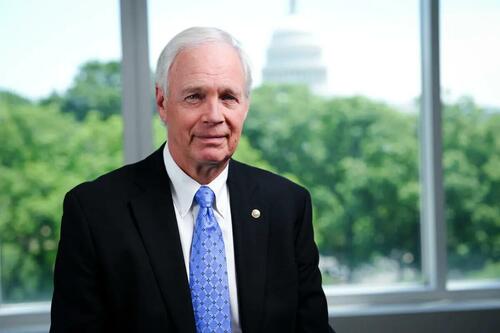
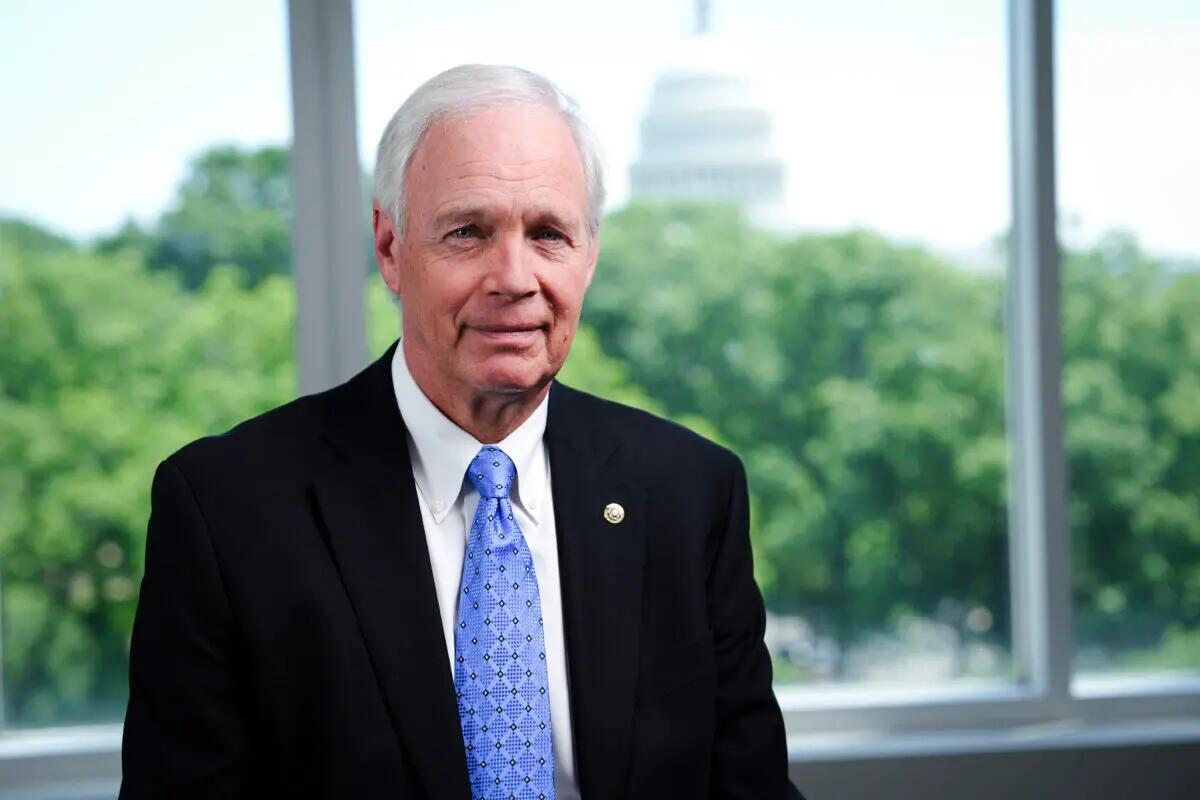
Sen. Ron Johnson (R-Wis.) speaks in Washington on May 15, 2023. (Madalina Vasiliu/The Epoch Times)

Ignored Questions

In another new letter, Mr. Johnson pressed the HHS on the program it administers to provide compensation to people injured by the COVID-19 shots.

Despite injections starting in December 2020, and more than 1.5 million reports being lodged with the Vaccine Adverse Event Reporting System. HHS has compensated just four people, paying $8,592 in total.

Others have been approved for compensation but the money is still pending.

Mr. Johnson in April asked for more details on the program as the agency has not been forthcoming, including whether there are caps on the amount of money an injured person can receive and whether the government has advertised the program.

Mr. Johnson also demanded communications between HHS and COVID-19 vaccine manufacturers regarding compensation claims.

In a recent letter, HHS declined to answer many of the questions.

Mr. Johnson on Sept. 5 urged HHS Secretary Xavier Becerra to provide answers to all of his questions.

He pointed to how Mr. Becerra, when being vetted by the Senate, told senators that he would commit to providing a prompt response to any questions addressed by Senate Finance Committee members.

"As a member of the Senate Finance Committee and as ranking member of the Senate’s top investigative subcommittee, your agency’s June 23, 2023 response is completely unacceptable and calls into question the veracity of the commitment you made before the Senate during your confirmation hearing," Mr. Johnson said. "I call on you to immediately revise HHS's incomplete response and provide the requested information."

HHS did not respond to a request for comment.

https://www.zerohedge.com/political/fda-refuses-provide-covid-19-vaccine-safety-data-us-senator

US-Canadian border flooded with illegal crossers, more caught in 2023 than 10 years combined

 Over 6,100 people from 76 different countries were caught illegally crossing into the United States along its northeastern border over the last 11 months alone — more than were apprehended there in the last 10 years combined, US border officials announced.

“Swanton Sector Agents are resolute and determined to hold the line,” said Chief Patrol Agent Robert Garcia in a series of social media posts Tuesday.

Garcia’s sector stretches nearly 300 miles across the US-Canadian border in New York, Vermont, and New Hampshire.

The announcement included trail-photos showing groups of migrants stealing through woods with luggage under the cover of dark.

Chief Garcia has previously issued warnings about alarming surges of illegal crossings at the border this year.

In February he issued a memo requesting a “quick turnaround” of agents be sent to his sector from the already inundated southern border, citing a nearly 850% increase in illegal crossings from the year prior since October.

Migrants sneaking through the woods on the US-Canadian border under the cover of night
Twitter/@USBPChiefSWB
A recent photo of migrants darting through the woods across the US-Canadian border
Twitter/@USBPChiefSWB

He cautioned about the “strain caused by the surge” of “primarily Mexican migrants with no legal documents,” according to the memo, obtained by Fox News.

“Chief Garcia is a phenomenal agent… If he’s asking for help, we do know that we’ve got a problem up there,” said former Arizona border patrol chief Chris Clem after memo was leaked.

It is unclear how many people have been apprehended illegally crossing along other US-Canadian border sectors this year. US Customs and Border Protection did not return The Posts’ requests for updated data at the time of publication.

The alarming numbers from Garcia’s relatively small swatch of the US’ more than 5,500 mile border show the problem extends far beyond the southern border — where 91,000 people were apprehended in August — and has contributed to the dire situation in cities across the US.

Officials said more migrants have cross into the US along its northeastern border this year than in the past 10
More migrants have been caught crossing into the US along its northeastern border this year than in the past 10 years
Twitter/@USBPChiefSWB
Migrants captured on trail cameras sneaking across the northeast US-Canadian border this year
Twitter/@USBPChiefSWB

Just hours before Chief Garcia released the numbers from the northeastern border, New York City Mayor Eric Adams cautioned that thousands of migrants being bussed in from the borders would “destroy” the city, and accused the White House of providing “no support” for the crisis.

“I’m gonna tell you something, New Yorkers, never in my life have I had a problem that I didn’t see an ending to. I don’t see an ending to this,” Adams said at a town hall on the Upper West Side Wednesday night.

About 110,000 migrants havearrived in New York City since spring 2022.

Adams has said he expects the cost of housing migrants will cost the city more than $12 billion over three years.

Earlier this year New York tried offering migrants free bus tickets to Canada, but many were turned away at the Canadian border or stole back across the border after being dissatisfied with the opportunities there.

https://nypost.com/2023/09/07/canadian-border-more-illegals-caught-in-2023-than-last-10-years/

'CDC Warns RSV Cases Are Rising Among Infants, Babies'

 by Katabella Roberts via The Epoch Times (emphasis ours),

The Centers for Disease Control and Prevention (CDC) is warning physicians and caregivers about an increase in respiratory syncytial virus (RSV) cases across some parts of the Southeastern United States in recent weeks.

In a Sept. 5 health advisory, the health agency said the rise in cases suggests a “continued shift toward seasonal RSV trends observed prior to the COVID-19 pandemic.”

“Historically, such regional increases have predicted the beginning of RSV season nationally, with increased RSV activity spreading north and west over the following 2–3 months,” the CDC said.

CDC data shows increases in weekly RSV levels since July but the agency said that nationwide, RSV test positivity had remained below the season onset threshold of 3 percent for two consecutive weeks.

However, more recent data show test positivity has increased in Florida since late July, and the three-week moving average has been greater than 5 percent for the last month.

RSV hospitalizations also increased in Georgia in August, the CDC said.

From Aug. 5 through Aug. 19, the rate of RSV-related hospitalizations increased from 2 in 100,000 kids aged 4 and younger, to 7 per 100,000, with the majority of those hospitalizations being in babies less than a year old, the CDC said.

In response to the rise in cases, the health agency urged clinicians to “prepare to implement new RSV prevention options” ahead of the 2023–2024 RSV season, including administering shots of monoclonal antibody products to patients as well as a preventative antibody treatment called nirsevimab.

A human respiratory syncytial virus, also known as RSV, shown in a 1981 electron microscope image. (Centers for Disease Control and Prevention via AP)

FDA Approves RSV Treatments

For all infants ages <8 months, and infants and children ages 8–19 months who are at increased risk of severe RSV, clinicians should start to offer Nirsevimab when it becomes available (expected by early October),” the CDC said.

A panel of outside advisers to the Food and Drug Administration (FDA) voted unanimously in July to approve nirsevimab for RSV in newborns and infants up to 24 months of age.

Sold under the brand name Beyfortus, the treatment is made by AstraZeneca and marketed by Sanofi. The companies said the drug showed efficacy in several clinical trials.

Regulators in countries including Canada and the United Kingdom have already approved Beyfortus.

A month later in August, regulators with the FDA also approved the first vaccine to be taken by pregnant women to prevent RSV infections in babies and toddlers.

Made by Pfizer, the Abrysvo single-dose injection was approved for use at 32 through 36 weeks of pregnancy. According to the pharmaceuticals giant, pregnant women who receive immunity from the shot will pass that immunity along to their unborn baby before birth, thus protecting them from lower respiratory tract disease (LRTD) and severe LRTD caused by RSV until at least the age of 6 months.

In trials, a dangerous hypertensive disorder known as pre-eclampsia occurred in 1.8 percent of pregnant individuals who received Abrysvo compared to 1.4 percent of pregnant individuals who received a placebo, according to the FDA.

https://www.zerohedge.com/medical/cdc-warns-rsv-cases-are-rising-among-infants-babies

CVS Health Creates New Problem For Viatris

 On Aug. 23, CVS Health (CVS 0.14%) announced that it's launching a new subsidiary focused on biosimilar drugs. That business, Cordavis, will start by seeking to commercialize a biosimilar to AbbVie's blockbuster Humira. That could mean trouble on the horizon for Viatris (VTRS -1.19%). As a generic medicine manufacturer, the last thing it needs is another powerful competitor looking to grab a share of the most lucrative markets.

Here's what you need to know about the situation and how it might affect your investing thesis for Viatris stock. 

Humira (adalimumab) is one of the most successful drugs of all time, bringing in more than $21 billion in revenue for AbbVie in 2022 even as multiple biosimilars of it hit the market in the E.U. and U.S.

It treats a bunch of conditions, including rheumatoid arthritis, ankylosing spondylitis, plaque psoriasis, and ulcerative colitis. That makes it a priority project to copy for makers of generic drugs like Viatris. There will eventually be plenty of competition in the Humira biosimilar market, as at least 10 different major biopharma businesses are working to commercialize their entries.

(Biosimilars are the equivalent to generics for large-molecule biologic drugs -- compounds that are produced not through chemical processes, but by engineered living cells. So unlike small-molecule drugs, they can’t be copied precisely by another manufacturer. However, competitors can biologically create extremely similar drugs that are functionally equivalent to the originals -- hence, the term biosimilar.)

CVS wants a slice of that pie, and it's partnering with Sandoz, a private pharmaceutical company, to make it happen. It could bring its version of Humira to market early next year if things go according to plan. But thankfully for Viatris' shareholders, that company is no longer directly exposed to that market. 

Viatris sold its biosimilars portfolio to Biocon Biologics in late 2022 for $2 billion in cash and $1 billion in preferred convertible equity, which (if converted) would give it a roughly 13% stake in Biocon. But that equity stake means that if Biocon struggles with sales of its Humira biosimilar, it'll make Viatris' investment less valuable, so it's still a risk for shareholders.

The actual new problem for the long term is that CVS' biosimilar efforts are unlikely to stop with Humira. The company will doubtlessly move on to target other high-earning medicines that have lost their patent and exclusivity protections. There isn't much reason to think that the Cordavis subsidiary will limit itself to producing only biosimilars without touching the even larger market for non-biologic generics. And that's where it is likely to take a bite out of Viatris' market share in the future. 

Viatris has a handful of generic candidates under regulatory review that CVS might also be interested in making. In particular, there are two therapies for type 2 diabetes, one of which is a generic version of Novo Nordisk's hit drug Ozempic. The active ingredient in Ozempic is semaglutide, which is also marketed in a different dosage as the popular weight loss drug Wegovy, and Viatris has submitted for regulatory approval in that indication as well.

There's also its generic version of Abilify, which treats both bipolar disorder and schizophrenia. And that's before even taking into account its efforts to make lower-cost versions of medicines for birth control and generalized anxiety disorder (GAD), which are in earlier stages of development.

Of course, Viatris will likely have other competitors in those markets too, and there is no guarantee that CVS Health will be willing or able to enter them in the next year or so. But other competitors are unlikely to be as massive or as well-resourced as CVS Health is, nor will they be vertically integrated into the healthcare chain.

After all, CVS is a major insurer, pharmacy, primary care provider, and more -- and that will give it an enormous edge in securing large market shares for whatever biosimilars or generics it chooses to produce. The threat is obvious on the basis of market capitalization alone: CVS' market cap is $86 billion, whereas Viatris and competitors like Teva Pharmaceuticals are only in the $13 billion range.

CVS Health's move into the biosimilars business does not portend doom for Viatris. Still, it indicates that hot generics markets are soon going to be even more crowded, and Viatris lacks the competitive advantages of CVS. That means its margins could be tighter in the future than they are today, and that could easily lead to lower returns for investors.

Keep an eye out for announcements from Cordavis over the next couple of years to see if it's becoming a direct competitor to Viatris. If it is, investors should consider that a major headwind for the company.

https://www.fool.com/investing/2023/09/01/cvs-health-just-created-a-new-problem-for-viatris/

Pentagon Aborts Flight Test Of 1st Hypersonic Missile At Last Minute, Cause Unknown

 The US military canceled a planned test launch of a new hypersonic missile system, announced at the last minute on the day it was supposed to happen, on Wednesday.

It remains unclear what happened to cause the Department of Defense to abort the test, but the DoD put out this statement: "On Sept. 6, the Department planned to conduct a flight test at the Cape Canaveral Space Force Station, Florida, to inform our hypersonic technology development. As a result of pre-flight checks, the test did not occur."

According to a a review of the lead-up to the launch in Space.com: "Navigational warnings announcing the closure of Atlantic Ocean airspace east of Cape Canaveral Space Force Station in Florida appeared earlier in the week that suggested a test launch would take place between Sept. 6 and Sept. 8."

China's widening iPhone curbs roil US technology sector

 Beijing's widening curbs on iPhone use by government staff raised concerns among U.S. lawmakers on Thursday and fanned fears that American tech companies heavily exposed to China could take a hit from rising tensions between the countries.

Apple fell more than 3% and was on track for its worst two-day decline since November after news that Beijing has told employees at some central government agencies in recent weeks to stop using their Apple mobiles at work.

Several Wall Street analysts said the curbs show that even a company with a good relationship with the Chinese government and a large presence in the world's second-largest economy was not immune to rising tensions between the two nations.

Sino-U.S. friction has worsened in recent years as Washington tries to restrict China's access to key technologies including cutting-edge chip technology, and Beijing looks to reduce its reliance on American tech.

Apple supplier Qualcomm, one of the U.S. companies with the largest China presence, tumbled nearly 7% to lead losses among major tech firms.

Lawmakers of both major U.S. parties have been vocal in their concerns about national security risks allegedly created by China's products, pressuring the Biden administration to get even more aggressive with Beijing.

The wider ban is not surprising and shows how China is trying to limit a Western company's market access to the nation, said U.S. Representative Mike Gallagher, the chairman of the House panel on China.

"This is textbook Chinese Communist Party behavior - promote PRC (People's Republic of China) national champions in telecommunications, and slowly squeeze Western companies' market access," Gallagher, a Republican, told Reuters.

U.S. Senator Mark Warner, a Democrat and the chair of the Senate Intelligence Committee, also shared similar concerns and said, "as the Chinese economy stalls, we can potentially anticipate more aggressive moves against foreign businesses".

China has curbed shipments from prominent U.S. firms including planemaker Boeing and memory chipmaker Micron.

Other suppliers of the iPhone maker including Broadcom, Skyworks Solutions and Texas Instruments were also lower, falling between 1.8% and 7.3%. The drop in the technology sector weighed on the three main U.S. stock indexes, particularly the tech-heavy Nasdaq Composite, which lost 0.9% in afternoon trading.

"This announcement seems to have just refocused investors that the relationship between the U.S. and China is a big risk to current equity prices, particularly in technology," said Rick Meckler, partner at Cherry Lane Investments.

IPHONE SLOWDOWN

China has been a bright spot for Apple in an otherwise tough period for iPhone sales.

"China is a crucial market for Apple, not just because it's a super-important manufacturing hub, but because the country is an increasingly important source of revenues," said Susannah Streeter, head of money and markets at Hargreaves Lansdown.

Apple gets nearly a fifth of its revenue from the country.

"Already rivals are closing the gap in high-end smartphone sales, and if the situation were to escalate this could potentially allow competitors to have a greater chance of stealing Apple's crown," Streeter said.

China's Huawei last week launched its new Mate 60 Pro smartphone, which is powered by an advanced chip made by Chinese contract chipmaker SMIC and marks a breakthrough for the duo hit by U.S. sanctions.

Those sanctions cut Huawei's access to chipmaking tools essential for producing the most advanced handset models, hammering the company's business and allowing Apple to take some market share from the national favorite in China.

"If Huawei has the capability to supply and scale its home-grown Kirin 9000S (chips), we see the Mate series phone as an opportunity for Huawei to increase its shipments and regain its market share," analysts at BofA Global Research said.

Apple could, however, see a demand boost after an event next week where it is expected to unveil its iPhone 15 line-up, as well as new smartwatches.

https://finance.yahoo.com/news/apple-tumbles-drags-wall-street-131316405.html