Merck & Co said on Wednesday it plans to conduct clinical trials testing its human papillomavirus (HPV) vaccine Gardasil 9 to evaluate the efficacy and safety of a single-dose regimen compared to the approved three-dose regimen.
The company said it plans to conduct two separate trials testing Gardasil 9 in men and women 16-26 years old to examine whether a single dose of the vaccine provides comparable long-term protection when compared with the approved three-dose regimen.
The large, multi-year trials are expected to start enrollment in the fourth quarter of 2024, according to Merck.
The drugmaker also plans to begin human trials for an experimental HPV vaccine in the fourth quarter that is designed to offer broader protection by targeting multiple HPV types.
The U.S. Food and Drug Administration first approved Gardasil 9 in 2014 to prevent certain cancers, including cervical, vulvar, vaginal and anal cancers, and diseases caused by nine variants of HPV.
Gardasil 9 is now approved for use in women and men aged 9 through 45 years.
HPV causes about 36,000 cancer cases in both men and women every year in the United States, according to government data.
Medicinal mushrooms have captured the attention of researchers, health enthusiasts, and medical practitioners because of their taste and remarkable therapeutic potential.
As consumer demand grows, so do the variety of products incorporating medicinal mushrooms. You can now find teas, coffee replacements, supplements, and other food products featuring three of the most popular medicinal mushrooms: cordyceps, reishi, and lion’s mane.
Each mushroom has a unique list of bioactive compounds, many with anti-inflammatory, anti-cancer, antioxidant, immunomodulatory properties, and other potential health benefits.
When choosing a mushroom-based product as a supplement for a specific health benefit—whether to relieve stress, boost immunity, or improve energy—it’s important to consider what part of the mushroom to use, its bioactive compounds, and their therapeutic properties.
Therapeutic Properties
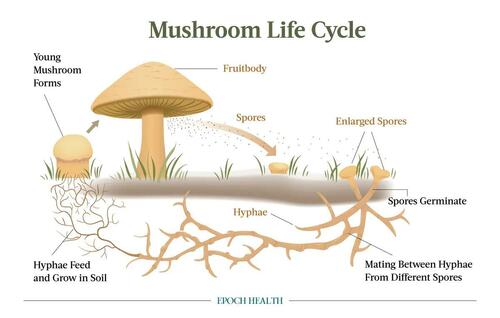
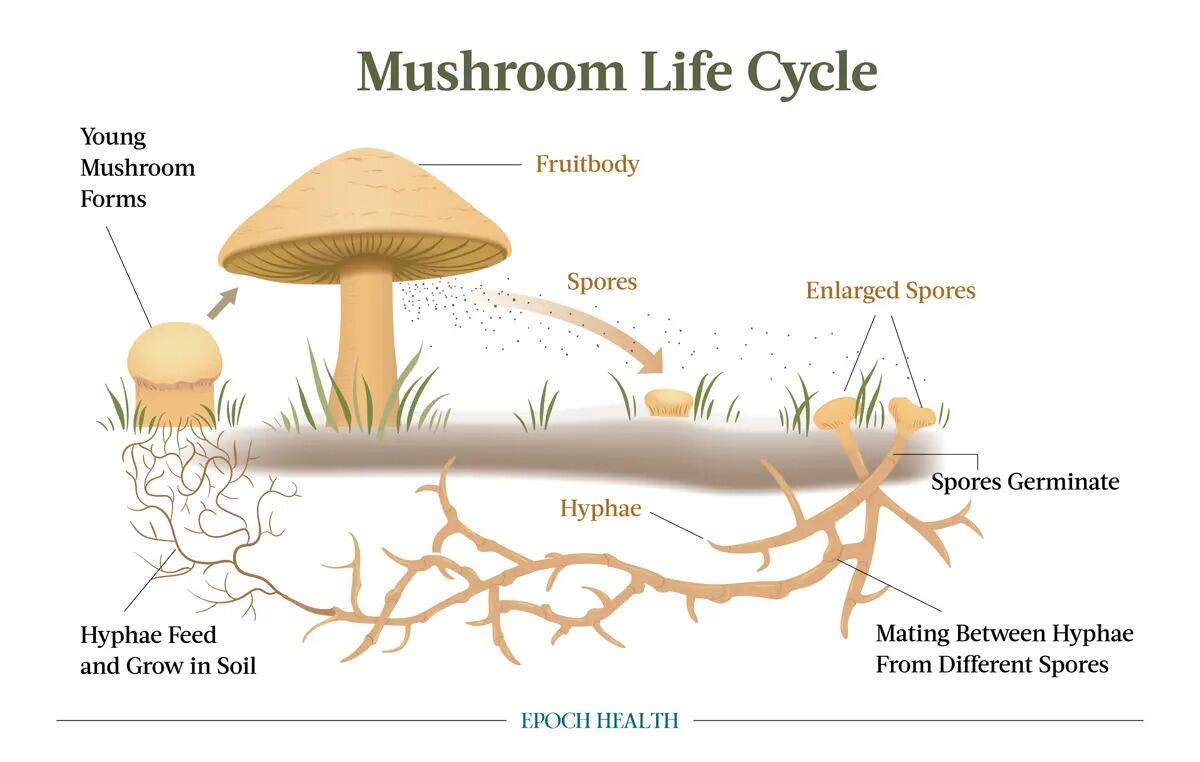
Mushrooms are a part of the fungal kingdom, which includes simple single-celled yeasts, complex fruiting bodies, and mold—all of which play crucial roles in our ecosystem. Fungi are a source of several major drugs, including antibiotics and statins. A mushroom has several parts, including the fruiting body, mycelium, and spores—each with different properties.
The fruiting body is the top of the mushroom, or what most people call the mushroom cap, and is typically above ground.
Mushroom mycelium is the underground colony of branching structures similar to a plant’s roots. It consists of microscopic formations called hyphae that absorb nutrients from the soil and transport them to other parts of the mushroom. Mycelium enables the mushrooms to connect, send, and receive nutrients from one another to enhance environmental survival. Some fungi species have extensive mycelium, such as the Armillaria species, which has hyphae that can cover more than 1,000 acres in the right conditions.
The spores are the equivalent of seeds and are the mushroom’s reproductive organs. A single mushroom can generate microscopic spores in the billions. These initiate the mushroom life cycle.
The therapeutic properties vary for different mushroom parts, so checking whether the fruiting body, mycelium, or both are listed on the label is important.
(Illustration by The Epoch Times, Shutterstock)
In a College of Naturopathic Medicine podcast, Hania Opienski, a naturopathic nutritionist, acupuncturist, and energy medicine specialist, was asked which part of the mushroom is the most therapeutic. “Ideally, you would use a fruiting body product, and that’s the thing that takes the longest to grow; it’s going to have the highest concentration of active compounds,” she said.
According to Ms. Opienski, although the fruiting body typically contains higher levels of therapeutic bioactive compounds, many commercial mushroom products are made from mycelium because it is quicker to get to an end product rather than waiting for the fruiting body to reach maturity and harvest to make a supplement.
The structural complexity and bioactive compounds packed inside each type of mushroom play an integral role in its mechanisms of action within the body to produce its therapeutic benefits.
Mechanisms of Action
According to Martin Powell’s “Medicinal Mushrooms: A Clinical Guide,” there are about 14,000 species of mushrooms. About 5 percent are known to produce compounds with widespread physiological activity and therapeutic benefits.
The medicinal properties and mechanisms of action come from these bioactive compounds that vary in content from one mushroom to another.
Beta-Glucans
The most significant bioactive compounds in mushrooms are beta-glucans, polysaccharides characterized by their ability to modulate the immune system. Beta-glucans have anti-inflammatory, metabolic, and gastrointestinal effects.
The molecular structure of beta-glucans can vary widely in shape and size, depending on the species and what part of the mushroom they come from. Different beta-glucans found across the fungal kingdom can have a variety of effects on the human body.
Triterpenes
Triterpenes are a class of compounds that are alcohol soluble and responsible for mushrooms’ antiviral, anti-inflammatory, and even hypnotic properties.
There are unique triterpenes, most notably the ganoderic acids in reishi mushrooms and the betulinic acid in chaga mushrooms. Research has uncovered more than 300 triterpenoids in reishi alone, many of which are not found in other mushroom species.
Sterols
Mushrooms also produce sterols—principally ergosterol—that have been shown to act against several different types of tumors in animal studies. Sterols work and act like cholesterol, but can lower cholesterol levels in the body. Additionally, ergosterol derivatives are reported to have anti-aging activity similar to resveratrol.
Ergosterol is also a precursor to vitamin D, so when a mushroom is exposed to the sun for long periods, it increases the vitamin D content, which is why some vitamin D supplements are made from mushrooms.
Statins
Researchers have discovered that some mushrooms can lower cholesterol because they possess statins such as lovastatin, which is used in cholesterol-reducing drugs. However, it’s important to note that high amounts of mushroom powder would be necessary to affect an impact.
3 Remarkable Medicinal Mushrooms
Three mushrooms are in high demand because of their remarkable medicinal properties: cordyceps, reishi, and lion’s mane. These mushrooms have medicinal effects and possible side effects for people on various medications. You should discuss any supplements, including medicinal herbs and mushrooms, with your health care provider.
1. Cordyceps
Cordyceps may be the most famous type of mushroom of all. It’s the fungus responsible for infecting civilization in the HBO series “The Last of Us” and was also the subject of discussion on Joe Rogan’s podcast, where he claimed to take cordyceps before workout sessions.
“It gives you an extra gear,” Mr. Rogan said in the podcast.
About 750 species of cordyceps originate from China’s high-altitude regions.
Cordyceps are unique because they begins as a spore, infecting and growing inside various insects, depending on the specific type of cordycep. Eventually, these mushrooms kill their hosts and start sprouting through the remains.
Cordyceps Sinensis
Cordyceps sinensis (C. sinensis), also known as caterpillar fungus, parasitizes the ground-dwelling ghost moth larva to begin its life cycle, technically making it a parasitic fungus rather than a mushroom.
Historically, C. sinensis has been used to treat several ailments, including lung, kidney, liver, and cardiovascular diseases. It was also a known treatment for male sexual dysfunction and has been used to boost the immune system. Interestingly, in 1993, the Chinese market for C. sinensis exploded when China’s female track team had a series of world-record-breaking times attributed to a tonic made from caterpillar fungus.
The cost of C. sinensis has also exploded, and a 2020 study reported a cost of $20,000 per kilogram, making it “the most expensive mushroom in the world.”
Genuine C. sinensis, cultivated by parasitizing ghost moth larvae, is found exclusively on the Tibetan Plateau. It isn’t found in supplements but can be purchased in its whole form in some Asian countries.
Cordyceps Militaris
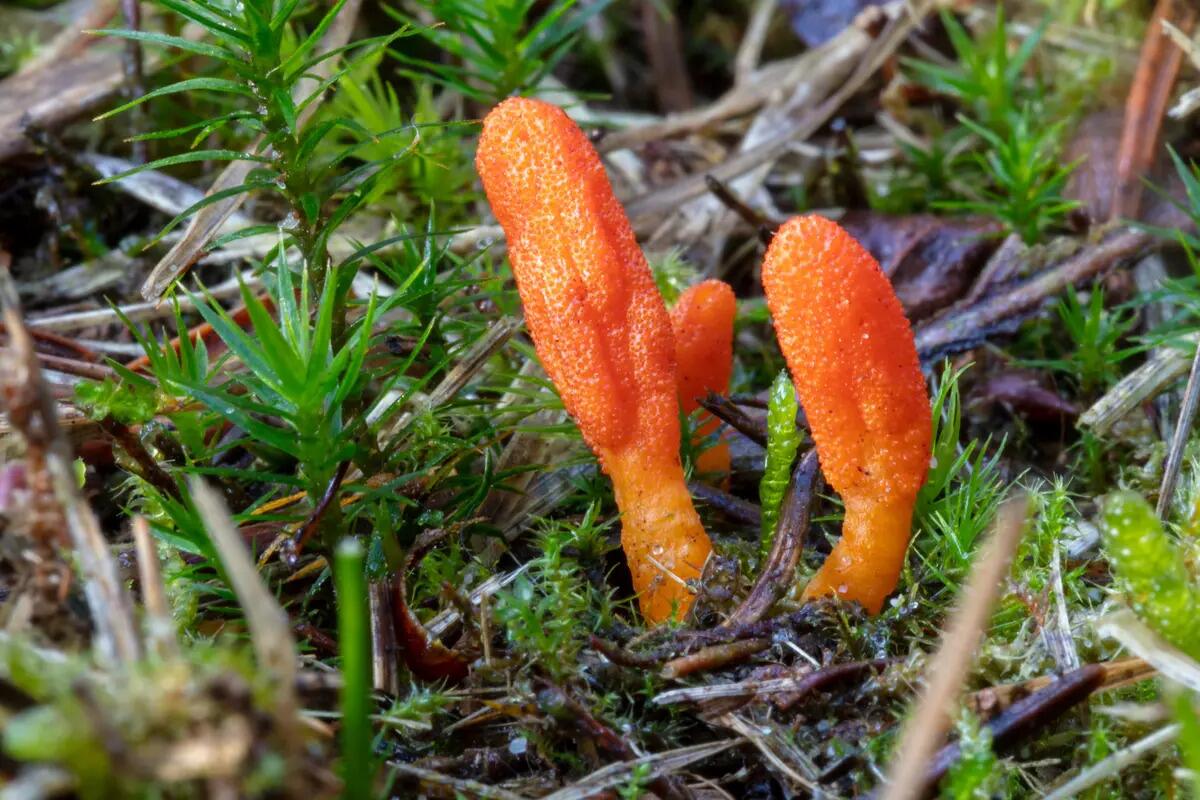
Cordyceps militaris can be cultivated with or without insects. The non-insect, grain-based cultivation leads to improved quality control and affordability, and the chemical profiles of C. sinensis and C. militaris are clinically interchangeable, as they have several of the same bioactive compounds. However, studies show that C. militaris has a much higher content of cordycepin and adenosine than C. sinensis, possibly making C. militaris the better choice.
Wild Cordyceps militaris fungus. (Edwin Butter/Shutterstock)
Cordyceps Health Benefits
Because C. sinensis is not readily available, the following references to Cordyceps pertain to Cordyceps militaris.
Cordyceps have been gaining attention in the scientific community because of their cordycepin content. Cordycepin is a potent bioactive metabolite created in Cordyceps. Research indicates that cordycepin has anti-cancer, antioxidant, and anti-inflammatory properties. It also has potential pharmacological actions in the liver, kidneys, and cardiovascular systems.
Researchers believe that cordyceps and cordycepin may eventually be used commercially in the pharmaceutical industry.
Cordyceps are probably best known for their energy-producing qualities and ability to increase the body’s ability to produce adenosine triphosphate (ATP), the primary energy source at the cellular level. Cordycepin is chemically similar to adenosine.
A study of 28 adults who consumed a mushroom blend containing cordyceps while participating in high-intensity exercise over three weeks showed a significant improvement in VO2 max, the oxygen that the body absorbs during vigorous exercise, which indicates cardiovascular fitness.
If you’re healthy and want to take something that will increase your cellular energy and oxygenation, cordyceps are great for people who wish to improve athletic performance, Ms. Opienski said.
Cordyceps Risks and Side Effects
Cordyceps are well-tolerated by most people but can cause gastrointestinal upset, such as nausea, diarrhea, and dry mouth. This fungus has hypoglycemic and antiviral effects, so it’s essential to use caution when taking antiviral or anti-diabetic medications.
2. Reishi
Global annual sales of reishi were about $4.3 billion in 2023, and the market is expected to grow to about $6.4 billion by 2028, making it one of the most popular medicinal mushrooms in the world today. Reishi is known as the “mushroom of immortality” in Japanese culture. In China, it goes by the name lingzhi instead of reishi and is known as the “herb of spiritual potency.” For thousands of years, people have used it to increase vitality, support immune function, promote cardiovascular health, and improve longevity.
Reishi’s scientific name, Ganoderma lucidum, describes its shiny, fruiting body—“gano,” meaning shiny, and “derma,” referring to skin.
It usually grows on the side of dead or decaying trees in a shelf-like manner. Reishi produced for supplementation is cultiva
Reishi Health Benefits
Reishi’s health benefits result from the high beta-glucans, triterpenes, and sterols packed into its cell walls. Extracting these three compounds from the mushroom isn’t easy, and eating them isn’t beneficial because they are locked inside the cell walls and must be extracted with either hot water or alcohol.
The reported health benefits of reishi are impressive, making it one of the world’s most commonly used medicinal mushrooms. Scientists continue to research the actual mechanisms of action that make it so powerful. Although it has many potential benefits, such as lowering cholesterol, blood glucose, and high blood pressure, reishi is best known for its other properties.
According to Ms. Opienski, reishi is one of the most potent immunomodulating mushrooms. It’s also known as a nervous system balancer and has been used for millennia in traditional medicine for sleep, stress, anxiety, and depression. “It’s one that is kind of known for calming the nervous system and helping to slow down or reduce the stress response,” she explained on the podcast.
Ms. Opienski also said that reishi is considered the mushroom of eternal youth because of its potent anti-inflammatory and antioxidant properties.
“Oxidation and inflammation are two of the things that cause cellular aging,” she said, noting that reishi could help to prevent these.
Although all mushrooms possess adaptogenic effects, reishi is one of the best-known adaptogens that can help the body adapt to stress. An adaptogen helps to calm the body and lets it adapt to stress. If someone is anxious or overstimulated, taking reishi may help to calm down their nervous system.
Reishi’s fruiting bodies have high levels of triterpenes that contribute to their anti-cancer properties, reducing the expression of matrix metalloproteinase, an enzyme that facilitates the spread of cancer cells. Reishi mushrooms also limit the attachment of cancer cells to the lining of blood vessels to stop their spread throughout the bloodstream.
The anti-tumor effects of reishi can help to treat lung, soft tissue, liver, white blood cell, breast, ovarian, colon, and bladder cancers.
Ms. Opienski said that because of its anti-inflammatory effect, reishi can be used in treating either benign prostatic hyperplasia or prostate cancer.
A systematic review found that patients on anti-cancer regimens containing reishi were 1.27 times more likely to respond to chemotherapy and radiotherapy. One study found that 65 percent of patients with advanced lung cancer reported an increased quality of life after taking reishi.
Reishi Risks and Side Effects
Mild side effects of reishi include nausea and insomnia. More severe side effects, while rare, include liver toxicity, chronic diarrhea, pseudo-parasitosis (the delusion that one is infested with parasites), and increased eosinophils, a type of white blood cell.
People taking anticoagulants should use caution when using reishi mushroom products because of the increased risk of bleeding. Reishi can also increase the immune response and is contraindicated for people taking immunosuppressants.
Because reishi can lower blood pressure, taking it with medication for hypertension may cause blood pressure to go too low.
Taking reishi with anti-diabetic medications may also cause blood glucose levels to go too low.
3. Lion’s Mane
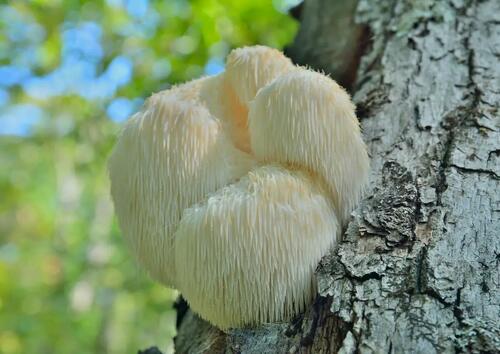
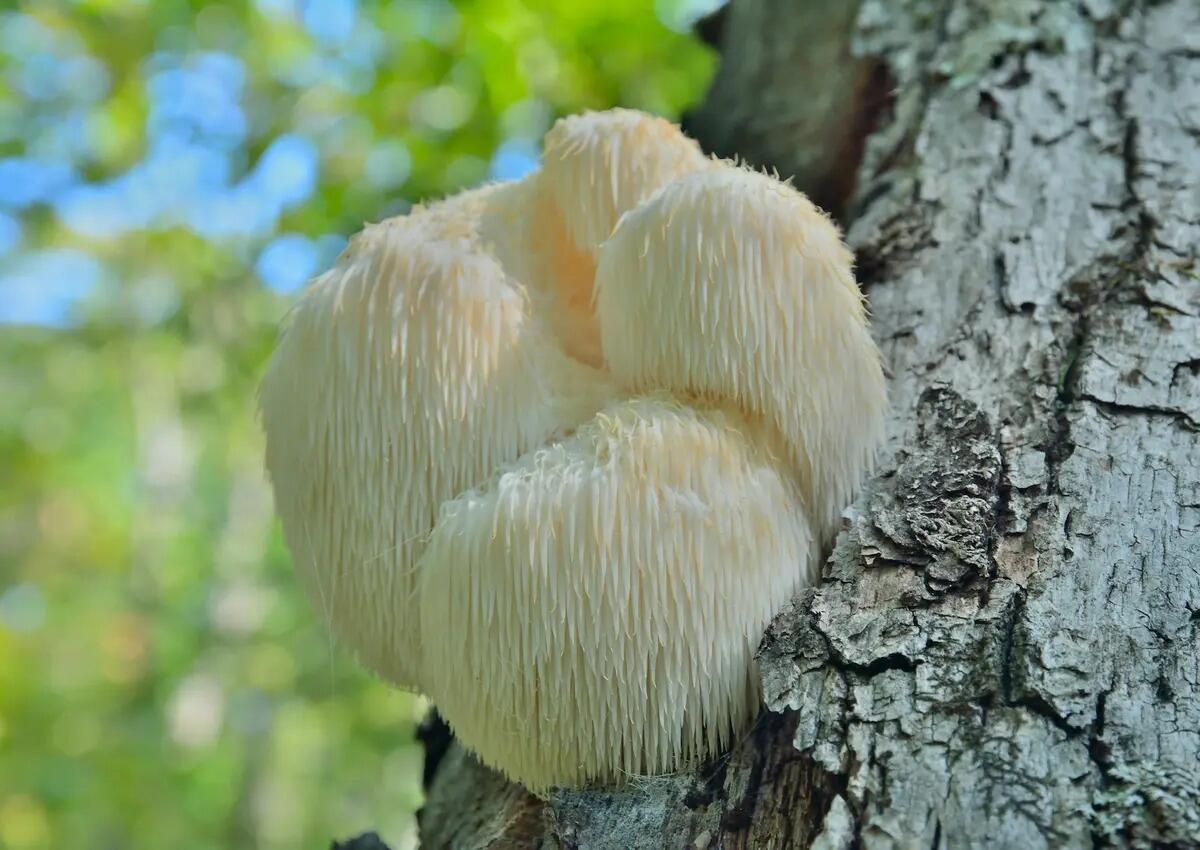
Lion’s mane (Hericium erinaceus) isn’t the typical mushroom with a cap and stem. Instead, it has “teeth” instead of gills, where it releases its spores. It is a saprophytic mushroom, which grows on dead trees or fallen logs and is relatively common to find when walking around in the woods during the late summer and fall.
Research shows that lion’s mane has unique bioactive compounds with several health benefits.
The edible lion’s mane mushroom (Hericium erinaceus) grows on a tree. (Kirsanov Valeriy Vladimirovich/Shutterstock)
Lion’s Mane Health Benefits
Two bioactive compounds exclusive to lion’s mane, hericenones and erinacines, help to support brain health, the immune system, and the digestive tract. Traditionally, lion’s mane was known for improving digestive health by preventing the bacteria that cause gastric ulcers, but recently, it has become better known for its potential benefits to support brain health.
1. Potential Brain Benefits
Bioactive components hericenones and erinacines set lion’s mane apart from all other mushrooms because they can easily cross the blood-brain barrier and stimulate nerve growth factor (NGF) production. NGF has a critical role in developing neurons and can protect parts of the brain from damaging inflammation responsible for neurodegenerative diseases such as multiple sclerosis.
Lion’s mane may also help to improve symptoms of dementia. One study showed that adults ages 50 to 80 who took 250 milligrams of lion’s mane three times daily for 16 weeks scored higher on cognitive tests than the placebo group and had overall better cognitive ability during supplementation. However, their test scores decreased four weeks after the study group discontinued lion’s mane.
There is also evidence that lion’s mane may help to relieve the symptoms of depression and help to reduce anxiety and stress. In a 2010 study, participants who ate cookies with 0.5 gram of a lion’s mane fruiting body supplement for four weeks reported less anxiety than those who consumed the placebo cookies. Researchers believed that the increase in NGF contributed to the anti-anxiety effects.
2. NGF and the Gut–Brain Axis
NGF isn’t limited to neurological health. It plays a significant role in regulating several actions within the body, and when it’s lacking, it can be associated with heart disease, Type 2 diabetes, and other inflammatory diseases.
Lion’s mane was traditionally used to treat gastrointestinal problems such as gastric ulcers and chronic gastritis. New evidence suggests that lion’s mane’s association with NGF is critical in rebalancing and improving the gut microbiota. Stimulating NGF can balance gut bacteria, which helps to heal the gut lining. Increased NGF can also heal the enteric (intestinal) and nervous systems, promoting the “gut–brain axis,” the two-way communication between the central nervous system (brain) and the gastrointestinal tract’s enteric nervous system (gut). When the gut–brain axis is disrupted, it can result in physical and mental health conditions, including irritable bowel syndrome, depression, and anxiety.
Lion’s Mane Risks and Side Effects
Lion’s mane has a few side effects, including stomach upset and skin rash in higher doses. It can also slow clotting times and should be taken with caution by anyone taking a blood thinner. Lion’s mane may also lower blood sugar and shouldn’t be taken with hypoglycemic medications.
The Bottom Line
There are many types of medicinal mushrooms growing in the fungal kingdom. Cordyceps, reishi, and lion’s mane are among the most popular but are definitely not the only ones with potential therapeutic benefits.
Mushrooms are unique. Neither plant nor animal, they produce unique compounds and metabolites that will continue to spark consumer enthusiasm and interest in the scientific community. As more studies emerge, we’ll learn even more about how to use these medicinal mushrooms as potent allies in our quest for well-being and vitality.
With the world still shocked at the whirlwind events taking place in the formerly quaint Caribbean island, on Tuesday Department of Defense officials testifying in Congress discussed the possibility of a "mass migration" into Florida as conditions in Haiti continue to deteriorate. Call it a... Hannibal Run?
Republican Congressman Matt Gaetz said during the House Armed Services Committee hearing that he was "deeply concerned" about the possibility of a large number of Haitian migrants amid the chaos in the Caribbean, coming to the Sunshine State "as a Florida man."
At Tuesday's hearing, Gaetz asked what President Joe Biden's administration was doing to prepare for a "wave" of migrants fleeing Haiti, prompting DoD official Rebecca Zimmerman to say that preparations were being made for a potential increase in refugees.
"Congressman, we're doing a number of things to ensure that we're keeping track of the situation and we're prepared," said Zimmerman. "At the moment, we have not yet seen large numbers—what we would characterize as a maritime mass migration."
Gaetz then interjected: "Do you anticipate a mass migration, though?"
"We are alert to that possibility," Zimmerman responded. "I think you're right that the driving conditions in Haiti could very well press more people. So, we've recently approved some additional assistance that we can provide to the Coast Guard."
Gaetz then asked Army General Laura Richardson, commander of U.S. Southern Command, whether the government should "activate the authorities, anticipating a mass migration."
"I think that we need to be postured appropriately for that," Richardson said. "I have put in a request for increase capability to do exactly that. And we are ready if we need to deal with a mass migration."
Conditions in Haiti have been becoming increasingly dire in recent months due to widespread gang violence and civil unrest. Armed gangs now reportedly control around 80% of Port-au-Prince, with Haitian Prime Minister Ariel Henry announcing his resignation on Tuesday.
While the U.S. Embassy in Port-au-Prince remains open, some personnel have recently been evacuated from the facility due to the ongoing violence in the Haitian capital.
The embassy said in a release on Monday that "the U.S. military conducted an operation" to bolster security, allow "operations to continue," and help "non-essential personnel to depart."
Last week, the embassy warned U.S. citizens to "depart Haiti as soon as possible by commercial or other privately available transportation options, in light of the current security situation and infrastructure challenges."
While the resignation of Henry had been demanded by the gangs occupying Port-au-Prince, it is unclear whether the situation will soon improve in Haiti as a result of the resignation being announced.
Henry said that he would leave office following the formation of a transitional council, although concerns remain that the gang leaders may reject a new interim leader chosen by the council and demand they control the government instead.
As for anyone expecting the Biden admin to actually do something - for once - about the next migration flood of cannibals undocumented carnivores, don't hold your breath for the following simple reason...
New York City is forking out an average of $387 per day to put up a single migrant household in taxpayer-funded shelters, the latest data from City Hall show.
That number — known as the “cumulative per diem” — is the average of what the city has spent to house and feed each migrant household per day every month since the start of the crisis in spring 2022.
The daily bill has slowly been dropping as the city desperately continues to try and slash asylum-seeker spending amid the ongoing crisis, with about 64,800 migrants in its care as of last week.
The $387 for February was down $5 from October 2023, when there were about 65,400 migrants in city care. The cumulative average began to go down steadily that month, hitting $391 in November, $390 in December and $388 in January.
The Big Apple is currently forking out an average of $387 per day to put up a single adult migrant in one its taxpayer-funded shelters, the latest data from Mayor Eric Adams’ administration show.Paul Martinka
City Hall has pegged the decline on cost-cutting measures implemented by Mayor Eric Adams’ administration to combat the crisis that’s forecast to set the Big Apple back $10 billion through next fiscal year.
“In the last two months, Mayor Adams has laid out plans to save billions of taxpayer dollars as New York City manages a national humanitarian crisis, and the numbers show that our efforts are working,” a City Hall spokesperson told The Post Tuesday, adding that “we expect to save $2.3 billion by next summer.”
Hizzoner had controversially ordered all city agencies to slash spending by an initial 5% last November — and then a further 5% in January — in response to the ever-growing costs of the migrant crisis.
Then, he abruptly called off a third wave of anticipated 5% cuts last month, citing “better-than-expected” revenue and further reductions in migrant spending.
The daily bill — known as the “per diem rate” — is down $5 from last October when the city was coughing up $392 on average a day to shelter and feed an asylum seeker, according to the data.Matthew McDermott
Based on those saving measures, City Hall is now forecasting the average daily cost of sheltering an asylum seekers to come in at $386 for the 2024 fiscal year — and drop further to $352 for FY25.
“As we continue to take action now by implementing the administration’s strategy of managing the population in our care and bringing down per-diem costs, we will continue to advocate for additional support from our state and federal partners,” the City Hall rep said.
Still, the per diem migrants costs are considerably higher than what it sets the city back to house the homeless population — a fact Department of Social Services commissioner Molly Wasow Park chalked up to the hefty cost of putting asylum seekers in hotels.
The daily bill has slowly been dropping as the city desperately continues to try and slash migrant spending.Robert Miller
“Commercial hotels are an incredibly expensive way to provide shelters,” Wasow Park told a City council budget hearing on Monday after being questioned about migrant costs.
“Our overall per diem numbers… for single adults, the average per diem is $145.13.”
The commish added: “I absolutely think we will see changes in the asylum number as there is a push to manage costs down.”