Search This Blog

Friday, March 15, 2024

Bristol Breyanzi Becomes First CAR-T Therapy for Two Types of Leukemia

 It isn’t often that a single company has an advisory committee meeting for one product and an FDA decision for another in the same week. Even more unusual is when the two drugs are of the same therapeutic class.

That’s what’s happening this week for Bristol Myers Squibb, though, as the regulator approved the company’s CAR-T treatment, Breyanzi, late on Thursday for chronic lymphocytic leukemia and small lymphocytic leukemia ahead of Friday’s meeting about Abecma, another CAR-T therapy, which will be discussed alongside Johnson & Johnson’s Carvykti for use as earlier lines of treatment in multiple myeloma.

With Thursday’s announcement, Breyanzi, a CD19-directed CAR T cell therapy, is approved for patients with relapsed or refractory chronic lymphocytic leukemia (CLL) and small lymphocytic lymphoma (SLL) who have already received treatment with a Bruton tyrosine kinase inhibitor (BTKi) and B cell lymphoma 2 inhibitor (BCL2i).

BTKi and BCL2i therapies are the most common and most effective treatment options for CLL, said David Porter, director of Cell Therapy and Transplantation at Penn Medicine’s Abramson Cancer Center. “When patients have failed both of those, the prognosis is terrible,” he told BioSpace. “They have truly very few effective treatment options at that point. This will offer one of the best, most potent, effective options for patients who have failed the more conventional therapy.”

But the outcome for Abecma may not be so positive, according to briefing documents released earlier this week. Specifically, the FDA raised concerns about the “higher rate of early deaths” in the clinical trials of both Abecma and Carvykti.

A ‘Manageable’ Safety Profile

In TRANSCENT CLL 004, Breyanzi showed a “manageable safety profile,” according to BMS. “I think that’s probably good wording,” Porter said. “CAR T cells do have potentially life-threatening toxicity. They have to be managed by caregivers with expertise in managing CAR T cells.”

For CLL and SLL, the FDA attached a boxed warning for cytokine release syndrome, neurologic toxicities and secondary hematological malignancies. The first two risks have occurred with Breyanzi specifically, while the third pertains to BCMA- and CD19-directed CAR-T therapies, including Breyanzi.

It’s those risks and others that the FDA is evaluating carefully when it comes to this class of therapies. In November, the regulator launched an investigation into the “serious risk” of secondary malignancies, leading to a boxed warning added to all six commercial CAR-T therapies at the time.

Rosanna Ricafort, vice president and head of late development hematology and cell therapy, noted that the field has come a long way in terms of toxicity management guidelines “and an understanding of how to manage CAR T-associated toxicities that are well characterized.”

Porter said that when considering CAR-T therapy, there must be a “very favorable” risk-benefit profile. “Patients with new diagnosis, early diagnosis, patients who may have low-risk disease, don’t necessarily need CAR T cells with its own set of toxicities.” However, he said that for patients with high-risk disease who are unlikely to have long-term benefit from standard therapies, “there’s a lot of logic to consider moving up into earlier lines of treatment,” as BMS and J&J seek to do with Abecma and Carvykti, respectively.

Ricafort agreed. “Multiple myeloma is a disease that is marked by multiple relapses and remissions,” she said. “When you have a transformational therapy, such as a CAR-T cell therapy that’s able to deliver a depth and durability of response, we know that employing those treatments earlier in treatment course will improve outcomes for patients.”

CAR-T Options Continue to Expand

Despite the FDA’s actions over the past several months, oncologists say the therapeutic class can be lifesaving, and analysts are confident the future of the CAR-T market is bright. And with Thursday’s approval of Breyanzi in CLL and SLL, the FDA is clearly open to expanding CAR T therapy into more oncology indications.  

In the pivotal TRANSCENT CLL 004 trial, 18.4% of patients with CLL or SLL followed for 21.1 months saw a complete response (CR) to treatment with Breyanzi, and an overall response rate (ORR) of 42.9%, BMS reported in May 2023. On Thursday, the company released updated results from the trial, showing that Breyanzi elicited a CR rate of 20% and an overall response rate (ORR) of 45%, with responses lasting more than 35 months.

Porter said that when the initial CR was first reported, he was disappointed. “It’s lower than I would have anticipated. It’s lower than we’ve seen in clinical trials that we've done here at Penn,” he noted. “That said, it certainly is better than the alternatives.” 

Ricafort emphasized the significance of even the 20% CR rate. “With current available therapies, complete responses are basically unheard of in this patient population, with relapsed/refractory CLL,” she told BioSpace.

Porter further suggested that the CR rate might be an “underestimate of the activity of the cells.” There are very strict criteria to score a complete response in CLL, he explained. In several clinical trials, he said, patients have had “significant improvements,” but the lymph nodes may not shrink down to a level that meets this CR criteria.

Next up for Breyanzi, BMS hopes to bring the therapy to market for patients with relapsed or refractory follicular lymphoma and relapsed or refractory mantle cell lymphoma who have been treated with a BTKi therapy. The company has a PDUFA date of May 23, 2024.

“Cell therapies are a significant focus of our research,” Ricafort said. “This is a big year for Breyanzi for label extensions as we strive to deliver this transformative cell therapy to more patients.”

https://www.biospace.com/article/bms-s-breyanzi-becomes-first-car-t-therapy-for-cll-and-sll-/

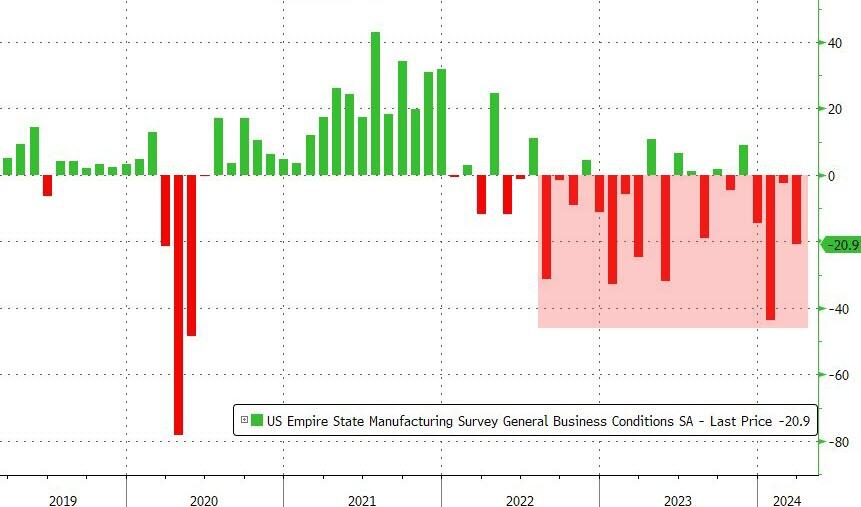
Despite 'Benefits Of Illegal Immigrants' NY Manufacturing Sector Stagflationary Shitshow

 New York state factory activity contracted in March by more than forecast as gauges of orders, shipments and employment all decreased, and worse still for the average (tax-paying Joe) manufacturers were confident in their ability to pass on costs to the end-user.

NYFRB's general business conditions index plunged 18.5pts in March to -20.9. A reading below zero indicates contraction, and the measure was weaker than all estimates in a Bloomberg survey of economists.

Cuban's drug company nabbed its 1st health system partnership

 After months of 10 p.m. Saturday emails about utilization trends and "pain points" at Community Health Systems, Mark Cuban Cost Plus Drug Co. secured its first hospital system partnership. Compared to other drugmakers, CHS leaders called the relationship unique. 

In summer 2023, Lynn Simon, MD, chief medical officer and president of healthcare innovation for Franklin, Tenn.-based Community Health Systems, connected with Cost Plus Drugs' CEO and co-founder, Alex Oshmyansky, MD, PhD.

"We've been watching Alex and his team from afar," Dr. Simon told Becker's. "It's always fun to watch disruptors in the industry and see what they're doing and trying to do."

For months, the two companies discussed drug shortage strategies tailored for hospital operations. 

"I think you guys must have spent crazy amounts of hours, like to the point of no work-life balance," Dr. Oshmyansky said in an interview alongside CHS leaders. "I think I got emails from you guys at like 10 o'clock on a Saturday, almost every week, delving into their utilization, figuring out what were the pain points and where we could fit into helping."

On March 7, CHS announced the partnership, which secures shipments of epinephrine and norepinephrine for nine of the system's hospitals. Since then, Dr. Oshmyansky said he has been in talks with dozens of other health systems and hospitals about potential deals. 

Cost Plus Drugs' pharmaceutical manufacturing site in Dallas can produce between 1 million and 2 million doses each year, depending on the vial size. This is relatively small for a drug manufacturing plant, so Cost Plus Drugs isn't seeking to partner with dozens of hospitals yet, but the plant is designed for scalability and quick changes. 

The facility, which cost $11 million and spans 22,000 square feet, could be expanded to eventually fill 70 million doses, Dr. Oshmyansky said. Right now, it is only licensed to ship medicines to four states — Texas, Pennsylvania, Oregon and Louisiana — but it's planning for all 50. 

In November, CHS leaders toured the plant. Heather Weese, PharmD, vice president of pharmacy services, and Kara Scalzo, PharmD, senior director of corporate pharmacy services, said they were impressed by the automation and attention to detail in the 503B facility.

"Cost Plus is probably the first vendor that Heather and I have run across that said, 'We hear what your needs are and we're willing to meet them,' rather than asking us to meet an industry standard," Dr. Scalzo said.

Those standards include vial sizes contrary to normal doses. For example, some epinephrine manufacturers only make 1 milliliter and 30 millimeter solutions, but the typical dose for an IV bag is 5 milliliters — a difference that can lead to medical waste, drug shortages and patient safety concerns. 

Cost Plus Drugs is halfway through manufacturing its first batches, which will be shipped to a lab for sterility tests before appearing at CHS in early April. This summer, the company expects to start manufacturing four chemotherapies in short supply: vinblastine, cisplatin, methotrexate and dacarbazine. As shortages fluctuate, the lines are designed to quickly pivot from one product to another.

Another unique aspect of the partnership is the health system gets answers to "why" questions, such as active pharmaceutical ingredients and manufacturing processes, CHS executives said.

"Usually, we don't have access to the Alexes of the manufacturers," Dr. Weese said, laughing. "I think his willingness to come to the table there really made a difference."

Two medications for nine hospitals is not "life changing," Dr. Simon said, but this isn't simply a vendor purchasing agreement — it's a symbiotic relationship. 

The system is collaborating with Cost Plus Drugs to offer unmet needs in the hospital industry, according to Dr. Simon, who said the partnership is easily transferable. 

"If there's disruption to be had in the industry, let's have at it," she said. "The more the merrier."

https://www.beckershospitalreview.com/pharmacy/how-mark-cubans-drug-company-nabbed-its-1st-health-system-partnership.html

Thursday, March 14, 2024

Flawed data inflated US maternal mortality rates,--study

 New research calls into question the severity of the nation's maternal mortality crisis, finding that flawed data has inflated death rates over the past two decades. 

The study, published March 12 in the American Journal of Obstetrics & Gynecologycenters on a change in the way pregnancy was noted on death certificates beginning in 2003. That year, the National Center for Health Statistics added a checkbox to death certificates to indicate whether the person was pregnant or had recently been pregnant, which was meant to improve the detection of maternal deaths.

The pregnancy checkbox led to "egregious errors," including hundreds of people ages 70 and older listed as having been pregnant at the time of or in the year before death. Cancer deaths and those from other causes were also misclassified as maternal deaths if the box was checked, researchers said. 

When the research team looked at death certificates that listed pregnancy as a cause of death, as opposed to looking at those that had the pregnancy box checked, they found maternal mortality rates were lower and stabilized over time.

"Identifying maternal deaths by requiring the mention of pregnancy among the multiple causes of death provides a more accurate, clinically coherent and compelling perspective on maternal mortality in the United States, and can serve as an evidentiary basis for clinical and public health initiatives," the study said. 

Under the revised tracking method, the study found the maternal mortality rate was 10.2 per 100,000 live births from 1999 to 2002, and 10.4 from 2018 to 2021. By comparison, with the pregnancy box, the National Vital Statistics System showed the mortality rate was 9.65 per 100,000 live births from 1999 to 2002, jumping to 23.6 in 2018 to 2021. 

Despite an overall reduction in maternal mortality, significant disparities remain, with disproportionately high rates among Black pregnant women. For some experts, this was the main takeaway. 

"We should be targeting a lot of our public outreach to focus on conditions that are affecting patients of color while they're pregnant," Colleen Denny, MD, associate professor in the department of obstetrics and gynecology and director of family planning at NYU Langone Hospital in New York City, told The Washington Post. 

View the full findings here.

https://www.beckershospitalreview.com/public-health/flawed-data-inflated-us-maternal-mortality-rates-new-study-says.html

What has UnitedHealth restored and what is next after major hack?

 UnitedHealth Group has brought back online the pharmacy systems at its Change Healthcare technology unit following the Feb. 21 ransomware hack that disrupted the U.S. healthcare system.

The healthcare conglomerate expects the payment platform to be functional and begin restoring the medical claims network starting mid-March. UnitedHealth is likely to need several months to make a full recovery, according to security experts.

The following are some of its largest businesses and UnitedHealth's plans for how and when to fix them:

PRESCRIPTION DRUG PROCESSING

Change Healthcare acts as a financial clearing house connecting the companies that managed drug benefits called pharmacy benefit managers with pharmacies. Without that technology, pharmacies cannot verify if a patient is covered by a healthcare plan for a particular drug and how much that patient was expected to pay out of pocket.

As of March 13, all major pharmacy and payment systems are up and more than 99% of pre-incident claim volume is flowing, UnitedHealth said.

There are still pharmacies that remained offline and there is disruption for infusion pharmacies and interruptions for some Medicaid fee-for-service customers, the company has said.

PRESCRIPTION DRUG COUPONS

UnitedHealth's tech unit processes discounts that manufacturers offer on some of their drugs through electronic coupons. Pharmacies could not apply many of these coupons when Change's systems went down, leaving patients to pay full price for the drugs upfront. Some manufacturers, including Eli Lilly, offered to reimburse patients for the amount their coupons would have covered.

UnitedHealth says its pharmacy network reconnection allows the majority of coupons it manages to again be processed. Coupons handled by rival McKesson's RelayHealth have not been disrupted.

INSURANCE CLAIMS

Healthcare providers including hospitals submit health insurance claims to Change, which sends them to health insurance companies to evaluate and process. After the cyberattack, these providers lost a primary means of processing payments for their services through patients' healthcare plans.

Beginning the week of March 18, UnitedHealth will begin bringing up the claims system for reconnection and testing in a phased manner. It recommends that customers use a workaround by reconnecting through an alternate network in the interim.

It said full service will be restored once testing has been completed.

The company said some providers may need more restoration work before they can submit claims and that there are some who have not been able to implement workaround solutions.

https://www.yahoo.com/news/finance/news/factbox-hack-unitedhealths-tech-unit-221118323.html

Class action lawsuits pile up over UnitedHealth data breach

 UnitedHealth Group has already been hit with at least six class action lawsuits accusing it of failing to protect millions of people's personal data from last month's hack of Change Healthcare, its payment processing unit, with more lawsuits likely to come.

In a motion filed late on Tuesday in Washington, D.C., plaintiffs' lawyers asked a federal judicial panel to consolidate the six cases in federal court in Nashville, Tennessee, where Change is headquartered, and said they expected more cases to be filed.

It is not known how large the litigation could become because it is not clear how much or what kind of information was compromised in the attack, which was carried out by the ransomware hacker group BlackCat.

UnitedHealth, which disclosed the attack on Feb. 21 without specifying how many people were affected, said in a statement Wednesday that it was focused restoring Change's operations.

UnitedHealth hasn't said if BlackCat demanded ransom, but a post on an online forum used by hackers claimed the company paid $22 million to the hackers for regaining access to its locked systems.

Under the Health Insurance Portability and Accountability Act (HIPAA), a U.S. health privacy law, companies have 60 days after discovering a data breach to notify affected individuals that their personal information has been compromised.

For breaches affecting more than 500 people, the company must notify federal regulators and prominent media. UnitedHealth has so far not given such a notice.

Change processes about 50% of the medical claims in the United States for around 900,000 physicians, 33,000 pharmacies, 5,500 hospitals and 600 laboratories.

The attack has halted Change's operations, leaving providers, including major hospital systems, small medical practices and pharmacies unable to collect payments. According to UnitedHealth's website, Change is expected to resume processing payments by March 15.

Option Care Health says UnitedHealth hack may hit financials in near term

 Homecare health services provider Option Care Health said on Thursday it has been affected by the cyberattack at UnitedHealth Group's Change Healthcare unit, and the hack could impact its near-term financial results.

More than half of the company's claims for services rendered since the hack remain unprocessed, Option Care said in a regulatory filing.

Option said it anticipates a hit to its cash flow and working capital due to the inability to process a number of claims, with inefficiencies in patient registration and billing also among factors that can affect the company.

Shares of Option were down nearly 2% in extended trading.

Option Care utilizes Change Healthcare's services to verify benefits for existing and prospective patients, submission of claims to health plans for processing and payment as well as application of cash remittances.

"The company cannot predict the ultimate impact on its operations and financial results given the dynamic and ongoing nature of the situation," Option said.

Option, however, said it has not identified any compromise or unauthorized access of its systems or networks due to the incident, adding it had disconnected its operations from Change Healthcare applications.

Change Healthcare processes about 50% of medical claims in the U.S. for around 900,000 physicians, 33,000 pharmacies, 5,500 hospitals and 600 laboratories.

The data breach, which has disrupted healthcare across the United States, is now under investigation by the U.S. government.

https://finance.yahoo.com/news/option-care-health-says-affected-210431603.html