Search This Blog

Saturday, March 16, 2024

Migration Is Invasion

 As the situation at the Texas/Mexico border continues to deteriorate, the premise of federalism is being tested in ways not seen in more than a century. The Biden Administration has openly refused any real effort to slow illegal entries, while as many as 13 million foreigners have crossed illegally since his inauguration. It took Texas longer than it should have to grasp that they were actually working to facilitate illegal entries. Eventually, though, Governor Greg Abbott recognized that the Lone Star State would have to act alone against Biden’s open border policy. After he implemented aggressive actions to stop the flow, the feds went to extraordinary measures to ensure that the border would remain open, cutting razor wire placed along the Rio Grande and doggedly fighting Abbott’s policies in federal court.

A major escalation occurred when the governor formally declared the situation an “invasion.” Predictably, Democrats howled at the use of a term with such rhetorical force. But if “invasion” is a faithful characterization of what is happening, then we have an obligation to call it that. And if there is an invasion at the southern border, then it must be stopped by all means—whether by federal intervention or in defiance of it.

What exactly constitutes an “invasion”? What are the characteristics that have defined invasions throughout human history? I propose that there are five. The first is that an invasion is something that the inhabitants of the nation being invaded never requested or invited. Second, invading forces are comprised predominantly of military-aged men. Third, invaders are primarily motivated by self-interest. Fourth, invaders carry the insignia of their home nations with them. And, finally, an invasion must pose a genuine threat to the existing social order of the place being invaded. With these criteria in mind, let’s examine the situation at our southern border.

Who Invited You?

The first characteristic of an invasion is that the people being invaded didn’t ask for the invaders to come. The influx of Europeans to the Americas in the sixteenth century serves as a prime example. Not all of the Europeans who made the trek across the Atlantic saw conquest as the purpose of their journey. The Puritans, for example, meant only to create a habitable environment for a life of religious observance apart from the repressive order they left in England. The Spanish conquistadors, on the other hand, set out to conquer and subdue the peoples they encountered in the Americas. But regardless of their intentions, neither the Puritans nor the conquistadors were invited by the indigenous tribes of those lands.

In the same way, there has been no formal invitation for the people of Central and South America to pass through our southern border illegally. America does, in fact, invite immigrantsbut it requires that they apply to do so. Advocates of unlimited immigration may argue that the United States has invited the millions who are crossing illegally. Only 40 years ago, we rewarded illegal immigrants with a mass amnesty and citizenship. Today, we allow illegal immigrants to attend our public schools (often at “in-state” tuition rates reserved for citizens); we give them driver’s licenseswelfare, and medical care. Are these benefits not an invitation? Nothese are incentives, which are not the same thing.

These incentives are often extended by individual states in defiance of federal law. Chicago, New York City, and other “sanctuary cities” have declared that they will not enforce federal immigration law (though they claim it’s only to protect the illegal immigrants who have already arrived). It’s plain that these cities never intended their policy to be taken as an invitation: simply look at their outrage and complaints after states like Florida and Texas began sending them illegal immigrants.

If there’s no invitation, you’ve got an invasion.

Where Are the Women and Children?

Anyone who views photographs of the many caravans moving into Eagle Pass will immediately see that the vast majority are menalmost exclusively men between the ages of 18 and 50. Whatever women and children there are, they are outnumbered by military-aged males. This disproportionality shows that the many requests for asylum are disingenuous. When the Trump Administration began screening to determine that family groups arriving were indeed family, we learned that women and children are often used as props by unrelated men who might otherwise be rejected for asylum. The overrepresentation of men suggests these people are not refugees. If they were fleeing from war, wouldn’t the military-aged men be at home fighting? Wouldn’t the caravans be comprised mostly of women and children?

Of course, the men are (probably) not planning a military assault on Dallas or Tampa, but planned military operations are not a prerequisite for a mass migration of people to be considered an invasion. If people migrate in sufficient numbers, they may not need to attack in order to conquer the region in question. At a certain point, there are too many individuals to deport: the nation being invaded has no choice but to (attempt to) integrate the newcomers.

With or without military activity, all historical invasions have consisted overwhelmingly of men in the initial stage. Indisputably, this is what is unfolding at America’s southern border.

What Are They After?

Today’s illegal immigrants undertake a treacherous journey—and they don’t do it because they want to help American citizens. They cross the desert because they believe it will benefit them personally. We constantly hear that they are “in search of a better life.” This refrain quietly concedes that the immigrants are seeking economic advantages. They may not get rich. But they will, in all likelihood, attain a level of wealth (and various social benefits) that would have been all but impossible in their countries of origin.

Regardless of their nationality, the people in the caravans are united by one characteristic: like all invading forces, they’re motivated by self-interest.

Which Flag Do They Fly?

Just as warships or fighter jets are marked with the insignia of the nation to which they belong, all invading forces bring with them the signifiers of their home. In past eras with high immigration, newcomers to the United States willingly gave up the language of their former homes. Germans, Italians, and Poles often fully transitioned to speaking English within a generation.

In contrast, the immigrants flooding over our southern border often resist assimilation—and are encouraged to do so. There are people who have been in the United States illegally for decades who still know almost no English. These people often live a life apart from the nation at large, congregating in particular neighborhoods in our major cities. But their attempts to hold onto their language and the norms of the homes they left are not the only indications they are invaders.

Who can ignore the fact that the people leading the caravans carry the flags of their homeland? Flags from Honduras, Guatemala, Mexico, and El Salvador are all on display in media images of the new arrivals. This affinity remains once they are in the United States. When the U.S. soccer team plays Mexico in California, it amounts to a home game for the Mexican team. Given a choice between the nation they left and the nation they chose instead, many “Mexican-Americans” choose to cheer for Mexico rather than America. Drive around a city with a high immigrant population like Houston, Los Angeles, or Orlando and you will see a surprising number of cars with stickers that pay homage to the home they abandoned: Mexican flags, geographical outlines of central American nations, and the like.

This resistance to assimilation—a resistance that is indulged and enabled by both public and private institutions—is a key sign that the people arriving illegally are invaders. For many, the aim isn’t to become Americans: it is to exploit the opportunities that America affords, and then to send the money earned to their families who still live back in their (true) home.

A New America?

All invasions change the way of life in the region they invade. The European invasion of the Americas completely transformed the Western hemisphere. A century after England renounced its claim to India, the signs of its invasion are still seen throughout Indian society.

The idea of the “melting pot”—an American metaphor for cultural assimilation in which the many peoples who come here become one—is now seen as a form of cultural chauvinism. Since the nineties, the dominant metaphor has been the “salad bowl,” where all the different peoples who inhabit the United States retain their various identities despite living in close geographical proximity to one another. The people who insist that “diversity is our strength” are often the same ones who assure us that mass immigration will have no discernible effect on American society.

How many more Central Americans—many of whom will not be readily assimilated—can we add to the bowl before it becomes a different sort of salad? A million? Ten million? Twenty? None of the proponents of unfettered immigration will even entertain the idea that there might be a tipping point, but there are signs that we are quickly approaching it. The recent arrival of relatively insignificant numbers of illegal immigrants in New York City and Chicago have been enough to spark housing crises, budgetary strain, and a rash of public violence that is (somehow) worse than the already-demoralizing norm.

Many who cross illegally leave their home nations because they are poor. Even when working illegally in the U.S., many still fall below the poverty line, so they are often dependent on the welfare state. In these situations, housing, food, health care, and court costs are all paid by the state, which is to say “taxpayers.”

Whether or not illegal immigrants intend to change America, they are. How much life in the nation will change depends on how long citizens tolerate the crisis. But the American way of life is already being transformed, and this shows that it amounts to an invasion.

Where There’s a Will, There’s a Way

It’s true that invasion is a strong word. But by any historically-informed perspective, it is the right word. Shying away from it amounts to a refusal to acknowledge the gravity of the problem. In the face of a world-historical tide of illegal migration, any term other than invasion is just a strategy that allows one to look away from the humanitarian catastrophe happening at the border and along the way. It’s a failure of courage—a feigned blindness that deliberately ignores the onerous ramifications that the crisis has for our own citizens and the safety of those who attempt the dangerous journey to America.

If we have any prospects of thwarting the invasion—indeed, if we are even to discover the will to do so—we and our leaders need to find the strength to admit it is happening.

 is professor of English at the University of Houston - Downtown. He is editor of The Peerless Review, a new online platform for publishing dissident scholarly research.

https://americanmind.org/salvo/migration-is-invasion/

Vitamin D: Deficiency Symptoms, Health Benefits, Optimal Sources, And Side Effects

 by Mecura Wang and medically reviewed by Dr. Beverly Timerding via The Epoch Times,

Vitamin D, or the “sunshine vitamin,” is considered both a fat-soluble vitamin and a hormone because it can be obtained nutritionally, and our skin can synthesize it through sunlight exposure. It is integral to various bodily functions.

Primarily recognized for enhancing calcium absorption, vitamin D plays a role in maintaining bone and dental health, supporting the immune system, regulating cell growth, influencing mood, and preventing conditions such as multiple sclerosis.

What Are the Signs and Symptoms of Vitamin D Deficiency?

Vitamin D deficiency is the most prevalent nutritional deficiency, affecting people of all ages globally. In the United States, nearly one-quarter of individuals have insufficient or deficient vitamin D blood levels, which can impact bone and overall health. Approximately 50 percent of children between ages 1 and 5 and 70 percent aged 6 to 11 experience vitamin D deficiency.

Vitamin D deficiency often arises due to insufficient sunlight exposure, inadequate dietary intake, and the skin’s inability to produce it. Also, natural foods typically do not provide enough vitamin D to prevent deficiency, making sunlight exposure a crucial factor.

Most people with vitamin D deficiency experience no symptoms. For others, common symptoms may include:

  • Fatigue: Vitamin D deficiency has been linked to fatigue in uncontrolled trials, and treatment with the vitamin has been shown to improve the condition in blinded, randomized, placebo-controlled trials. Individuals with persistent and severe vitamin D deficiency may encounter symptoms linked to secondary hyperparathyroidism, including fatigue. Secondary hyperparathyroidism is when the parathyroid excretes too much hormone due to low calcium levels.
  • Bone and muscle pain: A mild but prolonged vitamin D deficiency can result in chronic hypocalcemia (low calcium) and hyperparathyroidism, with symptoms such as bone pain and muscle aches.
  • Muscle weakness and cramps (spasms): Increased levels of vitamin D in the bloodstream have been linked to enhanced muscle strength, physical activity, and the capability to ascend stairs, while lower concentrations are associated with a higher risk of falls among older people. Muscle spasms, particularly in infants, can be an early indication of rickets due to low blood calcium levels resulting from severe vitamin D deficiency.
  • Mood changes: According to a systematic review, about a third of the studies indicated inadequate vitamin D levels were associated with depression. Others suggested supplementing with it was helpful if combined with exercise or along with other nutritional supplements.
  • Bone loss: Vitamin D deficiency can cause bone loss as it impairs calcium absorption, leading to decreased calcium levels in the blood. Specifically, insufficient vitamin D limits the body’s ability to absorb only 10 percent to 15 percent of dietary calcium, whereas with normal vitamin reserves, absorption typically ranges from 30 percent to 40 percent.

Other symptoms and signs of deficiency may include:

  • Heightened pain sensitivity
  • A tingling sensation in the hands or feet
  • A waddling gait from weakened hip or leg muscles
  • Bone fractures
  • Bowed legs (severe deficiency)
  • Knock-knees
  • Poor sleep
  • Hair loss
  • Increased susceptibility to illness

 Complications

The complications of vitamin D deficiency are:

  • Rickets: Rickets affects children’s bones, causing them to become soft and weak, potentially leading to deformities. Symptoms and signs include bone pain, reluctance to walk, skeletal deformities such as bowed legs, thickening of joints, dental issues, delayed growth, and fragile bones prone to fractures in severe cases.
  • Osteoporosis: Vitamin D deficiency can result in secondary hyperparathyroidism, leading to bone loss, osteoporosis, fractures, mineralization defects, and long-term risks of osteomalacia. Osteoporosis may cause intense back discomfort, diminished stature, or deformities in the spine, such as a bent or hunched posture.
  • Osteomalacia: This is similar to rickets but can happen at any age. Characterized by bone softening, osteomalacia is primarily linked to vitamin D issues negatively affecting calcium absorption. Its symptoms and signs include bone fractures, muscle weakness, and widespread bone pain, particularly in the hips.

What Are the Health Benefits of Vitamin D?

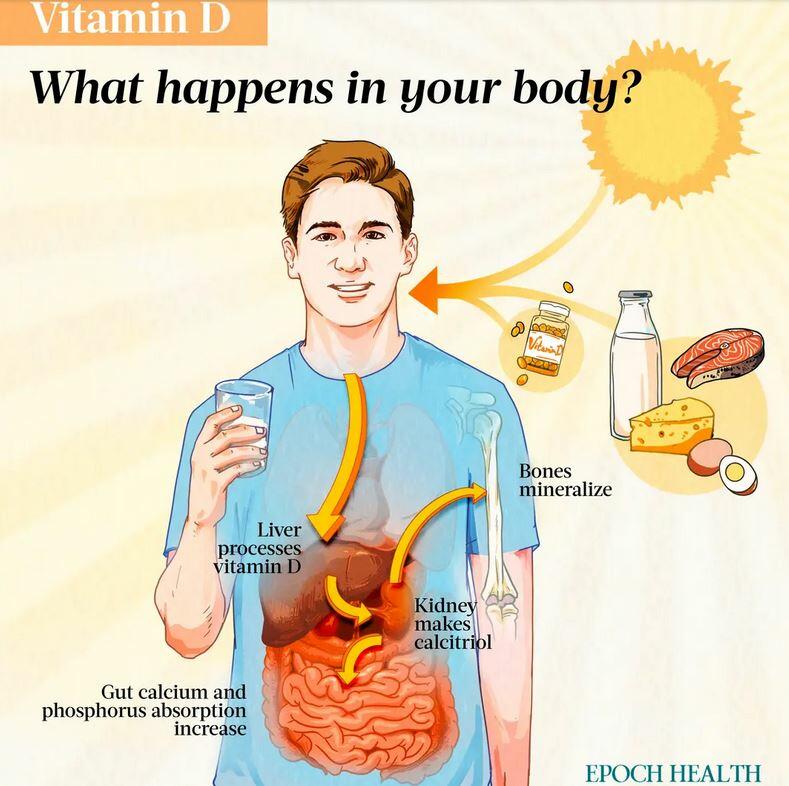
When you eat food or supplements containing vitamin D, your body undergoes two processes to activate it. First, in the liver, vitamin D is converted to calcidiol (25-hydroxyvitamin D). After that, the kidneys further transform it into calcitriol (1,25-dihydroxyvitamin D).

Calcitriol encourages the absorption of calcium and phosphorus in the small intestine. It also works with parathyroid hormone to enhance calcium transport, which is essential for maintaining proper calcium and phosphorus levels.

Vitamin D plays a crucial role in calcium absorption, essential for strong bones and teeth. It also supports muscle and nerve function, facilitating movement and communication within the body. In addition, vitamin D is vital for the immune system, as it helps defend against infections.

  • Bone health: Vitamin D helps with the absorption of calcium and phosphorus, promoting bone mineralization and bone mineral density. A meta-analysis of 12 studies involving over 42,000 individuals aged 65 and above discovered that the prevention of nonvertebral fractures with vitamin D is dependent on the dosage. A higher dose of about 500 to 800 international units (IU) resulted in a reduction of hip fractures by 18 percent and nonvertebral fractures by 20 percent for people aged 65 years or older. However, in another study involving over 25,000 generally healthy midlife and older adults, supplementing with vitamin D3 did not lead to a significantly lower risk of fractures compared to a placebo. Of note, though, patients in this study had no controlled calcium supplementation.
  • Muscle and nerve function: Vitamin D may contribute to increased muscle strength by preserving muscle fibers, potentially reducing the risk of falls, a prevalent issue associated with significant disability and mortality in older individuals. Research also suggests that vitamin D plays a vital role in essential neurological functions such as cell growth, development, nerve support, protection, signal transmission, and adaptability.
  • Immune system support: Vitamin D contributes to a healthy immune system. The vitamin D receptor is present in immune cells, allowing vitamin D to act locally in the immune system. The vitamin can influence both the innate and adaptive immune responses and its deficiency is linked to higher autoimmunity risk and increased vulnerability to infections. Moreover, vitamin D exhibits strong anti-inflammatory effects.

Other health benefits of vitamin D include:

  • Pregnancy support: Vitamin D supplementation during pregnancy has also been associated with a reduction in the risks of small-for-gestational-age babies, preeclampsia, preterm birth, and gestational diabetes.
  • Mood regulation
  • Insulin level regulation: Vitamin D has been shown to lower blood glucose levels and enhance insulin sensitivity in people with diabetes.
  • Weight loss: Vitamin D plays a role in preventing the formation of fat cells by influencing specific molecules, such as vitamin D receptors.
  • Dental health: Research highlights a link between alveolar bone density, osteoporosis, tooth loss, and periodontal disease risk. Several reports suggest a significant connection between periodontal health and vitamin D intake.

Vitamin D Prevents Certain Conditions

In addition to the aforementioned bone-related and mental medical conditions, an adequate level of vitamin D can potentially prevent or lower the risk of certain diseases, including:

  • Certain types of cancer: Animal and lab studies suggest that vitamin D may inhibit tumor development and slow the growth of existing tumors in various organs, including the breast, ovary, colon, prostate, and brain. Human epidemiological studies demonstrate that higher serum levels of vitamin D are linked to significantly slower progression of certain cancers, particularly colorectal cancer. The anti-cancer effects of vitamin D may also extend indirectly through its anti-inflammatory properties.
  • Heart disease: Maintaining optimal vitamin D levels may have potential cardiovascular health benefits, according to one recent study. Both deficiency and insufficiency of vitamin D were linked to an increased risk of cardiovascular diseases (CVD), including stroke, heart disease, heart attack, and heart failure. However, excess vitamin D was not associated with increased CVD risk.
  • Immune-related diseases: Sufficient vitamin D levels may help prevent or treat immune-related diseases.
  • Asthma: A meta-analysis discovered that taking vitamin D supplements helped adults with mild-to-moderate asthma who were also deficient in vitamin D to reduce their asthma exacerbations by 30 percent. However, this benefit was not observed in individuals with higher baseline vitamin D levels.
  • Atherosclerosis: Vitamin D’s anti-inflammatory properties appear promising in lessening atherosclerosis, as insufficient levels lead to increased production of pro-inflammatory markers, disrupting the balance in the inflammatory response. In atherosclerosis, vitamin D suppresses the production of pro-inflammatory cytokines, which play a significant role in the development of the disease.
  • Type 2 diabetes: One study suggested a higher prevalence of vitamin D deficiency in patients with Type 2 diabetes. Insulin resistance decreases with the supplementation of vitamin D.
  • Autoimmune diseases: Extensive research indicates a potential connection between vitamin D deficiency and the development of autoimmune diseases. Vitamin D deficiency has been noted in conditions such as rheumatoid arthritis, with an inverse relationship to disease activity, suggesting a role in the disease’s pathogenesis. Similar observations exist for systemic lupus erythematosus (SLE), Sjögren’s syndrome, ankylosing spondylitis, psoriatic arthritis, and idiopathic inflammatory myopathies. Research also indicates there is a lower risk of developing multiple sclerosis in individuals with higher levels of vitamin D.
  • Cognitive decline: Research has consistently established a connection between cognitive impairment, dementia, and a lack of vitamin D.
  • Mortality: As per a meta-analysis of 18 studies involving 57,311 subjects, daily intake of vitamin D supplements was associated with a reduction in all-cause mortality rates.

What Are the Types of Vitamin D?

Vitamin D is not a single chemical but a group of compounds. The two major types of vitamin D are D2 and D3. Vitamin D2 and D3, collectively known as vitamin D, share nearly identical functions, yet neither becomes active until the body performs its transformative process.

1. Vitamin D2 (Ergocalciferol)

Vitamin D2 comes from plants and fungi and is created when ergosterol is exposed to radiation. It is found in some plant-based foods and used in vitamin D supplements.

2. Vitamin D3 (Cholecalciferol)

The body naturally produces a form of vitamin D from a widespread cholesterol variant called 7-dehydrocholesterol, mainly through exposure to sunlight. UVB energy from sunlight plays a crucial role in converting this precursor into vitamin D3. It is also found in some animal-based foods, such as fatty fish, egg yolks, and liver.

Vitamin D3 is commonly available in animal-based supplements. It is often considered more effective than D2, possibly due to its stronger connection with the vitamin D binding protein. This increased affinity may result in slower clearance of vitamin D3, leading to longer-lasting concentrations of 25(OH)D in the blood compared to D2.

What Is the Recommended Amount of Vitamin D?

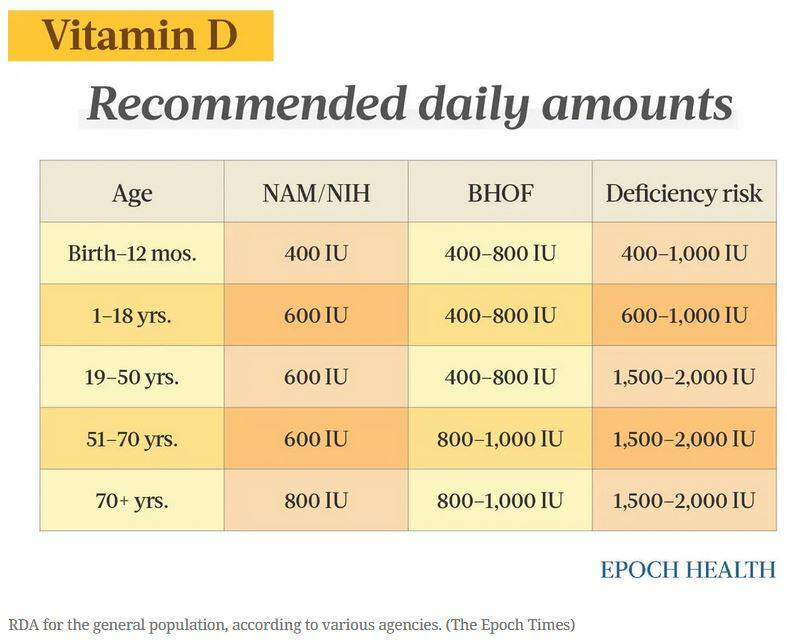
The required daily amount of vitamin D varies based on an individual’s age. The recommended dietary allowance (RDA) for vitamin D is designed to meet the daily requirements for maintaining healthy bones and normal calcium metabolism in individuals with minimal sun exposure.

The recommended daily intake of vitamin D can vary among different organizations, such as the National Academy of Medicine (NAM) (formerly known as the Institute of Medicine, or IOM), which is part of the National Academies of Sciences, Engineering, and Medicine (NASEM), the Bone Health & Osteoporosis Foundation (BHOF) (formerly known as National Osteoporosis Foundation, or NOF), and the Endocrine Society.

The NAM RDA guideline below is also recommended by the National Institutes of Health (NIH). NAM considers these intake amounts adequate to achieve a vitamin D blood level of 50 nanomoles per liter (nmol/L), which they believe is sufficient for most people. In addition, according to the Endocrine Society, ensuring a consistent elevation of the blood level of 25(OH)D above 75 nmol/L may necessitate a daily intake of at least 1,000 IU of vitamin D.

The following table compares the recommended daily vitamin D amounts by the NAM and NIH, BHOF, and the Endocrine Society.

What Types of Vitamin D Supplements Are Available?

Vitamin D supplements are available in three types: vitamin D2, vitamin D3, and calcidiol. However, calcidiol is considered a medication, and it may be prescribed for individuals with health conditions causing malabsorption, such as cystic fibrosis, celiac disease, or liver disease, which impairs the synthesis of calcidiol from typical vitamin D supplements.

Vitamin D2 vs. D3 Supplements

Vitamin D2 supplements are created by subjecting a plant sterol to ultraviolet energy, resulting in the production of vitamin D2. Vitamin D3 is usually generated through the irradiation of 7-dehydrocholesterol derived from lanolin obtained from sheep’s wool. Individuals who abstain from all animal-derived products can ask manufacturers about supplement sourcing and processing methods.

Ongoing debate surrounds the preference for vitamin D3 over D2 to increase blood levels. A meta-analysis suggests that D3 supplements tend to raise and maintain vitamin D levels more effectively than D2. Many experts favor vitamin D3 due to its natural production in the body and its presence in foods containing the vitamin.

One study involving 15,716 participants compared four treatment options for vitamin D deficiency, including vitamin D2 injection, vitamin D3 injection, a combination of vitamin D2 injection with a D2 tablet, and a combination of vitamin D3 injection with a D2 tablet. All treatments led to a significant increase in serum vitamin D within 12 weeks, with the vitamin D3 injection alone showing the highest increase. The findings suggest that using vitamin D3 in injectable form is the most effective option for restoring severe vitamin D deficiency, outperforming the injectable form of vitamin D2 and D2 tablets. However, the study did not address the effects of a vitamin D3 tablet/capsule, which is still generally better absorbed than oral vitamin D2.

Different Forms of Vitamin D Supplements 

Vitamin D2 and D3 supplements can be obtained over the counter or by prescription in the United States. They come in various strengths, including 400, 800, 1,000, 2,000, 5,000, 10,000, and 50,000 IU, with the latter requiring a prescription.

For adults, the general recommendation is a daily supplement containing 800 IU. Older individuals may still experience vitamin D deficiency at this intake level, so they might need to increase the dosage per their doctor’s instructions. In addition, all infants and children are advised to take a vitamin D supplement containing 400 IU starting shortly after birth.

As vitamin D is fat-soluble, it is most effectively absorbed when consumed with a meal or snack containing some fat.

Vitamin D supplements are also available in various forms, including:

  • Capsules/softgels
  • Tablets
  • Liquid drops
  • Gummies
  • Sprays
  • Injections

What Are the Dietary Sources of Vitamin D?

Vitamin D is found naturally in a few foods, and most dietary intake in the United States comes from fortified foods supplemented with vitamin D.

Vitamin D2

  • Many plant-based milks (e.g., soy, almond, and oat) and plant-based yogurts are fortified with vitamin D2. One cup of various soy, almond, and oat milk brands is fortified with 100 to 144 IU of vitamin D.
  • Some mushrooms naturally contain vitamin D2, and certain commercially sold ones have higher levels of D2 because they are intentionally exposed to high amounts of ultraviolet light. Half a cup of raw, sliced white mushrooms exposed to UV light contains 366 IU of vitamin D.
  • Vitamin D (both D2 and D3) is supplemented in various breakfast cereals. One serving of ready-to-eat cereal is fortified with 10 percent of the daily value (DV) for vitamin D (80 IU).
  • Some orange juice brands, margarine, and other food items are fortified with vitamin D2.

Vitamin D3

Vitamin D3 is obtained from animal products, with oily fish, fish oils, eggs, and dairy serving as the best dietary sources. The amount of vitamin D in an animal’s tissues is influenced by its diet.

Most of the U.S. cow’s milk supply is fortified with approximately 120 IU of vitamin D3 per cup, and infant formula is fortified. However, foods derived from milk, such as cheese and ice cream, are typically not fortified. Rich sources of vitamin D3 include fatty fish such as trout, salmon, tuna, and mackerel, as well as fish liver oils. In addition to vitamin D3, animal-based foods often contain calcidiol, also known as 25(OH)D. Research suggests that calcidiol is around five times more effective than the parent vitamin in increasing serum 25(OH)D concentrations.

Examples of foods containing vitamin D3 include:

  • Fish oil: 1 tablespoon of cod liver oil (1,360 IU per serving)
  • Trout: 3 ounces of cooked farmed rainbow trout (645 IU per serving)
  • Salmon: 3 ounces of cooked sockeye salmon (570 IU per serving)
  • Sardines: Two drained sardines, canned in oil  (46 IU per serving)
  • Cow’s milk: 1 cup of 2 percent milk fortified with vitamin D (120 IU per serving)

What Are the Other Sources of Vitamin D?

Unfortunately, we can obtain vitamin D from only diet, sun exposure, and supplementation. The belief that tanning beds can provide sufficient vitamin D is just a myth because tanning bed bulbs mainly emit UVA light, while vitamin D synthesis requires UVB light. Hypervitaminosis D (excessive vitamin D levels in the body) is a potential risk in a small proportion of tanning beds with UVB light. It’s not known if this is due to less heating of the skin in some facilities. Also, catching sunlight in a sunny office or while driving in a car won’t contribute to obtaining vitamin D, either, because window glass completely blocks UVB ultraviolet light.

Sunlight consists of two types of ultraviolet radiation: UVA and UVB. Although UVB is essential for the skin’s vitamin D synthesis, it can cause sunburn and contribute to cell damage linked to cancer. UVA also damages the skin and accelerates aging. To safeguard against sun damage and skin cancer, limit exposure during peak hours (10 a.m. to 2 p.m.), wear protective clothing such as a wide-brimmed hat and long-sleeved garments, and use sunscreen with SPF 30 or higher when too much exposure is unavoidable, ensuring it’s broad-spectrum for UVA and UVB protection.

Given the appropriate conditions, exposing the arms and legs to sunlight for 10 to 15 minutes a few times weekly can produce almost all the necessary vitamin D.

In addition to the aforementioned factors, elements affecting how much vitamin D your body makes include smog and other types of air pollution, season, and cloud cover. For instance, people living north of the 37-degree-latitude line, the imaginary line connecting Richmond, Virginia, and San Francisco, cannot obtain sufficient UVB exposure during winter to produce adequate vitamin D.

What Is the Treatment for Vitamin D Deficiency?

Blood 25(OH)D levels (combined vitamin D2 and D3) are a good indicator of vitamin D stores in the body and show a strong connection with symptoms and signs of deficiency. Blood tests measuring vitamin D, calcium, and phosphate levels can confirm a deficiency.

High-Risk Populations

Certain disorders, hereditary conditions, and medications may impact vitamin D absorption or conversion of vitamin D to its active form, thus contributing to deficiency.

The following risk factors put someone at higher risk of deficiency:

  • Limited outdoor activity: Older adults and those residing in institutions may not have easy access to the outdoors.
  • Inflammatory bowel diseases
  • Celiac disease
  • Cystic fibrosis
  • Surgery: People who undergo bariatric or gastric bypass surgery for weight loss and those with sections of the small intestine removed (resection) are at higher risk.
  • Darker skin: Less vitamin D is produced during sun exposure in darker skin compared to lighter skin, as the melanin in darker skin blocks and absorbs sunlight before it can initiate vitamin D production.
  • Excessive sunscreen use
  • Malabsorption disorders
  • Age: As people age, their skin’s 7-dehydrocholesterol levels (which play a crucial role in the synthesis of vitamin D) decrease, accompanied by changes in the skin. Older people are also more prone to spending extended periods indoors.
  • Certain medical conditions: Some conditions can hinder the body’s ability to synthesize or absorb sufficient vitamin D.
  • Lactose intolerance: Milk is usually fortified with vitamin D.
  • Vegan or vegetarian diets

To address vitamin D deficiency, increasing consumption of vitamin D-rich foods is often insufficient, prompting doctors to recommend supplements. The available forms of vitamin D supplements include vitamins D2 and D3 and calcidiol. The prescribed dosage varies based on factors such as severity, age, weight, and pregnancy status. The following table contains the suggested average daily dosages. The levels of 25-hydroxyvitamin D, or 25(OH)D, in the blood are used to measure vitamin D status.

https://www.zerohedge.com/political/vitamin-d-deficiency-symptoms-health-benefits-optimal-sources-and-side-effects

Feds investigating Meta for possible role in illegal drug sales on Facebook, Instagram

 The feds are poking Facebook for possible drug dealing.

US prosecutors in Virginia are investigating Meta Platforms, the parent company of Facebook and Instagram, for playing a role in facilitating illegal drug sales online, the Wall Street Journal reported Saturday.

They’ve issued subpoenas and begun questioning whether Meta’s social media platforms are enabling and profiting from illicit drug sales, sources told the Journal.

Prosecutors have also asked for records related to “violative drug content on Meta’s platforms and/or the illicit sale of drugs via Meta’s platforms,” according to copies of subpoenas delivered last year that were seen by the Journal.

A photo of a young woman looking at her laptop computer.
Meta, the company that owns Facebook and Instagram, is being investigated for possibly facilitating illegal drug sales.Kaspars Grinvalds – stock.adobe.com
During the COVID-19 pandemic, telehealth companies took advantage of Facebook and Instagram by running ads for prescription drugs for the treatment of attention-deficit hyperactivity disorder, anxiety and other medical conditions. The ads contributed to the abuse of controlled substances such as Adderall, the Journal reported, citing interviews from patients and employees.

Sellers recently touted fake versions of popular weight loss drugs on Meta sites, including some that don’t have FDA approval yet, the Journal has reported. But even when Meta has removed some of the flagged ads, new ones soon appear, the outlet said.

The subpoenas were requested by Assistant US Attorney Randy Ramseyer, who previously probed Purdue Pharma’s OxyContin marketing. He was also featured in “Dopesick,” the 2021 Hulu miniseries on the US opioid crisis.

The Food and Drug Administration has been involved in the investigation but the agency and prosecutors’ office would not comment, the Journal reported, adding that such probes don’t always lead to formal charges of wrongdoing.

A photo of Meta spokesman Nick Clegg gesturing with his hands at a panel discussion at Davos.
Nick Clegg, Meta’s president of global affairs, tweeted last week that “opioid epidemic is a major public health issue that requires action from all parts of US society.”AP

Meta has said it is working with the State Department and others to stop the sale of synthetic drugs online, according to WSJ.

“The sale of illicit drugs is against our policies and we work to find and remove this content from our services,” a spokesman for Meta said in a statement to the outlet. “Meta proactively cooperates with law enforcement authorities to help combat the sale and distribution of illicit drugs.”

“The opioid epidemic is a major public health issue that requires action from all parts of US society,” Nick Clegg, the company’s president of global affairs, tweeted Friday

Legislators have been hampered in their efforts to hold Big Tech responsible for what third parties post on their platforms by Section 230 of the Communications Decency Act, which says that online platforms aren’t liable for what third parties post, with a few exceptions.

https://nypost.com/2024/03/16/us-news/feds-investigating-meta-for-possible-role-in-illegal-drug-sales-on-facebook-instagram/

Tide Shift: Philadelphia Officer Says Criminals Will Be Prosecuted Once Again

 The tide is turning in lawless progressive cities after leftist radicals in city halls have pushed disastrous social justice reforms and defunded the police that have sparked crime wave after crime wave. 

According to one Philadelphia Police Department officer, the mayor, the commissioner, and the governor are no longer tolerating the soaring thefts and out-of-control crime that have transformed some parts of the metro area into third-world-like conditions. 

Electric Transmission Buildout Could Cost Americans Trillions Of Dollars

 by Bernard L. McNamee via RealClear Wire,

Though windmills and solar panels get the headlines, the big energy topic in Washington is electric transmission. Whether it is Congress’s newfound interest in permitting reform, the U.S. Department of Energy’s new Grid Deployment Office, or the Federal Energy Regulatory Commission’s (FERC) upcoming final rule on transmission planning and cost allocation, how to build and pay for long-range transmission to connect generators to customers is considered the final piece in the quest to meet net-zero goals.   

Like so many issues in Washington, the need for more transmission lines is accepted without question and the costs are not considered. But for American consumers, especially low-income and elderly, as well as small businesses and energy intense manufacturers, building new transmission lines could result in much higher monthly bills and leave them on the hook for stranded assets.

Traditionally, high-voltage transmission lines, consisting of 150-foot lattice towers crossing the landscape for hundreds of miles, were planned for by local utilities to meet their customers’ energy needs and subject to approval by state public utility commissions. But public policy goals to promote renewables are changing how the grid is being developed.

Over the past few years, States established renewable energy mandates; Congress enacted over $1 trillion in taxpayer subsidies for renewable energy; and President Biden issued an executive order setting net-zero goals for electricity generation by 2035. To fulfill these policies, the grid needs new high-voltage transmission lines—lots of them—and they will be expensive.

According to the “Net-Zero America” analysis published by Princeton researchers, achieving net zero goals with 100% wind and solar by 2050 will require an additional $3.5 trillion in capital spending for new transmission lines. If net-zero goals are pursued with a mix of renewables, nuclear, and natural gas generation (which may include carbon capture), then a significant portion of this transmission investment would be unnecessary. Furthermore, a balanced resource mix of dispatchable and renewable resources would enhance grid reliability without overbuilding renewables or transmission.

Contributing to the cost is that renewable projects are often built far away from where the electricity will be consumed. For example, the Midwest is a great place to build windmills, but long-distance transmission lines are needed to deliver their electricity to big population centers on coasts. Not only are these lines capital intensive, but they also require purchasing or condemning private property to site them. Adding insult to injury, many of these transmission lines will not serve the people whose land is used.       

Renewable power developers see the potential for selling their electricity in higher priced power systems near urban centers, while also being able to harvest generous taxpayer subsidies. But having to pay for transmission cuts into profits. Furthermore, property owners impacted by the transmission lines are objecting. The solution: a wave of lobbyists and special interests pressing policy makers to eliminate permitting barriers and to socialize the $3.5 trillion cost of building new transmission lines to more Americans.   

In response, FERC is engaged in a rulemaking to change transmission planning and cost allocation. Among the proposals is requiring grid planners to consider factors like “geographic zones”, such as wind potential in the Midwest; state and federal “public policy goals”; and “trends” in technology. If adopted, these factors would provide more subjective ways to justify building big, expensive, long-range transmission projects that would be paid for by a broader number of Americans.  

With public concerns about costs, transmission advocates now argue that more transmission is needed for grid reliability. Yet, the threat of blackouts is the result of the very net-zero policies that now require more transmission. For example, Maryland’s recent decision to shut down the Brandon Shores coal plant will cause customers across 12 states and the District of Columbia to pay $796 million for new transmission projects to support reliability.  

Customers may also be left paying for transmission projects that are no longer needed. New technology, such as small modular nuclear reactors that can be built at existing power plants that already have transmission access, may negate the need for new transmission lines to serve renewable generators. The current push for transmission reform may be another expensive example of Washington trying to solve yesterday’s problem. This is not mere speculation, since 2008 customers have paid $250 million for the PATH transmission line that crossed three states, even though it was never built and never served customers.  

It is time for policy makers to reaffirm that the electric grid exists to serve customers, not developers and investors. Transmission planning and cost allocation should be driven by the needs of customers and overseen by the state regulators who are best suited to protect their citizens. At a time when inflation is making its tougher from families and businesses to thrive, imposing additional costs for transmission buildouts for special interests makes little sense. 

Bernard L. McNamee was a Commissioner on the Federal Energy Regulatory Commission from 2018-2020. 

https://www.zerohedge.com/energy/electric-transmission-buildout-could-cost-americans-trillions-dollars