Search This Blog

Thursday, April 18, 2024

Mutations in noncoding DNA become functional in some cancer-driving genes

 Some genes are known to drive cancer, and astonishing new research shows why: Mutations in the noncoding regions become functional, altering the abundance of messenger RNA, or mRNA, and potentially facilitating cell proliferation. Even more surprising, the number of mutations in these regions can predict patient survival time for certain types of cancer.

Most genes are a sequence of DNA that holds the recipes for producing proteins. Proteins, in turn, are chains of amino acids that the body uses to send signals between cells, build and repair tissues, and for countless other functions necessary for life. Within these genes, certain areas are directly translated into proteins, whereas others, referred to as noncoding regions, do not directly contribute to .

But these silent, noncoding regions are far from lazy. They act much like a basketball coach during a game, directing the active regions of the gene to either enhance or suppress their expression, thus playing a crucial regulatory role.

Mutations in these noncoding areas are relatively common, yet they were once thought to have minimal impact on an organism's functions because they don't alter a protein's recipe. But what happens to their regulatory duties when a mutation occurs?

Researchers at UCLA now have an answer. Mutations in these noncoding areas are relatively common, yet they were once thought to have minimal impact on an organism's functions because they don't alter a protein's recipe. However, researchers at UCLA made an important discovery: These mutations lead to the production of abnormal amounts of mRNA. mRNA serves as the DNA's courier, carrying the blueprint for protein production from the  to the cytoplasm, where proteins are synthesized.

When mutations cause changes in mRNA levels, it can lead to either an excess or deficit in protein production, akin to the culinary disaster of mistaking a teaspoon for a cup of salt in a recipe. Because cancer involves the unchecked growth of cells, the abundance of mRNA might activate—or fail to inhibit—the proliferation of cells, ultimately leading to tumors and cancer.

The researchers made this discovery by synthesizing thousands of mutations into fully functioning DNA reporters—a kind of gene that helps scientists study what a gene expresses—which they put into cells, then analyzed the resulting alterations in mRNA abundance. The findings were published in the journal Nature Communications.

"Predicting the outcomes of mutations in protein-coding regions is relatively straightforward, but understanding the functions of mutations in noncoding regions presents a significant challenge," said corresponding author Xinshu 'Grace' Xiao, a UCLA professor of integrative biology and physiology. "We designed a high throughput experiment capable of simultaneously assessing a vast array of mutations."
Mutations in noncoding DNA become functional in some cancer-driving genes
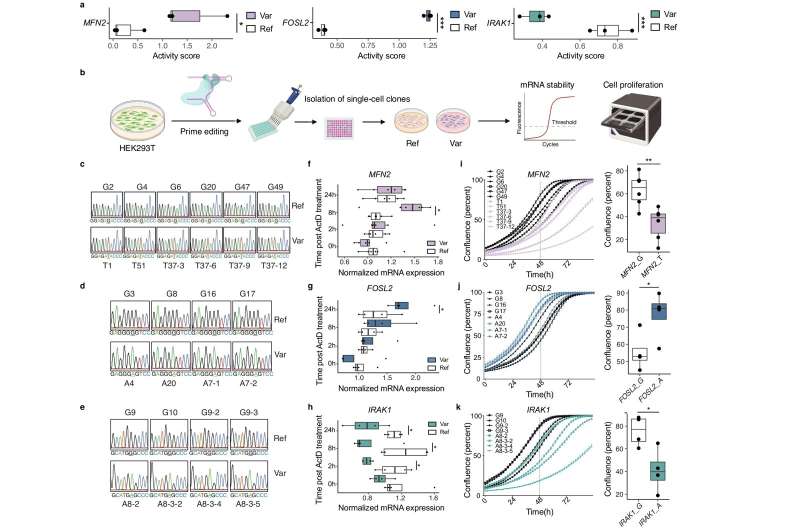
Functional rare 3′ UTR variants regulate mRNA stability and cell proliferation in HEK293T cells. Credit: Nature Communications (2024). DOI: 10.1038/s41467-024-46795-7

Some noncoding mutations are so rare they occur in only a few individuals. Plus, every person has their own unique mutations. Rare mutations are challenging to study because their scarcity means they are hard to obtain in statistically meaningful quantities.

"We focused on these poorly understood  because, with our method, we could generate any number of them, offering an unprecedented opportunity to figure out what they do," Xiao said.

This exploration led to a completely unforeseen discovery: Many of the rare, functional mutations were associated with genes linked to cancer pathways.

This finding shifted the research to the singling out of genes known to drive cancer. These notorious cancer driver genes have many —acquired over the course of the individual's life rather than through inheritance—in noncoding regions that aren't understood. The team repeated their experiments, this time testing 11,929 somatic mutations in 166 cancer driver genes.

They discovered that a large fraction—33%—of somatic mutations in noncoding regions of 155 of the 166 tested cancer driver genes can change mRNA abundance. But Xiao's group didn't stop there. They combed a cancer database to find patients who had these mRNA-modulating rare mutations and found many. Turning over this stone revealed an even bigger surprise.

"The number of functional mutations in untranslated regions can predict patient survival for certain cancer types," said Ting Fu, the first author of the article and a postdoctoral scholar in Xiao's lab. "We called this metric 'untranslated tumor mutation burden' or uTMB and found particularly striking the association between uTMB and lung squamous cell carcinoma as well as head and neck ."

This insight opens up new avenues for the development of prognostic testing tools. By calculating uTMB for individual patients, health care professionals could gain valuable predictions regarding survival outcomes to guide the selection of the most effective treatment options.

The findings also signal a promising new direction for research into the gene regulation mechanisms implicated in cancer. Understanding how these mutations influence mRNA abundance—and, by extension, protein production—could shed light on the intricate processes that drive cancer progression.

"Our next objective is to unravel the precise regulatory mechanisms by which these mutations function in cancer cells. Given their impact on mRNA levels, the underlying mechanisms could hold critical importance for the advancement of cancer treatment," Xiao said.

More information: Ting Fu et al, Massively parallel screen uncovers many rare 3′ UTR variants regulating mRNA abundance of cancer driver genes, Nature Communications (2024). DOI: 10.1038/s41467-024-46795-7


https://medicalxpress.com/news/2024-04-mutations-noncoding-dna-functional-cancer.html

Obesity-induced cognitive decline: Role of brain oxidation and tocotrienols

 Obesity has become a pressing worldwide health issue, with rates steadily rising over recent decades. Beyond its well-documented associations with physical health issues, such as cardiovascular disease and diabetes, obesity has also been linked to cognitive decline, including conditions like Alzheimer's disease and Parkinson's disease. Understanding the complex mechanisms underlying this cognitive impairment is crucial for developing effective interventions.

In a study published in the International Journal of Molecular Sciences, Assistant Professor Yugo Kato from Tottori University and Shibaura Institute of Technology, Professor Koji Fukui from Shibaura Institute of Technology and their team offer insights into potential solutions.

The study investigated the neuroprotective effects of tocotrienols (T3s) in mitigating the adverse impact of diet-induced obesity on brain function.

"Our goal is to combat obesity-related diseases using natural compounds and thereby reduce the prevalence of conditions like dementia among individuals affected by obesity," says Prof. Kato.

T3s are a group of naturally occurring chemical compounds belonging to the vitamin E family. Past studies have revealed that T3s have neuroprotective and anti-obesity properties. Additionally, they have also been shown to pass through the  and enter cells to produce antioxidant effects. However, little is known about how T3s contribute to the decline in brain function brought on by obesity.

To address this gap, the team conducted a comprehensive investigation using a mouse model system. They employed a meticulous experimental design, with C57BL/6 male mice subjected to either a high-fat, high-sucrose diet (HFSD) or a control diet, supplemented with or without T3s.

In the initial phase of the study, the team evaluated the anti-obesity effects of T3s. To do so, they incorporated a 50mg T3s mixture into 100g of both experimental diets, namely the control and HFSD. Key parameters, including , fat deposition, serum cholesterol, triglyceride, and glucose concentrations, were assessed alongside cognitive function using the Morris water maze and Y-maze tests. Additionally, markers of oxidative stress and proteomic changes in the cortex were analyzed to gain deeper insights into the underlying mechanisms.

The results of the study were highly promising. While HFSD feeding induced obesity in the mice, supplementation with T3s did not mitigate weight gain. However, T3s treatment demonstrated a significant improvement in cognitive function, as evidenced by enhanced learning ability in HFSD-fed mice. Furthermore, the study revealed the role of oxidative stress in obesity-induced , with HFSD-fed mice exhibiting increased brain oxidation levels.

Remarkably, T3s treatment appeared to mitigate this oxidative stress, suggesting a potential mechanism for their neuroprotective effects. Additionally, contrary to expectations, the team found that respiratory metabolism decreased and the temperature around  increased in mice fed with HFSD. This unexpected finding suggests that HFSD may have a complex impact on metabolic processes and temperature regulation in the body.

"Lastly, we wanted to examine the protein change associated with the consumption of the HFSD. So, we performed a quantitative proteomic analysis of the mouse cortex. Our focus was on the proteins that were expressed differently between the HFSD and control groups," explains Prof. Kato. They discovered that in comparison to the control group, obesity brought on by HFSD feeding changed 12 proteins, and mice treated with T3s showed considerable prevention of these changes.

In conclusion, this study represents a significant step forward in our understanding of the intricate relationship between obesity and cognitive decline. By uncovering the potential benefits of T3s in preserving cognitive function, the research opens up new avenues for therapeutic interventions targeting neurodegenerative diseases associated with .

More information: Yugo Kato et al, Tocotrienols Prevent the Decline of Learning Ability in High-Fat, High-Sucrose Diet-Fed C57BL/6 Mice, International Journal of Molecular Sciences (2024). DOI: 10.3390/ijms25063561


https://medicalxpress.com/news/2024-04-obesity-cognitive-decline-role-brain.html

'What is cloud seeding and did it cause Dubai flooding?'

 Dubai has been hit by record floods over the past 24 hours, sparking misleading speculation about cloud seeding.

So how unusual was the rainfall and what were the reasons behind the extreme downpours?

How extreme was the rainfall?

Dubai is situated on the coast of the United Arab Emirates (UAE) and is usually very dry. But while it receives less than 100mm (3.9in) a year of rainfall on average, it does experience occasional extreme downpours.

In the city of Al-Ain - just over 100km (62 miles) from Dubai - about 256mm (10in) of rain was recorded in just 24 hours.

A "cut off" low pressure weather system, which drew in warm, moist air and blocked other weather systems from coming through was the main cause.

"This part of the world is characterised by long periods without rain and then irregular, heavy rainfall, but even so, this was a very rare rainfall event," explains Prof Maarten Ambaum, a meteorologist at the University of Reading who has studied rainfall patterns in the Gulf region.

It is not yet possible to exactly quantify how much of a role climate change played. That requires a full scientific analysis of natural and human factors, which can take several months.

But the record rainfall is consistent with how the climate is changing.

Put simply: warmer air can hold more moisture - about 7% extra for every degree Celsius - which can in turn increase the intensity of rain.

"The intensity of the rain was record breaking, but this is consistent with a warming climate, with more moisture available to fuel storms and make heavy rainfall events and associated flooding progressively more potent," explains Richard Allan, professor in climate science at the University of Reading.

recent study suggested that annual rainfall could increase by up to about 30% across much of the UAE by the end of the century as the world continues to warm.

"If humans continue to burn oil, gas and coal, the climate will continue to warm, rainfall will continue to get heavier, and people will continue to lose their lives in floods," says Dr Friederike Otto, senior lecturer in climate science at Imperial College London.

Reuters People walk through flood water caused by heavy rains, in Dubai..Reuters
People walk through flood water caused by heavy rains in Dubai

What is cloud seeding and did it play a role?

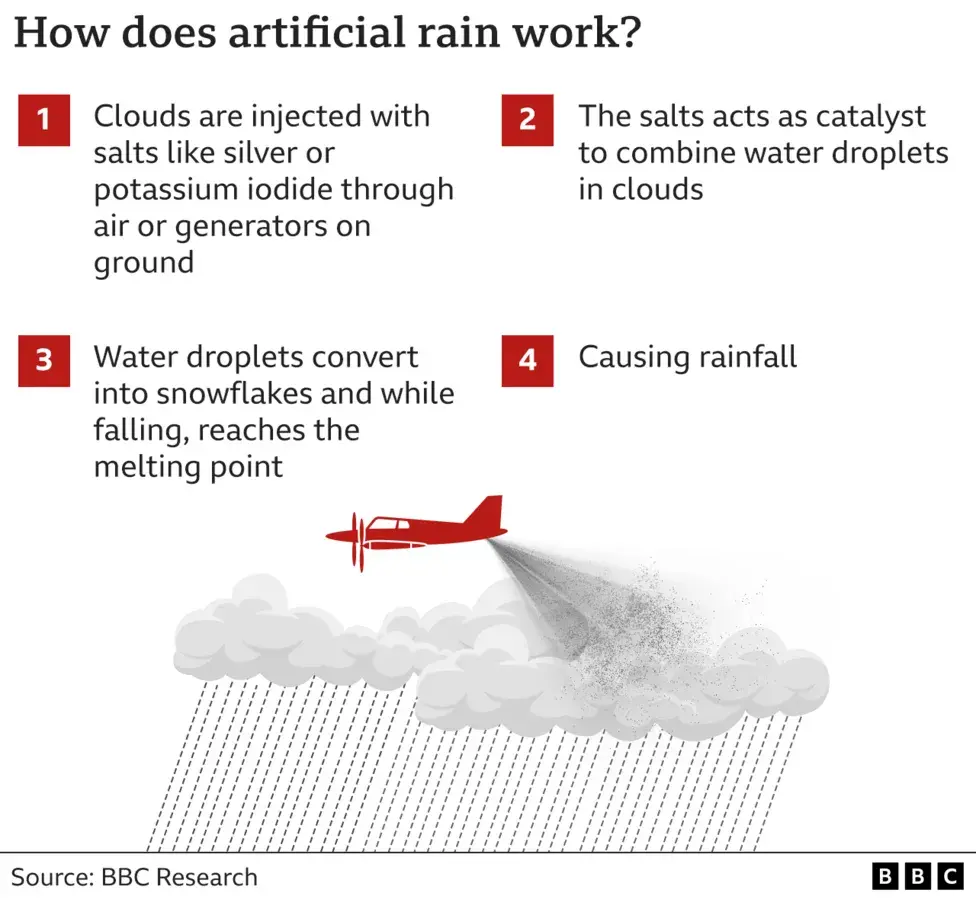
Cloud seeding involves manipulating existing clouds to help produce more rain.

This can be done by using aircraft to drop small particles (like silver iodide) into clouds. Water vapour can then condense more easily and turn into rain.

The technique has been around for decades, and the UAE has used it in recent years to help address water shortages.

In the hours that followed the floods, some social media users were quick to wrongly attribute the extreme weather solely to recent cloud seeding operations in the country.

Earlier reports by Bloomberg suggested cloud seeding planes were deployed on Sunday and Monday, but not on Tuesday, when the flooding occurred.

While the BBC has been unable to independently verify when cloud seeding took place, experts say that at best it would have had a minor effect on the storm and that focusing on cloud seeding is "misleading".

BBC illustration showing how artificial rain works: clouds are injected with salts, which act as a catalyst to combine water droplets in clouds, eventually causing rainfall.

"Even if cloud seeding did encourage clouds around Dubai to drop water, the atmosphere would have likely been carrying more water to form clouds in the first place, because of climate change", says Dr Otto.

Cloud seeding is generally deployed when conditions of wind, moisture and dust are insufficient to lead to rain. In the last week, forecasters had warned of a high flooding risk across the Gulf.

"When such intense and large scale systems are forecasted, cloud seeding - which is a costly process - is not performed because [there is] no need to seed such strong systems of regional scale," says Prof Diana Francis, head of the Environmental and Geophysical Sciences at Khalifa University in Abu Dhabi.

BBC Weather meteorologist Matt Taylor also noted the severe weather event had already been forecast. "Ahead of the event, computer models (that don't factor in potential cloud seeding effects) were already predicting well over a year's worth of rain to fall in around 24 hours," he said.

"The impacts were much wider than I would expect from cloud-seeding alone too - severe flooding impacting large areas from Bahrain to Oman."

Cloud seeding missions in Emirati territory are run by the National Center of Meteorology (NCM), a government task force.

How prepared is the UAE for extreme rainfall?

Preventing heavy rainfall turning into deadly floods requires robust defences to deal with sudden intense downfalls.

Dubai is, of course, heavily urbanised. There is little green space to absorb the moisture, and drainage facilities were unable to withstand such high levels of rainfall.

"There need to be strategies and adaptation measures to [adapt to] this new reality [of more frequent and intense rainfall]," explains Prof Francis.

"For example, the infrastructure of roads and facilities need to be adapted, building reservoirs to store water from spring rain and use it later in the year."

In January, the UAE's Road and Transport Authority set up a new unit to help manage floods in Dubai.

https://www.bbc.com/news/science-environment-68839043

Relationship with partner impacts breast cancer survivor's emotional and physical well-being

 Diagnosis and treatment of breast cancer place significant stress on survivors, their partners, and their relationships. A new study from researchers with Regenstrief Institute and Indiana University's Schools of Nursing, Science, and Medicine is one of the first to examine the impact of relationship satisfaction and agreement between breast cancer survivors and their partners on the survivor's emotional and physical health.

The study found that satisfaction with the  by both the breast cancer survivor and their partner and agreement between the two were related to survivors' better physical functioning, such as carrying groceries or walking around the block, reduced survivor depression and fatigue.

Conversely, less satisfaction with the relationship on the part of the breast cancer survivor and lack of agreement with their partner were both significantly associated with a number of poor emotional and poor physical outcomes for the breast cancer survivor, including depression and fatigue.

"How the breast cancer survivor and partner communicated and handled stressful events, particularly those related to breast cancer, were linked to emotional and  for the survivor, with better agreement related to better outcomes," said study corresponding author Eric Vachon, Ph.D., R.N., a research scientist with Regenstrief Institute and IU School of Nursing.

"Interestingly,  who rated their relationship satisfaction as high did not necessarily have better agreement with their partner or better well-being than those survivors who viewed their relationship less positively. It's the communication and relationship between the survivor and partner that are determinant.

"The implication of this work for breast cancer survivors, their , clinicians, researchers, and others involved with  is that it can be extremely impactful to make sure that both the survivor and the partner are on the same page and are in agreement."

A total of 387 women (220 breast cancer survivors on average six years out from time of diagnosis and 167 controls without previous cancer diagnosis) and 387 partners (all male, although both male and female partners were eligible to participate in the study) completed questionnaires on their relationship. The average age of study participants was mid-40s.

"We knew from the literature that breast cancer survivors' rating of their relationship satisfaction is linked with some poor physical and emotional outcomes," said Dr. Vachon. "We took that knowledge to the next level and combined the breast cancer survivors' and partners' views of relationship satisfaction and relationship agreement and determined impact on survivors' health."

Among the study findings:

  • breast cancer survivors' satisfaction with the relationship with their partner was significantly associated with physical functioning, attention function and sleep quality.
  • not all breast cancer survivors or controls who indicated high relationship satisfaction were in agreement with their partners.
  • agreement with the partner was not associated with worse physical functioning, worse attention function, or poorer sleep quality.
  • after the perspective of the partner was factored in, there was less agreement on the quality and  of their relationship for survivors than for control pairs.

"This work points to the critical importance of both members of the couple focusing on strengthening the relationship. Difficulties among couples can have devastating effects for your physical and . For clinicians, making sure that based upon the preferences of the breast cancer survivor, partners are involved in discussions, treatment, and overall care is vital to the short-term and long-term health of patients," the study concludes.

The study is published in the journal Healthcare.

More information: Eric A. Vachon et al, The Association between Relationship Satisfaction Concordance and Breast Cancer Survivors' Physical and Psychosocial Well-Being, Healthcare (2024). DOI: 10.3390/healthcare12020134


https://medicalxpress.com/news/2024-04-explores-relationship-partner-impacts-breast.html

Long COVID patients show immunological improvement two years after infection

 Biomarkers for long COVID that were present in patients at eight months have largely resolved by 24 months among a cohort of people who contracted COVID-19 during Australia's first wave.

Jointly led by the Kirby Institute at UNSW Sydney and St Vincent's Hospital Sydney and published in Nature Communications, the research provides optimistic insights to suggest that long COVID abnormalities can resolve over time.

The ADAPT study followed people who contracted COVID-19 during Australia's first wave, as well as a matched , for up to two years. It combines systematic self-reported health information collected from patients with detailed analysis of bloods specimens in the laboratory.

In January 2022, the Kirby Institute research team were the first globally to show that long COVID clinical symptoms were consistent with biomarkers showing a sustained inflammatory response at eight months following infection, providing a clear biological basis for the syndrome of long COVID.

"Almost one and a half years later, we are pleased to see that among this same group, significant improvements were found in blood markers. For the majority of samples we analyzed in the laboratory, the biomarkers previously indicating abnormal immune function have resolved," says Dr. Chansavath Phetsouphanh, first author on the paper and Senior Lecturer at the Kirby Institute.

While the exact scale of the immunological improvements is difficult to quantify as immune function varies significantly from person to person, by 24 months there were no observable differences between the group with long COVID and the control group—whereas at eight months the two groups had marked differences.

Importantly, this trend in the laboratory data was also visible in the patients' self-reported data, with 62% reporting improvements in health-related quality of life.

Long COVID patients show immunological improvement two years after infection
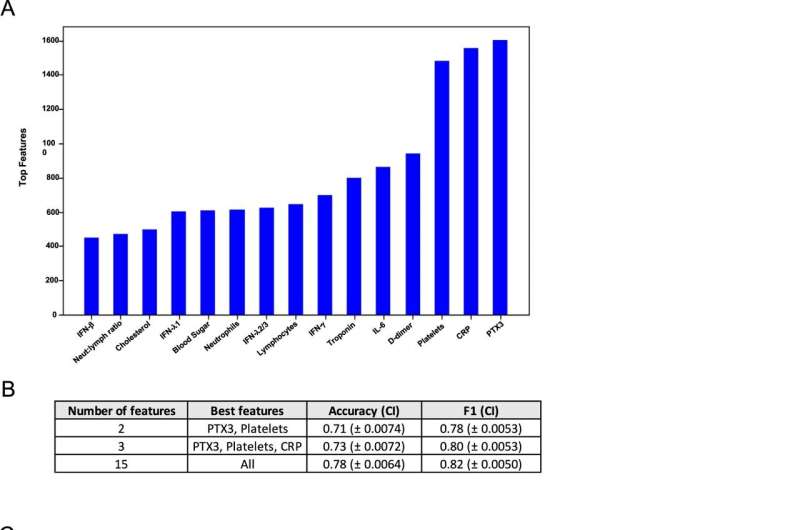
Blood parameters associated with improvement in health-related quality of life at 24-months. A) frequency of features highly associated with recovery. B) Table summarizing accuracy and F1 score for top 2 and top 3 most highly associated features. C) Left-panel: 3-dimensional scatter plot of recovered vs unrecovered participant with concentration values of 3 markers (PTX3, CRP and platelets). Right-panel: 2D projections of PTX3 vs platelets (upper) and PTX3 vs. CRP (lower) with line representing the decision boundary. Credit: Nature Communications (2024). DOI: 10.1038/s41467-024-47720-8

"While this is very encouraging and a reason for optimism, there are still around one third of patients who identify some ongoing impact on their quality of life," says Professor Gail Matthews from the Kirby Institute, lead investigator of ADAPT and Head of Infectious Diseases at St Vincent's Hospital.

"This is likely explained by the reality that patients may have a range of underlying causes for their long COVID symptoms, not all of which are driven by immunological abnormalities and some of which are likely to persist even when the immunological environment has largely returned to normal."

The ADAPT study is globally important as it is one of only a handful of studies that measure , patient self-reported information and intense biological sampling consistently within the same cohort of people, over a prolonged period of time.

Professor Anthony Kelleher, Director of the Kirby Institute says that while the finding is encouraging, it is important to remember that this is just one cohort who experienced an early strain of COVID-19, and it is a group in which the initial COVID-19 infection was generally considered mild or moderate.

"Immunology is a complex science, and it is impossible to say for certain that outcomes in our unvaccinated clinical cohort will be true for vaccinated people or for people who may have been infected with a different strain of COVID-19.

"What we do know is that for most people with long COVID, both their symptoms and their biomarkers improve significantly over time, and this is a cause for optimism.

"Importantly, we will continue to undertake research to understand more about why some people don't improve, and what can be done for those people."

More information: Chansavath Phetsouphanh et al, Improvement of immune dysregulation in individuals with long COVID at 24-months following SARS-CoV-2 infection, Nature Communications (2024). DOI: 10.1038/s41467-024-47720-8


https://medicalxpress.com/news/2024-04-covid-patients-immunological-years-infection.html

New therapeutic target for non-small cell lung cancer

 Non-small cell lung cancer accounts for nearly 85% of all lung cancer cases. Targeted immunotherapy is a common treatment, but it does not work for everyone. However, a new Moffitt Cancer Center study published in the journal Immunity offers insight into how lung cancer cells evade the protective immune system, potentially opening a door for novel antibody-based immunotherapies.

Their study centers on a molecule called Jagged2, which plays a primary role in fueling the aggressiveness and immune evasion capacity of lung cancer. Jagged2 elimination in  promotes the expansion of subgroups of immune cells called , with the ability to recognize the cancer cells and activate protective immune responses. This explains why tumors with higher levels of Jagged2 were associated with poorer outcomes and reduced immunity.

A research team led by Moffitt immunologist Paulo Rodriguez, Ph.D., found that removing Jagged2 from lung cancer cells or using antibodies recognizing Jagged2 led to slower tumor growth and increased protective immune cell activity mediated by macrophages.

"When we eliminated Jagged2, the lung cancer cells started expressing more of the molecules called DLL1 and DLL4. Unlike Jagged2, these molecules send an entirely different message to macrophages, telling them to fight back against the tumor cells," said Rodriguez, chair of the Department of Immunology.

He added that a key player in this reprogramming process is a molecule called IRF4. Blocking Jagged2 triggers macrophages to receive signals from the molecules DLL1 and DLL4 that, in turn, activate the Notch signaling pathway and drive IRF4; then, these macrophages target and eliminate cancer cells.

"This discovery could be a new opportunity for lung cancer treatment," Rodriguez said. "By dismantling the cancer's stealth mode and empowering the , we may be on the verge of a new era of effective and long-lasting therapies."

The research team is exploring the most effective methods to target Jagged2 in the  and in combination with immunotherapies.

More information: Jay K. Mandula et al, Jagged2 targeting in lung cancer activates anti-tumor immunity via Notch-induced functional reprogramming of tumor-associated macrophages, Immunity (2024). DOI: 10.1016/j.immuni.2024.03.020


https://medicalxpress.com/news/2024-04-therapeutic-small-cell-lung-cancer.html

Glucose levels of nondiabetic people vary more than thought

 A medical researcher at Tel Aviv University, working with a group of computer scientists at the Weizmann Institute of Science, both in Israel, has found that fasting glucose levels in nondiabetic people vary more than previously thought. In their study, published in the journal Nature Medicine, the group studied fasting glucose levels for thousands of nondiabetic volunteers who wore continuous glucose monitoring devices.

Currently, people are diagnosed with diabetes or prediabetes via lab reports—patients give blood, which is processed in two ways: testing blood for glycated hemoglobin levels and for elevated plasma  glucose (FG) levels. While the second test can be done more easily using test strips and a portable testing , it is also used more often in assessing whether a patient needs medication to stabilize  in the blood.

But, as the researchers note, such diagnostics are done using very few , which may provide doctors with an incomplete picture of true FG levels in patients. That could lead to misdiagnoses in patients. To find out if this might be the case, the research team recruited 8,315 nondiabetic volunteers who wore continuous glucose monitoring (CGM) devices.

A CGM is an adhesive patch applied to the skin that sends signals wirelessly to a smartphone. Participants fasted for a minimum of eight hours prior to a 6 a.m. to 9 a.m. comparison window every day of the study.

The study covered 59,569 of these morning windows, and the researchers found the average level was 96.2 ± 12.87 mg dl−1 and that the group had a  of 7.52 ± 4.31 mg dl−1. They also found considerable variability in FG levels in the same people, which suggests that relying on just one or two blood tests gives incomplete results, meaning that using CGM devices to diagnose type II diabetes may provide better results.

The research team also noted that fasting duration appeared to have little correlation to FG levels or associations with other clinical measures, which they suggest hints at the possibility that FG levels may be impacted by other, still unknown, body processes.

More information: Smadar Shilo et al, Continuous glucose monitoring and intrapersonal variability in fasting glucose, Nature Medicine (2024). DOI: 10.1038/s41591-024-02908-9


https://medicalxpress.com/news/2024-04-glucose-nondiabetic-people-vary-thought.html