Search This Blog

Monday, May 13, 2024

Alcohol to Blame: Weight Regain After Bariatric Surgery

 A 50-year-old woman with a history of class 3 obesity, gastroesophageal reflux disease, prediabetes, metabolic dysfunction–associated steatotic liver disease, asthma, and depression returns to our weight management clinic with weight regain 4 years after Roux-en-Y gastric bypass. 

Her initial body weight was 389 lb (176.8 kg; body mass index [BMI], 65), and her nadir weight after surgery was 183 lb (83.2 kg; BMI, 30.5), representing a total weight loss of 53%. During the initial 2 years after surgery, she experienced multiple life stressors and was treated with venlafaxine for mild depression. She regained 25 lb (11.4 kg). Over the next 2 years, she gained another 20 lb (9.1 kg), for a total of 45 lb (20.5 kg) above nadir.

The patient reported increased nighttime consumption of alcohol including vodka, wine, and beer of over 20 drinks per week for the past 2 years. Her laboratory profile showed an elevated fasting glucose level (106 mg/dL, formerly 98 mg/dL), an elevated gamma-glutamyltransferase (GGT) level, and iron deficiency anemia. She admitted to regularly missing doses of postbariatric vitamins and minerals.

Ask Patients About Alcohol Use

It's important to ask patients with significant weight regain after metabolic and bariatric surgery (MBS) about alcohol intake, because patients who have MBS are at an increased risk of developing alcohol use disorder (AUD).

The American Society for Metabolic and Bariatric Surgery recommends screening for alcohol intake both before and after MBS. Underreporting of alcohol consumption is common, but an elevated GGT level or elevated liver enzyme levels can indicate alcohol use. Depression and anxiety exacerbated by life stressors often accompany excessive alcohol intake.

Some antiobesity medications that regulate appetite may also help limit excessive alcohol intake. Naltrexone is used both for the treatment of AUD and for weight management, often in combination with bupropion (Contrave). In a patient with weight regain and AUD, naltrexone alone would be a reasonable treatment option, although weight loss would probably be modest. The addition of bupropion to naltrexone would probably produce more weight loss; average total body weight loss with bupropion-naltrexone in clinical trials was about 6%. One cautionary note on bupropion: A patient's seizure history should be elicited, because people with AUD are at increased risk for seizures in the withdrawal stage and bupropion can make those seizures more likely

Glucagon-like peptide 1 (GLP-1) receptor agonists (eg, liraglutide and semaglutide) and dual GLP-1/GIP (glucose-dependent insulinotropic polypeptide receptor agonists) (eg, tirzepatide) are second-generation antiobesity medications that produce more weight loss than first-generation agents such as bupropion/naltrexone. Of note, prior bariatric surgery was an exclusion criterion in the clinical trials assessing the efficacy of these agents for weight loss. The use of GLP-1 receptor agonists after MBS in people with inadequate weight loss or weight regain has been an area of active research. The BARI-OPTIMISE randomized clinical trial published in 2023 assessed the safety and efficacy of liraglutide 3.0 mg daily in patients with inadequate weight loss after MBS. The mean body weight reduction was 8.82% in the liraglutide group vs 0.54% in the placebo group. 

There is also emerging interest in the potential of GLP-1 receptor agonists in AUD. These medications act on the central nervous system to influence reward pathways. In rodents, studies have shown that GLP-1 receptor agonist administration reduces alcohol intake, although most studies have focused on short-term effects.

A series of experiments assessed the effects of semaglutide on alcohol intake in rodents. The authors found that semaglutide lowered the alcohol-induced release of dopamine and enhanced dopamine metabolism within the nucleus accumbens.

Evidence in humans is still limited, with only one published randomized controlled trial to date. In the 26-week study, weekly exenatide was not superior to placebo in reducing the number of heavy drinking days in patients with AUD who also received cognitive-behavioral therapy. An exploratory analysis in a subgroup of patients with obesity and AUD showed that exenatide reduced alcohol consumption. Of note, exenatide is rarely used in clinical practice because it does not produce substantial weight loss. 

Liraglutide was chosen for this patient because of the established efficacy for this agent in patients with a history of MBS. In addition, patients often anecdotally report reduced desire for alcohol while taking a GLP-1 receptor agonist. Although GLP-1 receptor agonists have been shown to reduce alcohol intake in animal studies, their efficacy and safety in humans with AUD are not yet well established. 

Back to Our Patient: 

Given the patient's weight regain, an upper gastrointestinal series was performed to rule out gastro-gastric fistula or other anatomic abnormalities. After fistula was ruled out, she was prescribed liraglutide for weight management, which was titrated from 0.6 mg/d to 3 mg/d per the prescribing guidelines. 

With the use of liraglutide over the next year, the patient maintained a stable weight of 200 lb (90.9 kg) and noted that along with reduced appetite, her cravings for alcohol had diminished and she no longer felt the urge to drink alcohol at night. Her fasting glucose and GGT levels normalized. She began to see a nutritionist regularly and was planning to rejoin a bariatric support group. 

https://www.medscape.com/viewarticle/alcohol-blame-weight-regain-after-bariatric-surgery-2024a10008ye

Non-opioid 'Green Whistle' Provides Pain Relief -- But Not in the US

 This discussion was recorded on March 29, 2024. This transcript has been edited for clarity.

Robert D. Glatter, MD: Hi. I'm Dr Robert Glatter, medical advisor for Medscape Emergency Medicine. Joining me today to discuss the use of methoxyflurane (Penthrox), an inhaled nonopioid analgesic for the relief of acute pain, is Dr William Kenneth (Ken) Milne, an emergency physician at Strathroy Middlesex General Hospital in Ontario, Canada, and the founder of the well-known podcast The Skeptics' Guide to Emergency Medicine (SGEM).

Also joining me is Dr Sergey Motov, an emergency physician and research director at Maimonides Medical Center in Brooklyn, New York, and also an expert in pain management. I want to welcome both of you and thank you for joining me.

William Kenneth (Ken) Milne, MD, MSc: Happy to be here.

RAMPED Trial: Evaluating the Efficacy of Methoxyflurane

Glatter: Ken, your recent post on Twitter regarding the utility of Penthrox in the RAMPED trial really caught my attention. While the trial was from 2021, it really is relevant regarding the prehospital management of pain in the practice of emergency medicine, and certainly in-hospital practice. I was hoping you could review the study design but also get into the rationale behind the use of this novel agent.

Milne: Sure. I'd be happy to kick this episode off with talking about a study that was published in 2020 in Academic Emergency Medicine. It was an Australian study by Brichko et al, and they were doing a randomized controlled trial looking at methoxyflurane vs standard care.

They selected out a population of adults, which they defined as 18-75 years of age. They were in the prehospital setting and they had a pain score of greater than 8. They gave the participants methoxyflurane, which is also called the "green whistle." They had the subjects take that for their prehospital pain, and they compared that with whatever your standard analgesic in the prehospital setting would be.

Their primary outcome was how many patients had at least 50% reduction in their pain score within 30 minutes. They recruited about 120 people, and they found that there was no statistical difference in the primary outcome between methoxyflurane and standard care. Again, that primary outcome was a reduction in pain score by greater than 50% at 30 minutes, and there wasn't a statistical difference between the two.

There are obviously limits to any study, and it was a convenience sample. This was an unmasked trial, so people knew if they were getting this green whistle, which is popular in Australia. People would be familiar with this device, and they didn't compare it with a sham or placebo group.

Pharmacology of Penthrox: Its Role and Mechanism of Action

Glatter: The primary outcome wasn't met, but certainly secondary outcomes were. There was, again, a relatively small number of patients in this trial. That said, there was significant pain relief. I think there are issues with the trial, as with any trial limitations.

Getting to the pharmacology of Penthrox, can you describe this inhaled anesthetic and how we use it, specifically its role at the subanesthetic doses?

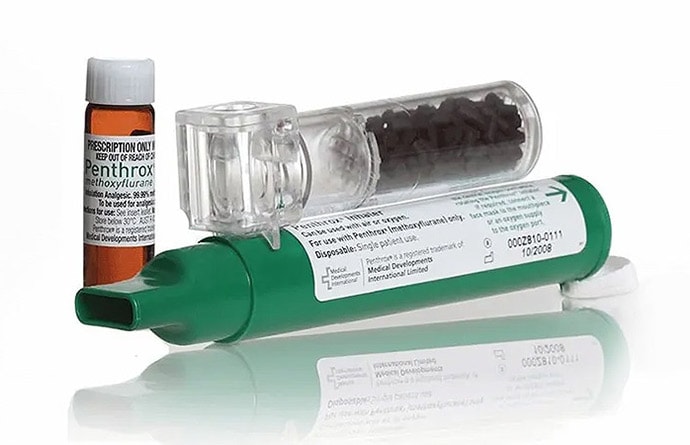
Sergey M. Motov, MD: Methoxyflurane is embedded in the green whistle package, and that whole contraption is called Penthrox. It's an inhaled volatile fluorinated hydrocarbon anesthetic that was predominantly used, I'd say 40, 50 years ago, for general anesthesia and slowly but surely fell out of favor due to the fact that, when used for prolonged duration or in supratherapeutic doses, there were cases of severe or even fatal nephrotoxicity and hepatotoxicity.
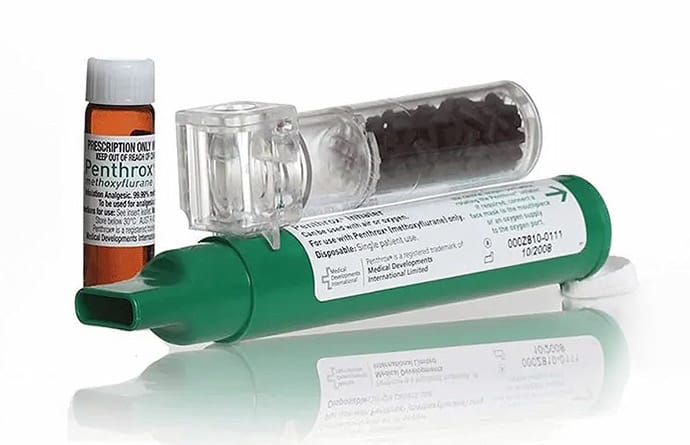
In the late '70s and early '80s, all the fluranes came on board that are slightly different as general anesthetics, and methoxyflurane started slowly falling out of favor. Because of this paucity and then a subsequent slightly greater number of cases of nephrotoxicity and hepatotoxicity, FDA made a decision to pull the drug off the market in 2005. FDA successfully accomplished its mission and since then has pretty much banned the use of inhaled methoxyflurane in any shape, form, or color in the United States.

Going back to the green whistle, it has been used in Australia probably for about 50-60 years, and has been used in Europe for probably 10-20 years. Ken can attest that it has been used in Canada for at least a decade and the track record is phenomenal.

We are using subanesthetic, even supratherapeutic doses that, based on available literature, has no incidence of this fatal hepatoxicity or nephrotoxicity. We're talking about 10 million doses administered worldwide, except in the United States. There are 40-plus randomized clinical trials with over 30,000 patients enrolled that prove efficacy and safety.

That's where we are right now, in a conundrum. We have a great deal of data all over the world, except in the United States, that push for the use of this noninvasive, patient-controlled nonopioid inhaled anesthetic. We just don't have the access in North America, with the exception of Canada.

Regulatory Hurdles: Challenges in FDA Approval

Glatter: Absolutely. The FDA wants to be cautious, but if you look at the evidence base of data on this, it really indicates otherwise. Do you think that these roadblocks can be somehow overcome?

Milne: In the 2000s and 2010s, everybody was focused on opioids and all the dangers and potential adverse events. Opioids are great drugs like many other drugs; it depends on dose and duration. If used properly, it's an excellent drug. Well, here's another excellent drug if it's used properly, and the adverse events are dependent on their dose and duration. Penthrox, or methoxyflurane, is a subtherapeutic, small dose and there have been no reported cases of addiction or abuse related to these inhalers.

Glatter: That argues for the point — and I'll turn this over to you, Sergey — of how can this not, in my mind, be an issue that the FDA can overcome.

Motov: I agree with you. It's very hard for me to speak on behalf of the FDA, to allude to their thinking processes, but we need to be up to speed with the evidence. The first thing is, why don't you study the drug in the United States? I'm not asking you to lift the ban, which you put in 2005, but why don't you honor what has been done over two decades and at least open the door a little bit and let us do what we do best? Why don't you allow us to do the research in a controlled setting with a carefully, properly selected group of patients without underlying renal or hepatic insufficiency and see where we're at?

Let's compare it against placebo. If that's not ethical, let's compare it against active comparators — God knows we have 15-20 drugs we can use — and let's see where we're at. Ken has been nothing short of superb when it comes to evidence. Let us put the evidence together.

Milne: If there were concerns decades ago, those need to be addressed. As science is iterative and as other information becomes available, the scientific method would say, Let's reexamine this and let's reexamine our position, and do that with evidence. To do that, it has to have validity within the US system. Someone like you doing the research, you are a pain research guru; you should be doing this research to say, "Does it work or not? Does this nonapproval still stand today in 2024?"

Motov: Thank you for the shout-out, and I agree with you. All of us, those who are interested, on the frontiers of emergency care — as present clinicians — we should be doing this. There is nothing that will convince the FDA more than properly and rightly conducted research, time to reassess the evidence, and time to be less rigid. I understand that you placed a ban 20 years ago, but let's go with the science. We cannot be behind it.

Exploring the Ecological Footprint of Methoxyflurane

Milne: There was an Austrian study in 2022 and a very interesting study out of the UK looking at life-cycle impact assessment on the environment. If we're not just concerned about patient care —obviously, we want to provide patients with a safe and effective product, compared with other products that are available that might not have as good a safety profile — this looks at the impact on the environment.

Glatter: Ken, can you tell me about some of your recent research regarding the environmental effects related to use of Penthrox, but also its utility pharmacologically and its mechanism of action?

Milne: There was a really interesting study published this year by Martindale in the Emergency Medicine Journal. It took a different approach to this question about could we be using this drug, and why should we be using this drug? Sergey and I have already talked about the potential benefits and the potential harms. I mentioned opioids and some of the concerns about that. For this drug, if we're using it in the prehospital setting in this little green whistle, the potential benefits look really good, and we haven't seen any of the potential harms come through in the literature.

This was another line of evidence of why this might be a good drug, because of the environmental impact of this low-dose methoxyflurane. They compared it with nitrous oxide and said, "Well, what about the life-cycle impact on the environment of using this and the overall cradle-to-grave environmental impacts?"

Obviously, Sergey and I are interested in patient care, and we treat patients one at a time. But we have a larger responsibility to social determinants of health, like our environment. If you look at the overall cradle-to-grave environmental impact of this drug, it was better than for nitrous oxide when looking specifically at climate-change impact. That might be another reason, another line of argument, that could be put forward in the United States to say, "We want to have a healthy environment and a healthy option for patients."

I'll let Sergey speak to mechanisms of action and those types of things.

Motov: As a general anesthetic and hydrocarbonated volatile ones, I'm just going to say that it causes this generalized diffuse cortical depression, and there are no particular channels, receptors, or enzymes we need to worry much about. In short, it's an inhaled gas used to put patients or people to sleep.

Over the past 30 or 40 years — and I'll go back to the past decade — there have been numerous studies in different countries (outside of the United States, of course), and with the recent study that Ken just cited, there were comparisons for managing predominantly acute traumatic injuries in pediatric and adult populations presenting to EDs in various regions of the world that compared Penthrox, or the green whistle, with either placebo or active comparators, which included parenteral opioids, oral opioids, and NSAIDs.

The recent systematic review by Fabbri, out of Italy, showed that for ultra–short-term pain — we're talking about 5, 10, or 15 minutes — inhaled methoxyflurane was found to be equal or even superior to standard of care, primarily related to parenteral opioids, and safety was off the hook. Interestingly, with respect to analgesia, they found that geriatric patients seemed to be responding more, with respect to changing pain score, than younger adults — we're talking about ages 18-64 vs 65 or older. Again, we need to make sure that we carefully select those elderly people without underlying renal or hepatic insufficiency.

To wrap this up, there is evidence clearly supporting its analgesic efficacy and safety, even in comparison to commonly used and traditionally accepted analgesic modalities that we use for managing acute pain.

US Military Use and Implications for Civilian Practice

Glatter: Do you think that methoxyflurane's use in the military will help propel its use in clinical settings in the US, and possibly convince the FDA to look at this closer? The military is currently using it in deployed combat veterans in an ongoing fashion.

Motov: I'm excited that the Department of Defense in the United States has taken the lead, and they're being very progressive. There are data that we've adapted to the civilian environment by use of intranasal opioids and intranasal ketamine with more doctors who came out of the military. In the military, it's a kingdom within a kingdom. I don't know their relationship with the FDA, but I support the military's pharmacologic initiative by honoring and disseminating their research once it becomes available.

For us nonmilitary folks, we still need to work with the FDA. We need to convince the FDA to let us study the drug, and then we need to pile the evidence within the United States so that the FDA will start looking at this favorably. It wouldn't hurt and it wouldn't harm. Any piece of evidence will add to the existing body of literature that we need to allow this medication to be available to us.

Safety Considerations and Aerosolization Concerns

Glatter: Its safety in children is well established in Australia and throughout the world. I think it deserves a careful look, and the evidence that you've both presented argues for the use of this pre-hospital but also in hospital. I guess there was concern in the hospital with underventilation and healthcare workers being exposed to the fumes, and then getting headaches, dizziness, and so forth. I don't know if that's borne out, Ken, in any of your experience in Canada at all.

Milne: We currently don't have it in our shop. It's being used in British Columbia right now in the prehospital setting, and I'm not aware of anybody using it in their department. It's used pre-hospital as far as I know.

Motov: I can attest to it, if I may, because I had familiarized myself with the device. I actually was able to hold it in my hands. I have not used it yet but I had the prototype. The way it's set up, there is an activated charcoal chamber that sits right on top of the device, which serves as the scavenger for exhaled air that contains particles of methoxyflurane. In theory, but I'm telling how it is in practicality, it significantly reduces occupational exposure, based on data that lacks specifics.

Although most of the researchers did not measure the concentration of methoxyflurane in ambient air within the treatment room in the EDs, I believe the additional data sources clearly stating that it's within or even below the detectable level that would cause any harm. Once again, we need to honor pathology. We need to make sure that pregnant women will not be exposed to it.

Milne: In 2024, we also need to be concerned about aerosolizing procedures and aerosolizing treatments, and just take that into account because we should be considering all the potential benefits and all the potential harms. Going through the COVID-19 pandemic, there was concern about transmission and whether or not it was droplet or aerosolized.

There was an observational study published in 2022 in Austria by Trimmel in BMC Emergency Medicine showing similar results. It seemed to work well and potential harms didn't get picked up. They had to stop the study early because of COVID-19.

We need to always focus in on the potential benefits, the potential harms; where does the science land? Where do the data lie? Then we move forward from that and make informed decisions.

Final Thoughts

Glatter: Are there any key takeaways you'd like to share with our audience?

Milne: One of the takeaways from this whole conversation is that science is iterative and science changes. When new evidence becomes available, and we've seen it accumulate around the world, we as scientists, as a researcher, as somebody committed to great patient care should revisit our positions on this. Since there is a prohibition against this medication, I think it's time to reassess that stance and move forward to see if it still is accurate today.

Motov: I wholeheartedly agree with this. Thank you, Ken, for bringing this up. Good point.

Glatter: This has been a really informative discussion. I think our audience will certainly embrace this. Thank you very much for your time; it's much appreciated.

Robert D. Glatter, MD, is an assistant professor of emergency medicine at Zucker School of Medicine at Hofstra/Northwell in Hempstead, New York. He is a medical advisor for Medscape and hosts the Hot Topics in EM series.

William Kenneth (Ken) Milne, MD, MSc, is an emergency physician at Strathroy Middlesex General Hospital in Ontario, Canada, and the founder of the well-known podcast The Skeptics' Guide to Emergency Medicine (SGEM).

Sergey M. Motov, MD , is professor of emergency medicine and director of research in the Department of Emergency Medicine at Maimonides Medical Center in Brooklyn, New York. He is passionate about safe and effective pain management in the emergency department, and has numerous publications on the subject of opioid alternatives in pain management.

https://www.medscape.com/viewarticle/1000476

Food Marketing on Video Games Influences Teen Eating Behavior

 Food and drink advertisements on video game live-streaming platforms (VGLSPs) such as Twitch are associated with a greater preference for and consumption of products high in fat, salt, and/or sugar (HFSS) among teenagers, according to research presented on May 12, 2024, at the 31st European Congress on Obesity in Venice, Italy.

The presentation by Rebecca Evans, University of Liverpool, United Kingdom, included findings from three recently published studies and a submitted randomized controlled trial. At the time of the research, the top VGLSPs globally were Twitch (with 77% of the market share by hours watched), YouTube Gaming (15%), and Facebook Gaming Live (7%).

"Endorsement deals for prominent streamers on Twitch can be worth many millions of dollars, and younger people, who are attractive to advertisers, are moving away from television to these more interactive forms of entertainment," Evans said. "These deals involve collaborating with brands and promoting their products, including foods that are high in fats, salt, and/or sugar."

To delve more deeply into the extent and consequences of VGLSP advertising for HFSS, the researchers first analyzed 52 hour-long Twitch videos uploaded to gaming platforms by three popular influencers. They found that food cues appeared at an average rate of 2.6 per hour, and the average duration of each cue was 20 minutes.

Most cues (70.7%) were for branded HFSS (80.5%), led by energy drinks (62.4%). Most (97.7%) were not accompanied by an advertising disclosure. Most food cues were either product placement (44.0%) and looping banners (40.6%) or features such as tie-ins, logos, or offers. Notably, these forms of advertising are always visible on the video game screen, so viewers cannot skip over them or close them.

Next, the team did a systematic review and meta-analysis to assess the relationship between exposure to digital game-based or influencer food marketing with food-related outcomes. They found that young people were twice as likely to prefer foods displayed via digital game-based marketing, and that influencer and digital game-based marketing was associated with increased HFSS food consumption of about 37 additional calories in one sitting.

Researchers then surveyed 490 youngsters (mean age, 16.8 years; 70%, female) to explore associations between recall of food marketing of the top VGLSPs and food-related outcomes. Recall was associated with more positive attitudes towards HFSS foods and, in turn, the purchase and consumption of the marketed HFSS foods.

In addition, the researchers conducted a lab-based randomized controlled trial to explore associations between HFSS food marketing via a mock Twitch stream and subsequent snack intake. A total of 91 youngsters (average age, 18 years; 69% women) viewed the mock stream, which contained either an advertisement (an image overlaid on the video featuring a brand logo and product) for an HFSS food, or a non-branded food. They were then offered a snack. Acute exposure to HFSS food marketing was not associated with immediate consumption, but more habitual use of VGLSPs was associated with increased intake of the marketed snack.

The observational studies could not prove cause and effect, and may not be generalizable to all teens, the authors acknowledged. They also noted that some of the findings are based on self-report surveys, which can lead to recall bias and may have affected the results.

Nevertheless, Evans said, "The high level of exposure to digital marketing of unhealthy food could drive excess calorie consumption and weight gain, particularly in adolescents who are more susceptible to advertising. It is important that digital food marketing restrictions encompass innovative and emerging digital media such as VGLSPs."

The research formed Evans' PhD work, which is funded by the University of Liverpool. Evans and colleagues declared no conflicts of interest.

https://www.medscape.com/viewarticle/food-marketing-videogames-influences-teen-eating-behavior-2024a100092h

Lawmakers Weigh Lifting National Restrictions on Physician-Owned Hospitals

 Nearly 15 years ago, the construction of doctor-owned hospitals largely ground to a halt. But federal lawmakers now are considering bills that would lift current restrictions on physician ownership — a move advocates said could increase competition at a time when regulators are closely scrutinizing consolidation in healthcare.

A provision in the Affordable Care Act of 2010 limited the expansion of existing physician-owned hospitals (POHs) and halted the opening of new ones. Today, only about 4% of American hospitals are owned by physicians.

The proposed legislation (H.R. 977/S. 470), called the "Patient Access to Higher Quality Health Care Act of 2023," would repeal that provision. The bills remain in committee for now.

Meanwhile, industry groups continue to debate the proposed legislation's potential impact on healthcare quality, cost, and patient access to hospital care.

Lifting current restrictions could dramatically expand the number of doctor-owned hospitals, now estimated at 250-265 nationally, according to Physician-Led Healthcare for America (PHA), which advocates for POHs.

Dozens of physician groups including PHA argued that ending the restriction would introduce more competition amid rising prices, hospital mergers, and other consolidation.

Allowing physician ownership also could give struggling rural communities "another option to maintain local high-quality care and encourage local investment in existing hospitals," proponents wrote in a Wall Street Journal op-ed.

The 'Cherry-Picking' Debate

Hospital industry groups counter that POHs are primarily orthopedic and other specialty facilities that "cherry pick" healthier, better insured patients and don't compete fairly with general acute-care hospitals.

"They're not providing full service," said Chip Kahn, president and CEO of the Federation of American Hospitals, which represents about 1000 for-profit hospitals. "They're not providing emergency rooms. They're not taking care of uninsured patients."

Both sides cite reports or other analyses often funded by or affiliated with their groups. They can't agree on how many POHs provide general services vs specialties such as orthopedics.

PHA leaders said slightly more than half of POHs are general service hospitals, pointing to data in a 2015 study. Kahn puts the figure at roughly a handful nationally that provide the full gamut of hospital services.

"There's a lot of strong opinions about physician-owned hospitals and not a lot of recent data," said Peter Cram, MD, MBA, a professor of medicine at The University of Texas Medical Branch at Galveston, who authored some of the studies published prior to 2010.

But Cram is not surprised that the idea has reemerged. Hospital consolidation over the last decade has ignited discussions about how to expand competition, he said. "In many markets, there are a very small number of very large health systems with enormous pricing power."

Dueling Studies Compare Cost, Utilization

Amid the fierce debate, dueling data points quickly stack up.

One 2023 analysis, commissioned by two physician-affiliated groups and based on 2019 Medicare claims data, found that the cost of care was 8%-15% lower at POHs than at traditional hospitals. The academic researchers, who focused on the 20 most expensive diagnostic-related groups treated by 186 POHs, calculated that the price difference would have translated to roughly $1.1 billion in Medicare savings for 2019.

Another analysis, also published last year and commissioned by the American Hospital Association and Federation of American Hospitals, scrutinized patient acuity, insurance coverage, and other factors at 163 POHs vs 3020 non-POHs. POHs were more likely to garner the maximum hospital readmission penalty and treated fewer Medicaid patients, 3.5% vs 8.4% at the non-POHs, according to the report by healthcare consulting firm Dobson DaVanzo & Associates.

Before the 2010 restriction, the concern was that hospital ownership would incentivize physicians to refer their patients there, "or an incentive to overtreat or to prioritize more profitable procedures," said Katherine Hempstead, a senior healthcare policy adviser at the Robert Wood Johnson Foundation.

One pre-2010 study, which looked at several heart procedures in Medicare patients after a specialty cardiac hospital opened in a healthcare region, found that the number of procedures increased during the subsequent 4 years compared with regions who added no new heart programs. For percutaneous coronary interventions — a procedure designed to open blocked arteries — the increase appeared to occur with patients who hadn't experienced a heart attack, where the benefits "are frequently less clear," the researchers wrote.

The authors of a related editorial, who included Cram, commented that the "current findings suggest that physician ownership of specialty hospitals may be problematic if such ownership increases the use of services for patients with marginal indications." 

However, Cram added in a recent interview, it "should be explored as another option for mitigating [healthcare] consolidation."

Cram also coauthored a peer-reviewed study, published last year, that compared commercially negotiated prices between POHs and non-POHs for eight services, including two levels of emergency room visits, a spinal injection, and a CT-scan of the abdomen and pelvis.

PHO advocates said the study's findings show that the negotiated prices for seven out of the eight services ran between 4% and 33% lower at POHs. (The exception was for a comprehensive metabolic panel.) Opponents noted that at the 156 POHs studied, just 3% of patients were covered by Medicaid compared with about 7% at the other hospitals.

Still, the lower prices illustrate how POHs can introduce competition in a market, said Ge Bai, PhD, CPA, another study author. The research was supported by a grant from www.PatientRightsAdvocate.org, a nonprofit group that focuses on healthcare price transparency.

"Let them compete, let the patient choose," said Bai, a professor of accounting and health policy at Johns Hopkins University in Baltimore. "Having these newcomers come in, they [the existing hospitals] will be under pressure to perform better for patients."

Boosting Rural Access to Care?

Bai agrees with POH supporters that permitting physician ownership could bolster struggling rural hospitals. Given that POHs can offer services at a lower price, she said, "they can afford to enter some markets that a non-POH won't find attractive."

Since 2010, nearly 150 rural hospitals have closed or converted to a more limited role, such as providing primary care or long-term care services, according to The Cecil G. Sheps Center for Health Services Research in Chapel Hill, North Carolina. Only 6.8% of POHs are located in rural areas, according to the 2023 Dobson | DaVanzo analysis, vs 24% of non-POHs.

Leaders at PHA provided a list of specialty hospital construction projects or expansion plans halted by the ownership restriction, including nearly 40 hospitals that hadn't yet been completed. Some affected projects were in rural communities, said Joseph Alhadeff, MD, the group's president, who feels that local physicians can potentially step in as owners if the restriction is lifted.

"Physicians, they want to treat their community — they want the healthcare to be local," he said. "They don't want to see people traveling 2 and 3 hours to have to get to healthcare."

Kahn dismissed the argument that physician ownership could prove to be the savior in rural regions as "fantastical thinking," noting that rural hospitals are more likely to serve communities with an aging or lower-income population primarily covered by Medicare or Medicaid.

"Frankly, Medicare and Medicaid doesn't pay enough for those hospitals to be viable," he said. "I don't think there are that many doctors out there that are going to come in with some magic formula."

Hempstead doesn't rule out that proactive rural physicians might step up for their local hospital. But too often rural challenges are intractable, rooted in a declining population and thus lower patient volume, she said.

Neither does Hempstead hold a position regarding whether expanding physician hospital ownership would improve cost and quality. But the idea is having its moment amid not only heightened consolidation but also physicians' longstanding belief that they're uniquely qualified to innovate in healthcare, she said.

"They are supposed to be entrepreneurs — that's their original role," Hempstead said. "And by not letting them own hospitals, you're losing a big opportunity for physicians obviously but also for society as a whole. You are kind of leaving the best players on the sidelines— I think that would be the argument."

https://www.medscape.com/viewarticle/lawmakers-weigh-lifting-national-restrictions-physician-2024a1000912

Novo Nordisk: Mim8 demonstrate superior reduction of treated hemophilia A bleeding

 Novo Nordisk today announced the headline results from the FRONTIER 2 trial, a pivotal phase 3a, 26-week open-label, randomised, controlled, multi-arm trial in 254 people. The trial investigated the efficacy and safety of once-weekly and once-monthly subcutaneous Mim8 versus no prophylaxis and versus prior coagulation factor prophylaxis treatment in people aged 12 years or older with haemophilia A with or without inhibitors.

The trial achieved its co-primary endpoints by demonstrating a statistically significant and superior reduction of treated bleeding episodes with both once-weekly and once-monthly Mim8 versus no prophylaxis treatment and prior coagulation factor prophylaxis treatment.

In people with no prior prophylaxis treatment, once-weekly and once-monthly Mim8 demonstrated superior reductions of 97% and 99% in treated bleeds, respectively, compared to those who received no prophylaxis treatment. In addition, 86% of people treated with once-weekly Mim8 and 95% of those treated with once-monthly Mim8 experienced zero treated bleeds, compared to 0% of those treated with no prophylaxis.

In the intra-patient analysis in people with prior coagulation factor prophylaxis, once-weekly and once-monthly Mim8 demonstrated superior reductions of 48% and 43% in treated bleeds, respectively, compared to prior coagulation factor prophylaxis (during run-in period of 26-52 weeks prior to initiation of Mim8 treatment). Additionally, 66% of people treated with once-weekly Mim8 and 65% of people treated with once-monthly Mim8 experienced zero treated bleeds.

In the trial, Mim8 appeared to have a safe and well-tolerated profile in line with previous trials. No deaths or thromboembolic events were reported in the trial.

https://finance.yahoo.com/news/novo-nordisk-once-weekly-once-154900043.html

Medical Properties Trust Q1 Summary

 The first quarter of 2024 was marked by a net loss of $736 million, a stark contrast to the net income of $33 million reported in the same period last year. This loss included approximately $693 million in impairments related to various assets, including a significant reserve of the company's loan to Steward Health Care. Despite these challenges, MPW's normalized funds from operations (NFFO) stood at $142 million, down from $222 million year-over-year, primarily due to decreased revenues from Steward.

Edward K. Aldag, Jr., Chairman, President, and CEO of MPW, commented on the ongoing strategic initiatives, stating, "We continue to execute a capital allocation strategy that we now expect will exceed our initial target of $2.0 billion in liquidity transactions in 2024." He also noted the provision of $75 million in debtor-in-possession financing to Steward Health Care to ensure continuity of care amidst their Chapter 11 bankruptcy proceedings.

https://finance.yahoo.com/news/medical-properties-trust-inc-reports-170059336.html

Stocks Waver as Traders Map Out Game Plan for CPI


  • 'Underlying gauge of US inflation probably moderated in April'
  • JPMorgan’s trading desk warns of big S&P 500 swings after CPI

Stocks fluctuated at the start of a week that will bring inflation data seen as key in shaping the outlook for Federal Reserve policy.

Equities struggled for direction just a few days ahead of the consumer price index, which is expected to show inflationary pressures have eased while still remaining too high to warrant rate cuts. On Monday, a Fed Bank of New York survey highlighted an increase in US consumer expectations for inflation and home prices.

https://www.bloomberg.com/news/articles/2024-05-12/asian-stocks-eye-sluggish-start-after-china-data-markets-wrap