Search This Blog

Wednesday, May 15, 2024

With illegals rolling in through the surf, City of San Diego decides to crack down on ... beach yoga

 The other day, I noted that illegals are getting bolder as they roll into San Diego, jetting in from organized-crime-sponsored speedboats onto San Diego's crowded beaches in broad daylight now. Running through the beach towels, sunblock, beach balls, and cold drink coolers of the beachgoers at Ocean Beach, they aren't even trying to hide it.


But don't think the city doesn't have its priorities as these illegals roll in.

According to Fox 5:

SAN DIEGO (FOX 5/KUSI) — Three yoga instructors in San Diego are expressing concern over the city’s recent ban of their free beachside yoga classes, which have been a tradition for over a decade.

According to Danielle Macgregor, one of the affected instructors, the city’s enforcement of the ban involved the use of large trucks to block their yoga classes, a measure she deems excessive.

Laura Monk, another affected instructor, highlighted that the ban extends beyond yoga, affecting other group activities such as recovery support groups and family gatherings in public parks.


Normally when you ban something, it's some kind of public nuisance. I've lived here for years and have never -- even once -- heard about these beach yoga classes being any kind of public nuisance. It's just a bunch of old ladies doing their sun signs and downward dogs their health and enjoying the scenery while they are at it.

Ostensibly, the beach yoga sessions (I doubt they are really classes with diplomas handed out) have now been classified as 'vendors' and thus, are required to hold purchased permits ... for certain areas, none of which include Sunset Cliffs, which is walking distance from Ocean Beach where the illegals are landing

They just wanted to shut the whole thing down because someone (who pays a lot of taxes to the city), was enjoying herself. Or quite possibly, some kind of yoga lobby paid some pol to write a regulation against these free classes, the better to rope them into pay classes indoors instead.

But all of that is neither here, nor there. The bottom line is, they've got a literal foreign invasion going on on these beaches from unvetted military-aged young men whose voyages are being financed by Mexican cartels. Indead of going after the foreign military-aged young men literally invading the U.S., they're going after old ladies doing warrior poses. They are rolling in, nobody's doing anything about it, they are not here legally, they are not asylum seekers, but they are getting in and disturbing the peace to do it. They are unvetted, they may be armed, they may have drugs, they may be involved with human slavery, and there hasn't been even a hint of a response from the City, no blasts at Joe Biden and his open borders, no press conferences with Border Patrol agents at their side, no calls to stop it, nothing. They also have a second beach problem from abroad with Mexico polluting the south County's beaches with raw untreated sewage, rendering it unswimmable. Nobody doing much about that too, except hold press conferences saying the problem is being solved but will "take time."

But when it comes to beach yoga, they've got the lawmen at the ready and they're swooping down.

They like to call Los Angeles 'la la land' but this is what la la land looks like. They lower the boom on beach yoga just as another boatload of illegals goes running on by.

 https://www.americanthinker.com/blog/2024/05/with_illegals_rolling_in_through_the_surf_city_of_san_diego_decides_to_crack_down_on_beach_yoga.html

Illegals accused of beating cops in New York's Times Square offered slap-on-the-wrist plea deals

 By Monica Showalter

On what planet does assaulting a police officer merit a mere six months in the slammer?

Only Planet New York.

According to the Daily Mail:

Six of the migrants accused of assaulting two New York City Police Department officers in Times Square have been offered plea deals - including one who was re-arrested while out on $15,000 bail. 

Ulises Bohorquez, Yohenry Brito, Edgarlis Vegas, Darwin Andres Gomez-Izquiel, Wilson Juarez, Yorman Reveron and Kelvin Servita Arocha appeared in New York Supreme Criminal Court on Tuesday in front of Judge Laura Wood.

The Venezuelan migrants were charged with second-degree assault and the obstruction of a government admin following the attack on January 27 which was caught on video and all have pleaded not guilty.

They were offered this:

The Manhattan District Attorney's office has offered plea deals to Bohorquez, Brito and Gomez-Izquiel for them to serve a year in prison in return to pleading guilty to second-degree assault.

Arocha and Juarez have been presented a deal where they serve six months in prison for pleading guilty to obstructing a government admin.

Yorman Reveron was also offered a deal of two years in prison in exchange for pleading guilty to second degree assault.

The rest of us would go to prison for ten years if we assaulted a police officer, but these illegals are special.

Worse still, the judge must have inspired smirks among the thugs with her ridiculous scoldings, buttressed with hollow 'one more time' warnings:

Judge Wood hit out at Brito during the hearing and threatened to throw him in jail if he puts another foot wrong while out on bail.

'I am furious that Mr Brito was rearrested and charged with petty larceny while he was out on this case,' she said.

'I am very tempted right now to put you in jail. I am telling you right now, if I learn you are rearrested for anything at all between now and this case being finished, I will order a warrant and I will place bail so high you will not get out.

'If you jaywalk, if you jump a turnstile, if you do anything at all and I have to issue a warrant, you will not see the light of day until this case is over.

'Do I make myself perfectly clear?'

Suuuure she made herself clear. The message the thug got was that next time he did it, he'd get an even sterner warning. She might even yell at him. What he wouldn't get was any fear of jailtime. The thug, who is likely among the emptied contents of Venezuela's prison system, will carry on with his life of crime plaguing New York and beyond, with no fear of jailing, let alone deportation.

It sends a terrible message to illegals that any crimes they commit will not be seriously punished, even if they are direct attacks on police officers whose job is to protect New Yorkers.

The wimpy ineffectiveness is going to resound with the illegals, who've just got another green light to express their contempt for this country and prey on its citizens, as if being allowed in this country with their clearly disgusting backgrounds were not enough. It's also likely to attract more criminals to New York from among the world's illegals getting in. Not only is it 'if I cross, I can stay,' it's 'if I prey, it's no loss.'

And it will be noticed by New York's cops, too, who will be even less inclined to stick their necks out and more inclined to retire at their desks, waiting for their pensions. This brand of "justice" being meted out is a middle finger to them once again, just like the earlier illegal migrant who flashed that after coming out of a courthouse (and eventually was not charged). Who could blame them?

That's going to be toxic for New Yorkers, and well deserved if they keep electing District Attorney Alvin Bragg, whose focus is on bookkeeping "felonies" in kangaroo courts against President Trump, while at the same time, letting real criminals walk.

https://www.americanthinker.com/blog/2024/05/illegals_accused_of_beating_cops_in_new_york_s_times_square_offered_slap_on_the_wrist_plea_deals.html

Greenwald Prediction On Ukraine

It was only on Tuesday night that Antony Blinken was leading a bizarre rock anthem as the guitar and vocals front man at a Kiev bar, singing Neil Young’s "Rockin’ in the Free World" — and the internet collectively cringed. But only the next morning, on Wednesday, Ukrainian President Volodymyr Zelensky declared he was canceling all upcoming foreign trips at a moment his forces are getting hammered in the Kharkiv region.

"Volodymyr Zelenskyy has instructed that all international events scheduled for the coming days be postponed and new dates coordinated. We are grateful to partners for their understanding," said Zelensky’s press secretary Sergii Nykyforov.

The man who turned his dead father into a chatbot

 Back in 2016, James Vlahos received some terrible news - his father was diagnosed with terminal cancer.

"I loved my dad, I was losing my dad," says James, who is based in Oakland, California.

He was determined to make the most of the remaining time he had with his father. "I did an oral history project with him, where I just spent hours, and hours, and hours just audio recording his life story."

This coincided with a time when James was starting to explore a career in AI, so his project soon evolved.

"I thought, gosh, what if I could make something interactive out of this?" he says. "For a way to more richly keep his memories, and some sense of his personality, which was so wonderful, to keep that around."

James' father John passed away in 2017, but not before James had turned what he'd recorded into an AI-powered chatbot that could answer questions about his dad's life - in his father's voice.

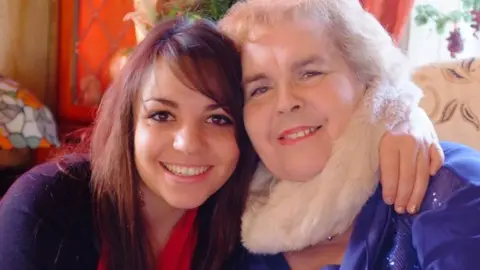
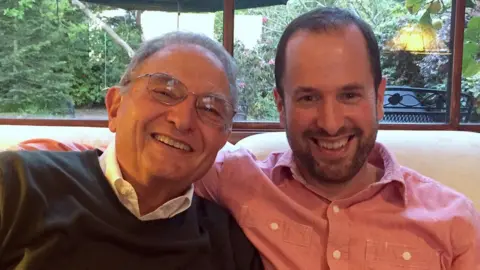
James Vlahos James Vlahos with his dad JohnJames Vlahos
James Vlahos spent hours recording the memories of his dad John

Such use of AI to artificially bring people back to life has long been explored in science fiction, but developments in AI technology have now made it possible in real life. In 2019, James turned his chatbot into an app and business called HereafterAI, which allows users to do the same for their loved ones.

He adds that while the chatbot didn't remove the pain of his dad's death, it does gives him "more than I otherwise would have". "It's not him retreating into this very fuzzy memory. I have this wonderful interactive compendium I can turn to."

While users of HearafterAI can upload photos of their loved one, to appear on the screen of their smart phone or computer when they use the app, another firm that turns people into AI chatbots goes much further.

South Korea's DeepBrain AI creates a video-based avatar of a person, by shooting hours of video and audio to capture their face, voice and mannerisms.

"We are cloning the person's likeness to 96.5% of the similarity of the original person," says Michael Jung, DeepBrain's chief financial officer. "So mostly the family don't feel uncomfortable talking with the deceased family member, even though it is an AI avatar."

The company believes such technology can be an important part of developing a "well dying" culture - where we prepare for our death in advance, leaving family histories, stories and memories as a form of "living legacy".

The process isn't cheap though, and users cannot create the avatar themselves. Instead, they have to pay the firm up to $50,000 (£39,000) for the filming process and the creation of their avatar.

Despite this high cost, some investors are confident it will be popular, and DeepBrain raised $44m in its last funding round.

Yet psychologist Laverne Antrobus says that great care should be taken when using such "grief tech" at times of heightened emotion.

"Loss is something that catches us out," she says. "You can think you're pretty much close to being OK, then something can take you right back.

"The idea that you might then have the opportunity to hear their voice, and hear their words spoken through them, might be quite discombobulating."

Ms Antrobus adds that people shouldn't rush to use a chatbot of a lost loved one. "You'd have to feel quite solid before using something like this. Take things very, very slowly."

The way we grieve is specific to each of us, but that doesn't mean there aren't common experiences.

Red tape is one of them. Banks, businesses and social media sites that your loved one used will need you to complete a raft of paperwork to close accounts, and end direct debits, subscriptions and the like.

"I was looking at more than two dozen companies, and having to phone every single one of them and tell them about my loss," says Eleanor Wood, 41, from South Devon. Her husband Stephen died in March of last year after a serious illness.

"Some of the firms were great and straightforward. Some were outright incompetent and callous. They created more stress and emotional distress at a time when I was already at my lowest possible emotional ebb."

To lessen the administrative burden of the recently bereaved, Settld is a UK online platform that contacts private sector organisations on their behalf.

The user uploads the required paperwork, and the list of everyone that needs to be contacted. Settld then automatically writes and sends off the emails. You can then log back in to check that the firms in question have replied, and that the issues have been dealt with.

It works with 950 bodies ranging from banks, to social media firms, to utility companies. It was co-founded in 2020 by Vicky Wilson following the death of her grandmother.

"The more we can do to use technology to lift that admin burden, the better," she says." When someone dies, to deal with the average estate, we're looking at around 300 hours across 146 tasks.

"It normally takes around nine months to wrap up. We reckon around 70% of that work can and should be automated."

Settld Vicky Wilson and her late grandmotherSettld
Vicky Wilson got the idea for Settld following the death of her grandmother

The grief tech sector, also called "death tech", is now valued at more than £100bn globally, according to tech news website TechRound.

This growth was fuelled by the coronavirus pandemic, says David Soffer, its editor-in-chief.

"What Covid did was highlight to people the importance of life," he says, stressing that it helped break down some of the taboos around talking about death. This in turn led to us increasingly accepting tech as a part of the grieving process.

"Being able to notify a lot of people at once, remembering people through voice recordings or visual messages are all important," he says.

But Mr Soffer believes the trend has an even more profound meaning. "When technology evolves to solve technological problems, that's good," he says. "But when it helps solve non-technological problems, like the grieving process, that's the real purpose of technology."

Yet Ms Antrobus cautions that there remains no substitute for human support when it comes to overcoming grief. "I can't quite envisage a place for technology to take over the more traditional aspects of grieving, which are around feeling close to people, feeling cared for, feeling appreciated."

https://www.bbc.com/news/business-68944898

Treatment-resistant depression linked to body mass index: Study

 Genetic factors are a small but significant contributor to severe depression that does not respond to standard therapy, according to researchers at Vanderbilt University Medical Center and Massachusetts General Hospital.

The heritability of treatment-resistant depression (TRD) was found to have significant genetic overlap with schizophrenia, , cognitive, alcohol and smoking traits, and body mass index (BMI), suggesting a shared biology and, potentially, new treatment avenues.

The report, published May 15 in The American Journal of Psychiatry, provides insights into the genetics and biology underlying TRD, supports the utility of estimating disease probabilities from clinical data for genomic investigations, and "lays the groundwork for future efforts to apply genomic data for biomarker and drug development."

"Despite the large proportion of patients with TRD, the biology has remained poorly understood. Our work here provides genetic support for new biological directions to explore in addressing this gap," said Douglas Ruderfer, Ph.D., associate professor of Medicine (Genetic Medicine), Psychiatry, and Biomedical Informatics.

"This work finally gives us some new leads, rather than reinventing the same antidepressants over and over again, for a condition that is extremely common," said Roy Perlis, MD, professor of Psychiatry at Harvard Medical School and director of the MGH Center for Experimental Drugs and Diagnostics.

Nearly 2 out of every 10 people in the United States experience , and roughly a third of them do not respond to antidepressant treatments and therapies. TRD is associated with a significantly increased risk for suicide.

Despite evidence that treatment resistance may be a heritable trait, the "genetic architecture" of this condition remains unclear, largely because of the lack of a consistent and rigorous definition of treatment resistance, and the challenge of recruiting enough research subjects to study.

To overcome these barriers, the researchers selected a surrogate for the condition—whether an individual diagnosed with  had received electroconvulsive therapy (ECT).

ECT applies a low voltage applied to the head to induce a generalized seizure without muscle convulsions. Approximately half of patients with TRD respond to ECT, which is thought to improve symptoms by stimulating "rewiring" of brain circuits after they are disrupted by the electrical current.

To ensure the study was sufficiently "powered," or had enough patients from which valid results could be obtained, the researchers developed a machine-learning model to predict, from clinical information recorded in the electronic health record (EHR), which patients were most likely to receive ECT.

The researchers applied this model to EHRs and biobanks from Mass General Brigham and VUMC and validated the results by comparing the predicted cases to actual ECT cases identified through the Geisinger Health System in Pennsylvania, and the Million Veteran Program of the U.S. Department of Veterans Affairs.

More than 154,000 patients from the four health systems with  and genotypes, or sequences of their DNA samples, were included in a , which can identify genetic associations with health conditions (in this case, a marker for TRD).

The study identified genes clustered in two locations, or loci, on different chromosomes that correlated significantly the likelihood of ECT predicted by the model. The first locus overlapped with a previously reported chromosomal location associated with  (BMI).

The ECT-BMI relationship was inverse—patients with lower body weight tended to be at higher risk for treatment resistance.

This finding is supported by studies that found patients with anorexia nervosa, an eating disorder characterized by extremely low body weight, are more likely than those with a higher BMI to be resistant to treatment of coinciding depression.

The other locus associated with ECT points to a gene that is highly expressed in brain regions that regulate body weight and appetite. Recently this gene also has been implicated in bipolar disorder, a major psychiatric illness.

Large studies are currently underway to collect tens of thousands of ECT cases for a case-control study.

Confirmation of the link between the ECT marker for TRD and the complex metabolic pathways underlying food intake, maintenance of body weight, and  could open the door to new, more effective treatments for treatment of major depressive disorder, the researchers said.

Co-authors from VUMC were JooEun Kang, MD, Ph.D., Michael Ripperger, Drew Wilimitis, Theodore Morley, Lide Han, Ph.D., Stephan Heckers, MD, MSc, and Colin G. Walsh, MD, MA; at MGH they included Thomas McCoy, MD, and Victor Castro.

More information: JooEun Kang et al, Genome-Wide Association Study of Treatment-Resistant Depression: Shared Biology With Metabolic Traits, American Journal of Psychiatry (2024). DOI: 10.1176/appi.ajp.20230247


https://medicalxpress.com/news/2024-05-treatment-resistant-depression-linked-body.html

Face masks did not reduce risk of COVID infection after first omicron wave: study

 New research from the University of East Anglia has found that wearing face masks did not lower the risk of COVID infection following the initial surge of the omicron variant.

The analysis of official data found that several risk factors for infection altered significantly as the dominant variant in the U.K. changed from delta to  in December 2021.

These included wearing a mask, a history of foreign travel, household size, whether people were working or retired, and contact with children or those over 70.

The study, "Changing risk factors for developing SARS-CoV-2 infection from Delta to Omicron," is published in PLOS ONE.

Lead author Professor Paul Hunter, of Norwich Medical School at the University of East Anglia (UEA), said, "Early in the pandemic there were many studies published looking at risk factors for catching COVID, but far fewer studies after the first year or so.

"Our research shows that there were changes in some risk factors around the time that the omicron BA.2 variant became dominant."

Co-author Dr. Julii Brainard, of UEA's Norwich Medical School, said, "This isn't totally surprising because laboratory evidence suggests that the omicron variant was better able to infect the cells lining the  than previous variants and so be more transmissible.

"Management of infection risk needs to be agile, adapting to epidemic development and better-quality information when it emerges.

"To prevent infections we need to have a good view of which factors might be most or least relevant. If those factors can change, we need to be alert to that happening."

The researchers analyzed data available from the Office for National Statistics (ONS) COVID survey in England, which compared infection rates with an ongoing household survey of the population to estimate how many people had infections.

From November 2021 to May 2022, the ONS also asked people questions about their circumstances and habits to see if those factors could be linked to risk of positivity.

Professor Hunter added, "We used this dataset to look for constancy or change in the importance and direction of potential risk factors for testing positive. We applied a statistical method called meta-regression to do this."

The study found that changes to risk factors included:

  • In November 2021, always wearing  at work, school or in enclosed spaces was associated with reduced risk of being infected in both adults and children, but after the first omicron wave it was not.
  • Living in a house with five or more people was a risk at the beginning but by the end of the study period people in larger households (four and above) had negligibly greater risk than people living in singleton households.

  • Early overseas travel was not associated with increased risk, but later on it was.
  • Working in health or social care or in contact with others, was often found to be important in the first year of the pandemic, but was not associated with overall higher or changing risk of infection in the study period.

  • Being of ethnic minority was strongly associated with increased risk in the first few months of the U.K. epidemic, but was associated with lower risk and no significant trend change during the study's full monitoring period.
  • Being retired was associated with reduced risk compared to those in work overall, but any protective effect had disappeared by February 27, 2022, which coincided with the start of the second omicron wave.

  • By the end of February 2022, it became apparent that there was a decrease in risk for adults living with children aged 16 or under.
  • People under 70 who lived with someone aged 70 or older initially had a lower likelihood of testing positive, but this protective effect diminished by about mid-February, 2022.

The researchers said the balance of evidence is that wearing face coverings reduces transmission of respiratory infections in community settings and did reduce transmission of COVID-19. The question, however, is by how much.

Systematic review of pre-pandemic evidence and analysis of original survey data during the COVID-19 pandemic both indicated that mask wearing could or did reduce transmission of SARS-CoV-2 by about 19%.

But these conclusions were derived mainly from data prior to the emergence of omicron variants.

This latest research found that prior to omicron BA.2, never wearing a mask was associated with an increased risk of around 30% in adults and 10% in children.

But by the second omicron wave (mid to late February 2022 onwards) there was no protective effect from mask wearing in adults and possibly an increased risk of infection in children.

Professor Paul Hunter commented, "It should not be a surprise that risk factors change during a pandemic due to a highly infectious disease with a short duration of immunity like COVID.

"So called SEIRS (Susceptible, Exposed, Infected, Recovered, Susceptible) models of epidemics predict that as such an infection becomes endemic risk factors that powered the epidemic in its early stages become less important and the rate at which people lose immunity become more important in driving infection rates."

Dr. Brainard added, "A lot of potential risk factors for catching COVID didn't change during this period, and that's important to know too.

"We offer some possible explanations for why the changes may have happened, but we would need more focused research to understand for sure why there were changes in some ."

More information: Changing risk factors for developing SARS-CoV-2 infection from Delta to Omicron, PLoS ONE (2024). research-portal.uea.ac.uk/en/p … -2-infection-from-de


https://medicalxpress.com/news/2024-05-masks-covid-infection-omicron.html

Infertility treatment found to double the risk of postpartum heart disease

 A study by Rutgers Health experts of more than 31 million hospital records shows that infertility treatment patients were twice as likely as those who conceived naturally to be hospitalized with heart disease in the year after delivery.

The work is published in the Journal of Internal Medicine.

Patients who underwent infertility were particularly likely—2.16 times as likely as those who conceived naturally—to undergo hospitalization for dangerously high blood pressure or hypertension.

"Postpartum checkups are necessary for all patients, but this study indicates they are particularly important for patients who undergo infertility treatment to achieve a conception," said Rei Yamada, an obstetrics and gynecology resident at Rutgers Robert Wood Johnson Medical School and lead author of the study.

The study authors say their results support standards of care that now call for an initial postpartum checkup three weeks after delivery, standards that some health systems have yet to adopt. Much of the elevated risk came in the first month after delivery, particularly for patients who developed dangerously high blood pressure.

"And these results aren't the only ones to indicate that follow-up should occur early," said Cande Ananth, chief of the Division of Epidemiology and Biostatistics in the Department of Obstetrics, Gynecology, and Reproductive Sciences at Rutgers Robert Wood Johnson Medical School and senior author of the study. "We have been involved in a series of studies over the past few years that have found serious risks of  and stroke to various high-risk patient populations within those initial 30 days after delivery—risks that could be mitigated with earlier follow-up care."

The study analyzed the Nationwide Readmissions Database, which contains nationally representative data on about 31 million hospital discharges and readmissions per year. The database contains diagnosis codes, which let researchers find specific populations and identify reasons for readmission.

The researchers used data from more than 31 million patients who were discharged following delivery from 2010 to 2018, including 287,813 patients who had undergone any infertility treatment.

Although infertility treatment predicted a sharply elevated risk of heart disease, the study authors said the relative youth of infertility treatment patients kept their overall risk fairly low. Just 550 of every 100,000 women who received infertility treatment and 355 of every 100,000 who conceived naturally were hospitalized with  in the year after .

The cause of the elevated risk of heart disease associated with infertility treatment remains unclear. The increase in heart disease could stem from the infertility treatments themselves, the underlying medical issues that made patients infertile or some other cause.

"Looking forward, I'd like to see if different types of infertility treatment and, importantly, medications are associated with different risk levels," said Yamada. "Our data gave no information about which patients had undergone which treatment. More detailed information might also provide insight into how  impacts cardiovascular outcomes."

More information: Rei Yamada et al, Infertility treatment is associated with increased risk of postpartum hospitalization due to heart disease, Journal of Internal Medicine (2024). DOI: 10.1111/joim.13773


https://medicalxpress.com/news/2024-05-infertility-treatment-postpartum-heart-disease.html