Search This Blog

Saturday, January 18, 2025

'Trump wants to visit China as president, WSJ reports'

 U.S. President-elect Donald Trump has told advisers he wants to travel to China after he takes office, the Wall Street Journal reported on Saturday, quoting people familiar with the discussions.

Trump has expressed interest in traveling to China in his first 100 days in office, the report said, citing one of the people.

Trump's inauguration is Monday, and Chinese state news agencies said on Friday that Chinese Vice President Han Zheng will attend as Beijing stands ready to strengthen cooperation.

Trump and Chinese President Xi Jinping, through their representatives, have discussed meeting in person, with one option involving the incoming American president inviting the Chinese leader to the U.S., the WSJ added.

The Chinese embassy in Washington did not immediately respond to a request for comment.

https://www.aol.com/news/trump-wants-visit-china-president-225401776.html

'China’s biotech gains push US companies to adapt'

 Soon after starting a new biotechnology company, David Li realized he needed to rethink his strategy. 

Li had been conducting the competitive research biotech entrepreneurs typically undertake before soliciting investment. He drew up a list of drug targets that his startup, Meliora Therapeutics, could pursue and checked them against the potential competition. 

Li quickly found that biotechs in China were already working on many of the targets he had on his list. Curious, he visited Shanghai and Suzhou and witnessed a buzzing scene of startups set frenetically to task. 

“They’re not really thinking about the U.S. at all. They’re just trying to create more value and stay alive to differentiate themselves from the next guy in China,” he said. “They’re moving quick. There are a lot of them and they’re just quite competitive.”

Li’s experience is illustrative of a trend that could pressure biotech companies in the U.S. and alter their drug development strategies. More and more, large pharmaceutical companies are licensing experimental drugs from China. Venture companies are testing similar tactics by launching new U.S. startups around compounds sourced from China’s laboratories. This shift has been sudden, with licensing deals ramping rapidly over the past two years. And it is occurring even as the shadow of U.S.-China competition within biotech grows longer. 

Executives and investors interviewed by BioPharma Dive at the J.P. Morgan Healthcare Conference this week share Li’s outlook. They expect such deals will accelerate and, in the process, force U.S. biotechs to work harder to stand out. 

“We’ve been warning people for a while, we’re losing our edge,” said Paul Hastings, CEO of cell therapy maker Nkarta and former chair of the U.S. lobbying group the Biotechnology Innovation Organization. “Innovation is now showing up on our doorstep.”

There’s perhaps no clearer example of this than ivonescimab, a drug developed by China-based Akeso Therapeutics and licensed by U.S.-based Summit Therapeutics. Recent results from a lung cancer study run in China showed ivonescimab outperformed Keytruda, Merck’s dominant immunotherapy and currently the pharmaceutical industry’s most lucrative single product. 

The finding “put a huge focus on what’s happening in China,” said Boris Zaïtra, head of business development at Roche, which sells a rival to Keytruda. 

Fast-moving research

Today’s deal boom has roots in efforts by the Chinese government to upgrade the country’s biotech capabilities by upping investment in technological innovation. In the life sciences, the initiative provided funding, discounted or even free laboratory space and grants to support what Li described as a “robust ecosystem” of biotechs. 

The results are clear. Places like Shanghai and Suzhou are home to a skilled workforce of scientists and hundreds of homegrown companies that employ them. Science parks akin to the U.S. biotech hubs of Cambridge, Massachusetts and San Francisco have sprouted up. 

Chinese companies generally can move faster, and at a lower cost, than their U.S. counterparts. Startups can go from launch to clinical trials in 18 months or less, compared to a few years in the U.S., Li estimated. Clinical trial enrollment is speedy, while staffing and supply chain costs are lower, helping companies move drugs along more cost effectively. 

“If you’re a national company within China running a trial, just by virtue of the networks that you work within, you pay a fraction of what we pay, and the access to patients is enough that you can go really fast,” said Andy Plump, head of research at Takeda Pharmaceutical. “All of those are enablers.” 

And what they’ve enabled is a large and growing stockpile of drug prospects, many of which are designed as “me too better” versions of existing medicines, analysts at the investment bank Jefferies wrote in a December report. Initially focused in oncology, China-based companies are now churning out high-quality compounds across multiple therapeutic areas, including autoimmune conditions and obesity

“There was a huge boom of investment in China, cost of capital was very low, and all these companies blew out huge pipelines,” said Alexis Borisy, a biotech investor and founder of venture capital firm Curie.Bio. ”Anything that anybody was doing in the biotech and pharmaceutical industry, you could probably find 10 to 50 versions of it across the China ecosystem.”

Me-toos become me-betters

For years now, Western biopharma executives have scouted the pipelines of China’s biotech laboratories — exploration that yielded a smattering of licensing deals and research collaborations. Borisy was among them, starting in 2020 a company called EQRx that sought to bring Chinese versions of already-approved drugs to the U.S. and sell them for less. EQRx’s plan backfired amid scrutiny by the U.S. Food and Drug Administration of medicines tested only in people from a single country.

Now, however, the pace of deals has accelerated rapidly. There are a few reasons for this. According to Plump, one is the improving quality of the drug compounds being developed. The “me toos” are becoming “me betters” that could surpass available therapies and earn significant revenue for companies — like BeiGene’s blood cancer drug Brukinsa, which, in new prescriptions for the treatment of leukemia, overtook two established medicines of the same type last year. 

Another reason, Plump said, is that China-based companies are becoming more innovative, studying drug targets that might not have yet yielded marketed medicines, or for which the most advanced competition is in early testing. Li notes how Chinese companies are going after harder “engineering problems,” like making complex, multifunctional antibody drugs, or antibody-drug conjugates. 

“There are so many [companies] that the new assets are going to keep coming,” Li said. 

Much as in the U.S., China-based biotechs are also fighting for funding, pushing them to consider licensing deals with multinational pharma companies. At the same time, these pharmas are hunting for cheap medicines they can plug into their pipelines ahead of looming patent cliffs. The two trends are “colliding,” said Kristina Burow, a managing director with Arch Venture Partners. “I don’t see an end to that.”

The statistics bear Burow’s view out. According to Jefferies, the number and average value of deals for China-developed drugs reached record levels last year. Another report, from Stifel’s Tim Opler, showed that pharma companies now source about one-third of their in-licensed molecules from China, up from around 10% to 12% between 2020 and 2022. 

“I see huge opportunities for us to partner and work together with Chinese companies,” said Plump, of Takeda. 

Several venture-backed startups have been built around China-originated drugs, too, among them Kailera TherapeuticsVerdiva BioCandid Therapeutics and Ouro Medicines, all of which launched with nine-figure funding rounds. 

“There’s been a lot of really good, high quality molecules and data that have emerged from China over the last couple of years,” said Robert Plenge, the head of research at Bristol Myers Squibb. “It’s also no longer just simply repeating what’s been done with the exact same type of molecule.”

Geopolitical risks

These deals are happening against an uncertain backdrop. The U.S. Congress has spent the last year or so kicking around iterations of the Biosecure Act, a bill that would restrict U.S. biotechs from working with certain China-based drug contractors. A committee in the House of Representatives is calling for new limits on clinical trials that involve Chinese military hospitals. And the incoming Trump administration has threatened tariffs that could ripple across industrial sectors. 

“We don’t know what this new administration is going to do,” said Jon Norris, a managing director at HSBC Innovation Banking.

The Biosecure Act “keeps going sideways,” added Hastings, who believes that any impact from the legislation, if passed, would be minimal. Instead, Hastings wonders if future tariffs may be more problematic. “There will be tariffs on other goods coming from China. Does that include raw materials and innovation? It’s hard to imagine that it won’t,” he said. 

But executives and investors expect deals to continue, meaning U.S. biotechs will have to do more to compete. 

“U.S. companies will need to figure out what it is they’re able to bring to the table that others can’t,” said Burow, of Arch. 

Borisy said startups working on first-of-their-kind drugs need to be more secretive than ever. “Do not publish. Do not present at a scientific meeting. Do not put out a poster. Try to make your initial patent filing as obtuse as possible,” he cautioned. 

“The second that paper comes out, or poster at any scientific meeting, or talk or patent, assume it has launched a thousand ships.”

Those that are further along should assume companies in China will be quick on their heels with potentially superior drugs. “The day when you could come out with a bad molecule and open up a field is over,” he said. 

Greater competition isn’t necessarily a bad thing, according to Neil Kumar, CEO of BridgeBio Pharma. Drug development could become more efficient as pharmas acquire medicines from a “cheaper” starting point and advance them more quickly. 

Venture dollars could be directed towards newer ideas, rather than standing up a host of similar companies.“If all of a sudden this makes us less ‘lemming-like,’” Kumar said, “I have no problem with that.”

Li similarly argues that, going forward, U.S. companies need to focus on “novelty and innovation.” At his own company, Li is now working on things “we felt others were not able to access.”

“The game has always been the same. Bring something super differentiated to market,” he said. But “the bar has risen.” 

https://www.biopharmadive.com/news/biotech-us-china-competition-drug-deals/737543/

US Suspends EcoHealth Alliance, Peter Daszak After COVID-19 Evidence Uncovered By House Committee

 EcoHealth Alliance, the nonprofit that Dr. Anthony Fauci used to offshore risky gain-of-function research 6 months before the Obama administration banned it, has finally been cut off by the US Government - along with its former president, Peter Daszak, for a period of five years following scrutiny over its work in Wuhan, China ahead of the Covid-19 pandemic.

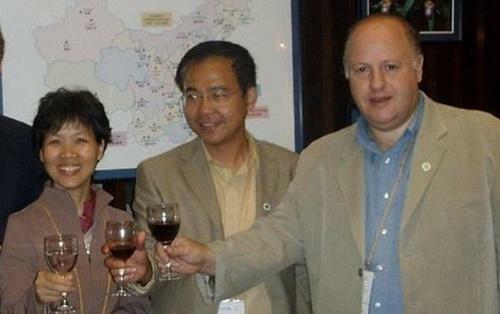
Peter Daszak toasts with Wuhan Institute of Virology 'bat lady' Shi Zhengli

The decision by the Department of Health and Human Services was based on findings by the House Oversight Committee, which announced on Friday that EcoHealth and Daszak had been disbarred.

"Justice for the American people was served today," said Oversight Chairman James Comer (R-KY) in a statement. "Bad actor EcoHealth Alliance and its corrupt former President, Dr. Peter Daszak, were formally debarred by HHS for using taxpayer funds to facilitate dangerous gain-of-function research in China. Today’s decision is not only a victory for the U.S. taxpayer, but also for American national security and the safety of citizens worldwide."

EcoHealth funding had been suspended in May by HHS, which recommended a permanent ban on funding the nonprofit.

"Given that a lab-related incident involving gain-of-function research is the most likely origin of COVID-19, EcoHealth and its former President should never again receive a single cent from the U.S. taxpayer," Comer continued.

As journalist Paul Thacker noted in Junethe NIH lied about EcoHealth's gain-of-function research, feeding lies to reporters, while lying to Congress. Meanwhile, former NIAID director Dr. Anthony Fauci 'prompted' the fabrication of a paper by a cadre of scientists aimed at disproving the Covid-19 lab-leak theory.

According to US Right to Know, emails obtained in 2020 revealed that a statement in The Lancet authored by 27 prominent public health scientists condemning “conspiracy theories suggesting that COVID-19 does not have a natural origin” was organized by employees of EcoHealth Alliance, a non-profit group that has received millions of dollars of U.S. taxpayer funding to genetically manipulate coronaviruses with scientists at the Wuhan Institute of Virology.

The emails obtained via public records requests show that EcoHealth Alliance President Peter Daszak drafted the Lancet statement, and that he intended it to “not be identifiable as coming from any one organization or person” but rather to be seen as “simply a letter from leading scientists”.

To review;

The US was doing risky gain-of-function research on US soil until 2014, when the Obama administration banned it. Four months before the ban, Dr. Fauci offshored it to Wuhan, China through New York nonprofit, EcoHealth Alliance.

After Sars-CoV-2 broke out down the street from the Wuhan Institute of Virology, Fauci engaged in a massive campaign to deny the possibility of a lab-leak from the lab he funded, and instead pin the blame on a yet-to-be discovered zoonotic intermediary species.

And if you'd like to dig even deeper, this is perhaps the best, most comprehensive summary of the "proximal origin" timeline.

Further reading:

JPM25: Takeda spotlights 6 pipeline assets that could pull down up to $20B in collective peak sales

 Among the myriad drugmakers laying out their plans for the future at this year’s J.P. Morgan Healthcare Conference, Takeda said it's laser-focused on six pipeline assets that could each reel in blockbuster-level sales down the line.

The emphasis on the half-dozen future medicines will be essential for Takeda as the company’s lead product, Entyvio, inches toward expected biosimilar competition in 2031.

As it stands, Takeda is banking on the success of six main mid- and late-stage candidates: oveporexton, zasocitinib, rusfertide, fazirsiran, mezagitamab and elritercept.

Assuming they all win approval, the clutch of potential new drugs could collectively generate peak sales between $10 billion and $20 billion—representative of roughly one-third to two-thirds of Takeda’s current annual revenue—CEO Christophe Weber said during the company’s conference presentation Tuesday.

Of those assets, Weber put the most emphasis on the narcolepsy type 1 candidate oveporexton, the psoriasis asset zasocitinib and the company’s potential polycythemia vera treatment rusfertide, all of which are expected to deliver phase 3 data this year.

Takeda’s oral orexin receptor 2 agonist oveporexton could eventually hit peak sales between $2 billion and $3 billion, Takeda noted in its presentation.

The “key” to the narcolepsy type 1 asset, according to Weber, is its ability to mimic the body’s natural orexin cycle. Orexin is a neuropeptide lacking in patients with narcolepsy that helps regulate waking, wakefulness, appetite and energy.

In terms of the med’s commercialization potential, Weber described narcolepsy type 1 as a rare disease that’s “not so rare,” noting that there are about 100,000 patients living with the condition in the U.S. The challenge in attempting to market a narcolepsy treatment is that many patients remain undiagnosed or misdiagnosed, Weber explained.

“The treatment rate is about 75%, so we think that if you bring a very innovative medicine like oveporexton, you can really change the diagnosis level and really help these patients who don’t have a very good solution right now to treat narcolepsy,” the CEO said.

Looking ahead to the projected launch, Weber noted that Takeda is exploring whether to wed the medication with a digital companion for monitoring patients' sleep. The company is also looking into artificial-intelligence-based algorithms to diagnose narcolepsy type 1 faster, he said.

As for Takeda’s psoriasis and psoriatic arthritis candidate zasocitinib, the company expects its drug “will have a much higher efficacy" than the current TYK2 inhibitor on the market, Weber said. If approved, the drug would challenge Bristol Myers Squibb’s Sotyktu, the first-in-class TYK2 inhibitor.

Takeda will plot out a “tactical” launch for the drug should it pass muster with regulators, Weber said, noting that his company has “learned a lot from BMS’ experience” with marketing Sotyktu.

Takeda expects that zasocitinib, if approved, could generated peak sales in a range of $3 billion to $6 billion.

Meanwhile, the hepcidin mimetic peptide rusfertide, being developed in the blood cancer polycythemia vera, could go on to generate $1 billion to $2 billion at peak if it passes muster with regulators, according to Weber's presentation.

As it stands, patients living with the serious form of cancer are limited to treatment options like phlebotomy, which is inconvenient and often insufficient, Weber pointed out. The CEO expects that an approval of rusfertide “could change the paradigm of treatment of this disease.”

As for the remaining assets in Takeda’s class of expected near-term approvals, the company is developing fazirsiran in alpha-1 antitrypsin related liver disease, mezagitamab in immune thrombocytopenia and immunoglobulin A nephropathy, and elritercept in myelodysplastic syndromes. If approved, the company expects those drugs to generate peak sales between $1 billion and $3 billion each.

Takeda certainly needs to pad out its pipeline given that the company’s lead product, Crohn’s disease and ulcerative colitis med Entyvio, is set to face biosimilar competition starting in 2031, according to Weber. By then, the drug is expected to reach peak sales of about $7.5 billion to $9 billion.

Meanwhile, Takeda will “not sit idle” when it spotlights promising external innovation, Weber added, highlighting the potential for business development in the form of in-licensing moves.

From now until 2031, Weber said he expects Takeda to thrive thanks to the waning impact of Vyvanse generics. The drugmaker has been weathering copycat competition to its flagship attention-deficit/hyperactivity disorder med for about two years now, Weber pointed out.

But with those pressures fading and Entyvio competition not expected until the start of the next decade, Takeda is looking forward to about five years of “limited generic exposure,” Weber said. 

https://www.fiercepharma.com/pharma/jpm25-takeda-spotlights-6-later-stage-assets-could-subvert-entyvio-pressures-20b-collective

Analysts tip Eisai, Biogen and Lilly to drive eightfold explosion in Alzheimer's market value

 GlobalData analysts are predicting an Alzheimer’s disease market boom, tipping its value across major regions to increase eightfold in a decade as therapies address unmet medical need.

The analysts valued the Alzheimer’s market across the U.S., France, Germany, Italy, Spain, U.K., Japan and China at a combined $2.4 billion in 2023. That figure says more about the dearth of treatment options than the needs of patients: Western populations are aging, and an estimated 4% of people aged 65 years and older in the U.S. alone have a dementia diagnosis, according (PDF) to the Centers for Disease Control and Prevention. The constraint has been a lack of good drugs to treat those patients.

Eisai and Biogen, with Leqembi, and Eli Lilly, with Kisunla, have begun the process of establishing a drug arsenal for Alzheimer’s. Philippa Salter, managing neurology analyst at GlobalData, said in a statement that the companies will turn their early-mover advantage into market leadership. Salter is tipping sales of Leqembi and Kisunla to reach $3.6 billion and $3.8 billion, respectively, by 2033.

The forecast makes Leqembi and Kisunla key building blocks of GlobalData’s prediction that the overall Alzheimer’s business across the eight major markets will grow to $19.3 billion by 2033. Salter identified Anavex Life Sciences’ ANAVEX2-73, TauRx Therapeutics’ LMTX and Novo Nordisk’s semaglutide as other molecules that could contribute to the growth of the market in the coming years.

For its part, Novo’s assessment of semaglutide, the active ingredient in Ozempic and Wegovy, in Alzheimer’s is built on a series of studies that have linked GLP-1 analogs to improved outcomes in the neurodegenerative disease. None of the studies prove the mechanism works in Alzheimer’s, but the signs were sufficiently encouraging to persuade Novo to run a trial that could boost the already rocket-propelled GLP-1 market.

That trio of molecules stands out in the late-stage pipeline because of their novel mechanisms, convenient oral administration and improved safety profiles compared to Leqembi and Kisunla, according to GlobalData. The fact that Leqembi and Kisunla are “only considered moderately effective” leaves room for better drugs, the analysts said, and spurs ongoing work toward the end goal of preventing disease.

“Key opinion leaders interviewed by GlobalData did not believe there will ever be one product that can cure AD. Rather, they consistently expressed that the future of AD treatment will entail the combinatory use of preventative, symptomatic and disease-modifying products,” Salter said. “Despite the significant anticipated growth for the AD market, many opportunities remain for developers.”

https://www.fiercepharma.com/marketing/analysts-tip-eisai-biogen-and-lilly-drive-eightfold-explosion-alzheimers-market-value

JPM25: New Acadia CEO eyes $1B in sales

 With just over 100 days as CEO now under her belt, Catherine Owen Adams is looking to cruise rare disease-focused Acadia Pharmaceuticals into its first $1 billion sales year.

Achieving the milestone will require the company’s two marketed products, Parkinson’s disease-related psychosis med Nuplazid and newer Rett disease treatment Daybue, to continue on their current growth trajectories. As it stands, both products are in line to grow sales within their approved indications, Acadia emphasized during its presentation at this year’s JP Morgan Healthcare Conference. 

After Acadia generated $726 million in 2023, the company forecast its 2024 sales would reach between $940 million and $960. The company has yet to report full-year 2024 financial results.

Still, a $1 billion year would mark an important milestone for the 31-year-old biopharma firm.

Acadia's Nuplazid (pimavanserin) was approved in 2016 and took center stage in a safety and marketing controversy two years later. While nothing came of a DOJ investigation that kicked off in 2019, the FDA added another blow when it repeatedly snubbed the company’s efforts to move the drug into other patient populations, including those with dementia-related psychosis and those with Alzheimer’s disease-related psychosis.

Finally in 2024 after failing to meet the mark in a phase 3 study testing Nuplazid as a treatment for negative symptoms of schizophrenia, the company called it quits on label expansion efforts for the drug.

Despite the hard stop on further studies, there’s still room to grow in the drug’s currently approved patient population, Acadia’s new CEO Owen Adams told Fierce Pharma on the sidelines of the conference. Around 50% of the 1 million Parkinson’s disease patients in the U.S. are at risk of developing hallucinations or delusions over the course of their disease, but company research shows that fewer than 10% of caregivers and patients are aware of the symptoms.

Owen Adams joined Acadia at the end of September, leaving her role as Bristol Myers Squibb’s general manager of U.S. operations for the job. Before her five-year stint at BMS, she served in various positions at Johnson & Johnson for 25 years.

Outside of her attraction to Acadia’s commercial portfolio and pipeline, the new CEO felt a personal pull to the company and its focus in neuropsychology. She herself is a caregiver to her parents, both of whom have Alzheimer’s disease.

A significant focus of Owen Adams' first full year as CEO will be on Rett disease treatment Daybue. The drug won its FDA approval in 2023 and continues to grow at a rapid clip, generating $91 million in the third quarter of 2024.

An approval in Europe could drive further growth, as there are about 9,000 to 12,000 patients with the disease in the region, according to the company.

Having a product that’s “clearly available for our patients” globally is a key part of the company’s future, Owen Adams said. Acadia is already preparing for Daybue’s European rollout with an EU launch team, and it's anticipating initial sales from its ongoing launch in Canada this year.

In the U.S., Acadia's goal is to continue increasing the company’s field sales force to better support patients and physicians through the early months of treatment.

After a strong launch right out the gate, the team at Acadia noticed that a “significant amount” of patients were stopping treatment in the first two to three months due to gastrointestinal-related adverse effects, Owen Adams said.

However undesirable, sticking with the twice-daily treatment through the early side effects is crucial, she stressed. Daybue is the first treatment for Rett disease, a genetic neurodevelopmental disorder that hinders verbal and nonverbal communication, leaving patients “trapped in their own body,” Acadia’s former head of rare diseases Kathie Bishop, Ph.D., previously told Fierce Pharma.

With Daybue, however, patients' families are seeing their loved ones “socially interact differently," Owen Adams said. 

"They're seeing eye contact differently, they're seeing motor function improved, they're seeing all sorts of improvements," she explained. 

Now, amid Acadia's increased launch efforts, 66% of active patients have been on treatment for more than 10 months. About 1,600 patients have been treated to date, according to Acadia figures.

Elsewhere, Acadia’s pipeline features candidates for other rare diseases with no approved treatments such as hyperphagia (extreme hunger) in rare neurobehavioral disease Prader-Willi syndrome and Lewy body dementia with psychosis. The ability to be first-in-class, or best-in-class, is a priority when exploring new assets, according to Owen Adams.

As it stands, the company is sitting on more than $700 million ready to invest in potential business development deals. In November, Acadia flexed its dealmaking muscles with a deal worth up to $582 million for Danish biotech Saniona’s essential tremor candidate. 

In the licensing agreement, the company committed to provide funds for Saniona’s ongoing phase 1 study and take responsibility for future clinical development, regulatory submissions and commercialization. 

https://www.fiercepharma.com/pharma/jpm25-after-taking-wheel-acadia-new-ceo-catherine-owen-adams-looks-steer-toward-1b-2025

Janet Yellen throws another can of garbage into the Biden dumpster fire economy

 By Jack Hellner

After four years of allowing Joe Biden and his fellow Democrats to spend up a storm and calling inflation "transitory." Treasury Secretary Janet Yellen is suddenly concerned about the debt ceiling.

In Her Last Official Act, Yellen Warns US Will Hit Debt Ceiling One Day After Trump Inauguration

This is a like a goofus who's maxxed out her credit cards and is now complaining about her credit limit.
 
Yellen didn't complain at all the last two months as Biden has been sending money to green pushers as fast as he could.
 
Biden has been paying off student loans illegally ... and Yellen didn't say a word. 
 
No complaints as Biden sent unlimited funds to Ukraine. 
 
Didn't say a word as Biden ran up a $2 trillion deficit in a supposedly great economy. 
 
Nor did she say a word when Democrats threatened to close the government instead of agreeing to lift the debt ceiling. 
 
But as soon as Trump takes office she says the U.S is in a world of trouble.
 
Of course, Yellen also didn't understand inflation as it hit her in the face
As Americans have continued to sound off over sticker shock on retail and grocery shelves, the U.S. Treasury secretary admitted Wednesday that her public predictions were wrong.
 

In early June 2021, Yellen had tamped down inflationary concerns, claiming rising costs and the contributing factors were "transitory," a term used to describe temporary market conditions.

She blamed consumers for defining 'transitory' as transitory, and not the creative way she did, which was not transitory.
 
As incoming Vice President J.D. Vance says, they are being handed a dumpster fire as Biden and most of the media continue to claim how great everything is.