Search This Blog

Saturday, January 18, 2025

Biden’s Crowning Legacy: 20% Bidenflation And The Economic Carnage Left Behind

 Which is the bigger cover-up—Biden’s frailties or Bidenflation?

The so-called experts, Nobel laureates, and leftist media elites have the chutzpah to hoodwink Americans into believing inflation is ‘under control’ just because CPI dropped from its 9.1% peak under Biden. But ask any hardworking family, and they’ll tell you the truth—prices didn’t go back down; they just stopped rising as fast. Americans are still hurting and will continue to hurt in the coming years. That’s the disconnect. Wages haven’t kept up, grocery bills are still painful, and homeownership is a pipe dream for millions. While the experts cheered a “cooling” inflation rate, voters felt the real cost of Bidenflation—and that’s why Democrats suffered at the ballot box. Washington ignored the pain, and Americans made sure they paid the price.

When Biden took office, inflation was at just 1.4%. Since March 2021, inflation has consistently remained above the Federal Reserve's 2% target (46 consecutive months).

Under Biden, the federal debt has increased by $8.4 trillion. To finance the President’s spending spree, the Federal Reserve printed money from nothing. The increased money supply, without a corresponding increase in goods and services, reduced the value of each dollar, causing prices to rise quickly and leading to high inflation, effectively acting as a hidden tax on everyone.

Prices have increased by 20%, while real wages have declined by 3.2%. Average weekly earnings for all employees dropped 3.2% to $385.34 in December 2024 from $397.9 in January 2021, when Biden-Harris took office.

Think of it as the 20% hidden tax Americans pay yearly.

According to the government’s CPI inflation calculator, an American now needs an additional $206.52 to cover the same $1,000 in family expenses as in January 2021. A middle-class family making $75,000 today has the same buying power as someone earning $62,500 in 2021. For millions, that means less food on the table, delayed homeownership, and a future filled with financial anxiety.

Biden’s Inflation Legacy: A Stark Contrast to Past Presidents

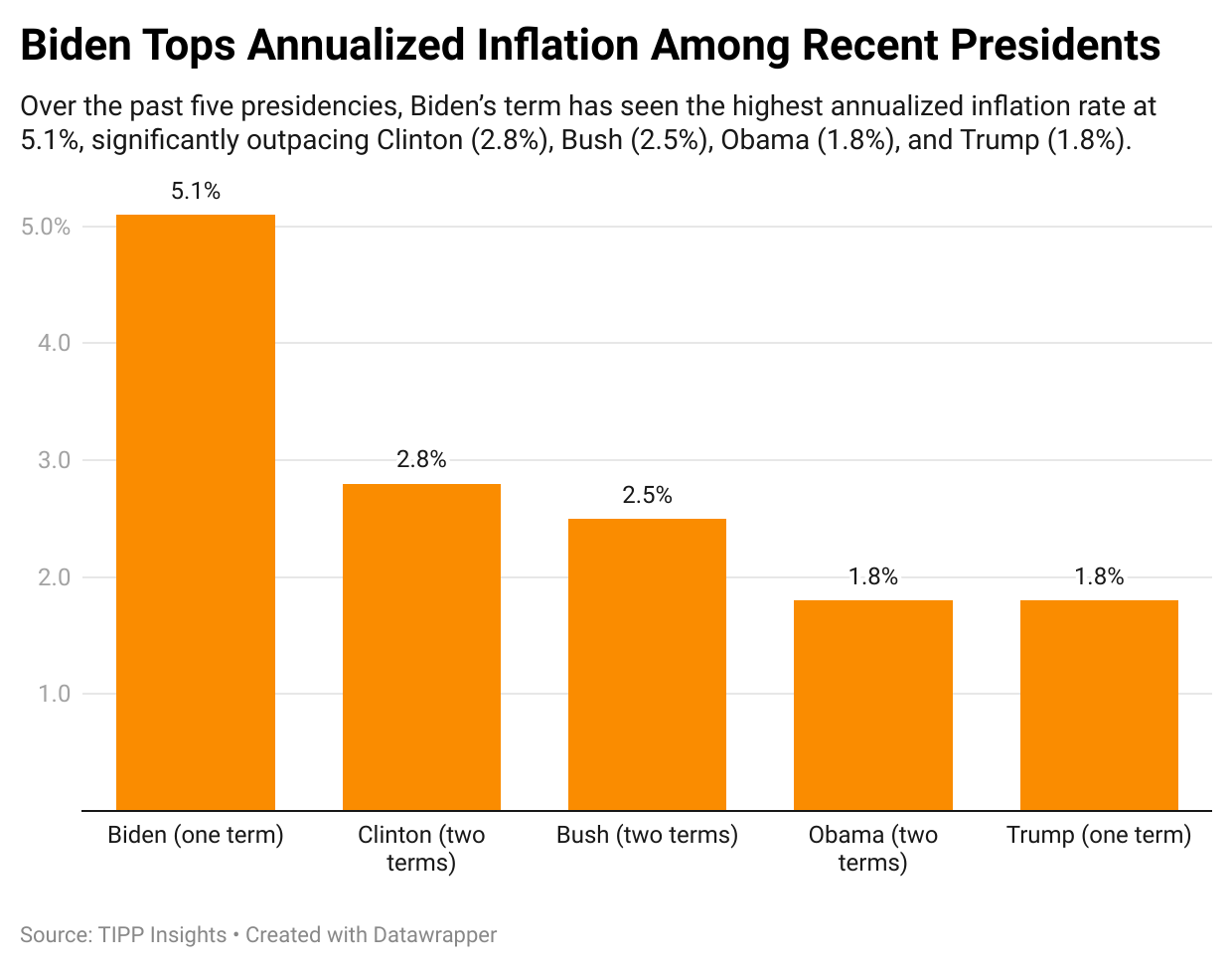
Inflation has been a defining economic issue during Biden’s presidency, reaching levels far beyond those seen in previous administrations. The chart below compares annualized inflation rates under the last five presidents, showing Biden’s term at 5.1%, significantly higher than Clinton, Bush, Obama, and Trump.
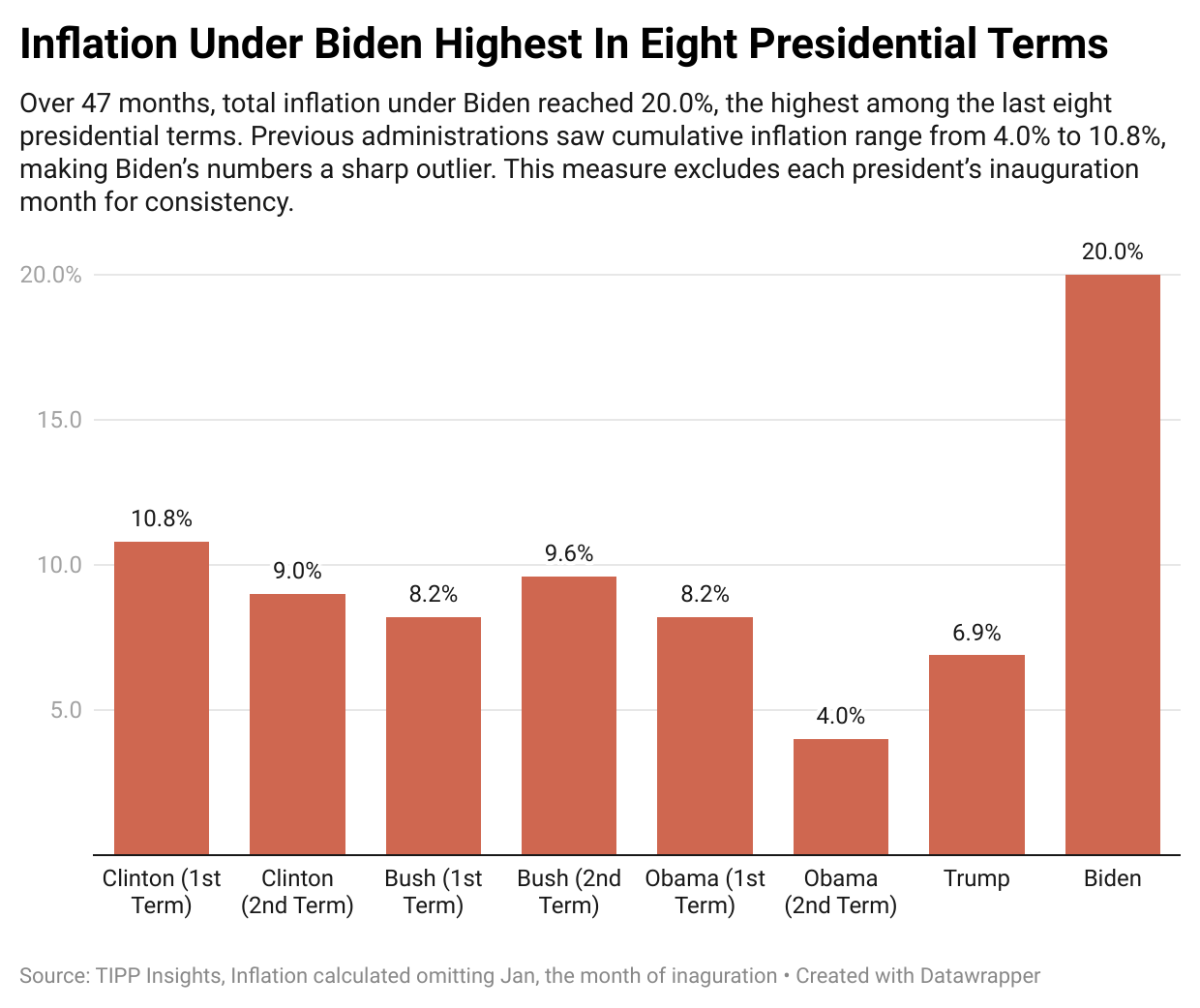
The chart below examines total inflation over 47 months, illustrating how price increases under Biden (20.0%) dwarf those of past presidential terms, where the highest previously recorded was 10.8% under Clinton’s first term. This cumulative inflation measure, which excludes each president’s inauguration month for consistency, highlights the broader economic impact of sustained price hikes during Biden’s tenure.
Economic Carnage

A recent MarketWatch survey found that 48.6% of Americans consider themselves to be “broke,” and 66.2% feel they are “living paycheck to paycheck.”

A family earning $75,000 in 2021 now needs $90,000 just to maintain the same lifestyle—but wages haven’t kept up. Americans are taking second jobs, drowning in credit card debt, and even skipping meals to bridge the gap.

American household debt has increased significantly amid challenging economic conditions. U.S. credit card debt hit a record $1.17 trillion in Q3 2024, up $24 billion from the previous quarter and 8.1% higher than a year ago. The average credit card balance per consumer is $6,329, rising 4.8% year-over-year. 28% of Americans reported increased debt over the last three months, often due to persistent inflation and high interest rates, which have strained household finances. Credit card interest rates remain above 20%, near an all-time high, disproportionately affecting lower-income households.

Housing affordability has also collapsed due to skyrocketing home prices and high mortgage rates. Buying a home in America now requires an income of $107,700—nearly double the $56,800 needed in 2019. Just 36% of households can afford a new home today, compared to 59% five years ago. Soaring home prices and mortgage rates that nearly doubled to 7.3% have locked an entire generation out of homeownership. Even with rates easing slightly, affordability remains a major casualty of inflation.

Nearly half of all renters spend more than 30% of their income on rent, with a quarter spending over 50%, making it difficult to save for a down payment.

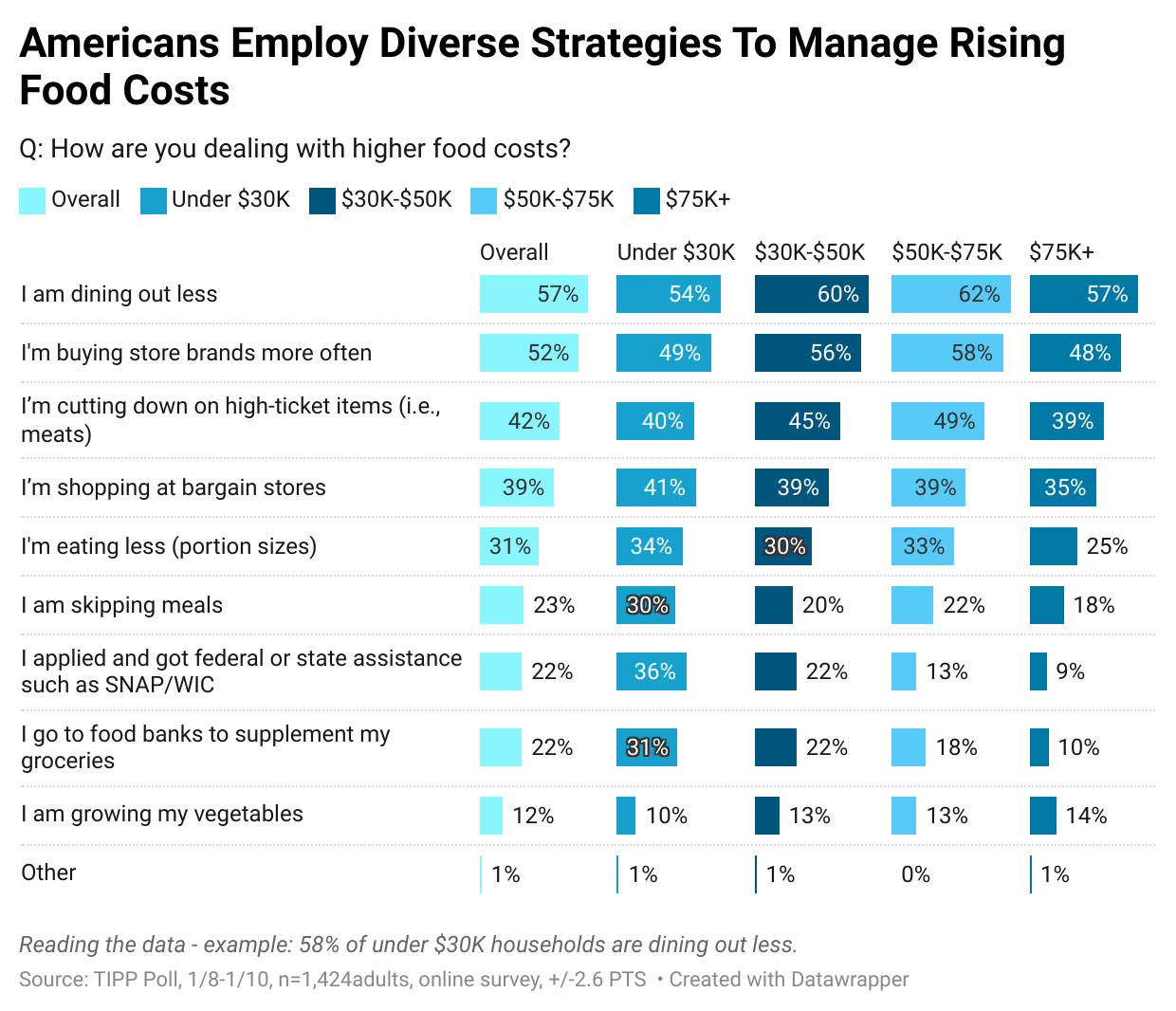
Inflation is hitting wallets hard. The LendingTree survey found that 78% of consumers view fast food as a luxury purchase because of rising costs, with 62% eating it less frequently. Americans adopt various strategies in their struggle to adjust to higher food costs. Some concerning trends include 31% eating less (reducing portion sizes) and 24% skipping meals.

Hunger Games in the First World: Americans Struggle to Afford Food Under Bidenflation

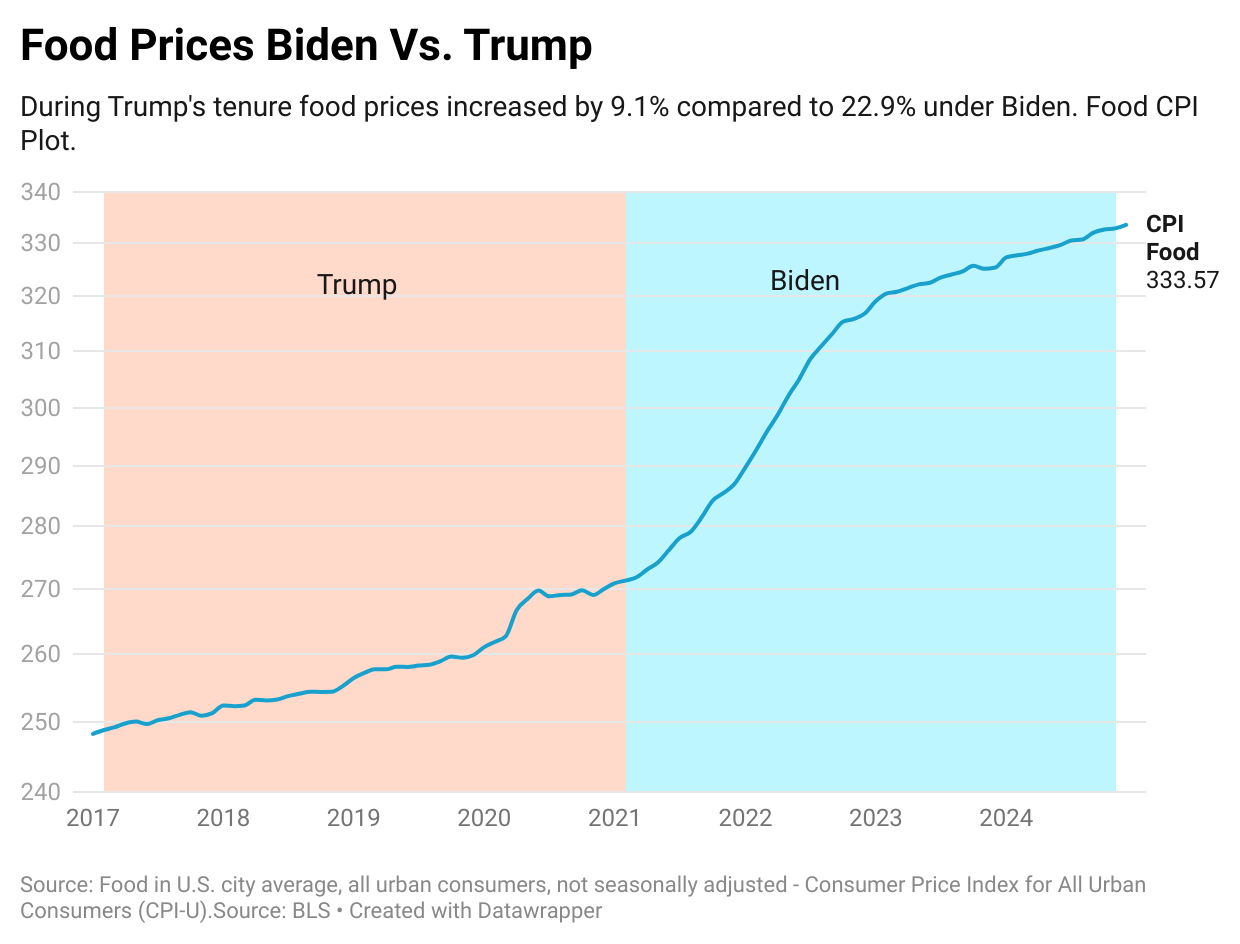
Food prices surged 22.9% under Biden, more than double the 9.1% increase under Trump. The data makes it clear—Bidenflation has made grocery shopping a financial burden.
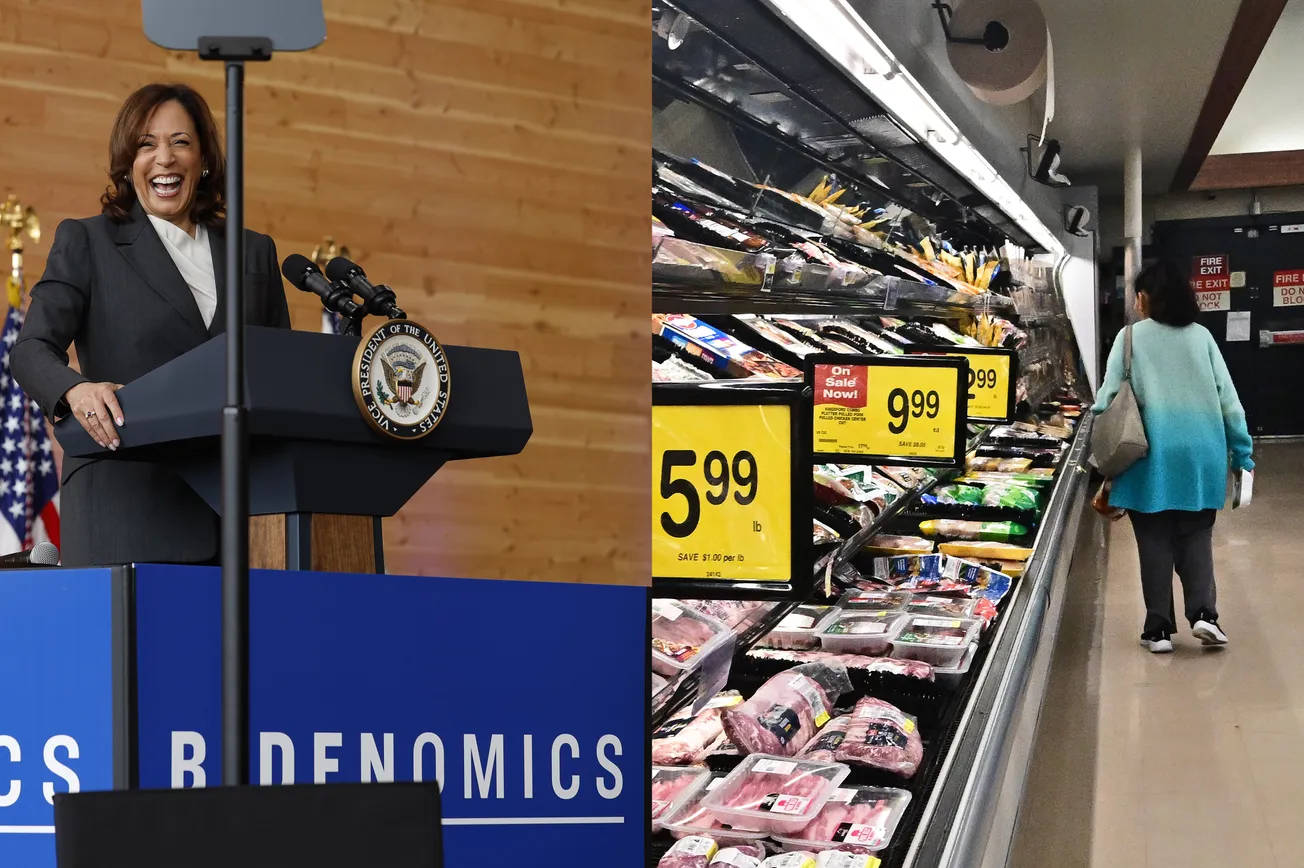
Photos: Getty Images, combined by TIPP Insights

Americans are making hard choices just to afford food. The latest TIPP Poll finds that 23% are skipping meals, 22% rely on food banks, and over half are cutting back on dining out and meat. Bidenflation has turned grocery shopping into a survival game for middle-class families feeling the squeeze.
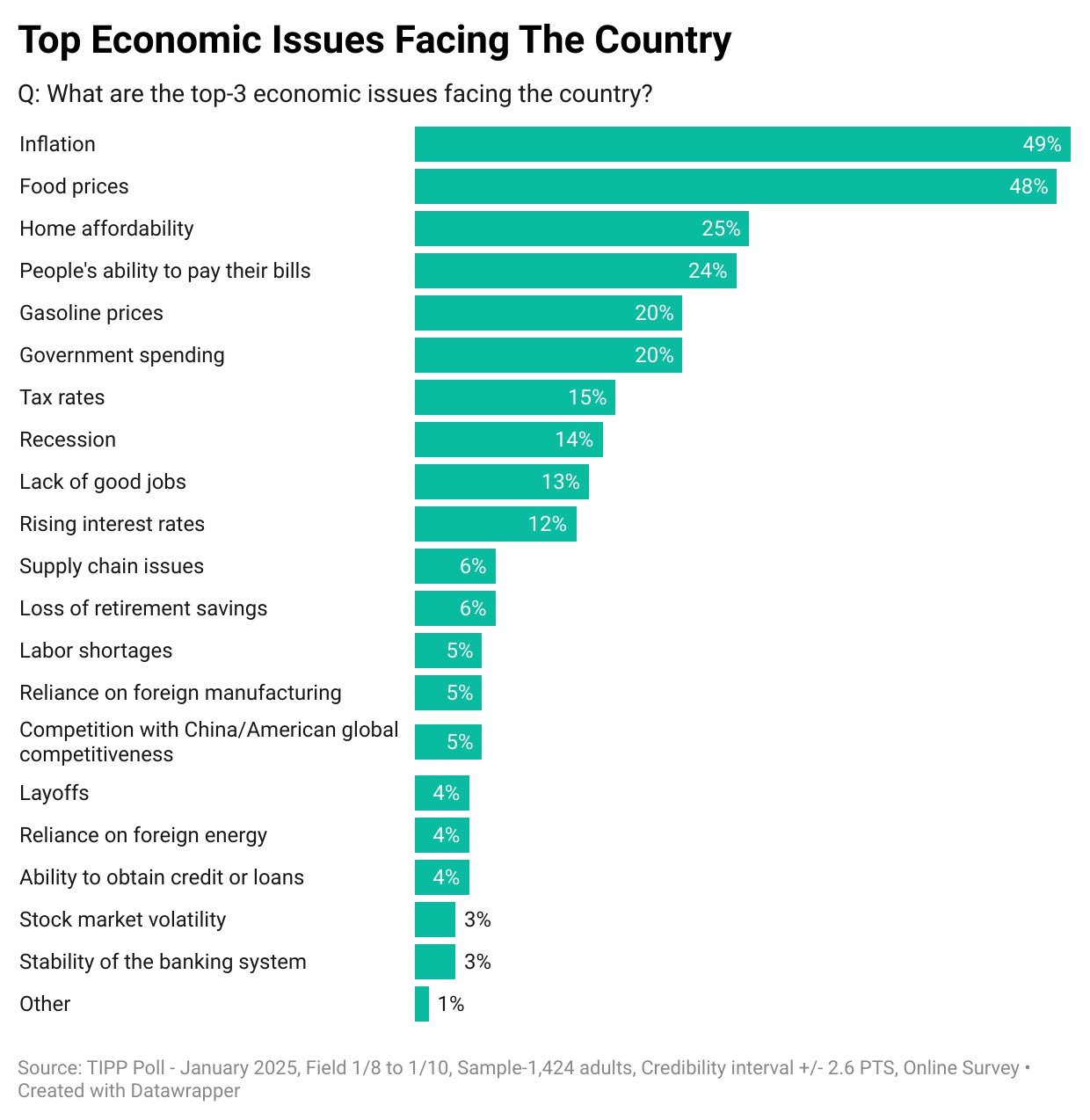
Therefore, it is unsurprising that inflation and food prices emerged as the top economic issues among Americans in the January TIPP Poll conducted after the presidential election.
CPI Report

The government's Consumer Price Index (CPI), released on Wednesday, showed a 2.9% year-over-year price increase from December 2023 to December 2024.

After adjusting for seasonality, the Consumer Price Index (CPI) increased by 0.4% between November 2024 and December 2024. During the same period, food prices increased by 0.3%, energy prices increased by 2.6%, and core prices (all items except food and energy) increased by 0.2%.

TIPP CPI

We developed the TIPP CPI, a metric that measures the rate of change using February 2021, the month after President Biden's inauguration, as the base. All TIPP CPI measures are anchored to this month, making them exclusive to the economy under Biden-Harris.

What is the motivation behind the TIPP CPI?

The official BLS CPI year-over-year calculations compare prices to already inflated bases, and these statistics could mask the full impact.

Washington brags about a ‘cooling’ 2.9% inflation rate—but Americans know better. The truth? Prices are up 20% since Biden took office. Our exclusive TIPP CPI exposes the full impact, revealing the economic pain Washington won’t admit.

We use the relevant data from the Bureau of Labor Statistics (BLS) to calculate the TIPP CPI, but we adjust the period to Biden's tenure. When discussing the TIPP CPI and the BLS CPI, we convert the index numbers into percentage changes to better understand and compare them. CPIs are like index numbers that show how prices affect people's lives, like how the Dow Jones Industrial Average reflects the stock market.

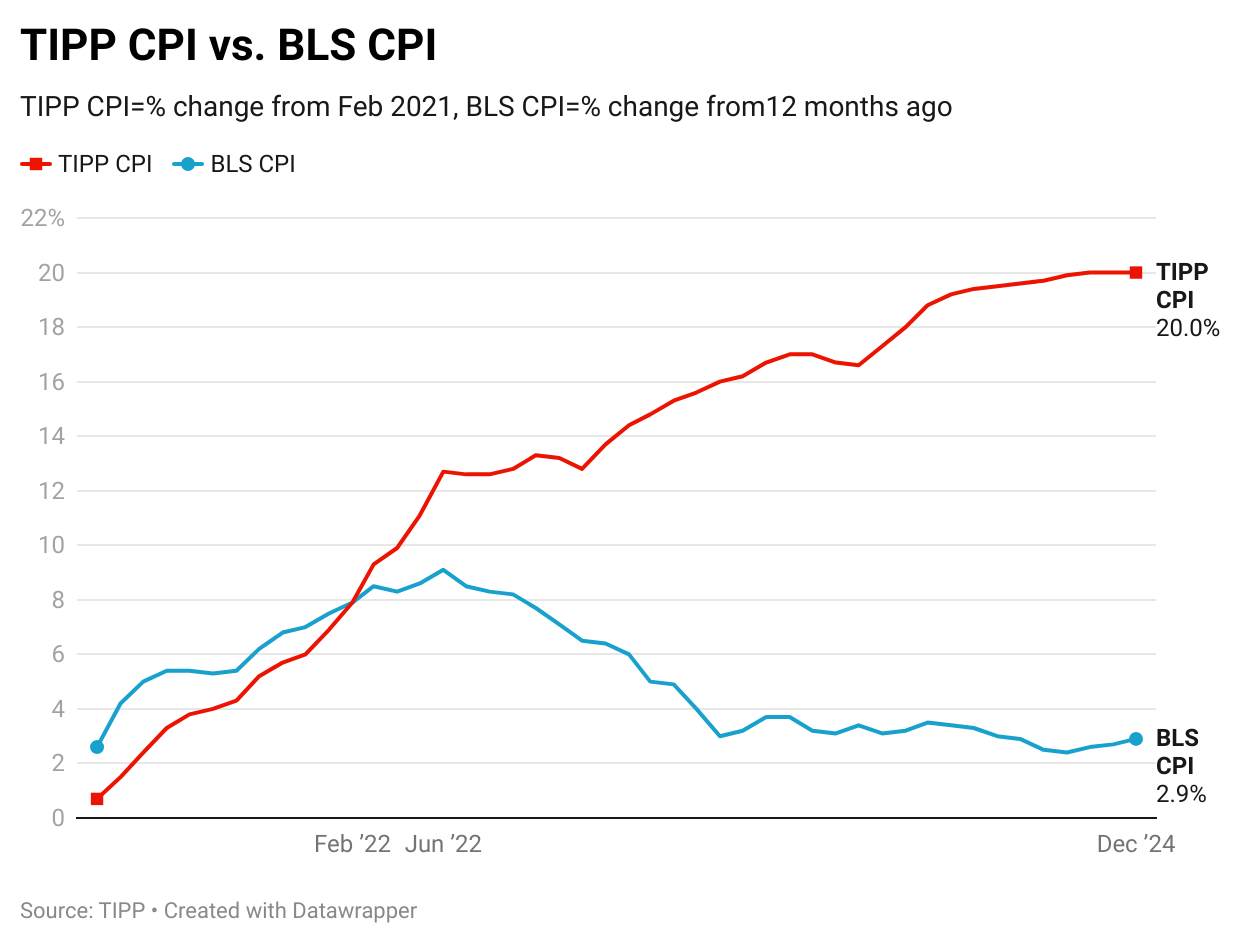
Bidenflation, as measured by the TIPP CPI using the same underlying data, stayed steady at 20.0% in December 2024. Starting at 17.3% in January, it steadily climbed throughout the year, reaching 19.2% by April and incrementally rising month by month to hit 20.0% in October. It remained at 20% in November. Biden finishes his term with 20%; since the month of January will be shared by both Biden and Trump, we ignore it.

TIPP CPI vs. BLS CPI

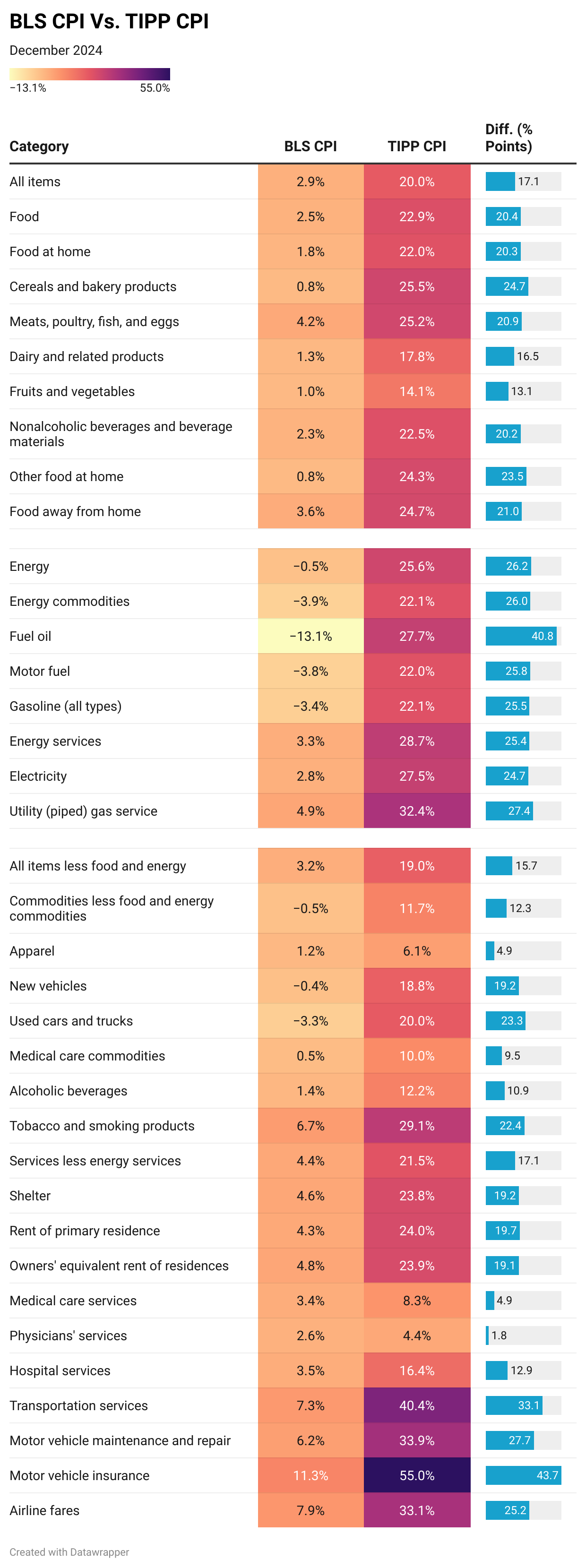
The following two charts present details about the new metric.

For December 2024, the BLS reported a 2.9% annual CPI increase. Compare this to the TIPP CPI of 20.0% - a 17.1-point difference. Prices have increased by 20.0% since Biden-Harris took office. On an annual basis, the TIPP CPI rate is 5.1%.

Food prices increased by 22.9% under Biden-Harris per TIPP CPI, compared to only 2.5% as per BLS CPI, a difference of 20.4 points.

TIPP CPI data show that Energy prices increased by 25.6%. But, according to the BLS CPI, energy prices dropped by 0.5%. The difference between the two is a whopping 26.2 points.

The Core CPI measures the price increase for all items, excluding food and energy. The Core TIPP CPI is 19.0% compared to 3.2% BLS CPI, a 15.7-point difference.

Gasoline prices have increased by 22.1% since Biden-Harris took office, whereas the BLS CPI shows that they have declined by 3.4%, a difference of 25.5 points.

Shelter costs rose by 23.8% under Biden-Harris’s watch, compared to the BLS reading of 4.6%, a difference of 19.2 points.

TIPP CPI finds that Used car prices have risen by 20.0% during the current administration. Meanwhile, the BLS CPI reports that the prices have dropped 3.3%, a difference of 23.3 points.

Air ticket inflation is 33.1% compared to the BLS CPI’s 7.9%, a difference of 25.2 points.

Motor vehicle insurance increased by 55.0% compared to the BLS CPI’s increase of 11.3%, a difference of 43.7 points.


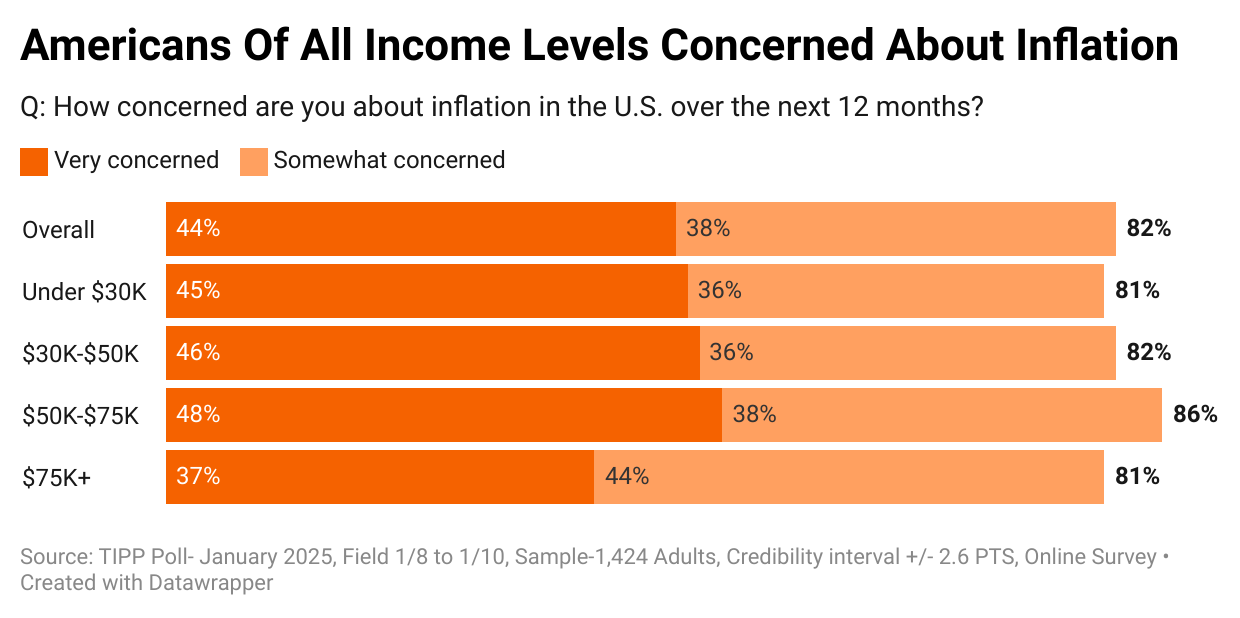
The latest TIPP Poll, completed in early January, shows that nearly eight in ten (82%) survey respondents are concerned about inflation. As the chart below shows, this concern is shared across income levels. The share of those “very concerned” is highest among the $75K+ households at 44% and tapers down as household income decreases, with 36% for both $30K-$50K and under $30K groups.
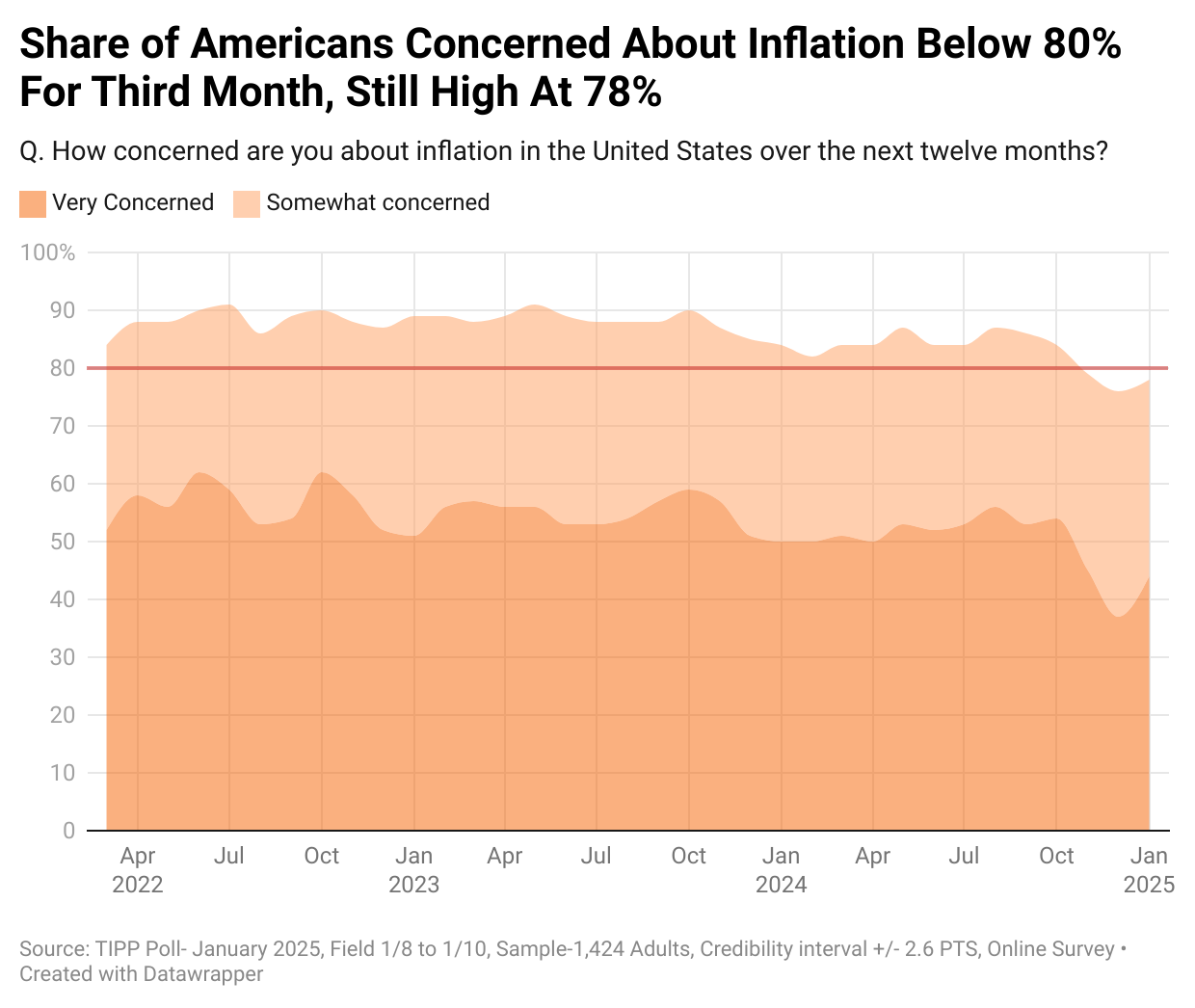
Since January 2022, inflation concerns have consistently remained above 80%. It’s welcome news that in November, the share of Americans who are concerned dropped below 80% for the first time in 33 months. In January it is 78%.
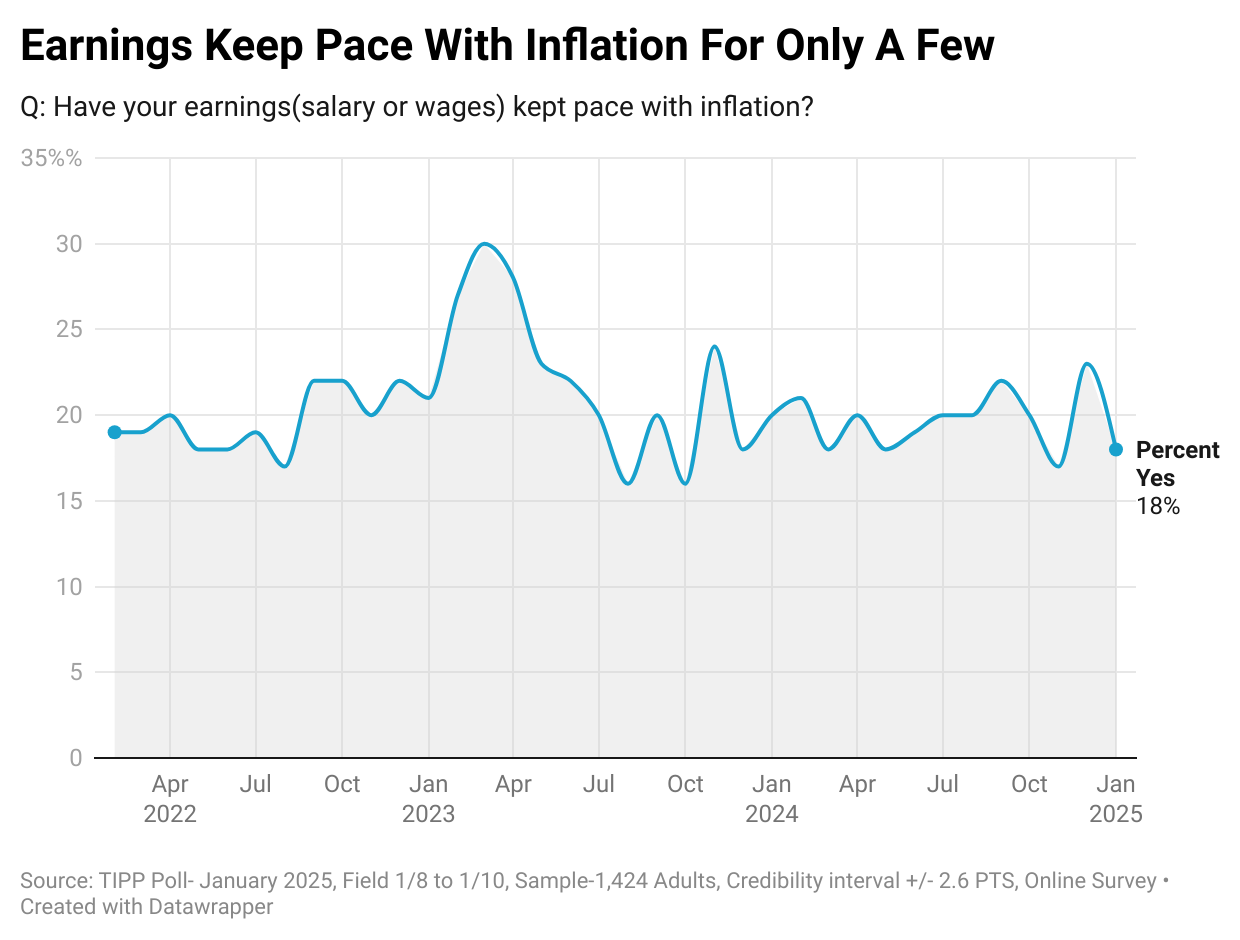
Over half (55%) say their wages have not kept up with inflation, while only one in six (18%) say their income has. Since January 2024, this statistic has moved in a tight 17% to 23% range.
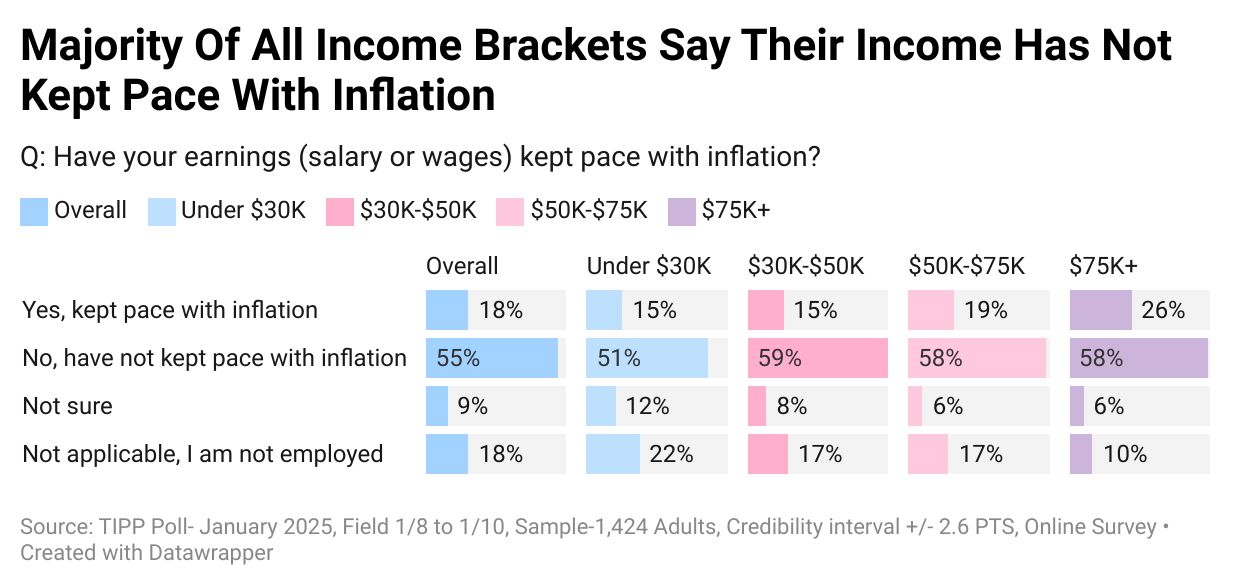
Our data shows that most households in all income brackets find that their earnings have not kept pace with inflation: 51% for households under $30K, 59% for households $30K to $50K, 58% for households $50K to $75K, and 58% for households $75K+.
Nominal wages represent the amount of money one earns without considering changes in the cost of living. On the other hand, real wages consider inflation and measure the purchasing power of wages. Real wages provide a more accurate reflection of what is affordable with the income earned by factoring in the changes in the cost of living.

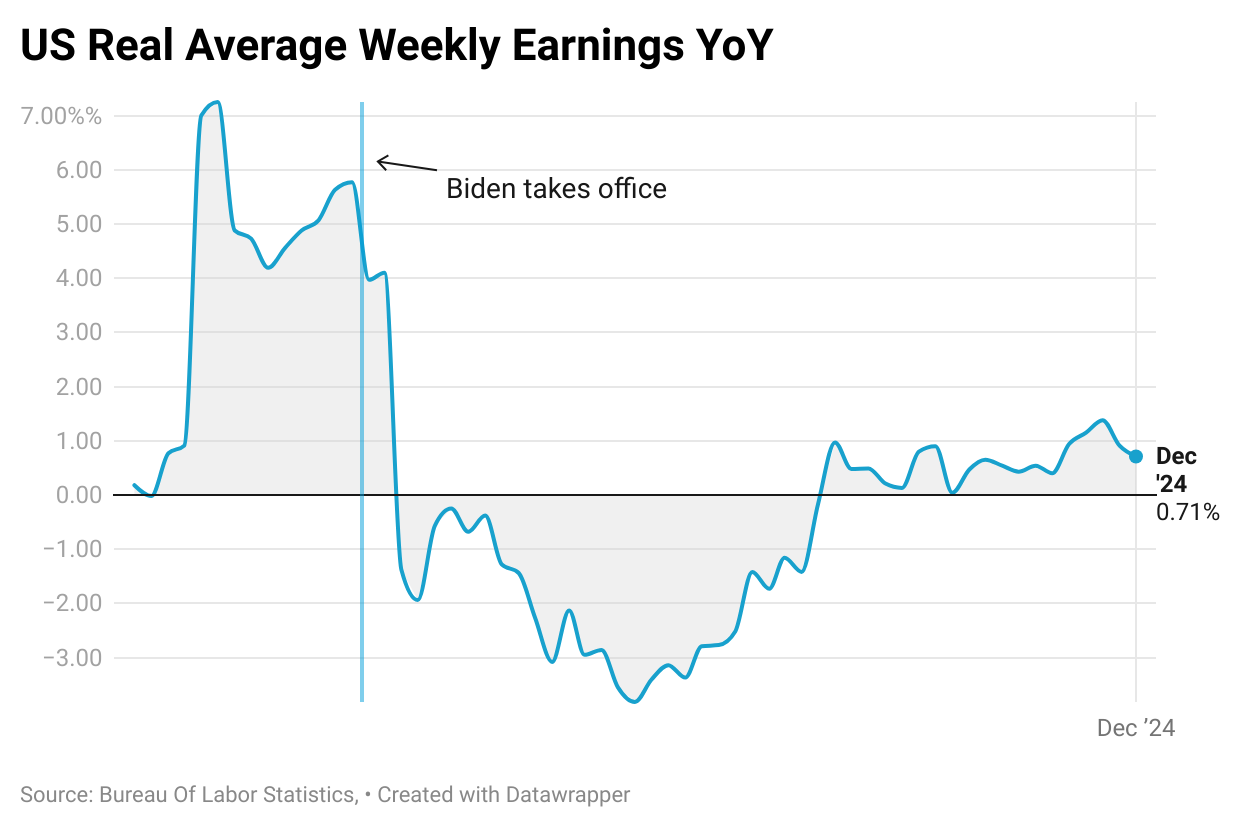
Real weekly wages, measured year-over-year, showed negative readings for 26 out of the 47 months during the Biden presidency from February 2021 to June 2024. The 26-month negative streak was broken in June 2023. Since then, the measure has posted positive readings.
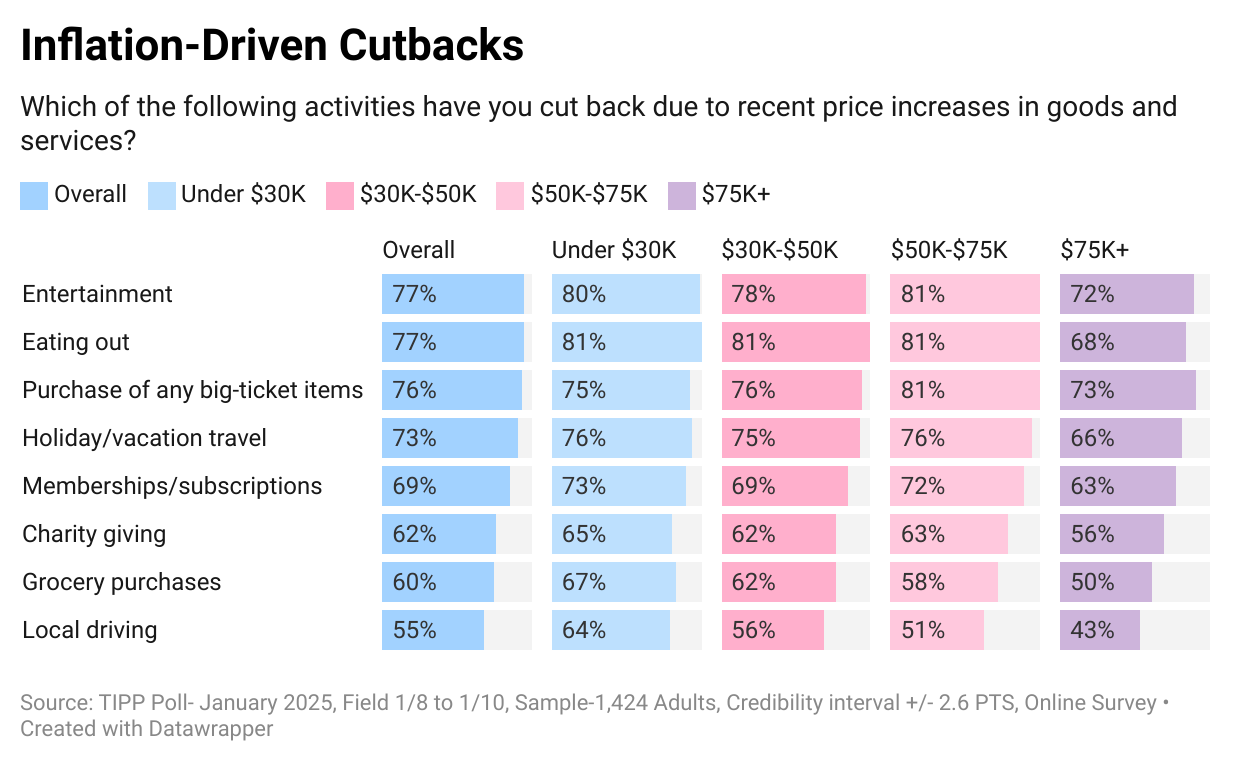
As a result of inflation, Americans are cutting back on household spending.

They are cutting back on entertainment (77%), eating out (77%), purchasing big-ticket items (76%), holiday/vacation travel (73%), and memberships/subscriptions (69%).

Nearly two-thirds (62%) are cutting back on charity giving. Over half (60%) spend less on groceries, and the high gasoline prices forced 55% to cut back on local driving.

The cutbacks are more prevalent among lower-income households than their higher-income counterparts.
Inflation Direction (Persistent)

The chart below compares the 12-month, 6-month, and 3-month averages with the latest reading for October 2024.
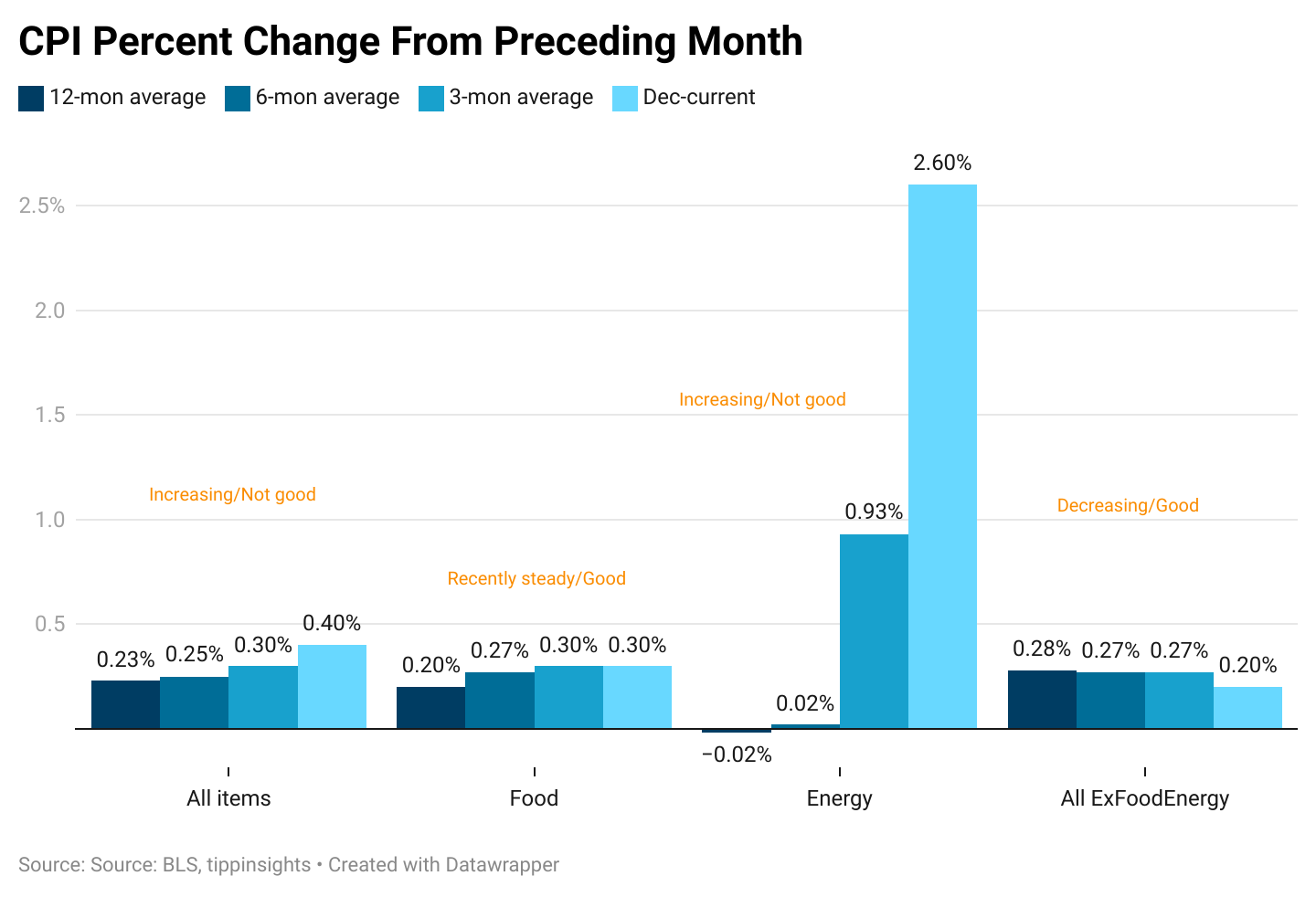
  • All Items: The latest increase of 0.40% is slightly above the 3-month average (0.30%), 6-month average (0.25%), and 12-month average (0.23%). This indicates a gradual uptick in recent months, suggesting that inflationary pressures remain persistent.
  • Food Prices: December’s 0.30% increase aligns with the 3-month average (0.30%) and is slightly above the 6-month average (0.27%) and 12-month average (0.20%). This signals stable but still elevated food inflation, keeping pressure on household budgets.
  • Energy Prices: Energy costs surged by 2.60% in December—far exceeding the 3-month (0.93%) and 6-month (0.02%) averages. This sharp increase reverses prior declines and raises concerns about renewed volatility in energy prices, which could drive broader inflation higher.
  • Core Inflation (All Items Less Food and Energy): Core inflation came in at 0.20%, slightly below the 3-month (0.27%) and 6-month (0.27%) averages but matching the 12-month average (0.28%). This indicates a modest easing in price pressures, but inflation outside food and energy remains sticky.

Based on the above chart, we concluded as follows:

  • This month, energy is the biggest inflation driver, raising concerns about renewed price volatility.
  • Food inflation remains steady but elevated, keeping pressure on consumer spending.
  • Core inflation shows slight easing, but underlying price pressures persist.

Biden’s legacy is written in red ink: 20% inflation, falling real wages, and trillions in new debt. For millions, his presidency meant higher prices, stagnant paychecks, and financial struggle unseen in decades.

Biden’s economy won’t just be a chapter in history—it’s a bill Americans will keep paying for years to come. As he exits, Americans are left with soaring debt, unaffordable homes, and wages that don’t stretch far enough. The scars of ‘Bidenflation’ won’t fade anytime soon.


https://tippinsights.com/bidens-crowning-legacy-20-bidenflation-and-the-economic-carnage-left-behind/

Biden touts record Obamacare signups, urges Congress to extend subsidies

 Nearly 24 million consumers have picked an Affordable Care Act health insurance plan for 2025, breaking last year's record enrollment, even though consumers have another week to sign up for coverage this year, Biden administration officials announced Wednesday.

The number of signups this year surpassed last year's record of 21.4 million people. And consumers have through Jan. 15 to select a health insurance plan from the federal marketplace, Healthcare.gov, according to the Centers for Medicare & Medicaid Services.

The record signups have been buoyed by the generous subsidies Congress passed during the COVID-19 pandemic, but outgoing Biden administration officials warned there's no guarantee they'll be extended beyond the end of this year.

Dig deeper:Why Americans pay so much more for health care in 2024

"Our efforts to lower healthcare costs and expand coverage are in jeopardy," Neera Tanden, the White House's director of domestic policy council, said on a Tuesday call with reporters. If the Republican-controlled Congress doesn't extend the enhanced subsidies beyond this year, "cost will essentially skyrocket for millions of Americans. The results would be catastrophic

Enhanced ACA subsidies expire next year

The Affordable Care Act, often called Obamacare, has always given taxpayer-subsidized credits to consumers based on their income levels to offset the cost of monthly health insurance premiums. Those subsidies became more generous under the American Rescue Plan Act in 2021 to ensure more Americans were covered during the COVID-19 pandemic. In 2022, the Inflation Reduction Act extended those subsidies through 2025.

So while health insurance costs have risen, consumers can still get sharply discounted insurance. Biden administration officials said 80% of consumers can get a health plan for $10 or less per month.

If the enhanced credits aren't extended beyond 2025, consumers' portion of their monthly insurance bills would increase more than 75% and rates in some states would more than double, according to an analysis by KFF, a health policy nonprofit.

In a statement, President Joe Biden touted his efforts to shore up ACA coverage, noting enrollment has nearly doubled since he took office.

"I urge Congress to double down on the progress we have made and ensure Americans have access to quality, affordable health care by extending the ACA premium tax credit this year," Biden said.

Costly care:Seven reasons why Americans pay more for health care than any other nation

What will Trump do?

While it's unclear how President-elect Donald Trump will approach the Affordable Care Act when he takes office later this month, he pushed unsuccessful efforts to repeal and replace the 2010 health care law during his first time. The Trump administration also expanded the use of short-term health insurance plans, which offered limited benefits and less expensive monthly premiums but denied coverage for existing medical conditions.

In his first term, Trump also cut the marketing outreach budget for navigators who help consumers sign up for marketplace insurance or Medicaid, the federal health care program for low-income families that was expanded in most states with funding from the ACA.

Brian Blase, a White House adviser during the Trump administration who runs the conservative think tank Paragon Health Institute, noted the record signups last year came amid consumer complaints that some were being switched from one plan to another without their permission.

“Unfortunately, the plans offer such low value that roughly half of enrollees need to receive giant subsidies that cover the entire premium cost in order to enroll," Blase said.

Republican Attorney Generals in 19 states sued to block the Biden administration's efforts to extend ACA coverage to people under the Deferred Action for Childhood Arrivals, or DACA, an Obama-era executive action that protected undocumented immigrants who arrived in the United States as children from deportation. DACA members, sometimes referred to as Dreamers, who number about 530,000, are still allowed to sign up for ACA coverage in 31 states.

"For the first time ever, and despite pending litigation, DACA recipients ... in 31 states can sign up for affordable marketplace coverage," said Xavier Becerra, secretary of the U.S. Department of Health and Human Services. "Very proud of that."

https://www.usatoday.com/story/news/health/2025/01/08/health-insurance-costs-could-skyrocket/77510005007/

Amazon puts its drone deliveries on hold following two crash incidents

 Amazon's drones won't be making any deliveries in the foreseeable future. According to Bloomberg, the company has paused all commercial drone deliveries in Texas and Arizona after a previously undisclosed event in which two of Amazon's MK30 drones had crashed at the Pendleton, Oregon airport it uses for testing. MK30 is the company's next-gen drone model, which is lighter and has a longer range than its predecessor, the MK27. The incidents took place in December, with one of the drones even catching fire after it fell. Amazon reportedly determined that its drones crashed due a software issue that's linked to the light rain drizzling at the time the tests were being conducted.

The company said, however, that the crashes weren't the "primary reason" why it's putting its drone deliveries on hold. Amazon spokesperson Sam Stephenson told Bloomberg that it's "currently in the process of making software changes to the drone" and that the operational pause is voluntary. After the updates are completed, Amazon still has to secure an approval from the Federal Aviation Administration before it can resume its operations. "Employees at the drone sites, who were told of the action Friday, will continue to be paid during the pause," Stephenson added.

In addition to the crashes in December, two MK30 drones collided during another test a few months earlier. Stephenson explained that Amazon expects to see incidents like these during testing and that they help the company improve the service's safety. Amazon has been sending out non-medical shipments via drones in Texas since 2022 before adding prescription medication a year later. In 2024, Amazon halted drone deliveries in California, but it also launched the service in Phoenix, Arizona.

https://www.engadget.com/big-tech/amazon-puts-its-drone-deliveries-on-hold-following-two-crash-incidents-140026835.html

German opposition leader vows to build 50 gas-fired power plants if elected

 Opposition leader Friedrich Merz, who is tipped to be Germany's next chancellor, has vowed to build 50 gas-fired power plants if his conservatives win the Feb. 23 snap election, the t-online news outlet reported on Sunday.

"We need to build 50 gas-fired power plants in Germany as quickly as possible, which will be connected to the grid immediately," Merz, who heads the CDU/CSU conservative bloc, told t-online in an interview.

Gas-fired electricity production in Germany jumped by a record 79% in November from the month before as utilities scrambled to offset a second straight month of sharply below-normal output from wind farms.

Wind power output was 25% below year-prior levels in October and November due to slow wind speeds, depriving power firms of a key electricity source just as winter set in. Wind farms supplied 27% of German utility electricity in 2023.

Merz, the head of Germany's CDU/CSU conservative bloc, is in line to succeed Social Democratic Chancellor Olaf Scholz, whose fractious coalition with the Greens and the pro-business Free Democrats collapsed in November over contradictory plans to revive the nation's ailing economy.

He told t-online it had been a "serious strategic mistake" by Scholz's government to "shut down the last three nuclear power plants that guaranteed reliable power generation in the middle of the energy crisis."

https://ca.news.yahoo.com/german-opposition-leader-vows-build-030306476.html

TikTok tells users it will be 'temporarily unavailable' in the US on Sunday

 TikTok told users in the United States late on Saturday it would be "temporarily unavailable" on Sunday when a law banning the app takes effect in the United States.

Users logging on were met with a message that said the law would "force us to make our services temporarily unavailable. We're working to restore our service in the U.S. as soon as possible." Users on Saturday could still click through the message and operate the app.

https://www.marketscreener.com/news/latest/TikTok-tells-users-it-will-be-temporarily-unavailable-in-the-US-on-Sunday-48806627/

Oracle prepares to start shutting TikTok servers from 0200 GMT, The Information reports

  Leaders at Oracle, the main cloud computing provider for TikTok's U.S. operations, have told some staff to prepare to shut down servers that host U.S. TikTok data as soon as 9 p.m. ET on Saturday (0200 GMT on Sunday) in advance of a U.S. law banning the app from Sunday, The Information reported.

https://www.marketscreener.com/quote/stock/ORACLE-CORPORATION-13620698/news/Oracle-prepares-to-start-shutting-TikTok-servers-from-0200-GMT-The-Information-reports-48806614/

Beyond hard hats: Mental struggles become deadly construction industry danger

 Frank Wampol had a dark realization when he came across some alarming data a few years ago: More than 5,000 male construction workers die from suicide annually—five times the number who die from work-related injuries, according to several studies. That's considerably more than the suicide rate for men in the general population.

"To say this is a crisis would be an understatement," said Wampol, vice president of safety and health at BL Harbert International, a construction company based in Birmingham with over 10,000 employees.

Since then, the company has added mental health first-aid training for on-site supervisors and distributed information about suicide prevention to laborers in the field. The efforts are part of a larger push led by the industry and supported by unions, research institutions, and  to address construction workers' mental health.

But initiatives to combat this mental health crisis are tougher to implement than protocols for hard hats, safety vests, and protective goggles. And some of the potential solutions, such as paid , have drawn pushback from the industry as it eyes costs.

Safety experts have long been concerned about the physical hazards of construction work. The "Fatal Four" hazards are falls, electrocutions, being struck by an object like a brick or a crane boom, and getting caught between two objects, according to the Occupational Safety and Health Administration.

Only in recent years have the psychosocial hazards of construction work moved onto the public radar. Studies paint a grim picture, said Douglas Trout, an occupational medicine physician and deputy director of the Office of Construction Safety and Health at the National Institute for Occupational Safety and Health.

In addition to high suicide rates, drug use is rampant, especially opioids such as heroin and fentanyl. A recent study from the Centers for Disease Control and Prevention found that construction ranks highest in overdose deaths by occupation.

"Rates of suicides and overdose deaths are some of the worst outcomes related to mental health conditions," Trout said. "And unfortunately, these are the more measurable ones."

Less measurable but also prevalent among construction workers are anxiety and depression, which often remain undiagnosed. Almost half of construction workers have experienced symptoms of both, a rate higher than that of the general U.S. population, according to a preliminary 2024 study by the Center for Construction Research and Training, an arm of North America's Building Trades Unions. But fewer than 5% of construction workers reported seeing a mental health professional, compared with 22% of all U.S. adults, according federal statistics.

The combination of high-hazard environments and organizational factors puts construction workers at particular risk for mental health issues, Trout said. Construction is a high-stress occupation involving long hours, extended separation from family and friends, and low job security due to the industry's cyclical nature.

Even though health insurance and workers' compensation are offered by some contractors, paid sick leave for laborers, craft workers, and mechanics is not standard. While 18 states and Washington, D.C., have approved laws requiring paid sick leave and federal contractors have to offer it, the mandates don't apply to many . And industry advocates are pushing back against such legal requirements, claiming they don't fit the transient and seasonal nature of construction work.

If workers get injured, they often "try to tough it out and get back to the job as quickly as possible," said Nazia Shah, director of safety and health services at the Associated General Contractors of America, the country's largest construction trade association.

To manage pain from injuries, workers often resort to prescription opioids. Some then develop a dependency and turn to street drugs. "It's a vicious cycle," Shah said.

If a worker is fatigued, distracted by pain or personal issues, or impaired by some type of substance, the results can be catastrophic, said Wampol, a 20-year industry veteran who went into construction after retiring from a career as a firefighter and paramedic.

The biggest step, Shah said, is "breaking the stigma and normalizing conversations around mental health."

The hurdles are particularly high in this male-dominated field, where harassment and bullying are common and speaking up about emotional hardships is often considered a sign of weakness, Shah said.

Several organizations, including the Associated Builders and Contractors, have created short "toolbox talks" to review the signs and symptoms of , the risks of self-medicating with drugs and alcohol, and the resources available through health insurance and employee assistance programs.

Some, such as the AGC's Missouri Chapter, hand out hard-hat stickers, cards, and "hope coins"—small tokens that symbolize support. They all serve as conversation starters and include information on the 988 Suicide & Crisis Lifeline in English and Spanish.

Many contractors hold regular stand-downs, with supervisors halting work at a construction site to provide on-the-spot training related to a specific mental health issue. Others, such as BL Harbert, offer health education fairs and team with local health clinics for lunch-and-learn events.

But Stanley Wheat, an on-site safety manager at BL Harbert, said that even the best policies, procedures, and training materials won't stick without making an effort on the ground. "A PowerPoint presentation alone won't cut it. You've got to know your people, and you've got to engage them."

Wheat, a military veteran who has worked in construction for over two decades, said it's important to make rounds several times a day at a job site—getting to know the workers and observing changes in their behaviors.

"You start noticing the guy who's isolating himself, sitting alone at lunch, not talking with anybody," he said.

Wheat can relate. His uncle died by suicide, but his family would never talk about it. During his time in the military, Wheat said, he went to rehab for drug and alcohol addiction. He dropped out of college to work in construction.

"I've been there," he said. "I skinned my knuckles. I pulled my back. I worked injured."

Wheat tries to strike up conversations with workers who he thinks are having a rough time. He listens, sometimes shares his personal story, and suggests resources for help.

Peer-to- is among the more promising concepts in the effort to curb the mental health crisis in construction. Workers often don't want to talk with management or outsiders, Trout said, "but they usually trust each other."

One successful model is Mates, a program for mental health and suicide prevention that originated in Australia in 2008. The idea is to train on-site personnel—workers, foremen, superintendents—to spot and support co-workers in crisis, offer a confidential space to talk, and guide them to help if needed.

The volunteers, called "connectors," are typically identified by green hard hat stickers. Efforts are underway to bring a formalized Mates program to the U.S., Trout said.

Other, often small and local initiatives are being implemented, too. Some contractors have hired full-time wellness coordinators or bring mental health care providers to construction sites so employees can start appointments immediately. A few companies have put dedicated trailers on their job sites that serve as quiet rooms, with lounge chairs, board games, and video consoles, so workers can take a moment to decompress.

Many contractors also have added naloxone—an emergency medication used to reverse opioid overdoses, often known by the brand Narcan—to on-site medical kits.

Going forward, as President-elect Donald Trump takes office next week, the industry faces major uncertainties, including possible ripple effects from tariffs, mass deportations, tax cuts, and deregulation.

No matter what comes, Wampol said, the construction industry needs to understand that the investment in mental wellness and suicide prevention programs creates "a healthier, more productive workforce"—and, ultimately, a better bottom line.

https://medicalxpress.com/news/2025-01-hard-hats-mental-struggles-deadliest.html