Search This Blog

Wednesday, February 12, 2025

Funding New Doctors, or Costlier Care? The politics of subsidies for teaching hospitals

 A  bipartisan group of four Senators (Bill Cassidy, Catherine Cortez Masto, Michael Bennet, and John Cornyn) recently introduced a bill to expand Medicare payments for Graduate Medical Education (GME).  They argue this legislation is needed to address physician shortages, which are concentrated in primary care and rural communities.

But there is no overall shortage in medical residencies.  The reluctancy of new physicians to practice in underserved communities in fact owes much to the existence of GME subsidies, which require residents to be trained in big city academic centers.  These supplemental payments were originally designed to secure the support of the nation’s most expensive hospitals for Medicare reforms, rather than to increase the supply of the nation’s physicians.

After 4 years of medical school, graduates undertake a 3 to 7 year medical residency (depending on the specialty), where they work as apprentices to experienced clinicians – typically in a hospital setting. 

As well as paying teaching hospitals for the care they deliver to patients, Medicare provides additional funding for them to pay residents, their instructors, and the administrative costs of medical education.  It also compensates facilities for the slower speed and greater overhead costs associated with procedures which involve training.  These funds are distributed in proportion to the number of Medicare patients hospitalized and according to the number of “residency slots” which is allocated to each facility.  Medicaid also makes similar add-on payments, without any limit on slots.

In 2021, Medicare and Medicaid distributed $25 billion for GME to a fifth of the nation’s hospitals.  With around 100,000 physicians in training, these add-on payments amounted to more than four times the average resident salary of $59,279.

Senators Cassidy, Cortez Masto, Bennet, and Cornyn argue that Congress in 1997 capped the number of residency slots for which hospitals could claim Medicare GME add-on payments due to concerns of a physician surplus.  Now, they suggest, the U.S. faces “a shortage of 139,940 physicians by 2036,” and advocate increasing the residency slots.

Yet, there is no clear market failure which makes it necessary to subsidize hospitals to train new physicians.  Health economists note that medical residents perform valuable work for hospitals, and “implicitly pay for the high cost of their training… by accepting salaries below the market value of their services.”  In fact, residents likely increase the productivity of experienced physicians, by helping with patient preparation and triage, while providing on-call coverage.

Hospitals have therefore found it profitable to expand residency programs, even without Medicare funding for additional slots.  The number of accredited medical residents increased by 27% in the two decades after the cap on Medicare GME slots was established, while over 70% of teaching hospitals in 2018 trained more residents than they had slots.  Salaries of medical residents did not change when Medicare GME add-on payments were introduced, or when the number of slots for them was capped. 

In fact, GME add-ons may have harmed the distribution of new physicians.  The Government Accountability Office notes that GME payments dwarf other expenditures on medical training, but don’t align with goals set out by the national strategic plan on the medical workforce.  Most of the funding goes to expensive academic medical centers in big northeastern cities, which serves to pull new doctors away from small towns and rural areas where physician shortages are greatest – and where they could be trained at lower cost.  Furthermore, GME payments serve to pull residents into inpatient settings, training them to treat emergency trauma cases, rather than patients with chronic diseases, which will be the focus for most of their careers.

Medical education has always been more of a pretext than the real purpose of GME subsidies.  When Medicare was established in 1965, hospitals were paid according to the costs they incurred in treating patients – an arrangement which paid costlier expensive facilities more, but also caused costs to increase.  In 1983, when Congress fixed Medicare for inpatient procedures to limit the escalation of costs, it created add-on payments for GME so that high-cost academic medical centers and New York’s congressional delegation would support the reform.  As the then-director of Medicare’s research department noted: “It was a bribe, pure and simple… and it worked.”

In large part due to GME add-ons, Medicare payments for surgery are now 33% to 59% higher at top teaching hospitals than non-teaching hospitals.  GME add-ons fly in the face of the recent bipartisan push for “site-neutral payment”, which attempts to equalize Medicare fees across hospitals, according to the most cost-effective levels.  Nonetheless, the Association of American Medical Colleges argues that its member hospitals deserve higher payments, because research and training responsibilities interact to confer unique capabilities to meet communities’ most complex medical needs, such as responding to mass-casualty events.

Even if such considerations justify existing GME add-ons, they do not mean that a further expansion of GME payments would address America’s medical workforce challenges.  In 2024, a record number of residency positions were available, but 6.2% were unfilled – with more residencies unfilled than ever before in family medicine.  Although the Senators propose to earmark some of the extra slots for “underserved areas”, these additional payments would likely serve to divert new physicians from less politically-favored communities, where they may be more needed.

Chris Pope is a senior fellow at the Manhattan Institute.

https://www.realclearhealth.com/articles/2025/02/12/funding_new_doctors_or_costlier_care_1090865.html

RFK Jr. is the health revolution America needs

 “A healthy person has a thousand wishes, a sick person just one.”

As a physician and a U.S. senator, I have spent my career working to improve the health of Americans. Our health care system is failing when over 60 percent of Americans have a chronic disease and 20 percent of our children are on prescription drugs. 

For decades, American health outcomes have declined as we continue to throw money at the problem. It’s safe to say that what we are doing is not working. Our health care system has devolved into “sick care” — treating the disease as opposed to preventing it.

Without radical changes to our approach, Americans’ health will continue to deteriorate, Medicare will become insolvent sooner and insurance premiums will skyrocket. A stronger, healthier future is possible, but it will take bold leadership. We need someone to bring innovation and transformation to the heart of our health care system. I wholeheartedly believe President Trump’s nominee to lead Health and Human Services, Robert F. Kennedy, Jr., is the person for the job.

After meeting with Kennedy last year, I knew he had the vision and courage to bring about the change that our health care system desperately needed. Kennedy is focused on ensuring all Americans have access to nutrient-dense whole foods, safe medicines and effective primary care along with addressing the soaring mental health crisis that our youth and young adults face.

As an OB-GYN, I have seen firsthand the transformative power of a healthy diet and exercise on long-term patient outcomes. 

I don’t agree with Kennedy on everything, but no one agrees with their colleagues 100 percent of the time. Even in my medical practice, doctors debated treatment decisions. That’s how science works — through questioning, reviewing and challenging available scientific studies and utilizing some common sense that comes with years of experience from medical practice.

Kennedy’s opponents focus on his vaccine skepticism, but let’s not get distracted. He has made it clear he will not change vaccine policy. What he will do is ensure that every medical intervention, including vaccines, is studied rigorously, and results openly shared — something every doctor and parent should support. And when we don’t know, we will say “we don’t know.”

Skeptics who choose to focus solely on vaccines miss the bigger issue. Chronic disease is the No. 1 health crisis in America today. We have spent decades treating disease instead of preventing it. Kennedy’s “Make America Healthy Again” plan will shift our approach to focus on common-sense nutrition and reducing exposure to harmful toxins in our food, water and air.

Kennedy and I agree that we should always scrutinize medical interventions to ensure they are necessary, safe and effective. This means holding the National Institutes of Health and the Centers for Disease Control and Prevention accountable for studying the risks, benefits, efficacy and side effects of vaccines — just as we do for all other drugs. Parents and doctors should have clear, unbiased data to make informed decisions together.

Science is not as “settled” as we often assume. History is full of medical consensus that was later proven completely wrong. For example, smoking was once advertised as healthy and even promoted by doctors. Low-fat diets were pushed for heart health, even as the real culprits were ignored. Stomach ulcers were blamed on stress until we discovered they were often caused by bacteria. And the USDA Food Pyramid led to a surge in obesity and diabetes by promoting excessive carbohydrates.

The list goes on. If we never questioned settled science, we’d still be prescribing bed rest for back pain.

Kennedy understands that, to prevent disease, we must challenge old assumptions. He will shift HHS’ focus from managing illness to promoting health. He has launched a health revolution. An army of young, intelligent, well informed Americans are taking their health into their own hands and leading the change they want to see.

Just as Trump was elected because Americans wanted a disruptor, I believe Kennedy is the disruptor our health care system needs. He will turn NIH, CDC, Medicare and Medicaid away from their disease-treatment mindset and toward prevention. This is not complicated. It’s common sense.

It’s time to stop debating and start making America healthy again. We can change the tide by tackling chronic disease at its roots. Making America healthy again means building a healthier future for ourselves, our children and generations to come. If we are serious about making America healthy again, we need bold leadership willing to challenge the status quo. I believe Kennedy is that leader.

Roger Marshall, M.D., is the junior senator from Kansas. He is an OB/GYN and a member of the GOP Doctors Caucus.

https://thehill.com/opinion/5137490-robert-kennedy-hhs-health/

DOGE Makes Math Great Again

 President Trump is slapping America in the face. If we’re lucky, it will revive our sleepwalking nation.

While cramming more action into a few hundred hours than FDR could in 100 days, he has diverted our somnambulant gaze from the shiny objects both parties have used to distract us from their failure to address our nation’s aching challenges. As he awakens us to fundamental problems of governance, Trump has even managed to make math great again.

The last few weeks have made clear that we’ve spent far too long talking about the wrong things in the wrong way. Instead of seeing the federal government for what it chiefly is – the world’s largest business, spending more than $6 trillion every year – we have turned it into a debating society for emotionally charged claims about woke culture and populism. Both parties have been happy to expend much of their energy demonizing the other because they saw partisan anger as a pathway to power – and because it is much easier to grandstand on inflammatory talking points than to make the hard choices required to smoothly operate such a massive entity. As a result, we became like farmers arguing over the best use of their land while their crops were withering.

That is how our unsustainable national debt has reached $36.5 trillion, gravely threatening our future. The current convulsions in Europe are offering a preview of what happens when nations run out of money.

What Trump and Elon Musk’s Department of Government Efficiency are making clear is that as much as our perilous financial situation has been bandied about, we have spent little time actually digging into the numbers behind it.

Old habits die hard, and Trump and Musk have continued to play the culture war card because that still seems the best way to get people’s attention. So their recent focus on USAID spending has highlighted the multi-million-dollar grants to LGBTQ+ groups in Guatemala and Serbia and the $47,000 earmarked for a transgender opera in Colombia. Such line-by-line scrutiny is important, but DOGE’s more meaningful work is exposing the shocking lack of oversight and accountability regarding far larger piles of government spending. On Saturday, for example, Musk sent out this Tweet:

“To be clear, what the @DOGE team and @USTreasury have jointly agreed makes sense is the following:

  • Require that all outgoing government payments have a payment categorization code, which is necessary in order to pass financial audits. This is frequently left blank, making audits almost impossible.
  • All payments must also include a rationale for the payment in the comment field, which is currently left blank. Importantly, we are not yet applying ANY judgment to this rationale, but simply requiring that SOME attempt be made to explain the payment more than NOTHING!”

Heads would roll and prison terms contemplated if this were happening in the private sector. But it’s government, so it’s been met with a shrug. How else to explain the fact that the Pentagon, which has a budget of $824 billion, has failed seven consecutive audits – though its leaders promise it will achieve its first clean audit by 2028. Try telling that to the IRS agent auditing your personal return.

Or consider the recent finding from Open the Books that “Congress allocated at least $516 billion for federal programs with expired authorizations in fiscal year 2024.” The watchdog group reported that this may only be the tip of the iceberg: “Congress funded 1,264 ‘zombie’ programs this year, the CBO found. Half of them expired at least 10 years ago, and one has not been authorized since 1980. Analysts were only able to find dollar amounts for 491 of the programs, totaling $516 billion. It is unknown how much funding the other 773 programs received.”

No doubt many of these programs – such as the $38.4 billion Foreign Relations Authorization Act, which expired in 2003 – would be reauthorized if Congress did its job. But the laxity surrounding the budget-making process is scandalous. Along those lines, the National Institutes of Health recently placed a 15% cap on “indirects,” which is the amount of grant money that could be spent for any purpose apart from the funded work. Last year, $9 billion of the $35 billion the agency awarded for research went to such overhead expenses, mostly at universities. At some leading institutions – including Harvard, Yale, and Johns Hopkins – more than 60% of research funding appears to have gone to such costs. NIH says its new policy will save $4 billion per year.

Here’s the kicker: All of this has been going on in plain sight. Almost nobody thought to pay any attention to it. Journalists share much of the blame for this failure. Like the politicians we cover, we found it a lot easier to seize on hot-button social issues; it’s hard to make numbers sound sexy. We’ve long believed that readers know these issues are important, but they aren’t too interested in reading about them. We’ve viewed government inefficiency as the antithesis of news, a classic dog-bites-man story.

Trump and Musk have upended all of that. Their relentless pursuit of transparency and accountability has made math sexy again. The steady stream of figures being released on X through accounts such as @DOGE and @DataRepublican (small r) is the greatest show on earth right now as they lift the veil on massive problems. Their work evokes the old hymn, I once “was blind, but now I see.”

This story is only beginning to unfold. Finally figuring out what we are spending our money on is only the start of a difficult conversation. While many conservatives are broad-brushing government outlays as examples of fraud, waste, and abuse, the truth is that most of it simply reflects priorities they don’t share. What’s more, for all the good they are doing, Trump and Musk are still ignoring the fundamental fiscal challenge hiding in plain sight: the cost of entitlements that are devouring most of the federal budget.

Still, as they rouse Washington and the American people from a long slumber in which we ignored the failure of our leaders to run the government with a modicum of efficiency, we can be thankful that they have made being “woke” great again.

J. Peder Zane is an editor for RealClearInvestigations and a columnist for RealClearPolitics. 

https://www.realclearpolitics.com/articles/2025/02/12/doge_makes_math_great_again_152345.html

Musk claims there are 150-year-olds receiving Social Security benefits

 Billionaire Elon Musk on Tuesday claimed that a cursory review of Social Security records by the Department of Government Efficiency (DOGE) found evidence that the safety net program is paying benefits to 150-year-olds.

Musk, who has been tasked with leading DOGE as a special government employee, spoke to reporters on Tuesday from the Oval Office with President Donald Trump and said DOGE found payments going to beneficiaries listed as being around the age of 150, though he didn't go into detail about the claims.

"There's crazy things like, just a cursory examination of Social Security and we've got people in there that are about 150 years old," Musk said. "Now, do you know anyone that's 150? I don't. They should be in the Guinness Book of World Records, they're missing out."

"So that's the case where, like, I think they're probably dead is my guess, or they should be very famous. One of the two," he added. 


Elon Musk

DOGE leader Elon Musk said the efficiency task force found records of Social Security payments going to 150-year-olds. (Getty Images / Getty Images)

Musk went on to say that "there are a whole bunch of Social Security payments where there's no identifying information, like, why is there no identifying information?"

"Obviously, we want to make sure that people who deserve to receive Social Security do receive it, and that they receive it quickly and accurately."

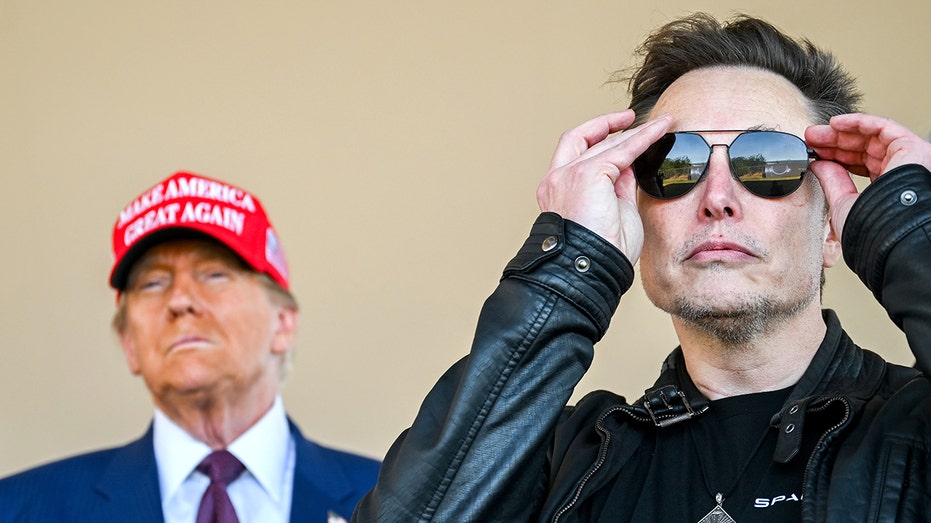
Elon Musk and Donald Trump

President Donald Trump tasked Elon Musk with leading the Department of Government Efficiency (DOGE). (Brandon Bell/Getty Images / Getty Images)

Musk also spoke about his perspective on DOGE's mission in terms of reducing wasteful federal spending.

"If your taxpayer dollars are not spent in a sensible and frugal manner, then that's not okay. Your tax dollars need to be spent wisely on the things that matter to the people," Musk said. 

"It's not draconian or radical, I think, it's really just saying let's look at each of the expenditures and say, is this actually in the best interest of the people, and if it is, it's approved, if it's not, we should think about it," he added.

https://www.foxbusiness.com/politics/musk-claims-150-year-olds-receiving-social-security-benefits

JD Vance’s 12-year-old relative denied heart transplant because she is unvaccinated

 A 12-year-old Indiana girl who is related to Vice President JD Vance has been barred from a spot on a heart transplant list because she’s not been vaccinated against COVID-19 and the flu, according to her parents.

Adaline Deal, a distant relative of the VP by marriage through his half-siblings, was born with two rare heart conditions that her family knew would one day require a transplant, her mother Janeen Deal told The Cincinnati Enquirer.

Adaline — who was adopted from China when she was 4 — was treated at Cincinnati Children’s Hospital for nearly 10 years, and her parents hoped she would get the transplant there.

Adaline Deal, 12, a relative of JD Vance, was born with two rare heart conditions that require a heart transplant.Jeneen Deal / Facebook

But the hospital requires transplant patients to be vaccinated, and declined to make an exemption even when told it goes against the family’s religious beliefs as nondenominational Christians, the parents said.

Skip in 4s

“I thought, wow. So, it’s not about the kid. It’s not about saving her life,” Janeen Deal told the newspaper of the hospital’s decision to deny her daughter.

The mom, who believes vaccines are unsafe, said she and her husband decided not to vaccinate Adaline against COVID-19 or the flu after “the Holy Spirit put it on our hearts.”

Vaccinations against preventable diseases are recommended for transplant recipients because those patients are much more vulnerable to infections.

Adaline is related to Vance by marriage through one of his half-siblings.REUTERS

For patients with severe illnesses like Adaline, who has Ebstein’s anomaly and Wolff-Parkinson-White Syndrome, there is a higher risk of death if infected with COVID compared to other patients, according to Dr. Camille Kotton, the clinical director of transplant and immunocompromised host infectious diseases at Massachusetts General Hospital.

“The first year after transplant is when they’re at highest risk for infection, but they do have a lifelong risk of severe disease and transplant patients are still dying because of COVID-19,” Kotton said.

Janeen, however, said she was confident her family, including their 11 other children, would not have any problems with COVID-19 after the transplant.

Adaline’s parents say she was kept off the transplant list at Cincinnati Children’s Hospital because of her vaccination status.Jeneen Deal / Facebook

“We’ll take it as we can if it happens,” Janeen said. “But I know I cannot put this (vaccine) in her body knowing what we know and how we feel about it.”

A Cincinnati Children’s spokesperson declined to confirm that Adaline had been kept off the transplant list, but told the Enquirer that the hospital’s clinical decisions are “guided by science research and best practices” and that the hospital follows guidelines from the National Institutes of Health.

“We tailor care plans to each patient in collaboration with their family to ensure the safest, most effective treatment,” spokesperson Bo McMillan said.

Adaline’s parents say they hope to take her to a transplant center that won’t require her to be vaccinated.Jeneen Deal / Facebook
Adaline’s parents now hope to take her to a different transplant center that won’t require her to be vaccinated, with a GoFundMe for the transplant raising more than $50,000 as of Wednesday morning.

https://nypost.com/2025/02/12/us-news/jd-vances-12-year-old-relative-denied-heart-transplant-because-she-is-unvaccinated/