Search This Blog

Monday, March 10, 2025

What #Stand Up for Science Rallies Don't Stand Up for

 by Vinay Prasad

Stand up for science protests occurred in many major metropolitan areas yesterday. Researchers argue against cuts to indirect funding, and a perception that there may be more scrutiny to come. I am confident that science is the best path forward and that societal investments in research are valuable, at the same time, anyone who is familiar with universities must admit the current process is byzantine, broken, and inefficient. It craves reform.

It is easy to protest to defend your own salary, but I wonder why no one stood up for any of the following 5 topics in the last few years

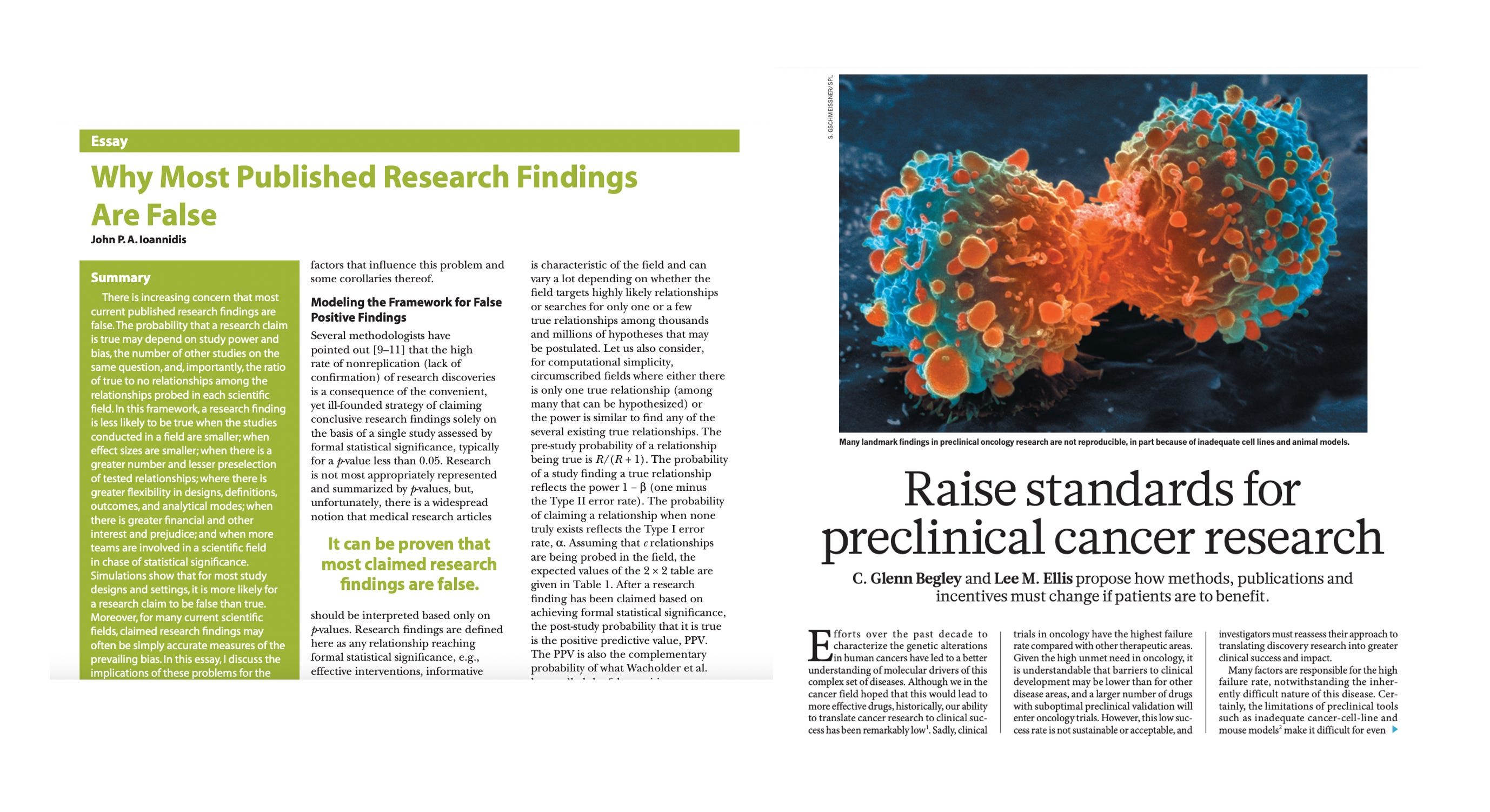
  1. The majority of science is conceptually flawed, does not reproduce, is not useful. Multiple empirical and theoretical analyses show this rate is upwards of 50%. Ioannidis showed with conservative modeling the majority of research is false. Glenn Begley reported Amgen’s experience where only 11%! of published cancer research could replicate in their lab

Not a single American university has sampled their own experiments and sought to replicate them. The NIH has never made reproducibility a cornerstone of funding. No one stood up for reproducible science.

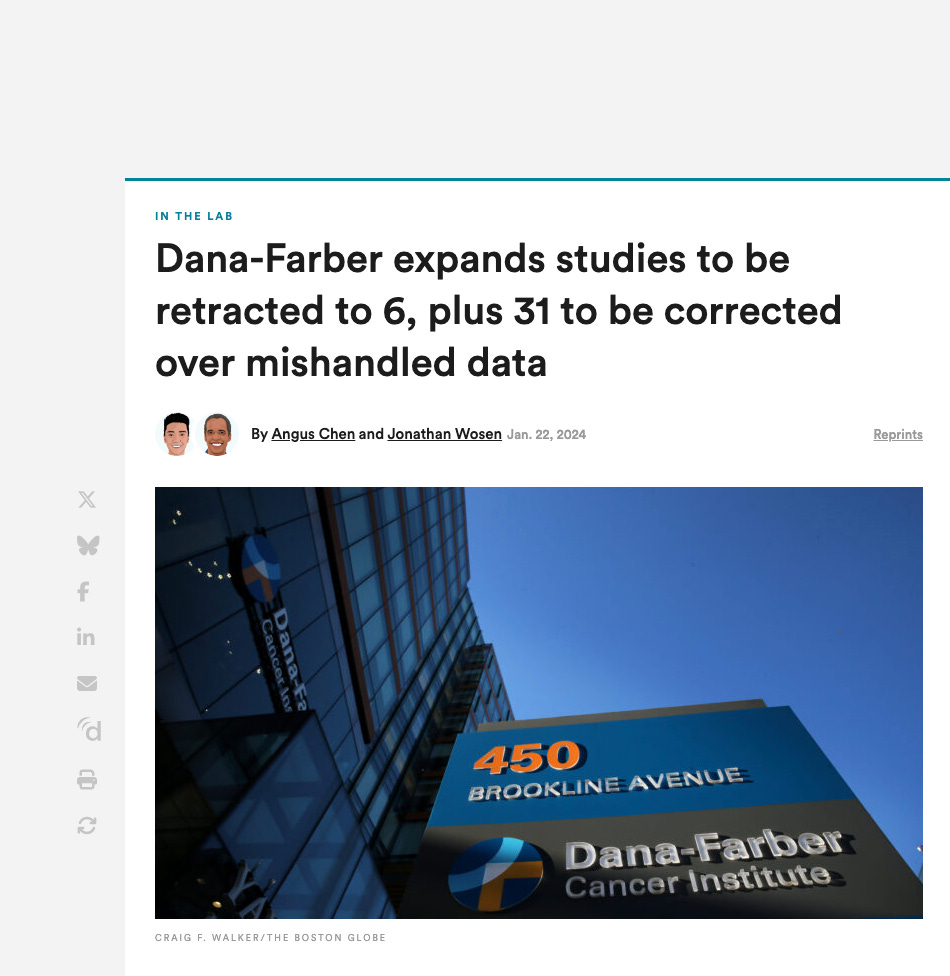
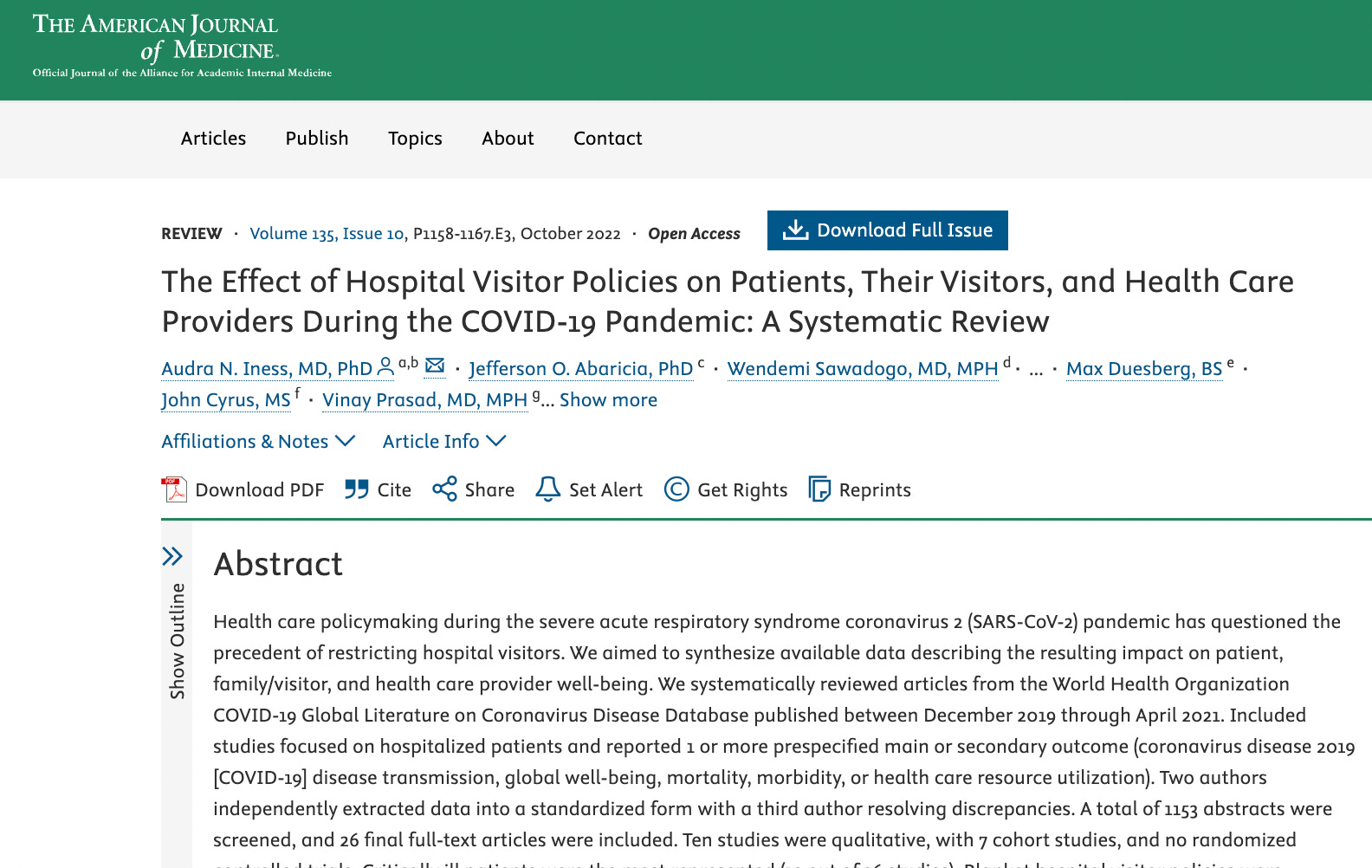
  1. Fraud is rarer, and involves willful deception. Its is often overlooked by scientists. To my knowledge, not a single one of these Dana Farber investigators have faced penalty for this. No one stood up for science free of photoshopped figures.

And, if you really wanted to eliminate all fraud you would realize that the only reason we find problems in images is people report the raw data. If we reported the raw data for all experiments, fraud would grow exponentially. Again, no one does that. Which brings me to….

  1. When many of us concerned with the veracity of science asked for data sharing the Editor in Chief of NEJM called us “research parasites”— that’s the word used for someone who wants to make sure the published work is correct. Interestingly patients who participate in these studies wrongly assume the data will be shared for maximum good. Instead, because researchers want to hide data, the ICMJE’s proposal for data sharing was defeated. No one stood up for transparent science.

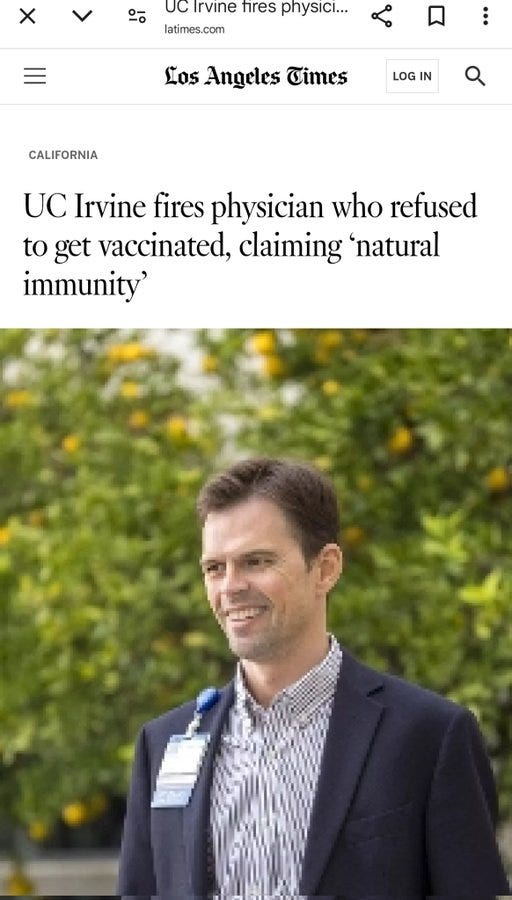
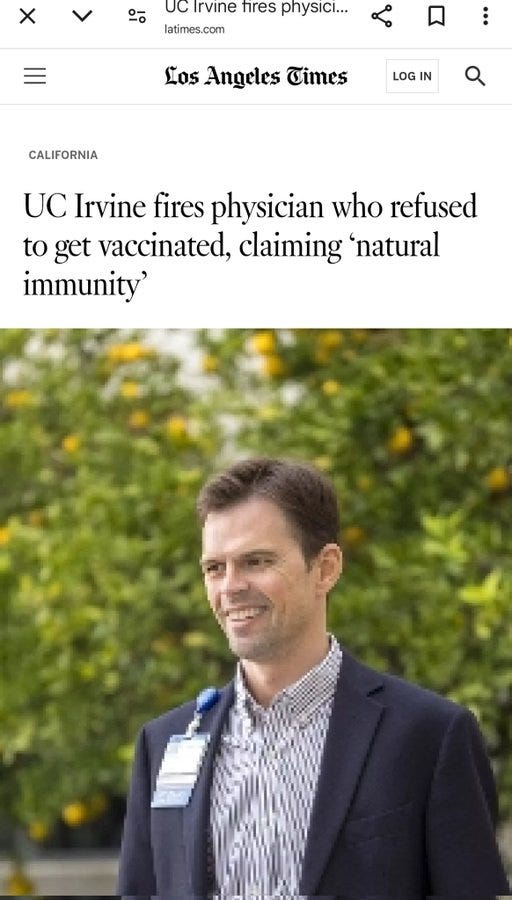
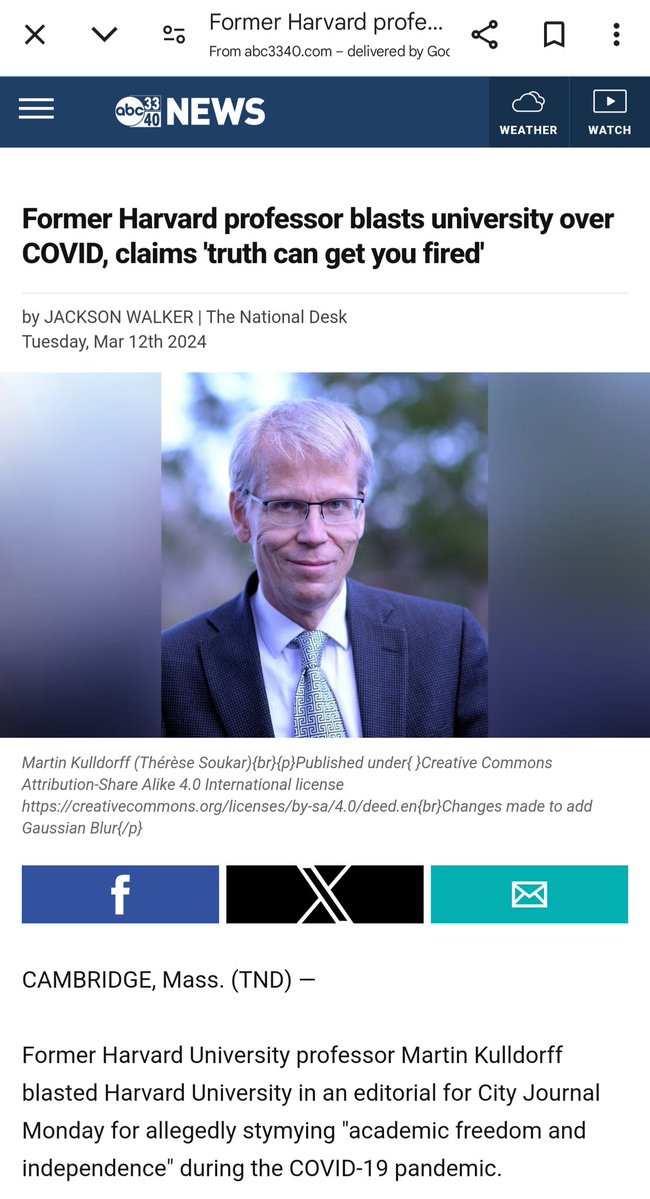
  1. These professors were fired for not getting a covid vaccine AFTER they already had covid. Interestingly, many other professors got exemptions, but they did not. It is almost as if the mandate could be used to cull professors with unpopular views with selective exemption. No one stood up for these scientists, or a culture where we don’t fire people with unethical mandates. Aaron ironically was the hospitals medical ethicist.

    Image
Image
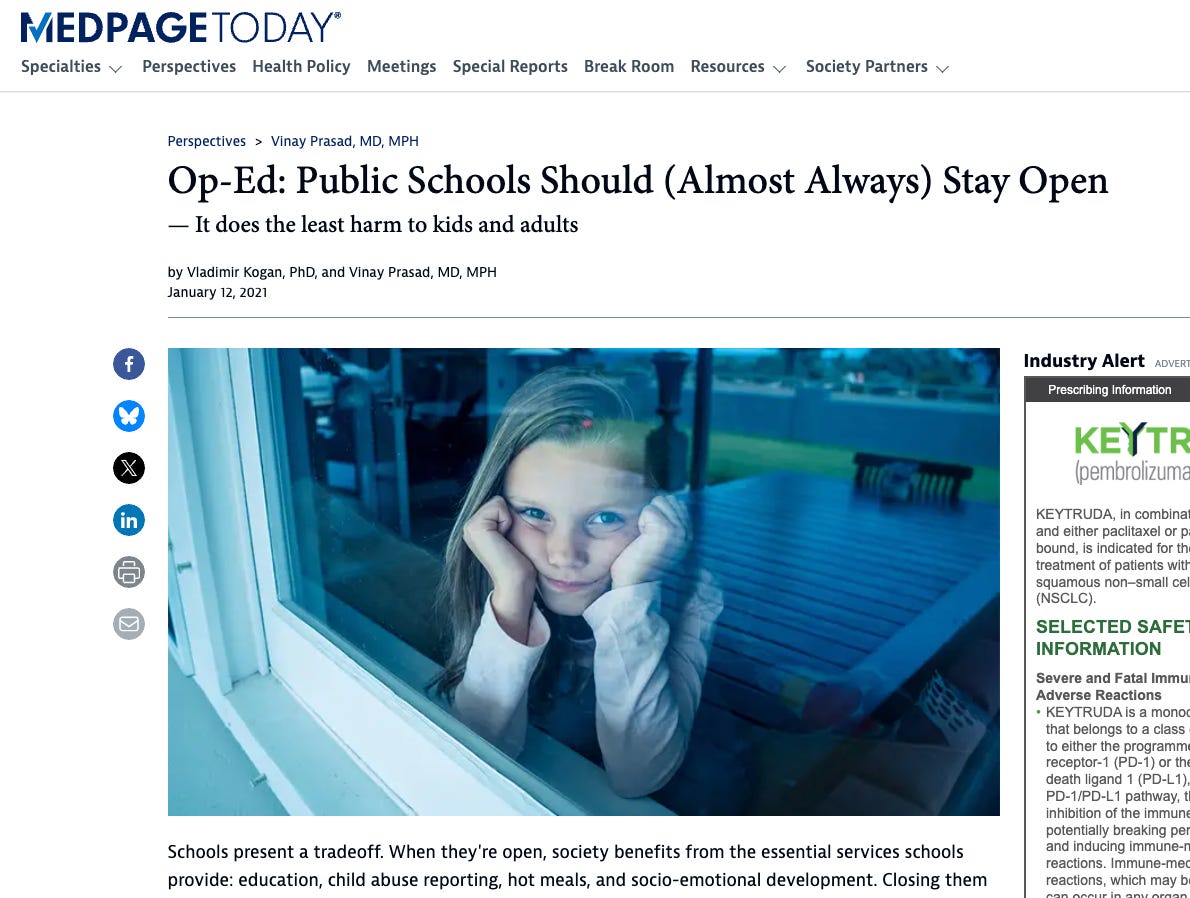
  1. Scientists are happy to protest their own funding, but most had nothing to say when schools were closed for 2 years, and people were separated from their dying loved ones. Both of these devastating actions went against science. Easy to stand up for science when it benefits you, harder to when it benefits others.

Stand up for science is not about standing up for scientific claims or processes; it is about standing up to unaccountable funding. Sadly, those days are over. Reform is coming.

https://www.drvinayprasad.com/p/what-stand-up-for-science-rallies

ActBlue Probes May Shut Down DNC Money Laundry

 Before the recent election, the House Committee on Oversight and Accountability asked then-Treasury Secretary Janet Yellen to turn over all Suspicious Activity Reports (SARs) relating to ActBlue — not much happened. An SAR is a document that banks file with the Treasury Department pursuant to potentially fraudulent or illicit financial activity. Yellen stalled, presumably in the hope that the Democrats would win the House back in November and halt the investigation. That obviously didn’t happen and the new Secretary of the Treasury, Scott Bessent, is of course cooperating with the committee.

This may well be what precipitated the sudden departure of seven senior officials from ActBlue in February. The New York Times reports that the exodus included “the associate general counsel — who was the highest-ranking legal officer at ActBlue — the assistant research director, a human resources official, the chief revenue officer and an engineer who had spent 16 years building and maintaining the electronic pipes through which the group’s donations flow.” These “electronic pipes” are clearly of particular interest to the Chairman of the Oversight and Accountability Committee, Rep. James Comer (R-Ky.), who included the following forewarning in his letter to erstwhile Treasury Secretary Yellen:

Recent reports have raised the specter of fraud and evasion of campaign finance law by individuals exploiting online contribution platforms, especially ActBlue. For example, ActBlue had not implemented standard procedures to guard against identity theft and fraud such as requiring a Card Verification Value (CVV) to process online transactions until it received criticism for not doing so. ActBlue is also being investigated by several states’ officials in relation to contributions allegedly made via the platform fraudulently without the reported contributor’s awareness.

This practice is known as “smurfing.” It is a type of identity theft whereby the names of small dollar donors are repeatedly used without their knowledge to mask large dollar political contributions that by law must be reported to the Federal Election Commission (FEC). The website, Election Watch, features a “Smurf Search” tool that allows users to search FEC data for implausibly large numbers of political contributions attributed to individual donors. An examination of the data, for example, indicates that a single Colorado resident allegedly made 57,138 contributions — one transaction every 1.3 days — totaling no less than $234,441.

And this is by no means an outlier. The FEC data shows a Florida resident whose individual contributions purportedly come to 52,591— an average of one transaction every 1.8 days — totaling $387,720. One California resident listed has supposedly made 52,501 separate contributions — an average of one transaction every 2.9 days — totaling $884,152. The list goes on and on. There are quite literally thousands of examples with similarly implausible contribution patterns. Thus, 19 states have opened investigations into ActBlue. The following is an excerpt of a letter the state attorneys general sent to its President and CEO, Regina Wallace-Jones.

Recent reporting suggests that that there may be donors across the country who are identified in filings with the Federal Election Commission as having donated to candidates through ActBlue (and other affiliated entities), but who did not actually make those donations. That raises a host of concerns about whether ActBlue’s platform is being used to facilitate “smurfing” — a type of money laundering in which donors break up large donations and submit them under different names to disguise who the money comes from and thereby skirt contribution limits.

None of this should surprise any student of Democratic fundraising tactics. As far back as March of 2023, independent journalist James O’Keefe looked into ActBlue and interviewed a number of the people this fundraising organization reported to the FEC as high volume, low dollar contributors. He subsequently posted this X video substantiating the results. He knocks on doors, speaks directly to alleged donors and receives responses ranging from doors slamming in his face to curious citizens simply answering his questions. The latter emphatically deny donating money in the amounts or with the frequency reported by ActBlue to the FEC in their names.

ActBlue’s Source of Money

All of which inevitably brings us to the following question: What is the source of the large contributions that ActBlue is suspected of laundering by means of identity theft and credit card fraud? We aren’t talking chump change here. ActBlue has raised about $16 billion for the Democratic Party and other far left organizations since it was founded in 2004. According to Open Secrets, it raised more than $3.8 billion during the recent election cycle, well over $3.7 billion of which allegedly arrived in the form of “small dollar” donations. Is it plausible that ActBlue received that kind of money from people worried about the price of eggs?

The most likely source of its funding is, and always was, a combination of far left billionaires such as George Soros, Reid Hoffman, Herbert Sandler, Patricia Bauman, et al. ActBlue will not survive the light that the House committee and nineteen state attorneys general are determined to shine on it. That’s why its senior officials bailed, leaving the rank-and-file activists holding all that dirty money. If ActBlue goes belly up, who will do the laundry for the Democratic Party?

https://spectator.org/actblue-probes-may-shut-down-dnc-money-laundry/

The case against Anthony Fauci


You probably don’t remember the lockdowns all that fondly.
But if you’re like a lot of Americans on this fifth anniversary of the COVID-19 pandemic, you at least understand why they were put in place.
The virus felt so frightening back then. So unexpected.
And if public health officials made some mistakes — you might be convinced, by this point, that they kept schools closed too long — you’re willing to cut them some slack.
People like infectious disease chief Anthony Fauci were doing the best they could with the information they had. They were following the science. And we got to the other side in better shape than we might have.


But if there’s something comforting in this story — even a little triumphant — there’s just one problem: It’s almost completely wrong.
That’s according to Princeton University political scientists Stephen Macedo and Frances Lee’s scathing new book, “In Covid’s Wake: How Our Politics Failed Us.”
Get The Gavel
A weekly SCOTUS explainer newsletter by columnist Kimberly Atkins Stohr.
Enter Email
Sign Up
In their telling, Fauci and his ilk didn’t follow the science, they betrayed it — pressing for lockdowns even though experts had warned for years that there was little evidence to support such a drastic intervention.
When they ran into dissent, they squelched it.
And the people who should have held them to account — the academics and journalists charged with speaking truth to power — too often fell down on the job.
The costs of the shutdowns were enormous: trillions of dollars in deficit spending to stave off economic ruin; massive learning loss, concentrated among the least advantaged children; the special pain of leaving loved ones to die alone in dreary nursing homes and emergency rooms; a further cleaving of our already divided society.
And despite all the sacrifice, the United States still had a much higher death rate than other wealthy nations.
At a critical moment, American science abandoned its most fundamental tenets. It forsook inquiry, it muzzled debate.
And American democracy did no better. Reasonable skepticism was cast as tinfoil-hat conspiracy mongering. Twitter and Facebook and YouTube were purged of heresy.
For Macedo and Lee, the story is clear: The pandemic was a monumental test of the American system — and the system failed.
That pronouncement feels a little overwrought in parts of the book. Though the authors promise in their introduction to be careful about criticizing what happened in the past based on what is known in the present, they don’t always live up to their pledge.
But much of “In Covid’s Wake” feels convincing — in no small part because Macedo and Lee are of the liberal, data-driven tribe they critique.
At the height of the pandemic, Macedo bleached his groceries like a good Blue Stater, shot dirty looks at strangers who crossed his six-foot perimeter, and took off his clothes after he’d been out in the world — dropping them straight into the washing machine before venturing into the house in a fresh outfit.
What a strange, isolating time that was.
How did we get there?

Origins of a failure
While vacationing at his ranch in the summer of 2005, President George W. Bush read an advance copy of a new book called “The Great Influenza: The True Story of the Deadliest Pandemic in History.”
It told the harrowing — and by then, largely forgotten — tale of the Spanish flu of 1918, which killed some 50 million to 100 million people worldwide and left about 670,000 dead in the United States.
Author John Barry focused on the American story — and it was the story of a nation unprepared. After the virus swept through Philadelphia, bodies lay in the streets for days.
When Bush returned to the White House, he demanded a full-fledged strategy for the next pandemic.
Speeding up vaccine development and isolating the sick wouldn’t do. It would have to be a whole-of-society approach.
Borders, commerce, everything.
The key figures on the White House task force charged with developing a plan were Dr. Richard Hatchett, an oncologist-turned-presidential adviser, and Dr. Carter Mecher, a blunt-spoken executive at the Veterans Administration who’d developed a reputation as an out-of-the-box thinker.
In the early stages of their deliberations, someone put Mecher in touch with Bob Glass, a scientist at Sandia National Laboratories in New Mexico.
Glass had recently helped his teenage daughter with a science project that examined how infection spreads through social networks. And he’d homed in on a strategy that went back centuries but seemed to be getting little attention in contemporary epidemiology: social distancing.
Mecher was intrigued.
And when he started messing around with Glass’s model of disease spread, he alighted on what looked like the single most important strategy for suppressing flu-like viruses: “Holy shit!” he said, in his eureka moment. “Nothing big happens until you close the schools.”
The broader strategic insight these Bush-era planners had landed on: The country didn’t have to wait around for a vaccine when a pandemic struck. It could separate kids from their classmates and workers from their colleagues — and suppress the virus until the pharmaceutical companies hit paydirt.
The Bush administration wove the idea into a series of lengthy planning documents. And there it sat — until calamity arrived.

Science upended
Here’s the thing, though.
As Macedo and Lee lay out in “In Covid’s Wake,” the Bush team was hardly the only group of scientists to think about pandemic management in the run-up to the COVID outbreak.
And the Bush group’s faith in so-called non-pharmaceutical interventions, or NPIs — the school closures and quarantines that were supposed to contain the virus until a vaccine could be developed — left them very much in the minority.
One of the most prominent scientists to clap back was Dr. D.A. Henderson, a giant in the field, known for leading the global effort to eradicate smallpox.
Lockdowns, he argued, would simply never work.
If schools were closed, teenagers would still find ways to hang out. There would be plenty of close contact at prisons and in nursing homes. Restaurant and grocery store workers would keep doing their jobs in person.
And the social and economic dislocations could be devastating.
Lots of other experts echoed that view. A Johns Hopkins University report from September 2019 pointed to research on the limited effectiveness of travel restrictions and quarantines. And it warned that governments sometimes resort to NPIs for the wrong reasons — to “abate fear” or appear to be doing something.
Just two months before the World Health Organization declared COVID a public health emergency, it issued a report on NPIs that designated several “not recommended in any circumstances.” Among them: contact tracing (there wasn’t strong evidence the practice worked and it gobbled up a lot of resources) and border closure (it might delay infection, but wouldn’t stop it).
School closures, the WHO added, might have some moderate effect, but the cost would be significant, having “a major impact on the safety, health and nutrition of children in lower income families.”
This is what the best science said when the pandemic arrived. And elite opinion largely reflected that consensus in the early going.
On March 2, 2020, hundreds of public health scholars posted an open letter cautioning that measures like regional lockdowns and travel bans are “difficult to implement, can undermine public trust,” and “have large societal costs.”
Liberal television host Rachel Maddow, appearing on “The Tonight Show” the next day, insisted that “we don’t have to do anything outrageous ... we don’t need to change our lives drastically at an individual level.” Healthy people wearing masks, she said, was “probably not that rational.”
This view didn’t hold for long, though.
Amid mounting panic over the virus, a desperate West was taking a growing interest in China’s big, authoritarian swipe at containment. The government was imposing extreme social distancing — going so far, in some cases, as to weld apartment doors shut.
At first blush, it seemed to be working.
The World Health Organization organized a hasty visit. And just months after issuing its pre-pandemic report warning against just the sort of strategies that China was imposing, the group heaped praise on Beijing for “perhaps the most ambitious, agile and aggressive disease containment effort in history.”
NPIs were suddenly in fashion — and in Washington, that meant pulling the Bush-era strategy off the shelf.
The plan’s heretofore obscure authors had a star turn in the press. Think tanks put forth their own, more intense visions for lockdown. And soon, it felt like the only way forward.
In one particularly dispiriting column, Ezra Klein, then with Vox and now with The New York Times, concluded that there “was no good alternative to shutting down life as we know it.”
Difficult decisions
For Macedo and Lee, the dereliction of duty is clear.
The best science called for a less restrictive approach — and the elites ignored it.
But as the authors themselves acknowledge, in parts of their book, the best science could be quite equivocal about how public health officials should handle a pandemic.
While the WHO’s pre-pandemic study recommended against contact tracing, it did reference one study that suggested the practice could be effective when bundled with quarantine, isolation, and antiviral drugs. Tracing could also be useful, the organization added, in quickly identifying newly infected people and getting them into treatment.
The study also suggested school closures “during a severe epidemic or pandemic” and declared that workplace closures could be considered “in extraordinarily severe pandemics”; the COVID pandemic, if nothing else, was extraordinary.
And while the WHO acknowledged that the evidence for masking’s effectiveness was scant, the group still “conditionally recommended” it in severe pandemics — explaining that there is “mechanistic plausibility for the potential effectiveness of this measure.”
While the science may have pointed, on balance, toward a more hands-off approach — humble about health authorities’ capacity to suppress a fast-moving virus and mindful of all that’s lost in a lockdown — there was some genuine ambiguity in the literature. And figures like Fauci — tasked with leading a frightened nation through a deadly pandemic — may deserve a bit more grace for latching onto NPIs than Macedo and Lee are willing to offer.
But if early, aggressive moves to contain the pandemic can be forgiven, it’s harder to excuse officials who clung to the shutdowns even amid mounting evidence that they were wrongheaded.
School closures are the most important case.
There was broad agreement, at the start, about the need to shift to remote learning. But the rationale for keeping millions of kids at home started to fall apart pretty quickly.
Within weeks, it was clear that children were much less likely to grow seriously ill or die than adults. And schools didn’t seem to be the super-spreaders that many had feared. Countries like Norway and Denmark that reopened schools for younger children — and made reasonable efforts to sanitize classrooms and put some distance between kids — didn’t see spikes in COVID cases.
By June, the American Academy of Pediatrics, an organization with a reputation for caution, was recommending that schools reopen — emphasizing the enormous costs of “social isolation” and bemoaning the closures’ “substantial impact on food security and physical activity for children and families.”
The case for reopening wasn’t ironclad at this point.
But it’s fair to say that Fauci, knowing what he knew at the time, was wrong to argue that many schools would have to remain shuttered in the fall of 2020 (later, he’d voice regret over how long remote learning lingered).
And the local officials who kept schools closed were wrong, too.
Those officials were highly concentrated in blue states. And no surprise. By that point, the pandemic had become thoroughly politicized.
The liberal, “follow-the-science” crowd was certain it was right.
And it had little tolerance for dissent.

Stifling the opposition
The sharpest challenge to liberal orthodoxy came in October 2020, when a group of academics from Harvard, Stanford, and Oxford universities published a document they called the Great Barrington Declaration.
It highlighted “grave concerns about the damaging physical and mental health impacts” of the lockdowns.
And it called for a pursuit of “herd immunity” instead: Large swaths of the population should be allowed to return to normal life and build up natural defenses to the virus through infection, while the old and infirm would be shielded from the disease through a system of “focused protection.”
The idea, as Macedo and Lee argue, was hardly out of bounds. Before the pandemic, herd immunity was widely accepted as a broad defense against infection. And many public health experts had invoked the concept in the early months of COVID’s spread.
But the guardians of the shutdown strategy couldn’t abide it.
Email records show that a few days after the declaration was published, Francis Collins, the director of the National Institutes of Health, reached out to Fauci and other public health officials urging “a quick and devastating published take down of its premises.”
“I am pasting in below a piece from Wired that debunks this theory,” Fauci replied.
“Excellent,” Collins wrote. And soon, he was publicly declaring herd immunity a “fringe component of epidemiology,” a “dangerous” idea designed to justify people “doing whatever they damn well please.”
Other establishment figures piled on.
A Yale public health specialist called herd immunity “not a plan” but a “massacre.” And at one point, YouTube pulled down a video of a conversation between Florida Governor Ron DeSantis and two of the authors of the Great Barrington Declaration.
This is not to say there weren’t legitimate critiques of the document. There was reason to doubt, for instance, that the vulnerable could truly be walled off from infection through “focused protection.”
But banishing the declaration from the realm of acceptable debate was a pretty stunning betrayal of scientific and democratic ideals.

The next crisis
Of course, some who broke with the “follow the science” crowd were offering up pure nonsense.
President Trump famously predicted that the virus would “miraculously” disappear, and later suggested household disinfectant, ingested or injected, might be an appropriate remedy.
The trouble was that too many liberals lumped these absurdities together with legitimate skepticism.
To question school closures was to be a “COVID denier.” To argue that younger, low-risk populations should be allowed to resume their normal lives was to invite a “massacre.”
And to suggest that the virus, which originated in Wuhan, China, might have escaped from the Wuhan Institute of Virology — a sophisticated lab specializing in coronaviruses — was to traffic in conspiracy theories.
This sort of rhetoric not only clouded judgment on public policy, it also did enormous damage to public trust.
As Macedo and Lee argue, a more responsible politics would acknowledge scientific uncertainty. It would be clear about what the experts know and don’t know. It wouldn’t simply tolerate dissent, it would welcome it.
Even institutionalize it.
In April 2020, Graham Allison, a Harvard professor and former US assistant secretary of defense, took a page from the intelligence community playbook and suggested the creation of a “Team B” of experts “that is prepared to begin by questioning everything.”
That would mean casting a critical eye on the scientific findings guiding policy. But it also would mean looking beyond science to experts from other domains. If “as the saying goes, war is too important to just be left to the generals,” he added, then the same should hold for “the current declared ‘war on coronavirus.’”
Early on, Allison was putting his finger on a central problem.
It’s not just that experts can be wrong. It’s that they can be blinded by their expertise — unable to see a problem through any other lens.
That’s what happened with COVID.
Public health professionals — and the liberal politicians and media who turned to them — focused too much on epidemiology and not enough on the economy, education, and the need for human connection.
“Science,” as Macedo and Lee write, “cannot tell us what to do.” It can only advise us. We have to balance values. Manage tradeoffs.
And as we face the next great crisis — pandemic, climate, democracy — we’d be wise to heed the lessons of the last one.
https://archive.is/GFxWf#selection-1531.0-2335.119

UroGen PDUFA date June 13


  • UGN-102 Pivotal ENVISION trial demonstrated an 18-month DOR of 80.6% (95% CI: 74.0, 85.7), by Kaplan-Meier estimate, for patients who achieved a complete response (CR) at three months after the first instillation of UGN-102
  • New drug application (NDA) for UGN-102 under review by the FDA; Prescription Drug User Fee Act (PDUFA) target action date set for June 13, 2025
  • Acquired a next-generation investigational oncolytic virus (ICVB-1042) and announced multiple strategic research collaborations in support of long-term growth strategy
  • JELMYTO® achieved net product revenue of $90.4 million in 2024, compared with $82.7 million in 2023, driven by underlying demand revenue growth of 12% for 2024 and 15% for Q4 2024
  • $241.7 million in cash, cash equivalents and marketable securities as of December 31, 2024
  • Conference call and webcast to be held today at 10:00 AM ET

Conference Call & Webcast Information: Members of UroGen’s management team will host a live conference call and webcast today at 10:00 AM Eastern Time to review UroGen’s financial results and provide a general business update.

The live webcast can be accessed by visiting the Investors section of the Company’s website at investors.UroGen.com. Please connect at least 15 minutes prior to the live webcast to ensure adequate time for any software download that may be needed to access the webcast.

https://www.businesswire.com/news/home/20250310157926/en/UroGen-Pharma-Reports-Fourth-Quarter-and-Full-Year-2024-Financial-Results-and-Announces-Updated-18-Month-Duration-of-Response-DOR-of-80.6-from-the-Phase-3-ENVISION-Trial-of-UGN-102

Genmab Stops Blood Cancer Treatment Development After J&J Won't License It

 Genmab has stopped clinical development of a blood cancer treatment after Johnson & Johnson decided it won't exercise its option to license it.

The Copenhagen, Denmark, biotechnology company said Monday Johnson & Johnson has decided it won't exercise its option to receive a worldwide license to develop, manufacture and commercialize HexaBody-CD38, which is designed to treat people with certain blood cancers.

Genmab will not pursue further clinical development of the drug, it said, after evaluating the data, market landscape and its own portfolio prioritization.

Genmab had provided Johnson and Johsnon with data from a clinical proof-of-concept study for HexaBody-CD38 to treat multiple myeloma. Preliminary data demonstrated an overall response rate of 55%, while the rate of very good partial response or better was 29% and complete response or better was 7%.

Johnson & Johnson's decision does not impact Genmab's 2025 financial guidance, it said.

https://www.morningstar.com/news/dow-jones/202503105258/genmab-stops-blood-cancer-treatment-development-after-jj-wont-license-it

How the FDA Opened Door to Risky Chemicals in America's Food Supply

 Joseph Shea, who sells athletic wear in Myrtle Beach, South Carolina, wonders and worries about the food he eats.

The chemical ingredients with mystifying names. The references on product labels to unspecified natural or artificial flavors. The junk food that fits his budget but feels addictive and makes him feel unwell.

Shea, one of 1,310 people who responded to a poll the health policy research group KFF conducted on healthcare priorities, said he assumes the FDA is making sure the ingredients are safe.

In many cases, it is not.

The FDA's restraints on food ingredients are limited and relatively feeble, especially compared with those in Europe, a KFF Health News examination found. There are at least 950 substances in our food that are not permitted in Europe, according to one expert's estimate, and chemicals linked to health concerns show up in hundreds of products that line the shelves of American supermarkets.

Robert F. Kennedy Jr., the new head of HHS, has railed about the risks of food additives for years and has said he wants to end "the mass poisoning of American childrenopens in a new tab or window." At a March 6 confirmation hearing, Marty Makary, MD, MPH, President Donald Trump's nominee to head the FDA, expressed concern about foods "with a lot of molecules that do not appear in nature."

"These are chemicals that the industry insists are safe, a subset of which are concerning," he said.


To a great extent, the FDA leaves it to food companies to determine whether their ingredients and additives are safe. Companies don't have to tell the FDA about those decisions, and they don't have to list all ingredients on their product labels.

Though pharmaceutical companies are required to share research on humans with the FDA, the agency is largely blind to what food makers know about their products.

"The food industry does massive amounts of research that we have no access to," Robert Califf, MD, told a Senate committee in December on his way out as FDA commissioner.

As a result: The FDA's oversight of food additives is much weaker than its oversight of prescription drugs.

"There is good reason to be concerned about the chemicals that are routinely included in much of our food," Califf testified.

Food is a big business. American consumers spend almost $1.7 trillion annually on food and beverages, according to Circana, a research and advisory firm.

Yet American food companies keep secret much of what they put in their products.

KFF Health News asked nine of the largest food manufacturers -- The Coca-Cola Co., Conagra Brands, General Mills, Kellanova (successor to Kellogg), The Kraft Heinz Co., MondelÄ“z International, Nestlé, PepsiCo, and Unilever -- for the number of ingredients, if any, that go unnamed on their product labels and the names of those ingredients deemed safe without involvement by the FDA, and substances used in their products in the U.S. but not in Europe, and vice versa.

None provided answers to those questions.

"We focus on the quality of the ingredients that we use, and all comply with applicable regulatory requirements," Nestlé spokesperson Dana Stambaugh said.

Chemicals such as titanium dioxide and potassium bromate, whose safety has been debated, are allowed in foods in the U.S. but not in Europe.

Corporations may turn a blind eye to potential dangers, a July 2024 FDA-funded report warned.

Potentially harmful ingredients "are not necessarily required to be named on a product label," the Reagan-Udall Foundation for the FDA, an adjunct to the agency, said in the reportopens in a new tab or window, which was based largely on interviews with representatives of companies across the food supply chain.

"Companies may choose not to track the presence of these ingredients/compounds due to concern about future litigation," the report said.

Some additives can remain hidden from the public behind such catchall terms as "spices" and "artificial flavors," as the Center for Science in the Public Interest (CSPI)opens in a new tab or window has reported, or shrouded by other exemptionsopens in a new tab or window from disclosure requirements.

And some ingredients that should have been listed on product labels -- potential allergens such as milk, wheat, eggs, and dyes -- have at times gone undisclosed, according to a series of food recallsopens in a new tab or window. Gaps in oversight have alarmed political leaders on both sides of the aisle, the U.S. Government Accountability Officeopens in a new tab or windowwatchdogopens in a new tab or window groupsopens in a new tab or window such as the CSPI, and academic researchersopens in a new tab or window.

Adding to the concern: the profusion of ultraprocessed foods, which use a wide array of chemicals to add flavor and color, extend shelf life, reduce cost, control texture or consistency, and generally tempt people to eat more. Ultraprocessed foods now make up 73% of the U.S. food supply, researchers have estimatedopens in a new tab or window. Sen. Bernie Sanders (D) of Vermont, the ranking member of the Senate Health, Education, Labor, and Pensions Committee, has said there's growing evidence they are "deliberately designed to be addictiveopens in a new tab or window," contributing to an epidemic of obesity -- a rare point of agreement between him and Kennedy.

At his confirmation hearing, Makary said some ingredients cause a chronic, low-grade inflammatory reaction in the gastrointestinal tract. "And what are we doing? We are drugging our nation's children at scale," he said.

The KFF pollopens in a new tab or window found that 58% of respondents want the Trump administration to prioritize setting stricter limits on chemicals in the U.S. food supply.

The Consumer Brands Association, which represents many of the largest food makers, defends the regulatory system as "rigorous," "evidence-based," and "proven." The system enables companies "to innovate to meet consumer demand," Sarah Gallo, the association's senior vice president of product policy, said in a statement to KFF Health News.

"Food manufacturers attest to the safety of an ingredient through the development of extensive scientific evidence and third-party expert review," Gallo added.

More than a decade ago, Pew Charitable Trustsopens in a new tab or window estimated that there were about 10,000 additivesopens in a new tab or window allowed in food in the U.S. -- and that the FDA had not reviewed the safety of about 3,000 of them.

"The system is fundamentally broken," said Thomas Neltner, one of the authors of the Pew study. "It's so bad, nobody knows -- not even FDA knows -- what's in our food."

Banned Abroad

The FDA allows titanium dioxideopens in a new tab or window to be used to enhance the appearance of foods, among other purposes. According to an Environmental Working Group (EWG) databaseopens in a new tab or window, it's listed as an ingredient in more than 1,900 products, including many candies.

The European Union takes a more cautious approach. In 2021, an EU regulatory panel concludedopens in a new tab or window that titanium dioxide "can no longer be considered as safe when used as a food additive." The panel said it couldn't rule out the possibility that titanium dioxide could damage chromosomes.

The FDA allows potassium bromateopens in a new tab or window to be used in baking, and, according to the EWG database, it's listed as an ingredient in more than 200 productsopens in a new tab or window, including bread, buns, and bagels.

Potassium bromate has been banned from food in many countries, including those of the European Union, Canada, India, and Peru. In 2023, California banned itopens in a new tab or window from food effective in 2027. The U.K. prohibited it in 1990opens in a new tab or window. The International Agency for Research on Cancer identified it as possibly carcinogenicopens in a new tab or window more than 25 years ago. A joint committee of the United Nations and the World Health Organization identified it as a "genotoxic carcinogen"opens in a new tab or window in 1992.

On its websiteopens in a new tab or window, the FDA says it has worked with industry to minimize potassium bromate levels and is reviewing the chemical, among others.

The EWG says that it created the database to help consumers make healthier choicesopens in a new tab or window and that the raw data on product labels is supplied by Label Insight -- which is owned by NielsenIQ, a major provider of data to industry. The EWG has called for tighter regulationopens in a new tab or window of foods.

Based on a review of FDA and European Commission databases, it appears that at least 950 more additives are used in foods in the U.S. than are allowed in the European Union, said Erik Millstone, PhD, an emeritus professor at the University of Sussex in England who has been studying food safety policy since the 1970s.

Direct comparisons are difficult because the two regulatory systems and the way they keep their records differ greatly.

A definitive count is elusive because the FDA doesn't require industry to inform it of everything used in foods in the U.S.

"That kind of casual neglect totally would be unacceptable in Europe," Millstone said.

'Several Decades Behind Europeans'

When the FDA formally approves substances for use in food, it can let decades pass without reassessing them -- even when subsequent research raises doubts about their safety.

In January, when the FDA banned Red Dye No. 3 from foods, it cited research published in 1987opens in a new tab or window. (The FDA said it had no evidence the dye puts people at risk; invoking one of the stricter consumer protections, it said a law from 1960opens in a new tab or window prohibits the use of additives found to induce cancer in animals.)

In the European Union (EU), substances used in foods must pass regulatory approval before being introduced. The EU has also required that its regulators reassess all additives that were on the market before Jan. 20, 2009, a process that is ongoing.

"In the FDA, although we have authorization to do postmarket reviews, there's no statutory mandate to do them," Jones, the former deputy commissioner of the FDA's Human Foods Program, told a Senate committee in December. "We are several decades behind Europeans and our Canadian counterparts because they have legal mandates to reevaluate chemicals that have been authorized at some point in the past."

The FDA website lists 19 postmarket determinations since 2010opens in a new tab or window that substances were not "generally recognized as safe." Four involve chemical constituents of one mushroom and the mushroom itself. Others include an anabolic steroid, caffeinated alcoholic beverages, cannabidiol, Ginkgo biloba, melatonin, and partially hydrogenated oils.

Meanwhile, trichloroethylene, banned by the Environmental Protection Agencyopens in a new tab or window in December as "an extremely toxic chemical known to cause liver cancer, kidney cancer, and non-Hodgkin's lymphoma," is still allowedopens in a new tab or window under FDA rules for use as a solventopens in a new tab or window in the production of foods.

FDA spokesperson Enrico Dinges said the agency will work with new leadership at HHS "to safeguard the food supply through premarket and postmarket safety evaluations of chemicals in the food supply."

'The Loophole Swallowed the Law'

The biggest gap in the FDA's oversight of foods goes back generations.

In 1958, Congress mandated that, before additives could be used in foods, manufacturers had to prove they were safe and get FDA approval. However, Congress carved out an exception for substances "generally recognized as safe," which came to be known simply as GRAS.

As conceived, GRAS promised regulatory relief for standard ingredients like salt, sugar, vinegar, and baking powder -- along with many chemicals.

Over time, "the loophole swallowed the law," said a 2014 report by Neltner and Maricel Maffini, PhD, for the Natural Resources Defense Councilopens in a new tab or window.

Companies can unilaterally decide their ingredients are already recognized as safe and use them without asking the FDA for permission or even informing the agency.

A better translation of GRAS would be "Generally Recognized as SECRETopens in a new tab or window," the Natural Resources Defense Council report said.

A federal watchdog reached a similar conclusion. "GRAS substances can be marketed without FDA's approval or even its knowledge," the Government Accountability Office warned in 2010opens in a new tab or window.

That spared the FDA from spending time reviewing countless substances.

For advice on whether ingredients are GRAS, companies may convene panels of specialists. The FDA has noted that panel members could be paid by the companies commissioning the review, but, in guidance to industryopens in a new tab or window, it says "such compensation is not itself an unacceptable conflict."

About 3,000 flavoring ingredients have been deemed GRAS by a panel of scientists working for an industry group, the Flavor and Extract Manufacturers Association of the U.S., known as FEMA, said George Southworth, the organization's executive director.

The scientists on the FEMA panel "adhere to stringent conflict-of-interest policies," and their GRAS determinations are submitted to the FDA, which includes them in an online database, Southworth said.

Southworth described the panel as independent, and the FEMA websiteopens in a new tab or window says panel members have never been employees of companies in the food industry.

Asked how many times FEMA's panel found that a flavoring didn't meet the test, Southworth wouldn't say. He indicated that some reviews are called off before a conclusion is reached.

"Publicly reporting these numbers without full context could lead to misinterpretations about the safety of substances," he added.

Another Way

Food companies have another option: They can voluntarily notify the FDA that they believe their product is GRAS for its intended use and lay out their reasons -- giving the FDA a heads up and essentially seeking its blessing.

If they take that route, they don't have to wait for an answer from the FDA to begin marketing the product, the agency has said.

And they don't risk much. If the FDA spots weaknesses in a company's argument or reasons to worry about a chemical's safety, it routinely calls off its review instead of declaring the substance unsafe.

FDA records posted on the agency's website show that the FDA often coaches companies to ask the agency to cease its evaluationopens in a new tab or window. That, too, leaves the company free to sell the product, food watchdogs said.

For companies that voluntarily run their products past the FDA, victory is a letter saying the agency has no questions.

But if companies market products as "generally recognized as safe" without firm grounds, they run the risk that the FDA could one day take enforcement action, such as issuing a warning or stopping sales. That's if the FDA notices.

Psyched Out

On March 8, 2022, a Canadian company, Psyched Wellness, issued a news releaseopens in a new tab or window saying it had a green light to market products in the U.S.

An "independent review panel of scientific experts" concluded that an extract the company developed, AME-1, was "generally recognized as safe," paving the way for it to be sold in bulk and used as an ingredient, the company said.

The company described the panel's judgment as a successful "certification" and "a key milestone." The extract was derived from a hallucinogenic mushroom, Amanita muscaria, which the company said "has incredible healing and medicinal powers." As the company later put it in a news releaseopens in a new tab or window, it had obtained "self-GRAS status."

In June 2024, the company announcedopens in a new tab or window that it would soon release Amanita muscaria watermelon gummies.

However, the FDA later took issue with the company and its product.

In a memo dated Sept. 9, 2024opens in a new tab or window, an FDA toxicologist said Psyched Wellness' claim of GRAS certification was false. The firm failed to show that its extract was generally recognized as safe, the FDA memo saidopens in a new tab or window.

Speaking of the mushroom, its extracts, and its known "pharmacologically active constituents," the FDA memo posted on the agency's website said they have "potential for serious harm and adverse effects on the central nervous system."

The FDA was focusing on the mushroom against the backdrop of a spate of medical problems linked to another company's "Diamond Shruumz" brand chocolate bars, gummies, and infused cones. When it recalled those products in June 2024, that other company announcedopens in a new tab or window that a chemical found in Amanita mushrooms was a possible cause of symptoms, including seizures and loss of consciousness.

The FDA memo discussed that recallopens in a new tab or window and said one death and 30 hospitalizations might have been related.

The memo did not connect Psyched Wellness to the outbreak or the Diamond Shruumz products.

The chief executive of Psyched Wellness, Jeffrey Stevens, did not respond to an interview request or written questions.

As recently as Feb. 1, Psyched Wellness said in a securities filingopens in a new tab or window that it will "continue to market its products in the U.S. using the Self-GRAS designation."

'Probably Poisoning Us'

If food ingredients cause acute reactions -- sending people to emergency rooms, for example -- the potential dangers may be relatively easy to identify, and regulatory action might naturally follow. Some critics of the system say they worry more about health effects that could take years or decades to develop.

Then, when it's too late, it could be hard to trace the harm to any particular ingredient.

All that leaves Joseph Shea of Myrtle Beach in a tough spot.

For a while, Shea tried shopping at a market that has a lot of organic offerings, he said in an interview. That proved too expensive.

Shea said the entire picture is "incredibly frustrating."

"They're probably poisoning us, and we don't know," he said. "We'll figure it out 30 years down the road when we get sick."

https://www.medpagetoday.com/publichealthpolicy/fdageneral/114569
Tevogen Bio (TVGN) files patent on T Cell vaccine

 Tevogen Bio (Nasdaq: TVGN), a clinical-stage specialty immunotherapy biotech company, today announced the filing of a new patent with the U.S. Patent and Trademark Office (USPTO) for its under-development T cell vaccine. Unlike many vaccines that primarily induce a B cell response, Tevogen Bio’s design aims to leverage the Company’s proprietary Tevogen.AI-powered PredicTcell technology to identify peptides which stimulate a T cell response.

A key differentiator of this vaccine is its ability to target the entire viral genome, much like the Company’s lead product candidate, TVGN 489. This strategy helps mitigate the risk posed by mutations that might otherwise evade immune detection when only one protein or segment of the virus is targeted.