Search This Blog

Friday, April 11, 2025

Researchers Agree with Secretary Kennedy's Call to Study Antidepressant Links to Violence

 During Robert F. Kennedy’s confirmation hearing to become Secretary of Health and Human Services, Senator Tina Smith asked if antidepressants cause school shootings. Kennedy responded that the issue “should be studied along with other potential culprits.” Senator Smith then cited selective studies as well as her own personal experience with these drugs to promote antidepressant use.

“I am grateful for that therapy,” Senator Smith said. “I am grateful for that experience and I think everyone should have access to that care and your job as Secretary is to expand access to care not to spread lies and misinformation.”

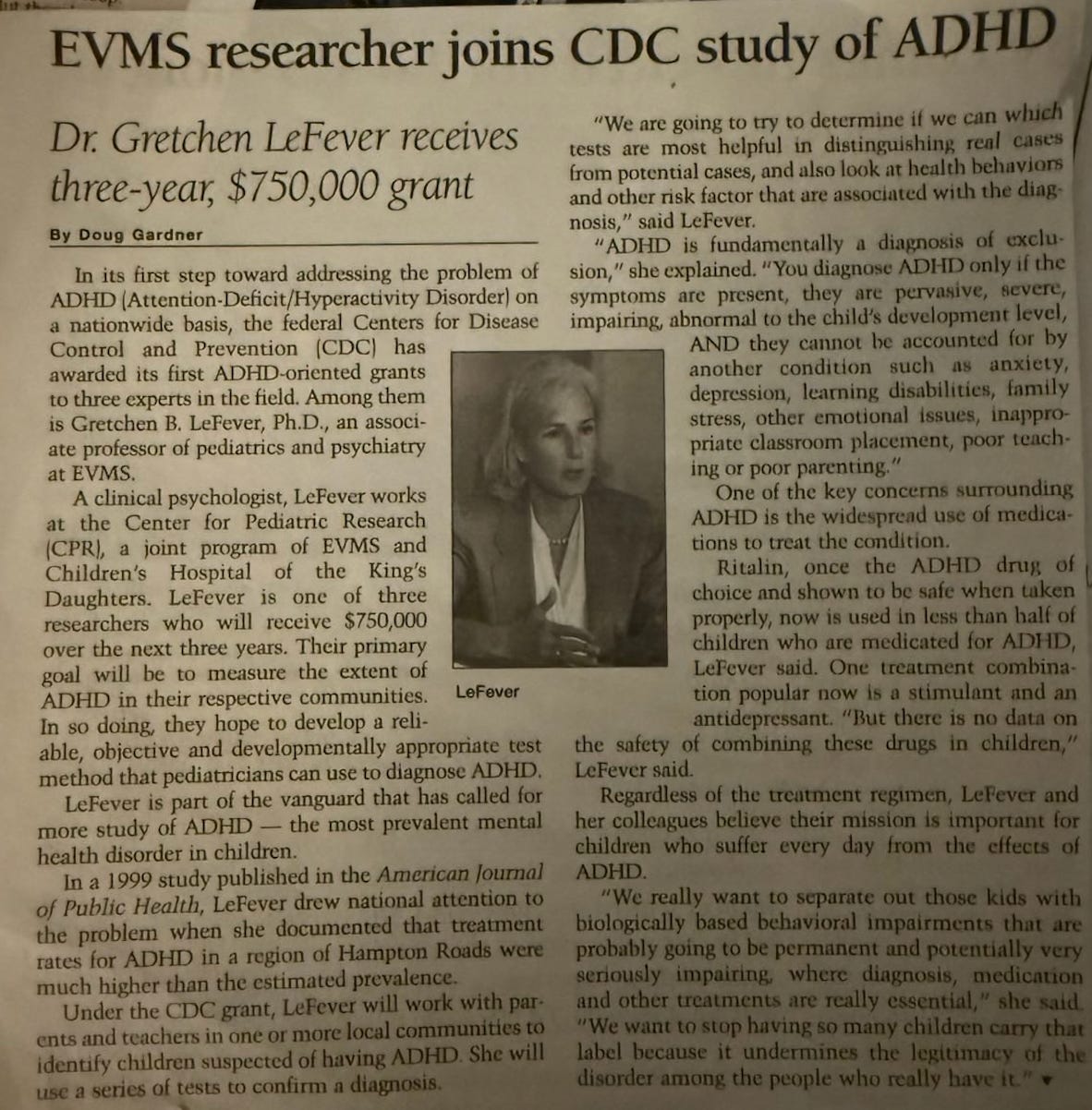
All of us should be grateful if Senator Smith herself would stop spreading lies and misinformation about the known links between antidepressants and violence, facts which anyone can find by reading the scientific literature and the FDA-approved labels for these medicines. As the former head of psychological assessment services at Children’s Hospital of The King’s Daughters, in the Hampton Roads region of Virginia, I have long been concerned about the dangers of psychotropic drugs (antidepressants, stimulants, antipsychotics and mood stabilizers). Like Secretary Kennedy, I welcome more research in this area.

Two decades ago, the pharmaceutical industry influenced the shutdown of medical studies I was conducting at Eastern Virginia Medical School. Those studies showed that children in some areas of America, most especially in Hampton Roads, were being medicated with psychotropics at rates many times higher than leading pharma-funded experts claimed. And the outcomes for children on these prescriptions were not favorable. For conducting and reporting on this research, I was characterized as an anti-medication zealot and accused of scientific misconduct. I am not anti-medication and I have never engaged in scientific misconduct. And I remain alarmed that the media feeds the public a poor diet of unreliable information that downplays these drugs’ harms.

Both Mother Jones and USA Today have published false information that ignored the documented dangers of antidepressants to attack Kennedy’s testimony. Mother Jones reporter Keira Butler misled readers, writing that Secretary Kennedy made “baseless claims” that antidepressants cause violence. Meanwhile, USA Today’s Alyssa Goldberg falsely reported that antidepressants have “anti-violence properties.”

Poor journalism is compounded by misleading claims from academic experts such as Georgetown professor Adriane Fugh-Berman. She leads PharmedOut, an advocacy group with a record for exposing the influence of pharmaceutical industry marketing on the practice of medicine. But in a recent editorial, Fugh-Berman wrote that any link between school shootings and antidepressant use is “absurd.” Yet, Secretary Kennedy only said the matter should be studied.

In my experience, the pre-emptive dismissal of a possible connection between antidepressants and violence seems uncharacteristic of PharmedOut’s leader, staff, and those who attend the group’s conferences. Fugh-Berman invited me to speak at the 2023 PharmedOut conference and emailed me praise for my presentation.
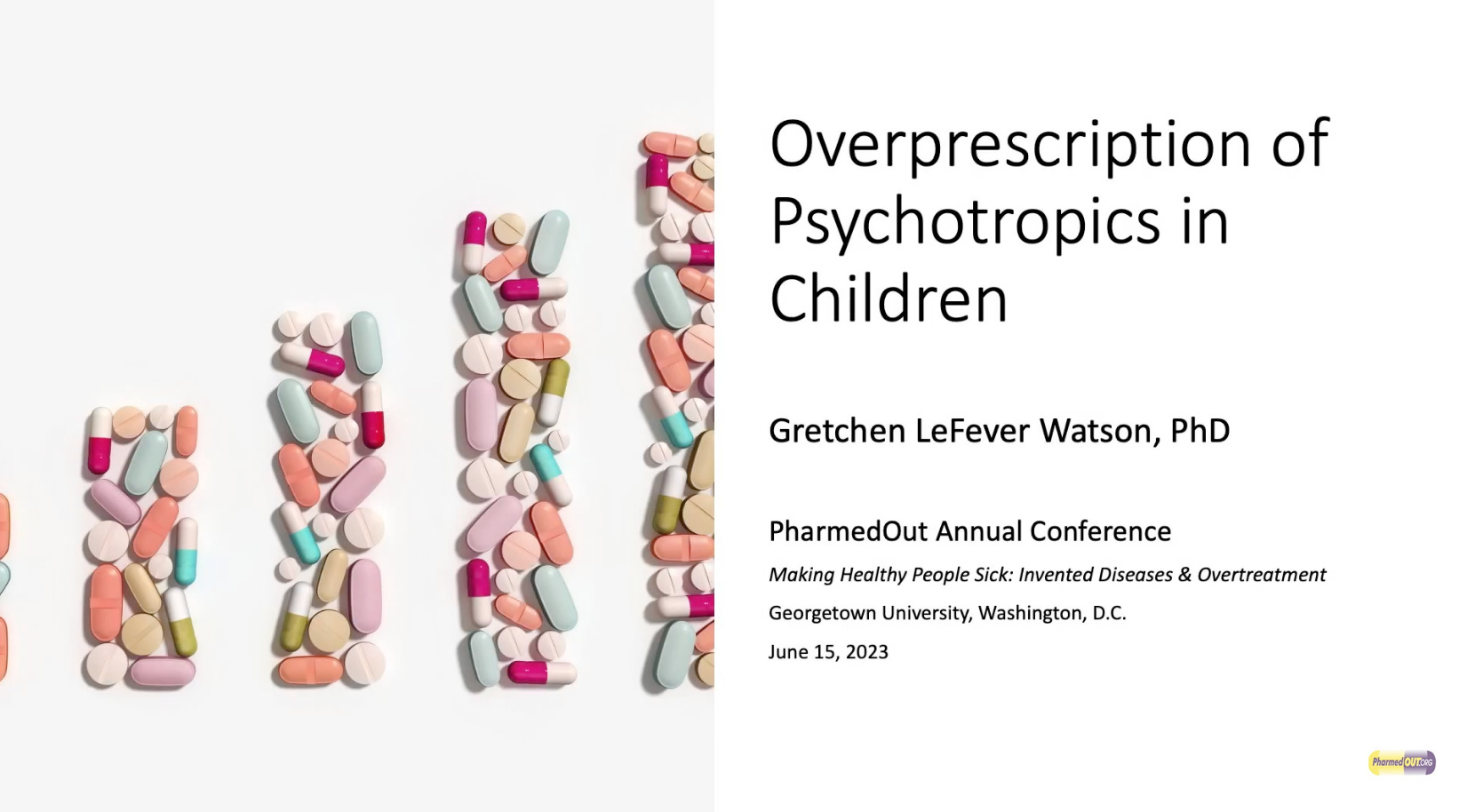
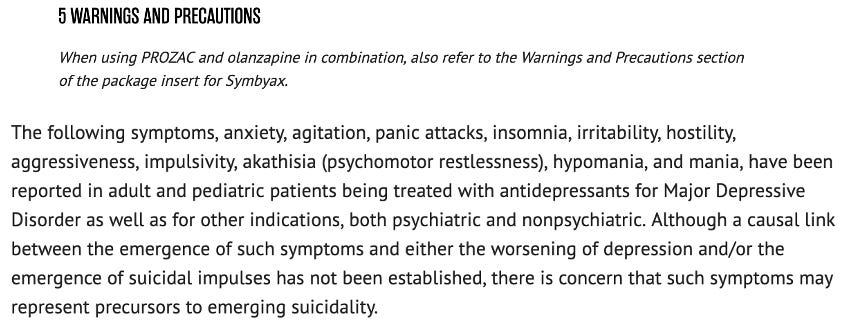
Parents can watch my talk online which covered the overprescription of psychotropics in children. While some might find parts of my talk controversial, be forewarned that the FDA placed Black Box Warnings on all antidepressants two decades ago, in 2004. These are the agency’s strongest warnings, short of pulling a product from the market, and these labels note risk of suicidal thoughts, hostility, and agitation in children, teens and young adults.

Here’s some of the side effects found on those FDA labels:

Prozac: irritability, hostility, aggressiveness

Effexor: aggression and violent behavior

Celexa: aggressive reaction, depersonalization, hallucination, paranoid reaction.

Shortly after FDA mandated these warning labels, scientists called for more research in 2006, just like Kennedy has. They also said that study results should be made public and used to create “good descriptions of the adverse outcomes of treatment.” Otherwise, courts will continue to encounter violence linked to psychotropic drug use, forcing judges to demand access to hidden data.

“The problem is international and calls for an international response,” researchers wrote.
In January 2023, a six-year old shot and seriously injured his first grade teacher at Richneck Elementary, a public school in Hampton Roads, Virginia, the same area where I practiced and conducted research for over a decade. This was the third gun violence incident in the school district within 17 months. The following month, police were called to another public elementary school in Hampton Roads, Little Creek School, because another six-year-old had brought a gun to school. Due to their young age, the students were not criminally charged but their parents were charged and convicted.

While parents are increasingly held to account for gun violence committed by their children, the established connection between psychotropics and violence has repeatedly been downplayed or dismissed.

Compared to the rest of the country, in the 1990s and 2000s, Hampton Roads medicated a much greater portion of children for ADHD, and the region medicated them at younger ages and with more drugs. Combining multiple types of psychotropics to treat ADHD was still rare, but 28% of the region’s ADHD-medicated elementary school students were already on two or more psychotropics — most often stimulants such as Adderall and antidepressants such as Prozac.

Nobody has studied the safety and efficacy of such drug combinations.

According to a special grand jury report, the Richneck shooter was started on ADHD medication with input from school personnel. The previous school year he had been “reckless, physically aggressive, used profanity toward the teachers and even choked another student.” Yet the school failed to afford the child the benefit of standard nondrug interventions, including a functional behavioral assessment, a behavioral intervention plan, an individualized educational plan, consideration for placement in an alternative school, or placement in a classroom for emotionally disturbed students.
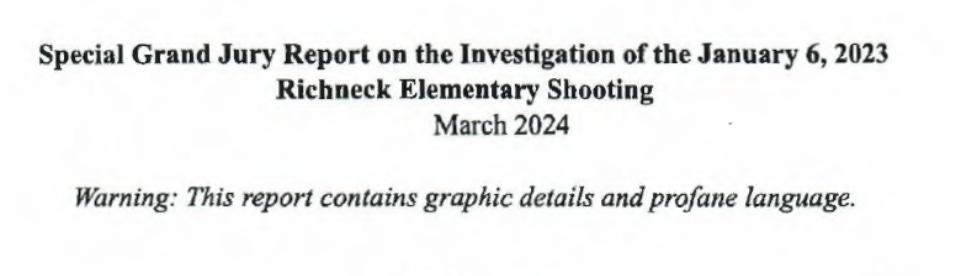
Furthermore, the grand jury found that these nondrug interventions “may have better addressed the child’s behavioral issues.”

When it comes to medicating kids with multiple psychotropics—what is known as polypharmacy—Hampton Roads is no longer our nation’s outlier. Today, 40% of ADHD-medicated American youths are on untested and unsafe psychotropic drug cocktails, according to a 2020 study published in the journal Pediatrics. Yet, compared to adults, children experience more adverse reactions to psychotropics and more severe reactions occur with psychotropic polypharmacy.

Violence is an uncommon response to prescribed stimulants, but stimulant-induced aggression does occur, and it can lead to violence. The FDA’s Adverse Event Reporting System (FAERS) data are telling. For one of the most popular ADHD medications (Adderall) during the years 1992 through 2024, adverse events that involved “aggression,” “increased irritability” and “exacerbation of the condition” comprised 45% of the 2,316 voluntarily submitted reports. These numbers lowball the magnitude of the problem because they concern only one of the many prescribe stimulants and the FDA estimates that FAERS reports capture as few as 1% of actual adverse events.

Moreover, these reports tells us nothing about risks associated with stimulants prescribed in combination with antidepressants.

Violence is an underreported and understudied adverse drug reaction because it involves other people, not just patients. Yet, research has linked violence toward others with 11 different antidepressants. Among healthy volunteers, antidepressants double the risk of violence and suicide. Why would people be afraid of more research?

Right after Kennedy’s confirmation, Trump released an executive order that calls for an assessment of the prevalence and threat posed by antidepressants, antipsychotics, mood stabilizers, and stimulants. This triggered Senator Smith to send a letter on March 20 to Secretary Kennedy. In her letter, Senator Smith alleges, “For individuals living with moderate or severe depression, anxiety, schizophrenia, or other conditions, medication can relieve symptoms so they can function normally and have improved quality of life.”

Senator Smith’s citation for this claim is a statement posted on the website of the National Alliance on Mental Illness (NAMI.)

The New York Times exposed NAMI in 2009 for its “lobbying efforts with drug makers and for pushing legislation that also benefits industry.” According to Senate investigators and documents obtained by The New York Times, drug makers from 2006 to 2008 contributed nearly $23 million to NAMI, about three-quarters of the nonprofit’s donations.

Secretary Kennedy is wise to question the rise in psychotropic prescribing and school shootings. Eli Lilly already has paid an estimated $50 million across 300 lawsuits linked to Prozac-related homicides, suicides, and suicide attempts. The published research and FDA warnings make clear that their use is linked to violence. So why would any scientist or elected official oppose further scientific investigation, especially given our country’s ever-rising reliance on these medicines?

Dr. Gretchen LeFever Watson of Virginia Beach is a clinical psychologist, academic affiliate of the University of South Carolina, and member of the Southern Network of Adverse Event Reporting (SONAR).

https://disinformationchronicle.substack.com/p/researchers-agree-with-secretary

KeyBanc Lowers Price Target on Revvity to $135 From $145

 Revvity has an average rating of overweight and mean price target of $134.29, according to analysts polled by FactSet

https://www.marketscreener.com/quote/stock/REVVITY-INC-12426/news/KeyBanc-Lowers-Price-Target-on-Revvity-to-135-From-145-49601824/

China hits back, hikes tariffs on US goods to 125% from 84%

 China on Friday struck back at President Trump's ballooning tariffs, raising its duties on imports of US goods to 125% from 84%.

The countermeasures will come into effect Saturday, further intensifying a US-China trade war that has roiled US stocks. The trade conflict has weighed on investor sentiment, even as Trump instituted a 90-day pause on steep Liberation Day tariffs and the EU matched a US pause on retaliatory duties.

The Trump administration warned Chinese officials against retaliation before the measures were announced and said that Chinese President Xi Jinping should request a call with President Trump, CNN reported Friday.

Beijing hinted it would not engage in further tariff hikes — even if Washington continues its escalations.

The White House clarified on Thursday that US tariffs on Chinese imports are now at least 145%, not the 125% that Trump had said previously.

Trump and members of his Cabinet attempted to reassure investors that things would "work out" with China. Treasury Secretary Scott Bessent said he was confident the US would be in a place of "great certainty" after the "pause" as the administration looks to negotiate new trade deals with partners.

Meanwhile, the baseline 10% tariff that went into effect on April 5 remains in place for all affected imports into the U.S.

In terms of the United States–Mexico–Canada Agreement (USMCA), compliant goods are imported tariff-free when traded among the three countries, while non-compliant goods are tariffed at 25% — except for energy and potash, which are tariffed at 10%.

https://finance.yahoo.com/news/live/trump-tariffs-live-updates-china-hits-back-hikes-tariffs-on-us-goods-to-125-from-84-191201925.html

How Chinese Imports Are Leveraged In Cyberattacks

 by Andrew Thornebrooke via The Epoch Times (emphasis ours),

For more than a decade, cybersecurity experts across the government and private sectors have sounded the alarm about the increasing risks posed by technology products manufactured in China.

The United States’ longstanding dependency on Chinese-made devices has been repeatedly exploited as part of a state-backed effort by China’s ruling communist regime to undermine the strategic interests and national security of the United States, from preinstalled malware on consumer devices to sabotage operations in critical infrastructure.

While not every Chinese-made device poses such a risk, the growing catalog of cyberattacks exploiting Chinese hardware underscores the need for vigilance when purchasing or using such products, and suggests the U.S. government may need to do more to curb its reliance on China for a broad array of devices.

Here’s a look at some of the most egregious documented uses of Chinese devices in cyberattacks from the last decade.

Chinese Malware Preinstalled on US Government-Funded Phones

Sending Americans’ most sensitive personal information directly to China probably wasn’t what the Federal Communications Commission had in mind when it decided to subsidize affordable mobile phones for millions of low-income Americans.

That’s exactly what happened, however.

Beginning in 2015, a wide range of budget Android phones manufactured by American company BLU in China were systematically preloaded with malware by suspected Chinese state-backed actors.

Those phones were found by cybersecurity company Kryptowire to have been preloaded with malicious software by the Shanghai Adups Technology Company, an opaque IT services company established in China in 2012, with which BLU had contracted to provide service updates for its devices.

The Adups malware operated at the most foundational level of the phones, including in the wireless update and settings apps, meaning that the malware could not be removed without rendering the phones unusable.

For years, Adups collected granular location data, contact lists, logs for calls and texts, and even the full contents of texts from Americans’ phones. Some of the phones even allowed remote actors believed to be based in China to take screenshots or otherwise seize control of the devices.

To make matters worse, all that data were encrypted and sent back to a server in China, where Chinese Communist Party (CCP) law mandates that information is a national resource, effectively transferring Americans’ most personal data directly to the regime.

The malign activity was able to bypass detection for some time because the malware was embedded in the software of the phone and therefore automatically whitelisted by most malware detection tools, which were programmed to assume that a product’s rudimentary software and firmware would not be malicious.

It’s still unclear just how many Americans were caught up in the operation. Adups claimed on its website in 2016 to have a worldwide presence with more than 700 million active users, and that it also produced firmware integrated into mobile phones, semiconductors, wearable devices, cars, and televisions.

In 2017, the Federal Trade Commission reached a settlement with BLU, finding that the company had knowingly misled its customers about the extent of data that could be collected by Adups.

Yet Adups emerged again in 2020, when cybersecurity firm Malwarebytes found that the company had preinstalled malware on budget mobile phones offered by Virgin Mobile’s Assurance Wireless program, another government-subsidized effort to make mobile phones available for low-income Americans.

Mystery Routers Hidden in US Ports

A congressional probe revealed in 2024 that Chinese-made routers used in U.S. ports could facilitate cyber espionage and sabotage.

The report revealed that giant ship-to-shore cranes, which are used to unload cargo throughout the United States’ largest ports, had been equipped with Chinese-manufactured modems with no known function.

Investigators warned that the technology embedded in the devices could allow unauthorized access to sensitive U.S. port operations and that some of the modems were also found to have active connections to the operational components of the cranes, suggesting they could be remotely controlled by a device no one previously knew existed.

All of the cranes in question were manufactured in China by Shanghai Zhenhua Heavy Industries, a subsidiary of the state-owned China Communications Construction Co.

U.S. lawmakers noted at the time that Zhenhua’s manufacturing facility was located adjacent to China’s most advanced ship-making facility, where the regime builds its aircraft carriers and houses advanced intelligence capabilities.

In a letter dated Feb. 29, 2024, addressed to the president and chairman of Zhenhua, the lawmakers demanded to know the purpose of the cellular modems discovered on crane components and in a U.S. seaport’s server room that houses firewall and networking equipment.

U.S. Coast Guard Rear Adm. John Vann, who led the Coast Guard’s Cyber Command at the time, said there were more than 200 China-manufactured cranes operating across U.S. ports and other regulated facilities, less than half of which had been thoroughly inspected for the Chinese devices.

Exploitation of Chinese Routers, Cameras

Chinese state-sponsored cyber actors have also been found exploiting vulnerabilities in network devices such as home routers, storage devices, and security cameras.

These devices, often manufactured in China, have been targeted to serve as additional access points for conducting network intrusions on other entities, effectively leveraging vulnerabilities inherent in certain Chinese-made devices to gain a foothold in American networks, according to the Cybersecurity and Infrastructure Security Agency.

In one such major incident in 2016, Dahua Technology, a leading Chinese manufacturer of surveillance equipment, was linked to a distributed denial-of-service (DDoS) attack and, again in 2021, security researchers found a flaw in Dahua’s software that allowed hackers to bypass authentication protocols and seize control of the devices.

In that incident, more than a million devices were exploited and used to create two botnets, which were then used to target the website of a cybersecurity journalist in a DDoS and extortion campaign.

Chinese state-sponsored cyber actors have continued to extensively target these and similar vulnerabilities in Chinese-made security cameras and webcams in the years since.

In February of this year, the Department of Homeland Security distributed a bulletin warning that innumerable such cameras were still being used throughout U.S. infrastructure sites, including in the electrical grid and ports.

That bulletin warned that Chinese-manufactured devices were especially likely to be exploited in cyber attacks and that tens of thousands of the devices had already been used to that end.

https://www.zerohedge.com/political/how-chinese-imports-are-leveraged-cyberattacks

Democratic State Attorneys General Sue To Restore COVID-Related Programs For K-12 Students

 by Jacob Burg via The Epoch Times (emphasis ours),

A group of Democratic state attorneys general and a governor sued the Trump administration on April 10 to attempt to stop it from ending more than $1.1 billion in funding for addressing the long-term impacts of the COVID-19 pandemic on K–12 students.

New York Attorney General Letitia James makes an announcement on March 14, 2025. Oliver Mantyk/The Epoch Times

Filed in Manhattan federal court, the lawsuit is in response to the Department of Education’s March 28 announcement that it would no longer let states utilize funds within programs implemented by a pandemic relief law passed during the Biden administration. Previously, the agency said the funds would be accessible through March 2026.

The states suing said they had planned on the funding and are now dealing with major budget shortfalls because of the agency’s policy change, the lawsuit states.

They said the funding was earmarked for facility upgrades, offering tutoring to students who fell behind during the COVID-19 pandemic, and feeding homeless students.

“The Trump administration’s latest attack on our schools will hurt our most vulnerable students and make it harder for them to thrive,” said New York Attorney General Letitia James, who was one of the plaintiffs bringing the lawsuit. “Cutting school systems’ access to vital resources that our students and teachers rely on is outrageous and illegal.”

She was joined by the attorneys general of California, Illinois, Massachusetts, Michigan, Minnesota, and the District of Columbia, and Pennsylvania Gov. Josh Shapiro was an additional plaintiff.

The group alleges that the Trump administration’s reversal on allowing access to the funds violated procedures necessary by the Administrative Procedures Act. They are asking the court to issue an order vacating the Education Department’s termination of funds and reinstating its previous policy, allowing the states to access the funds through March of next year.

The White House and the Department of Education did not respond to requests for comment by publication time.

President Donald Trump has said education authority should be returned to the states and parents should decide what’s best for their children. He signed an executive order last month directing his administration to hasten the process of dismantling the Education Department, which requires congressional approval.

California Attorney General Rob Bonta, a plaintiff in Thursday’s lawsuit, accused Trump of “throwing our schools into turmoil and jeopardizing the academic success of a generation of American children” by moving to dismantle the Education Department.

“I’m taking the President to court for the 13th time to help ensure our kids get the educational opportunities they deserve,” Bonta wrote in a statement.

Numerous groups have filed lawsuits challenging the administration’s sweeping cuts, arguing it is revoking congressionally appropriated contracts and grants without first getting input from the legislative branch.

https://www.zerohedge.com/political/democratic-state-attorneys-general-sue-restore-covid-related-programs-k-12-students