Search This Blog

Saturday, April 12, 2025

Finland Bans Russians From Buying Property As Zelensky Says 'Hatred' For Them Is Justified

On Friday Finland's parliament unanimously approved a government proposal for a complete ban on real estate acquisitions from Russian nationals. The country's leaders are hailing that the resolution was passed.

The Finnish Defense Ministry announced Friday that the measure aims to strengthen national security and that "This decision sends a clear message: we will not allow Finland to be undermined," according to the statement.

It applies to those from countries which "wage a war of aggression and pose a potential threat to Finland’s national security" - who are now barred from carrying out real estate transactions.

Finland will of course deny that its policies which target Russians are racist or xenophobic based on the following caveat:

The ban would not apply to Russians or other foreigners with a Finnish permanent residence permit or an EU residence permit granted by Helsinki, allowing them to seek approval from Finland’s Defense Ministry for transactions.

The legislation also seeks to prevent Russians from buying property through a third party, in any arrangement which tries to conceal the real buyer's identify.

During the first year of the Russia-Ukraine war, Western countries and institutions waged a cultural 'war' against all things seen as 'Russian' - from cancelling Russian classical music and ballet performances, to boycotting things as simple as Russian tea rooms or restaurants. Even books by the famous author Fyodor Dostoevsky were subject of hysterical denunciations in some corners.

Since then, it's apparently been OK for people to hate an entire nationality or ethnicity based on mere association with the Russian nation or identity. Western 'enlightened liberals' have advanced such an agenda, but also the Ukrainians themselves.

For example, Russian media has highlighted some of President Zelensky's latest comments on all of this as follows:

Ukraine’s Vladimir Zelensky has admitted that his "hatred" of Russians is one of the driving forces propelling him to “keep going” in the conflict against Moscow.

In an interview with the French daily Le Figaro published on Wednesday, Zelensky identified the emotion as one of his three key psychological drivers since the escalation of the conflict in February 2022.

Zelensky said he hated “Russians who killed so many Ukrainian citizens,” adding that he considered such an attitude appropriate in wartime. His other motivations included a sense of national dignity and the desire for his descendants to live “in the free world.”

Of course, the Ukrainian government has also welcomed Finland's move to ban all property purchases by Russians, something which is likely to be mimicked by some other EU and NATO member states.

Regardless, Washington is pursuing a different track, with ongoing bilateral meetings with Moscow with a goal of restoring diplomatic normalization. A Thursday meeting of delegations in Istanbul was toward this end, as is Special Envoy Steve Witkoff's third visit to Moscow to meet with Putin on Friday.

https://www.zerohedge.com/geopolitical/finland-bans-russians-buying-property-zelensky-says-hatred-them-justified

Greenwich Village not so liberal anymore as crime, drugs push residents to beg for more cops

 Greenwich Village isn’t so freewheelin’ anymore.

The bohemian Mecca made famous for its anything-goes attitude, counterculture musical scene and clashes with police is begging for law enforcement, a shocking new survey found.

The Sixth Precinct Community Council polled 600 neighborhood residents and found 487 of them — 83% — want more cops on the streets.

Residents say the crisis in the Village has gotten out of hand in the last few years.Washington Square Association and Neighborhood Action Group

And 74% of Villagers said the Empire State needed stronger prosecution for drug dealing, while 80% thought New York needed stricter bail laws, according to the first-of-its-kind survey, conducted in February and March.

“The village is frequently criticized for being liberal — but clearly the numbers here indicate we’re not happy,” said precinct council member Steve Zammarchi.

No place is more emblematic of the decline than Washington Square Park – where Bob Dylan used to sing songs about social injustice. Despite falling citywide crime, the green space continues to be overrun by junkies and dealers — and repeat offenders are on a loop – arrested, released and back by lunchtime, neighbors said.

“Enough is enough,” said Village-raised Trevor Sumner, president of the Washington Square Association. “Liberalism is being challenged and people are realizing that our attempts to honor some ideals are leading to worst outcomes.”

Trevor Sumner, president of the Washington Square Association, pictured with Emily Sumner.Patrick McMullan via Getty Images
The northwest corner of Washington Square Park is a known “drug den” to locals.Helayne Seidman

Sumner says he would have described himself as “quite liberal” up until two years ago, but his personal views shifted when conditions in the park took a nosedive after the pandemic.

But it’s not just in the park. The Sixth Precinct routinely posts on X about nabbing drug dealers plying their trade in broad daylight on Sixth Avenue — something that would have been unimaginable only a few years back.

“It’s very hard for me to unsee the realities of the outcomes on the streets. It’s shifted how almost everyone I know who’s active in the community is thinking about voting,” he said, blaming Albany’s bail reform and discovery changes for the unending cycle of lawlessness.

Residents started taking photos documenting their everyday experiences.Washington Square Association and Neighborhood Action Group

Major felonies have surged over pre-pandemic levels, with 1,789 reported in 2024, up from 1,534 in 2019 — a 16% climb. So far this year, felonies are down 21%, compared to last year.

The conservative shift is showing up in voting records too, a Post analysis found. Nearly 13% of voters in the neighborhood backed President Trump in 2024, up from the 8% of 2020 supporters, according to Board of Elections data.

Eli Klein, who runs an art gallery in Greenwich Village, grew up in a very prominent liberal family – his mother Janet Benshoof was the founder of the Center for Reproductive Rights and a champion of the left. But the former lifelong Democrat said the party abandoned them.

Residents say things started to change after the pandemic.Helayne Seidman

“The left has gotten more extreme as opposed to us really going the other way. There’s a lot of recidivist criminals on the streets. The progressives push really soft on crime stuff. It’s hard to believe that a huge section of our population wants career criminals on the streets,” he said.

Longtime village residents say the free-love energy of the past has morphed into something less poetic.

“There’s a lot more crazies, unstable people. It’s just an eyesore, it’s disconcerting,” said Philip Spinelli, 75, who’s lived on Christopher Street since the 1960s.

Philip Spinelli has lived on Christopher Street since the 1960s.Michael Nagle

Back then, they say, they were protesting for a cause. Now, not so much.

“We have literal zombies walking through the streets and framing it as somehow these reforms have given them some kind of dignity – this is not dignity,” said Sumner.

The NYPD did not return The Post’s request for comment.

https://nypost.com/2025/04/12/us-news/nyc-neighborhood-not-so-liberal-anymore-this-is-not-dignity/

EU considers defence fund to ease debt concerns for military gear

 European Union finance ministers started talks on Saturday over a joint defence fund that would buy and own defence equipment and charge members a fee for its use, as a way to spend more on defence without burdening national accounts with more debt.

The fund, called the European Defence Mechanism, was proposed by the Bruegel think tank in a paper for the ministerial discussions as a way of addressing concerns about how highly-indebted countries could pay for costly military equipment.

It is part of a broader European effort to prepare for a potential attack from Russia as EU governments realise they can no longer fully rely on the United States for their security.

"It's a good starting point for discussion," Portuguese Finance Minister Joaquim Miranda Sarmento said.

Several other EU countries also expressed initial support, noting that setting up such a fund could be technically relatively simple because it would be based on the model of the euro zone bailout fund, the European Stability Mechanism.

"We'll still have several issues in terms of the mandate, the finance, the contributions, the leverage in the market. There are several issues on the financing, but also on the military aspect," Sarmento said.

    The EU is already looking to boost military spending by 800 billion euros ($876 billion) over the next four years by loosening its fiscal rules on defence investment and jointly borrowing for large defence projects against the EU budget.

But such options increase national debt - a worry for many high-debt countries - while the Bruegel idea would provide a way to keep some of the defence investment off national books.

INTERGOVERNMENTAL FUND OPEN TO NON-EU COUNTRIES

The fund would be established under an intergovernmental treaty and have substantial paid-in and callable capital, allowing it to borrow on the market.

    The EDM could admit members from outside the EU, such as Britain, Ukraine or Norway. Because the fund would own the equipment it buys, the debt incurred to pay for it would stay on the EDM's books, rather than national accounts.

    The EDM would also promote a single European market for defence equipment to lower costs and pool resources.

Defence procurement and production in the 27-nation EU is highly fragmented with at least seven different types of tanks, nine types of self-propelled howitzers and seven types of infantry fighting vehicles, which increases costs, reduces interoperability and hinders economies of scale.

    "We have to consider the possibility of creating new instruments ... to reinforce the defence capacities of Europe," Sarmento said.

The fund could focus on "strategic enablers" - costly military infrastructure and equipment armies need to operate - now often provided by the United States.

    These include joint command and control systems, satellite-based intelligence and communication, development of expensive new weapon systems such as fifth- or sixth-generation fighter jets, integrated weapon systems needed by multiple countries like strategic air defence, strategic large-scale air transport and maritime logistics, missiles and nuclear deterrence.

    The Bruegel paper on the EDM said Europe had a chance to reduce its military dependence on the U.S. by 2030 only if it pooled procurement to the greatest extent possible and created a common European defence market including Britain as a major industrial defence player to boost competition.

https://www.marketscreener.com/news/latest/EU-considers-defence-fund-to-ease-debt-concerns-for-military-gear-49604500/

NATO Is A Corpse

 by Andrew Latham via RealClearDefense,

NATO is a corpse. All that remains is the grotesque performance art of a diplomatic zombie stumbling from summit to summit, mouthing tired clichés about “shared values” and “burden sharing,” even as its core strategic logic lies rotting beneath the surface. The Atlantic Alliance, once the steel scaffolding of Western security, has become a hollow ritual. Its military readiness is an illusion. Its political cohesion is fraying. Its future, if it has one, lies not in revival—but in reinvention or replacement.

This is not a triumphalist declaration from the Kremlin or Beijing. It is a sober diagnosis, grounded in realism and restraint. And it should be a wake-up call in Washington, Ottawa, Berlin, and beyond.

NATO’s death was not caused by Donald Trump, though he may soon become its undertaker. Nor was it caused by Vladimir Putin’s invasion of Ukraine, though that war has exposed the Alliance’s hollowness in ways no war game or communique ever could. The real cause lies in decades of European free-riding, American strategic drift, and a foundational lie at the heart of the Alliance: the idea that an empire can masquerade as a collective defense pact without consequences.

Let’s start with the numbers. Most NATO members still do not meet the 2 percent of GDP defense spending benchmark, despite years of promises and performative panic. Canada, which has taken freeloading to an art form, has shown no serious intention of meeting its obligations. As I’ve written elsewhere, Trudeau’s empty pledges mask a decaying defense industrial base, a stagnant recruiting system, and an Arctic strategy made of snow and sentiment.

Germany—the economic motor of Europe—still can’t field a combat-ready army for more than a few weeks at a time. The Bundeswehr is a shell. Its special fund is already mostly spent, and its political class remains addicted to strategic ambiguity and military minimalism. France wants “strategic autonomy” but lacks the scale and will to lead Europe alone. Poland, despite its impressive rearmament, cannot carry the continent’s defense burden on its shoulders—certainly not while Berlin dithers and Washington increasingly looks west, not east.

Meanwhile, the United States—still NATO’s military backbone—faces a fiscal cliff, a recruitment crisis, and an overstretched force posture. The era of limitless resources is over. American global primacy has ended. Multipolarity has arrived. The U.S. must now prioritize. And that means making hard choices about where its forces are truly needed—and where others must finally step up or face the consequences.

The war in Ukraine has laid these contradictions bare. NATO as an institution is not fighting the war. The United States is. Some European countries are helping—but most are hedging. NATO has been bypassed in favor of bilateral and ad hoc coalitions. Article 5 hasn’t been tested, and it may never be. The idea that NATO is “more united than ever” is a comforting fiction, trotted out to conceal the fact that the Alliance can no longer mount a serious, conventional defense of Europe without massive and prolonged American escalation.

Even the so-called Nordic expansion—Sweden and Finland joining NATO—has not changed the equation. It’s a strategic sideshow. Unless Europe can build up a credible, conventional deterrent in the East, without expecting Washington to always bail it out, the Alliance will remain a Potemkin village: flags, acronyms, and summits without substance.

Trump’s likely return to the White House in 2025 should not be viewed as a cataclysm but as an overdue reckoning. He will not end NATO. He will force Europe to decide whether it is willing to pay for its own defense or not. He will not blow up the Alliance. He will make it answer for its contradictions. And that, frankly, is what a serious ally should do.

Some critics will scream that this is the death knell of the “rules-based international order.” But the order they mourn was already breaking down—long before Trump, long before Ukraine, long before Brexit or Crimea. What we are witnessing is not a collapse but a transition: from the illusion of Atlanticism to the reality of multipolarity. And NATO, if it is to matter at all in this new world, must either become a true European-led military alliance with American support—or fade into history like SEATO and CENTO before it.

This doesn’t mean abandoning Europe to Russian domination. It means telling uncomfortable truths. Europe is rich. Europe is populous. Europe is not helpless. The United States can and should support its European allies—but it should not subsidize their illusions indefinitely. A more self-reliant Europe is not a threat to American interests; it is a precondition for strategic focus on the North Pacific, the Arctic, and the Western Hemisphere—where the real contests of the 21st century will be decided.

In my writing here and elsewhere, I have repeatedly argued that Canada must stop pretending it is a global power and start acting like what it is: a North Pacific, Arctic, and North Atlantic state. That means prioritizing regional defense, rebuilding naval and aerospace capabilities, and getting serious about continental defense. NATO is not the vehicle for that anymore—if it ever was. For Canada, continuing to hide behind NATO rhetoric while failing to meet even the most basic obligations is not only cowardly—it is dangerous.

A dead NATO still carries risks. Strategic ambiguity, brittle expectations, and performative deterrence are a recipe for miscalculation. The Alliance’s political leadership must either acknowledge the need for transformation or risk a future crisis that reveals, in real time and in blood, what we already know: that the emperor has no tanks.

The solution is not sentimental nostalgia. It is clear-eyed realism. NATO in its current form is not worth saving. But its core idea—collective defense among likeminded powers—still has value. What’s needed is a reset: a reimagined Euro-Atlantic security framework led by capable European states, with American support but not American dominance. A NATO that deters by capability, not by assumption. A NATO that can say no as well as yes. A NATO, in short, that lives in the real world.

The alternative is strategic decay. A slow slide into irrelevance. More summits, more selfies, more hollow communiqués. Until, one day, NATO doesn’t die with a bang—but with a bureaucratic whimper.

That future is already here. NATO is dead. The only question now is what comes next—and whether we have the courage to build it.

Andrew Latham,Ph.D., a tenured professor at Macalester College in Saint Paul, Minnesota. He is also a Senior Washington Fellow with the Institute for Peace and Diplomacy in Ottawa and a non-resident fellow with Defense Priorities, a think tank in Washington, DC.

https://www.zerohedge.com/political/nato-corpse

The Dos and Don'ts of Negotiating with Iran


Shortly after then-Secretary of State John Kerry concluded talks with his Iranian counterpart that led to the 2015 nuclear agreement, the wizards at Google had already delivered judgment. When I typed in the phrase, “how not to buy a carpet” at Google images, the first result was a photo of the two foreign ministers and their aides, facing each other across the negotiating table in Lausanne.

The ever-smiling Mohammad Javad Zarif told Kerry three times they had a deal, but that he needed to go back to Tehran to run it by the "Supreme Leader." And three times he came back, demanding more.

Donald Trump called the deal the United States finally signed, known as the Joint Comprehensive Plan of Action (JCPOA), "the worst deal ever" and withdrew the United States from it in 2018. He was right.

The President's Middle East special envoy, Steve Witcoff, recently admitted that he got "duped" by Hamas during negotiations in Qatar with Hamas-appointed Arab mediators.

Having worked in the Middle East as a war correspondent and investigative reporter for forty years, let me say it straight: if the Arabs managed to dupe Mr. Witcoff, the Iranians are going to take him to the cleaners.

So here are a few "do's and dont's" for Witcoff when he travels to Oman this weekend.

Rule #1: Always be prepared to walk out

The Iranians invariably win at negotiations because the other party wants the deal more than they do.

The media echo chamber run out of the Obama White House while Kerry was negotiating in Switzerland drummed into us the notion that it was the deal or war. The Iranians knew very well that wasn't true. Obama was never prepared to go to war with Iran. He wasn't even prepared to maintain sanctions on Iran if Kerry walked. That gave Kerry zero leverage.

President Trump has made very clear this time that if the Iranians don't agree to fully dismantle their nuclear infrastructure, there will be "hell to pay." That gives Witcoff substantial credibility from the moment he walks into the room. So does the pre-positioning of B2 "Spirit" bombers on Diego Garcia in the Indian Ocean.

Rule #2: No negotiations about negotiations

The Iranians love to talk about the size and shape of the table. And the participants. And the intermediaries. Witcoff must make clear that neither he nor the president finds their games amusing.

They get one shot at this. If they keep their foreign minister in an adjacent suite while the Omanis transmit messages back and forth, Witcoff should walk out. If they want negotiations to continue, they can crawl back.

Rule #3: Make the end state crystal clear from the beginning

The Iranians will attempt to redefine the subject of the negotiations from the get-go. They will say they are ready to resume where they left off with the JCPOA, and that the only reason they have been enriching uranium to 60% is because the U.S. walked out in 2018.

Witcoff's response must be crystal clear: We are not here to discuss the JCPOA. We are here to discuss the dismantling of your nuclear infrastructure, just as we did with Qaddafi in 2004.

Rule #4: Don't get bogged down in side issues.

Iranian foreign minister Abbas Araghchi knows the nuclear file inside and out, as he was the lead legal expert in the previous round of negotiations. He will raise a host of side issues, such as America's alleged failure to uphold its commitments under the Treaty on the Nonproliferation of Nuclear Weapons (NPT), the injustice of American sanctions, and the "bad faith" of the U.S. side.
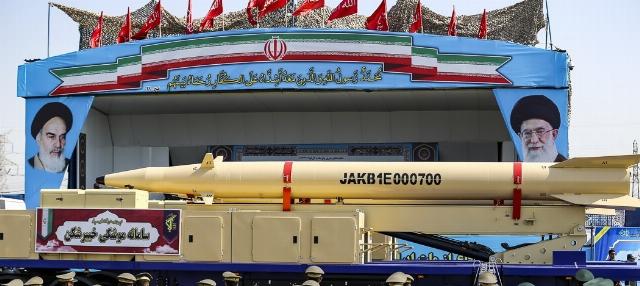
Don't get sidetracked. Nothing is on the table until Iran is ready to negotiate the dismantling of its nuclear weapons infrastructure, which includes the centrifuge enrichment plants in Nantanz and Fordo, its uranium hexafluoride plant, its centrifuge manufacturing workshops, its nuclear bomb design bureaux (and let's not pretend they don't exist), and the facilities it uses to produce the non-nuclear components of nuclear warheads.

Iran has been in violation of its NPT commitments since 2003, when its nuclear weapons program first became public. The UN Security Council passed five resolutions between 2006-2009 condemning Iran for those violations, starting with UNSC 1696 on July 31, 2006. Until it comes into full compliance with the NPT, it has no rights under the Treaty. Zero.

Rule #5: Verification is critical

In 2015, the Iranians snookered John Kerry and his team on verification, so much so that the apparent "concessions" the Iranians made became meaningless. The United States must be actively involved in verifying Iran's compliance with this deal -- and that means U.S. inspectors in Iran -- or else there is no deal.

Once again, Witcoff must be prepared to walk out, especially when the Iranians let on they are so close to an agreement.

Rule #6: No security guarantees

The Iranians will point to Qaddafi as Exhibit A of what happens to a Third World leader when he gives up his nuclear weapons.

I was in Libya in March 2004 when Qaddafi loaded his uranium enrichment centrifuges and his long-range ballistic missiles onto a U.S. cargo ship in Tripoli harbor. (Ironically, I was there thanks to a U.S. congressional delegation led by Rep. Curt Weldon (R-PA) and Senator Joe Biden.)

Qaddafi wasn't overthrown because he gave up his nuclear weapons infrastructure. He was overthrown because Obama and Hillary Clinton ignited the Arab spring and supported his Muslim Brotherhood opponents.

Don't get sidetracked. The United States is not going to provide security guarantees to the Iranian regime against its internal opposition, or to protect it from Israel. If Iran wants to prevent Israeli counterstrikes, it can stop attacking Israel.

Rule # 7: No grand bargain

Iran will demand that the United States lift all sanctions, return all frozen assets, and lock itself into an international mechanism that will prohibit us from reimposing sanctions at a later date.

You are not negotiating a "grand bargain," or the return of Iran to its place in the international council of nations. If Iran wants to talk about its support for international terrorist groups, its human rights abuses against its own citizens, or a resumption of trade with the United States, those are separate negotiations that may or may not take place in the future.

So for now, all except the specifically nuclear sanctions remain in place. The U.S. will continue to prohibit Iran from exporting its oil because that money is being used to support genocidal attacks against the Jewish people.

The bottom line:

So what does Iran get under this deal? A temporary reprieve from U.S. military action to destroy its nuclear weapons infrastructure. That is a temporary lifeline for the regime.

Witcoff must understand that and hold firm. The Iranians will squeal. They will complain. They will accuse us of behaving like a hegemon, depriving them of their "rights" to conduct nuclear research.

Let them. Because if they do not agree to Pres. Trump's terms they won't be squealing at all, at least, not for long.

Kenneth R. Timmerman was a guest lecturer on Iran at the Joint Counterintelligence Training Academy in Quantico for six years. His latest work of non-fiction, The Iran House: Tales of Revolution, Persecution, War, and Intrigue, was recently published by Bombardier Books.

https://www.americanthinker.com/articles/2025/04/the_do_s_and_don_ts_of_negotiating_with_iran.html