Search This Blog

Saturday, April 12, 2025

Iran, US hold 'productive' talks in Oman, agree to resume next week, Tehran says

 Iran and the US held talks in Oman on April 12 and agreed to reconvene next week, the Iranian side said, a dialogue meant to address Tehran’s fast-advancing nuclear programme, with US President Donald Trump threatening military action if there is no deal.

Iranian Foreign Minister Abbas Araqchi posted on his Telegram channel that his delegation had a brief encounter with its US counterpart, headed by Mr Trump’s Middle East envoy Steve Witkoff, after they exited the indirect talks mediated by Oman.

“After the end of more than 2½ hours of indirect talks, the heads of the Iranian and American delegations spoke for a few minutes in the presence of the Omani foreign minister as they left the talks,” he said.

He said the talks - a first between Iran and a Trump administration, including his first term in 2017-21 - took place in a “productive and positive atmosphere”.

“Both sides have agreed to continue the talks next week,” Mr Araqchi wrote, without elaborating about the venue and date.

There was no immediate US comment on the talks.

Underlining the profound rift between the US and Iran, Iranian Foreign Ministry spokesman Esmail Baghaei earlier said on X that each delegation had its separate room and would exchange messages via Oman’s foreign minister.

“The current focus of the talks will be de-escalating regional tensions, prisoner exchanges and limited agreements to ease sanctions (against Iran) in exchange for controlling Iran’s nuclear programme,” an Omani source told Reuters. Mr Baghaei denied this account but did not specify what was false.

Oman has long been an intermediary between Western powers and Iran, having brokered the release of several foreign citizens and dual nationals held by the Islamic Republic.

Iran is approaching the talks warily, sceptical that they could lead to a deal and suspicious of Mr Trump, who has repeatedly threatened to bomb Iran if it does not halt its nuclear programme.

While each side has talked up the chances of some progress, they remain far apart on a dispute that has rumbled on for more than two decades, and have not agreed on whether the talks will be face to face, as Mr Trump demands, or indirect, as Iran wants.

The April 12 exchanges appeared indirect, as Iran had wanted, rather than face-to-face, as Trump had demanded.

“This is a beginning. So it is normal at this stage for the two sides to present to each other their fundamental positions through the Omani intermediary,” Mr Baghaei said.

Signs of movement could help cool tensions in a region aflame since 2023 with wars in Gaza and Lebanon, missile fire between Iran and Israel, Houthi attacks on Red Sea shipping and the overthrow of the government in Syria.

High stakes

However, failure would aggravate fears of a wider conflagration across a region that exports much of the world’s oil. Tehran has cautioned neighbouring countries that have US bases that they would face “severe consequences” if they were involved in any US military attack on Iran.

“There is a chance for initial understanding on further negotiations if the other party (US) enters the talks with an equal stance,” Mr Araqchi told Iranian TV.

Supreme Leader Ayatollah Ali Khamenei – who, in the Islamic Republic’s complex power structure, has the final say on key state matters – has given Mr Araqchi “full authority” for the talks, an Iranian official told Reuters.

“The duration of the talks, that will only be about the nuclear issue, will depend on the US side’s seriousness and goodwill,” said the official, speaking on condition of anonymity due to the sensitivity of the matter.

Iran has ruled out negotiating its defence capabilities such as its missile programme.

Iran has always maintained its nuclear programme is intended for purely civilian purposes, but Western countries believe it wants to build an atomic bomb.

They say Iran’s enrichment of uranium, a nuclear fuel source, has gone far beyond the requirements of a civilian programme and has produced stocks at a level of fissile purity close to those required in warheads.

Mr Trump, who has restored a “maximum pressure” campaign on Tehran since February, ditched a 2015 nuclear pact between Iran and six world powers in 2018 during his first term, reimposing crippling sanctions on the Islamic Republic.

Since then, Iran’s nuclear programme has leaped forward, including by enriching uranium to 60 per cent, a technical step from the levels needed for a bomb.

US Secretary of State Marco Rubio said on April 10 he hoped that the talks would lead to peace, adding: “We’ve been very clear what Iran is never going to have a nuclear weapon, and I think that’s what led to this meeting.”

Tehran responded the following day, saying it was giving the US a “genuine chance”, despite what it called Washington’s “prevailing confrontational hoopla”.

Washington’s ally Israel, which regards Iran’s nuclear programme as an existential threat, has long threatened to attack Iran if diplomacy fails to curb its nuclear ambitions.

Tehran’s influence throughout the Middle East has been severely curbed, with its regional allies – known as the “Axis of Resistance” – either dismantled or badly hurt since the start of the Hamas-Israel conflict in Gaza and the fall of Bashar al-Assad in Syria in December.

The Axis includes not only Hamas but also Hezbollah in Lebanon, the Houthis in Yemen, and various Shi’ite armed groups in Iraq and Syria

https://www.straitstimes.com/world/middle-east/iran-us-to-start-talks-on-nuclear-programme-in-oman-under-shadow-of-regional-conflict

Trump Exempts Computers, Handsets, Chips From Reciprocal Tariff Blitz

U.S. Customs and Border Protection (CBP) issued an updated guidance late Friday night on product exclusions from President Trump's reciprocal tariffs, imposed under Executive Order 14257 and its amendments (EO 14259). The exclusions cover a wide range of electronic devices, including smartphones, laptops, and related components.

First, President Trump paused reciprocal tariffs for non-retaliating countries (e.g., China) for 90 days last week. Now, updated guidance from CBP reveals that some of the highest-value trade—particularly a wide range of electronics—is excluded from the reciprocal tariffs

Among the 20 tariff codes listed for exemption, three stand out in particular:

  • 8471 – Automatic data processing machines and units thereof (e.g., laptops, desktops, servers).

  • 8517.13.00 – Smartphones and other telecommunication apparatus for cellular networks.

  • 8542 – Electronic integrated circuits (e.g., microprocessors, memory chips).

  • Here's the complete list:

  • 8471 – Automatic data processing machines and units thereof (e.g., laptops, desktops, servers).

  • 8473.30 – Parts and accessories for automatic data processing machines (e.g., computer parts).

  • 8486 – Machines and apparatus for the manufacture of semiconductor devices or electronic integrated circuits.

  • 8517.13.00 – Smartphones and other telecommunication apparatus for cellular networks.

  • 8517.62.00 – Machines for the reception, conversion, and transmission/regeneration of voice, images, or other data (e.g., modems, routers).

  • 8523.51.00 – Solid-state non-volatile storage devices (e.g., flash memory, SSDs).

  • 8524 – Media for the recording of sound or other phenomena, not elsewhere specified (can include CDs, DVDs, etc.).

  • 8528.52.00 – Monitors capable of directly connecting to an automatic data processing machine (e.g., computer monitors).

  • 8541.10.00 – Diodes, other than photosensitive or light-emitting diodes (LEDs).

  • 8541.21.00 – Transistors with a dissipation rate of <1 W.

  • 8541.29.00 – Other transistors.

  • 8541.30.00 – Thyristors, diacs, and triacs (semiconductor switching devices).

  • 8541.49.10 – Light-emitting diodes (LEDs) – chips mounted in discrete packages.

  • 8541.49.70 – Other LEDs, not listed elsewhere.

  • 8541.49.80 – Infrared LEDs.

  • 8541.49.95 – Other light-emitting semiconductor devices.

  • 8541.51.00 – Silicon-based photovoltaic devices (solar cells), whether or not assembled in modules or panels.

  • 8541.59.00 – Other photovoltaic devices.

  • 8541.90.00 – Parts of the goods of heading 8541 (e.g., parts for diodes, transistors, LEDs).

  • 8542 – Electronic integrated circuits (e.g., microprocessors, memory chips).

To close out the week, the U.S.–China trade war escalated in a highly predictable tit-for-tat fashion. The U.S. now imposes a 145% effective tariff rate on Chinese goods, while Beijing has retaliated with a 125% rate on American products.

Meanwhile, Wall Street analysts have already trimmed sales estimates for U.S. companies with Chinese exposure, including Apple and Tesla, as economic storm clouds gather over global trade.

Notably, most of the products now exempt from reciprocal tariffs are those the U.S. lacks the capacity to produce at scale—highlighting the need for significant reshoring, investment, and supply chain restructuring. 

Many of these products are also consumer essentials—items Americans couldn’t live without, such as smartphones and computers—making them politically sensitive. The Trump administration likely chose not to risk upsetting consumers ahead of the Midterms. 

In markets, this news will be fuel to stage a further recovery...

Nasdaq Breadth...

As Wedbush's Dan Ives notes, Big Tech and investors 'got the dream news'.  .  . 

Minority Report: UK Government Developing 'Murder Prediction' Program

 by Steve Watson via Modernity.news,

The UK government is in the process of developing a system to predict whether people will commit homicide in the future.

What could possibly go wrong with that?

The idea is the literal plot line of Philip K. Dick’s dystopian story ‘Minority Report,’ where individuals are arrested before they are able to commit crimes thanks to a ‘precrime’ predictive policing system.

It’s the exact same thing, minus the mutant human precogs. In reality the program will be much more boring, using ‘algorithms’ to churn through data and spit out results.

Given that the data will presumably include spicy social media posts, which are now being punished with prison sentences in the UK, you can see where this is going.

The Guardian reports:

The UK government is developing a ‘murder prediction’ programme which it hopes can use personal data of those known to the authorities to identify the people most likely to become killers.

Researchers are alleged to be using algorithms to analyse the information of thousands of people, including victims of crime, as they try to identify those at greatest risk of committing serious violent offences.

The scheme was originally called the ‘homicide prediction project,’ but its name has been changed to ‘sharing data to improve risk assessment.’ The Ministry of Justice hopes the project will help boost public safety but campaigners have called it ‘chilling and dystopian.’

Questions…

Can you imagine…

Another backdrop to all this is the fact that the government just enacted racially biased criminal codes to punish white men more harshly than women or minorities.

Will the Minority Report program reflect this? Or will it reflect reality…

JD Vance was right, the UK now operates within a full on dystopian apparatus:

https://www.zerohedge.com/political/minority-report-uk-government-developing-murder-prediction-program


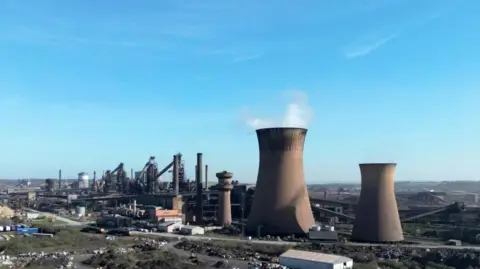
UK seeks emergency powers to take control of British Steel

 Parliament has been recalled for a rare Saturday sitting to pass an emergency law aimed at saving British Steel's Scunthorpe plant from imminent closure.

Sir Keir Starmer said the legislation would allow ministers to "take control" of the Lincolnshire site and stop its Chinese owner from closing its blast furnaces.

The move opens the door to a full nationalisation of the company at a later stage, with the prime minister saying "all options" remained on the table.

Talks have been taking place this week to keep production going at the firm, after owners Jingye said its blast furnaces were "no longer financially sustainable".

MPs and peers are currently on their Easter break and were not due to return until 22 April, but both are now going back to Westminster for the hastily convened sitting.

Parliament sat on both Saturday and Sunday on the outbreak of World War Two in 1939. And there have been only five occasions since then when it sat on a Saturday, showing the importance the government is placing on the law.

Speaking at Downing Street on Friday, Sir Keir said the government wanted to pass the legislation in a single day, adding the future of the company "hangs in the balance".

He said steelmaking was "essential for our future" and that he would always "act in the national interest to protect British jobs and British workers".

"Jobs, investment, growth, our economic and national security are all on the line," the prime minister said.

The BBC understands from a senior government source the emergency legislation being voted on in Parliament on Saturday would not give ministers the power to nationalise British Steel - another bill would be needed to do that.

Industry Minister Sarah Jones told BBC Breakfast the preference was for private investment alongside government funding to secure British Steel's future, but there was not currently a company "that is there willing to invest at this point".

Chinese company Jingye, which bought British Steel in 2020, says it has invested more than £1.2bn in the company to maintain operations, but has been suffering financial losses of around £700,000 a day.

The business department said the new law would give the government powers to order raw materials to keep the site's two running blast furnaces going, with supplies otherwise due to run out in the coming weeks.

It added it would also allow ministers to direct the company's board and workforce, and ensure anyone at the plant "who takes steps to keep it running, against the orders of the Chinese ownership" can be reinstated if they are sacked.

'Foundation industry'

The company announced plans last month to shed jobs at the Scunthorpe site, which employs 2,700 people, blaming "highly challenging" market conditions, tariffs and costs associated with lower-carbon production techniques.

The government has offered £500m of support to partly fund a switch from blast furnaces to more energy efficient electric arc furnaces. But the offer has been rejected by the company.

Earlier this week, the government offered to buy the coking coal to keep the blast furnaces running until a longer-term solution to saving the plant could be found, but was unable to get the company to agree to this in tense negotiations.

Jones said the government believed Jingye had "not been acting in good faith" over talks to agree a deal.

"Things have reached an existential point where the company is refusing to bring in the raw materials we need to keep the blast furnaces running," she added.

The business secretary is thought to have lost confidence in the company's Chinese owners, with a government source saying they are "no longer trustworthy partners".

Jingye says the blast furnaces are no longer sustainable, blaming "highly challenging" market conditions, tariffs and costs associated with transitioning to lower-carbon production techniques.

Reuters A landscape image of the British Steel works against a blue sky. Two large chimneys can be seen in the foreground - smoke is coming out of one. Reuters
The Scunthorpe site employs 2,700 people

A 'Save Scunthorpe Steel' campaign will take place in the town on Saturday, including a parade at half-time during Scunthorpe United FC's match against Spennymoor Town. The football club is nicknamed The Iron, a reference to the town's connection with the steel industry.

The move to take control of the company has been welcomed by unions representing employees at the site, with Unite saying it would grant workers a "reprieve" while a longer-term solution is worked out.

"Ministers could not have allowed a foundation industry to go under," added general secretary Sharon Graham.

The GMB union said the government's move looked like the "first step" towards nationalisation, which it supported as the "only way to save the UK steel industry".

Steelworkers' union Community said the government could not allow the UK to become the only country in the G7 group of advanced economies "without primary steelmaking capacity".

'Sticking plaster'

Conservative leader Kemi Badenoch accused the government of having "bungled" the negotiations with British Steel.

"They must have seen this coming for a while," she added.

"Instead of addressing it earlier in the week when Parliament was sitting, their incompetence has led to a last-minute recall of Parliament."

Reform UK leader Nigel Farage said the government's plan was just a "short-term sticking plaster".

He added that his party would try to amend the emergency legislation to nationalise British Steel immediately, calling public ownership "the only option we have to save this vital strategic asset".

Liberal Democrat leader Sir Ed Davey said "nothing should be off the table in this matter of national security" and added that the recall of Parliament should be seen as "an opportunity to come forward with a serious plan for the sustainable future of domestic steel production".

The Green Party of England and Wales said it backed nationalisation as the "only sure way to secure this strategically important sector".

Parliament was last recalled from a scheduled break in August 2021 to discuss the US withdrawal from Afghanistan.

The Falkland Islands invasion in 1982 and the proposed Brexit deal in 2019 are two other occasions that have merited recalls.

The most recent sitting Saturday was 10 September 2022, when the House of Lords reconvened to pay tribute to the late Queen Elizabeth II.

The House of Commons has been recalled 34 times since 1948.

https://www.bbc.com/news/articles/cx20jr8rjj2o

Iran-US talks focus on nuclear programme, regional de-escalation and prisoner exchanges

 Talks between Iran and the US are focused on de-escalating regional tensions, prisoner exchanges and limited agreements to ease sanctions in exchange for controlling Iran’s nuclear programme, an Omani source told Reuters on Saturday.

Iran and the United States began high-level talks in Oman on Saturday aimed at jump-starting negotiations over Tehran’s fast-advancing nuclear programme, with US president Donald Trump threatening military action if there is no deal.

Iran is approaching the talks warily, sceptical that they could lead to a deal and suspicious of Trump, who has repeatedly threatened to bomb Iran if it does not halt its nuclear programme.

While each side has talked up the chances of some progress, they remain far apart on a dispute that has rumbled on for more than two decades and have not agreed on whether the talks will be face-to-face, as Trump demands, or indirect, as Iran wants.

Signs of movement could help cool tensions in a region aflame since 2023 with wars in Gaza and Lebanon, missile fire between Iran and Israel, Houthi attacks on Red Sea shipping and the overthrow of the government in Syria.

However, failure would aggravate fears of a wider conflagration across a region that exports much of the world’s oil. Tehran has cautioned neighbouring countries that have US bases that they would face “severe consequences” if they were involved in any US military attack on Iran.

Supreme Leader Ayatollah Ali Khamenei, who in the Islamic republic’s complex power structure has the final say on key state matters, has given foreign minister Abbas Araghchi “full authority” for the talks, an Iranian official told Reuters.

Araghchi is leading the Iranian delegation, while the talks will be handled on the US side by Trump’s Middle East envoy, Steve Witkoff.

“The duration of the talks, that will only be about the nuclear issue, will depend on the U.S. side’s seriousness and goodwill,” said the official, speaking on condition of anonymity due to the sensitivity of the matter.

Iran has ruled out negotiating its defence capabilities such as its missile programme.

Iran has always maintained its nuclear programme is intended for purely civilian purposes but Western countries believe it wants to build an atomic bomb.

They say Iran’s enrichment of uranium, a nuclear fuel source, has gone far beyond the requirements of a civilian programme and has produced stocks at a level of fissile purity close to those required in warheads.

Trump, who has restored a “maximum pressure” campaign on Tehran since February, ditched a 2015 nuclear pact between Iran and six world powers in 2018 during his first term, reimposing crippling sanctions on the Islamic Republic.

Since then, Iran’s nuclear programme has leapt forward, including by enriching uranium to 60%, a technical step from the levels needed for a bomb.

US secretary of state Marco Rubio said on Thursday he hoped that the talks would lead to peace, adding that “We’ve been very clear what Iran is never going to have a nuclear weapon, and I think that’s what led to this meeting.”

Tehran responded the following day, saying it was giving the United States a “genuine chance” despite what it called Washington’s “prevailing confrontational hoopla”.

Washington’s ally Israel, which regards Iran’s nuclear programme as an existential threat, has long threatened to attack Iran if diplomacy fails to curb its nuclear ambitions.

Tehran’s influence throughout the Middle East has been severely curbed, with its regional allies – known as the “Axis of Resistance” – either dismantled or badly hurt since the start of the Hamas-Israel conflict in Gaza and the fall of Bashar al-Assad in Syria in December.

The axis includes not only Hamas but also Hizbullah in Lebanon, the Houthis in Yemen, and various Shiite armed groups in Iraq and Syria.

https://www.irishtimes.com/world/middle-east/2025/04/12/iran-us-talks-focus-on-nuclear-programme-regional-de-escalation-and-prisoner-exchanges/