China's largest trade show kicked off on Tuesdayin Guangzhou, located in South China’s Guangdong Province. According to state-run media, the event features 31,000 exhibitors and so far attracted 200,000 overseas buyers—including mega US retailer Walmart—despite ongoing trade tensions with the U.S.
Global Times said 255 top global retailers, including Walmart, Carrefour, Tesco, and Metro, are attending the 137th China Import and Export Fair (Canton Fair) to search for the latest and greatest products.
One US supplier told the state-run media outlet that American buyers remain dependent on Chinese products.
"Even when sourcing from other countries, the goods are often still manufactured in China. Whether the tariff is included or the goods are imported from elsewhere, American importers and consumers will ultimately bear the costs.
"In appliances like air conditioners, Chinese products' price-to-performance ratio has no global rival. While imports may be paused for a month to monitor tariff policies, we'll return to Chinese manufacturers."
Global Times cited other global suppliers that boasted about China "possessing the world's most comprehensive supply chain" to build low-cost electronics, home goods, and all other items.
Another buyer—this time from Germany—told the media outlet that "Chinese goods are hard to replace," adding that the trade war has unleashed uncertainty across global markets.
Global Times made it clear:
The main reason for global buyers to stick to Chinese products is the favorable price-to-performance ratio.
One key challenge in restructuring global supply chains—whether through friend-shoring or reshoring—is that such transitions take time. In the interim, top suppliers will continue relying on China (or other Southeast Asian countries) for specific goods.
Walmart's attendance at China's largest trade show highlights just how unlikely a complete decoupling between the world's two largest economies truly is. Instead, the U.S. is expected to prioritize reshoring critical supply chains—such as semiconductors, rare earths, drones, and robotics—that are essential to national defense.
Meanwhile, China can continue dominating soft-line manufacturing, such as footwear and luxury handbags. If America intends to dominate the 2030s, it must focus on expanding the capacity of advanced production lines at home, including ones for drones, robotics, and chips.
Skye Bioscience (NASDAQ: SKYE) has announced promising preclinical results for its CB1 antibody, nimacimab, in treating obesity. In a diet-induced obesity model, the combination of nimacimab with tirzepatide achieved over 30% weight loss after 25 days of treatment. Nimacimab alone demonstrated 23.5% weight loss, comparable to monlunabant and tirzepatide monotherapies.
New in vitro data revealed nimacimab's superior potency characteristics through its non-competitive allosteric binding to CB1, showing stable effectiveness even under high agonist concentrations, unlike monlunabant. This differentiated mechanism suggests potential advantages in treating obesity without the neuropsychiatric side effects associated with small molecule CB1 inhibitors.
The company expects to release top-line randomized data from the Phase 2a CBeyond™ study in late Q3/early Q4 2025.
Spruce Biosciences has put out new shoots, snapping uprights to a former BioMarin rare disease candidate and outlining plans to seek accelerated FDA approval in the first half of next year.
The deal gives Spruce global rights to tralesinidase alfa, an enzyme replacement therapy for use in the rare genetic disease Sanfilippo syndrome type B. Allievex licensed the program from BioMarin in 2019 but terminated (PDF) its operations in 2023 after failing to reach alignment with the FDA. According to Allievex, the agency changed its tune in March 2024 and encouraged its former staffers to seek approval.
Allievex lacked the resources to pursue the accelerated approval but, as part of the biotech’s liquidation, Spruce stepped up to take the asset forward. Spruce, which began looking for strategic alternatives last year, has assumed Allievex’s obligations to pay BioMarin up to $122.5 million in milestone fees, including $22.5 million in development and regulatory paydays.
In return, Spruce has secured the chance to seek accelerated approval on the strength of existing data, potentially netting a priority review voucher in the process. Asked by analysts why he is confident there is a path to accelerated approval, Spruce CEO Javier Szwarcberg, M.D., pointed to the agency’s acceptance of applications based on the same surrogate endpoint, change in heparan sulfate, in related conditions.
The FDA is set to rule on Ultragenyx’s gene therapy filing for Sanfilippo syndrome type A by August, while Denali Therapeutics began a rolling submission for its own candidate this month. Although those filings cover other forms of mucopolysaccharidosis than Sanfilippo syndrome type B, Szwarcberg argued they set a precedent.
“The FDA is honoring their prior commitments,” Szwarcberg said on a call with investors Tuesday. “We have not re-engaged with the FDA since we acquired the asset. Our review division is CDER, [the] same group of FDA that's regulating the Denali filing. Ultragenyx is under CBER. We have no reason to believe that the FDA will not honor the prior agreements made with the prior sponsor.”
Allievex founder Thomas Mathers, writing after reaching alignment with the FDA, predicted $60 million to $75 million of new investment was needed to allow for a submission and review of the candidate via the accelerated approval pathway. Mathers said at the time that the spending was needed to support manufacturing and the start of a confirmatory clinical trial.
Spruce ended last year with $38.8 million in cash and cash equivalents, a sum it said will fund operations through this year. Samir Gharib, Spruce’s chief financial officer, acknowledged on today's call with investors that the biotech faces a “very volatile market.” But Gharib framed this as a positive for the company, arguing that the asset is derisked and fits the profile investors are looking for.
MetaVia (NASDAQ: MTVA) announced positive results from its 4-week Phase 1 multiple ascending dose (MAD) trial of DA-1726, a novel dual receptor agonist for obesity treatment. The 32mg dose cohort demonstrated a maximum weight loss of 6.3% and mean weight loss of 4.3% at Day 26 (p=0.0005), with no titration required.
Key findings include:Maximum waist circumference reduction of 3.9 inches and mean reduction of 1.6 inches at Day 33 Maximum lowering of fasted glucose of -18 mg/dL and mean lowering of -5.3 mg/dL 25% of subjects experienced mostly mild gastrointestinal adverse events No treatment-related discontinuations or serious adverse events
The company plans to conduct Phase 1 Part 3 study investigating DA-1726 on Wegovy early drop-out patients, aiming to demonstrate superior tolerability and safety. Additional cohorts will be added to determine maximum tolerated dose.
The writing is on the wall at Mural Oncology. Responding to clinical data, the biotech is laying off90% of its employees and stopping clinical development of its lead program to hunker down and seek a strategic alternative.
Mural reported the failure of nemvaleukin alfa, an IL-2 variant, to get past an interim phase 3 analysis in March. At the time, the biotech stopped development of the asset in platinum-resistant ovarian cancer, where it was being tested in combination with Merck & Co.’s Keytruda, but kept working toward phase 2 data in mucosal melanoma.
Tuesday, Mural reported the failure of one cohort of the potentially registrational melanoma trial. The biotech also looked at preliminary data from another cohort but “did not observe a level of activity that warranted continuation.” Coupled with the phase 3 flop, the results persuaded Mural to axe nemvaleukin.
The decision triggered wholesale organizational changes. Mural is laying off 104 people, or around 90% of its workforce. The company expects the layoffs to cost up to $10 million and to incur $2 million to $4 million in non-cash impairment charges associated with the sale or disposal of property and equipment.
The charges point to the scale of Mural’s retreat. The biotech has engaged a financial advisor to help it review strategic alternatives. Nemvaleukin was Mural’s only clinical-phase program, but the biotech also has two preclinical prospects, a Nasdaq listing and, as of the end of December, $144.4 million in cash to offer potential buyers.
Mural’s abandonment of nemvaleukin ends the biotech’s short run at bucking the trend in IL-2. Alkermes created Mural to advance its IL-2 program in November 2023. The biotech started life with $275 million to show nemvaleukin is different from other IL-2s, a class of cytokines that unraveled in the aftermath of Bristol Myers Squibb’s costly misadventure with Nektar Therapeutics.
The biotech’s belief that nemvaleukin could succeed, despite the failures of similar drugs, was built on its use of features to limit activation of immune-suppressive regulatory T cells. Mural made the case that its fusion protein could retain the efficacy that made Proleukin a pioneering immunotherapy while limiting toxicity. Other groups used approaches such as pegylation and prodrugs to try to achieve that goal.
None of the approaches have delivered a safe, effective IL-2 drug to date. The addition of nemvaleukin to the list of failed attempts triggered a more than 100% jump in Mural’s share price in premarket trading. The company was valued at less than $18 million before the surge, despite Mural having much more than that in cash. Investors seemingly see more money in a strategic alternative than IL-2 development.
If Chinese soldiers are fighting in the Russian armed forces in Ukraine, that is not the big story. The big story is the effect the claim could have on the possibility of peace.
Ukraine has not yet even proven the months old claim of the presence of North Korean soldiers fighting for Russia on Russian soil. Now they are making the much more provocative claim that Chinese soldiers are fighting for Russia on Ukrainian soil.
Ukrainian President Volodymyr Zelensky announced on April 9 that the Ukrainian armed forces had captured two Chinese soldiers fighting in the Donetsk region of Ukraine. He then said that Ukrainian intelligence has uncovered 155 Chinese citizens who are "fighting against Ukrainians on the territory of Ukraine" and that they "believe that there are many more of them."
Independent journalists and organizations have not had access to the two prisoners in order to verify the truth of the claim. Ukraine has provided a video and documents listing names and passport documents. Media outlets have seen them, but CNN and The Independent both say that they have not been independently verified.
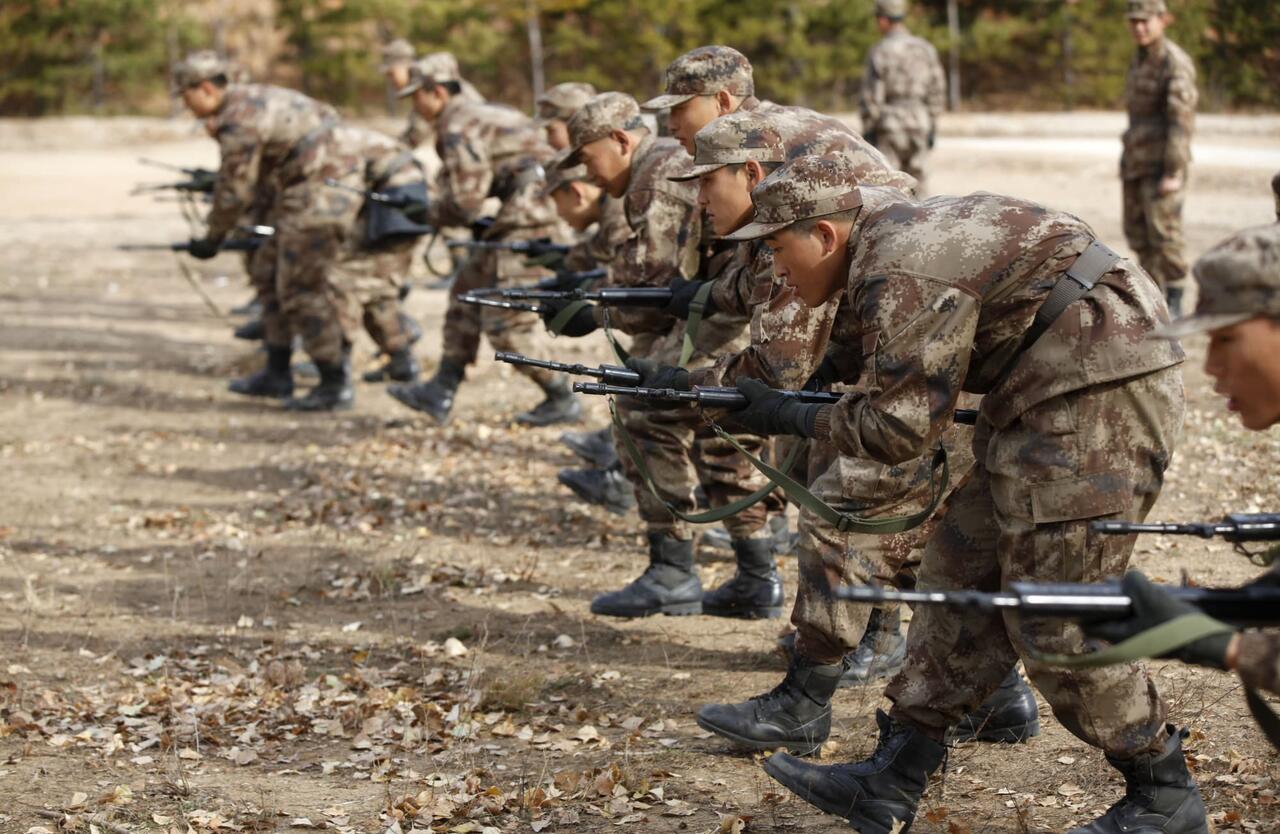
Illustrative image: Chinese PLA troops
There are tens and perhaps even hundreds of thousands of ethnic Chinese living in Russia. And even if the captured soldiers are from China, that does not mean they were sent by China. They could have enlisted on their own as mercenaries, a possibility that two former U.S. intelligence officers “with knowledge of the issue” now say U.S. intelligence believes to be the case.
The Chinese Ministry of Foreign Affairs has called the claim that many Chinese citizens are fighting in the Russian army "totally unfounded," and said that "the Chinese government always asks Chinese citizens to stay away from conflict zones, avoid getting involved in any form of armed conflict, and especially refrain from participating in any party’s military operations."
Zelensky, though, has made the provocative claim that the Chinese government is allowing its citizens to fight in Ukraine. Asked whether China had a policy of sending soldiers to Ukraine, Zelensky answered, "I don’t have an answer to this question yet. The Security Service of Ukraine will work on it… We are not saying that someone gave any command, we do not have such information." However, he added that “[o]fficial Beijing knows about this” and did not prevent it.
Zelensky then escalated the claim, saying, "The Chinese issue is serious" and calling on "the U.S. and the rest of the world for a response."
It is that threat to the peace process and not the possible presence of Chinese soldiers that is serious and significant. Mercenaries from many countries have been welcomed by both Ukraine and Russia since the beginning of the war. Al Jazeera reports that, not only Chinese, but Nepalese and Indians have fought for Russia. They also report that Colombians, Sri Lankans, Indians and Americans have fought for Ukraine. At least nine Canadians have been killed in Ukraine, and more are known to have fought there.
The Russian Defense Ministry claimed in March 2024 that 1,005 Canadian mercenaries have fought in Ukraine. They also claim that 2,960 have come from Poland, 1,113 from the United States, 356 from France and others from the United Kingdom and Romania. Ukraine says their international legion comprises around 20,000 fighters from fifty countries.
More seriously, it is not just mercenaries who have arrived in Ukraine. A leaked March 2023 Defense Department document reveals the presence of 97 NATO special forces in Ukraine. A recent New York Times article reports that more than three dozen military advisers were sent to Kiev and that CIA officers were in Kharkiv and “command posts closer to the fighting.” The British prime minister’s office has confirmed that the United Kingdom has boots on the ground in Ukraine. The presence of French forces has also been revealed, and Polish Foreign Minister Radoslaw Sikorski confirmed that “NATO soldiers are already present in Ukraine.”
Unless the Chinese government has a policy of sending troops to fight alongside Russia in Ukraine, which would be serious, since it could draw China into the war, it is not the alleged presence of Chinese soldiers that is dangerous. At a time when peace talks are at a fragile beginning, and US President Donald Trump is insisting on both sides showing they are serious about peace, it is the provocative statements coming out of Kiev that are potentially serious.
“Russia’s involvement of China, along with other countries, whether directly or indirectly, in this war in Europe is a clear signal that Putin intends to do anything but end the war,” Zelensky said. “This definitely requires a response. A response from the United States, Europe, and all those around the world who want peace.” The suggestion that Putin is not serious about negotiating undermines US-led negotiations.
The first two captured Chinese citizens. Today, investigators from the Security Service of Ukraine spoke with them. We are working to establish all the facts regarding the involvement of these and other Chinese citizens being part of the Russian occupation army. Ukrainian… pic.twitter.com/PkBpBjI2Qm
— Volodymyr Zelenskyy / Володимир Зеленський (@ZelenskyyUa) April 9, 2025
The statements are also ill timed and hazardous. The United States and China are engaged in a trade war. It is a volatile time to provide Washington with a cause for turning up its anger against China. Zelensky intends the presence of Chinese soldiers to evoke an American response. State Department spokesperson Tammy Bruce said the U.S. is “aware of those reports” and that “It’s disturbing with the Chinese soldiers having been captured,” though the White House has not confirmed the claim. National Security Spokesman Brian Hughes said that “if the Chinese government is allowing their citizens to fight on behalf of the Russia government, this would be a concerning escalation and the U.S. will consider options moving forward.”
Beyond challenging the peace process, the comments coming out of Kiev are provocative to China, questioning its credibility and its lack of involvement in the war. Equally importantly, it challenges any potential role of China both in the negotiations before the end of the war and in security arrangements after the end of the war: both potentially important roles for China.
Ukraine’s Minister of Foreign Affairs, Andrii Sybiha, said that "Chinese citizens fighting as part of Russia’s invasion army in Ukraine puts into question" not only "China’s declared stance for peace" but even that it "undermines Beijing’s credibility as a responsible permanent member of the UN Security Council."
If the two captured soldiers turn out to be from China, and if they turn out to be mercenaries fighting without the approval of China, then their presence in Ukraine is not the big story. If the claims being made about them and about China resonate in the White House, then the effect of the claims could make difficult peace talks even more difficult. And that is what the potential big story would turn out to be.
British pharmaceutical giant GSK has not met required ethical and regulatory standards in its marketing and prescription information for its Omjjara drug, an industry self-regulatory body said on Tuesday.
Omjjara is used to treat adults with myelofibrosis - a rare bone marrow blood cancer - and moderate to severe anemia.
GSK did not immediately respond to a Reuters request for comment on the ruling by the Prescription Medicines Code of Practice Authority (PMCPA).