Search This Blog

Friday, May 2, 2025

MTA delaying emergency gate openings to thwart fare evaders, alarms over safety

 The MTA has gone off the rails with its fare evasion crackdown, critics say.

The agency’s latest attempt at thwarting fare evaders is to bolster a program that locks subway emergency gates for 15 seconds after they’re opened, in a bid to stop scofflaws from sneaking in without paying.

But riders could still hold the doors open for fare beaters even under the pilot program, which the Metropolitan Transportation Authority announced Monday it was expanding to at least 150 stations this year.

Some straphangers pointed out the initiative could be dangerously foolish and spark mass panic in case of an emergency, such as a fire or shooting — and ripped it as un-fare to those with disabilities.

The MTA is expanding its fleet of delayed emergency gates in at least 150 subway stations this year as part of its latest attempt to thwart fare evaders.Gregory P. Mango

“When you’re in a state of panic and need to get out of a place fast, that 15-second [delay] is a long time,” said Sharon McLennon-Wier, executive director of the Center for Independence of the Disabled New York. 

Dustin Jones, a disability advocate who uses a wheelchair and who sued the MTA in 2017 over alleged accessibility issues at subway stations, agreed, calling the program “very dangerous.”

“The average person with a disability, if they are moving slowly and they have to wait for a certain time for the door to open, that’s time that you’re losing — [and] in an emergency, every second counts,” Jones told The Post.

News of the expanded fare-beating bid comes after the MTA said the issue was at “crisis-level” in a Blue-Ribbon Panel report released last year – which found turnstile hoppers cost the agency $690 million in 2022 alone.

“Every dollar lost to evasion impairs the MTA’s financial stability, threatens reliable transit for all New Yorkers, and increases the need for alternative revenue sources, including through larger fare and toll hikes,” the report reads.

The MTA has installed an alarm on the emergency door exits (pictured) that forces the customer leaving the station to wait 15 seconds before the doors open.Gregory P. Mango

The MTA did not respond to multiple inquiries from The Post about what riders should do during an actual emergency if they are forced to wait to exit through the safety gates.

But the agency has been given clearance for all applicable fire codes to deploy the measure at existing locations, amNewYork reported. 

MTA fare beaters at the Times Square train station in Manhattan.G.N.Miller/NYPost

The next round of alterations to emergency gates — historically used as a “superhighway” for fare evasion — will be implemented later this year in 34 St-Penn Station, Canal St, 161 St-Yankee Stadium, and Jay St-MetroTech, the MTA said in a statement.

The delays have so far been deployed at over 70 stations – including the Lorimer Street J/M train and 59th Street-Lexington Avenue in Manhattan – resulting in a roughly 40% reduction in gate evasion and a 10% drop in fare beating across the entire system, the MTA said.

Some straphangers said it wasn’t worth the risk.

“I think it’s a bad idea,” 68-year-old Bernice Parks told The Post. “Can you imagine if there’s a track fire and there’s smoke and everyone comes rushing up to the door trying to get out?

Emergency exit gates have historically been used as a “superhighway” for fare evasion, the MTA said in a statement.G.N.Miller/NYPost

“It might slow down the [fare beaters],” the Williamsburg, Brooklyn resident added, “but I don’t think it’s worth putting people’s lives at risk.” 

Tony Morris, 57, also a Williamsburg resident, said he didn’t think it would do much to stop kids from turnstile jumping. 

“Maybe if the MTA starts making their money back, they’ll stop raising fares every other week,” he griped, while adding, “I’m not too concerned it’ll be a safety issue. You just have to wait a few extra seconds for it to open.”

Sol Lipschutz, 53, agreed that the initiative wouldn’t pose that much of a hazard, saying, “The door is really just meant to be used in emergencies, and I’m not too worried about an emergency in the subway station.

“If there’s an emergency I’ll worry about it then.”

Another Williamsburg local, Wolf Mandelstam, 40, said it was worth a try to curb the fare-beating scourge.

“I’m happy about it,” he said. “I’m tired watching people cheat the fare all the time while the rest of us pay.”

New subway gates designed to prevent fare evaders will be rolled out at 20 subway stations starting this fall.MTA

Other MTA efforts to curb fare evasion on subways have included gate guards deployed at 200-plus stations, sleeves and fins installed on turnstile arms, turnstiles modified to prevent jumpers via “back-cocking” and a specialized “EAGLE” enforcement team aboard certain buses.

As a result of the measures, fare evasion dropped 26% in the second half of 2024, the MTA said. 

At the same time, the NYPD also issued 143,100 summonses for subway fare evasion in 2024, marking a 96% increase from 2019.

More interventions are expected later this year, including “back-cocking” modifications for the rest of the MTA’s turnstiles and new “wide-aisle” fare gates at 20 stations across the city.

The fare gates, which will be installed starting this fall, will be tested in four different models by four vendors — and are expected to be in at least 150 stations systemwide by 2029. 

The pilot stations include Atlantic Av-Barclays Ctr; 14 St-Union Square; 42 St-Port Authority Bus Terminal; Delancey St-Essex St; Nostrand Av; Crown Heights-Utica Av; Jackson Heights-Roosevelt Av; and Forest Hills-71 Av.

“Fare evasion undermines the very system that moves New York City and provides essential transportation for our communities,” New York City Transit President Demetrius Crichlow said in a statement. 

“Our team has made real progress, driving down fare evasion for the first time in years,” Crichlow said. “We will continue to explore all measures and means to ensure fare compliance and sustain a system that is equitable for all.”

https://nypost.com/2025/05/02/us-news/mta-delaying-emergency-gate-openings-to-thwart-fare-evaders-as-critics-sound-alarms-over-safety-putting-peoples-lives-at-risk/

Summit Therapeutics (SMMT) Advances with Ivonescimab in Key Trials

 Summit Therapeutics (SMMTFinancial) has made noteworthy advancements in the oncology sector, particularly with its lead therapy, ivonescimab. The drug has garnered regulatory approval in China for the treatment of PD-L1 positive non-small cell lung cancer, marking a crucial milestone for the company. Moving forward, Summit is geared up to initiate global Phase III HARMONi trials focused on EGFR-mutated advanced NSCLC, with outcomes anticipated by mid-2025. 

https://www.gurufocus.com/news/2823605/summit-therapeutics-smmt-advances-with-ivonescimab-in-key-trials

American Airlines, DFW Airport doubling the number of gates at new Terminal F

 On Thursday, American Airlines and Dallas-Fort Worth International Airport revealed amended plans for the new Terminal F that officials say will broaden the project's impact on travelers.

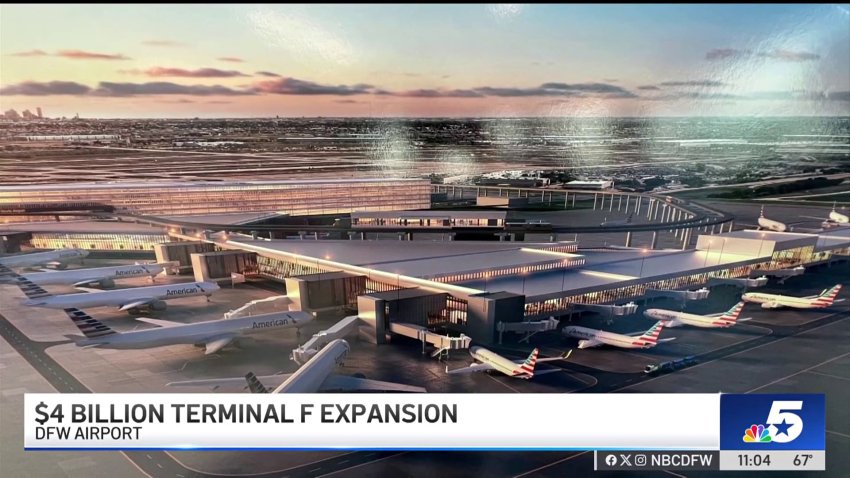
The agreement increases the planned investment in Terminal F to about $4 billion, which will double the number of gates than previously expected -- from 15 to 31. The new plans will also increase lounge and premium space, add a new lobby check-in area, and create a dedicated parking garage.

In 2023, DFW Airport and American Airlines reached a new 10-year Use and Lease Agreement with pre-approved capital investments. The agreement included the construction of Terminal F initially as a 15-gate facility. In the early plans, the new terminal could only be accessed through Terminal E via the airport's Skylink system and didn't include a dedicated area for check-in and other services.

$4 billion Terminal F expansion planned for DFW Airport
Fort Worth-based American Airlines announced a $4 billion investment in the all-new Terminal F at DFW Airport. NBC 5's Alanna Quillen reports the terminal will be bigger, better and sooner than planned.

However, officials said that after examining new economic data and projections for North Texas, increasing the gates and accelerating expectations in Terminal F became a priority.

"DFW is growing fast, and we are committed to sharing this economic opportunity with businesses in our community as we move forward," said DeMetris Sampson, chair of the DFW Board of Directors. "DFW has become the economic engine of our region, and we know that this investment will ensure the long-term sustainability of the airport.”

In Thursday's press conference, American Airlines CEO Robert Isom also announced plans for the airline to occupy all 31 gates of the new terminal exclusively. Other airlines will still have opportunities to occupy gates in expansions happening in terminals A and C.

"The future is bright for American. The future is bright for DFW, and it's an exciting time, a pivotal moment," said Isom. "I can't wait to get this construction done. It's going to be a driver for the growth of this economy."

Officials said American's exclusivity in Terminal F aligns with the airline's goals for better efficiencies with connecting passengers, who make up about 60% of DFW’s passenger traffic.

“DFW is American’s largest and most critical hub, and with this expanded plan for Terminal F, DFW has a clear path to become the largest airline hub in the world,” said Isom. “Dallas-Fort Worth is one of the fastest-growing regions in the country, and we’re excited that American and North Texas will continue to grow together."

The Terminal F project will create a new centralized Skylink Station, as well as a walking connection with Terminal D. The new parking garage for F is also set to be one of the airport’s largest, with a different design that includes built-in curbside circulation for quicker access to check-in and security.

DFW Airport
DFW Airport
Rendering of the parking garage connecting to Terminal F

"In the last decade, DFW has grown its passenger traffic by 50% and exceeded the wildest expectations of our founders to become the third-busiest airport in the world," said Sean Donohue, CEO of DFW. "Thanks to our close partnership with Robert Isom, American Airlines remains a competitive advantage that continues to show the strength of the airport as a global hub that is supporting the massive economic growth of the Dallas-Fort Worth region. Moving forward with Terminal F in this way ensures that DFW and American maintain that momentum.”

The original first phase of Terminal F is underway and still scheduled to be operational in 2027, with the newly added phases planned to come online in additional phases.

The Terminal F project is part of the ongoing 'DFW Forward' capital plan, which totals more than $12 billion in investments aimed at improving, expanding and changing the airport's infrastructure over the next several years. This marks the airport’s largest capital investment since opening in 1974.

"8.1 million people now call North Texas home and growing rapidly every single day. And it's not lost on me or Dallas Mayor Eric Johnson or frankly anyone here today about the critical importance that DFW Airport has meant to the growth and success of everyone in North Texas," said Fort Worth Mayor Mattie Parker.

This includes the approximately $3 billion program underway to completely reimagine and expand the airport's oldest terminal, Terminal C, with all-new facilities, shops and restaurants, lounge space, check-in areas, security checkpoints and improved restrooms. The plans also include an expansion for Terminal A.

https://www.nbcdfw.com/news/local/american-airlines-dfw-airport-gates-terminal-f/3830594/

FDA delays decision date on Cytokinetics’ heart drug to year’s end

 To REMS, or not to REMS.

That apparently was the question for Cytokinetics, which has seen any potential approval for its experimental heart drug delayed by an extra three months over an unusual safety program omission and addition. 

Aficamten, a cardiac myosin inhibitor, had been on the books with the FDA for a potential approval by (or before) September 26 for obstructive hypertrophic cardiomyopathy (HCM).

This disease, characterized by the blood flow from the heart being reduced by the thickening of the heart's muscular wall, already has an approved treatment on the market in the form of Bristol Myers Squibb’s cardiac myosin inhibitor Camzyos.

Cytokinetics was hoping to get into this market that has seen Camyzos bring in just over $600 million last year, but now those hopes will be on hold a while longer.

The whole issue revolves around REMS, the shorthand for the FDA's "Risk Evaluation and Mitigation Strategy" programs. REMS are typically demanded by the FDA for potentially risky drugs and are a common requirement for heart disease meds.

In a twist of fate, BMS also had a similar FDA REMS delay back in 2021, but its medicine was ultimately approved in 2022.

In the U.S., Camzyos can only be used via a REMS program because it can cause the heart to become too relaxed, increasing the risk of heart failure.

In its statement released after hours on Thursday, May 1, Cytokinetics said it had submitted its new drug application (NDA) with the FDA without a plan for REMS, seemingly with the agency’s blessing. 

But not so fast: The FDA has now looked over the NDA and in fact does want a REMS plan “based on the inherent characteristics of aficamten," the company explained. 

While Cytokinetics has now provided the plan, the addition has been regarded as a “Major Amendment to the NDA,” according to the biotech, thus adding a mandatory three months to the review. The drug's decision is now expected by December 26.

Analysts at Evercore ISI were perplexed, saying in a note to clients: “We didn’t see this one coming. The most surprising part to us is that [aficamten's] NDA was originally submitted without an accompanying REMS. Was that actually the FDA’s guidance to the company or some sort of miscommunication? We assume the former given that the application was accepted.”

The analysts add however that “the REMS was not expected to be the main differentiator for [aficamten]."

Shares in the biotech were down around 10% premarket. 

“We remain confident in the distinct benefit-risk and pharmaceutic profile of aficamten and continue to expect a differentiated label and risk mitigation profile upon its potential approval by FDA,” said Robert I. Blum, Cytokinetics’ President CEO in the release.

“We look forward to continuing our constructive engagement with the FDA regarding the NDA for aficamten.”

https://www.fiercebiotech.com/biotech/fda-pushes-back-cytokinetics-heart-drug-pdufa-years-end-unusual-safety-program-back-and