Search This Blog

Monday, May 12, 2025

Venezuelan oil disguised as Brazilian crude to circumvent US sanctions

 More than $1 billion worth of Venezuelan oil has been sold in China as Brazilian over the past 10 months, Reuters has reported, citing cargo tracking data and industry sources who wished to remain unnamed.

The rebranding of the crude has cut transportation costs for Venezuelan crude and facilitated U.S. sanction circumvention, the report noted. Before, traders resorted to ship-to-ship transfer at sea to mask the crude but now they have taken to manipulating vessels’ location signals to make it look like they are travelling from Brazilian ports instead of Venezuelan ones, data from TankerTrackers.com has shown, per Reuters.

The publication then cited Chinese customs data as showing imports of mixed bitumen from Brazil flowed in at a rate of 67,000 barrels daily between July2024 and March this year. However, Brazil’s Petrobras does not export bitumen to China.

“What we export to China is mainly crude oil from the pre-salt, it's not bitumen,” Reuters cited Petrobras chief executive Magda Chambriard as saying at a recent industry event.

Venezuela, however, is famous for its heavy crude, which it sells under the name Merey, mostly to Chinese so-called teapot refiners, who take advantage of the fact there are no government-set quotas for bitumen purchases. The oil gets its certificate of origin changed from Venezuela to Brazil and can be shipped as Brazilian crude around sanctions.

Meanwhile, the United States has once again tightened the noose around Caracas, with President Trump announcing last month that any country that buys oil or gas from Venezuela will pay a 25% secondary tariff on trades with the United States.

The U.S. federal government also revoked Chevron’s license to operate in Venezuela and cancelled some planned cargos, which dealt an immediate blow to Venezuela’s oil exports, slashing them by 20% in April from March, to some 700,000 barrels daily—the lowest export rate in nine months. 

https://oilprice.com/Latest-Energy-News/World-News/Traders-Are-Rebranding-Venezuelan-Oil-to-Bypass-Sactions.html

Budweiser-maker AB InBev to invest $300 million in US facilities

 Anheuser-Busch InBev (EBR:ABI) said on Monday it would invest $300 million in its manufacturing operations in the United States this year amid a push for local production under President Donald Trump.

The Budweiser maker, which said it invested nearly $2 billion over the last five years in 100 facilities across the country, also announced the launch of a new plant in Columbus (WA:CLC), Ohio.

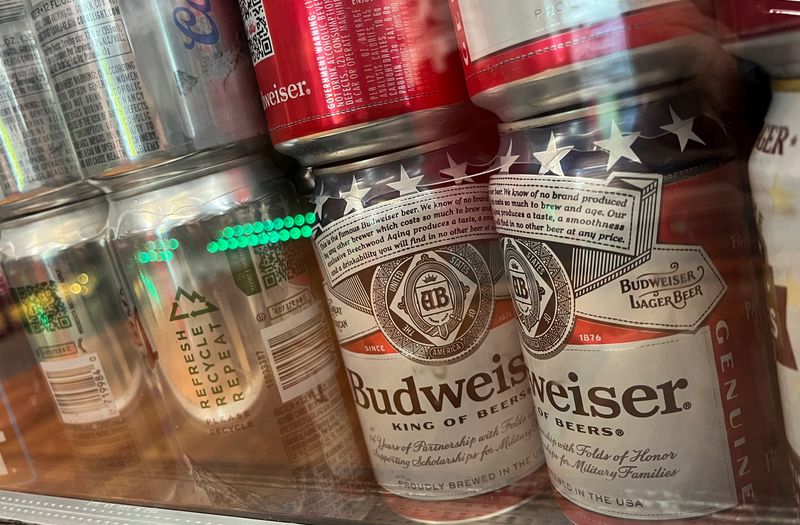
© Reuters. FILE PHOTO: Cans of Budweiser brand beer are pictured at a liquor store in Washington, D.C. U.S., September 1, 2024. REUTERS/Daniel Becerril/File photo

The brewer reported a rise in first-quarter profit last week, more than double the increase expected by analysts and boosting its profit margins despite a fall in sales volumes. It said it makes nearly all its domestic sales locally,

AB InBev had previously said it was boosting investments in key brands such as Budweiser and ramping up efforts to grow at-home consumption, as spending elsewhere - including in bars - remains pressured.

https://www.investing.com/news/stock-market-news/budweisermaker-ab-inbev-to-invest-300-million-in-us-facilities-4039009

Prosecutor says hip-hop mogul Sean 'Diddy' Combs ran 20-year criminal enterprise

 Hip-hop mogul Sean "Diddy" Combs went on trial on Monday on sex trafficking charges, with prosecutors telling a jury that the Bad Boy Records founder used his fame and fortune to abuse women and the defense expected to counter that there is nothing criminal about a "swingers" lifestyle.

Prosecutor Emily Johnson said in her opening statement that Combs ran a two-decade criminal conspiracy with the help of an inner circle of bodyguards and high-ranking employees.

“To the public he was Puffy, Puff Daddy or Diddy: a cultural icon, a businessman, larger than life. But there was another side of him - a side that ran a criminal enterprise. During this trial you are going to hear about 20 years of the defendant’s crimes,” Johnson told jurors.

Combs’ mother, Janice Combs, sat in the front row of the courtroom along with six of her son’s children. Combs wore a beige sweater over a white collared shirt and khakis. He smiled at his family and blew them a kiss before taking his seat with his lawyers.

On Monday morning, the panel of 12 jurors and six alternates was finalized ahead of opening statements by the government and then the defense. The prosecution would then call its first witness. The case has drawn intense media coverage because of Combs' fame.

Over the course of a two-month trial, jurors are expected to hear testimony from three and possibly four of the rapper's female accusers, as well as his former employees who prosecutors say helped arrange and cover up his actions. 

Combs, 55, has pleaded not guilty to five felony counts of racketeering conspiracy, sex trafficking and transportation to engage in prostitution. If convicted on all counts, he faces a mandatory minimum sentence of 15 years and could face life in prison. 

Combs' defense lawyers were expected to argue that the sexual activity described by prosecutors was consensual, and say there was nothing illegal about a "swingers" lifestyle in which Combs and his girlfriends occasionally brought a third person into their relationships. 

Allegations of sexual abuse in the criminal charges brought against Combs by the Manhattan U.S. Attorney's office last year made him the latest powerful man in the entertainment industry to be accused of sexual misconduct in the wake of the #MeToo movement, which encouraged women to speak up about abuse. 

Combs is known for turning rap and rhythm and blues artists like Notorious B.I.G. and Mary J. Blige into stars, and in the process elevating the mainstream appeal of hip-hop in American culture in the 1990s and early 2000s.

Born in Manhattan's Harlem neighborhood and raised by a single mother, Combs went on to live in mansions in Miami and Los Angeles and host lavish parties for the cultural elite in destinations like the Hamptons and Saint-Tropez. 

Prosecutors say his success concealed a dark side. Over two decades, Combs used violence and threats to force women to take part in days-long, drug-fueled sexual performances with male sex workers known as "Freak Offs," according to the indictment.

Combs would often watch the performances, masturbate and film them, sometimes using the recordings as blackmail to ensure his alleged victims did not report his abuse, prosecutors say. In one 2016 incident that was captured on hotel surveillance footage that prosecutors plan to show the jury, Combs was seen kicking and dragging a woman as she was trying to leave a "Freak Off," prosecutors say.

CNN last year broadcast footage that appeared to show Combs attacking his former girlfriend, the rhythm and blues singer Casandra Ventura, in 2016 in a Los Angeles hotel hallway. Combs apologized after the video aired. 

CASSIE AMONG FIRST WITNESSES

Ventura, known professionally as Cassie, is among the first witnesses expected to testify against Combs. 

Combs' defense strategy at trial will hinge on undermining the credibility of the women who testify against Combs, including by arguing they were motivated by money to accuse him of wrongdoing and have unreliable memories. 

Marc Agnifilo, Combs' lead lawyer, has said the 2016 hotel incident depicted the aftermath of a dispute over infidelity and was not evidence of sex trafficking. In a court hearing on Friday, Agnifilo said Ventura had a history of domestic violence, undercutting prosecutors' argument she was a victim. 

Ventura's lawyer declined to comment.

https://www.straitstimes.com/life/entertainment/prosecutor-says-hip-hop-mogul-sean-diddy-combs-ran-20-year-criminal-enterprise

US House targets big climate, clean energy rollbacks in budget proposal

 U.S. House lawmakers laid out plans on Sunday to phase out key clean energy tax credits, as well as slash billions in spending related to electric vehicles and renewable energy, fast-track gas exports and claw back unspent climate-related funds as part of the Republicans' attempt to pass a multi-trillion-dollar budget to carry out President Donald Trump's agenda.

The House Committee on Energy and Commerce laid out a proposal, which will be voted on Tuesday, that would raise $6.5 billion from the repeal of climate-related parts of the Biden administration's massive Inflation Reduction Act legislation.

It would repeal major Biden administration Environmental Protection Agency rules such as one that would slash allowed emissions for light- and medium-duty vehicles starting with model year 2027.

It also includes measures aimed at speeding up permitting for liquified natural gas exports and would direct $2 billion for the Energy Department to refill the Strategic Petroleum Reserve.

"This bill would claw back money headed for green boondoggles through 'environmental and climate justice block grants' and other spending mechanisms through the Environmental Protection Agency and Energy Department," House energy panel chair Brett Guthrie wrote in a Wall Street Journal op-ed that announced the proposal on Sunday.

The bill would rescind the remaining unspent money from the $27 billion greenhouse gas reduction fund, which has been a key target of EPA Administrator Lee Zeldin, who claimed that the money was being spent fraudulently in subsequent court cases.

It would also take back unspent funding from nine IRA renewable energy and electrification subsidy programs, such as tribal energy loan guarantees and transmission facility financing, and remove unspent IRA funds from the Energy Department's loan office.

It would rescind unspent funding made available by the IRA for methane reduction at oil and gas facilities and for greenhouse gas reporting, funds to reduce air emissions at ports and manufacturing facilities and schools as well as funds for low-income communities to access clean energy.

"Their proposal guts investments that are cutting energy costs, powering a domestic manufacturing boom, and delivering essential healthcare to the communities that need it most," said environmental group Evergreen Action Executive Director Lena Moffitt.

https://www.marketscreener.com/news/latest/US-House-targets-big-climate-clean-energy-rollbacks-in-budget-proposal-49914731/

More Walgreens stores to be serviced by prescription-filling robots

 Walgreens Boots Alliance (NASDAQ:WBA) is doubling down on automation, with plans to expand the number of retail stores serviced by its micro-fulfillment centers, CNBC reported. 

Micro-fulfillment centers use robots to fill prescriptions for patients, freeing up time for pharmacy staff to perform more clinical services, like vaccinations and testing.

These centers were first opened in 2021, but expansion was paused in 2023 to improve performance. The company is now ready to expand after more than a year of making upgrades.

Walgreens' (NASDAQ:WBA) target is for its 11 micro-fulfillment centers to serve over 5,000 stores by the end of the year, compared to 4,800 in February and 4,300 in October 2023. As of February, the micro-fulfillment centers on average handled 40% of the prescription volume at supported stores.

These centers have generated around $500M in savings to date by cutting excess inventory and boosting efficiency, Kayla Heffington, Walgreens' (WBA) pharmacy operating model vice president, told CNBC. She added that prescription volume has increased by 126% Y/Y.

Walgreens (WBA) is set to go private in a ~$10B deal with Sycamore Partners, which is expected to be completed by the end of the year. 

https://www.msn.com/en-us/money/companies/more-walgreens-stores-to-be-serviced-by-prescription-filling-robots/ar-AA1EBrCA

Lilly’s Zepbound Secures “Superior Benefit-Risk Ratio” Over Novo’s Wegovy


In addition to eliciting greater weight loss than Novo Nordisk’s Wegovy, Eli Lilly’s Zepbound does not come at the expense of safety, according to newly released comprehensive tolerability data—findings that analysts say confirm the GLP-1 drug’s edge in the closely watched market race.

Eli Lilly maintained the upper hand in the closely watched obesity face-off, announcing on Sunday full data from a trial showing that patients on Zepbound lost more weight than those on Novo Nordisk’s Wegovy while matching its safety.

Pointing to what they called Zepbound’s “comparable tolerability” to Wegovy, these latest data “confirm tirzepatide’s superior benefit-risk ratio,” analysts at Leerink Partners wrote in a note to investors on Monday.

Sunday’s readout comes from the Phase IIIb SURMOUNT-5 study, an open-label trial that pit Zepbound directly against Wegovy, enrolling more than 750 overweight and obese patients with at least one weight-related comorbidity but who didn’t have diabetes.

At 72 weeks, patients on Zepbound lost 20.2% of their body weight on average, as compared with 13.7% in those on Wegovy, a 47% relative weight loss advantage for Zepbound over Wegovy. Zepbound was likewise superior to Wegovy in terms of key secondary endpoints, such as the percentage of treated patients losing at least a quarter of their weight.

Lilly shared similar data in December 2024, when it released a topline readout from SURMOUNT-5. At the time, however, Lilly did not present tolerability data—the pharma only revealed that Zepbound’s adverse event profile “was similar” to what had previously been reported in the SURMOUNT program.

Compete data from SURMOUNT-5, published Sunday in the New England Journal of Medicine, provide a comprehensive safety comparison between the two drugs—and found that despite hitting greater weight-loss, Zepbound does not carry a higher burden of toxicities. Side effects were nausea, constipation, vomiting and diarrhea.

Serious adverse events occurred in 4.8% of Zepbound-treated patients versus 3.5% in those on Wegovy. Six patients in each treatment group dropped out of the study due to side effects. SURMOUNT-5 did not detect any treatment-related deaths.

Lilly will transition patients who complete SURMOUNT-5 into the Phase IIIb extension ATTAIN-MAINTAIN study, which will test the efficacy of switching patients to the oral obesity drug orforglipron, Lilly’s next generation GLP-1 drug, to help them maintain their weight-loss. The study’s primary completion date is in January 2026.

Last month, Lilly released Phase III data for orforglipron, touting a 7.9% reduction in body weight over 40 weeks of follow-up, as opposed to 1.6% in placebo. Analysts lauded these results at the time, with BMO Capital Markets analysts calling it “injectable like.”

Sunday’s SURMOUNT-5 readout is just the latest development in what has been a tight competition between Lilly and Novo as they jockey for leadership in the lucrative obesity space. Earlier this month, CVS Caremark, one of the biggest pharmacy benefit managers in the U.S., chose Wegovy over Zepbound as its “preferred GLP-1 medicine,” effective July 1.

While this move could give Wegovy a boost in the market, Lilly appears unfazed. During the company’s Q1 earnings call, CEO David Ricks told investors that pharma was “not surprised” by CVS’ choice and instead remains confident in its commercial execution. “If we look at what’s happening in the market, we’re pretty deep into a replacement cycle, particularly on obesity,” Ricks said.

https://www.biospace.com/drug-development/lillys-zepbound-secures-superior-benefit-risk-ratio-over-novos-wegovy

CytomX results beat, positive study results

CytomX Therapeutics (NASDAQ: CTMX) reported Q1 2025 financial results and significant clinical progress. The company announced positive interim data from its Phase 1 study of CX-2051, an EpCAM Antibody Drug Conjugate for advanced colorectal cancer, initiating dose expansions at 7.2, 8.6, and 10 mg/kg doses. A Phase 2 study is planned for 1H 2026. Financially, CytomX ended Q1 2025 with $79.9 million in cash, reporting revenue of $50.9 million (up from $41.5M in Q1 2024) and reduced operating expenses of $28.3 million. The company achieved a $5 million milestone payment from Astellas and extended its cash runway into Q2 2026 through cost reductions. Their pipeline includes CX-801, a PROBODY Interferon alpha-2b, currently in Phase 1 trials for melanoma.