Search This Blog

Monday, May 12, 2025

House panel releases sweeping GOP tax bill

 The House Ways and Means Committee on Monday released a fuller version of its part of Republicans’ bill full of President Trump’s legislative priorities, kicking off what is expected to be a showdown over the tax provisions in the sprawling measure.

The 389-page measure, which is the centerpiece of the GOP’s megabill, is expected to draw howls from within the House GOP conference.

In one of the most long-awaited details, the legislation increases the state and local tax (SALT) deduction cap from $10,000 to $30,000 for single and joint filers — which would phase down as income grows — a figure lower than the proposal floated by key stakeholders.

Shortly before the release of the tax bill, a group of Republican moderates from high-tax blue states told leadership they would be content with a SALT deduction cap of $62,000 for single filers and $124,000 for joint filers. The proposition came after the same group rejected an offer from leadership last week to increase the SALT deduction cap to $30,000.

Moderate Republicans from high-tax blue states pushing for a higher SALT deduction cap were quick to push back on the panel’s text.

“Still a hell no,” said Rep. Nick LaLota (R-N.Y.), one of the most vocal members pushing to increase the SALT deduction cap.

The SALT deduction cap, which was first instituted in the 2017 Trump tax cuts, has emerged as one of the most contentious debates pertaining to the Trump agenda bill. Moderate Republicans from high-tax blue states — including New York, New Jersey and California — have been pushing to increase the cap, which deficit hawks are opposed to.

The release of the text — which had been highly anticipated since Friday night, when the panel unveiled a partial version of the measure — comes as the committee prepares to debate and advance the measure in a meeting scheduled to begin on Tuesday at 2:30 p.m. EDT. That meeting is expected to run through the night.

Beyond increasing the SALT deduction cap, the bill includes several tax-related promises Trump made on the campaign trail, including getting rid of taxes on tips and overtime — provisions set to expire at the end of 2028. The bill also proposes exempting car loan interest payments through 2028, with several exceptions.

The bill also makes the 2017 income tax rate reductions permanent, a priority for many Republicans. The 2017 tax law specifies marginal tax rates of 10 percent, 12 percent, 22 percent, 24 percent, 32 percent, 35 percent and 37 percent.

While there had been consideration of letting the top tax rate expire, which would mean that the highest tax bracket for regular income would increase to 39.6 percent, this provision was left out. Conservative tax groups had railed against that possibility, but Trump pushed for the change within the past week, sources previously told The Hill.

Late last week, however, he appeared to waffle on that stance. In a Friday morning Truth Social post, Trump said he would be “OKAY if they do” increase taxes on the rich, but voiced some hesitation because of the political implications.

The bill’s release comes as Speaker Mike Johnson (R-La.) is looking to keep the conference on his ambitious timeline of approving the entire package by Memorial Day. Despite the lingering disagreements, Johnson was confident the conference would remain on track.

“Yes, I think we’re going to meet it,” he told reporters when asked if he is still confident in his Memorial Day deadline.

Trump, meanwhile, is publicly pushing for Republicans to approve the legislation. In a Truth Social post Monday morning, the president said GOP lawmakers “need to UNIFY” behind the chairmen of the committee chairmen marking up key parts of the package this week, calling the legislation “GREAT.”

“We have no alternative, WE MUST WIN!” he added.

Among other provisions, the bill increases the pass-through deduction to 23 percent from 20 percent. Pass-throughs are businesses designated as partnerships, sole proprietorships, LLCs and S-corporations that pass their tax liability on directly to their owners. The vast majority of U.S. businesses fall into this general category.

The National Association of Manufacturers (NAM) welcomed the proposed increase.

“For the 96% of manufacturers that are organized as pass-through businesses, this bill is more than policy—it’s a path to growth,” NAM CEO Jay Timmons said in a statement. “It means the ability to buy equipment, hire workers, increase pay and expand operations with greater certainty and confidence.

Critics of the GOP tax framework say it’s another example of trickle-down economics, meaning tax advantages for businesses, investors and managers, the benefits of which may or may not “trickle down” to workers and consumers.

“So far this costly bill appears to double down on trickle down, with huge tax cuts that will further enrich the rich and not much for the rest of us,” Amy Hanauer, director of the Institute on Taxation and Economic Policy, said in a statement in response to Friday’s version of the bill. 

Additionally, the bill includes a temporary expansion of the child tax credit, bumping it up to $2,500 through 2028.

The Ways and Means text also increases the debt ceiling by $4 trillion, which could be a point of contention if the package reaches the Senate as is. The budget resolution laid out a $5 trillion debt limit increase for the upper chamber.

The tax proposals also rescind some renewable energy incentives in Democrats’ 2022 Inflation Reduction Act. It slashes funding for the loans office in the Department of Energy, which provides financing for companies in the process of developing non-fossil fuel energy technologies and specifically low-carbon tech.

It also rescinds a grant program for reducing air pollution and emissions in underprivileged communities, taking aim at the climate justice movement. There are clawbacks on multiple Environmental Protection Agency programs, including on a $20-billion program that lends for climate-friendly projects.

The Republican tax bill reinstates a number of business provisions from the 2017 Trump tax cuts that had already expired and that businesses had been hoping would be renewed in previous years. 

These include immediate research and development expensing, bonus depreciation, and interest deductibility, along with the amped pass-through deduction and key elements of the international tax regime, which has competing initiatives at both the United Nations and the Organisation for Economic Cooperation and Development.

The Republican tax plan leaves in place the so-called carried interest loophole that allows the incomes of hedge fund and private equity manager to be taxed at preferential capital gains rates as opposed to regular income tax rates. Trump has criticized the loophole in the past but appears to have left it alone.

https://www.newsnationnow.com/politics/house-panel-releases-sweeping-gop-tax-bill/

Could an AI for biological age guide cancer treatment?

 Researchers in the US have developed an artificial intelligence algorithm that could help doctors predict a patient's chance of surviving cancer – and potentially guide treatment decisions.

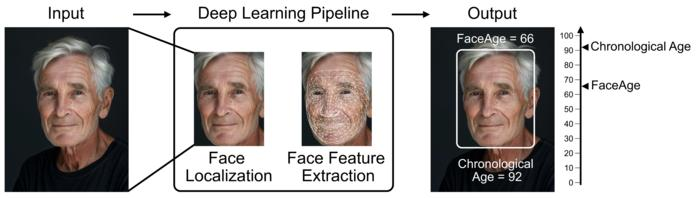
The FaceAge algorithm, developed by scientists at Mass General Brigham and trained on hundreds of thousands of headshots, examines a patient's face and converts data from features into a biological age, as opposed to their chronological age.

Looking at a group of more than 6,000 patients with cancer in the US and the Netherlands, they found that they had a five-year higher biological age, on average, than a comparison group without cancer. Moreover, cancer patients who had a higher biological age tended to have a lower chance of surviving cancer and a shorter lifespan than those with a lower age.

FaceAge was more accurate at predicting the lifespan of patients than clinicians among patients receiving palliative radiotherapy for cancer, according to their findings, which have been published in The Lancet Digital Health journal.

The researchers found that the clinician's accuracy was "only slightly better than a coin flip" – even with clinical context such as chronological age and cancer status – but improved significantly when FaceAge data was included.

The results raise the intriguing possibility that two patients of the same chronological age – but with a big difference in their biological ages – could be offered different treatment depending on their ability to tolerate it and the chances of a positive outcome.

At the moment, doctors may well be making such decisions on the basis of their experience or a gut feeling, but the AI could complement those intuitive assessments. Now, the team hope to extend their work to look at other diseases.

"We can use…AI to estimate a person's biological age from face pictures, and our study shows that information can be clinically meaningful," said co-senior and corresponding author Hugo Aerts, director of the Artificial Intelligence in Medicine (AIM) programme at Mass General Brigham.

"This work demonstrates that a photo like a simple selfie contains important information that could help to inform clinical decision-making and care plans for patients and clinicians," he added. "How old someone looks compared to their chronological age really matters – individuals with FaceAges that are younger than their chronological ages do significantly better after cancer therapy."

Another member of the AIM team, Ray Mak, said that the study could be an early demonstration of an emerging field of biomarker discovery from photographs.

"As we increasingly think of different chronic diseases as diseases of ageing, it becomes even more important to be able to accurately predict an individual's ageing trajectory," he remarked.

"I hope we can ultimately use this technology as an early detection system in a variety of applications, within a strong regulatory and ethical framework, to help save lives."

https://pharmaphorum.com/news/could-ai-biological-age-guide-cancer-treatment

Harvard, Yale Face Major Increase to Endowment Tax in House Plan


Republican lawmakers proposed to significantly increase taxes on the richest US universities, broadening a fight between the Trump administration and elite higher education.

Private colleges and universities with at least 500 students and endowments exceeding $2 million per student would pay a rate of 21% on net investment income under a bill released Monday as part of the House’s plan to extend the 2017 tax cuts. That’s up from the current tax of 1.4%.

https://www.bloomberg.com/news/articles/2025-05-12/harvard-yale-face-major-increase-to-endowment-tax-in-house-plan

MAHA: Fighting The Biomedical War On The American Public

 by James Howard Kunstler,

MAHA Hugger Mugger

"Those who perpetrated the greatest ruse in American presidential history by staging the Biden presidency will never tell us what their ultimate agenda was

- Victor Davis Hanson

One baseline truth in current American life is that our bodily well-being gets worse as the so-called health care industry gets ever-larger — it is now 17.6-percent of the economy (GDP). This is clearly the basis of the Make America Healthy Again (MAHA) campaign that attached itself to the Trump 2.0 program. 

You hear almost no arguments against MAHA itself, even from the Party of Hustles and Hoaxes, but plenty of calumny and objurgation against MAHA’s chief advocate, Robert Kennedy, Jr.

Mr. Trump’s initial nominee for Surgeon General, Dr. Janette Nesheiwat was pulled last week just before her scheduled Senate confirmation hearing. Her credentials looked a bit sketchy — med school on the tiny Caribbean island of St. Maarten (say, what. . . ?) and other irregularities — which she confabulated about anyway. 

Plus, she was a Covid vaccine cheerleader and an avid advocate of the censorship campaign to slam down debate over it.

Which leads directly to a glaring quandary in President Trump’s current order-of-business: he has avoided engagement with the whole Covid fiasco that unspooled in the last year of his first term

Now, it is the opinion of this blog that Mr. Trump was played on Covid by blob-marshaled “experts” Anthony Fauci and Deborah Birx, who led the White House Covid “team,” and then snookered the president into Operation Warp Speed, appealing to his vanity to play the superhero. You can also surmise that the Covid operation was hatched to run Mr. Trump out of office by enabling epic election fraud, making a chump of him.

Other aspects of the Covid hairball are now finally getting unraveled, such as the lab origin issue and Dr. Fauci’s nefarious and vast operations to fund bioweapons. But the awful subject of the Covid mRNA vaccines, and all the monkey business around their development and deployment, remains taboo, even as Trump 2.0 sets records in smashing bureaucratic idols and radically shifting all sorts of policy — for instance, today’s monumental move to lower drug costs by 30 to 80 percent, using the Most Favored Nation trade policy device, which ties U.S. drug prices to the lowest prices paid by other high-income countries (e.g., Canada, Japan, or European nations) for the same medications.

But the Covid vaccine shots loom over the land like an ominous miasma that no one wants to talk about. The evidence has mounted steadily that the shots were ineffective and deeply harmful to many of the people who took them, especially those who got multiple boosters. The result, apparently, is a shocking rise in rare and aggressive cancers, immune system dysfunction, damage to the heart and blood vessels, neurological disorders, and much more. The CDC under “Joe Biden” worked desperately to hide all that, but it came out, anyway, because it was too big to hide.

81-percent of the US population submitted to the Covid vaccine shots. So, you can suppose that all that would be an extremely touchy matter. To admit all that scary information to the public arena would likely set off a politically dangerous fury. You can see why Mr. Trump would avoid going near it in the early going of his second term. But eventually he must come to terms with it.

Likewise, sooner or later, Bobby Kennedy, Jr., will have to take some kind of stand on the Covid vaccines, namely stopping the shots altogether. Whatever you think of the childhood vaccine schedule — a red-hot issue these days — it seems quite insane that the Covid mRNA vaccine is still included on it. It is still officially recommended by the CDC. Among the “much more” effects of the shots is damage to human fertility. You must ask: by giving these shots to kids as young as six-months, are we setting up a nation that won’t be able to have children? Pretty spooky.

Casey Means, the new nominee for US Surgeon General

So, the new nominee for Surgeon General is one Casey Means of the brother / sister team, Calley and Casey Means, known primarily as food safety advocate sidekicks to Bobby Kennedy. The Meanses were already under some suspicion for rising too rapidly into prominence from out of nowhere since the summer of 2024 when Mr. Kennedy began to swing over to the Trump campaign. They were suspected and criticized as the shills for some sort of sinister alliance between Silicon Valley, Big Pharma, and the US intel blob. The Meanses have adroitly avoided taking a position on the Covid vaccines. Hmmmm. . . . That’s the chatter, anyway — whether there’s any truth to it, we will have to stand-by to discover.

You’d have to ask yourself whether Mr. Kennedy would ally himself with people of supposedly sketchy character. Is he being used or played? Or maybe, it’s just not so. The nomination of Casey Means sent out shock-waves through MAGA and MAHA. Her credentials seemed a little sketchy like Janette Nesheiwat’s before her. Ms. Means dropped out of her five-year medical residency in Oregon a few months before completing it, apparently due to disillusionment with conventional medicine. She does not have an active medical license, supposedly required to serve as Surgeon General.

Instead, she transitioned into what is loosely called functional medicine, which rejects the oppressive “standards of practice” dictated by insurance companies and reliance on pharma products to alleviate symptoms rather than treat the causes of disease. Ms. Means also became a medical entrepreneur, starting Levels, a glucose-monitoring tech company, and is an Instagram “wellness influencer” with 750,000 followers. Given the gross racketeering aspects of conventional medicine and its failure to deal with the shocking rise in chronic disease, you might argue that Ms. Means made the right career moves, weird as they might seem superficially.

It’s pretty much a miracle that RFK, Jr., managed to land safely as Secretary of HHS and that he was able to enlist “medical freedom” advocates Jay Bhattacharya to run the National Institutes for Health and Marty Makary to run the Federal Drug Administration. This represents a stupendous turnaround in government policy. It’s also plausible that this new public health team has been preoccupied with personnel and administrative re-org in the first months of Trump 2.0. They’ve begun to nibble around the edges of the national health crisis, such as banning toxic food coloring.

They have yet to face the big, nasty legal questions such as revoking Pharma’s liability shield against lawsuits for its defective products, ending TV advertising of Pharma products — which is just an extortion racket for managing cable news content to protect Pharma — fully confronting the autism calamity and its connection to childhood vaccines, and, of course, pulling the Covid shots.

There is also chatter that RFK, Jr., is “managed” by hidden persons or forces. One not-so-hidden character in that psychodrama is Senator Bill Cassidy (R-LA). Sen. Cassidy, a medical doctor, chairs the Senate Health, Education, Labor, and Pensions (HELP) Committee that ran Mr. Kennedy over-the-coals in his confirmation hearing. Political pressure caused Sen. Cassidy to cave and vote “yes” for RFK,Jr., then. Louisiana has since changed its election rules so that Democrats can no longer vote in the GOP primary, and Cassidy is vulnerable. His base is restless. He voted to impeach Mr. Trump in January 2021 over the Capitol J-6 riot.

So, the chatter says that Mr. Kennedy made a deal with Sen. Cassidy to avoid taking certain actions — like, anything that might hurt Pharma and its profit-stream — or else Mr. Kennedy would be dragged back in front of the HELP Committee and raked over the coals again. If that were to happen, I suspect Mr. Kennedy would handle himself very capably in any public hearing. He has always been in command of the facts.

As head of HHS, he has had access to a deep trove of information that he had no access to previously. He must know by now exactly what sort of mischief has been perpetrated in US public health over the decades and will not be shy about disclosing it publicly. 

You should also not be surprised if Mr. Kennedy begins issuing criminal referrals before much longer.

As for Casey Means. . . give her a chance to demonstrate that she is on the right side of MAHA and willing to fight in what has become a biomedical war on the American public.

https://www.zerohedge.com/political/maha-fighting-biomedical-war-american-public

White House weighs large chip sale to Emirati AI firm G42

 The White House is weighing a deal that could send hundreds of thousands of U.S.-made AI chips to G42, an Emirati AI company that the U.S. has scrutinized previously for its links to China, the New York Times’ Ana Swanson and Tripp Mickle report, citing three people familiar with the discussions. Under a previous agreement tot sell chips to G42 in 2024, Microsoft (MSFT) managed the chips to train and develop AI models, and G42 had permission to sell Microsoft services using those semiconductors, the authors say. In addition, the Trump administration is expected to announce an agreement this week with officials in Saudi Arabia, in a deal that would give the Saudi government and its AI company Humain access to tens of thousands of chips and tech support from Nvidia (NVDA) and AMD (AMD), the authors note.

https://www.tipranks.com/news/the-fly/white-house-weighs-large-chip-sale-to-emirati-ai-firm-g42-ny-times-says

Trump says China deal will open up market for US businesses

 President Donald Trump said Monday that his administration reached an agreement with China to temporarily lower tariffs while the two sides negotiate a final agreement, which the president says will open the Chinese market for U.S. firms.

"The biggest thing that we're discussing is the opening up China, and they've agreed to do that, but it's going to take a while to paper it, you know, that's not the easiest thing to paper," Trump said, noting that it will take time to finalize a formal version of the agreement.

"I think it would be fantastic for our businesses if we could go in and compete and compete with China," Trump said. "It would be a lot of jobs for China, it would be I think at a time when they can frankly use the jobs, and that's what we're talking about."

He went on to explain that his administration's push for more market access in China for U.S. businesses is a means of resetting the balance of trade between the two countries, including through the removal of non-tariff barriers to trade.

"We opened up our country to China, they have very few restrictions, and they didn't open their country to us. Never made sense to me. It's not fair. And they've agreed to open China – fully open China. And I think it's going to be fantastic for China, I think it's going to be fantastic for us, and I think it's going to be great for unification and peace." 

"China also will suspend and remove all of its non-monetary barriers. They've agreed to do that… they're very numerous," he added.

The president said that the "reciprocal" tariffs that were unveiled at the White House in so-called Liberation Day festivities on April 2, will be dropped from 125% to 10%, lowering the overall tariff on Chinese imports from 145% to 30% for a 90-day period, while China reduces its tariffs from 125% to 10%.

"Yesterday, we achieved a total reset with China. After productive talks in Geneva, both sides now agreed to reduce the tariffs imposed after April 2nd to 10% for 90 days as negotiators continue on the largest structural issues," Trump said.

"That doesn't include the tariffs that are already on that are our tariffs, and it doesn't include tariffs on cars, steel, aluminum, things such as that, or tariffs that may be imposed on pharmaceuticals because we want to bring the pharmaceutical businesses back to the United States," he said.

Trump went on to characterize the trade negotiations as being "very friendly" and touted the relationship with China, saying a deal will help boost the country's economy.

"The relationship is very good. We're not looking to hurt China; China is being hurt very badly. They were closing up factories, they were having a lot of unrest, and they were very happy to be able to do something with us," Trump said.

The president also referenced China's failure to comply with the "phase one" trade deal he reached with the Chinese government during his first term in office.

Treasury Secretary Scott Bessent said late last month in an appearance on FOX Business Network's "Kudlow" that the U.S. will "have to take into account that they didn't adhere to the phase one deal."

https://www.foxbusiness.com/economy/trump-says-china-deal-open-up-market-us-businesses

Newark air traffic crisis takes terrifying turn: 1 controller to oversee up to 180 takeoffs and landings

 The safety nightmare continues at Newark Liberty International Airport, where all air traffic control will be manned by just one fully qualified person during its busiest time tonight, The Post can exclusively reveal.

One air traffic controller (ATC) and a trainee will operate every flight in and out of Newark between 6.30pm-9.30pm — despite 15 staffers being the standard requirement for a shift.

A New York-based ATC, who spoke on the condition of anonymity, described the situation as “pure insanity” and warned that the schedule shows the control tower for the airport will operate “at bare bones” while between 168 and 180 planes are scheduled to take off and land.

Newark Airport in New Jersey has a huge shortage of air control staff, and its control tower is set to be manned by just one qualified controller and a trainee on Monday night.John McAdorey – stock.adobe.com

It comes after the New Jersey airport was initially facing a “zero ATC event” — a term used by industry workers to describe the doomsday scenario of no one showing up — Monday afternoon until a controller on his day off agreed to come in and cover the evening shift.

“One of the controllers is canceling his day off and coming into work. But that’s not going to safely cover the entire system,” the source warned The Post.

The source said that a similar situation had occurred on Sunday when only two ATC’s were on for the night shift.

“15 is the target for EWR. Anything less than half of that is rough. Safety begins to be compromised,” he said, adding that he has “never seen anything like this” in his decades-long career.

“If you get below half of that standard, so seven, your safety begins to be compromised and the Federal Aviation Administration (FAA) knows that. So what they’ll do is put out ground stop delays and that’s what we’re seeing across the country.

“But it’s still just dangerous when 1-3 controllers are getting slammed.”

The FAA and Department of Transportation (DOT) did not immediately return The Post’s request for comment.

However, US Transportation Secretary Sean Duffy gave a press conference about Newark where he said: “I think it is clear that the blame belongs with the last administration. Joe Biden did nothing to fix the system they knew was broke.”

Transportation Secretary Sean Duffy has claimed the control tower problems are the fault of the previous administration.Getty Images
A screen displaying a huge number of delayed flights at Newark on May 9.REUTERS

The airspace around New York and New Jersey is considered one of the “busiest and most complex” sectors in the nation, according to several ATCs who spoke to The Post.

“In ideal weather, with full staffing and with perfectly functioning technology, the FAA tells us that the airport can only handle 77 flights per hour,” United Airlines CEO Scott Kirby said in a note to employees last week.

“And yet, the FAA regularly approves schedules of 80+ flights per hour almost every day between 3:00pm and 8:00 p.m.”

“This math doesn’t work,” Kirby added in the note. “Especially when there is weather, staffing issues or technology breakdowns — the airspace, taxiways, and runways get backed up and gridlock occurs.”

Newark Liberty International Airport, where United Airlines Holdings Inc. operates 68% of the airport’s flights, experienced two jarring radar and communications failures in two weeks. The outages prompted the FAA to propose limiting the airport to no more than 56 total operations per hour.

The air control tower at Newark airport.AFP via Getty Images

The FAA and airlines are meeting on Wednesday to discuss flight cuts at Newark Liberty International Airport.

The source claimed there is a solution to the drastic staffing shortages that have brought the airport to a standstill, caused endless flight delays and cancelations, and prompted widespread safety concerns.

“It is because Pete Buttigieg and the union collaborated and moved the [Newark] sector from Long Island [in New York] to Philadelphia last summer in the name of ‘staffing concerns’,” he told The Post.

The FAA previously said the Newark Airport chaos was being exacerbated by at least ATC’s who took “trauma leave” of up to 45 days to cope with the stress of equipment failures.

https://nypost.com/2025/05/12/us-news/newark-air-traffic-crisis-gets-worse-with-one-controller-to-oversee-up-to-180-takeoffs-and-landings/