Search This Blog

Monday, May 12, 2025

Drug already on the market ‘could prevent 1 million new cases of Alzheimer’s’ a year

 Alzheimer’s affects nearly 7 million Americans, a number that’s expected to spike to 13.9 million by 2060.

Given the devastating effects of this incurable disease, the hunt is on for a drug that could help prevent or slow its progression.

Now, a new study has found that nucleoside reverse transcriptase inhibitors (NRTIs) — a common class of medications for HIV — could dramatically decrease the risk of developing this neurodegenerative disorder.

Pill bottle filled with prescription capsule medicine
A new study has found that a common class of medications could dramatically decrease the risk of developing Alzheimer’s disease.Eric Hood – stock.adobe.com

Analyzing data from over 270,000 patients aged 50 and older, researchers observed that the risk of Alzheimer’s decreased by 6% to 13% for each year the patients were on NRTIs.

These results are — to say the least — incredibly promising.

“It’s estimated that over 10 million people around the world develop Alzheimer’s disease annually,” said Jayakrishna Ambati, founding director of the University of Virginia Center for Advanced Vision Science.

“Our results suggest that taking these drugs could prevent approximately 1 million new cases of Alzheimer’s disease every year.”

NRTIs are primarily used to prevent HIV from replicating inside the body.

Ambati’s team discovered that these drugs also inhibit inflammasomes — immune system components implicated in Alzheimer’s development.

An MRI film showing the effects of Alzheimer's disease, related to the statistic that the risk of Alzheimer's decreased by 6% to 13% for each year patients were on NRTIs.
The risk of Alzheimer’s decreased by 6% to 13% for each year the patients were on nucleoside reverse transcriptase inhibitors.Atthapon – stock.adobe.com
The next step would be to test NRTIs in clinical trials, although Ambati noted his team has already devised another drug that is going down that route.

“We have also developed a new inflammasome-blocking drug called K9, which is a safer and more effective version of NRTIs,” Ambati said. “This drug is already in clinical trials for other diseases, and we plan to also test K9 in Alzheimer’s disease.”

The study was published last week in the journal Alzheimer’s and Dementia.

This finding adds to a growing number of potential Alzheimer’s treatments.

A compound found in rosemary and sage — carnosic acid — has been shown to reverse memory loss and reduce brain inflammation in mice with Alzheimer’s, bringing their cognitive function back to near-normal levels.

A study from Stanford Medicine found that seniors who received the shingles vaccine were 20% less likely to develop dementia over seven years.

And researchers at Penn State and Stanford University discovered that a certain cancer drug could restore memory and brain function in early-stage Alzheimer’s models.

https://nypost.com/2025/05/12/health/drug-could-prevent-1m-new-alzheimers-cases-a-year-study/

"Digital Gold" Narrative Sells Bitcoin Short

  by Isaiah Austin via BitcoinMagazine.com,

Humans like to make analogies to understand new things better. It makes complete sense why we would look for one in the case of Bitcoin. 

Bitcoin is a novel concept to most people hearing about it for the first time, and can require great effort to grasp fully. Using the phrase “digital gold” to describe Bitcoin is incredibly palatable, and even if you don’t understand the functionality of the network, you can know certain things to be true: Bitcoin is scarce, global, and a store of value.

This narrative has worked well, ushering in institutional and nation-state adoption. The first section of President Donald Trump’s executive order establishing the Strategic Bitcoin Reserve states, “As a result of its scarcity and security, Bitcoin is often referred to as ‘digital gold’.”

On one end, we should be celebrating these incredible achievements for Bitcoin. We have made massive strides in adoption by propelling the “digital gold” narrative that should not be understated. However, for Bitcoin to reach its true potential, the narrative needs to shift.

Bitcoin is NOT “digital gold”.

Labeling Bitcoin as “digital gold” is a misrepresentation that reduces the world’s most revolutionary form of money to a mere store of value. Bitcoin’s fundamentals make even the most desirable attributes of gold completely obsolete while simultaneously being a faster, safer, more decentralized alternative to fiat currencies.

Let’s dive into what separates Bitcoin from gold.

Scarcity vs Finicity

Likely the largest selling point for gold, and why it’s survived as a store of value for thousands of years, is its scarcity. 

It’s estimated that over the past 100 years, gold’s supply has only increased by around 1-2% each year. This is because there is no real economic incentive to increase the supply of gold through mining. In addition to how difficult new gold is to find, labor, equipment, and environmental compliance costs make the process extremely difficult to justify financing.

For this reason, gold has held its value well throughout history, with its monetary status dating back to 3000 BC. In the 1st century AD in Ancient Rome, you could buy a high-quality toga for the same price in gold as a luxury tailored suit today!

Gold’s scarcity and the impact that it has had on society for thousands of years cannot be understated. However, in the age of Bitcoin, continuing to measure economic value in terms of an asset with a fluctuating supply seems arbitrary.

Bitcoin is not scarce, but finite, with a set supply of 21 million coins entering circulation. There is no “gold rush” for Bitcoin, and, as technology advances, we won’t find Bitcoin on an asteroid.
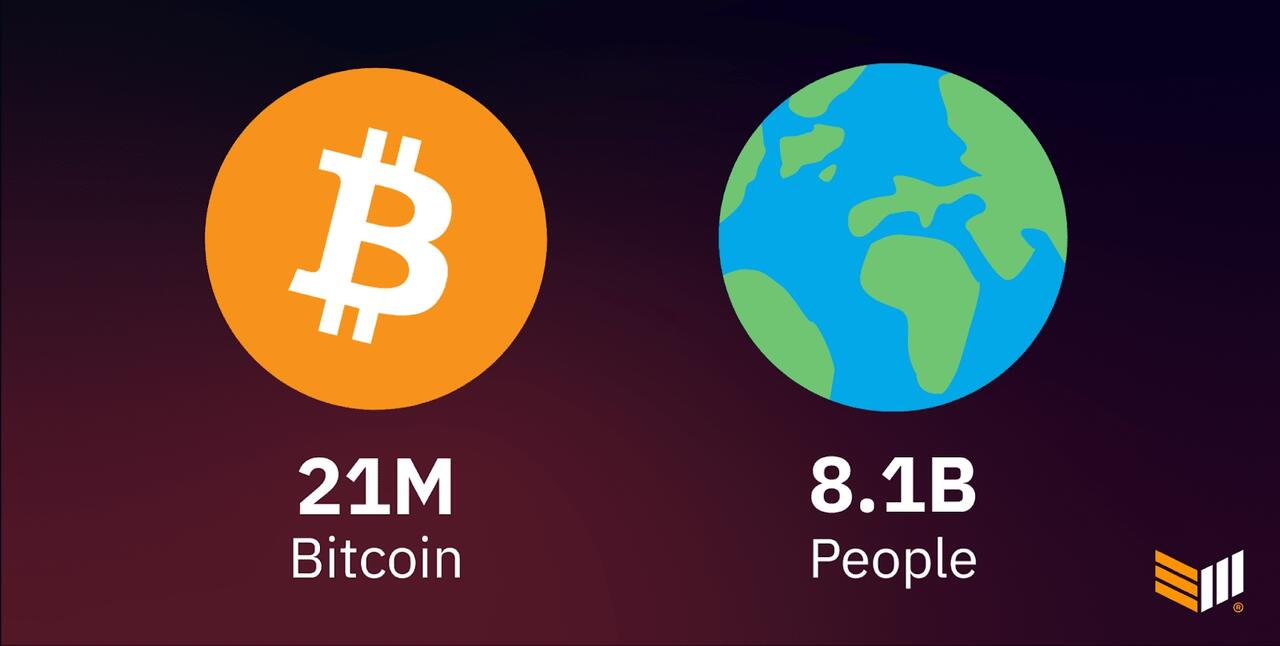
Through technological and mathematical advancements, we now have the capabilities to buy and exchange cash with a fixed supply. The significance of this development cannot be understated as “digital gold”.

Microdivisability

I will concur that gold is technically “divisible” – that is, if you have a handsaw or laser handy along with a scale. However, “microdivisible” is not a word that describes gold.

Gold thrives in large transactions where expensive goods and services are being transferred. But when you start moving to smaller transactions, problems start to arise.

Below is an image of 1 gram of gold, which, at the time of my writing this, is worth ~ $108. Imagine a world where you get a sandwich from Subway, and, in exchange, you shave off the corner on a gram of gold…
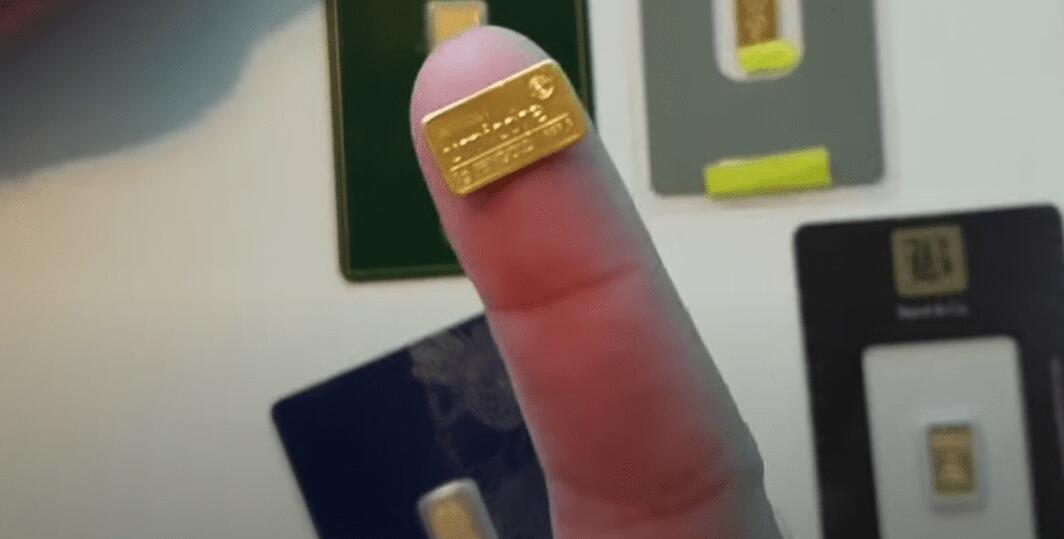
That’s not happening.

Older societies throughout history understood this limitation of gold and acted swiftly to combat this by issuing coins that represented a specific concentration of the precious metal.

Although it can be difficult to pin down, it is possible that the first gold-backed currency was the Lydian stater in 600 BC. Issued in Lydia (modern-day Turkey), the coin was initially minted with electrum (an alloy of gold and silver), with a gold composition of around 55%.

In 546 BC, the Persian Empire conquered Lydia and inherited the Lydian stater. Although the Persian Croeseids initially retained a high percentage of gold in the coins, they eventually debased the currency by adding base metals like copper. By the end of the 5th century BC, the Lydian stater only contained 30-40% gold.

Gold’s inability to be a microdivisible asset is a devastating flaw, and the reason societies have never been able to truly utilize it for a significant period of time. To make small transactions, citizens choose to hand their gold to the government in exchange for 1:1 coins, which, over time, are inevitably diluted and debased by the elite class, causing the society to collapse.

There is not a single example in history where a country operating on a gold standard hasn’t eventually debased its currency in exchange for microdivisibility through coins and paper notes. This, again, is largely due to people’s ultimate need for small units of account to purchase inexpensive goods.

This fatal blow to gold is ultimately solved by Bitcoin. Bitcoin’s smallest unit of account is called a “satoshi” and represents 1/100,000,000th of a bitcoin. Today, one satoshi is equal to roughly $0.001, which makes it more microdivisible than the US dollar!
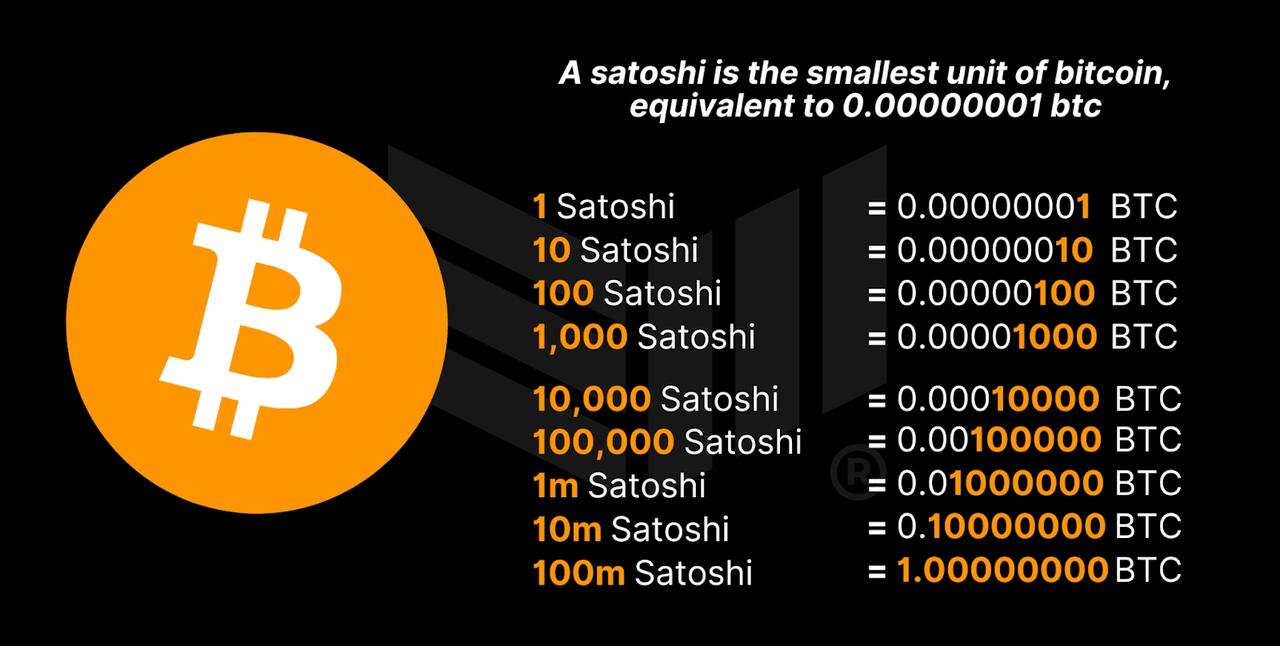
There is never a reason to involve governments in Bitcoin transactions because there is no need for a smaller unit of account. For that reason (among many others), Bitcoin works perfectly as money without the involvement of any intermediaries.

When considering bitcoin’s divisibility and units-of-account, it is comical to even compare it to gold in any form or fashion.

Auditability

I believe it’s a fair assumption that at the time of this article’s release, the “Fort Knox Audit” still hasn’t happened. As quickly as it became the top headline, the idea disappeared into irrelevance.

The United States’ gold holdings were last audited in 1974. After multiple decades of conspiracy theories and public speculation, President Gerald Ford decided to allow journalists inside Fort Knox. Their findings were unremarkable, with no noticeable missing gold on the premises.

However, that was 51 years ago. Today, we are in a similar position, with public curiosity piqued regarding the gold in Fort Knox.

Just a couple of months ago, the “Fort Knox Audit” seemed like it would happen any day. In fact, Elon Musk was going to livestream it! Though now, it’s beginning to seem like the elephant in the room that we’re not supposed to talk about.

Unlike gold audits, which are infrequent and manual, Bitcoin’s validation happens automatically through its proof-of-work consensus mechanism.

Approximately every 10 minutes, miners add a new block to the blockchain, verifying the legitimacy of transactions, the total Bitcoin supply, and adherence to consensus rules.
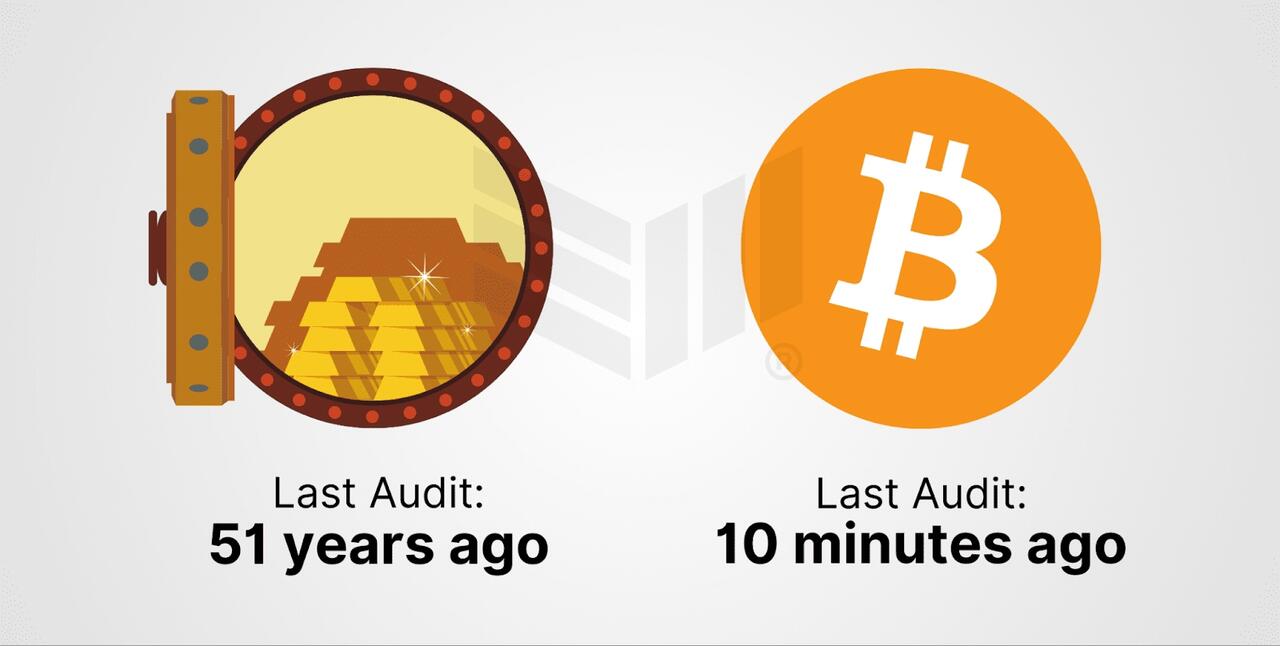
In contrast to traditional audits, which rely on trusted third-party intermediaries, Bitcoin’s decentralized process is trustless and transparent, allowing anyone to independently verify the blockchain’s integrity in real-time.

Don’t trust, verify.

Portability

It requires little persuasion to make the case that bitcoin is more “movable” than gold. Kept simply, gold in large quantities can be extremely heavy and require specialized ships and planes for cross-border transportation. Conversely, Bitcoin is held in a wallet that keeps the same physical weight regardless of the amount.

However, there is a greater distinction here that cannot go unaddressed; Bitcoin doesn’t need to physically “move” anywhere.

The most common critique of Bitcoin is that it is “not real” and “can’t be held”. However, I argue that it is one of the greatest flaws of gold. To receive a large payment in gold, you must put up the costs necessary to transport the heavy and highly valuable materials across fields, oceans, or jungles.

In addition, you must also have a high level of trust for the third parties involved. During cross-border gold transactions, you are trusting your gold with:

  1. The third party that brokered the transaction

  2. The delivery crew that took your gold to the export station

  3. The crew on the plane or ship that is transporting the gold

  4. The delivery crew that took your gold to you

  5. Whoever you put in charge of guarding and maintaining the gold

On the other hand, Bitcoin allows you to make transactions without needing to travel or involve intermediaries. As discussed before, the Bitcoin blockchain’s consensus protocol allows users to send money across borders without needing a third party.

This not only removes the costs associated with cross-border travel and the various individuals who may be involved, but also eliminates the possibility of fraud, as all transactions are public and on-chain for users to see and verify.

For the first time in human history, we have “electronic cash”. Bitcoin Magazine’s Conor Mulcahy defines “electronic cash” as “a broad category of money that exists solely in digital form and can be used to facilitate peer-to-peer transactions electronically. Unlike e-money, which typically involves intermediaries like banks and payment processors, electronic cash is designed to mimic the characteristics of physical cash, such as anonymity and direct exchange between users.”

The idea that a peer-to-peer transaction without an intermediary could occur without being together in person was only a theory before the creation of Bitcoin. Detractors who dismiss this advancement in our species’ capabilities as “not real because I can’t touch it” will soon realize that they are fighting a losing battle in a world that becomes more digital by the second.

Not All Bitcoin “Adoption” is Equal

If our sole aim is to drive Bitcoin’s price to the moon, the “digital gold” label will suffice. Certainly, governments, sovereigns, corporations, and individuals will continue to pour in rapidly, and the number will keep going up.

But…

If Bitcoin is the transformative freedom technology we believe it to be, we must fundamentally rethink how we educate and share it with the world. To seize this opportunity, we must prioritize educating pre-coiners on the novelty of Bitcoin and avoid oversimplified analogies. This approach will ultimately cement Bitcoin’s role as the cornerstone of global financial freedom.

https://www.zerohedge.com/crypto/digital-gold-narrative-sells-bitcoin-short

Arcturus prioritization of mRNA therapeutics pipeline extends cash runway into 2028

 ARCT-032 (CF) Phase 2 interim data from first two cohorts expected in mid-2025

ARCT-032 (CF) Phase 2 expected to complete enrollment by year end

ARCT-810 (OTC) Phase 2 interim data expected Q2 2025

Investor conference call at 4:30 p.m. ET today


Earnings Call: Monday, May 12, 2025 @ 4:30 PM ET

  • Domestic: 1-800-267-6316
  • International: 1-203-518-9783
  • Conference ID: ARCTURUS
  • Webcast: Link

Chicago Taps Loop Capital Founder to Fix $1 Billion Budget Hole


Loop Capital founder Jim Reynolds​​​​ will co-lead a working group established by Chicago Mayor Brandon Johnson to find ways for the city to close its deficits that are projected to top $1 billion in each of the next two years.

Reynolds, who began his muni career as a short-term bond trader in 1981 and founded Chicago-based Loop in 1997, will serve as co-chair of the group with Chicago Urban League Chief Executive Officer Karen Freeman-Wilson, the former mayor of Gary, Indiana. Johnson, who confirmed the appointments in an interview at City Hall, said the group will meet for the first time on Saturday. Reynolds and Freeman-Wilson didn’t immediately respond to requests for comment on Monday.

https://www.bloomberg.com/news/articles/2025-05-12/chicago-taps-loop-capital-founder-to-fix-1-billion-budget-hole

Trump Seeking $1 Trillion In Saudi Investment, Air Force One En Route

 Via The Cradle

US President Donald Trump is reportedly seeking $1 trillion in investments from Saudi Arabia in an upcoming visit to the energy-rich Gulf Kingdom. This comes amid reports that normalization between Riyadh and Tel Aviv has effectively "been delinked" from economic and security talks with Washington.

Trump has departed Monday on a four-day visit to Saudi Arabia, Qatar, and the United Arab Emirates, with the trip expected to center on securing business deals and attracting new investments from the oil-rich Gulf states. The president will not visit Israel

Reuters reported Sunday that Saudi Arabia is unlikely to normalize relations with Israel at this time due to Israel's continuation of its war in Gaza and refusal to allow the establishment of a Palestinian state, according to US and Saudi officials. "Establishing ties has become especially toxic for Saudi Arabia, the birthplace of Islam, since the start of Israel's war in Gaza," Reuters wrote.

US officials have failed to convince their Israeli counterparts to agree to an immediate ceasefire in Gaza – one of Saudi Arabia's preconditions for any re-start of normalization talks, two Gulf sources and a US official stated. Instead, Israeli leaders have expressed their desire to continue the war, which has killed well over 60,000 Palestinians, in an effort to ethnically cleanse Gaza of Palestinians and prepare it for Jewish settlement.

The reports contradict the optimism expressed by Trump's envoy to the region, Steve Witkoff, who told an audience at the Israeli embassy in Washington this week that he expected important progress on expanding the Abraham Accords, an agreement through which other Arab states, the UAE, Bahrain, Sudan, and Morocco, normalized relations with Israel.

"We think we will have some or a lot of announcements very, very shortly, which we hope will yield progress by next year," Witkoff said in a video of his speech before accompanying Trump on his trip to the region that will not include a visit to Israel.

As a result, Saudi normalization with Israel has "effectively been delinked from economic and other security matters between Washington and the kingdom, Reuters wrote, citing two Saudi and two US officials, all of whom requested to remain anonymous.

As a result, Trump's visit to the kingdom will focus on securing a trillion dollars' worth of Saudi investments in US companies, "including major deals in arms, mega-projects and artificial intelligence," Reuters wrote.

"The Trump administration wants this trip to be a big deal. That means lots of splashy deal announcements and collaborations that can be sold as being good for America," said Robert Mogielnicki, senior resident scholar at the Arab Gulf States Institute, a think tank in Washington.

"Normalizing ties with Israel is a much heavier lift than rolling out the red carpet for President Trump and announcing investment deals," he said. The Saudi government communications office did not reply to a request for comment, Reuters added.

In a related matter, an informed source told Palestinian newspaper Al-Quds on Sunday that the meeting between President Donald Trump and Saudi Crown Prince Mohammed bin Salman (MbS) in Riyadh on Tuesday will also include Palestinian President Mahmoud Abbas, Lebanese President Joseph Aoun, and Syrian President Ahmed al-Sharaa

The source, who declined to be identified, said Crown Prince Mohammed bin Salman submitted the proposal, which received Trump's approval. 

The source confirmed that MbS is looking forward to Trump's acceptance of the Saudi condition for the establishment of a Palestinian state, noting that achieving this would constitute one of the greatest and most important achievements of Saudi Arabia's active diplomacy.

https://www.zerohedge.com/geopolitical/trump-seeking-1-trillion-saudi-investment-air-force-one-en-route

Texas Gov. Abbott Halts Development Of Controversial 'Epic City' For Muslims

 Texas Governor Greg Abbott wrote on X that his team has halted construction of a planned mixed-use development connected with East Plano Islamic Center (EPIC), one of North Texas' largest mosques. 

The 402-acre site is being transformed into a community for Muslims that includes 1,000 homes, a K-12 faith-based school, a mega mosque, elderly and assisted living, apartments, clinics, retail shops, a community college, and sports fields. It is located just 30 miles northeast of downtown Dallas.

"We're going to demonstrate to the world what it means to be a Muslim in the West," one of the heads of EPIC City said in a promotional video. 


Now, Gov. Abbott laid down the hammer:

Texas has halted any construction of EPIC City. There is no construction taking place. The state of Texas has launched about a half dozen investigations into this project. That includes criminal investigations. And, the U.S. Department of justice is also investigating. This matter, and similar matters, are taken very seriously, and actions are being taken to address all concerns.

Abbott's decision comes just days after Texas Senator John Cornyn told the Department of Justice about potential "religious discrimination" in the proposed Muslim-centric city.

"A master-planned 'community of thousands of Muslims' could violate the constitutional rights of Jewish and Christian Texans, by preventing them from living in this new community and discriminating against them within the community. I further encourage the Department to investigate whether Christians, Jews, and other non-Muslim minorities would receive equal protection under the law in this new community. Religious discrimination, whether explicit or implicit, is unconstitutional under the First and Fourteenth Amendments. Religious freedom is a cornerstone of our nation's values, and I am concerned this community potentially undermines this vital protection," Senator Cornyn wrote in a letter to U.S. Attorney General Pam Bondi and Assistant Attorney General for Civil Rights Harmeet Dhillon.

The senator concluded: "Religious-based discrimination is a constitutional violation as well as a federal rights violation. Appropriate steps should be taken to ensure that this community does not run afoul of these obligations. It may also be appropriate for an investigation to explore whether the proponents of the proposed development are abiding by existing federal and state prohibitions on the enforcement of sharia law" 

In a recent podcast, supporters of the proposed EPIC City development discussed plans to name streets after historic Islamic conquerors and revealed that 75% of homeowner association fees would be funneled into the mosque.

So, what laws does EPIC City support? The laws of Texas/the U.S. Constitution, or Sharia law? 

Glenn Beck might have those answers... 

.  .  . https://www.zerohedge.com/political/texas-gov-abbott-halts-development-controversial-epic-city-muslims