Search This Blog

Thursday, August 14, 2025

'Fed expected to stick with regular-sized rate cut after inflation data'

 A jump in U.S. wholesale prices last month looks to have all but erased the possibility that the Federal Reserve will deliver a jumbo-sized half-percentage-point interest rate cut in September, though expectations for a quarter-percentage-point move next month, followed by another in October, remain intact.

U.S. producer prices rose 0.9% in July amid a surge in the costs of goods but also of services like machinery and equipment wholesaling, the Labor Department’s Bureau of Labor Statistics said on Thursday. The increase, which far exceeded economists’ expectations, may get passed on to consumers, who so far have not experienced a strong overall increase in prices even as the Trump administration has ratcheted up import tariffs.

"We expect a stronger pass-through of levies into consumer prices in coming months, with inflation likely to climb modestly over the second half of 2025," said Ben Ayers, senior economist at Nationwide.

The rise in services inflation will be particularly worrisome to Fed policymakers like Chicago Fed President Austan Goolsbee, who said on Wednesday he’s on alert for signs that inflation is seeping into prices beyond those for goods affected directly by tariffs. An increase in services inflation, also evident in the consumer price data released on Tuesday, suggests inflation could become a more persistent problem, he said.

"Fed officials ... are figuring out how they balance out between this sense that maybe inflation is still a bit sticky and there might be some upside risk from tariffs yet to be fully realized," said Michael Hanson, senior global economist at JPMorgan.

U.S. Treasury Secretary Scott Bessent, who is leading the search for a replacement for Fed Chair Jerome Powell, has been pushing for a bigger rate cut next month, citing tame inflation, though on Thursday he said the U.S. central bank could start with a quarter-percentage-point move. 

Before the data, traders put about a 3% probability on the idea of a half-percentage-point rate cut, with most bets firmly on a quarter-percentage-point reduction. After the data, traders erased bets on a 50-basis-point move.

San Francisco Fed President Mary Daly, who signaled earlier this week that she is increasingly open to the idea of a rate cut given the softening in the labor market, told the Wall Street Journal in a story published on Thursday that a 50-basis-point rate cut would signal an urgency about the job market that she does not feel.

Rate-sensitive two-year Treasury yields jumped more than five basis points after the data and were last at 3.743%, about five basis points higher than on Wednesday. Benchmark 10-year yields were up about five basis points on the day, at 4.294%.

https://www.investing.com/news/economy-news/fed-seen-sticking-to-regularsized-rate-cuts-after-inflation-data-pops-4192644

Oncology Institute stock rating reiterated at Buy by BTIG after Q2

  The Oncology Institute Inc. (NASDAQ:TOI) received a reiterated Buy rating from BTIG on Wednesday, maintaining its $7.00 price target following the company’s second-quarter earnings report. Analyst targets range from $6 to $8, with the stock currently trading near $4.10, suggesting significant upside potential. The company’s market capitalization stands at approximately $370 million.

TOI reported second-quarter revenue of $119.8 million, representing 22% year-over-year growth and exceeding both BTIG and consensus estimates of $112.6 million and $113.3 million, respectively. The company posted an adjusted EBITDA loss of $4.1 million, which was better than BTIG’s forecast of a $4.7 million loss and the consensus estimate of a $4.9 million loss.

Following these results, TOI raised its 2025 revenue guidance, now expecting to reach the higher end of its previously stated range of $460-480 million. The company reaffirmed its EBITDA guidance range of negative $8-17 million and maintained its expectation of achieving positive EBITDA by the end of 2025. 

BTIG attributed the revenue and earnings outperformance primarily to strength in TOI’s dispensing business, noting that both fee-for-service and dispensing revenue benefit from higher volumes and rising oncology drug prices. The research firm highlighted that while health plans face margin pressure from increasing oncology drug costs, this trend actually benefits TOI’s business model. The company’s revenue growth remains robust at 17.5% over the last twelve months.

The research firm also expressed approval of TOI’s approach to risk-based PMPM (per member per month) capitated arrangements, where clinicians maintain high control over services, care delivery locations, and medication dispensing, which drives margin improvement and reduces costs for health plans.

In other recent news, The Oncology Institute reported its Q2 2025 earnings with a significant increase in revenue. The company achieved a consolidated revenue of $119.8 million, reflecting a 21.5% growth compared to the same period last year. Despite an adjusted EBITDA loss of $4.1 million, this marks a considerable improvement from the previous year’s loss of $8.7 million. These developments indicate a positive trajectory in the company’s financial performance. Additionally, shares of the company remained stable following the earnings report. While the financial results are promising, no analyst upgrades or downgrades were reported in the recent articles.

https://www.investing.com/news/analyst-ratings/the-oncology-institute-stock-rating-reiterated-at-buy-by-btig-93CH-4191374

Abeona Posts Q2 Profit on Asset Sale


  • Headline profit and GAAP EPS of $1.71 for Q2 2025 resulted almost entirely from a one-time asset sale rather than ongoing business operations.

  • Q2 2025 marked the first revenue recognition ($0.4 million, GAAP), though there were no therapeutic product sales; ZEVASKYN launch only begins in the next quarter.

  • Cash reserves totaled $225.9 million as of Q2 2025, providing a funding runway of over two years as the company transitions to a commercial stage.

  • Abeona Therapeutics (NASDAQ:ABEO), a biotechnology company focused on developing and commercializing cell and gene therapies for rare diseases, reported its second quarter 2025 earnings on August 14, 2025. The biggest news from the release is a notable positive net income (GAAP) for Q2 2025, driven entirely by a one-time asset sale, while the first commercial product launch remains on the horizon. For Q2 2025, the company delivered GAAP earnings per share of $1.71, beating analyst estimates of a $(0.39) loss, and reported $0.4 million in GAAP revenue, both above expectations. However, both figures reflect non-recurring activities rather than regular operations. Management described the quarter as a transition point, showing strength in its regulatory achievements and readiness for commercialization, but with future performance hinging on successful sales of its first approved therapy.
MetricQ2 2025Q2 2025 EstimateQ2 2024Y/Y Change
EPS (GAAP, diluted)$1.71$(0.39)$(0.26)$1.97
Revenue (GAAP)$0.4 million$0.0 millionN/AN/A
R&D Expense$5.9 million$9.2 million(35.9%)
SG&A Expense$17.1 million$8.6 million98.8%

Source: Analyst estimates provided by FactSet. Management expectations based on management's guidance, as provided in Q3 2025 earnings report.

Company Overview and Recent Focus Areas

Abeona Therapeutics is a commercial-stage biotech focused on developing cell and gene therapies for severe and rare diseases. Its portfolio centers around ZEVASKYN, an autologous cell-based gene therapy, recently approved for treating wounds in recessive dystrophic epidermolysis bullosa (RDEB). This condition causes persistent skin wounds and is classified as a rare and life-threatening disease.

In recent quarters, the company has concentrated on three critical areas: securing regulatory approval for ZEVASKYN, building manufacturing capabilities at its Cleveland facility, and setting up commercial launch infrastructure. Another key focus is payer access and reimbursement, essential for rare disease therapies that often require specialized and expensive care. Intellectual property protections and strategic partnerships also remain central to its long-term differentiation and market entry, while competition from other rare disease gene therapy companies is intensifying.

Quarter in Review: Key Developments and Financial Performance

This period marked a significant milestone with the U.S. Food and Drug Administration (FDA) approval of ZEVASKYN in April 2025, making it the first approved autologous cell-based gene therapy for RDEB. The company quickly moved to activate its first two Qualified Treatment Centers and identified more than a dozen potential patients for treatment. While the quarter’s reported revenue of $0.4 million (GAAP) stems from license and milestone payments—not from product sales—it represents the company's first reporting as a commercial-stage organization.

A major event during Q2 2025 was the sale of its Rare Pediatric Disease Priority Review Voucher (PRV), granted upon ZEVASKYN's FDA approval, for gross proceeds of $155 million. This one-time asset sale provided a significant boost to reported net income and GAAP EPS in Q2 2025, but it is not expected to recur in future quarters. The spike in cash and cash equivalents to $225.9 million as of Q2 2025 (GAAP) was driven by this transaction, giving the company sufficient runway to fund operations for more than two years, even before new product sales begin in earnest.

Operational expenses showed considerable movement. Research and development (R&D) expenses dropped to $5.9 million from $9.2 million a year ago, as costs shifted from development to commercial supply in Q2 2025 (GAAP). In contrast, Selling, general, and administrative (SG&A) expenses (GAAP) doubled to $17.1 million in Q2 2025, reflecting increased headcount and professional costs associated with the commercial launch of ZEVASKYN, as well as the reclassification of select R&D expenses to SG&A. Management noted that these changes signal a shift from a research focus to commercial execution as a priority.

Reimbursement progress was also highlighted. The company reported that all submitted insurance authorization requests for ZEVASKYN had been approved, and coverage was established with national health insurers representing approximately 60% of the addressable RDEB market as of Q2 2025. The company agreed to a National Drug Rebate Agreement with the Centers for Medicare and Medicaid Services, further supporting near-term market access. First patient biopsies were completed ahead of anticipated treatments in the third quarter, with continued patient identification efforts underway at additional treatment centers and referring hospitals.

Looking Ahead: Outlook and Investor Watchpoints

For the coming quarters, management's guidance for fiscal 2025 signals an intention to activate additional treatment centers and ramp up commercial manufacturing, aiming to eventually support up to 10 patient treatments per month by mid-2026. The company forecasts the potential to reach profitability in the first half of 2026, assuming successful uptake and reimbursement for ZEVASKYN (based on management guidance provided in Q3 2025 and supported by company statements as of June 27, 2025). The company’s cash position as of June 30, 2025, is expected to be sufficient to fund current and planned operations for over two years, without accounting for anticipated revenue from ZEVASKYN.

Looking forward, core watch points for investors include the speed and scale of ZEVASKYN’s commercial rollout, sustained payer reimbursements, and control over expanding operating costs as the commercial phase unfolds. The path to recurring profitability relies on converting payer interest and initial patient identification into actual therapy initiation and sales. Competition in gene therapy for rare diseases, especially from established players, remains a strong consideration for future quarters.

https://www.nasdaq.com/articles/abeona-posts-q2-profit-asset-sale

Rogers to Sell Nine Data Centers to Sun Life-Owned Asset Manager


Rogers Communications Inc. will sell a portfolio of nine data centers to infrastructure asset manager InfraRed Capital Partners to help pay down debt.

The Toronto-based telecommunications firm, which announced the deal in a statement Thursday, did not disclose financial terms. A spokesperson for InfraRed Capital, part of the asset management business of Sun Life Financial, also declined to comment on the transaction’s value.

https://www.bloomberg.com/news/articles/2025-08-14/rogers-to-sell-nine-data-centers-to-sun-life-owned-asset-manager

Putin Hints At Expected Nuclear Arms Treaty Breakthrough With Trump At Summit

 Russian President Vladimir Putin is due in Anchorage, Alaska for the much anticipated bilateral summit with the US President and on Thursday he has praised the Trump administration’s "energetic" efforts to end the war in Ukraine.

What's more is that he suggested the two leaders could use the opportunity to strike a deal on nuclear arms control during their direct talks.

“The current American administration… is making, in my opinion, quite energetic and sincere efforts to stop the hostilities, stop the crisis and reach agreements that are of interest to all parties involved in this conflict,” Putin said.

He described while chairing a meeting of top security officials that the summit with the US aims to "create long-term conditions for peace between our countries, as well as in Europe, and in the world as a whole."

So despite Ukraine's Zelensky and a number of European leaders decrying being cut out of the talks, it seems both Trump and Putin are optimistic that real deal-making can occur related to the Ukraine conflict.

Putin said further in the fresh comments said that the "next stages" of discussions with the administrations could include reaching "agreements in the area of control over strategic offensive weapons."

New START remains among the last nuclear arms control agreements between Moscow and Washington, and it will expire in February 2026 unless a half-decade extension can be reached.

Both leaders have shown willingness to reach a breakthrough on this issue.

The treaty is intended to limit and reduce nuclear arms on either side, setting a limit of no more than 1,550 deployed warheads and 700 missiles. START I began in 1991, with New START signed under the Obama and Medvedev administrations in 2010 as a successor agreement.

In August 2023 the US accused Russia of violating the treaty in disallowing US on-site inspections under its stipulations. In response, Washington halted Russian inspectors' ability to do the same on American soil.

https://www.zerohedge.com/geopolitical/putin-hints-expected-nuclear-arms-treaty-breakthrough-trump-summit

Russiagate Redux: Can't Keep A Good Hoax Down

 by Frank Miele via RealClearPolitics,

When intelligence czar Tulsi Gabbard released her report last month accusing major players in the Obama administration of fabricating the Russia collusion hoax used to tarnish Donald Trump during the 2016 presidential campaign and beyond, some of us were not surprised.
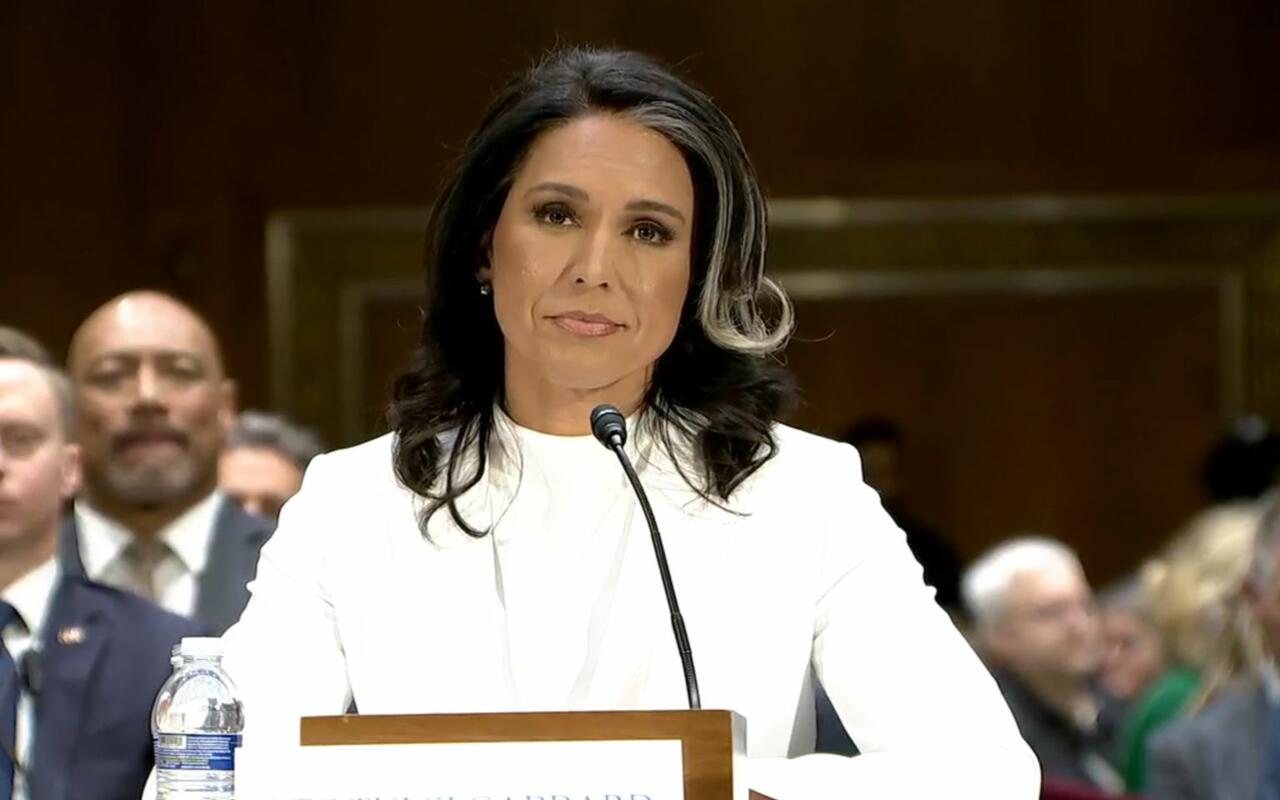
Nor were we surprised that the news media has either ignored the story or tried to discredit it. We are very familiar with that playbook, having seen major media outlets use it to perfection when 51 intelligence officials signed a letter falsely claiming that Hunter Biden’s incriminating laptop had “all the classic earmarks of a Russian information operation.” That letter, signed by former CIA director John Brennan and former director of national intelligence James Clapper, probably cost Donald Trump the 2020 election, just as the Russiagate hoax was intended to derail Trump in 2016.

The New York Times, ferociously guarding its fake Pulitzer Prize from 2018, has led the way in trying to convince Americans that the evidence released by Gabbard was manufactured by Russia. But isn’t that the same tune whistled by Clapper and Brennan five years ago regarding the laptop? Anyone who believes either the CIA or the New York Times at this point either hasn’t been paying attention or is impervious to new information. I won’t try to cover all the obvious ways in which the evidence points to a massive conspiracy to defame Trump and defraud the public. You can learn about it in the reporting by Michael Shellenberger and Matt Taibbi among others – including several reporters who write for RealClearInvestigations.

And with any luck, the originators of the Russia hoax will be brought to justice. We learned last week that Attorney General Pam Bondi has ordered a grand jury probe to investigate the culpability of Brennan, Clapper, former FBI director James Comey, and possibly even Hillary Clinton for their roles in what Gabbard called a “treasonous conspiracy” to interfere with the 2016 election and subsequently to undermine the first Trump administration.

That could take care of half the problem, but what about the other half of the conspiracy: the media allies who promoted the Russia Collusion Hoax without doing any reporting of their own other than swallowing hook, line, and sinker the fake news promoted by Clinton and the intelligence community because of their own hatred of Donald Trump? That part of the conspiracy is still alive and well.

Witness the NBC report I linked above on the grand jury probe. While it purports to be a straight news story about the possibility of charges against the purveyors of the Russia hoax, it reads more like a defense brief to clear them of criminal wrongdoing, starting with a subhead that says, “Past probes, including two conducted by Republicans, found no such crimes.”

After announcing the probe in the first two paragraphs, most of the rest of the story throws shade on it:

— “A former senior national security official pointed out that multiple past reviews, including ones conducted by Republicans, found no such crimes.”

— “Democratic lawmakers have accused the administration of seeking to distract attention from the Jeffrey Epstein case.”

— “Democrats contend that Gabbard’s talk of a treasonous Obama-era plot is patently false and a diversion.”

— “A 2020 bipartisan Senate Intelligence Committee review contradicted the idea that there was a conspiracy by Obama administration officials against Trump, finding significant evidence of Russian interference in the 2016 election.”

You get the idea. The media wants to dismiss Gabbard’s revelations about the origins of the Russia collusion hoax because most White House reporters were complicit in the hoax from the beginning.

Thanks to the First Amendment, neither NBC, nor CNN, nor MSNBC, nor the New York Times will ever be held accountable in a court of law for their part in propagating the fake collusion story. And so far, it appears that the Times and the Washington Post will never even have to return the Pulitzers they won in 2018 for whitewashing the phony evidence of collusion.

Nor will journalists like me ever be awarded any prizes for being right from the start. On Aug. 7, 2016, I published a column at the Daily Inter Lake in Kalispell, Montana, just days after the conspiracy is alleged to have started, wherein I cited “a political scandal … which exceeds in scope anything seen previously in our country’s 240-year history.” But it wasn’t about Trump colluding with Russians; it was about the media colluding with Democrats and the intelligence community to try to cripple the ascendant candidacy of Donald Trump.

I called it “Mediagate.”

The context was that Wikileaks had released emails on July 22, 2016, showing the Democratic National Committee had colluded with the Clinton campaign to sabotage the competing campaign of Sen. Bernie Sanders. This story should have crippled the Clinton campaign. Instead, the legacy media unleashed a barrage of anti-Trump stories that took the spotlight off Clinton.

“This was no coincidence,” I wrote, “but rather was the beginning of a concerted effort by the media to rehabilitate Hillary Clinton as the historic first woman presidential nominee in U.S. history.” As I explained at the time:

People were actually starting to ask questions about Clinton’s dubious moral character and her role in the [DNC email] scandal, but since Clinton didn’t have any answers, she did what she does best and deflected the story. Instead of explaining why she had lied for months about collaborating with the DNC to steal the election, she and her surrogates led the lapdog media to instead question whether or not the supposed Russian hackers had leaked the damaging evidence against Hillary in order to boost Trump’s chances in the election.

It was in this context that candidate Donald Trump held his famous press conference at the Trump National Doral Golf Club on July 27, 2016, to respond to the DNC email breach and to discount the notion that he was working with Putin.

In my column, I explained that Trump had launched into a humorous stream-of-consciousness riff about how the Russians, who supposedly had hacked into the DNC server, might also have “hacked into the soft target of Hillary’s private server when she was secretary of state and therefore might have copies of the thousands of ‘private’ emails which she and her lawyers had deleted.”

Trump followed up with a joke that used the Russian hacking theory about the DNC emails to take a bank shot at Hillary for her illegal email server that she used for official business as secretary of state:

I will tell you this: Russia, if you’re listening, I hope you’re able to find the 30,000 emails that are missing. I think you will probably be rewarded mightily by our press. Let’s see if that happens. That’ll be next.”

The press went wild, claiming that Trump’s quip was proof that he had a direct line to the Kremlin and that he was ordering Putin to hack Clinton’s server. This was absurd on so many levels that it seemed more like a “Saturday Night Live” skit. Suffice it to say, no one ever explained why “Russian agent” Trump didn’t just tell Putin what to do privately instead of announcing it during a press conference.

What we didn’t know at the time was that a Clinton ally named Leonard Benardo had written an email on the same day – July 27, 2016 – that claimed “HRC approved Julia’s idea about Trump and Russian hackers hampering U.S. elections” – HRC being Hillary Rodham Clinton. That email and others were concealed from the public until Gabbard declassified them last month. Of course, the New York Times and other Democrat lapdog media outlets immediately fell back on the “Russia did it” narrative to claim that the incriminating emails (like Hunter Biden’s laptop) were manufactured by Vladimir Putin and his henchmen. Fat chance.

What we now know is that Trump was right all along when he called the New York Times and the Washington Post “fake news.” And I was right when I called “Mediagate” the scandal you won’t hear about on cable news. Less than two weeks after the Russian collusion hoax started, I had already exposed it as a fraud.

So where do I go to get my Pulitzer?

https://www.zerohedge.com/political/russiagate-redux-cant-keep-good-hoax-down

Cognition Therapeutics confirms aligment with FDA on path for zervimesine

 Cognition Therapeutics (CGTX) received final minutes from the FDA pertaining to the end-of-Phase 2 meeting that was conducted on July 9. FDA confirmed the proposed design of the Phase 3 program may support a new drug application filing for zervimesine as a treatment for Alzheimer’s disease. Based on the FDA’s feedback, the Phase 3 program is expected to enroll adults with a diagnosis of mild-to-moderate Alzheimer’s disease who have lower levels of p-tau217 at screening. Previous clinical experience has shown that zervimesine can arrest cognitive deterioration in this population by 95% compared to placebo. This degree of cognitive preservation in zervimesine-treated patients supports plasma p-tau217 as a predictive biomarker of treatment effect. Screening for p-tau217 levels in Phase 3 will therefore enrich the study population with patients most likely to benefit from zervimesine treatment. Participants will be randomized to either 100mg of oral zervimesine or placebo daily for six months. Efficacy and safety will be assessed, with endpoints affirmed by the FDA in the meeting minutes. Cognition also plans to include biomarker and imaging assessments in the Phase 3 program to support the clinical outcomes. Participants who complete either study will be eligible to enroll in an open-label extension study.

https://www.msn.com/en-us/health/other/cognition-therapeutics-confirms-aligment-with-fda-on-path-for-zervimesine/ar-AA1Kpt9K