Search This Blog

Thursday, April 9, 2026

Virologist Tells NIH Lab Leak Likely Happened, Collins and Fauci “Professional Failure”

 by Paul D. Thacker

Professor Simon Wain-Hobson of the Institut Pasteur berated former NIH leaders Francis Collins and Tony Fauci for having “sterilized debate” over the dangerous gain-of-function research that many say likely started the COVID pandemic, adding that a controversial paper funded by the NIH called “Proximal Origins” that denied the possibility of a lab accident was based on “no data.”

Wain-Hobson’s comments came during a private talk he gave last month on gain-of-function research at the National Institute of Allergy and Infectious Diseases (NIAID), which Tony Fauci once led. The NIH invited Wain-Hobson to speak about dangerous gain-of-function research, which federal agencies are now seeking to better regulate, while waiting for the White House to release a new executive order.

The existence of this talk and its details have not been previously reported and makes clear that the Fauci regime is being erased from the NIH.

On a March video call with over 100 NIH scientists and officials, Wain-Hobson criticized NIH bosses for writing a 2011 essay in the Washington Post that dismissed concerns about dangerous virus research. Wain-Hobosn said this stifled discussion with a “Papal Bull” when the safety of virus research should have been debated and wrangled with by scientists.
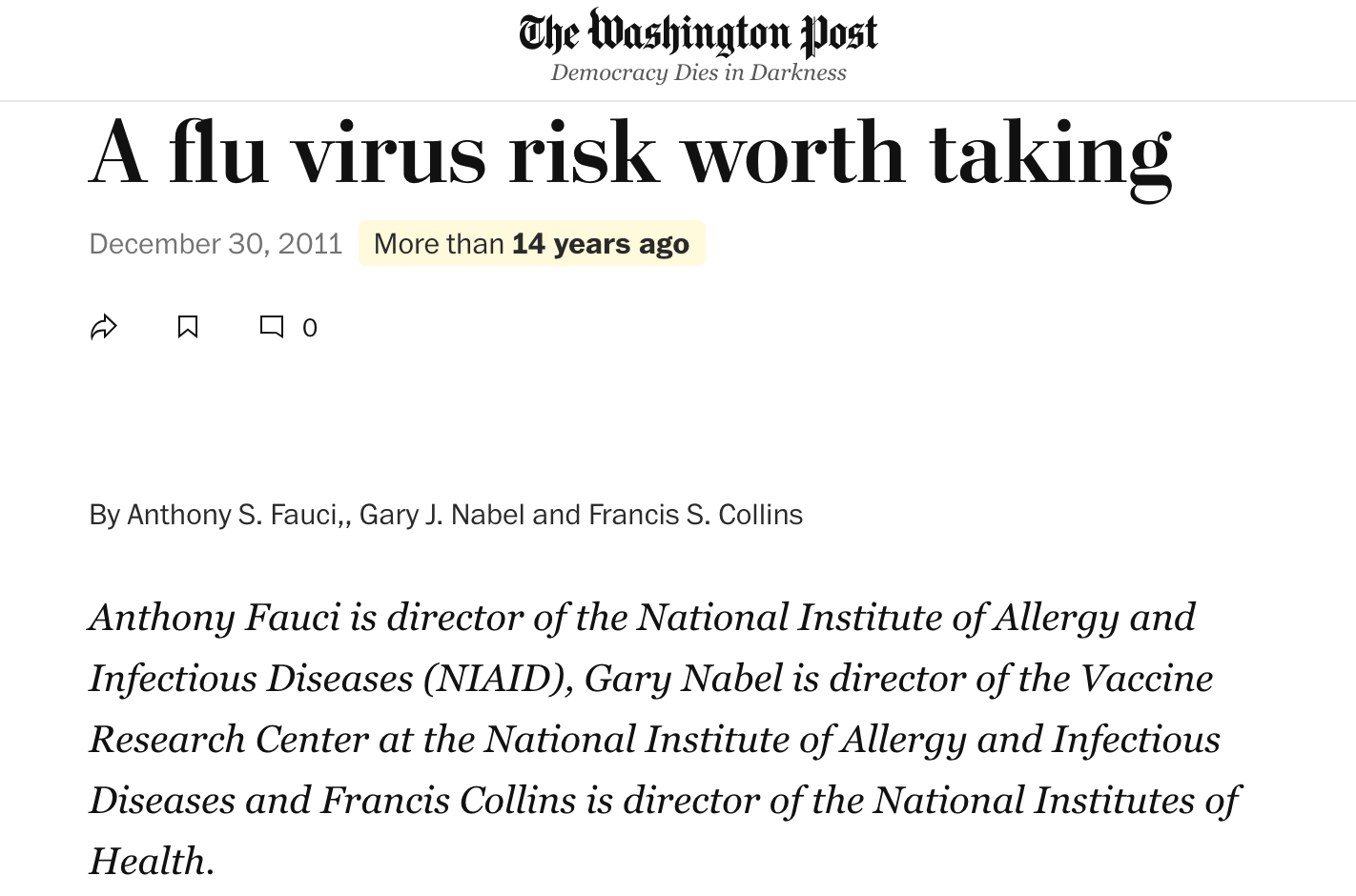
“And everyone was scared of doing this because Drs. Fauci, Nabel, and Collins had sterilized the debate,” Wain-Hobson said. He then apologized before continuing his criticism. “Sorry to be blunt,” he said. “I know these are former colleagues of somebody, but it was…the equivalent of a Papal Bull and it stopped all discussion. We can’t have this.”

Gary Nabel left the NIH the year after writing this essay to join Sanofi in 2012 as head of vaccine development. Both Collins and Fauci have since retired.

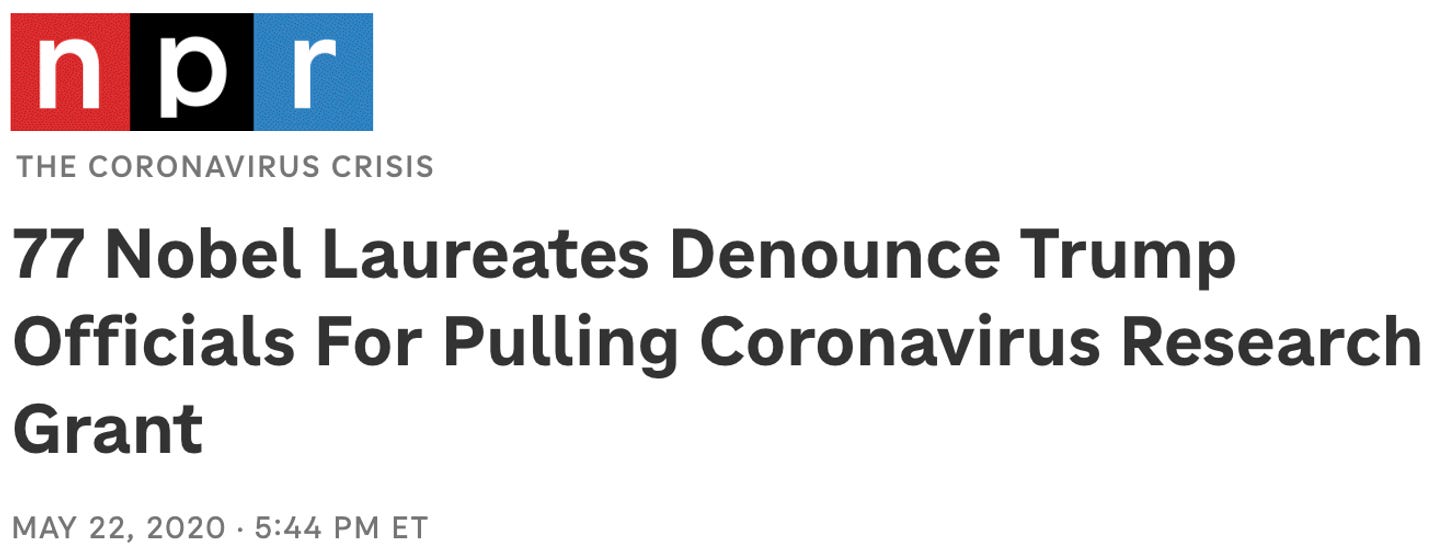
Wain-Hobson also condemned Nobel Prize winners for writing a May 2020 letter complaining about the cancellation of an NIH grant awarded to Peter Daszak of EcoHealth Alliance over safety concerns that his virus studies may have started the pandemic. “We believe that this action sets a dangerous precedent by interfering in the conduct of science and jeopardizes public trust in the process of awarding federal funds for research,” wrote the Nobel Laureates in a letter made public by the New York Times.

Wain-Hobson said the Nobel Laureates should have put public safety before virus research funding, especially for someone who was “not a strong scientist” like Peter Daszak. “This shows that scientists have to be educated because they are totally out of touch,” he said. “They’re in some sort of bubble.”

Selective segments of the talk follow below.
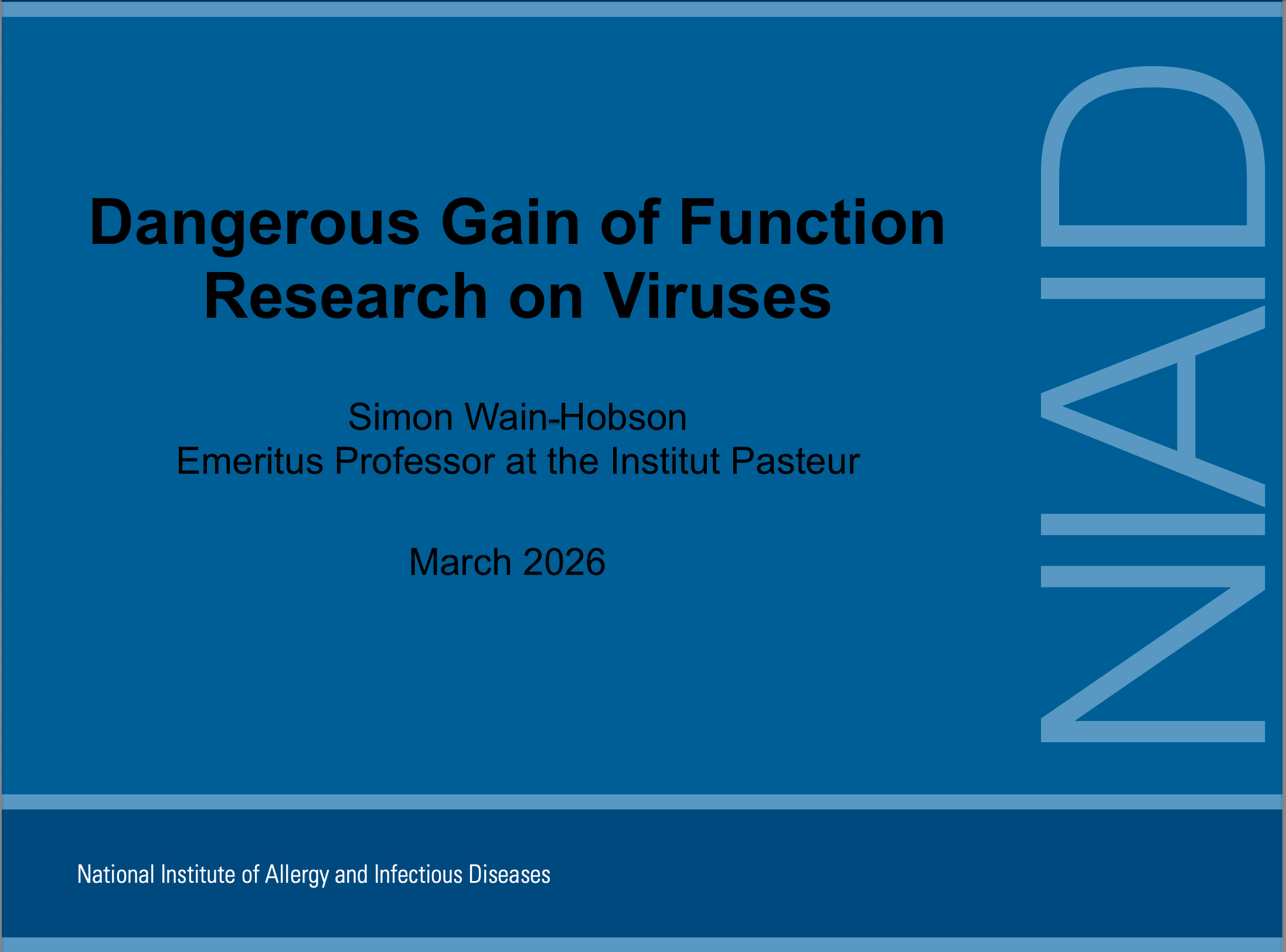
In his talk’s opening, Wain-Hobson called out the NIH and several scientists for obfuscating the meaning of gain-of-function research for well over a decade.

Around 2011, Ron Fouchier of Erasmus Medical Center and Yoshihiro Kawaoka at the University of Wisconsin conducted deadly gain-of-function research with H5N1 avian influenza virus. This research created a new and deadly virus that could spread through the air.

This was a potential biological weapon, meaning it had “dual use of concern.”

Wain-Hobson says the Fouchier/Kawaoka research was dubbed “gain-of-function” because that has a positive spin—you’re “gaining” something.

Since that time, scientists have tried to confuse and confound the difference between classical gain of function and these studies that created a deadly virus. Wain-Hobson places part of the blame for this on people at the NIH, and much of it on the American Society of Microbiology.
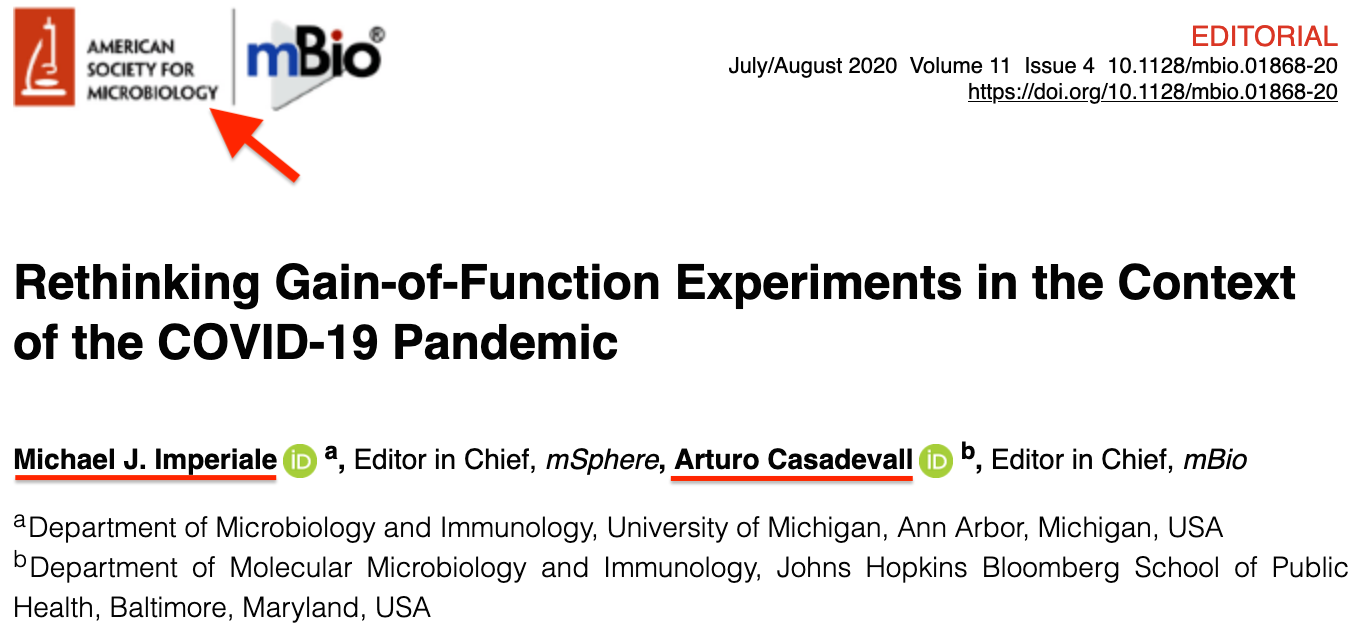
He also named professors Michael Imperiale and Arturo Casadevall as obfuscators, as well as Vincent Ranciello, who runs a Youtube channel that cheerleads for gain-of-function studies, while ignoring and downplaying the dangers.

“This has been a disservice,” Wain-Hobson said.

Wain-Hobson detailed the need for funders—meaning government agencies—and researchers to be honest about the dangers of pathogenic research.

Funders need to police research carefully, however, as scientists are too willing to ignore possible dangers to get grant money. He also warned that funders must be allowed to stop research, because they are responsible to the public.

“The ultimate in biosafety is protecting the public,” he said.

He cited the letter sent by Nobel Prize winners complaining when the NIH stopped a grant by Peter Daszak with EcoHealth Alliance. “The scientists cannot be egocentric and say, ‘We can override the safety and health of others.’”
Days before Biden exited the White House, his administration formally debarred both Daszak and EcoHealth Alliance from receiving federal grants.

“Scientists are not top of the heap,” he said. “They are using taxpayer’s money.”


He then spent time explaining the difference between “gain-of-function” and “dangerous gain-of-function” which he defined as research that threatens humans, their livestock, and agriculture plants.

Wain-Hobson denigrated the “infamous Proximal Origins” paper which he called out for having “no data.” Nature Medicine published this paper in March 2020, by lead author Kristian Andersen of Scripps Research, to distract from the possibility that the COVID virus came from a lab.

House Republicans have pointed to the influence of Tony Fauci on the paper, while House Democrats released a report and supporting documents that found Wellcome Trust’s Jeremy Farrar helped “organize and facilitate” the paper and “led the drafting process of the paper.” The paper’s authors failed to note Farrar’s contributions as required by ethics disclosure rules.

In an interview on the DisInformation Chronicle Podcast, virologist and former CDC Director Robert Redfield said the paper should be retracted.

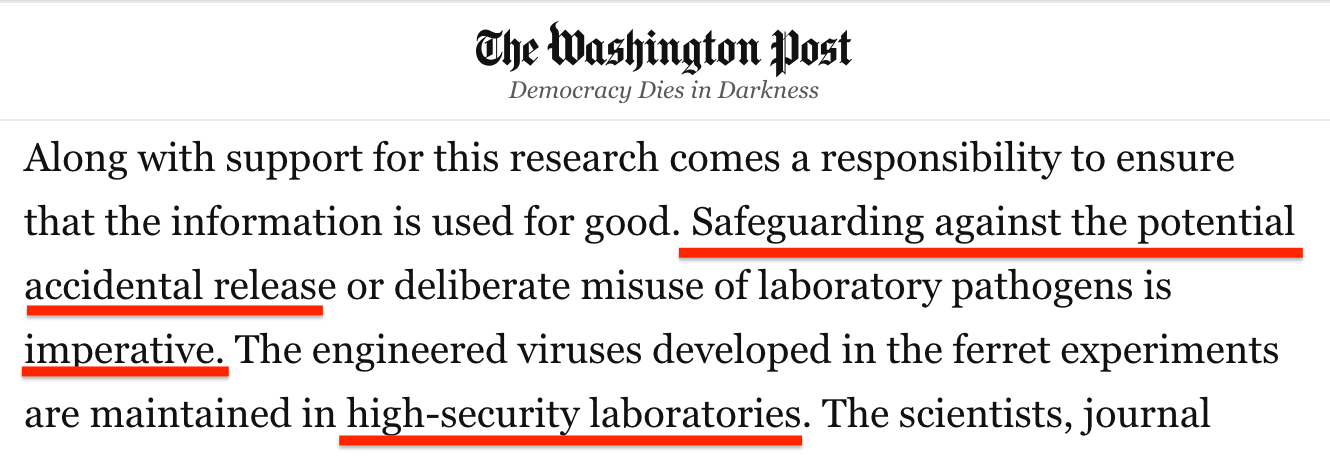
Finally, Wain-Hobson took NIH leaders to task for publishing a 2011 essay in the Washington Post titled, “A flu virus risk worth taking,” that curtailed debate around the dangers of virus research, at a time when the Fouchier/Kawaoka dangerous gain-of-function studies were being published. In their Washington Post essay, Collins, Nabel and Fauci stated that safeguarding against accidental release of dangerous viruses was “imperative” while assuring the public that these studies were taking place in “high-security laboratories.”
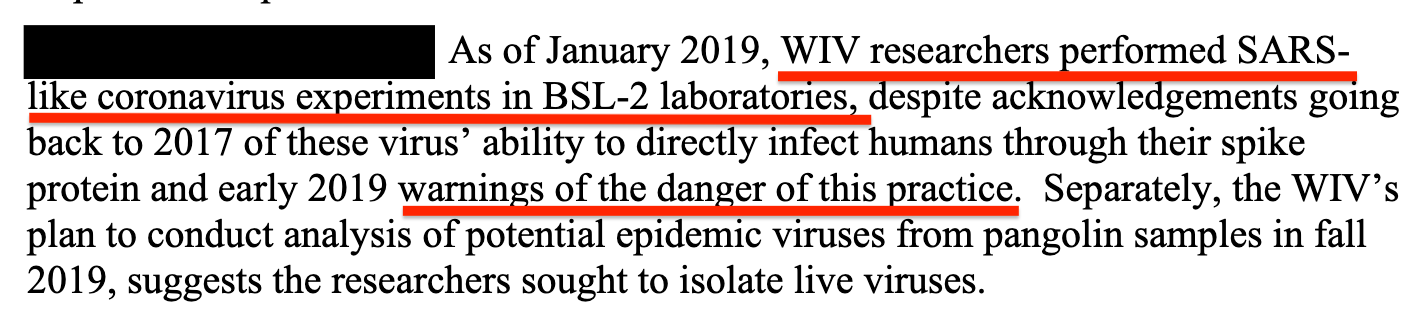
However, the Director of National Intelligence declassified a June 2023 report on the research conducted before the pandemic’s outbreak at the NIH-funded Wuhan Institute of Virology, concluding that dangerous gain-of-function studies were being conducted at BSL-2, a low level of biosafety, despite “warnings of the danger of this practice.”
“We can’t have the safety of society being dictated without discussion,” Wain-Hobson said. “I think that was a professional failure.”

https://disinformationchronicle.substack.com/p/leaked-video-virologist-simon-wain

Oxford Bio, Bristol Eye Next-Gen T-cell Engagers for Solid Tumours

 Collaboration leverages OBT's proprietary OGAP®-Verify discovery platform and drug development capabilities in alignment with BMS’s expertise to advance selected novel oncology targets ▪ This is OBT’s third major pharma collaboration within the past 12 months and reflects strong validation of the OGAP®-Verify platform's potential to drive oncology innovation ▪ OBT to receive an upfront payment and may be eligible to receive milestone payments, as well as royalties on net sales

https://oxford-biotherapeutics.lon1.cdn.digitaloceanspaces.com/OBT-BMS-2026-04-09.pdf

OVID: Wainwright price target raise to $4 on OV329/KCC2 confidence


HC Wainwright price target raise to $4 on OV329/KCC2 confidence drives 18.65% OVID surge.

H.C. Wainwright increased its price target on Ovid Therapeutics from $2.00 to $4.00 while maintaining a Buy rating, citing greater conviction in the OV329 program’s safety and potential as a best-in-class GABA-aminotransferase inhibitor following positive March 2026 Phase 1 data (no treatment-related adverse events at the 7 mg dose). The upgrade also highlights the upcoming KCC2 Deep Dive R&D event scheduled for April 14, 2026—announced by the company on April 8—which will showcase the first-in-class KCC2 activator portfolio, translational data, development strategy, and market opportunity for epilepsy and related disorders. This catalyst builds directly on recent momentum: the March private placement, OV329 indication expansion, Phase 1 clearance for OV4071 (triggering a warrant exercise window that could bring in up to an additional ~$54 million by April 17), and analyst reaffirmations such as Wedbush’s Outperform/$7 target. With the stock closing at approximately $2.60 on April 8, the upgrade and anticipation for next week’s event sparked heavy buying interest and the sharp intraday move. No new clinical data or company press release was issued on April 9.

https://finviz.com/quote.ashx?t=OVID&p=d

Needham Buy initiation, $37 target ignite MPLT surge on positive pipeline outlook


Needham Buy initiation and $37 target ignite MPLT's 18% surge on positive pipeline outlook.

Multiple Wall Street firms recently initiated coverage with Buy ratings on the clinical-stage biopharmaceutical company, citing the differentiated potential of lead candidate ML-007C-MA (an M1/M4 muscarinic agonist) for schizophrenia and Alzheimer’s disease psychosis. Analysts highlighted billion-dollar commercial upside, favorable tolerability and dosing versus competitors like Cobenfy, robust Phase 2 enrollment (ZEPHYR trial targeting topline data in Q3 2026), completed enrollment in the IRIS trial for autism spectrum disorder (also Q3 readout), Fast Track designation, and a strong cash position of approximately $453 million providing runway into 2027. This coverage—Needham on or around April 8-9 with a $37 PT (significant upside from recent levels near $24), TD Cowen on April 7, plus earlier positive notes from Canaccord and Stifel—drove renewed buying interest. The stock broke to new 52-week highs above $25.79, with elevated volume and intraday gains reaching approximately 17-18% on April 9 as traders reacted to the implied valuation and near-term catalysts. No new company press release occurred on the 9th; the move reflects momentum from these verifiable analyst reports building on the March 2026 clinical and financial update.

https://finviz.com/quote.ashx?t=MPLT&p=d

From Pixels to Prescriptions: How AI Is Reshaping Pathology in Oncology

 Whole-slide imaging is now a validated component of modern pathology practice, supported by increasingly robust foundation models that generalize across stains and scanners and by updated Clinical Laboratory Improvement Amendments (CLIA) guidance that clarifies digital and remote workflows (see part 1). Just as importantly, the same biopsy can now support triage, prognosis, molecular testing, and even treatment selection without additional tissue handling.

This convergence of validated digital slides, stronger AI backbones, and clearer regulatory footing sets the stage for the next shift: AI that doesn’t just detect cancer but informs treatment decisions.

Here is what’s cleared or designated today and how it fits into oncology practice.

First Image-Based Treatment Biomarker 

In August 2025, the FDA granted de novo authorization to ArteraAI Prostate. ArteraAI is the first AI-powered digital pathology tool cleared to provide both prognostic and predictive information in localized prostate cancer, creating a new product-code category for similar tools.

It analyzes biopsy whole-slide image plus clinical variables to estimate 10-year metastasis risk, prostate cancer-specific mortality, and the likelihood of benefit from treatment intensification (such as adding androgen deprivation therapy or androgen receptor pathway agents to radiation). It is included in NCCN Prostate (category 2A), and Medicare payment is established (effective January 1, 2024). Notably, FDA’s order includes a predetermined change control plan, allowing Artera to add scanner compatibility without full resubmission.

Consider a patient with high-risk localized prostate cancer preparing to start radiation. Traditional inputs include Gleason grade, prostate-specific antigen, clinical stage, and in some cases genomic classifiers. ArteraAI adds a morphology-derived estimate of treatment benefit, supported by validation anchored in datasets linked to trials such as STAMPEDE.

The shift is subtle but important. Instead of asking, “Is this patient high risk?” you can begin asking, “Is this tumor biologically likely to benefit from intensification?” This approach does not replace genomics or clinical judgment. It augments them with slide-derived biology.

The UK Vanguard Path program will evaluate how well the predictions made by ArteraAI align with real-world outcomes among more than 4000 men treated for prostate cancer over at least 5 years, measuring the AI’s real-world impact on treatment decisions and timelines.

Detection-Assist Tools 

Before predictive AI tools such as ArteraAI come assistive AI tools such as Paige and Ibex, which function as safety nets within routine pathology workflows.

Paige Prostate Detect was the first FDA-authorized AI in pathology, flagging suspicious foci on prostate core biopsies. It received class II designation through the agency’s de novo classification pathway in 2021. In April 2025, Paige PanCancer Detect received breakthrough device designation for detecting suspicious foci across multiple tissues and organs — the first such designation for a multitissue AI assist. Tempus acquired Paige in August 2025, merging approximately 7 million slides with multiomics data to accelerate the path from discovery to regulated tools.

Ibex Prostate Detect, an AI-powered cancer diagnostics from Galen Second Read, received FDA 510(k) clearance in February 2025. This tool flags cases initially signed out benign for re-review, producing case-level alerts and heatmaps of likely cancer regions — a pragmatic backstop in high-volume services.

These are assistive tools, not autonomous diagnosis. For oncologists, their value lies in reducing false negatives, standardizing triage, and supporting workforce-constrained pathology services.

Virtual Staining: Histology to Sequencing 

Virtual staining represents a broader shift in oncology AI, from tools that primarily detect cancer on slides to systems that actively improve downstream clinical workflows, including molecular testing, tissue utilization, and treatment planning.

ClearStain (Pictor Labs; research use in the US) generates a hematoxylin and eosin (H&E)-equivalent digital image from an unstained section destined for molecular testing. Pathologists can annotate tumor on the same section that undergoes DNA/RNA extraction, what you see is what you sequence. Proscia is integrating Pictor’s virtual stains into its Concentriq platform, signaling ecosystem uptake.

The implications are significant. This approach preserves tissue in small biopsies, improves tumor purity selection, reduces failure of next-generation sequencing (NGS) due to tissue depletion, and shortens turnaround time. For tissue-limited lung or prostate rebiopsies, this is immediately relevant. The conceptual shift: The diagnostic slide becomes an active guide for downstream molecular workflows.

Multimodal Models: What Comes Next 

Companies such as Noetik are training multimodal transformer models (OCTO/OCTO-VirtualCell) on paired H&E slides, spatial transcriptomics, spatial proteomics, and sequencing data from thousands of tumors (nearly 40 million cells). These systems simulate spatial single-cell gene expression in context.

They are not FDA diagnostics yet, but this is the pipeline for future computational biomarkers. Partnerships, such as those with Agenus, aim to derive predictive biomarkers for immunotherapy directly from morphology plus learned biology. The trajectory is clear: Detection, prognosis, treatment prediction, and pathway inference are all derived from the diagnostic slide. 

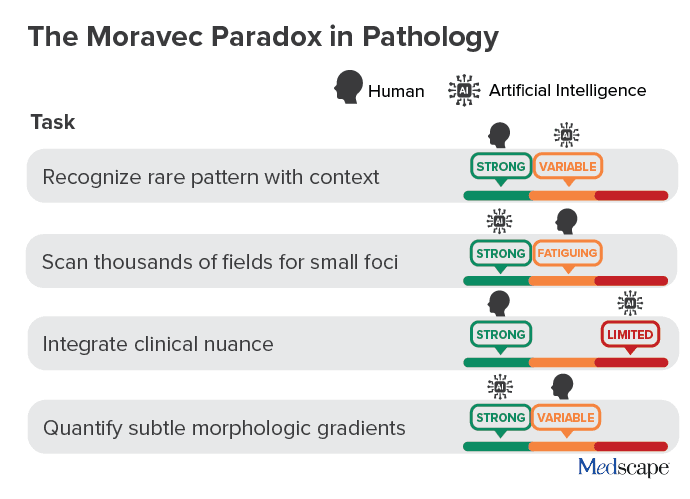
The Moravec Paradox in Pathology 

The Moravec paradox states that what is easy for humans is often hard for AI, and what is hard for humans may be easy for AI. In digital pathology, that dynamic is visible:

infographic

AI excels at large-scale scanning and quantification. Humans excel at contextual reasoning and clinical integration. The future is not replacement but division of labor.

What Oncologists Should Do Now 

Confirm whole-slide imaging readiness. Ask your pathology group whether primary diagnosis has been validated on the current whole-slide imaging platform according to College of American Pathologists guidance, including appropriate case mix and concordance. As a practical benchmark, many programs cite at least 60 cases and more than 95% concordance.

Also ask how performance is monitored over time, particularly when scanners, stains, or viewing software change.

Then ask the key operational question: Can your current viewer support third-party AI modules? This determines whether you can adopt one tool now and scale later without rebuilding infrastructure.

Clarify remote review policy. Ensure that your pathology and compliance teams have a clearly defined operational policy for remote digital review. Under current CLIA guidance, remote review of digital slides is permitted under the primary CLIA certificate when required conditions are met. Remote cytology digital review requires separate certification after March 23, 2026, and physical glass slides cannot be reviewed remotely under the primary certificate.

For oncology teams, this matters because digital workflows can expand access to subspecialty expertise across sites, but only if implemented within a compliant framework.

Build a prostate decision pathway. If you treat localized prostate cancer, determine whether ArteraAI ordering is enabled and incorporate it into multidisciplinary discussions when intensification decisions are on the table. Set expectations that this is an AI-enabled biomarker augmenting clinico-pathologic risk and genomics — not replacing them. Note Medicare payment status in your pathway to reduce billing friction.

Pilot virtual staining where tissue is scarce. For NGS-bound specimens, ClearStain can preserve tissue and reduce sequencing failures. Align on indications, such as scant core biopsies, along with validation steps and appropriate reporting language. In the United States, these tools remain research use only unless locally validated.

What to Watch Next 

Expect a trickle-down effect from foundational-model class encoders, such as PLUTO-4, which will boost accuracy and generalization across multiple commercial tools — backbone upgrades you may not see named in reports. Pan-organ detection is also on the near-term horizon. FDA breakthrough designation for Paige PanCancer Detect suggests a “universal triage” across organ systems. Additionally, health-system impact data will soon become widely available through the National Health Service Vanguard Path program, which is set to provide prospective evidence for AI-guided treatment selection in routine practice.  

Bottom Line 

Digital pathology is no longer about viewing slides on a screen. It is about extracting additional biologic signal from tissue already collected, without another biopsy. 

When evaluating any AI tool, consider these three questions:

  1. What is the regulatory status: de novo, 510(k), or research use?
  2. Is it validated on our scanners and viewers?
  3. Does it change a treatment decision I make every week?

If the answer to the third question is yes, it belongs in the multidisciplinary conversation. The microscope isn’t disappearing. It’s becoming computational.

The next chapter will not be about whether AI can detect cancer; that question is largely settled. It will be about whether image-derived biomarkers can reliably guide systemic therapy, immunotherapy selection, and resistance monitoring across tumor types. As foundation models mature and more slide-based predictors enter regulated use, the diagnostic biopsy will increasingly function as a multiomic sensor with morphology, molecular inference, and treatment guidance layered into a single workflow. Our job as oncologists is not to chase every tool, but to integrate the ones that meaningfully improve decisions for the patient in front of us.

Thoughts? Drop me a line at Arturo.AI.MedTech@gmail.com or DM on X (@DrArturoAI. Let’s keep the conversation — and the foundational models — going forward. 

Arturo Loaiza-Bonilla, MD, MSEd, is the co-founder and chief medical AI officer at Massive Bio, a company connecting patients to clinical trials using artificial intelligence. His research and professional interests focus on precision medicine, clinical trial design, digital health, entrepreneurship, and patient advocacy. Dr Loaiza-Bonilla serves as systemwide chief of hematology and oncology at St. Luke’s University Health Network, where he maintains a connection to patient care by attending to patients 2 days a week. 

https://www.medscape.com/viewarticle/pixels-prescriptions-how-ai-reshaping-pathology-oncology-2026a1000akz