by Tilak Doshi via Tilak’s Substack,
The Financial Times reported on Good Friday that “more than 65 leading UK scientists” had signed an open letter, published as a Google Doc, urging the Government to abandon new North Sea oil and gas drilling in favour of renewables.
“Here is the scientific establishment speaking with one voice,” the FT tells us, warning against the supposed folly of extracting what remains of Britain’s hydrocarbon resources and to choose renewables that, according to the scientist-signatories, provide both energy security and “cheaper solutions [that] we have already, that we know work”.
Also on Good Friday, Catherine McBride OBE — co-author of the recently published report for the Great British Business Council on Britain’s climate policy-induced de-industrialisation and a plan to reverse it — published a Substack article on X titled ‘What the Greens, most MPs and the FT don’t understand about the North Sea oil and gas‘. Ms McBride and her co-authors have little time for the sheer illiteracy of the Greens and mainstream media in economic and energy issues related to the UK government’s punitive taxes on North Sea oil and gas production.
To point out that the “FT is nothing more than the Guardian with stock prices these days”, a “once mighty publications fallen into the abyss of wokery” would be only to shoot the messenger bearing the familiar pink newsprint. Let’s now turn to the message itself, lest one stand accused of employing ad hominem tactics.
What the so-called ‘consensus’ scientists say
The open letter from the 65 “scientists” declares with solemn authority: “Extracting North Sea fossil fuels will threaten lives and livelihoods.” It asserts that “around 90% of North Sea oil and gas has already been extracted”, that additional production “is unlikely to move prices”, and that the world already possesses “more global reserves of oil and gas than we can safely burn if we are to limit global temperature rise to below 2°C”.
Of course, the usual fire and brimstone warnings of climate damnation apply if we refuse to abide by ‘the Science’.
We will soon exceed the ambitious 1.5°C Paris goal. Any overshoot pushes our climate further out of balance, threatening catastrophic tipping points, including ones that could plunge the UK into a much colder climate in which we would struggle even to grow our own food.
As per the usual climate sermon, warnings of Armageddon are followed by promises of salvation: “As climate scientists, we urge leaders to look to the cheaper solutions we have already, that we know work.”
It is curious that the letter refers to “tipping points” that could plunge the UK into a much colder climate which they say would destroy British agriculture. Apparently, the climate scientists like to cover all bases, global warming or cooling.
The layman, conditioned by years of mainstream media headlines proclaiming scientific unanimity on climate matters, is meant to nod along. After all, so many experts cannot be wrong!
Yet this is precisely the illusion that the late Michael Crichton dissected so ruthlessly on scientific consensus. Genuine science advances through falsification and debate, not through petitions or press releases:
Let’s be clear. The work of science has nothing whatever to do with consensus. Consensus is the business of politics. Science, on the contrary, requires only one investigator who happens to be right, which means that he or she has results that are verifiable by reference to the real world. In science consensus is irrelevant. What is relevant is reproducible results. The greatest scientists in history are great precisely because they broke with the consensus. …There is no such thing as consensus science. If it’s consensus, it isn’t science. If it’s science, it isn’t consensus. Period.
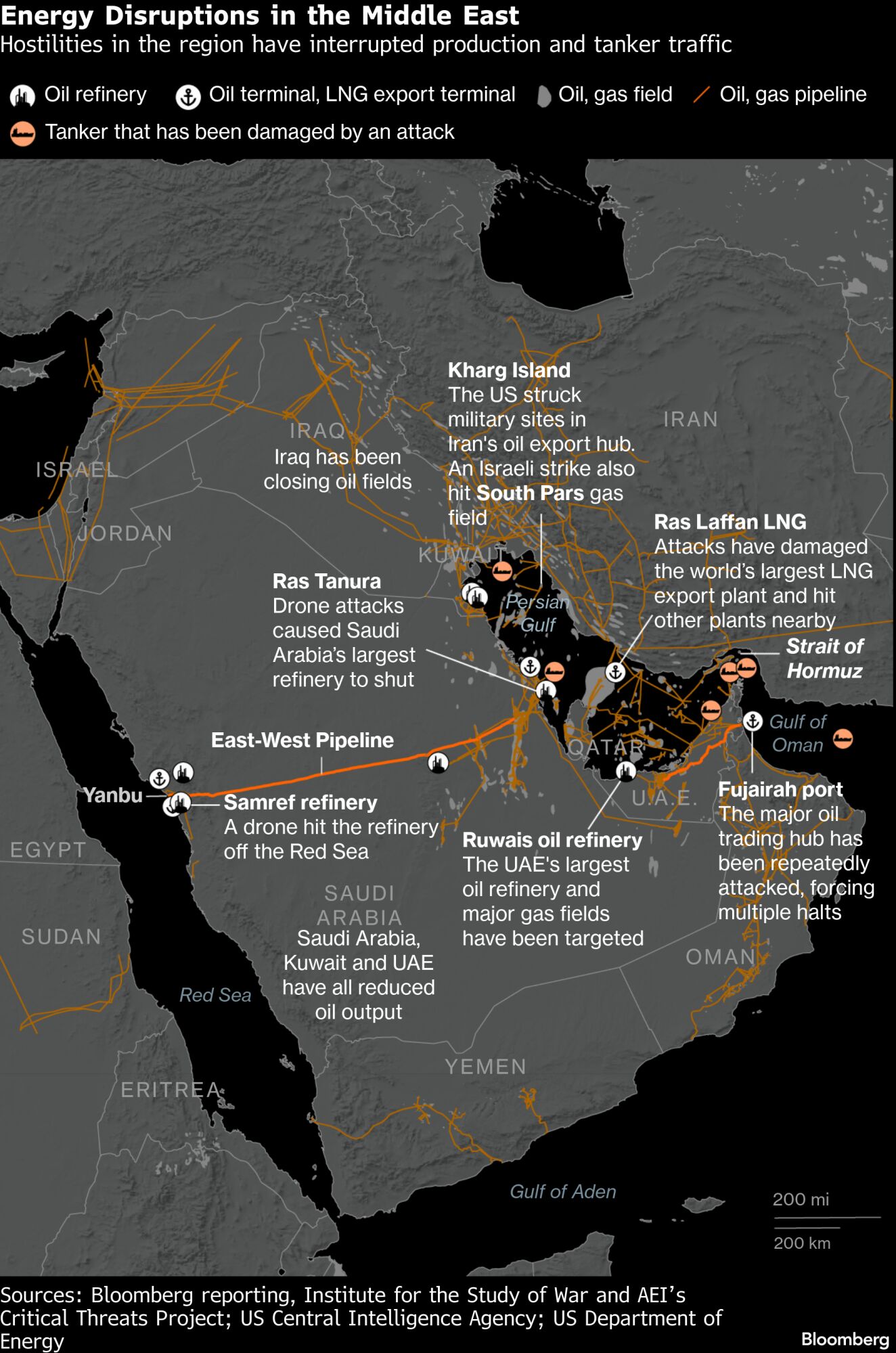
The North Sea letter is not a scientific paper. It is a political intervention dressed in lab coats. It reveals a familiar pattern: selective data, economic illiteracy and a refusal to confront the scale of global emissions realities — above all, those of China. Like China, other large developing countries such as India, South Korea, Japan, Indonesia, Thailand, the Philippines, Vietnam and Bangladesh are stepping up generation of coal-fired power to offset Liquified Natural Gas shortages created by the closure of the Strait of Hormuz. Even Germany, the world’s leading proponent of renewable energy, is seriously considering reopening some of its coal-fired power stations in response to the energy crisis caused by the war with Iran.
Who are these “climate scientists”?
Let us begin with the signatories themselves, the supposed “leading UK climate scientists”. The letter lists 65 names with affiliations and qualifications. On the face of the document alone, without external sleuthing, only a small minority display explicit indicators of hard-science credentials in climate-relevant fields — specific post-nominals such as FRMetS and FLSW, or clear roles at institutions like the British Antarctic Survey, National Centre for Atmospheric Science or Royal Meteorological Society.
By a quick AI-assisted count, based solely on what the letter itself states, fewer than a quarter of the signatories meet the minimal threshold of verifiable hard-science standing. The rest are listed with generic “Dr” or “Prof” titles, or none at all, attached to affiliations ranging from the NHS and Wiltshire Psychology Service to community energy groups, wildlife trusts and independent roles. Several entries provide no qualifications whatsoever. This is not the roster of a disinterested scientific academy. It is a coalition of activists, communicators and academics from adjacent or non-empirical fields, many of whom have long signalled their alignment with Net Zero orthodoxy.
The letter’s primary coordinator, Dr Ella Gilbert — a climate scientist and presenter at the University of Reading’s Meteorology Department with ties to the environmental NGO Climate Outreach – has been openly described in multiple reports as the driving force behind its circulation. Professor Ed Hawkins of the same institution played a key initiating role, posting on LinkedIn to solicit signatures and stating he had “written an open letter”. There is no public evidence of external financial direction or sponsorship; the effort appears to have been an internal academic-network exercise amplified through professional channels. Yet the very act of framing it as a consensus of “climate scientists” performs the rhetorical heavy lifting. It invokes the authority of science while sidestepping the awkward reality that science is not, and has never been, a democracy of signatures.
Mad Ed says: “North Sea oil and gas: no way”
The substantive claims fare no better under scrutiny. Take the repeated assertion that “around 90% of North Sea oil and gas has already been extracted”. This figure originates not from primary geological data but from a March 2026 analysis by the Energy and Climate Intelligence Unit, which aggregates North Sea Transition Authority (NSTA) projections of ultimately recoverable resources through 2050. Official NSTA data as of end-2024 records 47.7 billion barrels of oil equivalent (BOE) produced historically from the UK Continental Shelf, with 2.9 billion BOE of proven and probable (2P) reserves and a further 6.2 billion BOE in contingent resources—roughly 19% of what has already been extracted still potentially accessible.
Industry body Offshore Energies UK (OEUK) rightly notes that framing the basin as “93% drained” ignores the reserves-replacement ratio. Norway, operating under more supportive policies, has consistently replaced a higher share of its production through exploration. The UK’s low ratio of 14% over 2019-2024 reflects not inexorable geology but punitive fiscal terms, windfall taxes and licensing uncertainty under successive governments.
Only active exploration and production (E&P) investment can delineate the true commercial potential of remaining prospects. As the late economist Julian Simon observed, resources are not fixed endowments buried in the earth but functions of human ingenuity, technology and price. Proven reserves expand with higher prices or better recovery techniques; they are not a predetermined pie chart awaiting final division.
The open letter refers to “two proposed new oil and gas fields in the North Sea”, claiming that the likely lifetime emissions from them would be more than most individual nations emit in a year. Presumably the reference is to the Rosebank and Jackdaw oil and gas fields in the North Sea, with Rosebank being the largest untapped oil field in UK waters. Both are in advanced stages of development with significant infrastructure already in place and first oil could be delivered to shore by the end of 2026.
The open letter was launched in time to influence the debate over whether Ed Miliband, Secretary of State for Energy Security and Net Zero, should allow new production from the fields. He is under growing pressure to allow new production in the North Sea to combat what some call ‘the energy crisis’ sparked by the Iran war. Rachel Reeves has backed more North Sea drilling in a potential split with Miliband. The Chancellor said she was “very happy” to back exploration at Rosebank oilfield and Jackdaw gas field. Miliband, Labour’s chief Net Zero ideologue, is expected to make a decision on whether to grant licences for the two fields.
The Telegraph expects Miliband to block North Sea oil drilling, stating that he is “said to be unwavering in his opposition despite impending fuel shortages and surging oil prices”. In this, of course, Miliband is true to his “Mad Ed” designation, fiercely devoted to the UK’s immiserating “global climate leadership” role.
Economic and geopolitical illiteracy
The letter’s economic and geopolitical analysis is equally detached from reality. It laments “the volatility of oil and gas prices” that have “caused our energy and food bills to rocket — twice”, attributing this to dependence on “imported fossil fuels whose price is vulnerable to the actions of the world’s most authoritarian and least reliable leaders”. The implicit prescription appears to be greater independence through renewables. Yet this inverts the logic of comparative advantage that has enriched nations since David Ricardo.
International trade in hydrocarbons has historically buffered supply shocks precisely because diversified sources and spot markets prevent any single actor from dictating terms. The North Sea producers themselves demonstrated this in the mid-1980s by helping collapse the OPEC cartel’s administered pricing system. Britain – like most countries including large oil producers such as Saudi Arabia and Russia – remains a price-taker; incremental North Sea output will not set global benchmarks. But neither will it exacerbate volatility if it displaces imports. The alternative — deeper reliance on Chinese-manufactured solar panels, wind turbines and batteries, whose production is powered overwhelmingly by coal — merely shifts dependence to Beijing’s supply chains and the very fossil fuel infrastructure the letter condemns.
Here the letter’s silence on China’s emissions is deafening. The world’s largest emitter continues to approve coal-fired power stations at a furious pace that dwarfs Western renewables deployment, while its Nationally Determined Contributions under the Paris Agreement are little more ambitious than business-as-usual trajectories. Western Net Zero advocates prefer not to dwell on this, choosing hope over experience lest it complicate the narrative of renewable salvation.
Yet the arithmetic is merciless: even if the entire OECD ceased all emissions tomorrow — an impossibility — the impact on global temperatures by 2100 would remain marginal in IPCC-modelled scenarios, as Bjørn Lomborg has repeatedly demonstrated. The letter’s claim that “the likely lifetime emissions from two proposed new oil and gas fields in the North Sea would be more than most individual nations emit in a year” is true only in the most trivial sense; it ignores the fact that non-OECD emissions dominate the trajectory by far. Meanwhile, the UK’s share of global carbon emissions sits at 0.8%.
Our poor farmers
Farmers, meanwhile, receive the letter’s ritual concern: “rising prices and increasingly empty supermarket shelves”, “worst harvests in recent years” and “extremes of heat, drought, fire and flood”. Evidently, the letter’s signatories spent little time consulting actual IPCC studies. While the IPCC reports increases in heatwaves and some heavy-precipitation events in certain regions, it finds no clear global rise — only “low confidence” — in many of the extreme events (droughts, floods, tropical cyclones, wildfires) that are routinely invoked in climate alarmism.
One wonders when the signatories last consulted real life British farmers. The largest and most sustained rural protests of recent years — repeated tractor convoys into central London from late 2024 through 2026 — have centred not on ‘climate extremes’ but on the Government’s imposition of inheritance tax on agricultural assets above £1 million (later softened to £2.5 million after sustained pressure). Family farms face break-up, not because of marginal weather shifts but because of policy-driven cost pressures: the world’s highest electricity prices, diesel taxes exceeding 50% and regulatory burdens that make food production uneconomic.
The letter’s pastoral alarmism about “catastrophic tipping points” that “could plunge the UK into a much colder climate” is rhetorical. Earth’s 4.5-billion-year history records repeated glacial-interglacial cycles without human help; warm periods in antiquity and medieval times allowed, for instance, northern England to grow wine grapes and Greenland to support barley cultivation. The term “tipping point” itself is not a precise physical concept but a metaphor borrowed from non-linear systems. Large natural systems, per Le Chatelier’s principle in dynamic equilibrium, tend toward equilibrium when perturbed — not runaway instability.
Tropes and ideology
The signatories, like their fellow ideologues in academia, employ the cheap renewables trope. The letter urges leaders to embrace “the cheaper solutions we have already”. Renewables, we are told, are proven and cost-effective. This assertion rests on the familiar Levelised Cost of Electricity (LCOE) metric, which systematically understates the system-wide costs of intermittency: overbuilding, backup dispatchable generation (often gas-fired at inefficient part-load), grid reinforcement and balancing services. Full-cost-of-electricity analyses, incorporating adequacy and integration expenses, tell a different story — as detailed in the work of Lars Schernikau and others. Renewables’ “cheapness” is an artefact of subsidies, mandates and selective accounting, not a market verdict.
In the end, this letter, embraced and publicised by the FT, is less about science than about maintaining the climate-industrial consensus. The University of Oxford’s Smith School of Enterprise and the Environment came out recently with its analysis which echoes the conclusions of the open letter. In the open letter and in the Oxford analysis, there is no reference to the benefits of increased North Sea oil and gas production: added value to the nation’s GDP, improvements to Great Britain’s balance of payments as a net oil and gas importer, increases in Government tax revenues and oil and gas jobs and ancillary benefits in cities like Aberdeen which serve the offshore oil and gas industry.
Science advances not by petition but by relentless scepticism. The North Sea’s remaining resources — whether measured in billions of barrels of oil equivalent or in the potential unlocked by competitive exploration and production — are not a climate sin but a strategic asset. Ignoring them in favour of virtue-signalling autarky serves neither energy security nor affordability.
Britain’s leaders would do well to treat such letters with the scepticism they deserve: not as oracles, but as more noise in a debate that ideology has long sought to close. The real crisis is not the climate; it is the West’s self-imposed energy anorexia in the face of a multipolar world that has no intention of following suit.
https://www.zerohedge.com/political/leading-uk-scientists-letter-urging-abandonment-north-sea-ideology-masquerading-science