Search This Blog

Tuesday, May 12, 2026

Millions Of Student Borrowers Are Defaulting: They Are 40 Years Old On Average

 The NY Federal published its latest report on Household Debt and Credit for the first quarter: the report showed total household debt increased by $18 billion, just a 0.1% increase, in Q1 2026, to $18.8 trillion. 

Some details:

  • Mortgage balances shown on consumer credit reports grew slightly by $21 billion during the first quarter of 2026 and totaled $13.19 trillion at the end of March.
  • Balances on home equity lines of credit (HELOC) rose by $12 billion, marking the 16th consecutive quarterly increase. Outstanding HELOC balances now total $446 billion, $129 billion above the low reached in 2022Q1.
  • Non-housing debt balances declined by $15 billion, or 0.3%, from 2025Q4. This decline was driven primarily by a seasonal decrease in credit card balances, which fell by $25 billion and now stand at $1.25 trillion.
  • Student loan balances were essentially flat, decreasing by $6 billion and standing at $1.66 trillion.
  • Auto loan balances grew by $18 billion, to $1.69 trillion.
  • Other balances, which include retail cards and consumer finance loans, edged down by $2 billion to $562 billion.

The volume of newly originated credit held steady in the first quarter of 2026 for both mortgages and auto loans.  Mortgage originations, measured as appearances of new mortgages on consumer credit reports and including both refinance and purchase originations, were largely steady with $530 billion newly originated in 2026Q1.

About 59,000 individuals had new foreclosures on their credit reports, a slight increase from the previous quarter.

There were $182 billion in new auto loans appearing on credit reports during the first quarter.

Aggregate limits on credit cards continued to rise, with a $60 billion (1.1%) uptick in the first quarter, to ~$5.5 trillion.  Home equity lines of credit (HELOC) limits rose, albeit at a slightly slower pace, by $14 billion (1.4%), continuing an expansion in HELOCs that began in 2022.

The total balance of loans delinquent at least 30 days remained unchanged at 4.8% from the prior quarter after six quarters of steady increase. Still, the overall delinquency rate matched the highest level reported since 2017. Transition into early delinquency held steady for auto loans, but ticked down for credit cards, from 8.7% annually to 8.6%, and for mortgages from 3.9% to 3.8%. 

“Aggregate household debt levels rose slightly, with modest increases in most debt types offsetting a seasonal decline in credit card balances,” said Daniel Mangrum, Research Economist at the New York Fed. “Delinquency transition rates were mostly steady, while student loan delinquencies are returning to pre-pandemic levels.”

More concerning is that the percentage of loan balances that are seriously delinquent and set to transition to default/discharge continues rising - student loan delinquency rate increased to 10.3% of balances 90+ days delinquent, up from the 9.6% observed in 2025Q4 - and while it hit a new post-covid high for student loans after the Biden moratorium ended last year, the credit card picture is most dire, with the percentage there on pace to surpass the financial crisis record in the next few quarters. As shown below, transition rates into serious delinquency were mostly unchanged for auto loans and credit cards, but increased slightly for mortgages from 1.4 % annually to 1.5%. The student loan delinquency rate increased to 10.3% of balances 90+ days delinquent, up from the 9.6% observed in Q4 2025.

Some more details: 

  • The student loan transition rate into serious delinquency, measured as a four-quarter moving sum, declined from 16.2% in Q4 2025 to 10.9% this quarter, reflecting a slower pace of new student loan delinquencies in the first quarter relative to the previous year.
  • 2.6 million student loan borrowers who were more than 120 days past due had their loans transferred to the U.S Department of Education’s Default Resolution Group.

About 124,000 consumers had a bankruptcy notation added to their credit reports in 2026Q1, a pace unchanged from the previous quarter. The percentage of consumers with a third-party collection account on their credit report worsened slightly to 5.0 percent

Taking a closer look at the army of defaulting "students", the WSJ writes that millions of borrowers are defaulting on their student loans, and they are nearly 40 years old on average. That is nearly 2½ years older than the profile of a student-loan defaulter before the pandemic. Borrowers 50 and older are now at higher risk of default than younger borrowers. 

Since a pandemic-era pause on student-loan repayments ended in 2023, the federal government has been pushing people to start repaying their loans. In the fourth quarter of last year, those who failed to restart payments began defaulting, meaning they hit 270 days past due on their payments. The New York Fed estimated that more than 3.5 million people defaulted between October and March.

The Fed report offers a look at who is defaulting:

  • Most recently, the share of student-loan balances past due increased to just over 10%, nearing prepandemic levels.
  • The average borrower in default is more likely to live in the South, though borrowers are defaulting across the country.
  • Most of the newly defaulted borrowers weren’t past due on their student loans before the pandemic.
  • Borrowers who have defaulted on their student loans are struggling to make other debt payments, too. Nearly 40% of those with auto loans are past due, 56% with at least one credit card are past due and 20% with a mortgage are past due. Loan delinquencies have been broadly trending higher.
  • Some of these borrowers are likely parents who borrowed on behalf of their children, New York Fed researchers said.

The report found that Gen X borrowers, including those age 50 to 61, have the highest average student-loan balance of any age group. Many of them either reached college age as the modern federal student-loan system was forming or borrowed later, likely on behalf of their children.  

Just as concerning is that in late 2024, borrowers who missed their student-loan payments saw steep drops in their credit scores for the first time in years. 

The Trump administration has been revamping the federal student-loan system, emphasizing repayment. It is a reversal from the Biden administration, which pushed policies to reduce monthly payments for borrowers and get them closer to student-loan forgiveness

The biggest consequence for defaulted borrowers is that they could have their wages, tax returns and Social Security garnished. But the Education Department has delayed its garnishment plans. 

Finally, the Saving on a Valuable Education plan, or SAVE, one of the more affordable student-loan repayment plans introduced by the Biden administration, is ending, forcing millions of borrowers to transition to new plans. The new Repayment Assistance Plan, or RAP, is being introduced in July. As millions of borrowers transition out of SAVE, they will see their monthly payments increase under other income-based repayment plans. Many of them could also default on their student loans in the coming months, according to the Fed.

Source: NY Fed

https://www.zerohedge.com/economics/millions-student-borrowers-are-defaulting-they-are-40-years-old-average

China's Teapot Refiners Slash Output As Hormuz Crisis Crushes Margins

 Confirming our report from last Friday, Reuters reports that some independent refiners in China (also known as "teapots") are slashing their production rates as margins plummet to unprecedented negative levels, and demand weakens amid the continued paralysis of tanker traffic in the Strait of Hormuz.

Citing unnamed trade and industry sources, Reuters reported today that the average operating rates at so-called teapots in Shandong had fallen to 50%, from 55% in April. What’s more, the operating rates of independent refiners are likely to fall further as the war drags on, and refiners swing into losses that the Reuters sources estimate at between $74 and $88 per ton of processed crude oil.

As a reminder, on Friday we reported that Chinese authorities ordered private refiners to maintain high levels of gasoline and diesel supply, even at a loss, or risk their crude import quotas being slashed if they reduce run rates. If the private refiners move to cut processing rates to preserve margins amid soaring crude prices, they would see their import quotas – handed out by the government in quarterly or semi-annual installments – reduced in the coming years, the officials warned. Instead, they appear to have aggressively reduced their import demands, leading to a big drop in Chinese oil imports.

Reuters confirms that it now appears teapots have run out of options and are risking lower quotas to manage their losses. “Without cutting output, the losses are unbearable,” one of the Reuters sources said.

Asia, the biggest oil demand center globally, is facing the greatest pain from the closure of the Strait of Hormuz. Overall, the war could force up to 6 million bpd cuts to crude runs across Asia in April, as refineries face severe supply disruption with 65% dependency on Middle East crude.

China is better insulated than its neighbous thanks to a stockpile of an estimated 1.4 billion barrels that has been accumulated over the past couple of years. Yet as OilPrice notes, this supply cushion is limited, so China is doing a fine balancing act of keeping the domestic market well supplied to avoid sharp price spikes, especially since China's economy is increasingly dependent on the well-being of its Pacific rim neighbors (and trading partners) who are far less insulated from surging oil prices. 

https://www.zerohedge.com/energy/chinas-teapot-refiners-slash-output-hormuz-crisis-crushes-margins

Spencer Pratt

 by Byron King

LA politics burned down his house. Now, he’s burning LA politics.

“I’m not running to be a politician,” said Spencer Pratt, former television personality and now a candidate for Mayor of Los Angeles.

“I’m running because the current mayor (Karen Bass) let my house burn down.”

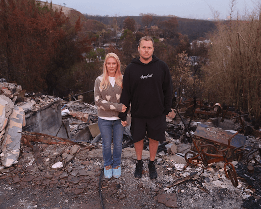
Spencer & Heidi Pratt amidst debris of former home in LA. Courtesy Pratt for Mayor 2026.

Kaboom! Great line.

It’s no wonder that Pratt is soaring in polls. He’s honest, serious, straightforward, sincere, sympathetic, original, energetic and refreshing; plus, he’s funny and totally incisive. Definitely, this guy resonates with voters. Hence, Pratt is raising funds, gaining endorsements, and remaking California politics, if not America’s.

Will Pratt be the next mayor of America’s second-largest city? Can he salvage LA from its trashy level of decline and urban implosion? Just now, it’s hard to say because strange things definitely happen on election days anymore.

Still, it’s “America 250,” and what better way to celebrate the country’s quarter-millennium than to liberate a formerly great city from the seedy, greedy grip of long-term, left-wing, progressive political dysfunction, corruption, incompetence and cronyism.

Meanwhile, the tale of Pratt’s political journey pertains not just to the Golden State, but offers a teachable moment to the entire nation. Let’s dig in…

Reality TV Meets LA Reality

At first blush, 42-year-old Spencer Pratt is an unlikely candidate to run a city, let alone a really big place like Los Angeles.

Still, he begins with solid bones, so to speak. Born and raised in LA, he’s a home-boy USC grad who went into a local industry, namely the entertainment business. There, Pratt played roles that portrayed him as a bad guy; although, of course, in Hollywood that’s also what actors call “work.”

“Yes, I was a bad guy,” Pratt explained in one interview. “That was my job. I worked with show-creators, producers and scriptwriters to be a bad guy. And I made good shows that people wanted to watch, which led to good ratings.”

(Note – Pratt discusses his career in a recently published book entitled The Man You Love to Hate: Confessions from a Reality TV Villain.)

Meanwhile, ratings are the cash register of the entertainment biz. And Pratt’s strong ratings led to more than a few handsome paydays. During one stretch, Pratt’s income was so good that he and his wife Heidi bought a multimillion-dollar home in tony Pacific Palisades. (Well, back then it was tony. Not anymore, as we’ll discuss below; and see here for a related article I wrote last year.)

For Pratt, his home and former life amidst the LA show biz crowd burned down on January 7, 2025, at the beginning of several weeks of massive wildfires that scorched the region.

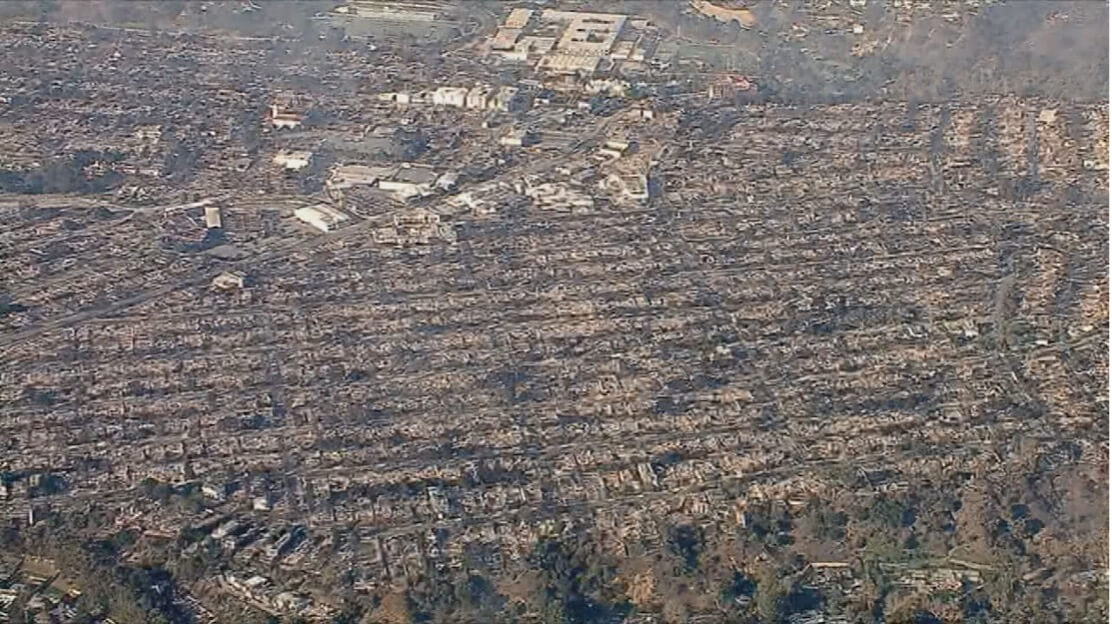
Pratt’s house went up in flames, along with much else. In fact, those LA fires burned about 90 square miles, destroyed more than 18,000 homes and structures, killed at least 31 people and forced more than 200,000 to evacuate. Insurance estimates placed losses north of $250 billion.

Pacific Palisades post-fire, January 2025. Courtesy ABC News.

During the conflagration, flames jumped from building to building. But in many neighborhoods water mains were empty and fire hydrants didn’t work. Not that it mattered because several of LA’s key reservoirs were empty, drained and never refilled by officious, know-it-all bureaucrats.

Even adjacent to the Pacific Ocean – absolutely, an aqueous firefighting resource – many areas burned to the ground for lack of equipment simply to pump seawater ashore and squirt it from a hose.

LA burned to the waterline; i.e., the Pacific Ocean! Courtesy U.S. Army Corps of Engineers.

On streets across the city, the LA fire department lacked sufficient firefighting trucks. In its fiscal wisdom, the city had retired equipment without replacement; or the fire department lacked funds for normal maintenance after the Bass administration raided the budget to fund so-called “homelessness” programs and other boondoggles.

And while LA burned, Mayor Bass was on a political junket to Africa, in Ghana to be exact, and nowhere to be seen in the early days of flaming disaster.

Burned Again, After the Fires

Immediately after the fires, politicians lined up and promised help. Clear the debris! Rebuild fast! Permits forthcoming! Blah, blah, blah. Yeah, right…

A year later, per Fox News, a mere 12 building permits were issued for reconstruction in Pacific Palisades. And in the past 17 months, just two new houses have been erected amidst the ruins, one of which is a “spec” by a builder who bought land from a seller who just wanted to cash out and get away from the entire mess.

Instead of helping citizens who lost homes rebuild, the Bass administration and her LA city bureaucracy placed roadblock after roadblock: new zoning and land use rules, extensive permits, costly filing fees, architectural reviews, endless checklists. And this is on top of how property owners must battle insurance companies over the amount of fire coverage (long story).

Along the way, several thousand displaced people have simply sold their former real estate to insiders, speculators and developers, more than a few of which are foreign corporations, and some apparently funded from Chinese sources.

Downtown, at City Hall, and up north in the state capital of Sacramento, the prevailing push is to rebuild Pacific Palisades with a large element of so-called “low-income” housing.

In other words, we see here a political land grab from former homeowners. The system ties up burnt-out homeowners in red tape, waits them out, wears them down, and then takes their property to advance the cause of Social Justice and the Nanny-Welfare State. It’s a massive racket between well-connected developers and local, county and state government.

Meanwhile, as things currently stand in California, multi-billions of dollars per year are already dedicated to… ahem… “housing the homeless,” and yet the numbers of people on those LA mean streets never seem to decline. (Long story; scandalously long.)

Campaigning for Competency

Pratt’s frustration with unaccountable, incompetent, uncaring government prompted led him to toss his hat into the political ring. “I saw who was running,” he said, “and it was the same exact people who caused the problems in the first place. So, I stepped up.”

Now, Pratt is staging a fast-growing, populist-style campaign, and in California no less; a state defined – and ossified – by two decades of single-party political dominance, certainly in LA.

“I’m running against incompetency,” Pratt said. “I’m running against complacency. Against the idea that these politicians are entitled to power, and to spend taxpayer money on whatever they want, no matter how bad the result. My campaign platform is common sense.”

Asked about his lack of past political experience, Pratt quickly notes, “The people who run things have all this supposed ‘experience,’ and look where we are.”

He explains that his campaign has been working with a long list of outsiders who will be pleased to step up and play roles in bringing better governance to LA if (when) he wins the election.

Pratt points out that, “California is home to some of the smartest people in the world. Many of them live in or around LA. And none of them seem to be working in the Bass administration.”

Meanwhile, “The LA region is among the wealthiest spots on the face of the earth,” he says. “We ought to be an economic powerhouse, gleaming like Dubai or Singapore. But instead, we have miles of homeless camps. We have drugs everywhere. Feces on the sidewalks. Crime. Bad schools. Broken infrastructure. Boarded up buildings where nobody can start a business.”

In a recent interview with CBS News, Pratt was filmed at his current abode, a trailer parked on the site of his burnt-out home in Pacific Palisades. “My opponent lives in a three-million-dollar home. I live in a trailer, a year after my house burned down. And after my parents’ house burned down. And my friends’ houses. And ten thousand other people’s houses.”

But neither is Pratt a single-issue candidate. For example, in another discussion he explained how LA is unprepared for a mass-casualty event.

“It’s not just last year’s fires,” he said. “Already, much of the underbrush has grown back and the city isn’t clearing fire breaks. And LA is unprepared for even a modest earthquake, and we know what kind of damage that would cause because we’ve seen it before.”

Plus, Pratt has a more than respectable approach to many other basic issues of city governance: how to deal with homeless people, drugs, crime and criminals; how to promote growth and economic development, repair infrastructure, and much more.

Indeed, it’s fair to say that Pratt has as much of a campaign package as anyone else, if not more. But it doesn’t matter if he doesn’t win.

Shock & Awe Social Media

So, what’s Pratt’s pathway to the mayor’s office? Well, here’s where his bad boy, reality TV past comes in handy.

Pratt understands that the way to break through the California media market is with some level of spectacle, but not just gratuitous sound and light. Thus, his ads are creative gems that offer a sharp, honest, reality-based, easily understood political point, delivered with pithy humor.

One of Pratt’s first ads was a homemade effort that required about six hours to devise and has already amassed over 20 million views. Numerous other Pratt ads are similarly impactful: a mix of funny sketches that include devastating political points about how out-of-touch is the current political class. (These ads are easily located with a simple You Tube search.)

Pratt eschews typical political pabulum. He knows that California is a one-party state run via a tight, mostly closed political-media system that maintains the Left in power. In other words, it’s next-to-impossible for an outsider to break through to the public by conventional means; other candidates have tried in the past and spent hundreds of millions of dollars on losing campaigns.

With this in mind, Pratt’s road to success is to mobilize public opinion via social media. His ads must land hard, and then go viral; that is, go over, under, and around the roadblocks of conventional television, radio, print and even established online venues.

Pratt’s anchor-narrative – and it will continue, no doubt – has been the loss of his house to the Palisades Fire: “Karen Bass let my house burn down.” Yes… very emotive.

But now that Pratt has people’s attention, his narrative is expanding. He can’t just be the “burned house” guy. So, he campaigns honestly on issues that quickly relate to other, widespread levels of dissatisfaction: homelessness, crime, drugs, urban decay, etc. That, and massive waste of billions of taxpayer dollars on failed boondoggles. At root, Pratt tears the mask away from standard California zombie-party politicking.

For Pratt, the political idea must be to mobilize and build a voter base via social media. Clearly, he has caught the wave of broad public opinion that’s dissatisfied with progressive, expensive, thoroughly ineffective Left-wing government.

Serendipitously, Pratt’s engaging ads have sparked a cottage industry of creative, independent imitators and spinoffs, many of them constructed from astonishing displays of visual AI. One ad depicts Pratt as Batman fighting crime, and thoroughly mocks the current crop of California political frauds.

So, Spencer Pratt is a blast of fresh air; but can he prevail? Will he be the next mayor? Well, he’s coming on strong right now. And the California primary is June 2nd. We’ll see, of course, and then we’ll see what happens in the November elections.

But clearly, Pratt is out to change Los Angeles, to recapture governance, kick out the hard Left, and bring some basic honesty and sanity back to the streets.

At an even higher level, LA offers hope to the nation. Because if the City of Angels can come back from the brink of Perdition, it says much about many other American jurisdictions where political dysfunction, corruption, grift, graft and incompetence also run deep.

Spencer Pratt. Bad guy. But you can call him “Mr. Mayor.” Indeed, maybe even America’s Mayor.

https://dailyreckoning.com/spencer-pratt/

Saudi Arabia Secretly Launched Attacks On Iran At Height Of Epic Fury

First it was revealed this week that UAE had directly attacked Iran in retaliatory strikes earlier in Operation Epic Fury, and now it has come to light that the Saudis did the same, and in multiple strike operations.

Reuters reports Tuesday that "Saudi Arabia launched numerous, unpublicized strikes on Iran in retaliation for attacks carried out in the kingdom during the Middle East war, two Western officials briefed on the matter, and two Iranian officials said."

"The Saudi attacks, not previously reported, mark the first time that the kingdom is known to have directly carried out military action on Iranian soil and show it is becoming much bolder in defending itself against its main regional rival," the report continues.

"The attacks, launched by the Saudi Air Force, were assessed to have been carried out in late March, the two Western officials said," Reuters notes further. One of the sources described this military actions as "tit-for-tat strikes in retaliation for when Saudi [Arabia] was hit."

The revelation suggests that even as the Trump White House tried to present this is a very limited war, or even a mere US "excursion" - as Trump previously said, it was on the brink of spiraling into an all-out regional war involving Gulf allies hitting back directly at the Islamic Republic.

By and large the Gulf allies relied solely on the US and Israel to pummel Iran during the prior 38 days of heavy bombing which marked the peak of Operation Epic Fury.

This as the Gulf absorbed the bulk of Iran's retaliation. Iran sent hundreds if not thousands of ballistic missiles and drones on Gulf energy, infrastructure, and even central areas of cities.

It had remained at the time an open question of whether countries like Saudi Arabia, UAE, Qatar and Kuwait would actually then go on the offensive. It seems that to some degree they did, and the public didn't know about it.

Neither the Saudis nor Emirates have publicly acknowledged direct attacks on Iran, and per the new Reuters reporting Tuesday:

Saudi Arabia has meanwhile sought to prevent the conflict from escalating and has stayed in regular contact with Iran, including via Tehran's ambassador in Riyadh. He did not respond to a request for comment.

The senior Saudi foreign ministry official did not directly address whether a de-escalation agreement had been struck with Iran, but said: "We reaffirm Saudi Arabia's consistent position advocating de-escalation, self-restraint and the reduction of tensions in pursuit of the stability, security and prosperity of the region and its people."

Iranian officials declared they were primarily targeting US assets and military bases, and further vowed to 'punish' these countries for ever hosting American bases in the first place.

But this new info showing that the Saudis and UAE in had already in effect joined the US military campaign marks yet more evidence of escalation. The ceasefire meanwhile seems effectively dead at this stage. NBC is now reporting the Pentagon actually considering re-naming Iran war ‘Sledgehammer’ if ceasefire collapses.

https://www.zerohedge.com/geopolitical/saudi-arabia-secretly-launched-attacks-iran-heigh-epic-fury

CDC Alerts Clinicians About Potential for Imported Hantavirus Cases

 The CDC has issued a Health Alert Network (HAN) health advisory on hantavirus, urging clinicians to be aware of the potential for imported cases of hantavirus disease in connection with an outbreak of Andes virus aboard a cruise ship.

While the risk of broad spread in the U.S. is "considered extremely unlikely at this time," the agency noted that early symptoms can be easily confused with influenza or other viral illnesses. In addition, the virus may not be accurately detected in body secretions and excretions within the first 72 hours of symptom onset, so testing should be repeated after that window, the agency warned.

About 30 passengers disembarked the ship on April 24, returning to their home countries, including several Americans. Several state health departments -- including Arizona, California, Georgia, Texas, and Virgina -- confirmed to MedPage Today that they are monitoring individuals in their respective states. New Jersey also is monitoring two people who were on the same flight as a woman who was symptomatic on board and later died. Maryland also announced it is monitoring two people who were on that flight.

Spanish woman who was on that flight also has developed symptoms and is being monitored. A Dutch flight attendant from that flight who had symptoms and was being treated recently tested negative for the virus.

The CDC said that symptoms typically appear 4 to 42 days after exposure -- though some reports have suggested up to 8 weeks -- and early symptoms can include fever, headache, muscle aches, nausea, and fatigue.

About half of patients experience headaches, dizziness, chills, and gastrointestinal symptoms including nausea, vomiting, diarrhea and abdominal pain, the agency said.

Late symptoms appear about 4 to 10 days after the initial phase of the illness and can include coughing, shortness of breath, and chest tightness.

However, patients can deteriorate rapidly, and delayed care reduces the chances of survival, CDC said. In severe cases, extra corporeal membrane oxygenation (ECMO) can significantly improve survival if started early.

Also, the critical phase of the illness is fairly short and survivors can recover quickly, CDC said.

Clinicians should include hantavirus pulmonary syndrome in the differential diagnosis for symptomatic patients who've had at least one epidemiologic risk factor, including direct physical contact or spending time in close or enclosed spaces with a symptomatic person with Andes virus; exposure to an infected person's saliva, respiratory excretions, or other body fluids through sharing utensils or handling contaminated bedding; or breaches in infection prevention and control precautions.

These patients should also be tested for COVID, influenza, and other common causes of GI and febrile illness, CDC said.

The agency also recommended that healthcare providers follow its guidance for Andes virus infection control in healthcare settings when patients are suspected to have the disease. It recommends placing them in an airborne infection isolation room, as well as use of a gown, gloves, eye protection, and an N95 or higher-level respirator when entering the patient's room.

People with hantavirus disease are generally only infectious while symptomatic, the agency said. Andes virus is the only type of hantavirus that has documented human-to-human transmission. It's rare and typically requires prolonged contact with a symptomatic person.

From 1993 through 2023, there have been a total of 890 lab-confirmed cases of hantavirus in the U.S., with a case fatality rate of 35%.

On Friday, the CDC said it was planning to repatriate the American passengers from the cruise ship after it docks in the Canary Islands, which is expected to happen on Sunday.

They'll be flown on a U.S. government medical repatriation flight to an Air Force base in Omaha and will be transported to a national quarantine center at the University of Nebraska Medical Center.

In a statement, the agency also said it had developed health guidance for those American passengers, which was delivered by the U.S. State Department. It also deployed a team of epidemiologists and medical professionals to the Canary Islands.

The HAN provided a disease timeline, beginning with the May 2 notification to the World Health Organization (WHO) of a cluster of severe acute respiratory illness among passengers and crew of the ship. At that time, there had been two deaths and one critically ill passenger.

As of May 8, WHO reported six confirmed cases, two suspected cases, and three deaths.

Investigations continue to assess the exposure risk of all American passengers on the ship or who may have been exposed to an infected cruise ship passenger on an aircraft, the agency said.

The ship left Argentina on April 1, traveling across the South Atlantic Ocean and stopping at several remote locations including Antarctica, South Georgia Island, Tristan da Cunha, St. Helena, and Ascension Island. It carried 147 people (n=86 passengers; 61 crew) from 23 countries.

https://www.medpagetoday.com/infectiousdisease/generalinfectiousdisease/121192

Autism-Vaccine Researcher Arraigned in the U.S.

 Poul Thorsen, MD, PhD, a Danish researcher who co-authored key papers demonstrating no links between childhood vaccines and autism, was arraigned on federal wire fraud and money laundering charges after his extradition from Germany, the Department of Justice said.

Thorsen was a co-author of a 2002 study published in the New England Journal of Medicine that offered strong evidence based on a cohort of 500,000 Danish children that refuted the hypothesis that measles, mumps, and rubella (MMR) vaccination caused autism.

He also was part of a 2003 ecological study in Denmark published in Pediatrics that did not support a correlation between thimerosal-containing vaccines and autism incidence.

In 2010, Aarhus University in Denmark discovered a "considerable shortfall" that involved U.S. grant funds Thorsen administered and referred the matter to the police.

A news report in The BMJ at the time included interviews with CDC staff who said that the research Thorsen worked on remained valid despite the missing funds. The lead author of the thimerosal study also explained to The BMJ that Thorsen's contribution was "more administrative than scientific."

According to the Justice Department, the CDC awarded more than $11 million to two Danish government agencies to study links between autism and vaccine exposure, cerebral palsy and infections during pregnancy, and childhood development and fetal alcohol exposure.

Thorsen became responsible for administering the CDC research funds and allegedly misappropriated more than $1 million in CDC grant funds by submitting fraudulent documents to the Danish government, Aarhus University, and a Danish hospital, the Justice Department said.

Between February 2004 and June 2008, he allegedly submitted more than a dozen fraudulent invoices bearing a forged signature of a CDC laboratory section chief, stating that a CDC laboratory had performed work and was owed grant payments. Relying on these invoices, Aarhus University transferred hundreds of thousands of dollars to CDC Federal Credit Union accounts it believed belonged to the CDC, the Justice Department said. After the transfers, Thorsen allegedly withdrew the proceeds for personal use.

After a grand jury in Atlanta indicted Thorsen in April 2011, a federal magistrate judge issued an arrest warrant. Thorsen remained in Denmark for nearly 14 years until June 2025, when authorities arrested the 65-year-old researcher in Germany, based on an INTERPOL Red Notice tied to the April 2011 warrant.

Earlier this year, Germany agreed to extradite Thorsen to stand trial on two counts of wire fraud and nine counts of money laundering. On May 7, 2026, he was returned to the U.S. in federal custody and arraigned.

He will be detained without bail pending further proceedings, the Justice Department stated. The case is being investigated by the HHS Office of Inspector General.

https://www.medpagetoday.com/neurology/autism/121234