Search This Blog

Saturday, July 7, 2018

NMC HEALTH : UAE’s health care can still take in more hospital beds


The UAE’s health care sector could still do with a few more hospital beds.
“Currently, the UAE [still] has the lowest hospital bed density (number of hospital beds per 1,000 residents) available in the GCC,” said Prasanth Manghat, CEO and Executive Director at NMC Health plc. “UAE’s vision to rank among the world’s Top 20 health care markets presents a renewed focus on health care, while mandatory health insurance would bring in more capacities and create the bedrock for an emerging medical tourism market.”
As of now, Abu Dhabi and Dubai have in place compulsory medical cover for all residents, while the Northern Emirates could be headed in the same direction. Some insurance industry sources say the first steps could be taken even as early as later this year.
“The utility of insurance has been realised — in Abu Dhabi it has matured to a larger extent as against elsewhere in the UAE,” said Manghat. “It has gone through evolutionary phases of free-for-all to allegations of over-diagnosis to co-payment.
“Excluding Abu Dhabi and Dubai, it still has to kick off. With the vivid dynamics of the migrant population, the concept of medical insurance and its contribution to the sector would always remain thematic.”
Whatever be the status for compulsory medical insurance for all in the Northern Emirates, the UAE overall could see the number of hospital beds rise to 14,000 by end 2020. That would come about from a 3 per cent annual growth over the next two years. For comparison’s sake, the number of hospital beds in 2010 was estimated at just under 8,000.
“UAE is among the top 20 countries for health spending per capita and the country accounts for 26 per cent of the total health care spending by GCC governments,” said Manghat. “All the money would translate into creating [new] capacities and capabilities.”
Some in the industry reckon that much of the required capacities are already in place to serve the needs of the resident base for the next three to five years. That after putting in significant investments in the first seven years of this decade, health care operators should pause for breath. That instead of focusing on just adding new beds, the emphasis of upcoming investments should be on specialised care rather than create more capacity in the primary health care space.
Ageing population
Manghat, however, argues that such broad assumptions cannot be made, and that it could vary with the emirate, “The growth would come from ‘specialised’ capability creation in Abu Dhabi [and] capacity creation in Dubai and especially the Northern Emirates,” the CEO added. “Other factors would be the ageing population and an increase in chronic diseases coupled with lifestyle diseases.”
For leading health care operators in the UAE, it means keeping one eye on growth chances and the other on an ever increasing cost of investment and operations. Industry feedback suggests that raising debt finance has also tightened up considerably in recent quarters.
According to Manghat, “The cost could be broken down in two parts — first is attributed to the money while the other is attributed to time. Not taking into account the real estate costs — as it could be vary based on location, etc — the cost of creating new capacities depends upon the type of facility is being created as in secondary-, tertiary- or quaternary care.
“A mid- to high-level tertiary care facility could cost anything between Dh1.5 million to Dh3 million per bed. The costs would always go up as medical technology is improving and the manpower is coming as more and more specialised and trained. These costs are almost similar all across the region.
“On the cost in terms of time, the regulatory approvals have always been forthcoming as the fastest in the UAE as compared to elsewhere in the region.”

‘Smart’ antibiotic may swat commonest bacteria infection in US hospitals


The most common health care-associated bacterial infection in hospitals in the United States is Clostridium difficile. This pathogen secretes toxins that trigger diarrhea and colitis in 500,000 patients annuallykilling approximately 29,000 people each year, and all at an annual cost to the U.S. health care system of approximately $6 billion. Ironically, exposure to antibiotics dramatically increases the risk of developing a C. difficile infection (CDI).
There are several reasons for this paradox. The current antibiotics used in clinical practice kill many  in the gut as well as the pathogenic target organism. This loss of good microbes causes an unhealthy shift in the bacterial population in the gut that is referred to as dysbiosis. After the beneficial bacteria are wiped out, C. difficile occupies the void left behind.
Treating CDI with  may in some cases make the situation worse. In a sense, the antibiotics we currently use to treat CDI patients are the same drugs that initially created the ideal conditions in the gut for this pathogenic microbe to flourish and cause infection. This helps explain why these infections persist and recur in between 15 and 30 percent of patients after their first antibiotic regimen.
Our team is focused on addressing these clinical treatment gaps for CDI by developing a new kind of antibiotic that does not disturb the beneficial microbes of the gut the way that conventional antibiotics do. To do this, our team is developing drugs that are inexpensive to produce and which are easily modifiable, so that the work we do on C. difficile can be potentially applied to other bacteria.
Our team is developing new targeted antibiotics that only kill C. difficile. We previously published the first paper on using specially designed slivers of DNA to fight CDI. Our most recent publication provides further proof of concept that these pieces of DNA are able to silence genes that are vital for this microbe to survive.
A new weapon
Much of the monetary cost of CDI is driven by the persistent infections and high recurrence rates, which require multiple rounds of antibiotics and longer hospital stays. C. difficile is unique among the bacterial infections affecting humans because it thrives when the gut is in disarray after antibiotic treatment.
Recently, fecal microbiota transplantations (FMT) – microbes collected from the feces of people with healthy guts – have been shown to be be an effective therapy for recurrent CDI. However, safety and efficacy for its use among inpatients with life-threatening CDI, issues regarding reimbursement from insurance companies, and social awkwardness surrounding the medicinal use of human stool currently limit FMT.
We have developed a completely new type of drug that uses small pieces of DNA to disable critical genes in this microbe. Our work has demonstrated that our custom DNA pieces – which we call antisense oligonuceotides (ASOs) – can potentially treat CDI and avoid the pitfalls of traditional therapies. Our DNA drug targets C. difficile based upon unique elements of its genome. Using genetic targets helps to ensure that we only kill one type of bacteria.
Delivering the drug
To design these new antisense DNA drugs we first had to sequence the genome of C. difficile – the entire complement of DNA that encodes the instructions for this bacterium. We then compared its genetic blueprint with that of other microbes and designed ASOs that only match the messages – messenger RNA – generated by important C. difficile genes.
But designing these new ASOs isn’t the only challenge; we still need to get them inside C. difficile. To do that, we also designed special molecules (nanocarriers) which deliver our ASOs into C. difficile without harming the cells lining the colon and without disturbing the community of bacteria that make up the gut microbiome. These transporters essentially taxi our ASOs to their destination, which is why we gave them the acronym CABS for cationic amphiphilic bola-amphiphiles.
In our most recent publication, we show that one of our CABS could deliver a dose of ASO to block the growth of C. difficile in culture in the lab. We also demonstrated that our new drug performed comparably to the most frequently used conventional antibiotics. And, when used at doses effective against C. difficile, our drugs left other frequently encountered bacteria largely undisturbed in culture.
Curbing antimicrobial resistance
Since ASOs are extremely inexpensive, creating a new microbe-specific ASO is a relatively simple drug modification – and an approach that may help stem the growing problem of antimicrobial resistance. Another benefit of our approach is that we can use ASO to target more than one genetic target, which reduces the chance of drug resistance. Our approach also enables us to target bacterial functions that conventional antibiotics could never reach.
For example, C. difficile is able to form spores, making it tougher to kill, and allowing it to survive on surfaces in hospital rooms. Targeting the spore forming genes with our new drugs could disrupt this process, making the organism easier to destroy. C. difficile also produces toxins responsible for the symptoms of colitis (diarrhea, pain, sepsis). Targeting the genes that are responsible for these toxins can reduce the severity of the symptoms and prevent life-threatening forms of this infection.
While our ASOs are designed to be specific to C. difficile, our nanocarriers are not and can be mass-produced to carry ASOs targeting any bacteria. The low cost and wide adaptability of our drug and carrier technology means it could be an especially valuable tool for improving care in impoverished countries where large numbers of people continue to die from diarrheal illnesses from a range of different bacteria.
One unique feature of CDI is that since it affects the colon, these drugs can be delivered via enema directly into the affected organ. This bypasses the rest of the gut, and it may improve efficacy while allowing for a lower  dose.
Challenges and next steps
We are well aware that we have many steps to go before we can deliver this medicine to humans. One of our first challenges is designing new nanocarriers that can carry larger doses of ASO while having minimal to no effect on the colon or colonic bacteria.
Another challenge is that bacteria often have redundant genes – so targeting the activity of just a single gene may not be enough to kill the microbe or block disease.
If we can successfully develop these drugs, not only would it provide a new treatment for a common infection, but just as importantly, it would introduce an inexpensive and adaptable strategy for developing similar antisense  for other .

Why Companies Should Hire Anxious Employees


I rarely talk about my clinical anxiety at my job in advertising sales at Google, but when I do, I always add the quick caveat that “It doesn’t affect my work.” I attempt to breezily explain that my anxiety is around relationships and social activities, not work, for fear that my co-workers will think I’m not able to handle workloads or stressful assignments the same way they can.
I’m not alone. According to the Anxiety and Depression Association of America, only one-fourth of those with an anxiety disorder have told their employers about their diagnosis. Thirty-eight percent of those who hadn’t worried that “their boss would interpret it as lack of interest or unwillingness to do the activity” while 34 percent of them worried it would affect their promotion opportunities.
But recently, I’ve come to realize my anxiety isn’t holding me back at work but actually making me a better employee.
According to Nanci Pradas, who has 30 years of experience as a therapist, “There’s evidence to show that people who overcome thought distortions and automatic thoughts (symptoms of anxiety) can think more quickly, get promotions more frequently, and be more assertive.” And explaining how just might help break down the stigma about anxious workers.
My journey with anxiety probably started in college but hit a breaking point soon after, when I started a new job and broke up with my long-term boyfriend. I started seeing a therapist who specializes in cognitive behavioral therapy, or CBT, a form of psychological treatment that focuses on addressing mental health problems through active behavior change. My anxiety was exhausting, all-encompassing, and painful to work through. But the truth is after four years of therapy and targeted medication, I have learned valuable lessons that I wouldn’t have if I didn’t have anxiety.
I often describe my anxiety as going down a big mind spiral, where unfounded thoughts lead to even more unlikely imagined scenarios, such as “My boyfriend and I got in a fight. Now he’s definitely going to break up with me, and I’ll be alone forever. I better start researching egg freezing,” which start to feel not just possible but inevitable.
This also happens in the workplace: I’ve seen people translate one odd look in a meeting to the assumption that a client is going to pull all of its spend. This creates unnecessary stress and work when it most often isn’t even needed, work often described by the workplace lingo of “spinning your wheels.”
The tool I’ve learned for coping with these harmful thoughts is asking myself, “What is the evidence right now?” This often helps me find good reasons to assuage my fears. In my nonwork life, that might be noting to myself that my boyfriend has already texted me with plans for the night—something he probably wouldn’t do if we were breaking up. I use this same tool constantly in my job, asking myself and teammates if there is actual evidence pointing to a problem, and saving us hours of unproductivity. Was that weird look in the meeting sandwiched between otherwise positive indicators about the client’s level of satisfaction with our work?
A key determinant of career success is the ability to take feedback calmly and use it to change or improve your behavior, but many employees struggle with this. It’s easy to leave a year-end review with a lump in your throat and a feeling that any critiques you heard from your boss mean you should start looking for a new job or hold a silent grudge. But through CBT for my anxiety, I’ve learned how to reflect on both my strengths and weaknesses and then to change patterns of unhelpful behavior.
So when I received the constructive feedback from my boss that I sometimes interrupt and correct co-presenters in customer-facing meetings, I took time to reflect on why I was doing this. It was coming from a fear my manager thought my new teammates were more knowledgeable than I am. Once I challenged that fear by noting that there was virtually no evidence this was true, and started pausing before each meeting to remind myself I had nothing to prove, my manager noticed a difference right away.
Dealing with anxiety has also increased my empathy for colleagues. I know I’m not perfect—I have a real mental health issue—so I don’t expect others to be either. I am more likely to give the benefit of the doubt and understand that when others exhibit what seems like irrational behavior, they might just be experiencing anxieties of their own.
While I’ve worked to reduce my anxiety, maintaining some is actually critical in achieving my goals. According to Colleen Cira, founder of Cira Center for Behavioral Health in Chicago, “flow theory” explains that people need a certain amount of physiological arousal (anxiety, engagement, stimulation) in order to be productive. But she warns that too much anxiety can make people overwhelmed. The key is finding balance, she says. “A person with well-managed anxiety is likely going to be a more productive employee as a result of their tendency to be anxious.”
A 2018 study about anxiety in the workplace echoes this, according to authors Julie McCarthy and Bonnie Hayden Cheng of the University of Toronto. “After all, if we have no anxiety and we just don’t care about performance, then we are not going to be motivated to do the job,” said Cheng.
The most valuable thing I’ve gained from coping with anxiety is a strong belief that change is possible, and that keeps me motivated. The process of working on myself didn’t happen overnight or in a linear fashion, which has helped me not get discouraged at the change of pace at large and complex organizations. But for anxious workers to thrive at work, we have to take on the stigma around mental illness at work. It’s time to see anxious employees as assets, not as liabilities. An employee who is productive, has empathy, challenges long-standing beliefs, and is persistent? Who wouldn’t want to hire someone like that.

There’s only one way to truly understand another person’s mind: Just ask


It’s often said that we should put ourselves in another person’s shoes in order to better understand their point of view. But psychological research suggests this directive leaves something to be desired: When we imagine the inner lives of others, we don’t necessarily gain real insight into other people’s minds.
Instead of imagining ourselves in another person’s position, we need to actually get their perspective, according to a recent study (pdf) in the Journal of Personality and Psychology. Researchers from the University of Chicago and Northeastern University in the US and Ben Gurion University in Israel conducted 25 different experiments with strangers, friends, couples, and spouses to assess the accuracy of insights onto other’s thoughts, feelings, attitudes, and mental states.
Their conclusion, as psychologist Tal Eyal tells Quartz: “We assume that another person thinks or feels about things as we do, when in fact they often do not. So we often use our own perspective to understand other people, but our perspective is often very different from the other person’s perspective.” This “egocentric bias” leads to inaccurate predictions about other people’s feelings and preferences. When we imagine how a friend feels after getting fired, or how they’ll react to an off-color joke or political position, we’re really just thinking of how we would feel in their situation, according to the study.
In 15 computer-based experiments, each with a minimum of 30 participants, the psychologists asked subjects to guess people’s emotions based on an image, their posture, or a facial expression, for example. Some subjects were instructed to “consult their own feelings,” while others were given no instructions, and some were told to “think hard” or mimic the expressions to better understand. People told to rely on their own feelings as a guide most often provided inaccurate responses. They were unable to guess the correct emotion being displayed.
The second set of experiments asked subjects to make predictions about the feelings of strangers, friends, and partners. (Strangers interacted briefly to get to know one another before hazarding guesses about the preferences of they had just person they met.) The researchers wanted to see if people who had some meaningful information about each other—like spouses—could make accurate judgments about the other’s reactions to jokes, opinions, videos, and more. It turned out that neither spouses nor strangers nor friends tended to make accurate judgments when “taking another’s perspective.”
 Imagining another person’s perspective doesn’t actually improve our ability to judge how another person thinks or feels. “Our experiments found no evidence that the cognitive effort of imagining oneself in another person’s shoes, studied so widely in the psychological literature, increases a person’s ability to accurately understand another’s mind,” the researchers write. “If anything, perspective taking decreased accuracy overall while occasionally increasing confidence in judgment.” Basically, imagining another person’s perspective may give us the impression that we’re making more accurate judgments. But it doesn’t actually improve our ability to judge how another person thinks or feels.
There were no gender differences in the results. Across the board, men and women tended not to guess another’s perspective very accurately when putting themselves in the other’s position. But this did increase self-confidence in the accuracy of their predictions—even when their insights were off.
The good news, however, is that researchers found a simple, concrete way we can all confidently and correctly improve the accuracy of our insights into others’ lives. When people are given a chance to talk to the other person about their opinions before making predictions about them—Eyal calls this “perspective getting” as opposed to perspective taking—they are much more accurate in predicting how others might feel than those instructed to take another’s perspective or given no instructions.
In the final test, researchers asked subjects both to try putting themselves in another’s shoes, on the one hand, and to talk directly with test partners about their positions on a given topic. The final experiment confirmed that getting another person’s perspective directly, through conversation, increased the accuracy of subjects’ predictions, while simply “taking” another’s perspective did not. This was true for partners, friends, and strangers alike.
“Increasing interpersonal accuracy seems to require gaining new information rather than utilizing existing knowledge about another person,” the study concludes. “Understanding the mind of another person,” as the researchers put it, is only possible when we actually probe them about what they think, rather than assuming we already know.
The psychologists believe their study has applications in legal mediation, diplomacy, psychology, and our everyday lives. Whether we’re negotiating at a conference table, fighting with a spouse, or debating the political motivations of voters, we simply can’t rely on intuition for insight, according to Eyal. Only listening will do the trick.
“Perspective getting allows gaining new information rather than utilizing existing, sometimes biased, information about another person,” Eyal explains to Quartz. “In order to understand what your spouse prefers—don’t try to guess, ask.”

What an Amazon Pharmacy Could Solve, and What It Won’t


Seamless refills and home delivery could help patients keep taking their drugs. Each year, failure to do so kills 125,000 Americans and costs over $100 billion.
If Amazon’s move to disrupt health care is going to make Americans any healthier, the improvement is most likely to take place in the business of getting prescription drugs to patients more reliably. For one thing, there’s plenty of room for improvement. Failure to take prescription drugs kills about 125,000 Americans a year, according to a recent review in the Annals of Internal Medicine, and this form of noncompliance costs the health care system $100 billion to $289 billion a year.
PillPack — the online pharmacy service that Amazon.com Inc. bought this week — already simplifies health care for its customers by pre-sorting multiple prescriptions. Amazon could do even more by cutting down on the 20 to 30 percent of prescriptionsthat are reportedly never filled, easing communications between doctors and patients, and helping the medical community collect useful data on side effects and customer satisfaction.
Physician and Harvard Medical School health policy professor Anupam Bapu Jena said he’s skeptical about Amazon’s ability to change the quality of doctor visits or hospital stays, but in prescription drugs, he can envision a number of big changes that would benefit patients.
There are two forms of noncompliance, he said. Some people get prescriptions filled but fail to take them, which is hard for Amazon to address. But many patients never fill the prescriptions at all, and here, Amazon could take away that step. Drugs would automatically arrive at patients’ homes.
Jena said there are a number of reasons people fail to take medications. One big factor he sees is that people are taking drugs to prevent illness, or to prevent complications from diabetes, asthma or other conditions. Because these drugs often don’t make patients feel better on a day-to-day basis, they are easy to forget or skip. It’s not like taking antibiotics or pain medications for a painful infection.
Cost is another factor. He considers this a minor effect. In one study, he said, researchers divided heart patients into two groups, one of which was charged the ordinary price for a prescription drug, while to the other got the drug for free. Free drugs improved compliance, he said, but only a little, moving it from around 50 percent to around 55 percent.
But in a broader survey done by the Commonwealth Fund, a third of Americans over 65 said they’d either skipped going to the doctor when sick or failed to fill prescriptions because they couldn’t afford the out-of-pocket costs. Because Amazon could function as a large buyer, Jena said, it might be possible for the company to negotiate lower drug prices from manufacturers.
My Bloomberg Opinion colleague Stephen L. Carter pointed out this week that access, affordability or both seem to contribute to compliance: “Living near a Walmart pharmacy significantly increases the likelihood that someone suffering from high blood pressure will take medication and decreases avoidable hospitalizations by a remarkable 6.2 percent.”
Jena sees even more potential in the world of data. In the future, patients could log into their Amazon accounts to track their prescription history, helping them better track their own health care. The company could also offer something like the “you might also like” recommendation engine, but more based on science than browsing history. A patient might indicate he has coronary heart disease and high cholesterol, for example. Amazon would also have data on the patient’s meds, and could recommend alternative treatments. Or Amazon might inform doctors that similar patients are getting a higher dose of the same drug.
Amazon would also have the capacity to collect data on side effects. Clinical trials are not big enough or run over a long enough time period to catch the less common side effects. Those tend to be identified after drugs go on the market and are widely used. But they might be identified faster if patients reported side effects the same way they write reviews of products. Not all reported complaints will be attributable to the drugs, but with enough data, patterns would emerge.
In the same way, and by tracking health outcomes, Amazon could also collect much-needed data on dangerous drug interactions — hazards that wouldn’t necessarily have been revealed in clinical trials. The more patients and their doctors know about side effects and interactions, the more likely patients will be to get the right prescription for their needs and the lower the risk of noncompliance.
And finally, Amazon’s online pharmacy can ask you about your experience the same way Amazon asks people how they liked the disposable diapers or cat food they ordered. People could report whether they finished a prescription, and if not, could check boxes to indicate the reason — whether it was related to cost, or side effects, or forgetfulness, or the perception that the drug wasn’t helping. An Amazon online pharmacy could transfer a lot of the power and responsibility of improving health care to patients themselves. Which is fine, because we’re the ones whose lives depend on it.

Death on foot: America’s love of SUVs is killing pedestrians


Robert and Karen Bonta, married 50 years last summer, explored all seven continents as they charged into their 70s.
So Amy Bonta Ferin didn’t worry about her parents each winter when they left their chilly Iowa home for the saguaro-dotted desert hills near Phoenix. Her mother, Ferin said, who also kept a bag packed to travel to events involving her three children and 10 grandchildren, lit up a room with her hopeful, smiling face.
“One of the hardest things to see was her in a casket,” Ferin said. “She didn’t have a smile on her face.”
Robert and Karen Bonta, 72 and 71 respectively, were killed after an SUV struck them March 13 in the desert community of Fountain Hills, Arizona.
A Ford Explorer driven by 27-year-old Alex Bradshaw hopped a curb and hit them as they stood on a sidewalk. Canadians Patti Lou and Ronald Doornbos, both 60, were also struck by the SUV as they walked toward the corner in a marked crosswalk. Patti Lou died immediately; Ronald died June 12.
The four deaths highlight a growing danger for America’s most vulnerable road users: Death by SUV.
The scene after a Ford Explorer jumped a curb, striking four people in Fountain Hills, Arizona, on March 13. Three people were killed and another…Show more
ROBERT GUNDRAN
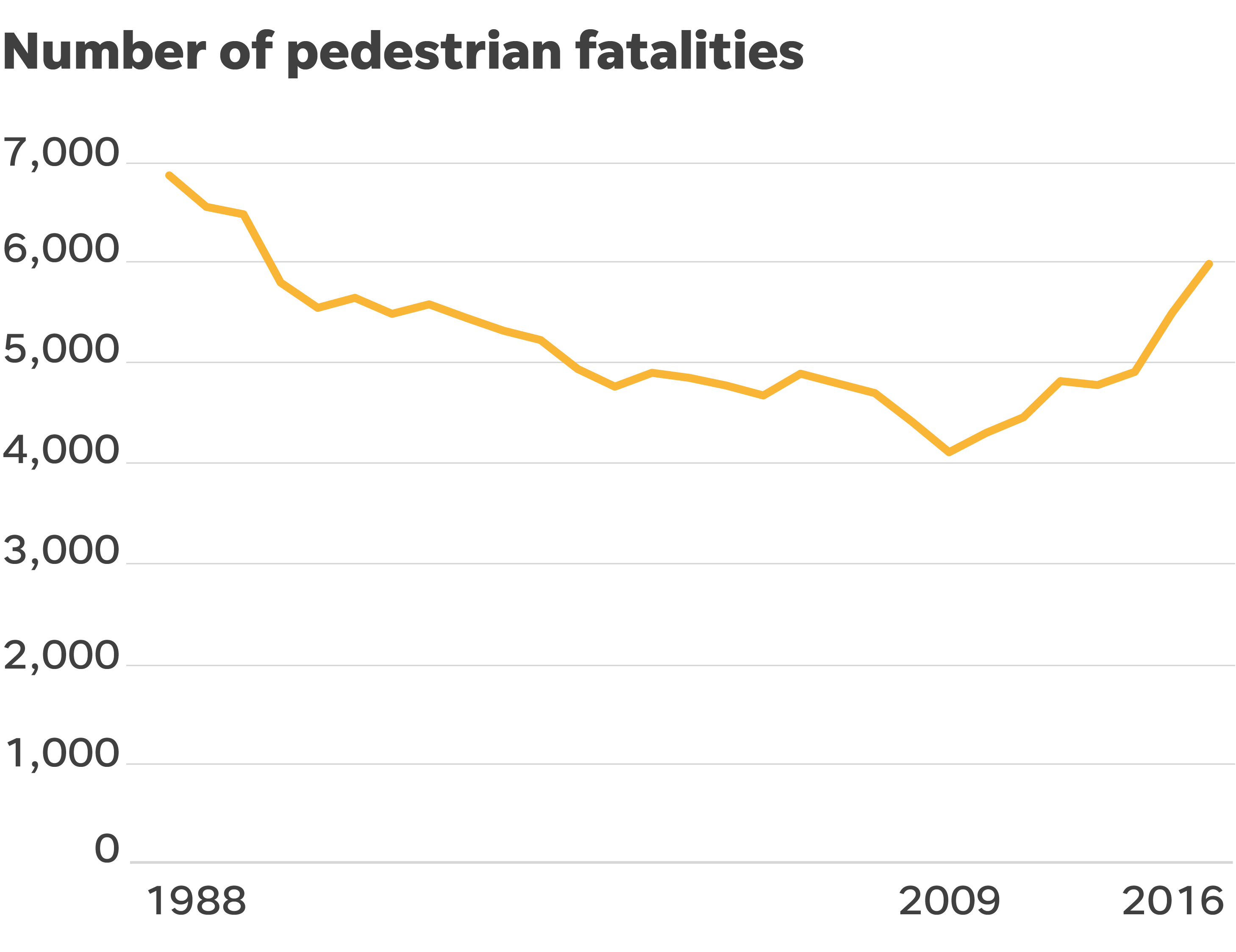
A Detroit Free Press/USA TODAY NETWORK investigation found that the SUV revolution is a key, leading cause of escalating pedestrian deaths nationwide, which are up 46 percent since 2009.
Almost 6,000 pedestrians died on or along U.S. roads in 2016 alone — nearly as many Americans as have died in combat in Iraq and Afghanistan since 2002. Data analyses by the Free Press/USA TODAY and others show that SUVs are the constant in the increase and account for a steadily growing proportion of deaths.
Our investigation found: 
  • Federal safety regulators have known for years that SUVs, with their higher front-end profile, are at least twice as likely as cars to kill the walkers, joggers and children they hit, yet have done little to reduce deaths or publicize the danger.
  • A federal proposal to factor pedestrians into vehicle safety ratings has stalled, with opposition from some automakers.
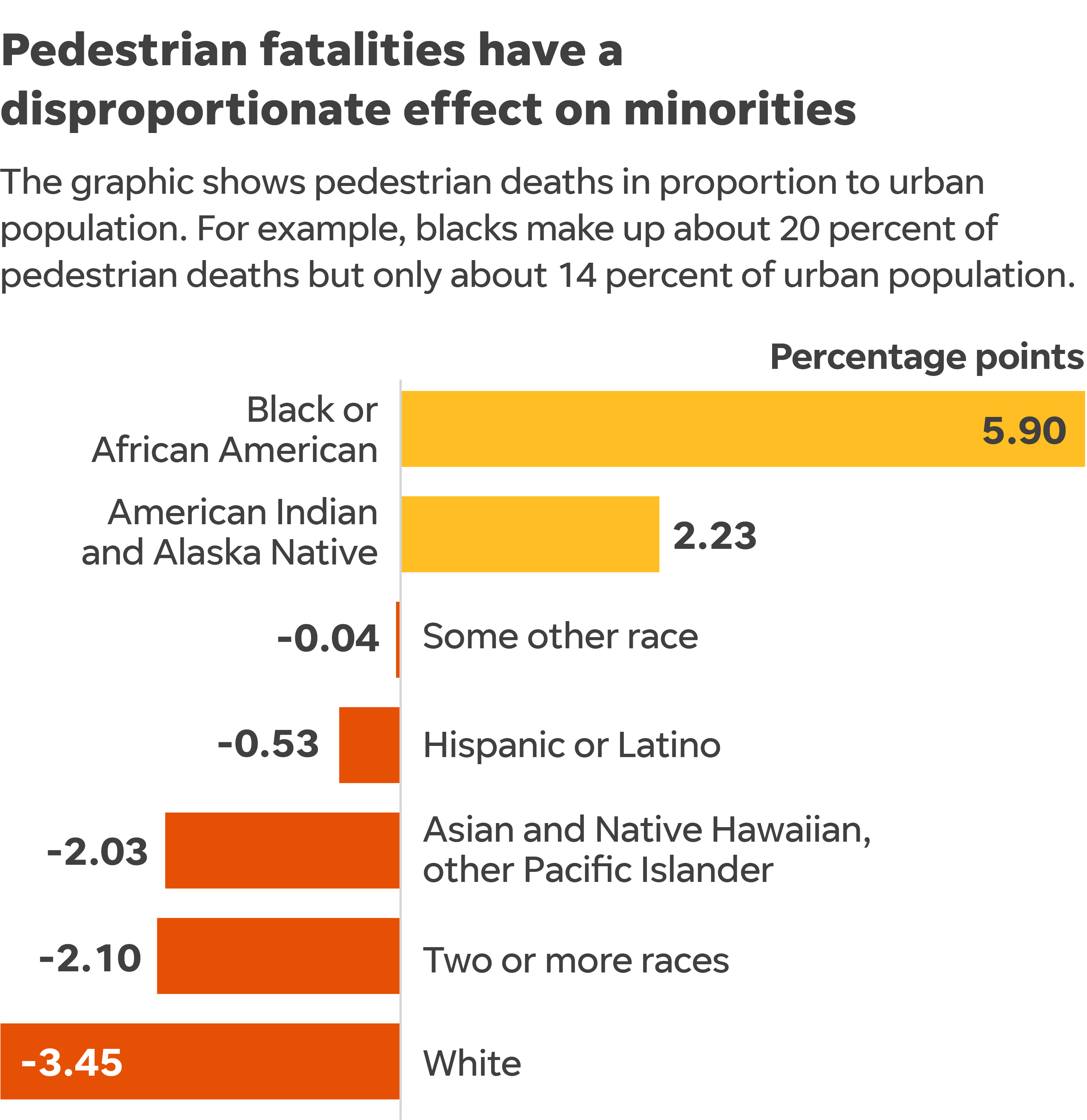
  • The rising tide of pedestrian deaths is primarily an urban plague that kills minorities at a disproportionate rate.
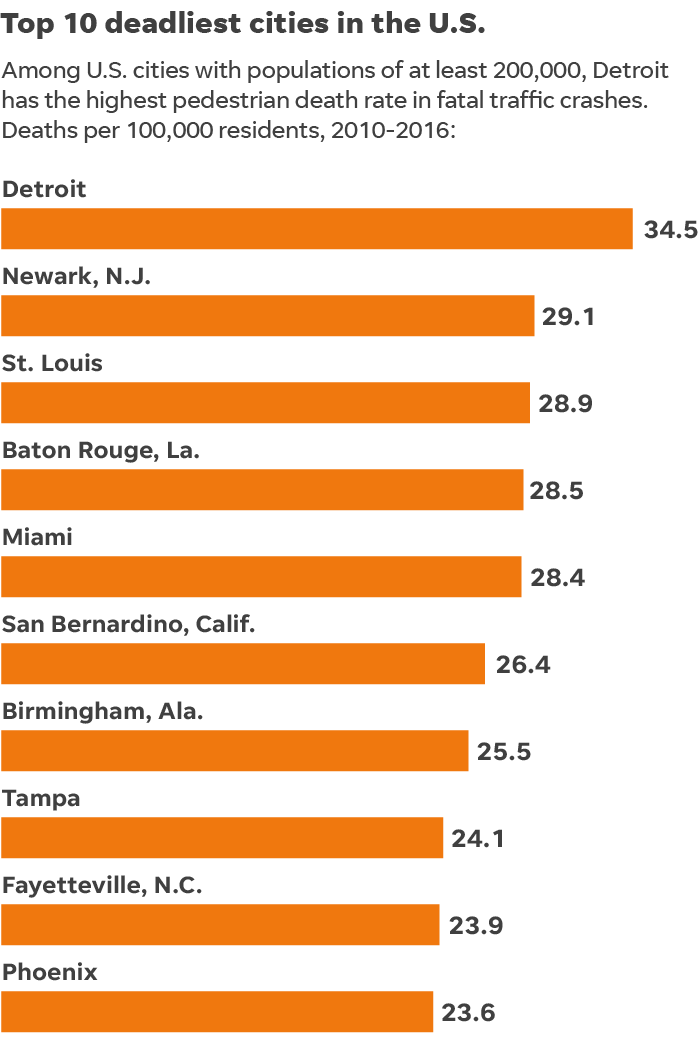
  • It is most prominent in cities both in the industrial heartland and warm-weather spots on the nation’s coasts and Sun Belt. Detroit; Newark, New Jersey; St. Louis; Baton Rouge, Louisiana; Miami, San Bernardino, California, Birmingham, Alabama; Tampa; Fayetteville, North Carolina; and Phoenix had the 10 highest per-capita death rates among cities with populations of at least 200,000 in 2009-16.
Vehicle safety measures, which the federal government says could save hundreds of pedestrian lives every year, are available but not widely employed by some automakers — nor are they required.
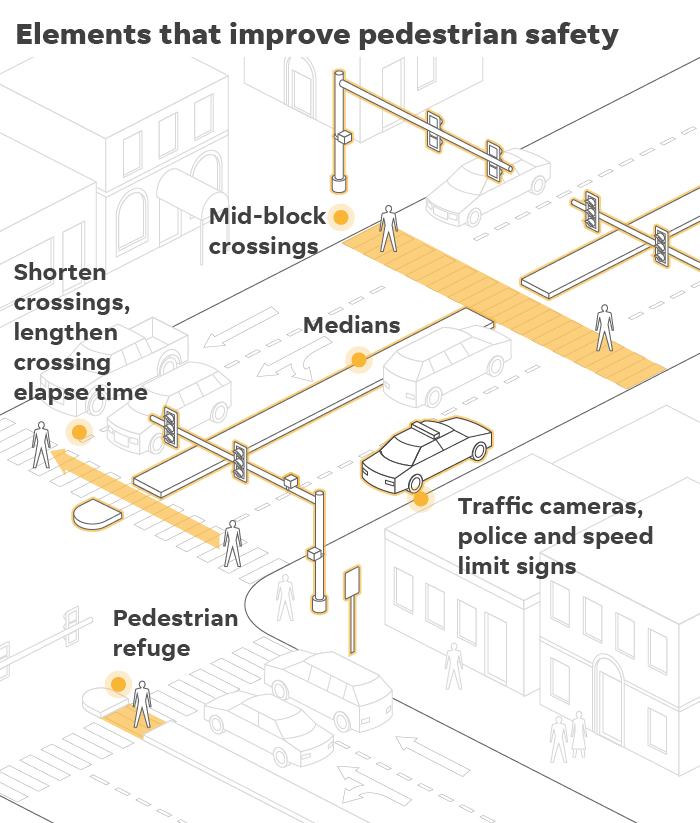
Along with automakers, cities can take action that saves pedestrians. New York City, for example, cut such deaths nearly in half in just four years. The need for steps such as lower speed limits, more midblock crosswalks and better lighting grows in urgency as automakers move strongly toward truck and SUV production.
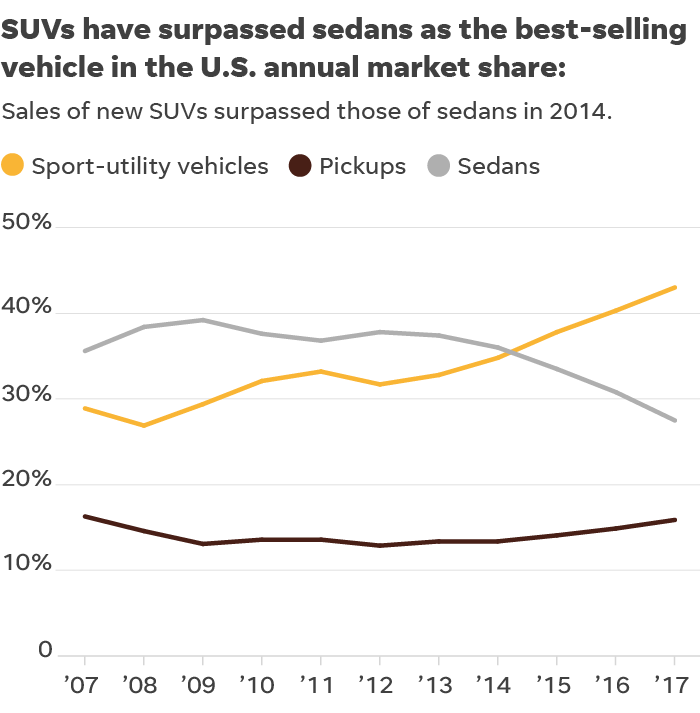
SUV sales topped sedans in 2014; pickups and SUVs now account for 60 percent of new vehicle sales. Ford recently announced plans to discontinue U.S. sales of most passenger cars, while Fiat Chrysler has already done so.

Distraction and other factors

It might seem obvious that a larger vehicle can cause more damage in a crash, whether to a smaller car or an unprotected skull, but some researchers have been hesitant to assign blame for the spike in pedestrian deaths to America’s love of SUVs, in part because various factors are at play in every crash.
Each of the 5,987 pedestrians who died in 2016, according to federal data, had his or her own tragic ending.
Many who died were males, were jaywalking or had alcohol in their systems on multilane roads in urban areas at night. Some might have been distracted, just as vehicle drivers could have been, by texting or talking on cellphones, although data is lacking to quantify distraction.
Some of these other factors also saw increases in recent years, but the SUV component stands out.
Data and safety experts verified that long-standing common factors in pedestrian deaths, such as alcohol and jaywalking at night, did not account for the growth.
A key factor consistently backed by data is growing involvement of higher-profile, blunt-nosed SUVs.
The Insurance Institute for Highway Safety calculated an 81 percent increase in single-vehicle pedestrian fatalities involving SUVs in 2009-16. The Free Press/USA TODAY analysis of the same federal data, counting vehicles that struck and killed pedestrians rather than the number of people killed, showed a 69 percent increase in SUV involvement. The assessment also showed increases each year in the proportion of fatal pedestrian crashes involving the popular vehicles.

Safety standards stalled

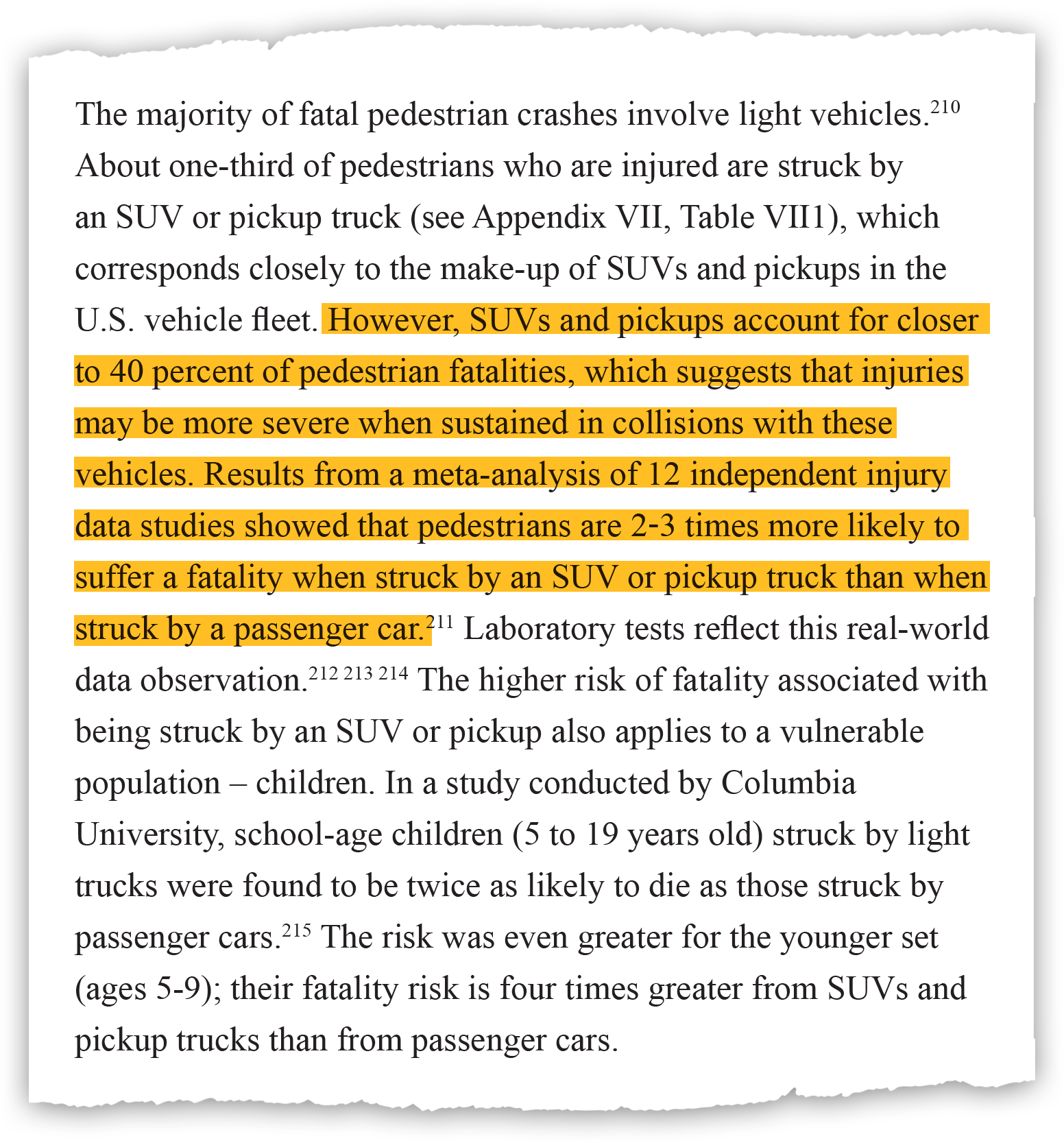
The National Highway Traffic Safety Administration made the connection in 2015 that SUVs were deadlier for pedestrians than cars, referenced on page 90 of a 195-page report. That report, citing 12 independent studies of injury data, said pedestrians are two to three times “more likely to suffer a fatality when struck by an SUV or pickup than when struck by a passenger car.”
That report also noted that SUVs and trucks were involved in a third of pedestrian injuries but 40 percent of deaths, indicating that injuries “may be more severe when sustained in collisions with these vehicles.” The proportion of SUVs on the road has only grown in the three years since.
NHTSA, citing the findings in December 2015, announced a plan to overhaul its vehicle-safety rating system to include a new score for pedestrian safety. The plan was to roll out an overhauled New Car Assessment Program, or NCAP, in 2018 for 2019 model-year vehicles.
But that hasn’t happened.
NHTSA did not respond to questions about what caused the delay, although the agency has been without a permanent administrator since President Donald Trump took office. In a statement to the Free Press this week, the agency said it is “working on a proposal for a standard that would require protection against head and leg injuries for pedestrians impacted by the front end of vehicles.”
The agency noted that it is studying interactions between motorists, pedestrians and bicyclists, distractions, and strategies that states can use to protect pedestrians and improve education on “this important topic.”
NHTSA said earlier that it “plans to continue our efforts to update NCAP by following our process for public engagement, including a public meeting during summer 2018.”
That meeting has not been scheduled and the SUV finding has not been widely shared. The Governors Highway Safety Association earlier this year, for example, reported on its estimates of pedestrian deaths in 2017 and did not cite SUVs as a factor, even speculating that legal marijuana has played a role.

A known factor

As early as 2001, researchers at Rowan University in New Jersey predicted a deadly trend that would reverse a historic drop in pedestrian fatalities, which are now the highest they have been since the George H.W. Bush presidency.
“In the United States, passenger vehicles are shifting from a fleet populated primarily by cars to a fleet dominated by light trucks and vans,” according to their research paper, referencing “light trucks,” which includes SUVs. “Because light trucks are heavier, stiffer and geometrically more blunt than passenger cars, they pose a dramatically different type of threat to pedestrians.”
Hampton Clay Gabler, a professor in the department of biomedical engineering and mechanics at Virginia Tech, wrote that paper with Devon Lefler. Gabler’s interest in the pedestrian issue came from research in other areas showing high death rates for those in cars struck by SUVs.
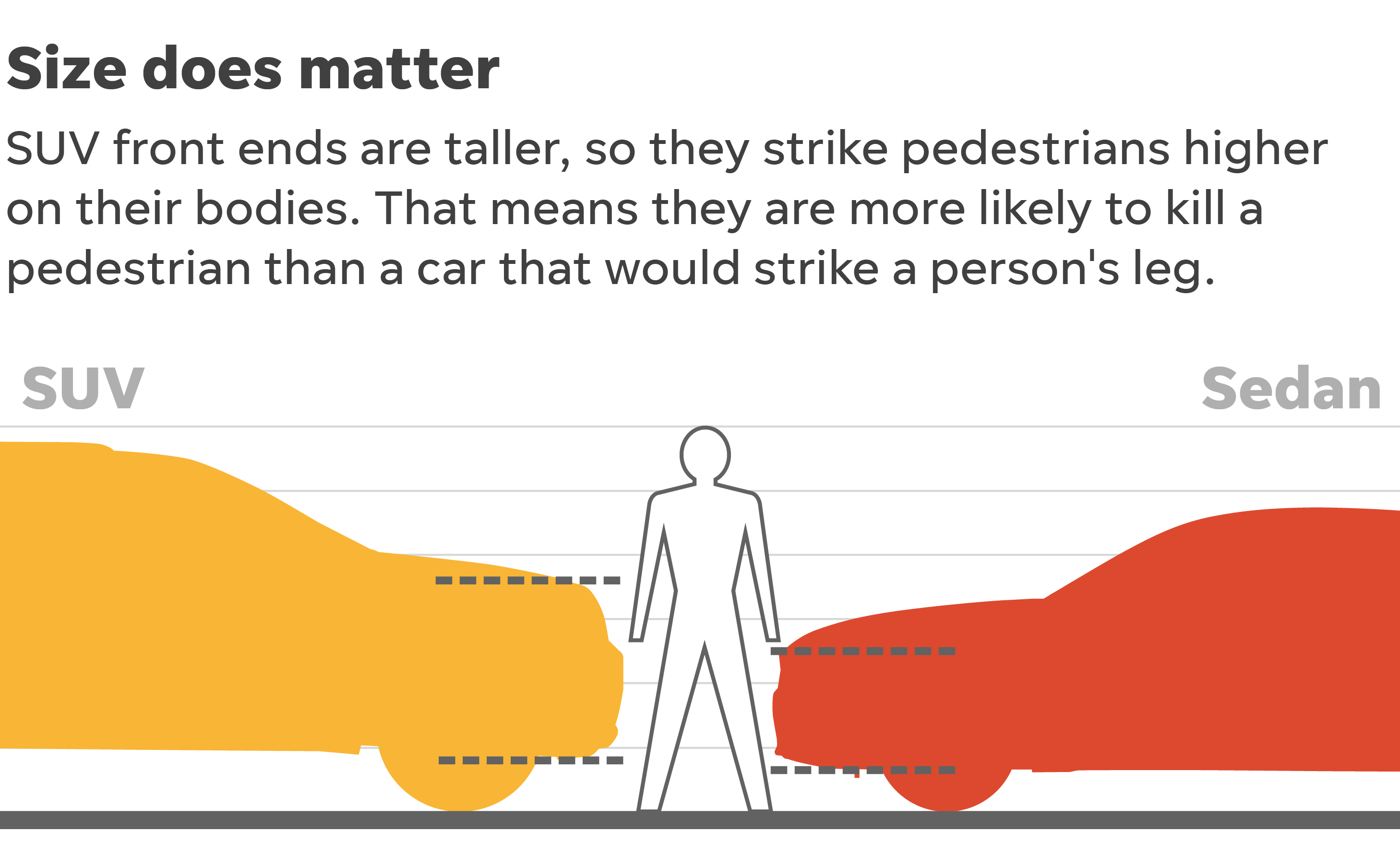
He described the vulnerability of pedestrians when struck by an SUV as a geometry problem of sorts because SUVs and pickups tend to be tall compared with pedestrians and have a blunter front end. That positioning is more likely to put someone’s head or chest in line to be struck during the initial impact with a vehicle.
“(Not to diminish leg injuries but) serious head and chest injuries can actually kill you,” Gabler said in a telephone interview.

More power

Size and profile are not the only vehicle factors involved in the increased fatalities. Power also increased. A report by the Insurance Institute noted that the trend toward more powerful vehicles could contribute to higher speeds, which, in turn, could lead to more crashes and more severe injuries.
“The increasing popularity of SUVs and higher vehicle speeds associated with more powerful vehicles could have contributed to how crashes involving pedestrians have become deadlier,” the study said.
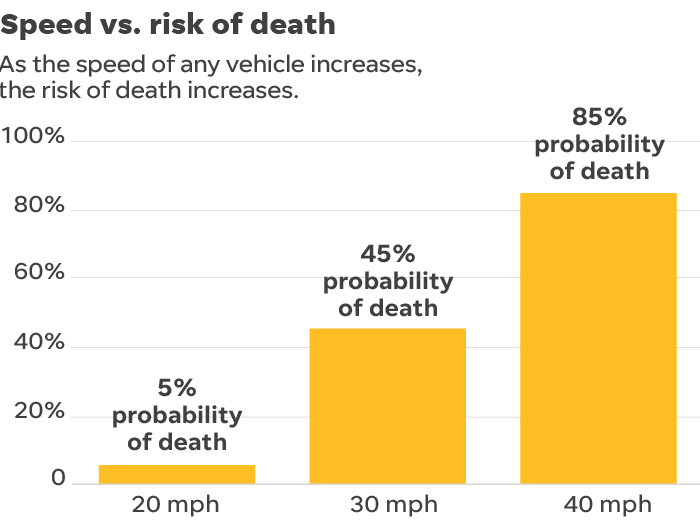
And speed can clearly kill.
At crashes where a vehicle is traveling 20 mph, 5 percent of pedestrians die. At 30 mph, the percentage increases to 45 percent. At 40 mph, the percentage skyrockets to 85 percent, according to research from 1995 cited by the European Commission, an arm of the European Union.
“Speeding is the most important determinant of whether a pedestrian dies in a crash,” said John Wetmore, a national pedestrian advocate who hosts the public access program “Perils for Pedestrians.”
That belief is supported by Dr. Joe Patton, division head of trauma and acute care surgery at Henry Ford Hospital in Detroit, a doctor on the front lines of treatment for those injured in crashes.
“Speeding is the most important determinant of whether a pedestrian dies in a crash.
John Wetmore, national pedestrian advocate
“Certainly, big cars going fast are worse than little cars going fast, but the speed has a lot to do with it,” Patton said. “I really think the speed makes more of an impact than the size of the vehicle, so you’d rather get hit by a big car going real slow than a small car going real fast because the velocity and the energy of that velocity that it imparts on the person they hit probably plays a bigger role than the size of the car but certainly people are driving bigger cars now.”
Patton called it “intuitive” that bigger vehicles cause worse injuries.

Overall traffic fatalities drop

Pedestrians deaths are not a new phenomenon.
The toll that automobiles have taken on pedestrians dates to the beginnings of the automotive age. In 1896, Britain saw its first pedestrian death by a motor vehicle when a woman was struck in south London. That same year, the country raised its speed limit from 4 to 14 mph, according to Steve Parissien’s “The Life of the Automobile.”
The first U.S. pedestrian death by automobile came in 1899 when a man was struck and killed in New York after hopping off a trolley, Parissien noted.
The more than 8,000 pedestrians killed in the United States in 1979 represent a high point, according to the Insurance Institute, but more than 51,000 people died in motor vehicle crashes that year. Motor vehicle crash deaths had fallen to 37,461 in 2016, according to NHTSA data, as vehicle safety improved.
Pedestrians are not seeing the benefits of the lifesaving safety improvements that have helped reduce total traffic fatalities. Pedestrians represent 16 percent of those killed in traffic crashes in 2016, a steady increase over the past decade.
Those who die, however, are not simply statistics.
In Memphis, 70-year-old Lee Soult was one of eight pedestrians killed so far this year. Soult was struck by a pickup and killed as he crossed a city street outside a crosswalk on an April evening. His brother, Bob Soult, mourned the fact that Lee, who retired from a glove company in 2013, would not “get to enjoy his retirement and his life a little while longer.” The truck driver was not charged in the crash.
In Detroit, the 2016 death of 64-year-old Maurice Parker Mims prompted a campaign to track down the hit-and-run driver of a Chevrolet Impala, which struck Mims in a crosswalk on Veterans Day, authorities said. Mims, a Marine veteran and street artist in Detroit’s Greektown neighborhood, had been picked as metro Detroit’s “Most Outstanding Volunteer” by the American Red Cross.
Gilberto Ramon Ortiz, 23, was accused of taking the car to a repair shop to have the windshield replaced after the crash, according to the Wayne County Prosecutor’s Office. A jury trial on charges of tampering with evidence and obstruction of justice is scheduled for July.
Robert Bonta, 72, and Karen Bonta, 71, were avid travelers and visited every continent. The Iowa couple was killed in a crash in Fountain Hills,…Show more
AMY BONTA FERIN
Back in Phoenix, Karen Bonta died at the scene of the March crash. Her husband, Robert, died 61 minutes later at an area hospital.
Ronald Doornbos, whose wife was killed, died this month in Calgary, where his family said he had been “minimally conscious.”
The crash on a multilane road with a 35-mph speed limit came during a deadly stretch this spring for pedestrians in the nation’s fifth-largest metro area, with 10 people dying in nine days.
Authorities have said Bradshaw, the driver, didn’t appear to be impaired. They have not disclosed how fast they think he was driving, but whether he was distracted remains part of the investigation.
Tim Budnick, a business owner near where the crash happened, said he heard tires squealing and noise he thought was the SUV ramming into a concrete curb. When he walked outside, he learned the sound was actually the vehicle hitting people.
“When I saw them, I was expecting some of them to start getting up, saying things like ‘Oh, my wrist,’ or ‘My shoulder hurts,’ ” Budnick said. “I heard nothing. All four of them were lying there.”

Known safety measures

As the number of pedestrian fatalities has spiked, some communities have worked to change the narrative.
Pedestrian safety advocates have pointed to efforts like those in New York as examples for other cities. Through a combination of enforcement targeted at driver behavior, lowered speed limits and training for cab drivers, the city saw its pedestrian deaths last year drop to their lowest number, 101, since the city began tracking the statistic in 1910.
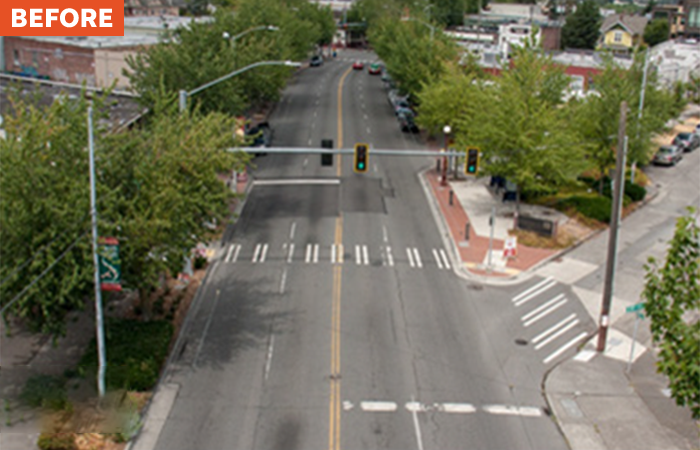
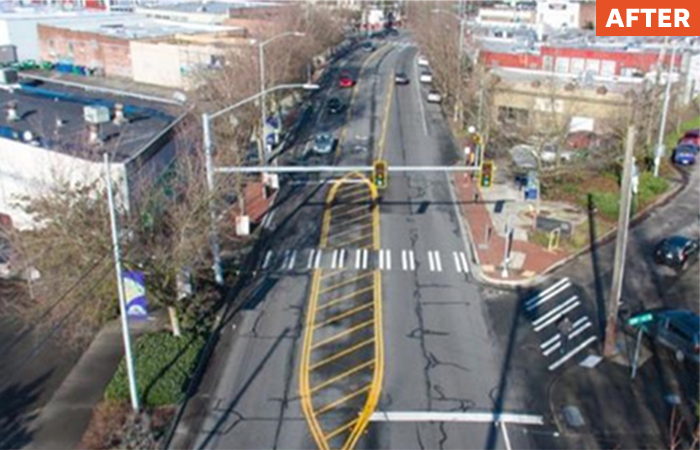
In Seattle, Rainier Avenue in 2015 was reduced from four lanes to three, enforcement was stepped up and other changes made it easier for pedestrians to cross. Eleven people died between 2004 and 2014 on one portion of the road, but no one has died in that section since the changes were made, according to a Seattle Department of Transportation report.
Infrastructure changes designed to better protect pedestrians by reducing traffic lanes, adding pedestrian refuge islands and midblock crossings are often credited with reducing speeds and improving safety. That’s part of the vision for a major thoroughfare on Detroit’s east side. East Jefferson Avenue, a multilane street that connects the city to the suburban Grosse Pointe communities, is undergoing a “road diet,” dropping from seven lanes to five, adding protected bike lanes and improving crosswalks.
In Detroit, which has the highest per-capita pedestrian death rate among large cities, deaths dropped in 2016, after the city, as part of its emergence from bankruptcy, added more than 60,000 new streetlights.
Nationally, speed and red-light cameras are also credited with making streets safer for pedestrians. As of May, 421 communities were using red-light cameras and 143 communities were using speed cameras to enforce traffic laws, according to the Insurance Institute.
Cities, including Honolulu and Montclair, California, have focused on pedestrians to reduce fatalities. Both cities passed laws against texting and walking when crossing streets. Honolulu council member Brandon Elefante told the Free Press in May that “the hope is more municipalities will adopt similar language looking at pedestrians and vehicles.”

Automatic braking

Vehicle safety features, however, are believed to be just as crucial to reducing pedestrian deaths.
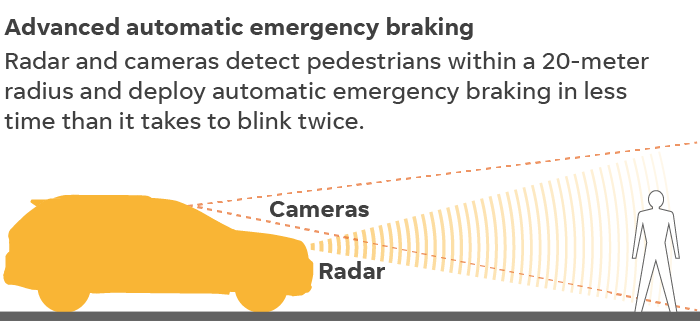
Researchers at the U.S. Department of Transportation’s Volpe Center have found that the use of pedestrian crash avoidance/mitigation systems and features such as automatic emergency braking, could reduce up to 5,000 vehicle-to-pedestrian crashes and 810 fatal crashes per year.
Most automakers have voluntarily committed to installing low-speed automatic emergency braking systems by 2022, but the progress to date varies greatly, according to NHTSA.
Some brands make automatic emergency braking standard — Tesla (99 percent), Mercedes-Benz (96 percent), Volvo (68 percent) and Toyota (56 percent).
Others, as of last year, produced only a small portion of their fleet with the technology — Fiat Chrysler (6 percent), Mitsubishi (3 percent), Ford (2 percent) and Jaguar/Land Rover and Porsche (none). General Motors produced 20 percent of its fleet with AEB.
Fiat Chrysler spokesman Eric Mayne, said the automaker will meet the standard by 2022. He noted that automatic emergency braking is currently available on 15 models in nine segments.
Elizabeth Weigandt, a Ford spokesperson, said Ford began offering its pre-collision assist with AEB on the 2017 Fusion and now makes it available on seven other models.
“We will standardize AEB on 15 percent of vehicles in 2018 and are well ahead of meeting the agreement to standardize across our lineup by 2022,” she said.
General Motors spokesman Tom Wilkinson noted that “GM was part of the agreement to make AEB standard in the U.S. by the end of 2022 and we will meet that target. More than two-thirds of our models now have AEB available.”
Catherine Chase, president of Advocates for Highway and Auto Safety, said the voluntary nature of the 2022 commitment means automakers can walk away if they choose and pedestrian-specific crash avoidance technology might not be included.
“We think that they should be put in as standard equipment in all vehicles,” she said.
The group’s research director, Shaun Kildare, noted that it’s not simply a delay of a year or two. Because it takes about 10 years for the fleet to change, delays in implementing new technology can mean decades before the improvements are in most vehicles on the road.
“This is a fundamental technology to reaching autonomous vehicles. … Why isn’t every automaker putting these in so we know we’re not killing people needlessly?”
Shaun Kildare, research director, Advocates for Highway and Auto Safety
From a practical standpoint, automakers should be pushing forward because of the rush to develop autonomous vehicles, Kildare said.
“This is a fundamental technology to reaching autonomous vehicles. You need to know how your system is going to identify objects on the road and if you’re going to be able to respond to it,” Kildare said, noting the risks highlighted by this year’s fatal self-driving Uber crash in Arizona. “Why isn’t every automaker putting these in so we know we’re not killing people needlessly?”
But Chase said automakers tend to resist mandates, preferring to decide on their own what should and should not go into a vehicle. Some of that resistance involves concerns about cost.
Once a technology is in wide use, however, the cost tends to decrease, Chase said. That technology can also become a selling point, she said, using the example of backup cameras. Chase said there had been resistance to adding backup cameras, which became required on new vehicles in the U.S. in May, but drivers who are familiar with them now demand them.
The Alliance of Automobile Manufacturers, which represents the industry on policy issues, views advanced driver-assistance and crash avoidance technology “as a much better approach” to improving pedestrian safety than an overhauled New Car Assessment Program that had been proposed by NHTSA, spokeswoman Gloria Bergquist said in an email.
“These technologies are well researched and have proved to be beneficial,” Bergquist said.
The alliance’s members appear to be split on whether the pedestrian protection rating is a good move.
For example, General Motors told NHTSA regulators in a February 2016 letter that it did not support a separate rating for pedestrian safety, saying “an overall crash performance category is the appropriate place to address the crashworthiness elements of pedestrian protection.”
But Toyota enthusiastically supported the agency’s recommendation. It “will allow consumers to more easily understand a vehicle’s safety performance,” the Japanese automaker told NHTSA in its own February 2016 letter.

European standards

Automakers face a different landscape in Europe, where pedestrian safety is a key rating component. The rating agency Euro NCAP includes detailed information on its website about various vehicles. Color-coded images even show where pedestrian impact protection is good, such as on the hood (or bonnet) of a 2017 BMW 6 Series GT, or where it is poor on the same vehicle, such as along a strip above the grille.
This is an image from a video showing how vehicles are tested in Europe to determine pedestrian safety ratings. (Courtesy of Euro NCAP)
EURO NCAP
“Euro NCAP has encouraged vehicle manufacturers to consider pedestrian impacts in the vehicle design and this can be seen most commonly as space available beneath the hood of the vehicle, padding to bumper areas, and more (compliant) structures at the base of the windscreen and on the bonnet leading edge. The space between the hood and engine allows the bonnet to absorb the impact of the pedestrian’s head before it contacts the very hard engine structures beneath. A similar principle is also applied to the bumper/front end to protect the vulnerable knee joint of a pedestrian,” according to the agency
The agency said that the testing had led to innovative countermeasures such as the deployable hood, which can lift up slightly, and external airbags, both designed to cushion the blow.
“The technology is really going to be our savior. In the short term, we’ve been getting dumber faster than our cars have been making us smarter.”
Tom Mayor, industrial manufacturing strategy practice leader at KPMG
Euro NCAP, which recently added testing of emergency braking systems to cover cyclists, noted that about 25,000 people die in traffic crashes in Europe each year and almost half of those killed in 2017 were vulnerable road users.
“Moreover, for every person killed in traffic crashes, about five more suffer serious injuries with life-changing consequences. Serious injuries are common and often costlier to the society because of longtime rehabilitation and health-care needs. The majority of the seriously injured on Europe’s roads are vulnerable road users, i.e. pedestrians, cyclists and drivers of powered two-wheelers,” the agency said.
“The technology is really going to be our savior,” said Tom Mayor, industrial manufacturing strategy practice leader at the consulting firm KPMG, who has had discussions with auto companies about improving in-vehicle infotainment systems. “In the short term, we’ve been getting dumber faster than our cars have been making us smarter.”
Contact Eric D. Lawrence: elawrence@freepress.com. Follow him on Twitter: @_ericdlawrence. Jason Pohl of the Arizona Republic, Yolanda Jones of The (Memphis) Commercial Appeal, and Chris Woodyard and Zlati Meyer of USA TODAY contributed to this report.