Search This Blog

Friday, October 5, 2018

Rabies Treatment in ERs Found Lacking


Emergency rooms appear to be ignoring guidelines that advise physicians to treat suspected rabies patients with both the rabies vaccine and the highly costly human rabies immune globulin (HRIG), a new study found.
HRIG is seriously underutilized, with only 17% of treated patients receiving HRIG, and only 15% receiving the recommended treatment regimen of both the vaccine and HRIG, reported Christopher Blanchette, PhD, of the University of North Carolina at Charlotte, here at the American College of Emergency Physicians meeting.
“HRIG is very important in the process as it provides immediate antibodies for individuals not previously vaccinated and allows time for the body to respond to the vaccine and create antibodies on its own,” Blanchette told MedPage Today.
It’s not clear why hospitals aren’t choosing to use HRIG, Blanchette said, but there has been a worldwide discussion over the use of HRIG because of its scarcity and expense. In the U.S., the cost of the drug can run as much as $10,000 or more, often leaving patients in debt.
According to the CDC, only 1 to 3 fatal cases of rabies occur in the U.S. each year, which can include cases where the disease was contracted in other countries. From 2008 to 2017, exposure to rabid bats accounted for nearly all rabies deaths in the U.S.
The agency attributes the near-disappearance of the once-dreaded disease to post-exposure prophylaxis — an estimated 30,000 to 60,000 people are treated each year — and to rabies vaccinations in animals.
Via the Nationwide Emergency Department Sample, the authors analyzed 118,710 emergency department visits in the U.S. for cases of suspected rabies from 2006 to 2015. Most cases (51%) were in the Northeast, while another 31% were in the South. More than 80% of the cases were treated in metropolitan hospitals. Just over half (53%) involved girls or women, 32% were in children. The average patient age was 34.
The study found that 77% of cases were not reported as treated, though the high rate could be misleading and due to a problem with coding, Blanchette noted.
More importantly he said, only 17% of the treated cases received treatment with HRIG. The other 82% were treated with vaccine alone.
According to the CDC, “rabies post-exposure prophylaxis consists of a dose of human rabies immune globulin and rabies vaccine given on the day of the exposure, and then a dose of vaccine given again on days 3, 7, and 14.”
HRIG is not required if a person has been vaccinated previously.
Earlier this year, the World Health Organization (WHO) recommended that HRIG only be administered after rabies exposure in certain cases such as bites, scratches, and direct exposure to bats.
Even in the absence of HRIG, the WHO report explained, data show that “wound washing with immediate vaccine administration and completion of [the vaccination protocol] saves 99% of patients.”
The study was funded by Grifols pharmaceutical company.
Blanchette reported consulting work for Grifols, United Therapeutics, and Ipsos.

Osmotica Pharmaceuticals’ $125 Million IPO Expected Next Week


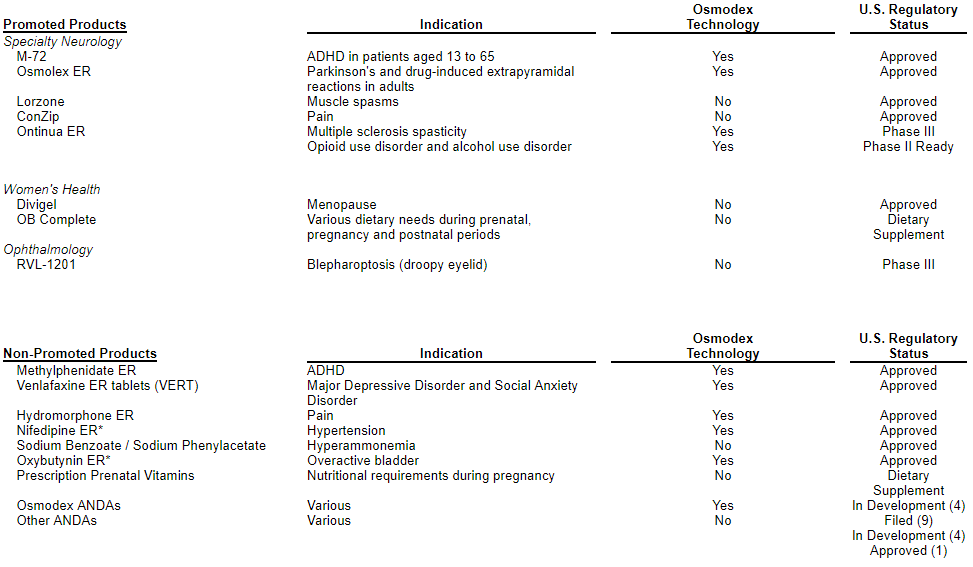
Osmotica Pharmaceuticals (pending Nasdaq: OSMT), whose initial public offering is expected next week, is not your typical biotech IPO. In addition to a pipeline led by late stage candidates in multiple sclerosis and blepharoptosis (droopy eyelid), the company is notably distinguished from most of the industry offerings we’ve seen this year by (1) $246 million in revenue in 2017 from a diverse portfolio of specialty neurology treatments, women’s health products and three dozen generic formulations and (2) private equity backing rather than typical venture capital support, as the result of a 2016 merger of Osmotica and Vertical/Trigen, a portfolio company of Avista Capital Partners.
The company is offering 8.3 million shares at $14 to $16 via Jefferies, Barclays, RBC and Wells Fargo. It would be a $124.5 million IPO at the midpoint of the filing range, yielding a post-money market capitalization of $767 million. Altchem, which the Form S-1 identifies as a holding company formed by an Argentine family in 2011 who have “interests in pharmaceutical companies in several regions of the world,” owns 50% of Osmotica—41.9% post IPO (Altchem was Osmotica’s controlling shareholder before the Vertical/Trigen merger). Avista Capital, with about $4 billion invested in more than 30 healthcare businesses, owns 45.4% of the company—38.0% post IPO.
Many of Osmotica’s products are based on its proprietary osmotic-release drug delivery system called Osmodex, which the company believes is superior to other extended-release (ER) technologies. Osmotica says that the technology enables it “to manufacture tablets with one or more active drugs, and in combinations of immediate-release, controlled-release, delayed-release and extended-release.”
Portfolio and pipeline
Source: Osmotica Pharmaceuticals
Osmotica’s pipeline is highlighted by two Phase III candidates: Ontinua ER tablets for muscle spasticity in multiple sclerosis patients (designated as an Orphan Drug by the FDA) and RVL-1201 eyedrops for blepharoptosis, or droopy eyelid. Ontinua ER has been designated by the FDA as an Orphan Drug for muscle spstin this indication. The company is also exploring opportunities for Ontinua ER in additional indications, such as opioid and alcohol use disorders. There are currently no approved non-surgical treatment options for droopy eyelid.
One issue to consider is the closely held nature of the company and the level of influence carried by the two largest investors. Following this offering, four of the six members of the board of directors will be affiliated with Avista (two) and Altchem (two). Additionally, Osmotica’s CEO Brian Markison is an operating executive at Avista. As Osmotica’ Form S-1 states, “these directors may face real or apparent conflicts of interest with respect to matters affecting both us and Avista or Altchem, as applicable, whose interests, in some circumstances, may be adverse to ours.” There may come a point down the road when the company needs to evaluate its board composition.
The post-IPO valuation appears to be reasonable for Osmotica, given the revenue base, its experience with the FDA and the product candidates in the pipeline. The significant revenue from the specialty neurology and women’s health products gives Osmotica a dramatically different profile compared to most of the biotech IPOs that may provide investors with downside comfort against the binary event risks associated with any biotechnology company. It behooves investors, however, to keep an eye on how successful the company continues to be in fully integrating the business of complex generic formulations with the very different business of drug development.

Akcea and Ionis receive FDA approval of TEGSEDI


Akcea Therapeutics (AKCA) and Ionis Pharmaceuticals (IONS), announced that the U.S. Food and Drug Administration has approved TEGSEDITM (inotersen) for the treatment of the polyneuropathy of hereditary transthyretin-mediated amyloidosis in adults. TEGSEDI is now approved in the U.S., European Union and Canada. In hATTR amyloidosis, transthyretin (TTR) protein misfolds and accumulates as amyloid deposits throughout the body. TEGSEDI targets the disease at its source by reducing the production of TTR protein. In the NEURO-TTR study, treatment with TEGSEDI produced up to a 79% mean decrease from baseline in serum TTR protein in patients regardless of TTR mutation, sex, age, or race. The FDA’s approval of TEGSEDI was based on results from the Phase 3 NEURO-TTR study in patients with hATTR amyloidosis with symptoms of polyneuropathy. Results from that study demonstrated that patients treated with TEGSEDI experienced significant benefit compared to patients treated with placebo across both co-primary endpoints: the Norfolk Quality of Life Questionnaire-Diabetic Neuropathy (Norfolk QoL-DN) and modified Neuropathy Impairment Score +7 (mNIS+7), a measure of neuropathic disease progression.
https://thefly.com/landingPageNews.php?id=2800621

FDA Accepts Karyopharm Application for Selinexor and Grants Priority Review


— Application Seeks Accelerated Approval for Selinexor as a Treatment for Patients with Penta-Refractory Multiple Myeloma —
— PDUFA Date Set for April 6, 2019 —
Karyopharm Therapeutics Inc. (Nasdaq:KPTI), a clinical-stage pharmaceutical company, today announced that the U.S. Food and Drug Administration (FDA) has accepted for filing with Priority Review its New Drug Application (NDA) seeking accelerated approval for selinexor, its first in class, oral SINE compound, as a new treatment for patients with penta-refractory multiple myeloma.  The FDA also granted Karyopharm’s request for Priority Review and assigned an action date of April 6, 2019 under the Prescription Drug User-Fee Act (PDUFA).  In its acceptance letter, the FDA has stated that it is currently planning to hold an advisory committee meeting to discuss this application.

FDA Classifies Previous Endologix AFX Safety Notice as Class I Recall


Endologix® Inc. (Nasdaq: ELGX), a developer and marketer of innovative treatments for aortic disorders, announced today that it has received notice that the U.S. Food and Drug Administration (FDA) has classified a voluntary recall action that Endologix took in July of this year as a Class I recall. The July recall involved Endologix’s issuance of a Safety Notice to healthcare professionals (HCPs) using the AFX® Endovascular AAA System.
The Safety Notice, dated 20 July 2018, provided updated information on comparative AFX Type III endoleak rates, patient-tailored surveillance recommendations, and recommendations for intervening through an AFX device or re-intervening on an AFX device. No product was removed from the field as part of this recall.
The July 2018 Safety Notice followed several earlier communications. Safety Notices from Endologix issued in late 2016 and early 2017 requested that all remaining AFX Strata devices be returned from the field and emphasized that Endologix had not manufactured AFX Strata grafts since 2014. On September 28, 2017, the FDA issued a letter to HCPs to raise awareness of an increased occurrence of Type III endoleaks after endovascular aneurysm repair (EVAR). On June 19, 2018, the FDA issued an updated letter to HCPs indicating the increased risk for Type III endoleak appears to be specific to one device at this time, the AFX with Strata device. (https://www.fda.gov/MedicalDevices/Safety/LetterstoHealthCareProviders/ucm611039.htm)
“As outlined at our Investor Day on October 2, 2018, the AFX Strata product was removed from global inventory in the first half of 2017. Our current commercially available versions of the AFX system, the AFX DuraplyTM and AFX2TM products, are manufactured using a different ePTFE processing methodology and include additional product improvements,” noted John Onopchenko, Chief Executive Officer of Endologix. “These AFX Duraply and AFX2 products, while part of the July 2018 Safety Notice providing updated recommendations to HCPs on how to re-intervene on or through these products, were not the subject of the voluntary product removal actions in December 2016/January 2017. Furthermore, AFX Duraply and AFX2 products were not the subject of the June 19, 2018 FDA letter to HCPs. Through our comprehensive system of post-market surveillance, anonymized registry data, and the only randomized trial to compare EVAR systems (the LEOPARD trial), we have a strong and growing evidence base that supports the use of the AFX Duraply and AFX2 systems for patients with AAA. We are proud of, and committed to, advancing our collaborative work with the FDA on behalf of our patients, customers, and the broader clinical community.”

Many Young Drug Abusers Not Tested for Hep C


Too few teens and young adults with an opioid addiction are tested for hepatitis C, even though they’re at high risk for the liver infection, researchers say.
In 2016, hepatitis C killed more than 18,000 Americans, making it the most common cause of death from a reportable infectious disease, according to the U.S. Centers for Disease Control and Prevention.
“We’re missing an opportunity to identify and treat young people who are at risk for this deadly infection,” said Dr. Rachel Epstein, lead author of the new study.
“Screening for [opioid addiction] and other drug use, and then testing for hepatitis C in those at high risk, can help us do a better job of eliminating this serious infection, especially now that very effective hepatitis C medications are approved for teenagers,” said Epstein, a postgraduate research fellow at Boston Medical Center.
Her team studied the electronic medical records of more than 269,100 teens and young adults, ages 13 to 21. Between 2012 and 2017, the patients had visited one of 57 federally qualified health centers that provide health care to underserved communities in 19 states.
Of the 875 people with diagnosed opioid addiction, only 36 percent were tested for hepatitis C. Of those, 11 percent had been exposed to hepatitis C and almost 7 percent had evidence of chronic hepatitis C infection, the researchers found.
Overall, 2.5 percent, or more than 6,800 teens and young adults who visited the health centers, were tested for hepatitis C. Of those, 122 tested positive for it. Those most likely to be tested were black, had any substance use disorder, and were ages 19 to 21.
The study was presented Thursday at IDWeek, a meeting of infectious disease specialists, in San Francisco.
Injection drug users who share needles often spread hepatitis C. It’s possible that doctors don’t test suspected opioid abusers because the drugs are available in pill form, which doesn’t increase the risk of hepatitis C. However, studies show many youths who misuse prescription opioid pills eventually begin injecting drugs, the researchers noted.
Current guidelines only recommend hepatitis C testing for known injection drug users.
“The issue is complicated by the fact that not enough at-risk youth are screened for opioid or other drug use for a variety of reasons, including lack of time, comfort level between clinician and patient, and privacy and stigma concerns,” Epstein said in a meeting news release.
“And even when drug use is identified, there’s a belief that youth are less likely to test positive for hepatitis C, which isn’t necessarily the case as we show in our study. Clearly, this is an overlooked group that is at high risk,” she concluded.
Research presented at meetings is usually considered preliminary until published in a peer-reviewed medical journal.
More information
The American Academy of Family Physicians has more on hepatitis C.
SOURCE: IDWeek, news release, Oct. 4, 2018

Working Out When Under the Weather


Every now and then you might not feel well enough to exercise and decide to skip a workout. But if you have a cold that could last a full week, you probably won’t want to find yourself facing a fitness setback once you’ve recovered.
Here’s how to stay in the game.
The general guideline is that you should be able to work out if your symptoms are from the neck up, like a stuffy nose from a cold, but not when you have the whole-body achiness of the flu. Easy or moderate exercise, such as walking rather than running, should be fine. Some experts say it could even be beneficial.
But you don’t want to spread germs at the gym, so work out at home to avoid infecting others. And remember to cut back on the intensity and length of your usual workout as needed to avoid further taxing your body and risking injury.
If you’re sick enough that you need to significantly scale back your usual workout, a call to your doctor’s office is warranted — beyond whether it’s safe to exercise with your particular illness, ask whether you need an office visit. Even if you get the go-ahead to exercise, tread lightly so you can see how your body responds. Stop if necessary — pay attention to any clues that you just can’t handle the physical exertion you’re attempting.
If you have the full gamut of flu symptoms, like fever, fatigue and body aches, even moderate exercise is out. You might need to wait 2 to 4 weeks after recovery before you get back to high-level workouts. Return at a slow pace and gradually build up to avoid stressing your system.
What about exercise when you have a chronic condition?
Health experts say exercise may help you better manage it, especially if the illness is characterized by inflammation, such as an inflammatory bowel or rheumatic disease, because exercise engenders an anti-inflammatory response in the body. But you may need to sit out a severe flare, such as a rheumatoid arthritis attack.
And always follow your doctor’s advice if you need to take any medications that make it unsafe to exercise.
More information
The Mayo Clinic has more on how to tell if you’re too sick to exercise.