Search This Blog

Tuesday, December 4, 2018

Happy at last with Ocular manufacturing, FDA approves eye drug/device Dextenza


After two FDA rejections that culminated in a management shake-up and staff cuts, Ocular Therapeutix’s $OCUL eye drug/device Dextenza has finally got the regulatory nod, about a month ahead of the FDA’s expected decision date.
Following ophthalmic surgery, patients are typically prescribed steroids via up to 70 topical eye drops to treat ocular pain. In lieu of this complex regimen, Dextenza offers a full course of post-surgical steroid treatment with a one-time placement of an ophthalmic insert that releases the corticosteroid dexamethasone for up to a month following insertion.
Last year, the Bedford, MA-based company’s shares took a big hit when the FDA slapped Ocular with a second complete response letter, citing manufacturing deficiencies in a pre-NDA inspection the agency undertook months prior. The regulator’s first rejection in 2016 was also related to manufacturing issues.
Ocular, which inked a $300 million-plus partnership with Regeneron $REGN in 2016 to develop a more convenient formulation for the latter’s flagship injectable eye drug Eylea among other anti-VEGF drugs, has a hit-and-miss record with Dextenza in the clinic. The product has yielded positive results in diminishing post-surgical pain, but has came up short in a study for ocular itching associated with allergic conjunctivitis.
The biotech has one product on the market approved to close corneal incisions after cataract surgery, ReSure Sealant, which won the regulatory nod back in 2014. Although Ocular’s hydrogel-based drug delivery platform is designed to provide a competitive advantage over the current treatment paradigm in post-surgical ocular pain and inflammation, adoption and/or access to Dextenza will ultimately depend on pricing and reimbursement.

Last month, EyePoint Pharma $EYPT announced that the CMS had handed Dexycu, its injectable steroid administered after ocular surgery to control inflammation, permanent reimbursement in the form of a J-code, which is typically issued to drugs used in office-based procedures and not to therapies associated with cataract surgery, which are reimbursed within a package price, noted WC Wainwright’s Raghuram Selvaraju.
“There has been doubt among investors on how DEXTENZA can be reimbursed after a C-code expires in three years. With a J-code issued to DEXYCU, which is clearly a product that cannot be dissociated from cataract surgery, we believe it is highly likely that DEXTENZA could also secure a J-code after regulatory approval,” Selvaraju wrote in a note.
On Monday, the company said it planned to submit an application for a J-code ahead of the January 2019 deadline.

Axonics Files for FDA Premarket Approval for Neuromodulation System


Axonics Modulation Technologies, Inc. (NASDAQ:AXNX), a medical technology company focused on the design, development and commercialization of rechargeable implantable Sacral Neuromodulation (“SNM”) solutions for the treatment of urinary and bowel dysfunction, today announced that on December 3, 2018, the Company submitted a premarket approval application (“PMA”) to the U.S. Food & Drug Administration (“FDA”) for the Axonics r-SNM® System, an investigational medical device.
This PMA filing submitted by Axonics is referred to as a “literature-based PMA”. While most PMAs are supported by original clinical investigations, in rare cases, literature-based evidence may be accepted as the sole basis for approval of a PMA to establish reasonable assurance of safety and effectiveness when the literature is sufficient, detailed, objective, and directly applicable to the subject device. In this PMA filing, Axonics has submitted existing literature reporting on InterStim II®, manufactured by Medtronic plc, the only currently approved SNM device.
In addition to the technical specifications, testing data and published literature, Axonics included one-year follow-up data from its 51-patient RELAX-OAB European Post-Market Clinical Follow-up study to support the PMA. This PMA filing incorporates all elements of the Axonics r-SNM implantable system as well as the External Trial System and related accessories.
As is the case with a traditional PMA, the FDA has at least 180 days to review and decide whether or not to approve the PMA. Axonics anticipates that the FDA will complete a substantive review by early March 2019. Once the Company responds to any questions that may arise, the FDA will then have another 90 days to complete its review and issue a decision letter. Therefore, the earliest date a final determination is anticipated is June 2019.
Axonics is currently conducting a 129-patient pivotal clinical study, ARTISAN-SNM, under a U.S. Food & Drug Administration Investigational Device Exemption, for urinary dysfunction. On June 27, 2018, Axonics announced completion of the enrollment and implant phase. Axonics anticipates that substantially all patients will reach their 6-month post-implant endpoint on or about January 4, 2019.

Parkinson’s Foundation Hosts Its 1st-Ever Med Marijuana/Parkinson’s Conference


The Parkinson’s Foundation will host its first-ever conference focused on medical marijuana and Parkinson’s disease (PD) in Denver, COMarch 6-7, 2019.

“The Parkinson’s Foundation is bringing together experts from across the globe to discuss the implications and recommendations of medical marijuana use for people with Parkinson’s,” said James Beck, PhD, chief scientific officer of the Parkinson’s Foundation. “Now that medical marijuana is legal in 33 states and in many other countries, people are equating access to efficacy. It is imperative that we address the clinical implications of medical marijuana use among people with PD.”
The goal of the conference is to bring together a diverse group of experts from academia, clinics, industry, government and the Parkinson’s community to establish a consensus on medical marijuana use in PD. The conference will address the potential benefits and risks of medical marijuana for people with PD, potential delivery methods, safety considerations, approval as a therapeutic for PD patients, and areas for more rigorous clinical research.
“Having worked as a clinician for the past decade in Colorado, a state at the forefront of medical marijuana use, it is clear that people with PD and their families are intensely interested in the potential of marijuana and cannabinoids in helping manage symptoms and other aspects of their disease,” said Benzi Kluger, MD, MS, associate professor of University of Colorado Hospital and co-chair of the conference. “To date, there is more hype than actual data to provide meaningful clinical information to patients with PD. There is a critical need to analyze existing data on medical marijuana and to set priorities for future research.”
Recent results from a survey conducted by the Parkinson’s Foundation and Northwestern University, a Parkinson’s Foundation Center of Excellence, found that:
  • 80% of patients with PD have used cannabis
  • 23% of doctors received formal education on medical marijuana
  • 95% of neurologists have been asked to prescribe medical marijuana
People with PD and their physicians are looking to answer whether medical marijuana can help manage PD symptoms. Few clinical studies have enrolled people with PD to investigate the effects of medical marijuana on PD symptoms. There is currently no conclusive scientific research supporting the benefits of medical marijuana for PD, however, anecdotal evidence suggests that it may help manage Parkinson’s symptoms such as pain, sleep, appetite, nausea and anxiety.
“In order to move the field forward, we need to determine which cannabinoids are likely to be beneficial or harmful, whether people with PD are at risk from side effects, what we are hoping to treat, and how to conduct informative clinical trials,” said A. Jon Stoessl, MD, co-director of the Djavad Mowafaghian Centre for Brain Health at the University of British Columbia, and co-chair of the conference.
The conference is invitation-only. In addition to Parkinson’s specialists, select Parkinson’s advocates living with PD will be invited to provide their perspective. The Foundation will publish suggested practices and areas for further research following the conference.
For more information on medical marijuana and PD, call our Helpline, 1-800-4PD-INFO (473-4636) or visit Parkinson.org/Marijuana.

Juniper Research: Healthcare Chatbot Interactions to Reach 2.8 Billion by 2023


Healthcare to represent 10% of all chatbot interactions across key verticals such as banking, eCommerce and social media by 2023

New findings from Juniper Research forecast that AI-powered chatbots will soon become the first responders for citizens’ engagements with healthcare providers, as the number of chatbot interactions exceeds 2.8 billion annually by 2023. This is up from an estimated 21 million in 2018, an average annual growth of 167%.
For more insights on the market readiness for healthcare chatbots, download the free whitepaper: Will Digital Health be Ready for Complete AI Dominance?
Hospitals Turn to AI & Chatbots to Make Cost Savings of $4 billion by 2023
The new research, Digital Health: Disruptor Analysis, Country Readiness & Technology Forecasts 2018-2023, found that the adoption of chatbots will ramp up in the future, due to:
  • Citizens becoming more comfortable using chatbots to discuss their healthcare requirements.
  • Chatbots becoming an important component of healthcare providers’ customer experience strategies.
  • Shortages of medical practitioners to support ageing populations; for example, the German government expects that it will need 3 million more nurses by 2060.
  • Increased sophistication of conversational AI platforms leading to a greater percentage of enquiries being completed entirely via chatbots; freeing up the medical staff time and saving countries’ healthcare systems around $3.7 billion by 2023.
Chatbot Adoption Will Shake Up the Healthcare Value Chain
The research found that the first priority for healthcare providers will be to ensure that the information collected is transferred to a person’s medical record and other applications, such as appointment scheduling or for those for dispensing prescriptions. This means that providers of medical records and line of business applications will need to make their existing systems interoperable with chatbot providers.
Research author Michael Larner explained: “Chatbots have the potential to transform the way in which patients engage with their healthcare systems and go some way to take the pressure off overstretched staff. But if deployments are not backed up by investment in record keeping, then financial and time savings will evaporate”.

FDA acts to advance reliable, beneficial genetic tests to improve patient care


The U.S. Food and Drug Administration today took a significant step forward in driving the efficient development of novel diagnostic technologies that scan a person’s DNA to diagnose genetic diseases and guide medical treatments. For the first time, the agency has formally recognized a public database that contains information about genes, genetic variants and their relationship to disease. The FDA is recognizing the genetic variant information in the Clinical Genome Resource (ClinGen) consortium’s ClinGen Expert Curated Human Genetic Data, which is funded by the National Institutes of Health (NIH), as a source of valid scientific evidence that can be used to support clinical validity in premarket submissions. The information contained in this open database has been collected and studied by researchers across the world. This recognition by the FDA will facilitate test developers, including those that use a technology known as next generation sequencing, to rely on the information available in the database to support the validity of their tests, instead of having to generate the information on their own.

“Technological and clinical advances in genetic tests mean that patients and providers have a better understanding of the causes of disease and potential treatment options. The availability of genetic tests is opening up new opportunities to segment illnesses into more treatable subsets and enabling the development of targeted therapeutics aimed at these previously unknown categories of disease. These new medicines increasingly show outsized benefits in small populations of patients with rare, hard-to-treat and sometimes fatal conditions. The ability to use diagnostics to identify these rare subsets is a key element in driving this transformation in medical care and drug development,” said FDA Commissioner Scott Gottlieb, M.D. “The FDA is committed to supporting the development of these novel technologies that provide critical, potentially life-saving information. With our policies, we’ve sought to create an efficient regulatory pathway that promotes the more rapid development of important tests that can transform medical care while assuring their accuracy and clinical relevance. Our continued efforts, including today’s recognition, will advance this process and help patients gain access to more sophisticated tests that provide important genetic information, allowing for more targeted medical care.”
Genetic tests work by looking at a person’s DNA to detect genomic variations that may determine whether a person has or is at risk of developing a genetic disease and, in certain cases, may help to inform treatment decisions. Unlike traditional diagnostics that typically detect chemical changes associated with a single disease or condition, DNA-based assays can look at hundreds to millions of DNA changes in a single test to help determine the cause of a person’s disease or condition.
Availability of these types of tests plays an important role in advancing how clinicians and researchers learn about diseases, how innovators develop new treatments, and how doctors improve patient care.
Most genetic data are not aggregated and stored in a manner that is accessible to many researchers and clinicians. Recognizing the benefits of public databases, the FDA issued a final guidance in April 2018 to help accelerate the development of reliable and beneficial genetic tests. The agency’s policies seek to encourage data sharing and outline an approach clarifying how test developers may rely on clinical evidence provided in FDA-recognized public databases to support clinical claims for their tests and help provide assurance that the test is “clinically valid,” which, in the case of genetic tests, is the relationship between a gene variation and a specific disease.
Today’s action – which recognizes the ClinGen consortium’s ClinGen Expert Curated Human Genetic Data as a source of valid scientific evidence that can support clinical validity – means that developers of genetic tests have assurance of the reliability of the freely available data that they can use in support of their applications for marketing authorizations with the agency, rather than generating the same data on their own. The new recognition means developers will not need to demonstrate to the FDA the reliability of the database, the data and information within which can be used to support the relationship between a gene variation and a specific disease that are within the scope of the recognition. For example, the sponsor of a test that detects variants involved in hereditary cardiomyopathy could point to the cardiomyopathy genetic variant information available in ClinGen as part of a submission to support clinical validity of their test.
“A major current challenge for precision medicine is the need to translate new discoveries and data from the Human Genome Project so that this information can be used by physicians and other health care providers to improve health,” said NIH Director Francis S. Collins, M.D., Ph.D. “ClinGen provides a standard curated data reference of genetic variants to facilitate the development and implementation of genetic tests for use by health care professionals, which is critically important for moving science into practice.”
The FDA recognized the database using the process detailed in the April 2018 final guidance. The agency reviewed ClinGen’s standard operating procedures and policies, including processes and validation studies for variant evaluation, data integrity and security, and transparency of all evidence. The FDA also reviewed the policies for how the consortia qualifies and approves researchers and clinicians to evaluate variants, including conflict of interest and disclosure policies.
ClinGen brings together more than 700 clinical and research experts to develop standard processes for reviewing data and genetic variants and their connections to health and disease. The experts who are part of the consortium determine how each variant is associated with a specific hereditary disease or condition and make that information available for unrestricted use in the community.
In its recognition of ClinGen, the FDA reviewed variant classifications and the processes that support them for gene changes in reproductive cells (germline variant) in hereditary disease where there is a high likelihood that the disease or condition will materialize if the gene is altered. Genetic tests may use germline variant information to detect for cardiomyopathy, hearing loss, inborn errors of metabolism and other hereditary conditions.
The FDA’s recognition anticipates that ClinGen may add new or modify existing genetic variant information on an ongoing basis, provided they are within the scope of recognition.
More Information:

Wounded Warrior Project Releases New Findings from 9th Annual Warrior Survey


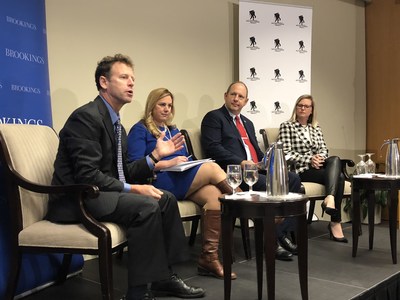
Wounded Warrior Project® (WWP) released the results of its ninth Annual Warrior Survey during a panel discussion hosted by The Brookings Institution. Every year, to learn more about warriors’ physical, social, economic, and mental health needs, WWP conducts the nation’s largest and most comprehensive survey of veterans who have sustained physical and hidden injuries of these wars. This year marks the survey’s ninth issuing and the first time that five-year trends will be released.
Wounded Warrior Project (WWP) released the results of its ninth Annual Warrior Survey during a panel discussion hosted by The Brookings Institution.
Michael O’Hanlon, Senior Fellow of Foreign Policy at The Brookings Institution, led the panel discussion, featuring Dr. Melanie Mousseau, Director of Metrics at WWP; Dr. Kieta Franklin, National Director of Suicide Prevention at the VA; and Mr. Anthony Kurta, Deputy Assistant Secretary of Defense for Military Personnel Policy.
The panelists discussed the potential impacts of the survey’s findings on both the Department of Defense (DoD) and the VA. Data collected from the survey focused on topics such as injuries, challenges, successes, unemployment, and health care choices, enabling WWP to refine and improve the programs and services it provides.
Since Sept. 11, 2001, 3.3 million Americans have served in uniform. As of Nov. 14, 2018, the DoD reports that 6,918 have died and 52,774 service members have been wounded in action, but this is just a fraction of those who are estimated to have been adversely impacted by the longest war in American history.
The DoD’s own Defense and Veterans Brain Injury Center reports that more 380,000 have sustained traumatic brain injuries. In 2008, RAND estimated nearly 20 percent of military service members who have returned from Iraq and Afghanistan reported symptoms of post-traumatic stress disorder or major depression, and in 2014, that there were an estimated 5.5 million military caregivers of all generations in the United States. The need for services and support continues to grow exponentially even as the numbers of killed and wounded decline, and the public’s interest and involvement wanes.
“Since 2009, we’ve used our Annual Warrior Survey to determine the needs of wounded warriors in order to inform our programs,” said WWP CEO Lt. Gen. (Ret.) Mike Linnington. “This is the science behind our programming. We do this to ensure we are being good stewards of our donors’ dollars – directing their investments to where it’s needed most. And in addition to informing internal programs, we use information to help inform legislation and policy at the federal level. Together with our partners at the Department of Defense, the Department of Veteran Affairs, and our colleagues in the veterans service community, we will improve the way we prepare warriors for future wars and improve the support we provide to them when they return home.”
Among the findings were several significant challenges that post-9/11 wounded, ill, and injured warriors face:
  • 62% have a VA rating of at least 80% (58% in 2017).
  • 78% report post-traumatic stress disorder (PTSD) as their main health challenge and are still dealing with these effects.
To treat mental health concerns, including PTSD, the survey found that warriors:
  • 71% chose a VA medical center as their top place to seek help for mental health concerns.
  • 75% of warriors have healthcare coverage through the VA, up from 59% in 2014.
  • 53% preferred talking to another veteran about their mental health.
  • 47% used prescription medications to treat their mental health.
  • 33% had difficulty getting mental health care, put off getting such care, or did not get the care they needed. Of those warriors:
    • 19% did not seek treatment because they felt they would be considered weak.
    • 19% were concerned that future career plans would be jeopardized.
    • 18% felt they would be stigmatized by peers or family for seeking mental health treatment.
The survey results also showed significant successes:
  • 70% of warriors are pursuing bachelor’s, master’s, or professional / doctorate degrees, while 36% of warriors have earned a bachelor’s degree or better (33% in 2017).
  • 60% of warriors are homeowners, compared with 46% in 2014.
  • The warrior unemployment rate is 11% in 2018, compared to 14% in 2014.
    • Non-active duty warrior unemployment rate is 12% currently; 20% in 2014.
  • Prescription medicine usage is down to 47% in 2018, compared with 51% in 2014.
PTSD symptoms remain a top challenge for veterans. To help combat this key issue, WWP recently committed to a $160 million investment in Warrior Care Network®, an innovative partnership with four top academic medical centers. This network provides specialized clinical services through two- to three-week intensive outpatient programs that integrate evidence-based treatments, rehabilitative medicine, wellness, nutrition, mindfulness training, and family support with the goal of helping warriors thrive, not just survive.
“I strongly believe that suicide prevention must move beyond simply managing a crisis, or being about healthcare,” said Linnington. “Through Warrior Care Network and other mental health services provided by Wounded Warrior Project, we’ve seen what an integrated and comprehensive public health approach can do. We need a multi-pronged approach to treatment: a combination of clinical, non-clinical, and peer-to-peer community-facing efforts that are focused on resilience and prevention. Suicide prevention cannot just be about saving someone’s life when they are in crisis; it must be about creating a life worth living.”
To see the full survey, visit https://www.woundedwarriorproject.org/survey, and to learn more about WWP’s advocacy efforts, visit https://wwp.news/Newsroom.

Report: China Researcher Used CRISPR to Edit Cholesterol Gene, Goes Missing


Last week, He Jiankui, a researcher from the Southern University of Science and Technology of China announced that a set of twins had been born in which he had used CRISPR gene editing to modify the embryos. He made this announcement at the Second International Summit on Human Genome Editing held at the University of Hong KongHe Jiankui modified the CCR5 gene, which should make the babies less susceptible to HIV infection.
The announcement was met by widespread condemnation worldwide, and investigations are being launched by Southern University, Rice University, where researcher Michael Deem works—Deem reportedly assisted He Jiankui—the China government and the U.S. National Institutes of Health (NIH).

Another announcement He Jiankui made before reportedly leaving the conference to return to China, was that there was another successful pregnancy. There is some question as to He Jiankui’s whereabouts, however. There were rumors that he was being detained by the Chinese government, but a spokeswoman for the Southern University told the South China Morning Post, “Right now nobody’s information is accurate, only the official channels are.”
At least one U.S. researcher who was in touch with He Jiankui and his team speculates that the second pregnancy may involve a baby or babies whose PCSK9 gene was editing using CRISPR. PCSK9 is involved in control of cholesterol.
As reported by STAT, about a year ago Kiran Musunuru, a researcher at the University of Pennsylvania, was contacted by a graduate student at Southern University, Feifei Cheng. In the email, Feifei Cheng described the work performed in the laboratory using CRISPR to disable the PCSK9 gene in human embryos. “Our results have shown that CRISPR/Cas9 technology can reach a high editing efficiency for PCSK9 gene in human and monkey embryos,” the email stated. And concluded, “Do you think it is reasonable and feasible?”
According to STAT, Musunuru “offered little encouragement,” replying, “I’m not sure I have much technical advice to offer.”
He then forgot about it until He Jiankui’s announcement. Then he dug up the emails. The student, Feifei Cheng, worked with He and together they had presented a paper on their work in April in China at a meeting.
Now, reviewing the emails, Musunuru thinks the second pregnancy may be with embryos where the PCSK9 gene was disabled. “It seems clear,” Musunuru tells STAT, “this PCSK9 work in human embryos goes back at least two years. I think it’s possible that He’s group has implanted PCSK9-disrupted embryos, though I have no evidence it went that far. It was clearly in their plans, though.”
He Jiankui had also contacted one of the CRISPR developers, Feng Zhang, of the Broad Institute of MIT and Harvard, in April 2016, requesting a tour of Feng Zhang’s laboratory. That tour never occurred, although He Jiankui did pay a visit this past August, according to Zhang, to talk about making CRISPR more accurate.
Zhang told STAT, “By August, he must have been quite far along in his work in humans, at least according to his most recent claims. He certainly never mentioned this work when I saw him.”
Going through his emails, Musunuru finds several from Cheng requesting reagents for gene editing, and later was asked to review an article by an international scientific journal authored by Cheng and He on editing of PCSK9. Because the peer-review process is supposed to be confidential, Musunuru declined to name the journal.
Broadly speaking, the moral and ethical problems with editing embryos that are then implanted for pregnancy, relate to potential off-target edits and inheritance. First, there have been reports that CRISPR, though relatively precise, accidentally edits other areas of the genome at the same time as the target area, with potential unknown short-term and long-term side effects. Along those same lines, the results from disabling either of these genes, CCR5 or PCSK9, is not completely understood. In fact, there is research suggesting that ultra-low cholesterol modification increases the risk of type 2 diabetes by approximately 30 percent.
And secondly, because the editing was conducted on embryos that were implanted and became live human beings, whatever changes made to their genomes can be passed along to any children they may eventually have, as well as their children’s children, and so on.
This has resulted in the widespread condemnation, calls for global guidelines, and the launch of numerous investigations. A group of more than 100 Chinese scientists co-signed a letter condemning it, calling it “crazy.” Other ethicists have called it “monstrous,” “unconscionable” and “a grave abuse of human rights.”
Francis Collins, director of the NIH, called it “a lesson in the potential for human hubris to take over.”
For his part, Musunuru told STAT, “It makes me sick to my stomach,” to think that his own research “probably motivated him [He] to pursue PCSK9 in human embryos, possibly all the way to pregnancy.”