Search This Blog

Thursday, February 7, 2019

WSJ Warns The New Democratic Agenda Sure Looks Like Socialism

Now that President Trump has criticized the “new calls to adopt socialism in this country,” Democrats and the media are already protesting that the socialist label doesn’t apply to them.
But, as The Wall Street Journal asks (and answers), what are they afraid of – the label or their own ideas – because the new Democratic agenda sure looks like government control over the means of production.
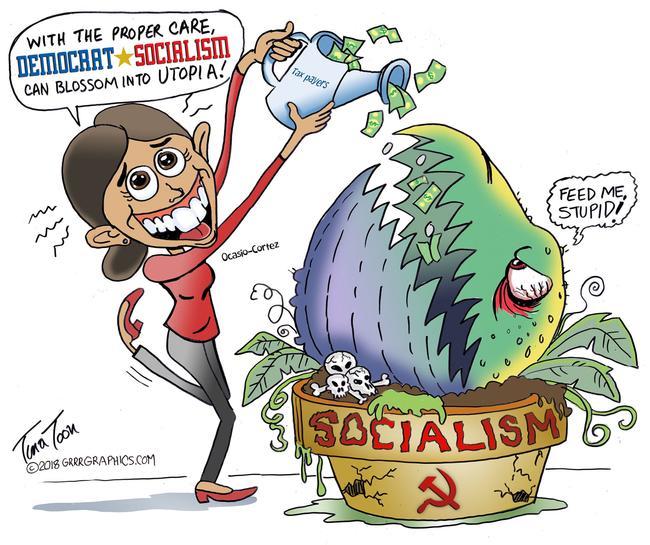
The biggest political story of 2019 is that Democrats are embracing policies that include government control of ever-larger chunks of the private American economy.
Merriam-Webster defines socialism as “any of various economic and political theories advocating collective or governmental ownership and administration of the means of production and distribution of goods.”
The U.S. may not be Venezuela, but consider the Democratic agenda that is emerging from Congress and the party’s presidential contenders. You decide if the proposals meet the definition of socialism.
Medicare for All. Bernie Sanders’ plan, which has been endorsed by 16 other Senators, would replace all private health insurance in the U.S. with a federally administered single-payer health-care program. Government would decide what care to deliver, which drugs to pay for, and how much to pay doctors and hospitals. Private insurance would be banned.
As Senator Kamala Harris put it recently on CNN, “the idea is that everyone gets access to medical care, and you don’t have to go through the process of going through an insurance company, having them give you approval, going through the paperwork, all of the delay that may require. Who of us has not had that situation, where you’ve got to wait for approval, and the doctor says, well, I don’t know if your insurance company is going to cover this? Let’s eliminate all of that. Let’s move on.”
If replacing private insurance with government control isn’t socialism, what is?
The Green New Deal. This idea, endorsed by 40 House Democrats and several Democratic presidential candidates, would require that the U.S. be carbon neutral within 10 years. Non-carbon sources provide only 11% of U.S. energy today, so this would mean a complete remake of American electric power, transportation and manufacturing.
Oh, and as imagined by Rep. Alexandria Ocasio-Cortez, all of this would be planned by a Select Committee For a Green New Deal. Soviet five-year plans were more modest.
A guaranteed government job for all. To assist in this 10-year transformation of society, the Green New Deal’s authors would “provide all members of our society, across all regions and all communities, the opportunity, training and education to be a full and equal participant in the transition, including through a job guarantee program to assure a living wage job to every person who wants one.”
This is no longer a fringe idea. The Center for American Progress, Barack Obama’s think tank, supports a government job for everyone “to counter the effects of reduced bargaining power, technical change, globalization,” and presidential candidate Kirsten Gillibrand tweeted her support for it as an alternative to tax reform.
A new system for corporate control. Senator Elizabeth Warren wants a new federal charter for businesses with more than $1 billion in annual revenue that would make companies answer to more than shareholders. Employees would elect 40% of directors, who would be obliged to consider “benefits” beyond returns to the owners. This radical redesign of corporate governance would give politicians and their interest groups new influence over private business decisions and assets.
Vastly higher taxes. These ideas would require much more government revenue, and Democrats are eagerly proposing ways to raise it. Mr. Sanders wants to raise the top death tax rate to 77%. Ms. Ocasio-Cortez wants a new 70% tax rate on high incomes, which is supported by the Democratic intelligentsia. The House Ways and Means Committee is working on a plan to raise the payroll tax to 14.8% from 12.4% on incomes above $400,000.
Never to be outdone on the left, Ms. Warren wants a new 2% “wealth tax” on assets above $50 million and 3% above $1 billion, including assets held abroad. France recently junked its wealth tax because it was so counterproductive, and such a tax has never been levied in America. This is government confiscation merely because someone has earned or saved more money than someone else. Socialism?
These are merely the most prominent proposals. There are many others, such as Ms. Warren’s plan to set up a government-owned generic drug maker that would inevitably put private companies out of business because its cost of capital would be zero.

*  *  *
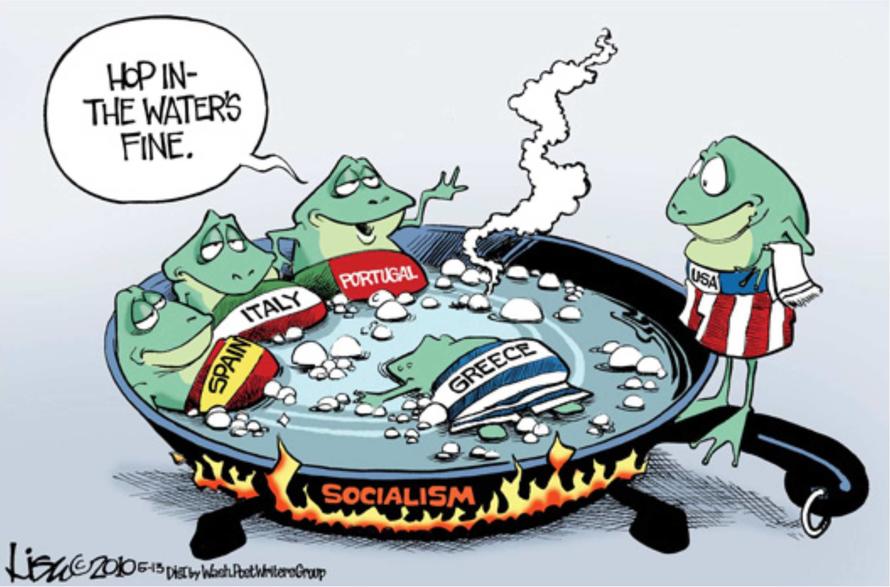
WSJ concludes with some even more ominous perspective, apparently fearful of the ‘boiling frog’ or ‘just the tip’ dissonance…
Some readers might think this is all so extreme it could never happen. But presidential candidates don’t propose ideas they think will hurt them politically. The leftward lurch of Democratic voters, especially the young, means the party could nominate the most left-wing presidential candidate in U.S. history. If other Democratic candidates oppose any or all of this, we’d like to hear them.
The American public deserves to have a debate about all this, lest it sleepwalk into a socialist future it doesn’t want. Credit to Mr. Trump for teeing it up.

Regeneron’s Libtayo is chugging along in skin cancer. Next stop? First-line lung


Regeneron CEO Len Schleifer has called its brand-new cancer drug Libtayo “the engine that could.” And Wednesday, those wondering, “could what?” got a glimpse at what the PD-1 latecomer has done so far.
Through the first three months of its launch, Libtayo—which Regeneron shares with Sanofi—racked up $15 million in U.S. sales, Regeneron said, thanks in part to what Leerink Partners analyst Geoffrey Porges called “near-complete patient access” in a note to clients. Some 95% of total lives in commercial, Medicare and Medicaid plans have reimbursement coverage for the cutaneous squamous cell carcinoma therapy, he said.
What’s more, that $15 million in first-up sales “is demand-driven,” commercial chief Marion McCourt said on the company’s fourth-quarter earnings call.
“This is not a product with a lot of inventory building, and what we are seeing is that each month we’re showing progress in terms of demand for Libtayo,” she said.

Where is the demand coming from? The company is seeing uptake “from some of the most prestigious academic centers,” McCourt said, and “secondarily in more community, large hospital settings” with “sophisticated oncology” programs.
“We feel very good about the launch of Libtayo. We’re working very hard on it,” she added.
Of course, rolling out a product that’s the first approved therapy in its indication is one thing—and Libtayo has that distinction in cutaneous squamous cell carcinoma. But launching in a market dominated by Merck & Co.’s Keytruda, perhaps the industry’s hottest up-and-coming therapy, is quite another. And that’s exactly what Sanofi and Regeneron are planning to do with Libtayo next. The partners have their eyes on the previously untreated lung cancer arena, which Regeneron R&D chief George Yancopoulos called a “major potential indication for Libtayo.”

The thing is, while Libtayo was the sixth drug in its class of PD-1/PD-L1 drugs to hit the scene—behind Keytruda, Bristol-Myers Squibb’s Opdivo, Roche’s Tecentriq, AstraZeneca’s Imfinzi and Pfizer and Merck KGaA’s Bavencio—Keytruda is still the only drug that bears a monotherapy nodin first-line lung cancer. So “if our ongoing trials succeed, we have the potential to be the second,” Yancopoulos pointed out.
And the Libtayo partners have been doing what they can to ensure they’ve got the data to take on Merck when the time comes: They’ve doubled the size of their Libtayo-versus-chemo trial in patients with high levels of biomarker PD-L1.
Regeneron is counting on Libtayo to step up as wet age-related macular degeneration competition advances to eye blockbuster Eylea, the drug that first put the company on the map. But it won’t be the only new drug chipping in growth for the New York biotech.
“Despite the potential competitive threat of Novartis’ RTH258 to Eylea that could emerge later this year, we believe the growth from new indications for Eylea, from Dupixent in asthma and adolescent atopic dermatitis (AD) in the U.S. and from launches in new geographies, and from Libtayo in cutaneous squamous cell carcinoma (CSCC), should more than offset the risk of slowing Eylea sales,” Leerink’s Porges wrote.

Sangamo, CRISPR stocks slide after report of data from early stage trial

Shares of Sangamo Therapeutics (SGMO) are plunging after the company presented interim data from the Phase 1/2 EMPOWERS Study evaluating the SB-318 zinc finger nuclease in vivo genome editing product candidate in patients with MPS II, also known as Hunter syndrome. Concurrent with the press release regarding the data, STAT’s Adam Feuerstein quoted Sandy Macrae, Sangamo’s CEO, as having said: “First and foremost, we must think about the patients we’re treating, which is why it’s fair to conclude that the results we’re showing from our low and middle doses are not good enough.” Following the presentation of the data, shares of Sangamo are down $3.24, or 27%, to $8.78. Crispr Therapeutics (CRSP), Editas Medicine (EDIT) and Intellia Therapeutics (NTLA), which are all publicly-traded companies investigating using CRISPR technology for disease treatments, are also sliding. Crispr shares are down 7%, Editas shares are down 6% and Intellia shares are down 4% following the release of Sangamo’s data.
https://thefly.com/landingPageNews.php?id=2861111

UnitedHealthcare New Oral Health Policies re Opioid Epidemic

  • Approach includes pharmacy policy and informational campaigns for the public, dental health professionals and UnitedHealthcare dental plan participants
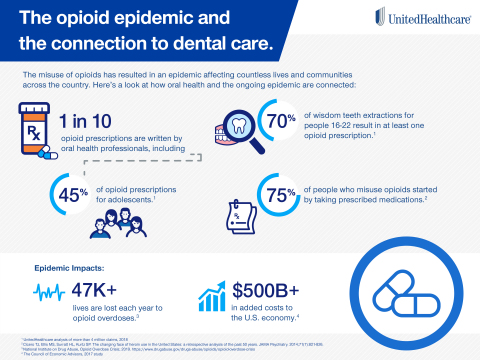
  • Oral health professionals write 12 percent of all opioid prescriptions, including 45 percent of opioid prescriptions for adolescents1 – an age group especially vulnerable to addiction
  • Efforts part of UnitedHealthcare’s comprehensive approach to confronting the opioid epidemic, which causes more than 130 overdose deaths2 in the United States each day
UnitedHealthcare, a UnitedHealth Group (NYSE: UNH) company, has introduced oral health strategies to confront the opioid epidemic, building on a companywide approach to address the epidemic from all angles. The oral health approaches include:
Here's a look at some key data points highlighting the often-overlooked connection between the opioi ...
Here’s a look at some key data points highlighting the often-overlooked connection between the opioid epidemic and dental care (Source: UnitedHealthcare).
  • Pharmacy Policy: All first-time opioid prescriptions written by dental health professionals for people age 19 and under are now capped at three days and fewer than 50 morphine milligram equivalents per day, as recommended by the Centers for Disease Control & Prevention (CDC). Among the first dental plans to take this step for plan participants age 19 and under, this policy helps limit access to often unnecessarily large prescriptions and helps facilitate patient engagement to reduce the risk of misuse.
  • Dental Plan Participants: All UnitedHealthcare dental plan participants with dependents ages 16 to 22 will receive information by mail about the risks associated with opioids, specifically in connection to wisdom teeth extractions. More than two-thirds (70 percent) of wisdom teeth extractions for people ages 16 to 22 result in at least one opioid prescription, so providing this information will help parents and young people better identify pain management alternatives and strategies to manage the frequency of use, dosage and proper disposal of unused opioids. A recent study from Stanford University found that teens and young adults can end up in a battle with opioid addiction following wisdom teeth removal.
  • Dental Health Professionals: Dental health professionals identified as among the top 10 percent of highest opioid prescribers in UnitedHealthcare’s network – as measured by the number of days per supply and/or morphine milligram equivalents per day – last year received information about their status. Following UnitedHealthcare’s outreach, prescribing patterns improved by 17 percent3. This informational campaign has now been expanded to include network dental health professionals that are in the top 20 percent of the highest prescribers in the UnitedHealthcare network.
  • Public Service Announcements (PSAs): TV and radio PSAs – in collaboration with Shatterproof, a national nonprofit confronting the opioid epidemic – are now airing across the country, helping parents and health professionals understand the connection between oral health and the opioid epidemic.
“Oral health is an important facet in the fight against the opioid epidemic and in helping reduce the misuse of these drugs, which is why UnitedHealthcare has introduced these programs,” said Tom Wiffler, CEO, UnitedHealthcare Specialty Benefits. “Working together, we can help address this important national public health issue.”
The economic cost from the opioid epidemic exceeds $500 billion annually, according to a study from The Council of Economic Advisors.
UnitedHealthcare is also collaborating with health care providers and communities, and using powerful data and analytics to prevent opioid misuse and addiction, tailor ways to treat people who are addicted and support long-term recovery.
More information about UnitedHealthcare’s efforts to address the opioid epidemic is available here.

FDA starts enforcement v. Walgreens, Circle K locatiosn over tobacco sales

The Food and Drug Administration said in a statement that it initiated enforcement action against certain retail locations of Walgreen Co. (WBA) and Circle K Stores for “repeated violations of restrictions on the sale and distribution of tobacco products, including sales of cigars and menthol cigarettes to minors.” The agency filed complaints seeking No-Tobacco-Sale Orders, which seek to bar the two specific retail locations from selling tobacco products for 30 days. The two retail outlets that are the subject of these NTSO actions are a Walgreens store in Miami, Florida, and a Circle K store in Charleston, South Carolina, the agency said. “Notably, Walgreens is currently the top violator among pharmacies that sell tobacco products, with 22 percent of the stores inspected having illegally sold tobacco products to minors,” it added.
https://thefly.com/landingPageNews.php?id=2861077

FDA head to request meeting with Walgreens over youth tobacco sales

FDA Commissioner Scott Gottlieb said in a statement, “I will be writing the corporate management of Walgreens and requesting a meeting with them to discuss whether there is a corporate-wide issue related to their stores’ non-compliance and put them on notice that the FDA is considering additional enforcement avenues to address their record of violative tobacco sales to youth. We all share the important responsibility of keeping harmful and addictive tobacco products out of the hands of kids. Retailers in particular – especially those who position themselves as health-and-wellness-minded businesses – are on the frontlines of these efforts and must take that legal obligation seriously. I’m also deeply disturbed that a single pharmacy chain racked up almost 1,800 violations for selling tobacco products to minors across the country. I have particular concerns about whether the pharmacy setting is influencing consumer and retailer perceptions around tobacco products in a way that’s contributing to these troubling findings. The FDA will continue to hold retailers accountable by vigorously enforcing the law. We are also evaluating our data on other large, national retail chains to identify other entities that also have high rates of repeat violations and are considering what additional measures we should pursue. While many of our recent enforcement actions focused on the illegal sales and marketing of e-cigarettes, today’s announcement is a reminder that youth access to all tobacco products remains a public health problem. No child should be using any tobacco or nicotine-containing product. And no retailer should be illegally selling these products to minors. As part of our Youth Tobacco Prevention Plan, we’ll continue to employ all the tools at our disposal to monitor, penalize and prevent sales of all tobacco products, including e-cigarettes, to minors at brick-and-mortar stores and Internet storefronts as we work to ensure these products are sold in ways that make them less accessible and appealing to kids.”
https://thefly.com/landingPageNews.php?id=2861079

Alector opens at $18.70, IPO priced at $19.00 per share

https://thefly.com/landingPageNews.php?id=2861087