Search This Blog

Wednesday, June 5, 2019

Insys Agrees to $225M Global Resolution of Criminal and Civil Probes

Opioid manufacturer Insys Therapeutics (NASDAQ: INSY) agreed to a global resolution to settle the government’s separate criminal and civil investigations, the Department of Justice announced today. As part of the criminal resolution, Insys will enter into a deferred prosecution agreement with the government, Insys’s operating subsidiary will plead guilty to five counts of mail fraud, and the company will pay a $2 million fine and $28 million in forfeiture. As part of the civil resolution, Insys agreed to pay $195 million to settle allegations that it violated the False Claims Act. Both the criminal and civil investigations stemmed from Insys’s payment of kickbacks and other unlawful marketing practices in connection with the marketing of Subsys. Insys’s drug Subsys is a sublingual fentanyl spray, a powerful, but highly addictive, opioid painkiller. In 2012, Subsys was approved by the Food and Drug Administration for the treatment of persistent breakthrough pain in adult cancer patients who are already receiving, and tolerant to, around-the-clock opioid therapy.
Today, the U.S. Attorney’s Office for the District of Massachusetts filed an Information charging Insys and its operating subsidiary with five counts of mail fraud. According to the charging document, from August 2012 to June 2015, Insys began using “speaker programs” purportedly to increase brand awareness of Subsys through peer-to-peer educational lunches and dinners. However, the programs were actually used as a vehicle to pay bribes and kickbacks to targeted practitioners in exchange for increased Subsys prescriptions to patients and for increased dosage of those prescriptions. One practitioner targeted by Insys was a physician’s assistant who practiced with a pain clinic in Somersworth, New Hampshire. During the first year that Subsys was on the market, the physician’s assistant did not write any Subsys prescriptions for his patients. In May 2013, the physician’s assistant joined Insys’s sham speaker program knowing that it was a way to receive kickbacks for writing Subsys prescriptions. After joining the sham speaker program, the physician’s assistant wrote approximately 672 Subsys prescriptions for his patients – many of which were medically unnecessary – and in turn, received $44,000 in kickbacks from Insys.
As part of the criminal resolution, Insys agreed to a detailed statement of facts outlining its criminal conduct with respect to the illegal marketing of Subsys. Insys will enter into a five-year deferred prosecution agreement with the government, while Insys’s operating subsidiary will plead guilty to five counts of mail fraud pursuant to the plea agreement that will be filed in the District of Massachusetts. According to the terms of the criminal resolution, Insys will pay a criminal fine of $2 million and forfeiture of $28 million. The Court has not yet scheduled the plea hearing. Last month, five former Insys executives were convicted after trial of racketeering conspiracy in connection with the marketing of Subsys. In total, eight company executives have now been convicted in Boston for crimes relating to the illegal marketing of Subsys.
In April 2018, the United States intervened in five qui tam lawsuits accusing Insys of violating the civil False Claims Act. In its Complaint, the United States alleged that Insys, headquartered in Arizona, paid kickbacks to induce physicians and nurse practitioners to prescribe Subsys for their patients. In addition to payments for sham speaker program speeches, the kickbacks also allegedly took the form of jobs for the prescribers’ relatives and friends, and lavish meals and entertainment. The United States also alleged that Insys improperly encouraged physicians to prescribe Subsys for patients who did not have cancer, and lied to insurers about patients’ diagnoses in order to obtain reimbursement for Subsys prescriptions that had been written for Medicare and TRICARE beneficiaries.

Wells Fargo: Medtronic An Accelerating Growth Story Trading At A Discount

Medtronic PLC MDT 2.31% has earned a bullish review from Wells Fargo Securities, which premised its optimistic outlook on the company’s growth prospects.

The Analyst

Larry Biegelsen upgraded Medtronic from Market Perform to Outperform and increased the price target from $100 to $110.

The Thesis

Medtronic’s late-stage pipeline will likely drive a growth acceleration beginning in May 2020 and extending into fiscal 2021, Biegelsen said in a Tuesday note. (See his track record here.)
The company has managed Street expectations over the past year, exceeding EPS estimates by an average of 6-7 cents over the past four quarters, the analyst said.
Medtronic shares are trading at a 20-percent discount to large-cap medtech peers, and the discount could close as the pipeline materializes and top-line growth accelerates, he said.
Wells Fargo raised its 2020-2024 revenues estimates for Medtronic by $22 million, $181 million, $342 million, $483 million and $554 million, respectively, on the basis of the following:
  • Greater market share capture from Micra AV.
  • The inclusion of a surgical robot to the firm’s model, with a potential launch in 2020.
  • The adding back of renal denervation estimates to the model.
Biegelsen raised 2020-2024 EPS estimates by a penny, 3 cents, 6 cents, 10 cents and 6 cents, respectively.
Wells Fargo sees Medtronic as an accelerating growth story trading at a discount to peers, the analyst said. The firm estimates an acceleration in organic growth from 2.8 percent in the first quarter to 4.4 percent in the fourth quarter and from 3.8 percent in 2020 to 4.7 percent in 2021, he said.
The firm sees the following as drivers of this acceleration:
  • The Micro AV leadless pacemaker.
  • The surgical robotic platform.
  • Reveal Linq 2.0.
  • The 780G diabetes pump.
  • The next-gen Interstim device.

InflaRx Hit As Skin Inflammation Drug Flunks Midstage Trial

Shares of the thinly traded, micro-cap biotech Inflarx NV IFRX 91.87% were losing 90 percent of their value Wednesday following a failed clinical trial. ChemoCentryx Inc CCXI 19.22%, which has a rival drug in its pipeline, traded down in sympathy

What Happened

InflaRx announced top-line results from the Phase 2b study SHINE, which showed that IFX-1, its pipeline candidate for treating moderate-to-severe Hidradenitis suppurativa, or HS, did not meet the primary endpoint of demonstrating a statistically significant dose-dependent effect on the HS Clinical Response, or HiSCR rate, at week 16.
The HiSCR rate was 51.5 percent for the treatment arm compared to 47.1 percent for the placebo arm.
HS is a chronic inflammatory skin disease with limited treatment options.
IFX-1, InflaRx’s lead compound, is a first-in-class anti-human complement factor C5a monoclonal antibody being evaluated for multiple indications. The HS indication is in the most advanced stage of clinical development.

ChemoCentryx Trades Down

ChemoCentryx, a small-cap biotech, is moving in sympathy with InflaRx. The move in the stock is in reaction to the read-through from the InflaRx trial setback, JPMorgan analyst Anupam Rama told Benzinga.
ChemoCentryx’ CCX168 is being tested for HS in a Phase 2b trial.

CVS Turnaround Plan May Be ‘Good Enough,’ But Timeline Is The Question

CVS Health Corp CVS 2.65% laid out its ideas for growing earnings growth from the low single digits expected next year, giving analysts a look at a plan that includes a turnaround in its retail long-term care business, growth at its acquired health insurer Aetna and faster-than-expected ramp up of HealthHUB stores.

Expanding HealthHUB

CVS announced ahead of its investor day on Tuesday that it will open 1,500 HealthHUB stores by the end of 2021. The locations are similar to drug stores, but focused more on health services and some health products, without all the chain drugstore standby products like greeting cards and snacks. The company already has opened three locations in Houston. CVS says it will follow the Houston test market for HealthHUB with three more markets this year.
CVS’s performance improvement plan presented to analysts includes $900 million in synergies at newly acquired Aetna by 2021, and more than $1.5 billion in savings from modernization by 2022.
“Aetna appeared as the most positive business with earnings up high single digits, largely driven by Medicare growth,” Wells Fargo analyst Peter Costa wrote in a note. Costa rates CVS at Market Perform with a $62 price target.
CVS also told analysts its Omnicare long-term care business is stabilizing. The company gave an initial outlook for EPS of at least $7 in 2020 and expects faster growth beyond 2020.

Guidance: Good Enough

While the guidance for 2020 was below consensus, it was “good enough,” said Morgan Stanley’s Ricky Goldwasser, who has an Overweight rating and a $74 price target on the drugstore chain.
CVS offered a bit of a surprise with its confidence in retail reacceleration, Goldwasser said. The company is banking on preferred network agreements, a better product mix, and a turnaround in the company’s long-term care pharmacy services provider, Omnicare.
The turnaround plan at the pharmacy chain does have “a lot more meat on the bone,” noted UBS Global Research analyst Kevin Caliendo.
He said the question, though, is “can investors wait until 2021 to eat?”

Price Reform?

“We suspect investors will wait to see how drug pricing reform shakes out this summer before increasing risk,” Caliendo wrote Wednesday. He continues to have a $67 price target on CVS, and rates the stock a Buy.
Baird Equity Research analyst Eric Coldwell also said the steeper growth curve than expected will keep the Street reluctant.
“There is a lot of hard work ahead to execute on this plan and environmental headwinds remain stiff,” wrote Coldwell, who has a Neutral/Higher Risk rating and a $63 price target on the stock. “With sentiment awful, we wouldn’t be surprised if stock continued to rally modestly on heels of the event. But, 2018-2021 EPS are all implied with a $7-handle. We don’t see a rush to get involved.”

Innovent Updates on Results of Lymphoma Treatment at ASCO

Innovent Biologics, Inc. (Innovent) (HKEX: 01801), a world-class biopharmaceutical company that develops and commercializes high quality medicines, today announced that the research data on the treatment of relapsed or refractory extranodal NK/T cell lymphoma (ORIENT-4) by sintilimab, the anti-PD-1 antibody that co-developed with Eli Lilly and Company, was presented in an oral session at the 55th Annual Meeting of the American Society of Clinical Oncology (ASCO) [Abstract #7504; Tuesday, June 410:57 AM -11:09 AM CDT]. ORIENT-4 is the first clinical study of PD-1 antibody from China that was orally presented at ASCO.
As the top and most influential international oncology conference, ASCO Annual Meeting provides the most important platform for publishing and discussing cutting edge clinical studies. Under the theme “Caring for Every Patient, Learning from Every Patient,” 2019 ASCO Annual Meeting has attracted numerous top oncologists, scholars, staff from regulatory and patient organizations to share the latest updates and achievements in clinical oncology, with the ultimate goal to help deliver more promising medicines and treatment options to cancer patients.
It is worth noting that more and more Chinese companies choose to participate and disclose their programs in ASCO, showcasing the importance of emerging Chinese biotech industry. As a leading Chinese biotech company, Innovent will provide key result update of several clinical studies at the ASCO 2019 Annual Meeting. The results on the treatment of relapsed or refractory extranodal NK/T cell lymphoma (ORIENT-4) with sintilimab will be presented in an oral session by Professor Jianyong Li, Director of Department of Hematology of Jiangsu Province Hospital.
ORIENT-4, the first data released globally for prospective phase II clinical study of PD-1 monoclonal antibody for the treatment of r/r ENKTL, evaluates the efficacy and safety of sintilimab as monotherapy in the treatment of patients with r/r ENKTL.
Patients receive 200 mg sintilimab every 3 weeks until disease progression. Treatment beyond disease progression is allowed. This study includes 28 patients with r/r ENKTL who have progressed after receiving an average of 3 conventional treatments. The primary endpoint is objective response rate (ORR) per LUGANO2014 criteria.
According to the predefined analysis, 19 patients achieved objective response for an ORR of 67.9%, disease control rate (DCR) of 85.7% and 1-year overall survival (OS) rate was 82.1%. (The data cutoff was February 2, 2019 with the median follow-up time of 15.4 months; at which time, 19 patients were still on treatment.)
Extranodal NK/T cell lymphoma is an aggressive malignancy and accounts for more than 20% of the peripheral T-cell lymphoma in Asia. Currently, patients with relapse or refractory disease have few treatment options and poor prognosis. According to historical data, the overall survival is about 6 months, reflecting high unmet medical needs.

Smith & Nephew Launches CONQUEST FN™ Femoral Neck Fracture System

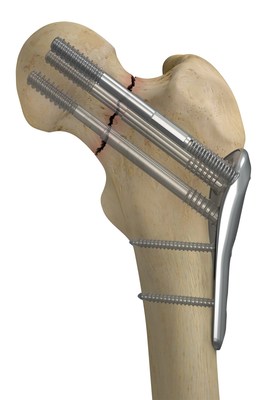
Smith & Nephew Inc. (LSE: SN, NYSE: SNN), the global medical technology business, has announced the launch of its CONQUEST FN™ system, a new implant solution to treat femoral neck fractures and promote bone preservation.
CONQUEST FN
Irrespective of age and bone quality, femoral neck fractures pose a significant clinical challenge with complication rates reported to be as high as 69% 1 depending on fracture type, patient population and therapeutic intervention. Smith & Nephew designed the CONQUEST FN system to address these challenges by providing a combination of innovative instrument and implant offerings with the intent of providing intra-operative and post-operative reduction control.
Inadequate implant fixation can lead to post-operative complications and secondary procedures. To address this concern, Smith & Nephew collaborated with FX Devices and became the first to utilize their POGO® Technology for femoral neck fractures. The POGO telescoping compression screw is designed to provide continuous fracture compression post-operatively with the intent to decrease hip pain and post-operative complications. Coupled with a proximal femoral locking plate, the system provides surgeons with a new level of control when treating these devastating fractures – dynamic locking fixation.
“Femoral neck fractures in physiologically young patients are significant injuries. I have had positive results in my initial experience with CONQUEST FN. Intra-operatively, it is easy to implant without a threat of loss of reduction; and post-operatively, patients often follow-up very comfortable with minimal pain, and have progressed to weight-bearing more quickly. I feel this speaks to the enhanced stability of the implant,” said Daniel S. Chan, MD, an orthopaedic traumatologist with the Orthopaedic Trauma Institute in Macon, Ga.
The estimated number of hip fractures worldwide will rise from 1.7 million in 1990 to 6.3 million in 2050. 2 Femoral neck fractures represent approximately 50% of these cases.3
“We take pride in designing products that address procedural challenges when treating traumatic injuries and are excited to introduce our CONQUEST FN system to a market that is clearly ready for new solutions. It offers truly differentiating POGO Technology that will help take femoral neck fracture treatment to the next level by offering dynamic locking fixation and promoting bone preservation – key elements in returning patients to pre-fracture function. It further complements our comprehensive hip fracture portfolio to give surgeons and their patients a choice of treatment options,” said Skip Kiil, President of Global Orthopaedics, Smith & Nephew.

Mallinckrodt Agrees In Principle With DOJ On Legacy Questcor Sales, Marketing

Mallinckrodtplc (NYSE: MNK), a global specialty biopharmaceutical company, today reported the company has reached an agreement in principle with the U.S. Department of Justice (DOJ) to resolve the previously disclosed government investigation of Questcor’s legacy sales and marketing activities, which is still subject to the finalization of certain terms. Under the civil False Claims Act settlement, Mallinckrodt expects to pay $15.4 million relating to legacy Questcor activities. While the agreement will not contain any admission of wrongdoing, it believes the agreement is fair and reasonable under the circumstances, and should put to rest these government claims relating to Questcor’s sales and marketing activities.

With respect to allegations in the newly filed DOJ civil complaint covering alleged legacy Questcor charitable foundation conduct between 2010 and 2014, the government is seeking to recover unspecified monetary damages for alleged violations of the False Claims Act and the Anti-Kickback Statute. Contrary to the DOJ’s characterizations in the complaint, the allegations relate to legacy Questcor conduct as all the donations to the Chronic Disease Fund (CDF) referenced in the complaint occurred prior to the acquisition of Questcor or were for grandfathered patients who had been approved by CDF for co-pay assistance prior to the acquisition. Mallinckrodtacquired Questcor in August 2014.
During the applicable period, CDF operated under a U.S. Health and Human Services (HHS) Office of the Inspector General (OIG)-issued advisory opinion, and CDF represented to Questcor that it operated in compliance with that opinion. In addition, the HHS-OIG stated in 2005 that single-donor, single-drug funds may, under prescribed circumstances, be lawful, and the agency reiterated publicly that position nearly a dozen times during the period in the complaint. Mallinckrodt believes Questcor’s relationship with CDF fell within this guidance, and as such was lawful and appropriate. Mallinckrodt denies any wrongdoing on the part of Questcor during the relevant period, and intends to vigorously defend the company in this matter.
Mallinckrodt looks forward to finalizing our settlement agreement with the government relating to legacy Questcor sales and marketing activities. As we have said repeatedly, where we can resolve legacy legal matters in a reasonable and manageable way, we will do so,” said Mark Casey, General Counsel, Mallinckrodt. “Unfortunately, that has not been possible to date regarding the allegations relating to Questcor’s charitable foundation activities, despite what we believe was lawful and appropriate activity. We are confident that the litigation process will focus the contested issues and be a productive step in reaching resolution.”