Search This Blog

Tuesday, December 3, 2019

New approach to treating cystic fibrosis may lower risk of lung transplants, death

A new approach to treating people with cystic fibrosis (CF) has been shown to reduce inflammation, which has the potential to reduce the need for lung transplants and lower the risk of death.
The study, led by researchers at RCSI (Royal College of Surgeons in Ireland), is published in the current edition of the American Journal of Respiratory and Critical Care Medicine.
CF is a genetic disease that affects about 1,300 children and adults in Ireland and 70,000 worldwide. The main cause of death in people with CF is lung disease, which is driven by severe inflammation and chronic infection in the airways.
While recent years have seen the emergence of several new therapies aimed at improving lung function and survival, the lack of effective anti-inflammatory and anti-infective treatments for these individuals continues to represent a significant challenge.
The researchers found that one of the most aggressive bacteria found in the lungs of those with CF caused certain immune cells to change their metabolism. This change caused the immune cells to produce a protein that causes more inflammation. They identified that high levels of the protein were associated with worse lung function and a higher risk of death or need for a lung transplant.
The team then used a small molecule called MCC950 to reduce levels of the protein in a laboratory model of CF. In addition to reducing inflammation, this also helped clear the lungs of bacteria. This marks the first time that researchers were able to stop this protein in CF in vivo by targeting cell metabolism, which could potentially lead to a new approach to treating inflammatory diseases like CF.
“This is an important first step to significantly improving patient outcomes for people with cystic fibrosis. While more testing is required before delivering this to patients, we believe these results are very promising and could make this molecule a candidate for clinical trials,” said Professor Gerry McElvaney, the study’s joint senior author and Professor of Medicine at RCSI.
RCSI researchers, including joint senior and corresponding author Dr Emer Reeves, carried out the study in collaboration with the University of Duisberg-Essen and the Trinity Biomedical Sciences Institute. The research was funded by the StAR (Strategic Academic Recruitment) MD Programme, which aims to transfer impactful research discoveries to clinical practice more quickly for the benefit of patients.
“Previously, people with CF had a very low life expectancy. Due to improvements in medical treatment, these individuals are now living longer. However, they still suffer from a very severe disease. We hope that this advancement can lead to further improvements in outcome, better quality of life and eventually a normal life expectancy for our patients,” said Dr Oliver McElvaney, the study’s lead author.

Story Source:
Materials provided by RCSINote: Content may be edited for style and length.

Journal Reference:
  1. Oliver J. McElvaney, Zbigniew Zaslona, Katrin Becker-Flegler, Eva M. Palsson-McDermott, Fiona Boland, Cedric Gunaratnam, Erich Gulbins, Luke A. O’Neill, Emer P. Reeves, Noel G. McElvaney. Specific Inhibition of the NLRP3 Inflammasome as an Antiinflammatory Strategy in Cystic FibrosisAmerican Journal of Respiratory and Critical Care Medicine, 2019; 200 (11): 1381 DOI: 10.1164/rccm.201905-1013OC

Micro implants could restore standing and walking

When Vivian Mushahwar first applied to grad school, she wrote about her idea to fix paralysis by rewiring the spinal cord.
It was only after she was accepted into a bioengineering program that the young electrical engineer learned her idea had actually prompted laughter.
“I figured, hey I can fix it, it’s just wires,” Mushahwar said. “Yeah, well, it’s not just wires. So I had to learn the biology along the way.”
It’s taken Mushahwar a lot of work over two decades at the University of Alberta, but the Canada Research Chair in Functional Restoration is still fixated on the dream of helping people walk again. And thanks to an electrical spinal implant pioneered in her laboratory and work in mapping the spinal cord, that dream could become a reality in the next decade.
Because an injured spinal cord dies back, it’s not simply a matter of reconnecting a cable. Three herculean feats are needed. You have to translate brain signals. You have to figure out and control the spinal cord. And you have got to get the two sides talking again.
People tend to think the brain does all the thinking, but Mushahwar says the spinal cord has built-in intelligence. A complex chain of motor and sensory networks regulate everything from breathing to bowels, while the brain stem’s contribution is basically “go!” and “faster!” Your spinal cord isn’t just moving muscles, it’s giving you your natural gait.
Other researchers have tried different avenues to restore movement. By sending electrical impulses into leg muscles, it’s possible to get people standing or walking again. But the effect is strictly mechanical and not particularly effective. Mushahwar’s research has focused on restoring lower-body function after severe injuries using a tiny spinal implant. Hair-like electrical wires plunge deep into the spinal grey matter, sending electrical signals to trigger the networks that already know how to do the hard work.
In a new paper in Scientific Reports, the team showcases a map to identify which parts of the spinal cord trigger the hip, knees, ankles and toes, and the areas that put movements together. The work has shown that the spinal maps have been remarkably consistent across the animal spectrum, but further work is required before moving to human trials.
The implications of moving to a human clinical setting would be massive, but must follow further work that needs to be done in animals. Being able to control standing and walking would improve bone health, improve bowel and bladder function, and reduce pressure ulcers. It could help treat cardiovascular disease — the main cause of death for spinal cord patients — while bolstering mental health and quality of life. For those with less severe spinal injuries, an implant could be therapeutic, removing the need for months of gruelling physical therapy regimes that have limited success.
“We think that intraspinal stimulation itself will get people to start walking longer and longer, and maybe even faster,” said Mushahwar. “That in itself becomes their therapy.”
Progress can move at a remarkable pace, yet it’s often maddeningly slow.
“There’s been an explosion of knowledge in neuroscience over the last 20 years,” Mushahwar said. “We’re at the edge of merging the human and the machine.”
Given the nature of incremental funding and research, a realistic timeline for this type of progress might be close to a decade.
Mushahwar is the director of the SMART Network, a collaboration of more than 100 U of A scientists and learners who intentionally break disciplinary silos to think of unique ways to tackle neural injuries and diseases. That has meant working with researchers like neuroscientist Kathryn Todd and biochemist Matthew Churchward, both in the psychiatry department, to create three-dimensional cell cultures that simulate the testing of electrodes.
The next steps are fine-tuning the hardware — miniaturizing an implantable stimulator — and securing Health Canada and FDA approvals for clinical trials. Previous research has tackled the problem of translating brain signals and intent into commands to the intraspinal implant; however, the first generation of the intraspinal implants will require a patient to control walking and movement. Future implants could include a connection to the brain.
It’s the same goal Mushahwar had decades ago. Except now it’s no longer a laughable idea.
“Imagine the future,” Mushahwar said. “A person just thinks and commands are transmitted to the spinal cord. People stand up and walk. This is the dream.”

Story Source:
Materials provided by University of Alberta Faculty of Medicine & Dentistry. Original written by Brent Wittmeier. Note: Content may be edited for style and length.

Journal Reference:
  1. Amirali Toossi, Dirk G. Everaert, Steve I. Perlmutter, Vivian K. Mushahwar. Functional organization of motor networks in the lumbosacral spinal cord of non-human primatesScientific Reports, 2019; 9 (1) DOI: 10.1038/s41598-019-49328-1

Allscripts launches $200M convertible debt offering

Allscripts Healthcare Solutions (NASDAQ:MDRX) slips 1% after hours on the heels of its $200M private offering of convertible senior notes due 2027. Initial buyers will have a 13-day option to purchase up to an additional $30M of the notes.
Price, yield and conversion rate have yet to be determined.

Is Clovis Oncology Really a Buyout Candidate?

If enough people think something, does that make it true?
That’s the question investors should ask themselves when it comes to Clovis Oncology (NASDAQ:CLVS), which saw its stock skyrocket 371% in November. The reason: The return of merger and acquisition (M&A) activity in the pharma industry has renewed hope that the company might be an attractive buyout candidate.
Clovis Oncology has a potentially important oncology drug on the market in Rubraca, which could earn supplementary approvals to greatly expand its use. The business recently started to curb operating expenses, which may tempt a potential suitor to take action — or so goes the thinking of wishful investors. Do the rumors swirling around this pharma stock have merit?

A legitimate buyout candidate vs. wishful thinking

Some might argue that Clovis Oncology is making progress where it matters. For instance, after reporting operating cash outflow of $98.4 million in each of the first two quarters of 2019, the business cut that down to a cash outflow of $57 million in Q3.
To be fair, one quarter isn’t a trend. Even if it proves to be, the company would be on pace to burn through roughly $228 million in cash from operating activities on a forward-looking annualized basis. That would still meet the definition of progress: Clovis Oncology has reported operating cash outflows of at least $260 million in each of the previous three years.
Slimming down may be a good way to attract a potential suitor, which would likely make significant spending cuts after completing an acquisition. It also helps to extend the company’s runway, as it ended September with $354 million in cash. But potential buyers will still need to factor in the hefty cash burn. The cost of the potential transaction is the upfront price to acquire Clovis Oncology, plus forking over at least $200 million per year (or whatever it can be whacked down to) to support the unsustainable business.
The acquisition calculus would also need to factor in the future of the company’s primary asset, Rubraca, which is less than certain. The drug inhibits poly ADP ribose polymerase (PARP), an enzyme that plays an important role in the survival of certain genetically defined cancers, especially those harboring mutations in BRCA 1 or BRCA 2 genes, or those with mutations in other genes controlling DNA repair mechanisms.
Rubraca is currently approved to treat individuals with epithelial ovarian, fallopian tube, or primary peritoneal cancer who have been treated with at least two chemotherapies or who are in complete or partial remission. That’s a relatively small opportunity, but PARP inhibitors could potentially be used to treat various forms of genetically defined, solid-tumor cancers as first-line options. That could represent a multibillion-dollar opportunity for the drug class.
The issue for Clovis Oncology is that there’s ample competition with significant financial backing. AstraZeneca (NYSE:AZN) and Merck (NYSE:MRK) have teamed up to market and develop Lynparza, while GlaxoSmithKline acquired Tesaro for $5.1 billion in early 2019 to gain control of Zejula. Johnson & Johnson owns partial rights to the drug in prostate cancer, which could become the decisive market for PARP inhibitors.
Unfortunately for Clovis Oncology, Wall Street analysts have much higher expectations for the commercial potential of Lynparza and Zejula compared to Rubraca. Consider the latest clinical results for the trio when it comes to objective response rates (ORR) in metastatic castration-resistant prostate cancer (mCRPC) with various mutations in DNA repair genes:
METRICRUBRACALYNPARZAZEJULA
Peak annual sales estimate (all indications)$740 million$3.1 billion$1.1 billion
Study design for latest mCRPC dataPhase 2, single-armPhase 3, randomizedPhase 2, single-arm
ORR in individuals with BRCA 1/243.9% (57 patients)33% (162 patients, includes ATM mutations)41% (46 patients)
ORR in individuals with non-BRCA mutationsN/A21.7% (256 patients, all mutations, including 162 patients above)9% (35 patients)
DATA SOURCES: REUTERS AND COMPANY PRESS RELEASES.
Each of the three PARP inhibitors has earned “breakthrough therapy” designation from the U.S. Food and Drug Administration (FDA) in mCRPC. That will allow Clovis Oncology to file a supplemental new drug application (sNDA) from the phase 2 data before the end of 2019, which means it could receive regulatory approval in 2020. The company is also enrolling patients in a larger, randomized phase 3 trial comparing Rubraca against a therapy chosen by the treating physician.
While generating data from a randomized study design will prove crucial for the ultimate commercial fate of Rubraca, AstraZeneca and Merck already have that data for Lynparza. The pair will submit an sNDA this month and look to gain approval in 2020. It may not matter which drug gets to market first, however.
Doctors — especially in countries with government-run, value-based healthcare systems — are more likely to choose Lynparza over Rubraca, especially since Lynparza was shown to reduce the risk of disease progression or death by 66% compared to the current standard of care. That could change if Rubraca delivers robust results from its phase 3 study, but that data is at least one year away.

Pump the brakes on the speculation

Shares of Clovis Oncology erupted higher in November on speculation that the company is a leading buyout candidate. Investors didn’t seem to care about the mCRPC data or timeline for an sNDA filing, as shares actually lost value in the month following the last data update. While the company only has one needle-moving asset, investors assumed that a market cap of less than $300 million was simply too good to pass up. But investors may want to pump the brakes on all the speculation.
Clovis Oncology is burning through over $200 million in cash through operations on an annualized basis, which a potential suitor certainly wouldn’t overlook when assessing the value proposition. The more important consideration is the uncertain future of Rubraca. After generating $104 million in revenue in the first nine months of 2019, the drug product is far from maximizing its potential. However, any company interested in a deal would have to bet that Rubraca holds its own against Lynparza in prostate cancer after launching in 2020, delivers superior data to Lynparza in the former’s currently enrolling phase 3 trial, and then races to disrupt established relationships with doctors to snag market share (assuming the previous condition is met).
That’s a risky bet. It also doesn’t factor in superior data in other solid-tumor cancers for Lynparza in the PARP inhibitor landscape, or the fact that more targeted PARP inhibitors are being developed across the industry’s pipeline today. Rather than gobble up Clovis Oncology and hope the value proposition pans out, it may make more sense to throw down on a lucrative licensing deal with a start-up or industry peer. Simply put, everything has to go right for Clovis Oncology, which isn’t a great position to be in.

Outlook Therapeutics up 49% on advancement of ONS-5010

Thinly traded nano cap Outlook Therapeutics (OTLK +49.3%) is up on a healthy 24x surge in volume on the heels of the FDA’s sign-off on protocols for three new Phase 3 studies supporting ONS-5010, an ophthalmic formulation of Roche’s cancer med Avastin (bevacizumab).
The three studies are: NORSE 4, in patients with branch retinal vein occlusion (BRVO) and NORSE 5 & 6 in diabetic macular edema patients. All should launch in 2020 after enrollment is completed in NORSE 2 in wet AMD. If all goes well, the company expects to launch commercially in 2022.

Rapt Therapeutics teams up with Hanmi on FLX475 in Asia; shares up after hours

Rapt Therapeutics (NASDAQ:RAPT) will collaborate with South Korea’s Hanmi Pharmaceutical Co., Ltd. to develop and commercialize cancer candidate FLX475, a CCR4 antagonist, in Asia.
Under the terms of the agreement, RAPT will receive $10M upfront, up the $48M in development milestones, up to $60M in sales milestones and double-digit royalties on net sales. Hanmi will have an exclusive license to FLX475 in South Korea and China (including Taiwan and Hong Kong).
Shares up 12% after hours.

Dexcom: Outage that kept diabetics from tracking blood sugar ‘complete surprise’

  • Dexcom experienced it’s largest ever technical glitch over the weekend.
  • The company’s technology chief acknowledged that Dexcom needs to do better.
  • Dexcom is analyzing its tech infrastructure and working to bolster its communications systems.
CNBC: Kevin Sayer, Dexcom 191113 2
Kevin Sayer, CEO, Dexcom
Scott Mlyn | CNBC
Dexcom’s technology chief admits that the maker of continuous blood sugar monitoring systems was caught flat-footed by a technology outage over the Thanksgiving holiday weekend, and was ill-equipped to properly inform users of the problem.
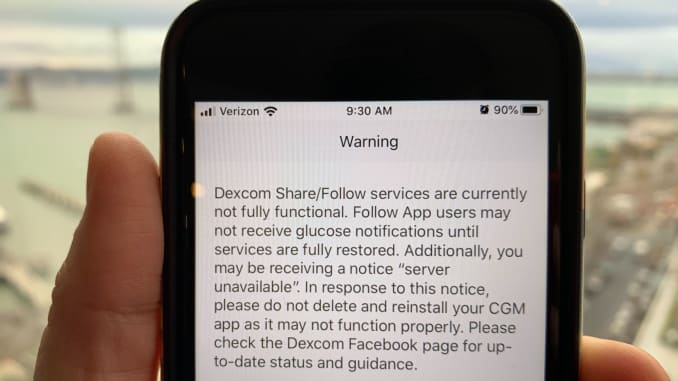
Because of a server glitch, a large number of Dexcom’s customers, who rely on the company’s technology to manage their diabetes treatment, weren’t alerted to potentially dangerous changes in their blood glucose levels. The issue was of particular concern to parents who use Dexcom’s system to monitor their kids’ health.
“It was a complete surprise,” said Jake Leach, Dexcom’s chief technology officer, in an interview late Monday, after CNBC published a story on the ongoing problem. Leach said the company didn’t have any scheduled updates over the weekend. “This is a real learning opportunity to look at our system architecture.”
Dexcom acknowledged that the bug affected a “large portion” of its users in the U.S. who rely on its Follow feature, which lets users share their glucose readings with caregivers or family members. It began very early Saturday morning, with some parents saying they figured out something was wrong after their kids went to bed Friday night.
The company says it has a system for monitoring technology problems 24 hours a day and recognized what was happening right away though it didn’t know that the outage was so widespread and that it was expanding. Leach said that over the weekend, Dexcom pulled in its internal engineers to work on restoring the system and recruited help from its technology infrastructure partners.
Dexcom relies on Google’s cloud service and also uses some Microsoft technology. Almost immediately, Leach’s team started reaching out to Google to see if it could troubleshoot the problem. Microsoft also offered to help fix what had rapidly become Dexcom’s largest ever glitch.
Dexcom down
Dexcom is still experiencing intermittent technical issues.
Erin Black, CNBC
The company even evaluated potential influence from foreign hackers, but didn’t find evidence of a data breach.
As of Monday, the outage was mostly resolved but some intermittent issues persisted. Leach said Dexcom has been reassessing its entire back-end system to make sure this doesn’t happen again.
One major fix the company is working on is improving its ability to message customers in real time. Currently, the messaging feature isn’t set up to inform users that the alert system isn’t working, Leach said, so Dexcom has been limited to updating people through its Facebook page.
Users who were unaware of Dexcom’s Facebook updates were stuck. Some started deleting and reinstalling the smartphone app, only to find that they could no longer log in, because that feature was also affected.
As Melinda Wedding, a mother of a teenager with diabetes told CNBC, “I get more information, more quickly when there’s an outage on my Dropbox than I do for my child’s blood sugar monitor.”
Leach said the company is “always evaluating” upgrades to its customer service, especially in light of criticisms from users who say they didn’t receive a call back or email response quickly enough.
“Ultimately we need to be able to communicate faster, and in a broader way,” he said. “Clearly, there’s an opportunity there.“