A group of Blue Cross Blue Shield insurers is investing $55 million
in a new venture with a non-profit generic drug manufacturer to try to
offer cheaper prices on pharmacy drugs to their members, the companies
said on Thursday.
The Blue Cross Blue Shield Association and 18 Blue Cross Blue Shield
health insurers are working with Civica Rx, a non-profit formed two
years ago to try to increase competition for hospital-based generic
drugs.
The new subsidiary will focus on drugs that members can purchase via
mail order or in retail pharmacies. It aims to launch new rivals
starting in 2022 for about 7 to 10 expensive generic drugs where there
is currently only one manufacturer, Civica Chairman Dan Liljenquist
said. An advisory board will select the drugs.
Civica will be able to sell the drugs at a lower price than a current
manufacturer by leveraging the volume of prescriptions among its Blues
plans members to guarantee discounts, Liljenquist said. The company may
also make drugs itself.
Members will benefit from those lower prices based on their plan
design, BCBSA strategy head Maureen Sullivan said. The lower cost the
Blues plan pays could mean lower out-of-pocket spending, savings on the
overall premium or potentially a lower co-pay or a co-pay waiver for
patients, she said.
About 78 percent of the U.S.’s $335 billion in annual drug spending
is on copycat versions of branded drugs whose patents have run out,
according to the generic industry trade group, the Association for
Accesible Medicines.
Large generic drug manufacturers say price competition has driven
down the profits of many generic drugs, leading to industry
consolidation. That has increased the number of drugs with only one
manufacturer, which can result in price spikes on lifesaving medicines.
The U.S. Food & Drug Administration has enacted new policies to
try to ease the process for approving new rival generic drugs when there
are only one or two existing drugs on the marketplace.
A Civica spokeswoman said that as of the beginning of this year, the
company’s existing venture was either supplying or producing a total of
18 hospital-based medicines including commonly used medicines like
bacitracin, lidocaine and morphine. It uses several generic
manufacturers to produce the drugs.
Participating Blues plans include Independence Blue Cross, Blue
Shield of California and Highmark Blue Cross Blue Shield among others. https://www.reuters.com/article/us-usa-pricing-generics/blues-health-insurers-fund-u-s-non-profits-generic-drug-expansion-idUSKBN1ZM1R8
Roche (OTCQX:RHHBY) announces positive results from Part 2 of a Phase 2/3 clinical trial, FIREFISH, evaluating risdiplam in infants ages 1-7 months with spinal muscular atrophy type 1 (SMA1).
The study met the primary endpoint of the
proportion of infants sitting without support for at least five seconds
at month 12 as measured by a scale called BSID-III.
No new safety signals were observed.
Detailed data will be submitted for presentation at a future medical conference.
The company announced positive results from another Phase 2/3 study, SUNFISH, in November 2019.
Risdiplam is a survival motor neuron-2 (SMN2)
splicing modifier designed to increase and sustain SMN protein levels
throughout the central nervous system and in peripheral tissues.
Roche is leading development in collaboration with PTC Therapeutics (NASDAQ:PTCT) and the SMA Foundation.
The WSJ reports that
the coronavirus responsible for the current outbreak in China, mainly
in the city of Wuhan, appears less virulent than the virus responsible
for the SARS outbreak in 2003.
On the negative side, though, infection is
spreading due to better transportation infrastructure, particularly
high-speed rail. China’s economy is much more dependent on services and
consumer spending (drives ~60% of growth) so containing the outbreak
will be important considering that retail sales dropped by 50% during
the height of the 2003 epidemic.
Government officials have closed public transportation links in and around Wuhan in an effort to contain the spread.
Selected tickers that have rallied on the news: Moderna (NASDAQ:MRNA) (+5% premarket), NanoViricides (NYSEMKT:NNVC) (+17%), Novavax (NASDAQ:NVAX) (+11%), ImmuCell (NASDAQ:ICCC), Aethlon Medical (NASDAQ:AEMD), Inovio Pharmaceuticals (NASDAQ:INO), BioCryst Pharmaceuticals (NASDAQ:BCRX), Nabriva Therapeutics (NASDAQ:NBRV)
Thinly traded nano cap Co-Diagnostics (NASDAQ:CODX) jumps 181% premarket on increased volume in reaction to its announcement that
it has completed the principle design work for a PCR screening test for
the coronavirus, 2019-nCoV, driving the current outbreak in China.
There has been only one confirmed case in the U.S. so far, a man in the Seattle area.
When Marie Antoinette was captured during the French Revolution, her hair reportedly turned white overnight. In more recent history, John McCain experienced severe injuries as a prisoner of war during the Vietnam War—and lost color in his hair.
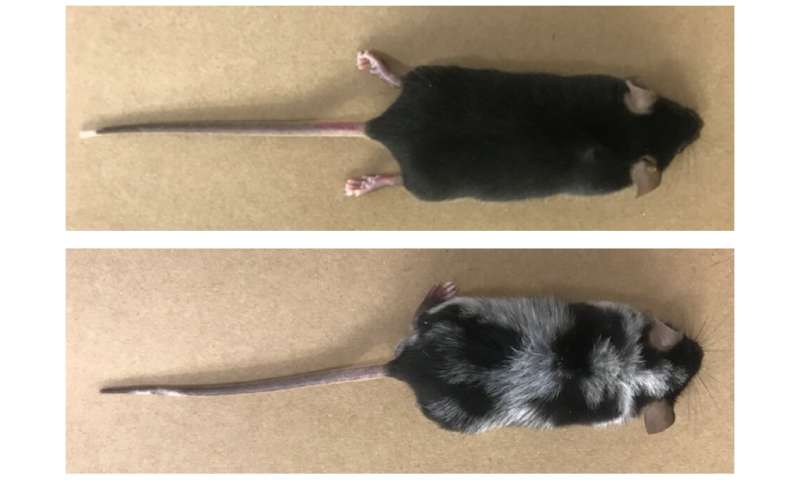
For a long time, anecdotes have connected stressful experiences with the phenomenon of hair graying. Now, for the first time, Harvard University scientists have discovered exactly how the process plays out: stress activates nerves that are part of the fight-or-flight response, which in turn cause permanent damage to pigment-regenerating stem cells in hair follicles.
The study, published in Nature, advances scientists’ knowledge of how stress can impact the body.
“Everyone has an anecdote to share about how stress affects their body, particularly in their skin and hair—the only tissues we can see from the outside,” said senior author Ya-Chieh Hsu, the Alvin and Esta Star Associate Professor of Stem Cell and Regenerative Biology at Harvard. “We wanted to understand if this connection is true, and if so, how stress leads to changes in diverse tissues. Hair pigmentation is such an accessible and tractable system to start with—and besides, we were genuinely curious to see if stress indeed leads to hair graying. ”
Narrowing down the culprit
Because stress affects the whole body, researchers first had to narrow down which body system was responsible for connecting stress to hair color. The team first hypothesized that stress causes an immune attack on pigment-producing cells. However, when mice lacking immune cells still showed hair graying, researchers turned to the hormone cortisol. But once more, it was a dead end.
“Stress always elevates levels of the hormone cortisol in the body, so we thought that cortisol might play a role,” Hsu said. “But surprisingly, when we removed the adrenal gland from the mice so that they couldn’t produce cortisol-like hormones, their hair still turned gray under stress.”
After systematically eliminating different possibilities, researchers honed in on the sympathetic nerve system, which is responsible for the body’s fight-or-flight response.
Sympathetic nerves branch out into each hair follicle on the skin. The researchers found that stress causes these nerves to release the chemical norepinephrine, which gets taken up by nearby pigment-regenerating stem cells.
Image comparing mice submitted to pain-inducing experiment, which resulted in loss of pigmentation [bottom], to dark-colored mice in the control group. Credit: William A. Gonçalves
Permanent damage
In the hair follicle, certain stem cells act as a reservoir of pigment-producing cells. When hair regenerates, some of the stem cells convert into pigment-producing cells that color the hair.
Researchers found that the norepinephrine from sympathetic nerves causes the stem cells to activate excessively. The stem cells all convert into pigment-producing cells, prematurely depleting the reservoir.
“When we started to study this, I expected that stress was bad for the body—but the detrimental impact of stress that we discovered was beyond what I imagined,” Hsu said. “After just a few days, all of the pigment-regenerating stem cells were lost. Once they’re gone, you can’t regenerate pigment anymore. The damage is permanent.”
The finding underscores the negative side effects of an otherwise protective evolutionary response, the researchers said.
“Acute stress, particularly the fight-or-flight response, has been traditionally viewed to be beneficial for an animal’s survival. But in this case, acute stress causes permanent depletion of stem cells,” said postdoctoral fellow Bing Zhang, the lead author of the study.
Answering a fundamental question
To connect stress with hair graying, the researchers started with a whole-body response and progressively zoomed into individual organ systems, cell-to-cell interaction and, eventually, all the way down to molecular dynamics. The process required a variety of research tools along the way, including methods to manipulate organs, nerves, and cell receptors.
“To go from the highest level to the smallest detail, we collaborated with many scientists across a wide range of disciplines, using a combination of different approaches to solve a very fundamental biological question,” Zhang said.
The collaborators included Isaac Chiu, assistant professor of immunology at Harvard Medical School who studies the interplay between nervous and immune systems.
“We know that peripheral neurons powerfully regulate organ function, blood vessels, and immunity, but less is known about how they regulate stem cells,” Chiu said.
“With this study, we now know that neurons can control stem cells and their function, and can explain how they interact at the cellular and molecular level to link stress with hair graying.”
The findings can help illuminate the broader effects of stress on various organs and tissues. This understanding will pave the way for new studies that seek to modify or block the damaging effects of stress.
“By understanding precisely how stress affects stem cells that regenerate pigment, we’ve laid the groundwork for understanding how stress affects other tissues and organs in the body,” Hsu said. “Understanding how our tissues change under stress is the first critical step towards eventual treatment that can halt or revert the detrimental impact of stress. We still have a lot to learn in this area.”
Louisiana rescinded Medicaid managed care contracts to UnitedHealthcare, Humana and two other insurers because of problems with the bidding process.
The decision by Louisiana’s state procurement officer announced Friday likely will mean a new round of bidding for Louisiana’s Medicaid managed care program unless the decision is appealed and overturned.
Centene’s Louisiana Healthcare Connections and Aetna Better Health Louisiana protested the state’s award of Medicaid contracts to Healthy Blue, Humana Health Benefit Plan of Louisiana, AmeriHealth Caritas and UnitedHealthcare Community Plan last year.
Centene and Aetna charged in their appeal last August that Humana gave inaccurate information and that the scoring method used by the bidding process was “tainted with multiple conflicts of interest within the evaluation committee.”
Louisiana’s procurement officer didn’t find any bias against Aetna or Centene among the evaluators nor any conflicts of interest.
However, the procurement officer did find the evaluation process to be riddled with problems. For instance, the state changed its evaluation tool for bids multiple times after the review process had started, tainting the evaluation.
The original request for proposals also required the insurers to give a provider network listing. However, “unbeknownst to proposers and contrary to the language of the RFP” the evaluation committee did not examine the provider network listing.
The committee also didn’t properly amend the RFP to tell insurers they were not going to review the listing.
Humana said that it was “disappointed” in the ruling.
“We will be appealing the decision and await the state’s final determination in the coming weeks,” the insurer said in a statement. “We continue to focus on preparing for the start of the new Medicaid program.”
AmeriHealth added that it was reviewing the decision, and UnitedHealthcare said it will continue to serve the state’s Medicaid beneficiaries but did not mention an appeal.
Louisiana paid out $7.6 billion to five managed care plans in the 2018 fiscal year, the state’s department of health said.