Search This Blog

Thursday, January 20, 2022

Fosun Pharma, Other Chinese Drugmakers Rise After Deal to Make Merck's Covid-19 Pill

 Shares of three Chinese drugmakers rose following news they will be among 27 companies globally to help make cheaper versions of Merck & Co.'s Covid-19 pill for distribution in low- and middle-income countries.

BrightGene Bio-Medical Technology Co. hit the maximum 20% daily rise on Shanghai's science- and tech-focused STAR board, while Shanghai Fosun Pharmaceutical (Group) Co.'s A-shares rose as much as 10% on Friday. Fosun Pharma's H-shares jumped 13% in early trading but have since pared gains to trade 3.5% higher.

Viva Biotech Holdings, whose unit Zhejiang Langhua Pharmaceutical Co. was also part of the deal, surged as much as 37% in Hong Kong was recently 16% higher.

The United Nations-backed public-health organization Medicines Patent Pool said Thursday that it had signed agreements with 27 Asia- and Africa-based generic manufacturers to produce versions of Merck's oral Covid-19 antiviral drug molnupiravir to be made available in more than 100 countries.

Fosun Pharma and BrightGene will produce raw ingredients for molnupiravir and manufacture the finished drug, while Langhua Pharmaceutical will produce the raw ingredients only.

Other Asia-based companies that are part of the deal include Indonesian pharmaceutical Kimia Farma, which was last up 3.4%, and South Korea's Hanmi Pharmaceutical Co., which added 1.2%. Another Korean drugmaker, Celltrion Pharm Inc., rose as much as 5.5% before reversing course in morning trade.

Merck earlier this week said it will allocate up to 3 million courses of molnupiravir to Unicef in the first half of 2022 for distribution in more than 100 low- and middle-income countries, pending regulatory authorizations.

The drug has been cleared for use in the U.S. In a study done before the Omicron variant emerged, Merck and partner Ridgeback Biotherapeutics LP found their pill to be 30% effective in reducing the risk of hospitalization and death.

https://www.marketscreener.com/quote/stock/SHANGHAI-FOSUN-PHARMACEUT-6548924/news/Fosun-Pharma-Other-Chinese-Drugmakers-Rise-After-Deal-to-Make-Merck-s-Covid-19-Pill-37604391/

Elanco Long-Acting Transdermal Buprenorphine for Cats Gains U.S. Approval

 FDA issues approval for new, prescription medication to control postoperative pain associated with surgical procedures in cats, expanding Elanco’s pain portfolio.

With the U.S. Food and Drug Administration (FDA) approval of Zorbium™ (buprenorphine transdermal solution), Elanco Animal Health (NYSE: ELAN) expands its pain management offerings while addressing an unmet need for veterinary practices.

A new long-acting medication to control postoperative pain associated with surgical procedures in cats, ZORBIUM provides up to four days of pain control from a single transdermal dose. ZORBIUM is an innovative, transdermal formulation of a commonly used opioid (buprenorphine) in cats, enabling veterinarians to provide consistent, reliable pain relief to their post-op feline patients for 4 days without relying upon owners to administer an opioid after discharge and without the need for repeat injections. Consistent pain control reassures cat owners and reduces the challenges of administering pain medications at home.

https://finance.yahoo.com/news/elanco-zorbium-buprenorphine-transdermal-solution-213000984.html

Covid test firm urges end to tests for travellers

 Covid tests for travellers arriving in the UK should be scrapped, one of the big testing firms has said.

Simon Worrell, global medical director of Collinson - which also runs airport lounges - said: "As soon as we can drop it, we will be delighted."

At present, all those aged five and over arriving in England must take a test within 48 hours of arriving.

Prime Minister Boris Johnson said on Wednesday the government was reviewing testing arrangements for travel.

He said the Health Secretary Sajid Javid would announce the outcome of the review in the coming days.

Mr Worrell said Collinson, which has a large travel business that includes running customer services in airports, launched its testing sites early in the pandemic in a bid to prop up the travel industry, which a large part of his business depends on.

But now, with more people able to return to the skies, the requirement for people to test on arrival has become more of a hindrance to the business, because it may put them off travelling.


The travel industry has continually voiced its objection to testing. Manchester Airports Group and Airlines UK on Friday renewed their calls for testing rules to become a thing of the past for fully vaccinated travellers.

But virologists have expressed caution. Dr Stephen Griffin from the University of Leeds said: "You have a moral responsibility to monitor and to know if you're infectious. It is a good idea to test."

Collinson was one of the first operators to run Covid testing stations at airports and also distributes tests through the post. It partners with a number of UK airlines and travel operators.

Mr Worrell said: "Airport testing was only ever supposed to be a band-aid, a temporary solution to get trade and tourism staggering whilst we build up immunity and we are able to fight the virus by ourselves. We are at that point now.

"The link between getting infected and hospitalisation has been broken. We are in a fantastic place - the envy of the world, I think."

'Rip-off'

Covid testing for travellers has been controversial and the government has faced criticism over its regulation of the sector.

Consumer rights groups said the Department for Health and Social Care had not done enough to protect consumers from what was called a "predictable Covid rip-off".

The government did launch an investigation to remove operators who were selling tests that, in some instances, were too cheap or not available at the price advertised.

But those in the medical community are alarmed that testing for those arriving back in the UK could be removed.

Dr Eleanor Gaunt, who investigates the genetic coding of viruses at the University of Edinburgh, said: "I fully agree that this needs to happen, but the timing is premature.

"It is entirely possible that Omicron will be succeeded by a new variant and possibly one that can circumvent immunity provided by vaccination and previous infection.

"Therefore we need eyes on what viruses are moving where, until the virus becomes more predictable and endemic."

Yet not everyone in the scientific community believes testing for travellers arriving into the UK should remain.

Dr Bharat Pankhania, from the University of Exeter Medical School, believes that it is time for travel tests to end, as long as community testing remains in place to identify variants of concern.


https://www.bbc.com/news/business-60063606

Intuitive Surgical Weathers Omicron, But Offers Word Of Warning

 Intuitive Surgical outplayed the omicron variant Thursday, reporting another quarter of procedure growth for its robotic surgery systems. But ISRG stock fell late.

During the fourth quarter, the number of procedures performed using Intuitive Surgical's da Vinci systems increased 19%. Procedure growth is a key indicator of the strength of Intuitive's business. At the height of the pandemic in 2020, procedures declined. Last year, they roared back.

Still, the company offered a word of warning.

"The impact of the Covid-19 pandemic on the company's business has, and continues to, differ by geography and region," Intuitive Surgical said in a news release. "Covid-19 has had, and will likely continue to have, an adverse impact on the company's procedure volumes."

In after-hours trading on today's stock market, ISRG stock dipped 0.9% near 290. Shares closed the regular session down a fraction at 292.73.

ISRG Stock: Shipments, Instrument Sales Rise

Fourth-quarter revenue was in line with Intuitive Surgical's positive preannouncement earlier this month. Sales increased 17% to $1.55 billion, just ahead of ISRG stock analysts' projections for $1.52 billion. Adjusted profit was $1.30 per share, up roughly 9%, and beat forecasts by 2 pennies.

The company also shipped 385 of its da Vinci Surgical Systems, an increase of 18%.

Sales from one-time use instruments and accessories climbed 13% to $843 million. This was driven by growth in da Vinci procedures. Intuitive Surgical noted procedures were particularly strong for U.S. general surgery and continued growth outside the U.S.

The company didn't offer an outlook for 2022. ISRG stock is now well below its key moving lines, according to MarketSmith.com.

https://www.investors.com/news/technology/isrg-stock-intuitive-surgical-earnings-q4-2021/

Biden Admin Decrees All 'Essential' Workers Traveling To US Must Be Fully Vaccinated

 It's the latest example of "vaccines for thee, but not for me..."

Despite the fact that the Supreme Court has blocked OSHA from enforcing the Biden Administration's corporate vaccination mandate for most US workers, the administration has decided to require travelers visiting the US for "essential" reasons - ie to fill "essential" jobs like serving as a hospital nurse treating COVID patients - to be fully vaccinated.

Travelers arriving in the US by plane have already been required to prove their vaccination status for months now. But the new restrictions, which take effect at the beginning of next week, will expand the requirement to cover foreigners entering the US via port, land or ferry terminals along the US-Mexico and US-Canada borders (though, fortunately for them, a negative COVID test isn't required for entry at these locations).

The requirement will also apply to "non-essential" travelers, meaning that people seeking to visit the US must be from one of the countries fortunate enough to have broad access to vaccines.

In a statement, DHS Secretary Alejandro Mayorkas said he was moving to protect public health while "safely facilitating the cross-border trade and travel that is critical to our economy."

"Starting on January 22, 2022, the Department of Homeland Security will require that non-U.S. individuals entering the United States via land ports of entry or ferry terminals along our Northern and Southern borders be fully vaccinated against COVID-19 and be prepared to show related proof of vaccination,” said Secretary Alejandro N. Mayorkas. "These updated travel requirements reflect the Biden-Harris Administration’s commitment to protecting public health while safely facilitating the cross-border trade and travel that is critical to our economy."

Regardless of whether they're "essential" or "non-essential", they must do the following:

  • Verbally attest to their COVID-19 vaccination status

  • Provide proof of a CDC-approved COVID-19 vaccination, as outlined on the CDC website

  • Present a valid Western Hemisphere Travel Initiative (WHTI)-compliant document, such as a valid passport, Trusted Traveler Program card, or Enhanced Tribal Card

  • Be prepared to present any other relevant documents requested by a U.S. Customs and Border Protection (CBP) officer during a border inspection

Of course, this doesn't bode well for the labor market, especially for hospitals desperate for front-line nurses and other "essential" workers, since health-care workers outside the US are typically even more reluctant to get the vaccine than health-care workers inside the US.

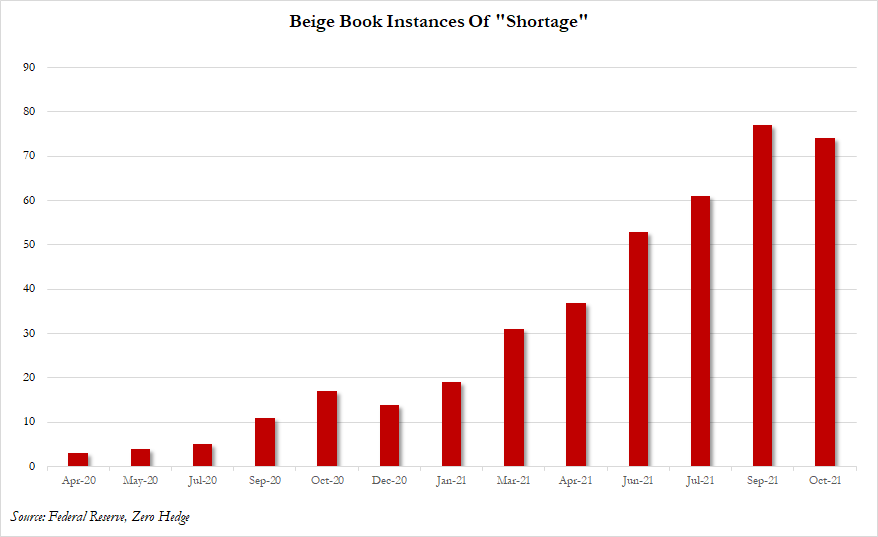
Economic data, including, most notably, the Fed's Beige Book (a collection of economic observations) has suggested as of late that the worker shortage in the US has started to ease.

But the Biden Administration's decision certainly won't help hospitals and other health-care providers paying traveling nurses 3x what they pay their staff due to the demand.

https://www.zerohedge.com/economics/biden-admin-decrees-all-essential-workers-traveling-us-must-be-fully-vaccinated

Fewer breakthrough COVID-19 infections, lower risk of hospitalization with Moderna vaccine v. Pfizer–BioNTech

 A new study by researchers at the Case Western Reserve University School of Medicine finds those who received the Moderna COVID-19 mRNA vaccine are less likely to experience “breakthrough” COVID-19 cases, compared to recipients of the Pfizer-BioNTech mRNA vaccine.

A vaccine breakthrough infection occurs when a person becomes infected after being fully vaccinated (receiving two doses of the mRNA vaccine), according to the Centers for Disease Control and Prevention.

The research—which also found those who received the Moderna vaccine were less likely to be hospitalized, compared to recipients of the Pfizer-BioNTech vaccine—was published today in the Journal of the American Medical Association. The study examines breakthrough SARS-CoV-2 infections, hospitalizations and death rates when the Delta variant was predominant.

Rong Xu, professor of bioinfomatics and director of the Center for AI in Drug Discovery at the Case Western Reserve School of Medicine and study author, said the study analyzed electronic health records of more than 637,000 fully vaccinated patients from 63 healthcare organizations across the United States, covering diverse geographic, age, races and ethnicities, income levels and insurance groups.

“Breakthrough COVID infections, hospitalization and mortality associated with the Delta variant were compared between recipients of Moderna mRNA vaccine and recipient of Pfizer mRNA vaccine while considering patient characteristics and the varying time since vaccination,” Xu said.

Data included COVID-19 breakthrough infections that occurred between July and November 2021, when Delta accounted for almost all cases. Incidents of breakthrough infections were included if the person had not been previously infected with COVID-19 or had received a booster vaccination. The team considered demographics, social determinants of health, transplants and comorbidities. Hospitalization rates of patients within 60 days after COVID-19 infection were also compared.

The findings show that the monthly incidence rate of breakthrough cases was higher in those who received the Pfizer–BioNTech vaccine, compared to the Moderna vaccine. For example, the data showed 2.8 breakthrough cases in those vaccinated with Pfizer–BioNTech, compared to 1.6 cases per 1,000 people in November 2021. The 60-day hospitalization rate was 12.7% for Moderna recipients and 13.3% for Pfizer–BioNTech recipients.

No significant difference was observed in mortality rates between those who received the Moderna vaccine and Pfizer- BioNTech vaccine.

“Although there is a difference in breakthrough infections, both vaccines are highly protective against SARS-COV2 infection and especially against the most severe consequences of infection,” said Pamela B. Davis, the Arline and Curtis Garvin Research Professor in the Center for Community Health Integration and a coauthor of the study.  “Further studies are required to assess the results of booster doses and also the protection afforded especially vulnerable populations by vaccines.”

Highlighting COVID-19 neurological symptoms and need for rigorous studies

 SARS-CoV-2 was initially identified as a respiratory virus, but it can affect the entire body, including the nervous system. In a new Viewpoint published in Science, Avindra Nath, M.D., clinical director of the National Institutes of Health’s National Institute of Neurological Disorders and Stroke (NINDS), and Serena Spudich, M.D., Yale School of Medicine, New Haven, Connecticut, highlight what is currently known about the effects of SARS-CoV-2 on the brain, the importance of increased research into the underlying causes of Long Covid and possible ways to treat its symptoms.

Neurological symptoms that have been reported with acute COVID-19 include loss of taste and smell, headaches, stroke, delirium, and brain inflammation. There does not seem to be extensive infection of brain cells by the virus, but the neurological effects may be caused by immune activation, neuroinflammation, and damage to brain blood vessels.

Acute COVID-19 infection can sometimes lead to long-lasting effects, that have collectively been termed “Long Covid,” and can include a wide variety of symptoms in the brain and nervous system that range from a loss of taste and smell, impaired concentration, fatigue, pain, sleep disorders, autonomic disorders and/or headache to psychological effects such as depression or psychosis.

Drs. Nath and Spudich outline the current scientific understanding of the potential body responses to acute COVID-19 infection and how those responses could lead to Long Covid symptoms. They also draw parallels between the symptoms experienced by individuals with Long Covid to those living with myalgic encephalomyelitis/chronic fatigue syndrome (ME/CFS) or post-Lyme disease, which suggests there could be common risk factors involved.

Finally, owing to the significant variability in symptoms from person to person and the fact that many individuals with Long Covid were healthy prior to a relatively mild COVID-19 infection, the authors highlight the urgent need for significant research efforts into identifying the full extent of Long Covid complications and their causes. This kind of research, which would include the careful study of individuals with Long Covid categorized by their specific symptoms, is crucial to the development of diagnostic and therapeutic tools to identify and treat what is becoming an ever-increasing public health concern. The NIH RECOVER COVID initiative is an ambitious research program to reach these goals.

WHO:

Avindra Nath, M.D., clinical director, NINDS. To arrange an interview, please contact NINDSPressTeam@ninds.nih.gov.

ARTICLE:

Spudich S. and Nath A. “Nervous system consequences of COVID-19” Science. January 21, 2022. DOI: 10.1126/science.abm2052.

###

NINDS (http://www.ninds.nih.gov) is the nation’s leading funder of research on the brain and nervous system. The mission of NINDS is to seek fundamental knowledge about the brain and nervous system and to use that knowledge to reduce the burden of neurological disease.

About the National Institutes of Health (NIH): NIH, the nation's medical research agency, includes 27 Institutes and Centers and is a component of the U.S. Department of Health and Human Services. NIH is the primary federal agency conducting and supporting basic, clinical, and translational medical research, and is investigating the causes, treatments, and cures for both common and rare diseases. For more information about NIH and its programs, visit http://www.nih.gov.