by Bob Goldberg
America tells itself a pleasing story about its own origins. It imagines the Republic as the offspring of Athens, Rome, and the Enlightenment: Greek reason, Roman republican virtue, English common law, and French political theory, all finally brought to perfection in Philadelphia.
There is truth in this. But it is not the whole truth. The story is too marble, too secular, too clean. It omits the older and deeper source from which the American constitutional imagination drew much of its moral architecture: the Hebrew commonwealth.
The Founders were not creating a Jewish state. Nor were they trying to reproduce ancient Israel. They were doing something subtler and more consequential. They read the Hebrew Bible as a political text. They saw in Israel’s passage from bondage to law-bound nationhood the prototype of their own passage from imperial subjection to republican self-government.
That is why Exodus became America’s founding metaphor. The colonies were Israel. George III was Pharaoh. The Atlantic crossing became a kind of Red Sea. The wilderness was the hard school of liberty. And the Constitution, while emphatically not divine revelation, bore the unmistakable marks of covenant: “We the People... do ordain and establish.”
Begin with kingship. Before 1776, much English and colonial Whig thought remained accommodationist. A free constitution, it was believed, could coexist with monarchy so long as royal power was checked by Parliament. Britain could be regarded as “the best republic in the world, with a prince at the head of it.” In that older Whig view, republicanism was a question of balance, not of crowns.
Thomas Paine destroyed that compromise in Common Sense. He did not merely argue that hereditary monarchy was inefficient or imprudent. He attacked it as a theological absurdity. Kingship, for Paine, was not simply a bad institution. It was rebellion against God’s design for a free people.
His weapon was 1 Samuel 8. Israel demands a king “like all the nations.” The people make the request. It is, in one sense, democratic. Yet God calls it a rejection. Samuel warns the people what kings do: they take sons, daughters, fields, harvests, servants, flocks. They promise majesty and deliver expropriation. They offer unity and produce servitude.
Here was the biblical root of American anti-monarchism: the people may vote themselves into slavery. Consent alone is not enough. A crowd may demand its own chains and call them glory.
Paine drew from Milton, whose anti-monarchical theology itself rested on Hebrew Scripture, the Talmud, Midrash, and medieval Jewish exegesis. Harvard’s Eric Nelson has described this as the rise of “republican exclusivism”: the idea that monarchy is not merely compatible or incompatible with liberty depending on circumstance, but is inherently suspect, even idolatrous. By 1787, that Hebraic republican frame had become part of the Founders’ atmosphere.
It also found its way into one of the Constitution’s strangest clauses. Article IV guarantees every state a “Republican Form of Government.” Today the phrase sounds like civic wallpaper. In 1787, it had teeth. It meant that no state, even by popular decision, could convert itself into a monarchy. The federal government was obligated to prevent republican backsliding.
This is Samuel’s warning constitutionalized. Edmund Randolph made the analogy at the Convention: a state must not have the power to abolish its own republican character and restore kingship. A modern democrat might say that if a people unanimously votes for monarchy, the vote itself legitimizes the result. The Constitution says otherwise. Freedom is not merely majority preference. It is an order of government that protects the people even against their own periodic intoxications.
That Hebraic realism also underlies separation of powers. We usually give the credit to Montesquieu, whose Spirit of the Laws famously warned that liberty perishes when legislative, executive, and judicial power are united in the same hands. Fair enough. But Montesquieu was not the first to grasp the danger of concentrated authority.
As Ronan Shoval notes in his book Holiness and Society, Deuteronomy 17 and 18 had already sketched a polity of divided offices: king, priest, prophet. Later rabbinic thought spoke of the “three crowns”: Torah, priesthood, and kingship. No man could lawfully gather them all. The king could not usurp priestly authority. The priest could not seize kingship. The prophet stood outside both, armed with no army, no treasury, and no bureaucracy, yet empowered to rebuke king and priest alike.
This was separation of powers as moral anthropology. Power must be divided not because men are inefficient machines, but because men are sinners. Concentrated authority is not merely risky. It is corrupting because human beings are corruptible.
Madison’s line in Federalist No. 51 — “If men were angels, no government would be necessary” — reads like Enlightenment prose. Its anthropology is biblical. The Founders inherited from Hebraic and Puritan sources the idea that political systems must be built not for angels, but for fallen men. Checks and balances are not decorative. They are an institutional confession of human nature.
The American system does not assume that power will be purified by good intentions. It assumes that ambition must be made to counteract ambition. That is Madison. But it is also Samuel, Deuteronomy, and the prophets.
The same Hebraic inheritance appears in federalism. The word itself tells the story. “Federal” derives from the Latin foedus, meaning “covenant,” which is used to translate the Hebrew berith. Covenant is not contract in the thin modern sense. It is a binding moral and political act that creates a people through mutual obligation under a higher law.
At Sinai, Israel accepts the covenant and becomes “a kingdom of priests and a holy nation.” This is not yet a modern nation-state. It is a covenanted commonwealth. Ancient Israel’s governance was layered: families, tribes, elders, princes, judges, and a national law. The tribes retained identity and local authority, yet belonged to a larger covenantal union.
This mattered deeply to American political thought. Samuel Langdon’s 1788 New Hampshire election sermon, delivered two weeks before that state’s decisive ratifying vote, made the parallel explicit. He described Moses’s rulers of thousands, hundreds, fifties, and tens, as well as the national council of seventy elders. The tribes, he noted, retained their own local elders and internal authority. Langdon called ancient Israel “a federal republic of tribes under a national covenant.”
The comparison was not eccentric. Reformation covenant theology had prepared the ground. Calvin, Bullinger, and Johannes Althusius treated legitimate society as a network of covenants: families into communities, communities into commonwealths, commonwealths into larger unions. The Mayflower Compact bound the settlers “in the presence of God” into a “civil body politic.” Connecticut’s Fundamental Orders of 1639 united Hartford, Windsor, and Wethersfield into “one Public State or Commonwealth” through “Combination and Confederation.” Donald Lutz called it the first expression of federalism in the American colonies — a document written by men who knew the political covenants of the Bible.
This is the forgotten background to the American federal system. It is not merely administrative convenience. It is covenantal architecture. Local authority is not a nuisance. It is part of the moral structure of self-government.
Israelite kingship was conditional; the king operated within covenant, not above it. In 2 Kings and 2 Chronicles, the covenant involved the Lord, the king, and the people. When kings violated the covenant, their authority could be judged and revoked. This echoes in the American system, where power is delegated, limited, and revocable, as seen in the Ninth and Tenth Amendments: authority flows from the people and states to Washington, not vice versa.
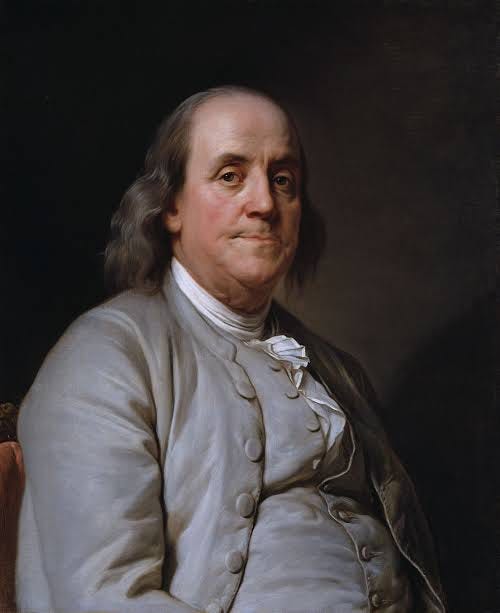
This Hebraic influence was not confined to abstractions. It entered the ratification battles directly. Benjamin Franklin’s only essay on the Constitution, published anonymously as “K” in the Federal Gazette on April 8, 1788, was no stray biblical flourish. It was a precision weapon.
Franklin imagined a constitution delivered by an angel and still greeted by opposition. Then he invoked Sinai itself: even the constitution God gave through Moses was resisted by “discontented restless spirits.” He went further, explicitly citing Josephus and the Talmud for details not fully narrated in Scripture. His subject was Korah: wealthy, ambitious, resentful, and skilled at dressing private hunger for power in the language of liberty.
The parallels were unmistakable. Korah’s complaints about the secrecy of Moses’s proceedings echoed Anti-Federalist attacks on the secrecy of the Philadelphia Convention. Charges that Moses intended to make himself an absolute prince mirrored attacks on the proposed presidency. The 250 “men of renown” who joined Korah’s revolt served as a jab at Anti-Federalist orators. Franklin was not proof-texting. He was translating constitutional polemic into the shared biblical language of his audience.
Both sides cited scripture during New York’s ratifying convention. Federalist Robert Livingston warned against rejecting good government out of perfectionism using 1 Samuel 8. Anti-Federalists John Lansing and Melancton Smith argued that people in distress might misjudge their problems and blame their constitution, as they believed Federalists did by abandoning the Articles. Massachusetts’s James Winthrop accused Federalists of trading a virtuous, decentralized government for imperial grandeur to be “like all the nations," echoing Israel’s idolatry.
That debate is nearly incomprehensible to modern secular ears. But to the Founding generation, Scripture supplied the common grammar of political argument. Donald Lutz’s survey of founding-era political literature found that the Bible was the single most-cited source, accounting for roughly a third of all citations. Deuteronomy appeared more often than Montesquieu’s Spirit of the Laws. That statistic alone should demolish the idea that the biblical inheritance was merely atmospheric piety.
And yet it has been mostly ignored.
Why? Because the Hebrew commonwealth is too religious for secular historians, who prefer an America born from reason alone. It is too Jewish for Christian civil religion, which often absorbs Hebrew political ideas into a generalized biblical haze while forgetting their source. And it is too inconvenient for the myth that America was born almost entirely from classical reason and Enlightenment theory.
America cannot be fully understood without the Jewish political imagination: Exodus against Pharaoh, Samuel against kingship, covenant against arbitrary power, divided crowns against tyranny, and law as the condition of liberty.
Roger Sherman, the only Founder to sign the Declaration, the Articles of Confederation, the Constitution, and the Bill of Rights, looked explicitly to the “civil polity of the Hebrews” as a model for republican design. In his 1784 Remarks on a Pamphlet, he drew lessons from Mosaic law: the Jubilee as a safeguard against permanent wealth concentration, the relative simplicity of Israelite statute, and the decentralized justice of elders at the gate.
The Hebrew Bible did not imagine liberty as liberation from law. It imagined liberty as lawful self-government. Judges at the gate. Elders in the city. Tribes under covenant. Kings under judgment. Power always answerable to something prior to itself.
The presidency, too, was shaped by this anxiety. The Framers needed an executive strong enough to govern, enforce law, and command in war. But they feared creating an elected king. Mercy Otis Warren called the proposed presidency the “foetus of monarchy.” The solution was not to abolish executive power, but to desacralize it. The president would be commander, magistrate, and law-bound officer — closer to the biblical judge than to the monarch. Joshua, Deborah, Gideon: leaders of energy and authority, but not kings, not idols, not hereditary sovereigns.
That distinction remains essential. The presidency is not a throne. It is an office. Its occupant is not the embodiment of the nation. He is the servant of a constitutional order that precedes him and will outlast him. The biblical judge helped solve the Article II problem: executive energy without executive idolatry.
The Founders did not copy ancient Israel. They were not theocrats. They did not mistake Mosaic law for American law. Their achievement was more profound. They took from the Hebrew commonwealth a structural mirror. A people comes out of bondage. It binds itself by covenant. It divides power because men are fallen. It rejects kingship because no man may stand as god over his fellows. It federates local communities into a larger union. It treats law not as the enemy of freedom, but as freedom’s condition.
That is the Jewish root of the American republic.
It matters now because America is again tempted by the oldest political seduction: the desire for saviors, tribunes, liberators, redeemers. They promise to embody the people, punish enemies, sweep aside institutions, and make politics simple. The Hebrew Bible knew this temptation well. “Give us a king,” the people say, “that we may be like all the nations.”
It is the most dangerous sentence in politics.
America was founded, in large part, to resist it. Athens gave us reason. Rome gave us republican memory. England gave us common law. The Enlightenment gave us rights, language and institutional theory. But Sinai gave us the indispensable warning: power is never sacred because man is never divine.
The American republic was born not only in Philadelphia, but in the long shadow of the Hebrew Bible. Its deepest constitutional instinct is not merely that government should be limited. It is that man must be limited, especially when he governs.
That is the ancient Jewish wisdom at the heart of the American experiment. No Pharaoh. No Caesar. No king like all the nations. Only a covenanted people, under law, forever struggling to remain free.
https://thenewzionisttimes.substack.com/p/americas-forgotten-jewish-roots

No comments:
Post a Comment
Note: Only a member of this blog may post a comment.