Search This Blog

Sunday, March 6, 2022

As vaccine demand falls, states are left with huge stockpile

 As demand for COVID-19 vaccines collapses in many areas of the U.S., states are scrambling to use stockpiles of doses before they expire and have to be added to the millions that have already gone to waste.

From some of the least vaccinated states, like Indiana and North Dakota, to some of the most vaccinated states, like New Jersey and Vermont, public health departments are shuffling doses around in the hopes of finding providers that can use them.

State health departments told The Associated Press they have tracked millions of doses that went to waste, including ones that expired, were in a multi-dose vial that couldn’t be used completely or had to be tossed for some other reason like temperature issues or broken vials.

Nearly 1.5 million doses in Michigan, 1.45 million in North Carolina, 1 million in Illinois and almost 725,000 doses in Washington couldn’t be used.

The percentage of wasted doses in California is only about 1.8%, but in a state that has received 84 million doses and administered more than 71 million of them, that equates to roughly 1.4 million doses. Providers there are asked to keep doses until they expire, then properly dispose of them, the California Department of Public Health said.

The national rate of wasted doses is about 9.5% of the more than 687 million doses that have been delivered as of late February, the Centers for Disease Control and Prevention said Thursday. That equates to about 65 million doses.

The problem is not unique to the U.S. More than a million doses of the Russian Sputnik vaccine expired this week in Guatemala, because nobody wanted to take the shot.

Vaccination program managers say that tossing out doses is inevitable in any inoculation campaign because of the difficulty in aligning supply and demand for a product with a limited shelf life.

But the coronavirus pandemic has killed nearly 6 million people and shattered economies across the globe, and every dose that goes to waste feels like a missed opportunity considering how successful the vaccines are in preventing death and serious disease.

It also comes only about a year after people desperate to get the vaccine attempted to jump in line to get ahead of those deemed higher priority. Hospital board members, their trustees and donors around the U.S. got early access or offers for vaccinations, raising complaints about favoritism and inequity at a time when the developing world had virtually no doses.

And many poorer nations still have low vaccine rates, including 13 countries in Africa with less than 5% of their population fully vaccinated. T hey are plagued by unpredictable deliveries, weak health care systems, vaccine hesitancy and some supply issues, although health officials say inventory is markedly stronger than earlier in the pandemic.

In fact, supplies are so strong that the CDC now advises doctors that it’s OK to discard doses if it means opening up the standard multi-dose vials to vaccinate a single person and the rest has to be tossed.

“Pivoting to what’s happening now, you have much more production and distribution to low-income countries,” said Dr. Joseph Bresee, who directs the COVID-19 Vaccine Implementation Program at the Task Force for Global Health in Decatur, Georgia. “The issue of some stockpiles in the U.S., Germany and Japan, that are not redistributed to sub-Saharan Africa, it’s less of an acute problem now because vaccine production and distribution is in high-gear right now serving those low-income countries.”

The Department of Health and Human Services also said that redistributing states’ excess doses to other nations is not feasible because of the difficulty in transporting the shots, which must remain cold, in addition to not being cost effective because of the relatively small number concentrated at sites.

Of the more than 687 million doses sent to states, 550 million to 600 million have been administered, HHS said Monday. The vaccines authorized in the U.S., made by Pfizer, Moderna and Johnson & Johnson, can last for up to about six months from the time of manufacture.

A senior HHS official familiar with vaccine distribution plans took issue with the word “wastage,” saying it implies mismanagement when states are effectively overseeing their inventories. The CDC, however, uses the term “wastage” on its website and asks states to report their numbers.

The CDC said Thursday that the federal government, jurisdictions and vaccine providers have a strong partnership to get as many people vaccinated as possible while reducing vaccine wastage, and that the likelihood of leaving unused doses in a vial may increase as demand slows, even when providers continue to follow best practices to use every dose possible.

The fading demand comes as the pandemic itself wanes in the U.S. On Thursday, the CDC said about 90% of the U.S. population lives in counties where the risk of coronavirus is posing a low or medium threat — meaning residents don’t need to wear masks in most indoor settings. That was up from 70% last week.

The average number of Americans getting their first shot is down to about 70,000 a day, the lowest point since the U.S. vaccination campaign began in December 2020. About 76% of the U.S. population has received at least one shot and roughly 65% of all Americans are fully vaccinated.

With demand so low, states will undoubtedly be confronted with more waste in the months ahead, although they will benefit from any booster expansions.

Idaho, for example, has 230,000 doses on hand but is only averaging fewer than 2,000 doses administered a week.

Oregon’s vaccination rate is slightly higher than the national average, but the health authority there said last week that they have “significant excess vaccine on hand” because of the recent drop in demand. The state is trying to use up as many of the 716,000 doses in its inventory as possible.

Rhode Island has the highest percentage of residents who are fully vaccinated in the nation, at slightly more than 80%, but the health department reported having 137,000 doses on hand last week. Health officials say they need them for a big push to increase the vaccination rate for booster doses.

Health officials in some states have developed “matchmaker” programs to connect vaccine providers with excess doses with providers seeking doses. Many said they’re attempting to redistribute doses with expiration dates that are quickly approaching. New Jersey has a task force that has transferred more than 600,000 doses around the state since June. West Virginia has offered to transfer Pfizer adult doses to nearby states.

Immunization managers have been asking for single-dose vials, especially for pediatricians, but it may not work for manufacturers to package it that way yet, said Claire Hannan, executive director at the Association of Immunization Managers. She said wasting vaccine “just can’t be an issue.”

“We tell this to providers, but the most important thing is getting people vaccinated. And that’s hard when the demand goes down. You don’t have constant flow,” she said. “But that’s just a necessary evil I guess.”

HHS said states are ordering prudently, paralleling the drop in demand. The minimum order for Pfizer used to be nearly 1,200 doses but now it’s 100, and Moderna reduced the number of doses per vial, the agency said.

“Given what we’ve seen in terms of the number of people still unvaccinated, I do think finding any way to get the shot in arms, even at the expense of potential wastage, is still important,” said Katie Greene, an assistant research director at the Duke-Margolis Center for Health Policy.

https://apnews.com/article/coronavirus-pandemic-vaccine-stockpile-2e8009d9f55401911ab6146b03608693

Saturday, March 5, 2022

California could OK abortions by solo nurse practitioners

 A bill announced Thursday in the California Legislature would let some nurse practitioners perform abortions without the supervision of a doctor — part of a plan to prepare for a potential influx of patients from other states if the U.S. Supreme Court allows states to ban or severely restrict the procedure.

State Senate leader Toni Atkins, a Democrat from San Diego, said the goal is to increase the number of health care workers in California who can perform abortions ahead of a potential Supreme Court ruling this summer.

“As states like Texas and others start to restrict further abortion, it just makes sense that women are going to find other places to go. California will be one of those states,” she said.

Nurse practitioners are not doctors, but they have advanced degrees and can provide a number of treatments. In 2013, California passed a law allowing nurse practitioners, certified nurse midwives and physician assistants to perform abortions during the first trimester of pregnancy — but only if they completed special training and were under the supervision of a doctor.

Atkins’ bill would change the law by letting nurse practitioners with the required training perform first trimester abortions without a doctor’s supervision. California has about 30,000 nurse practitioners. But it’s unclear how many more of them would be allowed to perform abortions if this bill becomes law.

The U.S. Supreme Court now has a conservative majority after former President Donald Trump made three appointments during his term. Many conservative-led states have responded by passing new abortion restrictions, hoping the court will uphold them.

Texas has a law that bans nearly all abortions in the state, but it is only enforceable by civil lawsuits. Abortion rights groups have sued to block that law, but the U.S. Supreme Court has allowed the law to remain in effect while the case is pending.

Last year, the court heard arguments over whether to uphold a Mississippi law that bans most abortions after 15 weeks of pregnancy. The court likely won’t make a decision on that case until June. But during a hearing on the case, a majority of justices indicated they were likely to uphold the law and could even overturn Roe v. Wade, the court’s 1973 ruling that banned states from outlawing abortion.

If the court overturns or significantly weakens the Roe ruling, multiple states would likely act quickly to ban or severely limit access to abortion.

But California, led by Democrats who support abortion rights, would do the opposite by passing laws to increase access to abortion. That could include helping women who live in states where abortion is banned or severely limited travel to California for care.

A proposal filed last month would potentially use taxpayer money to help women from other states get to California by paying for things like travel, lodging, child care and food. Atkins said the government couldn’t pay for everyone, saying the bill would create a fund that would also accept private donations.

“You will see a bill that tries to set up a framework for where we can do that and take private dollars,” Atkins said.

Jonathan Keller, president and CEO of the California Family Council, called Atkins’ bill “a tragic example of the legislators putting abortion numbers above abortion safety and putting ideology above patients.”

“We are essentially treating abortion like no other health care service,” he said. “We’re not flying people from poor states to California to get heart transplants.”

2013 study led by the University of California-San Francisco concluded first trimester abortions are “just as safe when performed by trained nurse practitioners, physician assistance and certified nurse midwives as when conducted by physicians.”

“When we’re within our areas of training, we are absolutely qualified to provide the care that we do,” said Patti Gurney, president of the California Association for Nurse Practitioners.

https://apnews.com/article/abortion-us-supreme-court-business-health-california-cc1c451ce472fdeac33ce2f7b20dd4a7

At cartel extermination site; Mexico nears 100k missing

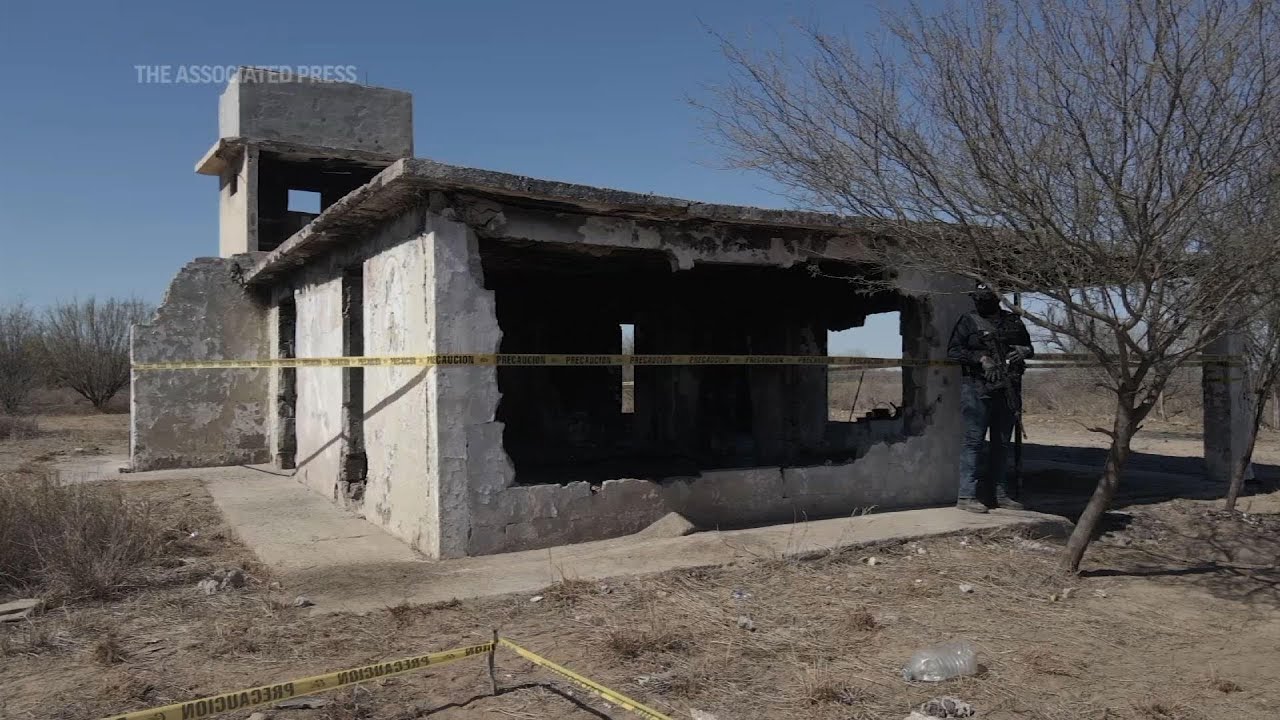
 For the investigators, the human foot -- burned, but with some fabric still attached -- was the tipoff: Until recently, this squat, ruined house was a place where bodies were ripped apart and incinerated, where the remains of some of Mexico’s missing multitudes were obliterated.

How many disappeared in this cartel “extermination site” on the outskirts of Nuevo Laredo, miles from the U.S. border? After six months of work, forensic technicians still don’t dare offer an estimate. In a single room, the compacted, burnt human remains and debris were nearly 2 feet deep.

Uncounted bone fragments were spread across 75,000 square feet of desert scrubland. Twisted wires, apparently used to tie the victims, lie scattered amid the scrub.

Each day, technicians place what they find -- bones, buttons, earrings, scraps of clothing -- in paper bags labeled with their contents: “Zone E, Point 53, Quadrant I. Bone fragments exposed to fire.”

They are sent off to the forensic lab in the state capital Ciudad Victoria, where boxes of paper bags wait their turn along with others. They will wait a long time; there are not enough resources and too many fragments, too many missing, too many dead.

At the Nuevo Laredo site -- to which The Associated Press was given access this month -- the insufficiency of investigations into Mexico’s nearly 100,000 disappearances is painfully evident. There are 52,000 unidentified people in morgues and cemeteries, not counting places like this one, where the charred remains are measured only by weight.

A skull sits on a shelf at the forensics lab in Ciudad Victoria, Mexico, Friday, Feb. 4, 2022. The official total of Mexico’s missing is nearly 100,000. Even without the civil wars or military dictatorships that afflicted other Latin American countries, Mexico’s disappeared are exceeded in the region only by war-torn Colombia. (AP Photo/Marco Ugarte)
A skull sits on a shelf at the forensics lab in Ciudad Victoria, Mexico, Friday, Feb. 4, 2022. The official total of Mexico’s missing is nearly 100,000. (AP Photo/Marco Ugarte)
Youtube video thumbnail
Mexicans search for their missing loved-ones, as forensic teams investigate burned out houses where human remains have been found. (AP Video/Fernanda Pesce)

And people continue to disappear. And more remains are found.

“We take care of one case and 10 more arrive,” said Oswaldo Salinas, head of the Tamaulipas state attorney general’s identification team.

Meanwhile there is no progress in bringing the guilty to justice. According to recent data from Mexico’s federal auditor, of more than 1,600 investigations into disappearances by authorities or cartels opened by the attorney general’s office, none made it to the courts in 2020.

Still, the work goes on at Nuevo Laredo. If nothing else, there is the hope of helping even one family find closure, though that can take years.

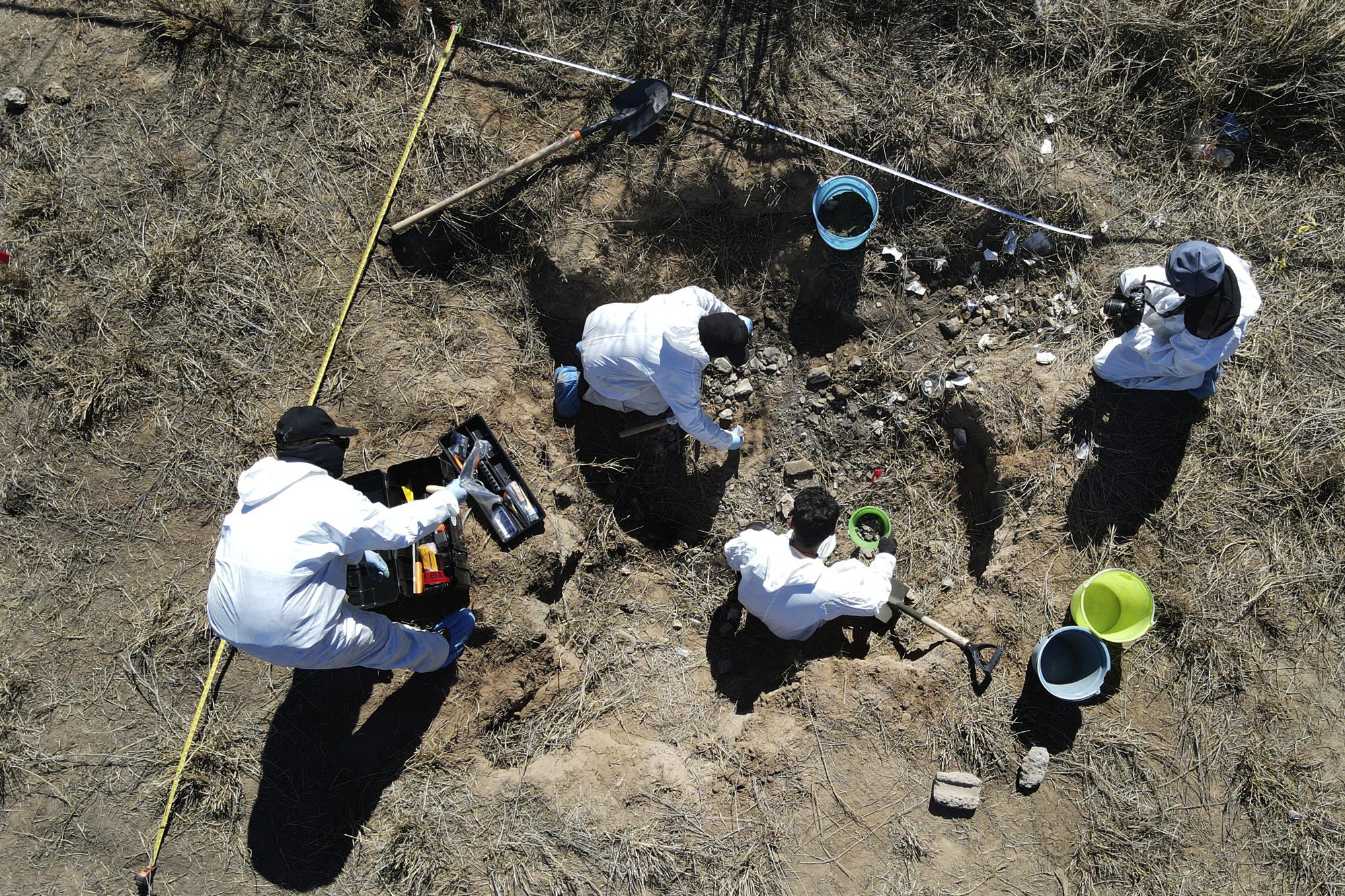
Forensic technicians excavate a field on a plot of land referred to as a cartel "extermination site" where burned human remains are buried, on the outskirts of Nuevo Laredo, Mexico, Tuesday, Feb. 8, 2022. The  insufficiency of investigations into Mexico’s nearly 100,000 disappearances is evident. There are 52,000 unidentified people in morgues and cemeteries, not counting places like this one, where the charred remains are measured only by weight. (AP Photo/Marco Ugarte)
Forensic technicians excavate a field on a plot of land referred to as a cartel "extermination site" where burned human remains are buried, on the outskirts of Nuevo Laredo, Mexico, Tuesday, Feb. 8, 2022. (AP Photo/Marco Ugarte)
Forensic technicians excavate a field where uncounted of human bone fragments are spread across 75,000 square feet of this desert scrubland, on the outskirts of Nuevo Laredo, Mexico, Tuesday, Feb. 8, 2022. When the team first arrived to what is referred to as a cartel “extermination site”, they had to clear brush and pick up human remains over the final 100 yards just to reach the squat, ruined house where bodies were ripped apart and incinerated. (AP Photo/Fernanda Pesce)
Forensic technicians excavate a field where uncounted of human bone fragments are spread across 75,000 square feet of this desert scrubland, on the outskirts of Nuevo Laredo, Mexico, Tuesday, Feb. 8, 2022. (AP Photo/Fernanda Pesce)

That’s why a forensic technician smiled amid the devastation on a recent day: She had found an unburnt tooth, a treasure that might offer DNA to make an identification possible.

___

When Jorge Macías, head of the Tamaulipas state search commission, and his team first came to the Nuevo Laredo site, they had to clear brush and pick up human remains over the final 100 yards just to reach the house without destroying evidence. They found a barrel tossed in a trough, shovels and an axe with traces of blood on it. Gunfire echoed in the distance.

Nearly six months later, there are still more than 30,000 square feet of property to inspect and catalog.

The house has been cleared, but four blackened spaces used for cremation remain. In what was the bathroom, it took the technicians three weeks to carefully excavate the compacted mass of human remains, concrete and melted tires, said Salinas, who leads work at the site. Grease streaks the walls.

Macías found the Nuevo Laredo house last August when he was looking for more than 70 people who had disappeared in the first half of the year along a stretch of highway connecting Monterrey and Nuevo Laredo, the busiest trade crossing with the United States.

The area was known as kilometer 26, a point on the highway and the invisible entrance to the kingdom of the Northeast cartel, a splinter of the Zetas. There are small shops with food and coffee. Men sell stolen gasoline and drugs. Strangers are filmed with cell phones. The power poles lining the highway farther north have been blasted with large-caliber weapons.

Most who disappeared here were truck drivers, cabbies, but also at least one family and various U.S. citizens. About a dozen have been found alive.

Forensic technicians excavate a field on a plot of land referred to as a cartel "extermination site" where burned human remains are buried, on the outskirts of Nuevo Laredo, Mexico, Tuesday, Feb. 8, 2022. After six months of work, there are still more than 30,000 square feet of property to inspect and catalog.  (AP Photo/Marco Ugarte)
Forensic technicians excavate a field on a plot of land referred to as a cartel "extermination site" where burned human remains are buried, on the outskirts of Nuevo Laredo, Mexico, Tuesday, Feb. 8, 2022. (AP Photo/Marco Ugarte)
Jorge Macias, head of the Tamaulipas state search commission, uses a two-way radio while walking on a field on the outskirts of Ciudad Victoria, Mexico, Thursday, Feb. 3, 2022. Macías’ state commission has 22 positions budgeted, but has only filled a dozen slots. The issue isn’t money but the difficulty in finding applicants who pass background checks. (AP Photo/Marco Ugarte)
Jorge Macias, head of the Tamaulipas state search commission, uses a two-way radio while walking on a field on the outskirts of Ciudad Victoria, Mexico, Thursday, Feb. 3, 2022. (AP Photo/Marco Ugarte)
A National Guardsman hands a bucket to a forensic technician during an excavation on a plot of land referred to as a cartel "extermination site" where burned human remains are buried, on the outskirts of Nuevo Laredo, Mexico, Tuesday, Feb. 8, 2022. The official total of Mexico’s missing is nearly 100,000. Even without the civil wars or military dictatorships that afflicted other Latin American countries, Mexico’s disappeared are exceeded in the region only by war-torn Colombia. (AP Photo/Marco Ugarte)
A National Guardsman hands a bucket to a forensic technician during an excavation on a plot of land referred to as a cartel "extermination site" where burned human remains are buried, on the outskirts of Nuevo Laredo, Mexico, Tuesday, Feb. 8, 2022. (AP Photo/Marco Ugarte)

Last July, Karla Quintana, head of the National Search Commission, said the disappearances appeared to be related to a dispute between the Jalisco New Generation cartel, which was trying to enter the area, and the Northeast cartel, which wanted to keep them out. It’s not clear if the victims were smugglers of drugs or people, if some were abducted mistakenly or if the goal was simply to generate terror.

The phenomenon of Mexico’s disappearances exploded in 2006 when the government declared war on the drug cartels. For years, the government looked the other way as violence increased and families of the missing were forced to become detectives.

It wasn’t until 2018 -- the end of the last administration -- that a law passed, laying the legal foundations for the government to establish the National Search Commission. There followed local commissions in every state; protocols that separated searches from investigations, and a temporary and independent body of national and international technical experts supported by the U.N. to help clear the backlog of unidentified remains.

The official total of the missing stands at 98,356. Even without the civil wars or military dictatorships that afflicted other Latin American countries, Mexico’s disappeared are exceeded in the region only by war-torn Colombia. Unlike other countries, Mexico’s challenge still has no end: authorities and families search for people who disappeared in the 1960s and those who went missing today.

President Andrés Manuel López Obrador’s government was the first to recognize the extent of the problem, to talk of “extermination sites” and to mount effective searches.

But he also promised in 2019 that authorities would have all the resources they needed. The national commission, which was supposed to have 352 employees this year, still has just 89. And Macías’ state commission has 22 positions budgeted, but has only filled a dozen slots. There the issue isn’t money; the difficulty is finding applicants who pass background checks.

___

Disappearances are considered the perfect crime because without a body, there’s no crime. And the cartels are expert at ensuring that there is no body.

“If a criminal group has total control of an area they do what we call ‘kitchens,’ because they feel comfortable” burning bodies openly, Macías said. “In areas that are not theirs and where the other side could easily see the smoke, they dig graves.”

In 2009, at the other end of the border, a member of the Tijuana cartel confessed to having “cooked” some 300 victims in caustic lye. Eight years later, a report from a public university investigation center showed that what officially had been a jail in the border city of Piedras Negras, was actually a Zetas command center and crematorium.

Alejandro Lopez, part of a collective of relatives who search for disappeared persons, sifts through dirt taken from a clandestine grave in a field on the outskirts of Ciudad Mante, Mexico, Tuesday, Feb. 1, 2022. Most extermination sites in Mexico have been found by family members who follow up leads themselves with or without the support and protection of authorities. Such search groups exist in nearly every state.  (AP Photo/Marco Ugarte)
Alejandro Lopez, part of a collective of relatives who search for disappeared persons, sifts through dirt taken from a clandestine grave in a field on the outskirts of Ciudad Mante, Mexico, Tuesday, Feb. 1, 2022. (AP Photo/Marco Ugarte)
Teeth recovered by forensic technicians are collected on a screen during an excavation on a plot of land referred to as a cartel "extermination site", on the outskirts of Nuevo Laredo, Mexico, Tuesday, Feb. 8, 2022. The phenomenon of Mexico’s disappearances exploded in 2006 when the government declared war on the drug cartels. It wasn’t until 2018, that a law passed, laying the legal foundations for the government to establish the National Search Commission. (AP Photo/Marco Ugarte)
Teeth recovered by forensic technicians are collected on a screen during an excavation on a plot of land referred to as a cartel "extermination site", on the outskirts of Nuevo Laredo, Mexico, Tuesday, Feb. 8, 2022. (AP Photo/Marco Ugarte)
A forensic technician holds a charred jawbone found during an excavation on a plot of land referred to as a cartel "extermination site" where burned human remains are buried, on the outskirts of Nuevo Laredo, Mexico, Tuesday, Feb. 8, 2022. According to recent data from Mexico’s federal auditor, of more than 1,600 investigations into disappearances by authorities or cartels opened by the attorney general’s office, none made it to the courts in 2020. (AP Photo/Marco Ugarte)
A forensic technician holds a charred jawbone found during an excavation on a plot of land referred to as a cartel "extermination site" where burned human remains are buried, on the outskirts of Nuevo Laredo, Mexico, Tuesday, Feb. 8, 2022. (AP Photo/Marco Ugarte)

Perhaps the largest such site was yet another border setting near the mouth of the Rio Grande called “the dungeon,” in territory controlled by the Gulf cartel. The memory still stirs Macías. The first time he went he saw “pelvis, skulls, femurs, everything just lying there and I said to myself, ‘It can’t be.’”

Authorities have recovered more than 1,100 pounds of bones at the site so far.

According to the Tamaulipas state forensic service, some 15 “extermination sites” have been found. There are also burial sites: In 2010, graves containing 191 bodies were found along one of the main migratory routes through Tamaulipas to the border. In 2014, 43 students disappeared in the southern state of Guerrero. Only three have been identified from pieces of burnt bones.

Most of the extermination sites have been found by family members who follow up leads themselves with or without the support and protection of authorities. Such search groups exist in nearly every state.

For the families, the discoveries inspire both hope and pain.

“It brings together a lot of emotions,” said a woman who has been searching for her husband since 2014 and two brothers who disappeared later. Like thousands of relatives across Mexico, she has made the search for her loved ones her life. “It makes you happy to find (a site), but at the moment you see things the way they are, you nosedive.”

The woman, who requested anonymity because of safety concerns, was present for the discovery of two sites last year. When she entered the Nuevo Laredo location with Macías, she could only cry.

A few months earlier, she had found the site in central Tamaulipas where she believes her loved ones are. That day, accompanied by the state search commission and escorted by the National Guard, they entered the brush in search of a drug camp.

“I’m not well psychologically after that,” she said as she showed photos of the deep graves where burnt remains were buried, some wrapped in barbed wire. They recovered around a thousand teeth, she said.

___

On a recent day in Nuevo Laredo, gloved hands sifted through the dirt, separating out bits of bone: a piece of a jaw, a skull fragment, a vertebra.

The work is hard. The forensic technicians clear brush and then dig. Some days the temperature hovers around freezing, others it’s above 100 degrees. They wear head-to-toe white protective suits and are constantly guarded.

Security is a concern, and so authorities have separated the search function from the investigations -- the cartels appear less concerned with those just looking for bones, though anything they find could eventually become evidence in a prosecution. Each day before dusk, they are escorted to a safe house and don’t leave except to return the next day to the site.

A forensic technician holds a bag of evidence collected during an excavation on a plot of land referred to as a cartel "extermination site" where burned human remains are buried, on the outskirts of Nuevo Laredo, Mexico, Tuesday, Feb. 8, 2022. Each day, technicians place what they find -- bones, buttons, earrings, scraps of clothing -- in paper bags labeled with their contents and send them off to the forensic lab in the state capital Ciudad Victoria. (AP Photo/Marco Ugarte)
A forensic technician holds a bag of evidence collected during an excavation on a plot of land referred to as a cartel "extermination site" where burned human remains are buried, on the outskirts of Nuevo Laredo, Mexico, Tuesday, Feb. 8, 2022. (AP Photo/Marco Ugarte)

When cartel violence exploded in Tamaulipas in 2010, the capital’s morgue had space for six bodies. In a single massacre that year, a cartel killed 72 migrants. In those days, the Interamerican Commission of Human Rights denounced serious negligence in Tamaulipas’s forensic work.

Pedro Sosa, director of the state’s forensic services, said that their way of working changed radically in 2018 with the establishment of the identification team. But it’s not enough. “A single forensic anthropologist in the whole state is not compatible with all of this work.”

It can take four months for the Nuevo Laredo remains to be cleaned, processed and arrive to the genetic lab. It can take longer if something urgent emerges like in January of last year, when nearly 20 people -- mostly migrants -- were incinerated in an attack near the border.

Even if they manage to extract DNA, identification isn’t assured because the profile will only automatically be crossed with a state database.

It could be years before the profile is added to one of the national databases. In 2020, the federal auditor said that that system had only 7,600 registered disappeared and 6,500 registered dead.

Though the federal law calls for a system in which various databases can interact, that doesn’t exist, said Marlene Herbig, of the International Committee of the Red Cross. Each state or federal database of fingerprints or genetic profiles is like an island, despite calls for bridges to connect them.

No one can estimate how much money is needed or how many years it could take to see significant results in Mexico’s efforts to locate and identify the disappeared.

Herbig offered a clue: A similar effort mounted on the island of Cyprus took 10 years to identify 200 disappeared in the conflict between Greece and Turkey during the latter half of the last century. And there are many thousands more missing in Mexico than there were in Cyprus.

“This issue is a monster,” Macías said.

A technician organizes bone fragments at the forensic lab in Ciudad Victoria, Mexico, Friday, Feb. 4, 2022. According to recent data from Mexico’s federal auditor, of more than 1,600 investigations into forced disappearances by authorities or cartels opened by the attorney general’s office, none made it to the courts in 2020. (AP Photo/Marco Ugarte)
A technician organizes bone fragments at the forensic lab in Ciudad Victoria, Mexico, Friday, Feb. 4, 2022. (AP Photo/Marco Ugarte)
A technician photographs bone fragments at the forensic lab in Ciudad Victoria, Mexico, Friday, Feb. 4, 2022. President Andres Manuel Lopez Obrador promised in 2019 that investigators would have all the resources they needed. But the national commission, which was supposed to have 352 employees this year, still has just 89.  (AP Photo/Marco Ugarte)
A technician photographs bone fragments at the forensic lab in Ciudad Victoria, Mexico, Friday, Feb. 4, 2022. (AP Photo/Marco Ugarte)
Forensic technicians investigate on a plot of land known as a cartel "extermination site" where burned human remains are buried, on the outskirts of Nuevo Laredo, Mexico, Tuesday, Feb. 8, 2022. After six months of work, there are still more than 30,000 square feet of property to inspect and catalog. (AP Photo/Marco Ugarte)
Forensic technicians investigate on a plot of land known as a cartel "extermination site" where burned human remains are buried, on the outskirts of Nuevo Laredo, Mexico, Tuesday, Feb. 8, 2022. (AP Photo/Marco Ugarte)

Wisconsin Special Counsel Finds ‘Widespread Election Fraud’ In 2020 Nursing Homes

 Rampant fraud and abuse occurred statewide at Wisconsin’s nursing homes and other residential care facilities,” according to the Office of Special Counsel’s second interim report filed on March 1 with the Wisconsin Assembly. That conclusion represents but one of the key findings of election irregularities detailed in the nearly 150-page report—a report that also confirms the conclusion of the Racine County Sheriff’s office last fall that fraud occurred at nursing homes in Wisconsin.

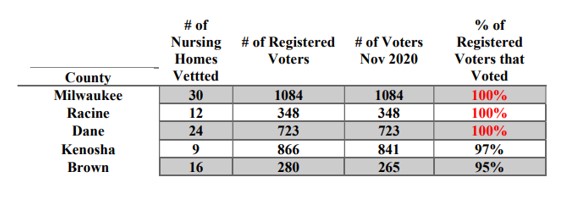
Special Counsel Michael Gableman, the retired state Supreme Court justice appointed by the Wisconsin Assembly to investigate integrity concerns about the 2020 election, vetted more than 90 nursing homes in five different counties before concluding there was “widespread election fraud at Wisconsin nursing homes in November of 2020.”

According to the report, nursing home staff and administrators illegally handled absentee ballots, illegally assisted with “marking” residents’ ballots, illegally “witnessed” the voting, and possibly included forgery of the elderly residents’ signatures. Under Wisconsin law, these violations of the election code constitute fraud.

This Local Investigation Led to the Special Counsel

The fraud uncovered by the special counsel’s office mirrored that revealed late last year by the Racine County Sheriff’s office. This local investigation led to the broader special counsel investigation.

In the Racine County case, the sheriff’s office received a complaint of potential violations of state election law occurring at the Ridgewood Care residential facility. After conducting a thorough investigation of the complaint, Racine County Sheriff Christopher Schmaling held a press conference on October 28, 20221, in which lead investigator Sgt. Michael Luell methodically presented his findings.

As Luell explained during an hour-long press conference, Section 6.875 of the Wisconsin election code provides the “exclusive means” of absentee voting in residential care facilities. That law requires local municipalities to dispatch two special voting deputies, or “SVDs,” to such facilities.

Under the election code, those SVDs must personally deliver ballots to any residents of the facility who wish to vote and then witness the voting process. By law, only a relative or a SVD may assist the voter in the process, and after the ballot is completed, the SVD must seal the ballot envelope and deliver it to the elections clerk.

The Ridgewood Care Center in Racine County violated every one of those mandates, Luell explained, with the Wisconsin Election Commission (WEC) holding blame for the blatant disregard of state election law taking place at residential facilities because the commission had directed municipalities not to “use the Special Voting Deputy process to service residents in care facilities,” and to instead “transmit absentee ballots to those voters by mail.”

Based on the WEC’s illegal directive, Luell detailed how further violations of the election code occurred at the Ridgewood Care Center, with staffers improperly completing portions of the absentee ballots, mishandling and not securing ballots, and discussing the elections and candidates with the residents beyond merely reading them the ballots.

District Attorney Refuses to Prosecute

Less than a week after his press conference, the Racine County Sheriff’s Office announced it had forwarded its conclusions to District Attorney Patricia Hanson and had recommended election fraud charges be filed against five members of the WEC, including two felony counts.

The most serious felony charges referred to Hanson alleged that the five commissioners violated Wisconsin Statute 946.12(2), entitled “Misconduct in Public Office,” and Wisconsin Statute 12.13(2)(b)7, “Election Fraud –Election Official Assisting with Violations.” The misdemeanors referred to the county DA recommended charges against the WEC for being a party to the crimes of illegal receipt of ballots and the solicitation of assistance in completing the ballots.

After reviewing the referral for several months, in February Hanson announced she would not be filing criminal charges against the five WEC members because she lacked jurisdiction over the commissioners. Hanson explained in her letter announcing her decision that because the commissioners do not live in Racine County and did not issue the allegedly illegal directive doing away with SVD, she lacked the authority to prosecute the commissioners.

Hanson then exercised her prosecutorial discretion to decline to charge the Ridgewood Care Center employees, explaining that “it would be unfair for me to expect that these health care professionals would better understand the election laws in Wisconsin than the Wisconsin Election Commission.”

Following Hanson’s announcement, Luell spoke “with the four district attorneys in the home counties of the five commissioners.” “I have forwarded the materials from my files to each office and recommended charges that appear to fit the facts,” Luell told The Journal Times in an email. Those prosecutors could still file charges against the WEC members or reportedly appoint Hanson as a special prosecutor.

Racine’s Fraud Wasn’t Isolated At All

Luell’s referral to the other prosecutors concerns only the Ridgewood Care Center. But as Sheriff Schmaling stressed during his late October 2021 press conference, Racine County is just “one of 72 counties,” and “Ridgewood is one of 11 facilities within our county.”

“There are literally hundreds and hundreds of these facilities throughout the entire state of Wisconsin,” Schmaling continued: “We would be foolish to think for a moment that this integrity issue, this violation of the statute, occurred to just this small group of people at one care facility in one county in the entire state.”

Tuesday’s second interim report by Special Counsel Gableman confirms Schmaling’s intuition, establishing that the problem at Ridgewood was not isolated. Rather, “rampant fraud and abuse occurred statewide at Wisconsin’s nursing homes and other residential care facilities in relation to absentee voting at these facilities,” Gableman reported.

The illegalities seen at Ridgewood in Racine County were repeated at more than 90 other nursing homes in five counties vetted by the special counsel’s team. The fraud and abuse, Gableman concluded in his report, resulted ultimately from the unlawful acts of WEC’s members and its staff.

The special counsel stressed that, despite the clear mandates of Wisconsin law that SVDs be used at residential facilities, the WEC on June 24, 2020 “directed clerks not to send SVDs to facilities, and to instead mail ballots to voters in those facilities,” then further stated that “the regular rules for absentee voting by mail will apply to ballots sent by mail to care facility voter.” The report then detailed, as the Racine County sheriff had, how that directive constituted fraud under the Wisconsin Election Code.

Not Accidental Or Technical Errors

Further, the special counsel’s report showed that fraud found was not merely “technical” fraud but resulted in ballots cast and votes counted contrary to the intent of the nursing home residents. The “improbably high voting rates” alone creates a strong inference of fraud, but the special counsel also gathered evidence of fraud, such as suspected forgeries of residents’ signatures and situations in which the residents who “cast” a vote had been adjudicated mentally incompetent, meaning they no longer had a legal right to vote. Other residents, while not adjudicated mentally incompetent, “were unaware of their surroundings, with whom they are speaking at any given time, or what year it is.”

The special counsel’s report also condemned the WEC for attempting to justify its illegal conduct by claiming it wanted to ensure seniors were not disenfranchised during Covid. “In no way was WEC’s mandating illegal activity a ‘solution’ to ‘disenfranchisement’ and to suggest that WEC’s actions were a good faith effort at doing so ignores the facts and the law,” Gableman wrote.

To the contrary, the report continued: “It is ‘disenfranchisement’ when electors are pressured to fill out ballots they did not wish to or in a way they don’t desire or even understand. It is ‘disenfranchisement’ when ballots are illegally cast on behalf of persons who have had their right to vote taken away by the courts of this State due to their mental incompetence.”

Someone Else Voted For Her, But Who?

The report backed up these conclusions with specifics, such as the case of Resident D. Resident D lived in a facility in Brown County, Wisconsin. Her family took Resident D to vote at her assigned polling location, but when she presented herself to vote on election day, the election workers informed her she had already voted.

After questioning from her family, Resident D recalled someone at the nursing home had talked with her about voting, but she denied voting at the residential facility. Nonetheless, records from 2020 show Resident D cast an absentee ballot.

Because a ballot had already been cast in her name, Resident D was disenfranchised, and she was far from alone given the findings of the special counsel’s report. Those findings were limited because, while the special counsel’s staff “spent significant time and resources investigating the fraud and abuse that occurred at Wisconsin’s nursing homes,” the special counsel’s audit was limited in scope. To fully understand the significance of the fraud, Gableman concluded, “a state-wide, complete audit of all absentee votes from all facilities” required to use SVDs is necessary.

Well Within the Election’s Margin of Error

With about 92,000 people in Wisconsin who reside in these facilities, the failure of Wisconsin election officials “to prevent wards and incapacitated persons from voting in the 2020 Presidential election” casts “doubt on the election result,” according to the report. Those 2020 general election results showed the midwestern state breaking by 20,682 votes to Joe Biden.

Whether the state Assembly will direct Gableman to conduct a further audit of the nursing homes is unclear, but what appears clear is that Wisconsin’s Democratic Attorney General Josh Kaul is unlikely to do so, as he rejected calls by the Racine County Sheriff’s Office to launch an investigation. Instead, Kaul called the southeastern county’s investigation “a publicity stunt.”

While Democrats and their media mouthpieces will likely paint Gableman’s report in the same light, Wisconsinites might soon make them care by ousting Kaul this November when he is up for re-election. State legislators up for re-election this fall may also find that their constituents care about election integrity even if they don’t.

https://thefederalist.com/2022/03/03/wisconsin-special-counsel-finds-widespread-election-fraud-in-2020-nursing-homes/

'Recall ready': FDA urges companies to comply with drug recall guidance

 The FDA has finalized guidance to help companies quickly recall products and take the necessary steps before a product reaches the recall stage, as part of work pull violative products and keep them out of the hands of consumers.


Initiation of Voluntary Recalls offers guidance for companies to develop procedures including training, planning and record-keeping to reduce the time a dangerous product is on the market and limit the risk of exposure. The FDA can recall controlled substances, biological products, human cells, tissues and cellular and tissue-based products, as well as medical devices and food.


The report also explains how to keep records and product coding. Since recalls affect the entire supply chain, the FDA says that a procedure should be in place to quickly inform everyone in line, from downstream suppliers to wholesalers and vendors. The final guidance builds off of a draft from April 2019.


“Voluntary recalls continue to be the fastest, most effective way for a company to correct or remove violative and potentially harmful products from the market to help keep consumers safe,” said Judith McMeekin, the FDA’s associate commissioner of regulatory affairs. “It is critical that all companies in the supply chain are ‘recall ready’ to ensure appropriate actions are taken swiftly across the distribution channels to best protect public health and the integrity of the supply chain. We will continue to work with companies to improve their recall procedures and minimize Americans’ exposure to potentially harmful products.”


There have been 14 drugs recalled since the start of 2022 alone, according to the FDA’s website. Most recently, Braun Medical was forced to voluntarily recall five lots of its 0.9% Sodium Chloride for Injection USP 250ML due to fluid leakage or low fill volume. That recall was announced Thursday.


In 2021, there were 77 drugs recalled. Most notably was the industry’s issues with NDMA contamination, a known probable human carcinogen with cancer-causing potential.


In January, Viona Pharmaceuticals recalled 33 lots of metformin hydrochloride after finding traces of NDMA. But Pfizer battled issues with the contamination of its anti-smoking drug Chantix in June, July, August and September for NDMA. Lots were distributed in the US, US Virgin Islands and Puerto Rico from May 2019 to September 2021. In 2018, blood pressure drug valsartan was pulled for the same reason. Last January, Nostrum Laboratories twice voluntarily recalled its generic metformin. In November 2020, a batch of 500 mg tablets was recalled for the same reason.

https://endpts.com/recall-ready-fda-urges-companies-to-comply-with-drug-recall-guidance/