Search This Blog

Monday, March 7, 2022

Moderna to set up mRNA vaccine manufacturing facility in Kenya

 Moderna Inc said on Monday it would set up a manufacturing facility in Kenya, its first in Africa, to produce messenger RNA (mRNA) vaccines, including COVID-19 shots.

Moderna said it expects to invest about $500 million in the Kenyan facility and supply as many as 500 million doses of mRNA vaccines to the continent each year. It also has plans to start filling doses of its COVID vaccine in Africa as early as 2023.

Africa has lagged sharply behind other regions in vaccinating its citizens through the pandemic and there have been several efforts in recent months to help the continent produce its own mRNA COVID-19 shots.

The World Health Organization last year set up a tech transfer hub in South Africa to give poorer nations the know-how to produce COVID-19 vaccines and has been trying to get Moderna and Pfizer to join in its efforts.

However, in September, a senior WHO official said there had not been much progress in talks with Moderna.

WHO-backed South Africa's Afrigen Biologics said in February it would produce a version of Moderna's shot, though it has not yet managed to enlist the U.S. vaccine maker's assistance.

BioNTech, which teamed up with Pfizer to make the western world's most widely-used COVID-19 shot, has also announced plans to begin work on its mRNA manufacturing facility in the African Union this year.

Moderna's Kenyan facility would manufacture drug substance and could be expanded to include fill/finish and packaging capabilities, the company said.

Moderna's COVID vaccine brought in $17.7 billion in sales in 2021 and has been cleared for use in over 70 countries.

The company is developing several other vaccines based on mRNA technology, including for respiratory syncytial virus, HIV and shingles. 

https://finance.yahoo.com/news/moderna-set-mrna-vaccine-manufacturing-133000452.html

Gilead: Phase 3 TROPiCS-02 Study Met Primary Endpoint in Metastatic Breast Cancer

 Gilead Sciences, Inc. (Nasdaq: GILD) today announced results from the Phase 3 TROPiCS-02 study evaluating Trodelvy® (sacituzumab govitecan-hziy) in patients with HR+/HER2- metastatic breast cancer who received prior endocrine therapy, CDK4/6 inhibitors and two to four lines of chemotherapy. The study met its primary endpoint with a statistically significant improvement in progression-free survival (PFS) versus physician’s choice of chemotherapy. The trial targeted a 30% reduction in the risk of disease progression or death. The primary endpoint results were consistent with those observed in the Phase 1/2 IMMU-132-01 study in a subset of HR+/HER2- metastatic breast cancer patients.1 The first interim analysis of the key secondary endpoint of overall survival in the TROPiCS-02 study demonstrated a trend in improvement for overall survival. Patients will be followed for a subsequent overall survival analysis. The safety profile for Trodelvy was consistent with prior studies, and no new safety concerns emerged in this patient population.

"Trodelvy demonstrated consistent activity in this difficult-to-treat patient population," said Merdad Parsey, MD, PhD, Chief Medical Officer, Gilead Sciences. "We are evaluating the data and will explore potential pathways with regulatory authorities to bring Trodelvy to this group of patients. As we work to expand the patient benefit of Trodelvy beyond its current indications for second-line metastatic triple-negative breast cancer and accelerated approval in second-line metastatic bladder cancer, we are pursuing studies across multiple tumor types and earlier lines of therapy."

https://finance.yahoo.com/news/phase-3-tropics-02-study-133000097.html

Coherus cut to Neutral from Overweight by JPMorgan

 Target $15

https://finviz.com/quote.ashx?t=CHRS&ty=c&ta=1&p=d

Merit Medical Receives FDA Breakthrough Device Tag for Pain Relief Therapy

 Merit Medical Systems, Inc. (NASDAQ: MMSI), announced today that it has received “breakthrough device designation” from the U.S. Food & Drug Administration (FDA) for Embosphere® Microspheres for the Genicular Artery Embolization (GAE) indication.

GAE is a procedure intended to reduce pain and disability caused by knee osteoarthritis by reducing blood flow to the knee, minimizing the inflammatory process. As a market-leading solution in embolotherapy, Embosphere Microspheres are the most clinically utilized and clinically studied spherical embolic. With more than 20 years of clinical experience, Embosphere Microspheres have been used in more than 250,000 procedures and featured in more than 200 clinical articles.

https://finance.yahoo.com/news/merit-medical-receives-fda-breakthrough-142500915.html

Chelsea Clinton Buys Large Block of Clover Health Stock

 https://www.barrons.com/articles/chelsea-clinton-clover-health-stock-51646436051

Sunday, March 6, 2022

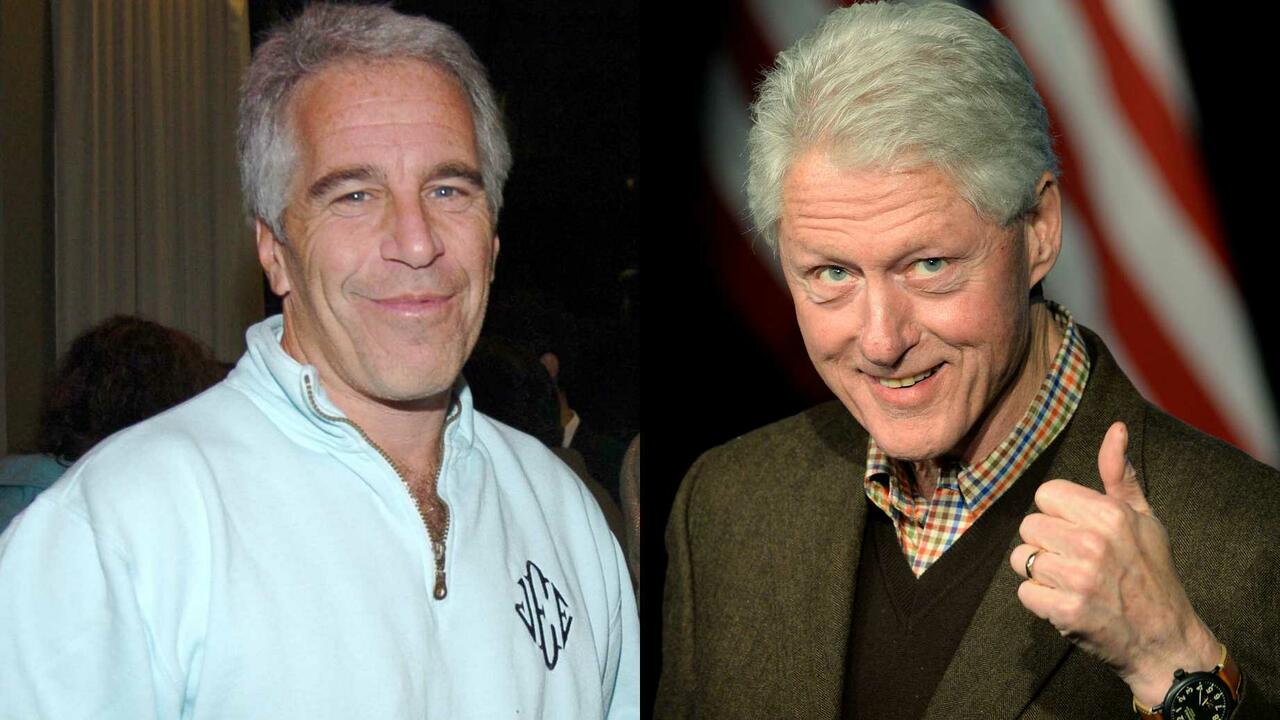
Clintons To Revive Foundation Arm That Jeffrey Epstein Said He Helped Conceive

 In what some might say is the strongest indication that Hillary Clinton is running in 2024, former President Bill Clinton just announced the revival of the Clinton Global Initiative (CGI), an arm of their infamous foundation which was shuttered nearly five years ago after Hillary Clinton's loss to Donald Trump in the 2016 US election.

In a Friday letter, former President Bill Clinton announced that the Clinton Global Initiative would be reactivated to tackle 'urgent needs' such as climate change and the situation in Ukraine

"The need for that kind of cooperation and coordination has never been more urgent than it is now," wrote Clinton, adding, "The COVID-19 pandemic has ripped the cover off of longstanding inequities and vulnerabilities across our global community."

"The existential threat of climate change grows every day. Democracy is under assault around the world, most glaringly in Ukraine where Russia has launched an unjustified and unprovoked invasion that has put millions of lives in grave danger."

"The number of displaced people and refugees worldwide is higher than it has ever been — more than one in 95 of all people alive on the planet today has been forced to flee their home," Clinton added.

Ahem:

The former US president, who stayed at Vladimir Putin's house just seven short years ago on the same trip where he collected a $500,000 check for a speech at a Russian investment bank, founded CGI with former adviser Doug Band - who left CGI in 2010.

Notably, Jeffrey Epstein lawyer Alan Dershowitz wrote in a 2007 letter to prosecutors that the dead pedophile helped conceive CGI.

"Mr. Epstein was part of the original group that conceived the Clinton Global Initiative, which is described as a project ‘bringing together a community of global leaders to devise and implement innovative solutions to some of the world’s most pressing challenges," wrote Dershowitz.

Bill Clinton is the co-chair of the foundation, while daughter Chelsea is its vice chairwoman.

UK Recovery trial confirms Covid benefit for Olumiant

 Huge state-funded clinical trials have been instrumental in uncovering the benefits, or otherwise, of potential Covid treatments, and results are still rolling in. This week the UK’s Recovery trial concluded that Lilly’s Olumiant did indeed reduce the risk of death in very sick patients, albeit with a smaller benefit than some previous studies had found.

And, over in the US, the NIH scrapped an arm of the Activ-2 trial that was studying SAB Biotherapeutics’ antibody, SAB-185, because too few people were getting sick enough. The agency also told the UK’s Synairgen that its agent would not progress further in the study any time soon, presumably for the same reason.

Behind these moves lie Omicron and climbing background vaccination rates, which are leading to less severe symptoms and sending fewer people to hospital. As such, it is becoming increasingly hard to tease out an agent’s potential benefits, at least without running huge clinical studies.

Activ-2, a basket study that has put seven agents through their paces, is being carried out in patients with mild-to-moderate disease at high risk of ending up in hospital. Symptom duration and rate of hospitalisations are important endpoints.

The phase 3 arm studying SAB-185 had already been upsized. But this week the National Institute of Allergy and Infectious Diseases, the NIH division running the programme, accepted that the trial would still not be large enough to generate statistically rigorous findings.

Activ-2 is still ongoing, the NIAID confirmed to Evaluate Vantage, pointing out that the SAB-185 arm was the only one recruiting during the Omicron surge.

The agency this week told Synairgen to pause preparing clinical supplies for the start of the phase 3 portion of Activ-2 that will test SNG001. The inhaled beta interferon has already completed the phase 2 stage of its cohort, results from which are still awaited.

SNG001 recently failed to show a benefit in hospitalised patients in a large company-run trial. Should the NIAID road continue to close down, the tiny biotech, which is now worth only £50m ($66m), could struggle to justify further pandemic-focused investment.

The Activ-2 arms: NIH-funded phase 2/3 outpatient trial
Project DescriptionCompany Outcome 
BMS-986414 and BMS-986413Subcutaneous MAb combination Bristol Myers SquibbPh2 data awaited
SNG001Inhaled beta interferonSynairgenPh2 data awaited; plans to start Ph3 on hold
SAB-185Intravenous polyclonal antibodySAB Biotherapeutics Arm closed in Mar 2022 after DSMB concludes trial likely to fail owing to lack of severe disease
Amubarvimab and romlusevimabInfused MAb combination Brii BiosciencesPositive results announced Aug 2021; no news since EUA submitted Oct 2021
EvushieldIntramuscular MAb combination Astrazeneca Arm closed, Ph2 data expected in 1H 2022. Not approved in Activ-2 setting (EUA granted for pre-exposure prophylaxis in Dec 2021)
BamlanivimabInfused MAbLilly/AbcelleraEUA granted in combination with etesevimab in Sep 2021, but withdrawn Jan 2022 (no activity against Omicron)
Regen-Cov/Infused MAbRegeneronEUA granted Nov 2020, but withdrawn Jan 2022 (no activity against Omicron)
Ronapreve
Camostat mesilateOral protease inhibitorSagent PharmaceuticalsArm closed in Jun 2021 for futility
Source: NIH & company statements. 

Omicron might be damping demand for interventions at the milder end of Covid, but for the small number of people who end up very sick in hospital there remains a need for effective options. This is where the Recovery data on Olumiant come in, showing its mortality benefit, a finding made more impressive by the fact that patients were already on other drugs known to prevent death.

The study recruited over 8,000 patients, with 95% receiving steroids and 23% Actemra – agents that have become standard thanks to previous Recovery sub-studies. The primary finding was a statistically significant (p=0.026) 13% reduction in mortality for patients given Olumiant on top of standard of care, versus those on standard of care alone.

Researchers noted that this was smaller than the 43% reduction found by a meta-analysis of eight previous studies of a Jak inhibitor; when the Recovery result was incorporated the benefit came out at 20%.

Recovery was more than three times the size, in terms of statistical information, of the eight previous trials put together, the UK researchers noted in a preprint of the data.

Olumiant is already being widely used to treat Covid in hospitals throughout the world, of course; the drug has emergency use authorisation in the US, and was recently endorsed by the World Health Organization. Lilly reported that its sales almost doubled last year, with the rise driven by use in this setting.

The Recovery result confirms Olumiant as a valuable option, despite pointing to a benefit around half as great as previously thought. This in itself underlines the importance of running sufficiently powered studies to tease out the real benefit that various therapies might play.

https://www.evaluate.com/vantage/articles/news/trial-results/uk-recovery-trial-confirms-covid-benefit-olumiant