Search This Blog

Wednesday, January 11, 2023

Kash Patel Says Jan. 6 Committee Buried Key Evidence From His Testimony

 by Samantha Flom and Jan Jekielek via The Epoch Times (emphasis ours),

As the former chief of staff to the Defense Department under the Trump administration, Kash Patel was one of the first people the now-shuttered House Jan. 6 Committee sought testimony from in its investigation of the Capitol breach.

Despite this, the transcript of his deposition was one of the last to be released as the committee concluded its work, and the reason, according to Patel, was simple.

I gave them the hard truths that they didn’t want the answers to because it didn’t fit their political narrative,” he told The Epoch Times’ Jan Jekielek on the Jan. 6 episode of his Kash’s Corner podcast.

Burying the Evidence

Revisiting the events of Jan. 6, 2021, and the aftermath, Patel held that the committee failed to abide by its own rules when it excluded the exhibits he and his legal team entered into the record during his deposition.

Among those exhibits, of which Patel said there were roughly nine, was a key report (pdf) released in November 2021 by the Biden Defense Department (DoD), which concluded that the actions the department took under the Trump administration to prepare for the Jan. 6 protests were “appropriate” and “complied with laws, regulations, and other applicable guidance.”
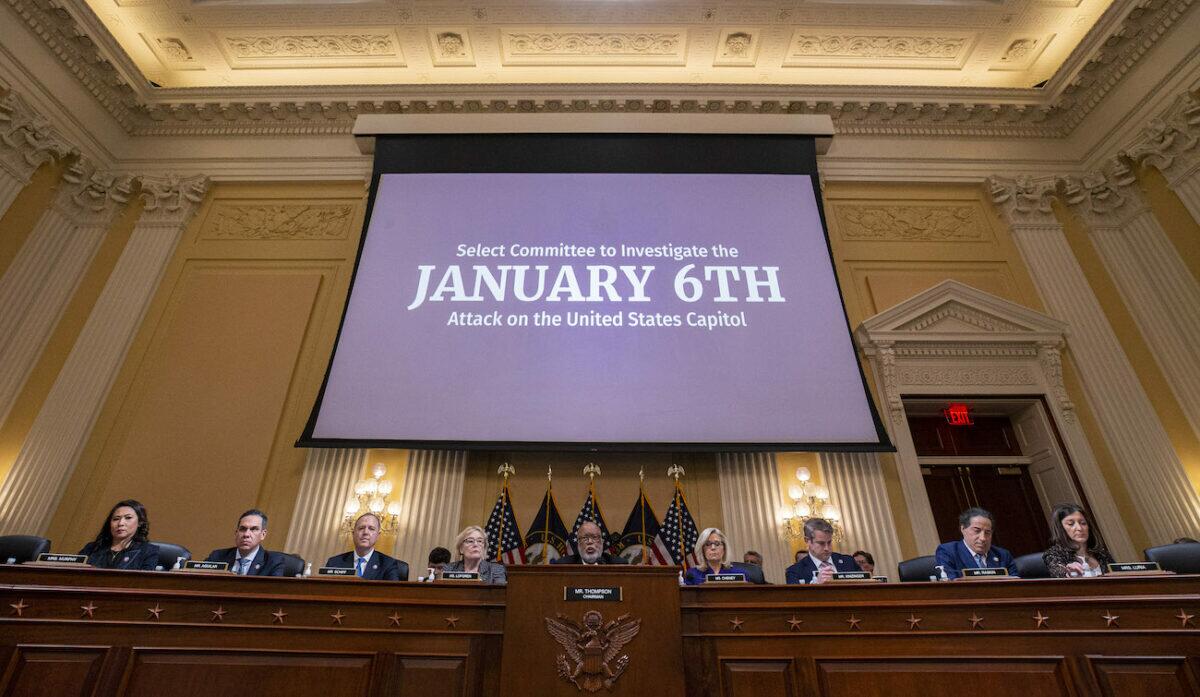
The Jan. 6 Committee in the Canon House Office Building on Capitol Hill in Washington, on Dec. 19, 2022. (Al Drago/Getty Images)

That report, Patel said, along with his testimony that former President Donald Trump’s authorization of the deployment of 20,000 National Guardsmen to protect the Capitol, contradicted the committee’s conclusions that Trump was responsible for the violence that occurred that day.

Patel also noted that, when they were offered additional assistance from federal law enforcement, both Mayor Muriel Bowser and the Capitol Police (USCP) declined.

In fact, on Jan. 5, 2021, Bowser announced publicly that she would not be requesting additional federal law enforcement, sharing a letter she had written that stated as much to her Twitter account.

“To be clear, the District of Columbia is not requesting other federal law enforcement personnel, and discourages any additional deployment without immediate notification to, and consultation with, MPD [Metropolitan Police Department] if such plans are underway,” Bowser wrote in the letter to Acting Defense Secretary Chris Miller, Acting Attorney General Jeffrey Rosen, and Army Secretary Ryan McCarthy.

Likewise, according to the Capitol Police’s official Jan. 6 timeline, the Pentagon contacted USCP to confirm if a request for National Guardsmen was being considered. The next day, USCP Deputy Chief Gallagher replied that “a request for National Guard support is not forthcoming at this time after consultation with COP [chief of police] Sund.”

According to Patel, both Bowser’s letter and USCP’s timeline were also submitted as exhibits but were not released along with the transcript of his deposition.

Under the House’s rules (pdf) for deposition procedure, “the transcript and any exhibits shall be filed, as shall any video recording, with the clerk of the Committee.”

While the committee released exhibits from other interviews with the supporting materials for its final report, none of the exhibits listed as being on file with the committee include those produced by Patel.

“No surprise, the Jan. 6 Unselect Committee broke its rules, broke the House rules, broke its commitment—and not just orally, but in writing to my legal team—by saying the exhibits would be included,” he said. “They excluded every single exhibit.”

Unanswered Questions

Patel also slammed the committee for failing to investigate significant questions and concerns that remain largely unexplained.

The majority of his deposition, he noted, was not even about Jan. 6 but other, unrelated matters the committee simply wanted information on.

That just showed me that all they cared about, this committee, was setting up perjury traps and looking for political ammunition, not the facts,” he said.
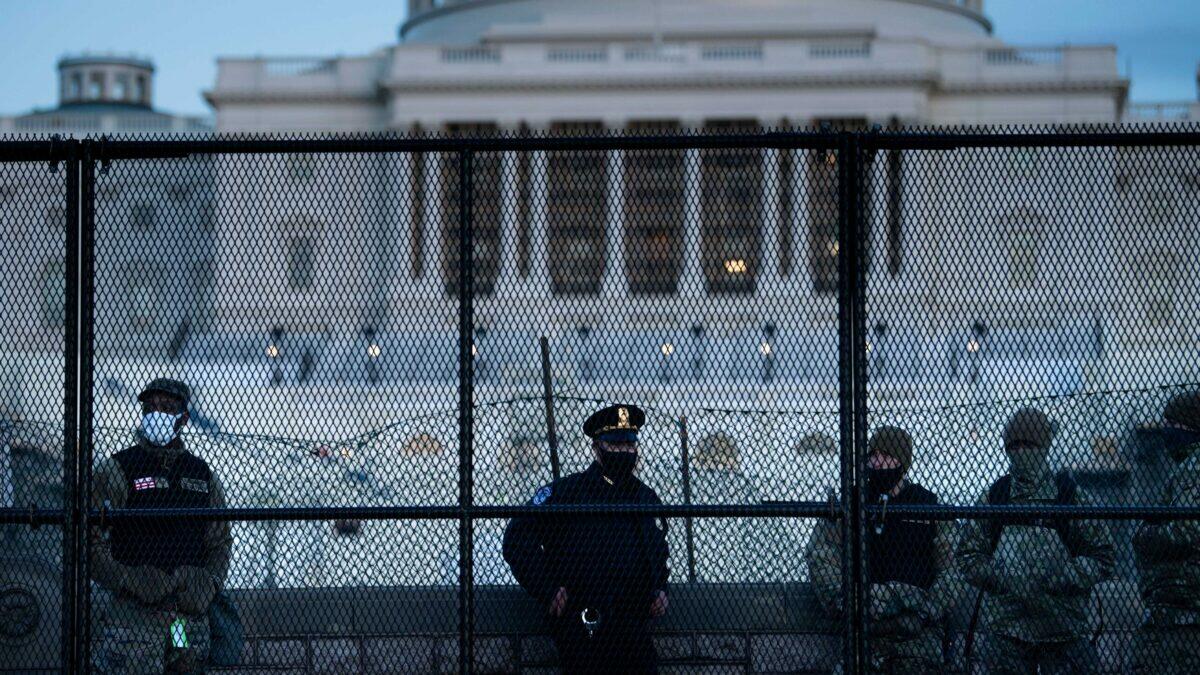
A Capitol Police officer stands with members of the National Guard behind a crowd control fence surrounding Capitol Hill in Washington on Jan. 7, 2021. (Brendan Smialowski/AFP via Getty Images)

One question Patel said he is still seeking an answer to is why a “no-climb” fence was not constructed around the Capitol prior to Jan. 6.

Patel recounted how he showed up at the scene on Jan. 6, after the protests had broken out, to find no fence had been erected to help secure a perimeter.

Noting that he had to buy the fence himself and have the National Guardsmen put it up later that day, he wondered: “If we could do it that fast, why wasn’t it done before? What are they going to say, optics? They didn’t have the intelligence? This committee never bothered to examine that question.”

Further, according to Patel, he and other DoD officials offered to remove the fence after the protests had subsided, but their offers were rejected by then-Speaker Nancy Pelosi (D-Calif.) and the incoming Biden administration.

The fence would remain up for half a year, serving as a reminder of the events of Jan. 6 to all who passed by.

“That’s what I believe that this partisan political charade was about,” Patel said. “They wanted the optics before Jan. 6 with no security, and they wanted the optics after Jan. 6 with heavy security to show that their political narrative was the one that was right. But when you look at the underlying facts, their narrative is defeated.”

Another unexplained mystery Patel pointed to was the role played by Ray Epps, a former Arizona Oath Keepers leader who was filmed encouraging protesters to enter the Capitol on Jan. 6.

While Epps maintains that he was at the Capitol that day to support Trump, many have come to believe that he was there as a provocateur, potentially on the orders of the FBI.

Noting that the FBI has repeatedly failed to give a straight answer on whether Epps is an operative of theirs or not, Patel said: “Look, as a former federal prosecutor who ran sources and informants, if the answer is, ‘This guy is not on our payroll, and we don’t know him, and he did absolutely nothing for the United States government,’ you come out hard and fast out of your press office and say those things. And those things have never been said by this DOJ or FBI about Ray Epps.”

Patel also pointed to the recent revelation that Pelosi’s office played a key role in planning security for the event and the fact that the FBI withheld a crucial report indicating thousands of protesters could show up at the Capitol as additional mysteries that should be investigated by the Republican-controlled House.

“Look, if the FBI and DOJ are willing to subpoena my records from five years ago, maybe we can get this Congress to actually subpoena some records of consequence to answer some of these questions.”


https://www.zerohedge.com/political/kash-patel-says-jan-6-committee-buried-key-evidence-his-testimony

The Senator Who Didn't Know (But Thought She Did)

 Authored by Joakim Book via The Mises Institute,

Legislators have a strange relationship with magic. To achieve that which physically cannot be done, they like to wave magic wands and pretend that it can. Reality puts a limit on political power, a realization that always sits poorly with those in charge of our trillion-dollar bureaucratic machinery.

Quest: Initiatives for Returning to the “Business of Play”

 More than 2 years following the onset of the COVID-19 pandemic, Americans are eager to resume something like normal life again.

This not only means returning to work and to school: perhaps just as importantly, it also means returning to recreation. Several innovative partnerships are allowing Quest to help people safely return to the activities they love. Here are a few examples.

Quest plays key role in return of world's oldest marathon

After being canceled for the first time in its 124-year history due to the COVID-19 pandemic in 2020, runners were once again able to participate in the 2021 Boston Marathon. As the virus continued to race across the country with the introduction of new variants, the 125th running of the marathon faced multiple health and safety challenges. As part of the protocols mandated by the Boston Athletic Association (BAA), the 10,000 athletes as well as organizers, volunteers, and staff were all required to show either proof of vaccination or a current negative COVID-19 test within 72 hours of the race.

At the request of the BAA, Quest was selected to be the sole on-site testing provider offering COVID-19 testing. To provide this high volume of testing, Quest employees were specially trained to work at the race's starting point as registration representatives, specimen collection observers, testers, supervisors, and support staff, playing a crucial role in providing a safer environment for runners, staff, and volunteers alike.

A safe return to the high seas

In mid-March 2020, the CDC issued a "no-sail order" for cruise ships due to the COVID-19 pandemic. It wasn't until more than a year later, in summer 2021, that the CDC allowed cruise lines to resume operations.

Ensuring a safe return to cruise ships required establishing best practices for health and safety.

As part of these efforts, Quest Diagnostics partnered with Carnival Corporation and Royal Caribbean, the 2 largest cruise lines in the US, to make pre-board COVID-19 testing more accessible and convenient for guests, offering the reassurance of a trusted national laboratory provider.

Regardless of COVID-19 vaccination status, all cruise passengers must present negative COVID-19 test results 2-3 days before embarking. In establishing their program, Carnival, Royal Caribbean, and Quest understood the importance of testing passengers before they arrived at their ports-thereby avoiding port congestion and the costs and frustration that could result from receiving positive COVID-19 tests at port, preventing guests from being allowed to board.

Instead, the Carnival, Royal Caribbean, and Quest testing programs help to streamline pre-cruise preparation. By offering passengers the convenience of receiving quality COVID-19 testing close to home, the program makes testing available at more than 2,200 Quest Diagnostics patient service centers and select Walmart locations, Giant Eagle drive-throughs, and other retail pharmacy testing locations throughout the US.

A return to "Tennis Paradise"

Referred to as "Tennis Paradise" by the tennis community, the BNP Paribas Tennis Open is a professional men's and women's tennis tournament in Indian Wells, CA traditionally held in March. Due to the COVID-19 pandemic, the organizers canceled the 2020 tournament and rescheduled for October 6 to 17, 2021, turning to Quest for assistance.

Returning safely to the courts and courtside required a multifaceted effort. Quest employees registered all tournament participants and attendees and collected PCR and antigen samples (resulting in >4,500 samples) from all in attendance, including world-class players, coaches, family members, international media, tournament officials, and even VIP world champion tennis legend Billie Jean King. Quest employees tested antigen samples directly on-site and provided results in fewer than 20 minutes. They also sent PCR samples out daily to Quest's lab in San Juan Capistrano, CA.

This was the third world-class tennis event in 2021 for which Quest served as the testing lab for the Association of Tennis Professionals (ATP) and the Women's Tennis Association (WTA) - as part of its ongoing commitment to form innovative partnerships to enhance health, safety, and well- being in all walks of life.

Our continued safe return to all we love

As we learn to live with the ongoing challenges of COVID-19 and its endemic presence, Quest will continue to develop innovative partnerships to help us all return safely to the recreational activities that form such an important part of our lives.

https://finance.yahoo.com/news/quest-diagnostics-initiatives-returning-business-171000621.html

Amarin Comments on Sarissa’s Notice to Call a Special Meeting

 Amarin Corporation plc (NASDAQ:AMRN) (“Amarin” or the “Company”) today confirmed receipt of a requisition by Sarissa Capital Management LP (“Sarissa”) to convene a General Meeting of Shareholders (the “Special Meeting”). As appropriate, Amarin will announce the date of the Special Meeting and the record date for shareholders to vote at the Special Meeting in due course, and Amarin shareholders are not required to take any action at this time.

Amarin issued the following statement:

The Company’s preliminary fourth quarter and full year 2022 revenue results provided on January 10, 2023, clearly demonstrate significant progress associated with the Company’s refocused operations. The Company has refreshed approximately 70% of its Board of Directors (“Board”) over the last year, including the appointment of six highly qualified independent directors and the transition of four longer tenured directors. The Board refreshment program has sought to address the changing needs of the Company as it executes its new growth strategy, adding expertise in financial governance, international commercialization, global clinical development and other areas to support the Company’s strategy.

Since Sarissa’s position was made public in November 2021, Amarin has engaged actively with Sarissa. We continue to question Sarissa’s persistent demand for, and expected value contribution from, Board representation, especially in light of the Company’s financial and operational progress and the ongoing Board refreshment program. We believe Sarissa’s proxy contest is misguided, costly and not in the best interest of other Amarin shareholders at this critical time for the Company. Amarin is at a strategic inflection as we are achieving favorable European price and reimbursement decisions, continued stabilization of the U.S. business and progress our international strategy. We believe this contest will create significant disruption and cause considerable harm to the Company’s efforts in driving positive pricing and reimbursement decisions in Europe, continued stabilization of the U.S. business and its international strategy and is detrimental to the Company’s future.

LIV Golf wants ‘intelligence file’ on 9/11 victims’ families, suit says

 The Saudi-backed LIV Golf professional league is denying explosive claims that it is seeking to “build an intelligence file” on the families of those who perished in the Sep. 11, 2001 terrorist attacks as part of its legal battle with the PGA Tour.

Clout Public Affairs, a “boutique” public relations firm hired by both the PGA Tour as well as 9/11 Justice, a nonprofit group made up of victims’ families, made the allegation against LIV in response to a court subpoena filed by the Saudi-backed league.

“Clout’s allegations that LIV and its counsel seek to discover information about groups affiliated with 9/11 victims so the Kingdom of Saudi Arabia can spy on and harass them is an affront to this Court, to LIV, and to its counsel,” LIV Golf said in a Tuesday court filing, which was first cited by Bloomberg News.

“It lacks any conceivable merit.”

LIV Golf, which has sued the PGA Tour alleging anticompetitive practices, sued Clout last month in an effort to obtain the PR firm’s communications with 9/11 Justice.LIV Golf, which boasts stars such as Phil Mickelson, is suing the PGA Tour for alleged antitrust violations.

LIV Golf, which boasts stars such as Phil Mickelson, is suing the PGA Tour for alleged antitrust violations.
AP

The Saudi-backed league said the request for Clout’s communications with 9/11 Justice was necessary because the PGA Tour has not been forthcoming with materials.

“The need for information from Clout is especially acute in light of the Tour’s modus operandi of interrupting texts, emails, and chats, and switching to undiscoverable telephone calls,” LIV said in its court filing.

LIV Golf has alleged that the PGA Tour and 9/11 Justice are collaborating in a “smear campaign” to discredit the Kingdom of Saudi Arabia.

A judge has yet to rule on LIV Golf’s subpoena against Clout. The Post has sought comment from attorneys for LIV Golf.

Relatives of those who perished in the attacks have protested LIV Golf events due to its backing by a Saudi sovereign wealth fund.
AFP via Getty Images

A lawyer for Clout has declined to comment.

Last year, LIV Golf filed an antitrust lawsuit against the legacy PGA Tour after it suspended several high-profile golfers who defected to the Saudi-backed league, including Phil Mickelson, Dustin Johnson, Cameron Smith, Bryson DeChambeau, and Brooks Koepka.

The nonprofit 9/11 Justice has filed a separate lawsuit against Saudi Arabia which alleges that the kingdom played a role in the terrorist attacks that claimed the lives of around 3,000 Americans.

The Saudi government has denied a role in the attacks which killed some 3,000 Americans more than 20 years ago.
REUTERS

LIV Golf is backed by the Saudi-backed Public Investment Fund, a sovereign wealth fund whose holdings are said to be worth at least $620 billion.

It created a storm of controversy last year when it poached several high-name PGA Tour stars who were lured away by massive paychecks.

LIV Golf has staged several events in the US — some of which attracted protests from 9/11 victims’ families and their supporters.

https://nypost.com/2023/01/11/saudi-backed-liv-golf-accused-of-spying-on-9-11-victims-families/

Penn Biden Center where classified papers found ‘dark money nightmare’

 The Ivy League think tank where lawyers found classified materials linked to the Obama White House is a patronage mill for the Biden administration, raising suspicions among critics that its establishment attracted tens of millions in donations from anonymous Chinese donors.

The Department of Justice is currently probing how “a small number” of classified documents from President Biden’s years as vice president ended up at the Washington, DC, think tank that bears his name, the White House confirmed Monday. A second batch of papers were found at an additional location, it was reported Wednesday.

The University of Pennsylvania received more than $30 million from Chinese donors shortly after the Penn Biden Center for Diplomacy and Global Engagement, which functioned as an office for Joe Biden before he was elected president, was announced in 2017, according to public records.

“The Penn Biden Center is a dark money, revolving door nightmare where foreign competitors like China donated millions of dollars to the university so that they could have access to future high ranking officials,” said Tom Anderson, director of the Government Integrity Project at the Virginia-based National Legal and Policy Center.

The center, located in Washington, DC, is affiliated with the University of Pennsylvania and critics suspect that its establishment attracted tens of millions in donations from anonymous Chinese donors for the school.
AP

The University of Pennsylvania raked in a total of $54.6 million from 2014 through June 2019 in donations from China, including $23.1 million in anonymous gifts starting in 2016, according to public records.

Most of the anonymous donations came after the university officially announced in February 2017 that it would create the academic center named for Biden, whose term as vice president under Barack Obama had just ended. In addition to leading the think tank, Biden was also named a professor at the school.

It was reported Wednesday that a second batch of confidential documents were found at an additional location.
AP

The Ivy League institution received $15.8 million in anonymous Chinese gifts in 2017 and one $14.5 million donation in May 2018 — three months after the center opened — records show.

“The Penn Biden Center has never solicited or received any gifts from any Chinese or other foreign entity,” said a spokesman for the University of Pennsylvania. “In fact, the University has never solicited any gifts for the Center. Since its inception in 2017 there have been three unsolicited gifts (from two donors) which combined total $1,100. Both donors are Americans. One hundred percent of the budget for the Penn Biden Center comes from university funds.” 

The Center does not list any of its fellows or administrators on its web site, and does not have separate financial filings. It operates under the auspices of the University of Pennsylvania with a mission of engaging “fellow citizens in shaping this world, while ensuring the gains of global engagement are widely shared,” according to its website.

Several people once associated with the Penn Biden Center now have key positions in the Biden administration.
AP

Meanwhile, former fellows and administrators of the Penn Biden Center now have key positions in the Biden administration.

Michael Carpenter, the former managing director of the Penn Biden Center, was named the US ambassador to the Organization for Security and Cooperation in Europe, based in Vienna, in 2021. Secretary of State Anthony Blinken also briefly served as director of the think tank before joining the Biden administration in January 2021. Before that, Blinken was a policy advisor for President Biden’s 2020 campaign.

Juan Sebastian Gonzalez, a senior fellow at the center from April 2018 to September 2020, is currently special assistant to the president and the National Security Director for the Western Hemisphere at the White House, according to his LinkedIn page.

Michael Carpenter, the former managing director of the Penn Biden Center, was named the US ambassador to the Organization for Security and Cooperation in Europe in 2021.
Wikimedia

The sensitive material at the center was discovered by Biden’s personal lawyers on Nov. 2, 2022, while they “were packing files housed in a locked closet to prepare to vacate office space,” according to a statement from Richard Sauber, special counsel to the president.

Sauber said that Biden used the Washington, DC, office space from “mid-2017 until the start of the 2020 campaign” in April 2019.

After Joe Biden was elected president in 2020, the center said it would operate “completely independent of the Biden administration.”

Other Ivy League colleges have raked in Chinese money, including Harvard, which got $75 million during the 2014-2019 period, and Yale, which received $43.5 million, records show.

The Education Department opened investigations in 2020 into whether Harvard and Yale were meeting reporting requirements for foreign cash.

https://nypost.com/2023/01/11/penn-biden-center-is-dark-money-nightmare-patronage-mill/

JPM Day 3: Highlights

 1:30 p.m.: Only 11 days into his new post, Teva CEO Richard Francis stepped into J.P. Morgan expressing confidence about the company’s ability to continue to service its ongoing debt and achieve growth.

The presentation was chiefly led by CFO Eli Kalif, who said as the “world’s largest leader”, the company’s most critical element is managing its footprint, including sizable debt, to have better access to medicines to serve patients.

“What we also did in the last five years, and as we committed, we serviced the debt,” Kalif said, noting that Teva looked at any assets it was able to monetize and anything it could optimize in order to contribute cash. In total, Teva was able to pay around $18 billion, he said. 

Moving forward, Francis, who assumed the position from Kare Schultz as of 2023, cautioned against any rapid strategic shifts. Francis, too, touted the generics business the company is known for.

Additionally, he said he hoped biosimilars could create growth.

“Some of the major growth drivers around biosimilars and around our innovative portfolio … are a significant unmet need that can be addressed.”


12:00 p.m.: Arcturus Therapeutics spoke at JPM Wednesday on the cusp of its 10-year anniversary. In his presentation, Joseph Payne, president & CEO, provided updates on assets across both the Arcturus-owned and partnered portfolios.

Payne expressed particular excitement about a Phase III study of ARCT-154, a COVID-19 vaccine built on the company’s LUNAR lipid-mediated delivery platform. Working with Japan’s Meiji Pharma, Arcturus will compare its self-amplifying mRNA vaccine to Pfizer’s Comirnaty in a non-inferiority trial.

As the Japanese population is highly vaccinated and boosted, this will provide an opportunity to “directly compare self-amplifying mRNA with conventional [mRNA] and…put to bed all questions and concerns” about how the technology fits into this space, Payne said.

In December, Arcturus struck a global licensing and collaboration agreement with CSL Ltd. subsidiary CSL Seqirus for access to this vaccine. CSL paid Arcturus $200 million upfront.

Other Milestones for 2023 include:

  • Interim data from a Phase II trial of ARCT-810 in ornithine transcarbamylase (OTC) deficiency, a genetic urea cycle disorder that causes too much ammonia to accumulate in the blood
  • Initiation of a Phase I trial for ARCT-032 for cystic fibrosis expected in Q1
  • 734 additional subjects slated to be vaccinated in the Japanese trial of ARCT-154

11:15 a.m.: Nektar Therapeutics’ President and CEO Howard Robin’s presentation highlighted the company’s new strategy following last year’s course-altering clinical failure of bempegaldesleukin (bempeg) and Bristol Myers Squibb’s Opdivo. As a refresher, the two companies announced disappointing clinical trial data for the combo therapy in melanoma, renal cell carcinoma and urothelial carcinoma in the first half of 2022.

Nektar’s comeback plan will reportedly rest on three key pillars:

  • Robin plans to continue to focus on reducing expenses to maximize the company’s cash runway. At last count, Nektar had approximately $500 million in cash and cash investments, which should be sufficient to fund the drugmaker’s near-term pipeline efforts.
  • The company plans to spotlight the Rezpeg autoimmune collaboration with Eli Lilly. Rezpeg is on track to produce Phase II topline data in lupus in the first half of 2023. Additionally, Lilly is expected to initiate another Phase II trial for the drug in atopic dermatitis later this year. Finally, Robin said Lilly is gearing up to reveal Rezpeg’s third autoimmune indication in the first half of 2023.   
  • Robin also expects the company’s immune booster, NKTR-255, to play a vital role in Nektar’s comeback story. During his presentation, he called the experimental compound “potentially the best IL15 molecule in development”. Nektar is trialing the compound across of range of solid and liquid tumor types. Nektar’s NTKR-255 program ought to yield four major data releases over the course of 2023, per today’s presentation. 

10:30 a.m.: Brian Goff, CEO of Agios Pharmaceuticals, presented updates on the company’s pyruvate kinase (PK) activation growth portfolio, touting its first-in-class therapy for adults with PK deficiency, the first disease-modifying therapy for this rare anemia.

According to Agios’ presentation, PK activation may address a range of hemolytic and acquired anemias underpinned by a shared pathophysiology. Agios intends to use the underlying red blood cell malfunction in these diseases to develop the PK application for more conditions.

Highlights of the presentation included:

  • Compelling and consistent data across connected diseases, particularly those with an underlying pathophysiology of red blood cell metabolic stress (including PK, thalassemia, sickle cell disease and lower-risk myelodysplastic syndromes)
  • Meaningful commercial opportunities (potential for additional PK applications by 2026)
  • Building a diverse pipeline leveraging Agios’ expertise in cellular metabolism
  • Goff said the company finds itself in an “enviable cash position” going into the decade

“By 2026, we have the potential to meaningfully expand our rare disease portfolio across connected diseases that share a common underlying pathophysiology,” he said.

Further, Goff stated that by divesting Agios’ oncology portfolio, the company can now concentrate on the rare disease space – an area where he forecasted promising growth.

“Our pipeline has grown dramatically since we announced the divestiture of our oncology business, and focused exclusively on rare diseases just two years ago.”

https://www.biospace.com/article/jpm-day-3-highlights/