Search This Blog

Tuesday, January 17, 2023

Will CVS Health’s M&A appetite be satiated in 2023?

 After announcing earlier last week that it would buy drugstore operator Carbon Health for $100 million, a Bloomberg report stated that CVS Health was exploring a $10 billion acquisition of primary care provider Oak Street Health.

It may be weeks before we know if a deal can be reached, but the news is further indication that the retail health care chain has not lost its appetite for huge acquisitions to further diversify its services. CVS CEO Karen Lynch would not directly comment on the possible Oak Street Health deal but said the company was in the market for a primary care asset.

If it does acquire Oak Street Health, it would enable CVS to expand care offerings to seniors. Oak Street, which went public in 2020, has 169 primary care clinics targeting Medicare-eligible patients (many in underserved communities) in 21 states, with 159,000 at-risk patients receiving care.

In addition, CVS invested $25 million in a Series C funding round for the virtual outpatient mental health practice Array Behavioral Care. Array’s services are in network with most payers — including Aetna, which is part of CVS Health. The company documents all patient visits in its electronic health record and submits claims to health plans. The company also integrates its clinicians into other provider groups.

https://www.aha.org/aha-center-health-innovation-market-scan/2023-01-17-3-looming-questions-jp-morgan-health-conference

Bristol-Myers started at Overweight by Cantor

 Target $95

https://finviz.com/quote.ashx?t=BMY&ty=c&ta=1&p=d

Merck set to remove cancer-causing chemical from top diabetes drugs

 Merck & Co has discovered how its blockbuster diabetes drugs have become contaminated with a potential carcinogen and believes it can resolve the problem by the end of the year, Bloomberg News reported on Tuesday.

The company submitted a report to the U.S. Food and Drug Administration (FDA) and other regulators after identifying the root cause for the presence of a nitrosamine called NTTP in certain batches of the drugs, according to the report, which cited a person familiar with the situation.

NTTP belongs to the nitrosamine class of compounds, some of which are classified as probable or possible human carcinogens, based on laboratory tests, according to the FDA.

The impurity arose mostly during storage, as well as during manufacturing, Bloomberg News said.

Merck did not immediately respond to a Reuters request for comment.

The FDA said in August certain samples of sitagliptin, a compound in Merck's diabetes drugs Januvia and Janumet, were contaminated with a possible carcinogen.

For the nine month ended September, Januvia and Janumet posted sales of $2.25 billion and $1.35 billion, respectively. 

https://finance.yahoo.com/news/merck-set-remove-cancer-causing-180846959.html

Moderna says RSV vaccine 84% effective at preventing symptoms in older adults

 Moderna Inc said on Tuesday that its experimental messenger RNA vaccine for respiratory syncytial virus (RSV) was 83.7% effective in a late-stage trial at preventing at least two symptoms, such as cough and fever, in adults aged 60 and older.

RSV, which produces symptoms similar to a cold but can be fatal for young children and older adults, causes about 14,000 deaths annually in adults ages 65 and older. The disease surged in the United States and Europe this fall alongside the flu and COVID-19.

There is currently no vaccine for the virus in adults. Moderna, Pfizer Inc and GSK Plc are racing to get their RSV vaccines to market first.

Pfizer and GSK filed applications for U.S. regulatory approval late last year. Pfizer's RSV vaccine was found to be 66.7% effective against two or more symptoms in late-stage trials.

Moderna said it intends to submit its vaccine, mRNA-1345, for regulatory approval consideration globally in the first half of 2023.

Moderna President Stephen Hoge told Reuters its vaccine appears to compare favorably to the experimental Pfizer and GSK shots.

"It's very exciting to see progress in RSV vaccines in older adults, and I think both of those vaccines have shown pretty remarkable results as well," Hoge said. "We really think we're in that top class - 84% is a terrific efficacy number."

The RSV vaccine market could be worth more than $10 billion globally, half of which would come from the United States, according to Cowen analyst Tyler Van Buren.

Moderna's study was conducted in about 37,000 participants aged 60 years and older. The data analysis was performed after 64 participants contracted RSV. The company plans to release the full data at a medical meeting.

Hoge said Moderna had started secondary analyses on the vaccine’s efficacy against more severe disease and hospitalization. He said it was too early to provide a potential price range for the vaccine it expects to be given annually.

The vaccine was generally found to be safe, with the most common side effects including injection site pain, fatigue and headache. Hoge said there were no myocarditis concerns - a type of heart inflammation linked to mRNA COVID vaccines.

https://finance.yahoo.com/news/moderna-says-rsv-vaccine-84-210500704.html

CBDCs Not Worth The Cost And Risks, Says Former BoE Adviser

 by Joseph Hall via CoinTelegraph.com,

Tony Yates, the former senior adviser of the Bank of England, argues that CBDCs are not worth the headache...

Central banks worldwide are pushing forward with digital asset projects despite the various crypto industry implosions of the past 12 months. China has rolled out its central bank digital currency (CBDC) to several cities and made it available for use at the Winter Olympics.

Many other central banks, including the Bank of England, are considering how to roll out a CDBC, while Nigeria’s CBDC has had poor uptake so far. India has already launched a pilot scheme, while Mexico has confirmed the launch of a digital peso.

However, Tony Yates, former senior adviser to the Bank of England, advises against CBDCs in a recently published opinion piece for the Financial Times.

According to Yates, “The huge undertaking of digital currencies is not worth the costs and risks.”

CBDCs are already in place in most countries as most countries already have digital versions of cash, coins and notes.

Yates, therefore, questions the motivations behind global rollouts of CBDCs, calling them “suspect.”

CBDCs could be a way of quashing crypto, including decentralized currencies such as Bitcoin.

However, “Cryptocurrencies are such bad candidates for money,” he explains, adding:

“They don’t have money supplies managed by humans to generate steady paths for inflation and are hugely expensive and time consuming to use in transactions.”

Yates’ take on Bitcoin is unsurprising.

He has tweeted several times about Bitcoin, claiming that most of Bitcoin’s use is “illicit” and “speculative.”

Since Bitcoin use a public ledger available for everyone, its use for illicit purposes has decreased steadily over the years to less than 1% of total transactions, reports show

On top of that, the layer-2 Lightning Network allows instant remittance payments, while other cryptocurrencies and even stablecoins continue to grow in use cases and development.

For Yates, introducing CBDCs is akin to “making central bank reserves more widely available than just to counterparties.”

But in a world where the reserve currency is the U.S. dollar, the competition for a new global CBDC is counterproductive.

The Financial Times opinion piece summarizes that the most compelling arguments for CBDCs are around payments and settlement efficiency, but the debate is “mysterious.” Yates explains that it would be a colossal undertaking for the central bank to employ the staff to build and manage the hardware and software of a new payment system. 

https://www.zerohedge.com/crypto/cbdcs-not-worth-cost-and-risks-says-former-boe-adviser

Stocks Tank After US Regulator Threatens To Break-Up 'Too Big To Manage' Banks

 Acting Comptroller of the Currency Michael Hsu appeared to want to make an early name for himself this afternoon as The Wall Street Journal reports the top federal banking regulator warned that big banks may need to be broken into smaller pieces if they become too big to manage and are unable to fix significant regulatory lapses.

Banks can become so big and complex “that control failures, risk management breakdowns, and negative surprises occur too frequently,” Mr. Hsu said, speaking at the Brookings Institution, a Washington think tank.

“Not because of weak management, but because of the sheer size and complexity of the organization.”

“In short, effective management is not infinitely scalable,” he said.

On Tuesday, WSJ reports that Mr. Hsu said the most effective and efficient way to successfully fix issues at a bank deemed too big to manage is to simplify it by divesting businesses, curtailing operations, and reducing complexity.

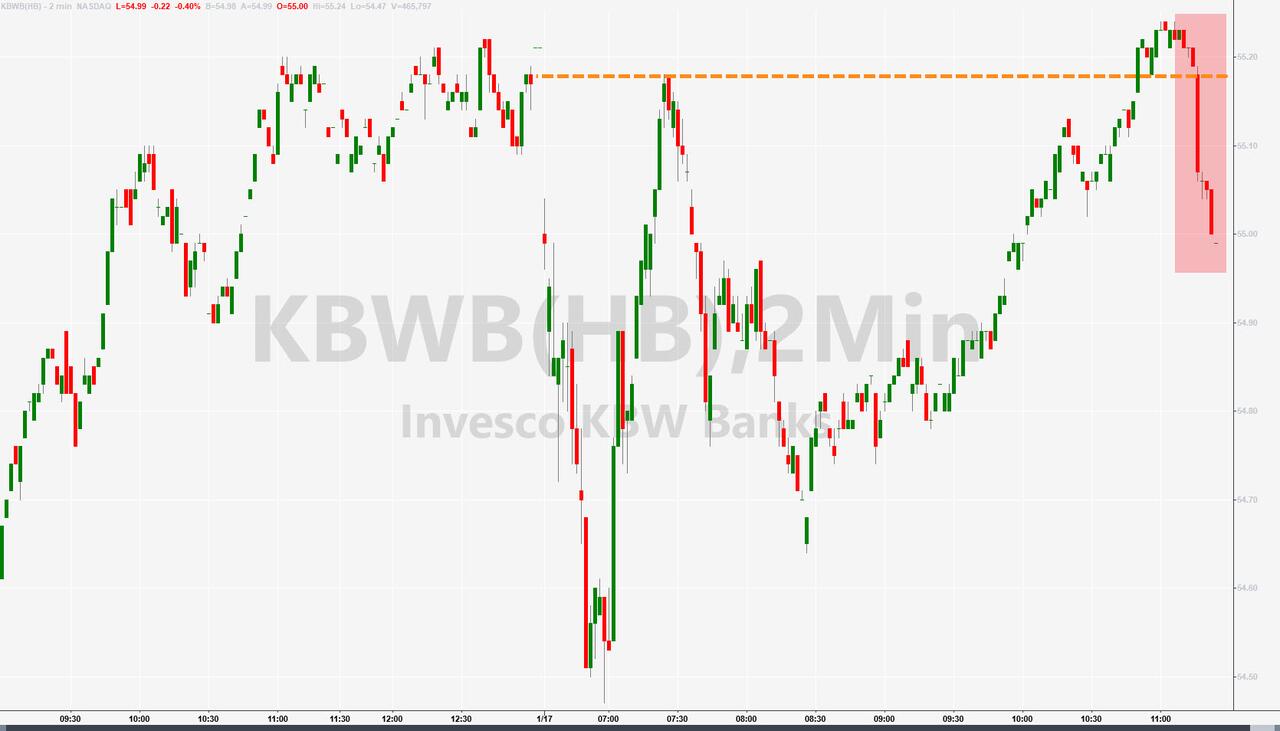
Bank stocks were hit...

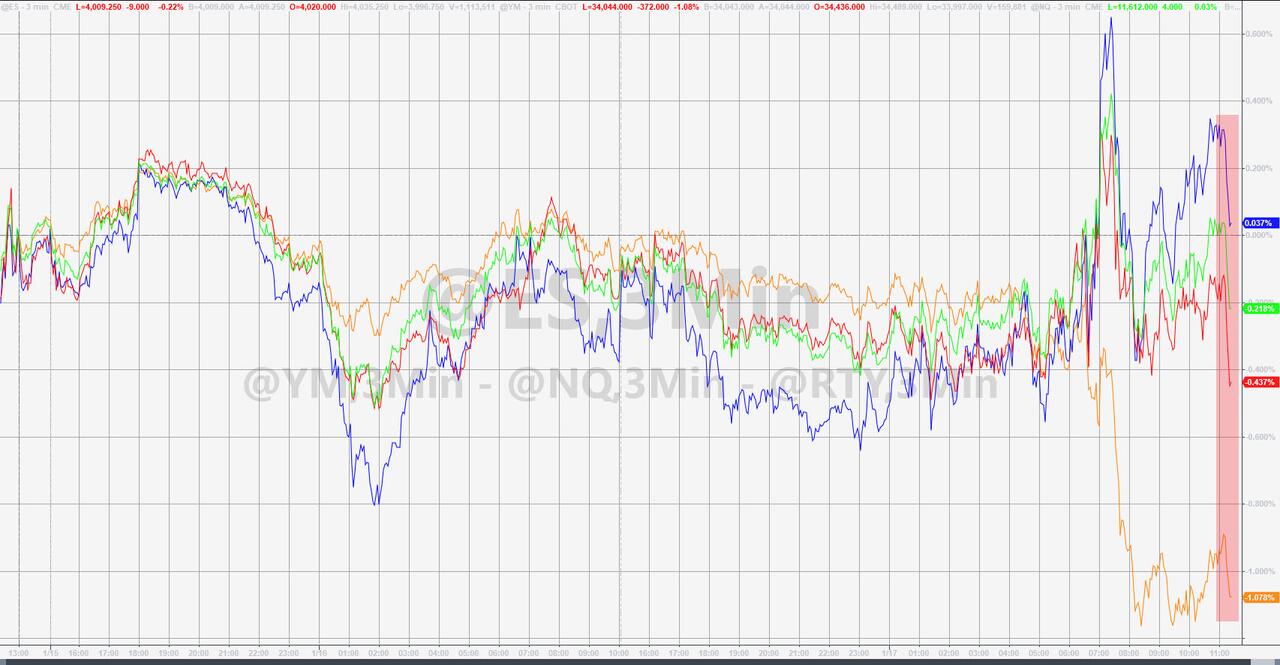
But the broad market took a spill on the headlines...

While rogue actors do exist, Hsu said significant problems are typically “multi-causal and reflect deeper, unseen weaknesses, which if unaddressed can manifest as further incidents in the future."

https://www.zerohedge.com/markets/stocks-tank-after-us-regulator-threatens-break-too-big-manage-banks

Edesa Biotech's Dermatitis Study Data Fails To Cheer Investors


  • Edesa Biotech Inc (NASDAQ: EDSA) announced preliminary topline results from a Phase 2b study evaluating multiple concentrations of the company's drug candidate, EB01, as monotherapy for moderate-to-severe chronic Allergic Contact Dermatitis.

  • EB01 is a non-steroidal anti-inflamamatory compound that inhibits secretory phospholipase 2.

  • Edesa reported that 1.0% EB01 cream demonstrated statistically significant improvement over the placebo.

  • For the primary endpoint, patients with 1.0% EB01-treated lesions demonstrated a 60% average improvement in symptoms from baseline versus 39% for placebo/vehicle.

  • The effect was also observed at 15 days (44% for 1.0% EB01 vs. 29% for placebo) and continued at follow-up (64% for 1.0% EB01 vs. 44% for placebo).

  • For the secondary efficacy endpoint, 53% of patients with 1.0% EB01-treated lesions achieved a score of "clear" or "almost clear," with at least a 2-point improvement from baseline. Only 29% of patients in the placebo group reached the same endpoint.

  • No serious treatment-related adverse events were reported across all concentrations. The 2.0% and 0.2% formulations did not show significant differences compared to the placebo.

  • The company expects to complete the Phase 2b data analysis by midyear.