Search This Blog

Tuesday, January 17, 2023

Contraceptive Advice From YouTube Influencers

 Welcome to Impact Factor, your weekly dose of commentary on a new medical study. I'm Dr F. Perry Wilson of the Yale School of Medicine.

When I was 12, I learned about birth control with 20 other boys in my class in a series of 45-minute sessions with my gym teacher — you know, as nature intended.

I remember very little, save for the fact that he referred to mammary glands as "mammalary" glands.

But pre-teens and teens don't get their information about sex from misinformed gym teachers anymore. We live in the Information Age, where virtually every bit of knowledge on a subject is accessible from the palms of our hands. We are all walking around with thousands of Libraries of Alexandria in our pockets.

And so, of course, the kids get their information from YouTube.

A new study, "What Do Social Media Influencers Say About Birth Control? A Content Analysis of YouTube Vlogs About Birth Control," appearing in the journal Health Communication, posits that this new source of information — the YouTube influencer — is biased. Against birth control. Or at least, against hormonal birth control.

I'll say up front that I think this is an important topic. Where people get their medical information from is something I have spent a lot of time thinking about (and discuss a lot in my book, How Medicine Works and When It Doesn't coming out later this month).

But I have some issues with the study design that I'll get to in a moment. First, let's look at how the study was done.

Researchers Emily Pfender and Marie Devlin, from the University of Delaware, searched YouTube to find influencers (here defined as people with more than 20,000 subscribers) who were talking about their experience with birth control between 2019 and 2021. Videos from medical professionals were excluded, but of course no one listens to us anyway. They watched 50 videos. During each video, they painstakingly coded the information that was being conveyed about birth control.

These were popular YouTube channels, with an average subscriber count of more than 350,000 individuals.
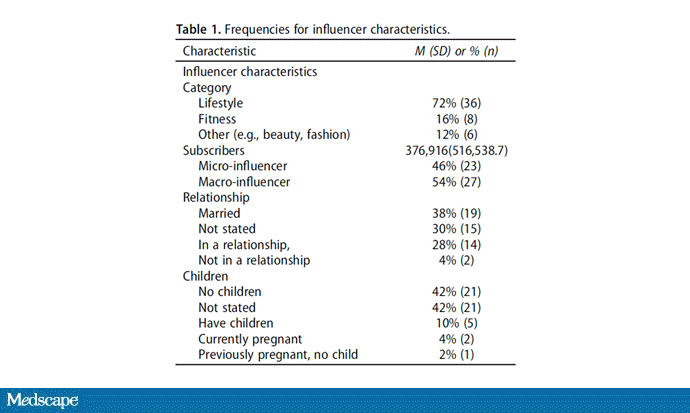


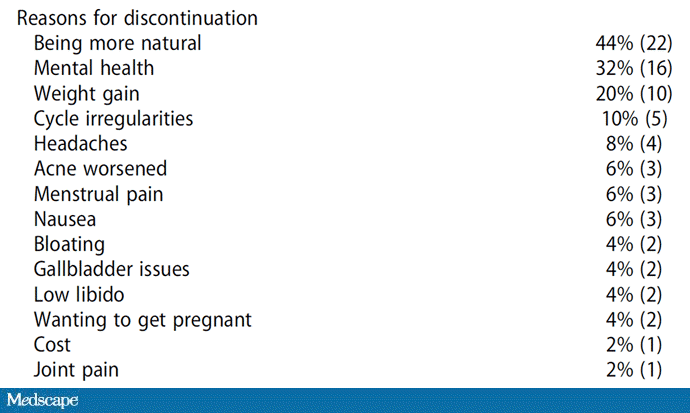
Of the 50 influencers, almost all reported having been on hormonal birth control. And three fourths of the videos (37 out of 50) discussed why those influencers decided to stop hormonal birth control.

The reasons were varied: wanting to be more "natural"; concerns that hormonal contraception was hurting their mental health; weight gain; and so on. It's not that this is misinformation — hormonal contraception can certainly have these side effects; it's that the videos that come up on YouTube focus on these side effects, which may lead impressionable minds to… well, to what exactly?


Most of these influencers who reported stopping hormonal contraceptives did not discuss any alternatives. Of the 20 who mentioned some form of nonhormonal contraception, 15 discussed cycle tracking with an app like Daysy, the most popular app in this space. Just two mentioned condoms and two mentioned IUDs.

In other words, if you get your impression on how contraception works from YouTube influencers, you may come to believe that hormonal birth control is terrible and fertility tracking is a good method of birth control, and that's pretty wrong.

The Daysy app that people keep talking about is basically a cycle-tracking app — charting period days, basal body temperature, cervical mucus, etc. The company touted its product as more than 99% accurate in a paper published in Reproductive Health. That paper has since been retracted for cherry-picking data. And, of course, none of these influencers mentioned that.

I told you up front that I had some issues with study design here and that's true. The authors used the phrase "birth control experience" to find these videos. And I can confirm that when I use that phrase, I get a lot of influencers complaining about hormonal contraception.

But is "birth control experience" the search term most young people would use? If you just search for "birth control," you get a more balanced group of videos — more informative and less, you know, influencer-y. Of course, we all know how easy it can be to fall down the YouTube rabbit hole.

Perhaps the influencer thing is the problem. Multiple studies have shown that influencers online have outsized influence on our opinions. Compared with some fact-spitter like me, what makes someone an influencer is that their viewers feel they are in a relationship together, that they are friends. They do this by fostering a sense of community and of course by revealing personal details about their lives (like their experiences with birth control).

And the trust built through that mechanism, that sharing, however misplaced, is powerful. It's why marketers pay influencers; they have a hold over their subscribers that is quite valuable. And if marketers are paying attention to them, we should be too — because our kids will.

Not being an influencer myself, I can't hope to change too many minds watching this, but I will close with one thing. Young people, it's true that hormonal contraception can have side effects. Talk to your doctor about them. But if you do choose to go off hormonal contraception, please, please don't use the rhythm method. It's not as successful as the influencers will lead you to believe. And it doesn't protect against sexually transmitted infections. Condoms do. And you don't even need an app for that.

F. Perry Wilson, MD, MSCE, is an associate professor of medicine and director of Yale's Clinical and Translational Research Accelerator. His science communication work can be found in the Huffington Post, on NPR, and here on Medscape. He tweets @fperrywilson and his new bookHow Medicine Works and When It Doesn'tis available for pre-order now.

https://www.medscape.com/viewarticle/986965

Article That Called Trump 'Main Driver of Vaccine Misinformation on Twitter' Retracted

 In October 2021, a Reddit user on the r/badscience subforum posted a long critique of an article published in PLOS ONE  earlier that year that had analyzed the "anti-vaccination infodemic" on Twitter and concluded that former U.S. president Donald Trump was "the main driver of vaccine misinformation" on the platform before his account was suspended.

The critique, titled "Terrible PlosOne Paper Dissected," listed concerns about the sample size (50 pro-vaccine and 50 anti-vaccine accounts), method of selecting the sample and control groups, and data analysis. The Redditor also looked at the reviews of the article which PLOS ONE made available, and concluded that "clearly neither reviewer actually read it in any detail." 

The day after the comment was posted, an account for PLOS Communications responded, thanking the user "for your post publication peer review" and saying that PLOS ONE was looking into the article. 

According to emails seen by Retraction Watch, the PLOS publication ethics team emailed the corresponding author on the article in June 2022 with the subject line "Request for clarification about published PLOS ONE article." 

In December, the article was retracted. 

The lengthy retraction notice detailed a back-and-forth with the authors about methodological concerns in the article. The editors concluded those concerns meant the paper "did not meet PLOS ONE's publication criteria," but one of the authors told us he believes a correction could have addressed them. 

"The anti-vaccination infodemic on social media: A behavioral analysis" appeared in March 2021. Written by Federico Germani and Nikola Biller-Andorno of the Institute of Biomedical Ethics and History of Medicine at the University of Zurich in Switzerland, the paper has been cited 95 times, according to Clarivate's Web of Science. Altmetrics shows pickup in several news stories, as well as a working paper from the World Bank.

The June email from the PLOS publication ethics team stated that "some concerns have been raised regarding your article with respect to some clarity in the reporting and methodology," and asked the authors to submit a revision to the article with specific changes "in order to comply with our publication criteria." 

Germani, the corresponding author, sent the journal an updated version of the paper less than two weeks after receiving the request. But he didn't hear back for months, he told us, until an October email from the publication ethics team informed him and his co-author that the editors had decided to retract the paper. 

The email included a draft of the retraction notice listing methodological concerns, to which the authors responded in detail in their appeal of the decision. The journal rejected their appeal and sent them a revised retraction notice in November. After more back-and-forth about the wording of the notice, the retraction was published on Dec. 22, 2022. The notice began: 

Following the publication of this article [1], concerns were raised regarding the methodology, results, and conclusions presented in this article. The editorial team and a subject expert have re-evaluated the article and determined that the concerns listed below remain unresolved.

The notice listed five bullet points of concerns, including this one: 

The reported conclusion "Our data demonstrate that Donald Trump, before his profile was suspended, was the main driver of vaccine misinformation on Twitter." is not supported by the research reported in this study. Although the reported results suggests [sic] that people who tweet anti-vaccine content are likely to be in Trump's network, the reported results are not sufficient to support the claim that Trump himself is driving vaccine misinformation.

The rest of the notice contains the authors' response to the concerns. About Trump:

Regarding the conclusion, the authors agreed that the sentence regarding Trump's role, taken out of context, is not supported by the data presented in the paper, but they maintain that their results, as described in the discussion section, show that Trump's profile was, at the time, "the main influencer in the anti-vaccination web" on Twitter.

The notice concluded: 

The PLOS ONE Editors retract this article [ 1 ] because, per our editorial assessment, it did not meet PLOS ONE's publication criteria (#3, 4) [ 2 ]. We regret that the issues with the article were not identified and addressed prior to its publication.
Both authors did not agree with the retraction and stand by the article's findings.

Germani told us he thought the journal's initial request for a revision to the paper "would have been a reasonable approach." 

He and his co-author, Biller-Andorno, disagreed with the editorial team and subject expert's assessment of the methodological concerns, he said, but were "happy to have the opportunity to make corrections to the paper," and the back-and-forth of corrections, or a response article and reply, "is just how science should work."

The findings about Trump's role in the anti-vaccine Twitter community were a surprise to him, he said, and he expressed concern that political considerations could have influenced the retraction decision: 

It's not clear to us why this paper had to be retracted at all costs and with little communication from the journal.


Germani and Biller-Andorno have posted a revised version of the paper as a preprint, with a disclaimer detailing the history with PLOS ONE and a supplementary PDF responding to the issues listed in the retraction notice. 


He reached out to PLOS for comment on Germani’s concern that PLOS’s editors may have felt political pressure to retract the article. Renee Hoch, managing editor for publication ethics, responded: 

The claim is untrue. The retraction decision reflects PLOS’ assessment of how the unresolved issues identified in our post-publication editorial assessment aligned with the PLOS Retraction Policy and the Committee on Publication Ethics (COPE) Retraction Guidelines. External parties do not contribute to or influence our editorial decisions.

We recognize that individuals raising concerns may have potential competing interests. Our Publication Ethics team and journal editors are well-versed at evaluating potential competing interests and isolating scientific and ethical criticisms/concerns from personal assertions, opinions, or agendas that sometimes accompany complaints. We focus our investigations on the scientific and ethical concerns, and our editorial decisions reflect our assessment of how any verified and unresolved concerns align with PLOS policies, journal requirements, and relevant COPE guidance.

We had also asked through what venue concerns were raised about the paper, and Hoch pointed us to the Reddit post. As for why the issues with the paper weren’t raised during peer-review, before the article was accepted for publication, she said: 

The reddit posts discussed concerns about the article’s published peer review history. We cannot disclose any unpublished information about the article’s peer review. However, in responding to the concerns raised in this case we completed a thorough, rigorous assessment of the article and obtained input from a well-qualified expert. We regret that the issues identified in this assessment did not surface during the pre-publication peer review.

She also noted:

We addressed why these cases take so long sometimes, and why some of these issues are not caught before, in this blog post, here. It’s quite a good read.


https://www.medscape.com/viewarticle/987040

Oncologist to Insurer: 'This Denial Will Not Stand.'

 "Is this really the hill you want to die on?" asked Rebecca Shatsky, MD, a medical oncologist at the University of California San Diego.

It was November 18 and Shatsky was on the phone with a retired oncologist working for the health insurance company Premera Blue Cross.

Shatsky was appealing a prior authorization denial for pembrolizumab (Keytruda) to treat her patient with stage IIIc triple negative breast cancer (TNBC). She hoped the peer-to-peer would reverse the denial. The FDA had approved the immunotherapy for people with high-risk TNBC both in the neoadjuvant setting alongside chemotherapy and, in her patient's case, as a single-agent adjuvant treatment based on data from the KEYNOTE 522 trial.

In the peer-to-peer, Shatsky laid out the evidence, but she could tell the physician wasn't going to budge.

When she pressed him further, asking why he was denying potentially lifesaving care for her patient, he said the data on whether patients really need adjuvant pembrolizumab were not clear yet.

"The man — who was not a breast oncologist — was essentially mansplaining breast oncology to me," she told Medscape Medical News. "I don't need a nonexpert giving me their misinterpretation of the data."

Shatsky informed him that this decision would not stand. She would be escalating the claim.

"I'm not going to let you get in way of my patient's survival," Shatsky told the physician during the peer-to-peer. "We have one shot to cure this, and if we don't do it now, patients' average lifespan is 17 months."

The conversation turned a few heads in her office.

"My whole office stopped and stared. But then they clapped after they realized why I was yelling," she tweeted later that night.

She continued: "@premera picked the wrong oncologist to mess with today. I will not be letting this go. This denial. Will. Not. Stand. An insurance company should not get to tell me how to practice medicine when Phase III RCT data and @NCCN + @ASCO guideline support my decision!"

Medscape Medical News reached out to Premera to better understand what had happened: Why the initial request and appeal had been denied. A spokesperson for Premera told Medscape that "while we did see many of the details about the case were posted to Twitter, we cannot comment on the specifics you noted due to privacy policies."

The spokesperson explained that Premera has "the same goal as our provider partners: ensure our members have access to quality healthcare," noting that prior authorization helps health plans evaluate the medical necessity and safety of healthcare services given that "15%-30% of care is unnecessary."

"We also understand that providers may not agree with our decisions, which is why we have a robust appeals process," the spokesperson said, suggesting Shatsky could have appealed the decision a second time.

And "if the member or provider still disagrees with Premera's coverage decision after the initial appeal, providers can request review by a medical expert outside Premera who works for an independent review organization," and the company "will pay for" and "abide by" that decision, the spokesperson added.

The Twitter Storm

After Shatsky tweeted about her experience with Premera, she received a flood of support from the Twitterverse. The thread garnered tens of thousands of likes and hundreds of comments offering support and advice.

Several people suggested asking Merck for help accessing the drug. But Shatsky said no, "I'm tired of laying down and letting [insurance companies] win. It IS worth fighting for."

The next morning, Shatsky got a call. It was the vice president of medical management at Premera.

"We've talked again, and we'll give you the drug," Shatsky recalled the Premera vice president saying.

The next day, Monday morning, Shatsky's patient received her first infusion of pembrolizumab.

Although relieved, Shatsky noted that it wasn't until she posted her experience to Twitter that Premera seemed to take notice.

According to health policy expert Kelly Anderson, PhD, MPP, getting patients the cancer care they need should not require an oncologist venting on social media. Plus, "an oncologist without a strong social media following may not have gotten care approved and that's not how medicine should work," said Anderson, assistant professor in the Department of Clinical Pharmacy, University of Colorado Anschutz Medical Campus, Aurora.

Tatiana Prowell, MD, expressed similar concerns in a November 20 tweet: "And sadly, the patients with cancer & an even busier, more exhausted doctor who doesn't have a big 📢 on social media will be denied appropriate care. And that's bank for insurers."

But, Prowell noted sarcastically, "At least a patient with cancer had her care delayed & a dedicated OncTwitter colleague's Physician Burnout was exacerbated."

In this case, the prior authorization process took about a week — requiring an initial prior authorization request, an appeal after the request was denied, a peer-to-peer resulting in a second denial, and finally a tweet and a phone call from a top executive at the company.

In fact, these delays have become so common that Shatsky needs to anticipate and incorporate likely delays into her workflow.

"I learn which drugs will take a long time to get prior authorization for and then plan enough time so that my patient's care is hopefully not delayed," Shatsky said. "It should not be so hard to get appropriate and time-sensitive care for our patients."

This is the first in our Gatekeepers of Care series on issues oncologists and people with cancer face navigating health insurance company requirements. Read more about the series here.

Please email vstern@medscape.net to share experiences with prior authorization or other challenges receiving care.

https://www.medscape.com/viewarticle/987029

Sodium Nitrite in Food, Water Tied to Type 2 Diabetes Risk

 Greater daily exposure to nitrites in food and water may increase the risk for type 2 diabetes, French researchers reported.

Compared with those in the lowest tertile of total nitrite exposure (mean 3.3 mg/day), those exposed to the most nitrites -- a mean 8.6 mg/day -- had a 27% greater risk for type 2 diabetes (HR 1.27, 95% CI 1.04-1.54, P=0.009 for trend), according to Bernard Srour, PhD, PharmD, MPH, of Sorbonne Paris Nord University, and colleagues.

Meanwhile, those in the middle tertile for total nitrite exposure -- a mean 5.1 mg/day -- did not have a significantly higher type 2 diabetes risk, they wrote in PLOS Medicine

opens in a new tab or window.

Essentially the same level of risk was seen when looking at people who fell into the highest tertile for food- and water-originated nitrite exposure compared with the lowest exposure group over a median 7.3-year follow-up (HR 1.26, 95% CI 1.03-1.54, P=0.02).

When looking just at nitrite originating from additives -- mostly sodium nitrite e250, which is often used as a color fixer -- there was an even stronger relationship between the highest levels of exposure versus the lowest levels (0.56 mg/day vs 0.14 mg/day) with type 2 diabetes risk (HR 1.53, 95% CI 1.24-1.88).

The greatest risk for type 2 diabetes was seen when the researchers restricted the data to just sodium nitrite exposure. People falling into the highest daily exposure to sodium nitrite specifically saw a 54% higher risk for type 2 diabetes than the lowest exposure group (0.47 mg/day vs 0.14 mg/day).

On the other hand, there wasn't a significant link between any amount of nitrate exposure with type 2 diabetes risk. This included exposure to total nitrates, food and water-originated nitrates, additive-originated nitrates, and potassium nitrate.

"[T]hese results provide a new piece of evidence in the context of current discussions regarding the need for a reduction of nitrite additives' use in processed meats by the food industry and could support the need for better regulation of soil contamination by fertilizers, as highlighted by the latest report of the French Agency for Food, Environmental and Occupational Health and Safety," Srour's group pointed out.

They added that "in the meantime, several public health authorities worldwide already recommend citizens to limit their consumption of foods containing controversial additives, among which sodium nitrite, in the name of the precautionary principle."

Nitrites are quite pervasive across prepackaged foods. For reference, Srour's group noted that over 15,000 packaged items currently on the French market contain added nitrites or nitrates.

"Dietary exposure to nitrites and nitrates also includes food additives, as they can be used as preservatives to improve shelf life, also providing a pink coloration to ham and several processed meats," the authors explained. As for food-originated nitrites, they noted that the most common sources are green leafy vegetables and beetroots, as they're naturally occurring in water and soil, and also often added for fertilizer.

They acknowledged that fruit and vegetables, and leafy greens in particular, are an important source of nitrites, but that several meta-analysesopens in a new tab or window have shown "low to very low quality of evidence for the association of cruciferous green leafy vegetables with [type 2 diabetes] risk."

The current analysis drew upon data on 104,168 adults in the French NutriNet-Santé cohort study. The cohort was about 80% female and the average age was 43. Nitrite and nitrate exposure was deduced from 24-hour dietary recalls linked with a food composition database. Over the course of the follow-up period, a total of 969 new cases of type 2 diabetes were identified.

The authors cautioned that no "causal link can be established from this observational study." Other study limitations included potential selection bias tied to the healthier behaviors of the cohort participants versus the general population.

Disclosures

The NutriNet-Santé study was supported by the Ministère de la Santé, Santé publique France, Institut National de la Santé et de la Recherche Médicale (INSERM), Institut National de la Recherche Agronomique (INRAE), Conservatoire National des Arts et Métiers (CNAM) and University Sorbonne Paris Nord.

Srour disclosed no relationships with industry. A co-author disclosed relationships with the French Pork Institute.

Primary Source

PLOS Medicine

Source Reference: opens in a new tab or windowSrour B, et al "Dietary exposure to nitrites and nitrates in association with type 2 diabetes risk: Results from the NutriNet-Santé population-based cohort study" PLOS Med 2023; DOI: 10.1371/journal.pmed.1004149


https://www.medpagetoday.com/endocrinology/diabetes/102664

Early Promise for PCSK9 Inhibition in Severe COVID-19

 PCSK9 inhibitors may have a role in dampening vascular inflammation to improve outcomes in severe COVID-19, a pilot study suggested.

Among people with severe COVID-19 with respiratory failure and heightened inflammation, the advantage of getting PCSK9 inhibition therapy was a significantly reduced incidence of death or need for intubation at 30 days (23.3% vs 53.3% with placebo), according to Eliano Navarese, MD, PhD, of Nicolaus Copernicus University in Bydgoszcz, Poland, and colleagues on the IMPACT-SIRIO 5 team.

The clinical benefit was supported by large changes in circulating interleukin (IL)-6 levels after treatment (-56% vs -21%), they stated in the Journal of the American College of Cardiology

opens in a new tab or window.

Notably, patients with baseline IL-6 above the median -- 51.29 pg/mL -- had a lower mortality rate with PCSK9 inhibition compared with placebo (12.5% vs 50%). "Although our study was not powered to address mortality alone, its reduction with PCSK9 inhibitor in patients presenting higher baseline IL-6 levels suggests that inflammatory intensity may drive therapeutic benefits," the authors wrote.

The PCSK9 monoclonal antibody drug class was originally developed as an adjunctive therapies to lower LDL cholesterol. The agent tested in the present study, evolocumab (Repatha), was first FDA approved in 2015opens in a new tab or window and has since also won an indication for cardiovascular preventionopens in a new tab or window.

Now there is growing interest in PCSK9 inhibitors as potential anti-inflammatory agents targeting the IL-6-mediated inflammatory pathway implicated in severe COVID-19.

"Although we found a moderate association between baseline levels of LDL-C [LDL cholesterol] and IL-6 in the present study, it is possible that the greatest benefit of PCSK9 inhibition in severe COVID-19 resides in mechanisms distinct from increased LDL receptor expression, including direct inhibition of PCSK9-triggered inflammation," according to Navarese's group.

"Such interpretation would explain why the positive findings of the present study have not been consistently observed in trials involving other lipid-lowering agents such as statins," they surmised.

The authors cautioned that their study was not designed to show any superior efficacy or safety of PCSK9 inhibition in patients with COVID-19.

Whether the observed clinical results of PCSK9 inhibition are due to LDL lowering or LDL-independent effects is also beyond the scope of this hypothesis-generating trial, according to an editorial commentopens in a new tab or window by Sascha Goonewardena, MD, of the University of Michigan in Ann Arbor, and Robert Rosenson, MD, of Mount Sinai Icahn School of Medicine in New York City.

"Regardless of the specific mechanisms, the effects of PCSK9i [PCSK9 inhibition] on inflammation and clinical outcomes in COVID-19 are provocative and warrant further investigation, and ongoing studies of lipid-modulating therapies in COVID-19 will further illuminate the connection between lipoprotein metabolism and inflammation," they wrote.

IMPACT-SIRIO 5 was conducted from June 2021 to May 2022 with 60 patients hospitalized for severe COVID-19 at four sites in northern Poland. Eligibility criteria included ground-glass opacity pneumonia and arterial partial oxygen pressure to fraction of inspired oxygen ratio ≤300 mm Hg and serum levels of IL-6 above the upper reference limit.

The double-blind trial had patients randomized to a single 140-mg subcutaneous injection of evolocumab or placebo during their hospitalization (on average 8-9 days from symptom onset). Usual COVID-19 therapies were applied as usual to both groups. No selective IL-6 inhibitors were administered.

The randomized cohort was on average age 66, with just under 40% women, and a mean BMI nearing 30.

Compared with placebo, evolocumab was associated with shorter hospital stays (16 vs 22 days) and fewer days required of oxygen therapy (13 vs 20 days).

There were no safety signals reported in terms of thrombotic, serious adverse arrhythmic, or myocarditis events.

Disclosures

The study was supported by Collegium Medicum of Nicolaus Copernicus University.

Navarese disclosed relationships with, and/or support from, Amgen, Sanofi-Regeneron, Bayer, and Abbott. Co-authors disclosed relationships with, and/or support from, Bayer HealthCare, OtiTopic, Amgen, Janssen, U.S.WorldMeds, Instrumentation Laboratory, Haemonetics, Medicure, Idorsia Pharmaceuticals, Hikari Dx, Novartis, from UpToDate, Bayer, Bristol Myers Squibb (BMS), AstraZeneca, Boehringer Ingelheim, BMS/Pfizer, and Daiichi-Sankyo.

Goonewardena disclosed no relationships with industry. Rosenson disclosed institutional funding from Amgen, Arrowhead, Eli Lilly, Novartis, and Regeneron, as well as relationships with Amgen, Arrowhead, CRISPR Therapeutics, Eli Lilly, Lipigon, Novartis, Precision Biosciences, Regeneron, Ultragenyx, Verve, Kowa, Wolters Kluwer/UpToDate, and MediMergent.

Primary Source

Journal of the American College of Cardiology

Source Reference: opens in a new tab or windowNavarese EP, et al "PCSK9 inhibition during the inflammatory stage of SARS-CoV-2 infection" J Am Coll Cardiol 2023; DOI: 10.1016/j.jacc.2022.10.030.

Secondary Source

Journal of the American College of Cardiology

Source Reference: opens in a new tab or windowGoonewardena SN and Rosenson RS "PCSK9: the nexus of lipoprotein metabolism and inflammation in COVID-19" J Am Coll Cardiol 2023; DOI: 10.1016/j.jacc.2022.11.014.


https://www.medpagetoday.com/infectiousdisease/covid19/102668

Intranasal Saline May Suffice for Some Kids' Sleep-Disordered Breathing

 Intranasal mometasone furoate was no better than saline for resolving symptoms of sleep-disordered breathing (SDB) in children, but either treatment may reduce the need for specialty care or surgery, the randomized MIST trial suggested.

After 6 weeks of daily treatment, the proportion experiencing the study's primary endpoint -- resolution of significant SDB symptoms -- was a similar 44% and 41% with mometasone and saline, respectively (P=0.51), reported Kirsten Perrett, PhD, of the Murdoch Children's Research Institute at Royal Children's Hospital in Melbourne, Australia, and colleagues.

And recommendations for surgery decreased sharply in both arms from baseline (62-67%) to 6 weeks (32-38%).

"It appears possible that a large proportion of children with SDB may be able to be treated successfully by their primary care physician, using 6 weeks of intranasal saline as a first-line treatment," Perrett's group concluded in JAMA Pediatricsopens in a new tab or window. "Management with less invasive, cheaper, and readily available treatment would increase the quality of life of children with SDB."

"Further," the authors continued, "it would reduce burden on specialist services and therefore allow more timely access for those children who need it most, i.e., those who do not respond to initial primary care medical management. This, in turn, could reduce waiting times and improve care for all children with SDB."

Whether the study findings represent a treatment effect with mometasone furoate or saline, or simply the natural history of the condition is unclear, is a question that will be explored in MIST+, they noted.

Perrett's group explained that current American Academy of Pediatrics (AAP) guidelines

opens in a new tab or window recommend referring all children with SDB -- snoring, difficulty breathing, and other issues during sleep -- for management. This may include polysomnography (PSG) or a specialist assessment, with prompt adenotonsillectomy (T&A) recommended for patients with moderate-severe obstructive sleep apnea (OSA).

But the current trial aimed to fill a gap in the management of children who may not have access to PSG, which is limited in many countries; there, the decision to undergo T&A is made on history and clinical examination alone.

"T&A results in improved sleep, quality of life, behavior, and cardiovascular outcomes in the majority of children with SDB symptoms," wrote Perrett and coauthors. "However, if tested using PSG, approximately one-half of the children referred for T&A have primary snoring without OSA, and evidence is lacking for the benefit of T&A in this group. Additionally, T&A is painful, costly, and carries a risk of mortality and postoperative morbidity (hemorrhage and respiratory compromise)."

The primary adverse events observed in the current trial included epistaxis (occurring in 9.7% of the mometasone group and 15% of the saline group) and nasal itch or irritation (9.7% and 18%, respectively).

From 2018 to 2020, MIST randomized a total of 276 patients ages 3 to 12 years with SDB to 6 weeks' of daily intranasal treatment with either mometasone furoate (50 μg) or sodium chloride (0.9%). The primary outcome was defined as a reduction of SDB symptoms to a level no longer requiring a specialist referral as per AAP guidelines.

Average age of participants was 6.1 years, with 53% of patients being boys. All patients were on the respiratory, sleep, or ear, nose, and throat clinic waiting lists at the Royal Children's Hospital and Monash Children's Hospitals in Melbourne.

At inclusion, parents of the participants were asked if their child snored, had difficulty breathing while asleep, and if the child had ever experienced apnea while sleeping. Responses were recorded then calculated to produce a summary SDB score, with scores greater than or equal to -1 being the threshold for inclusion in the trial. Scores less than -1 meant the child was categorized as not having significant SDB symptoms.

Patients and their medical backgrounds were also assessed by ear, nose, and throat surgeons and provided recommendations for surgery to address the child's SDB symptoms. At the time of follow-up, the surgeons were "blinded to the treatment group" and were not told whether the information they examined was from the initial visit or the follow-up.

There were some limitations to the study, including that 26 patients were not present at the time of follow-up. Also, the ear, nose, and throat surgeons did not provide a direct clinical assessment, but examined the patient's previous medical history and exams, the authors noted.

Disclosures

Peters reported receiving funding from the National Health and Medical Research Council of Australia outside the submitted work. Dr Nixon reported receiving funding from the ResMed Foundation outside the submitted work. Dr Perrett reported receiving grants from the National Health and Medical Research Council of Australia, Immune Tolerance Network, the Royal Children's Hospital Foundation, the Murdoch Children's Research Institute, DBV Technologies, Novartis, Siolta, and Aravax outside the submitted work. No other disclosures were reported.

Primary Source

JAMA Pediatrics

Source Reference: opens in a new tab or windowBaker A, et al "Effectiveness of intranasal mometasone furoate vs saline for sleep-disordered breathing in children: a randomized clinical trial" JAMA Pediatr 2023; DOI: 10.1001/jamapediatrics.2022.5258.


https://www.medpagetoday.com/pulmonology/sleepdisorders/102669

NY Supreme Court Strikes Down COVID Vaccine Mandate For Health Care Workers

 by Tom Ozimek via The Epoch Times,

A state Supreme Court judge in Syracuse, New York, struck down a statewide mandate for medical staff to be vaccinated against COVID-19, ruling that Gov. Kathy Hochul and the state’s health department overstepped their authority.

In a landmark ruling issued on Jan. 13, state Supreme Court Judge Gerard Neri declared the statewide COVID-19 vaccine mandate for medical staff “null, void, and of no effect.”

Hochul and the state Department of Health exceeded their authority by sidestepping the state legislature in imposing a permanent COVID-19 vaccine mandate for medical professionals, the judge wrote in the order (pdf).

Neri also found that the mandate was “arbitrary and capricious,” citing evidence that COVID-19 vaccines don’t prevent the spread of the virus, undercutting the basis for the mandate.

“In true Orwellian fashion, the Respondents acknowledge then-current COVID-19 shots do not prevent transmission,” Neri wrote, citing a Summary of Assessment of Public Comment that was entered as evidence in the case.

In support of the view that the mandate was capricious, Neri also pointed to the fact that the order, titled Prevention of COVID-19 Transmission by Covered Entities (pdf), used a loose definition for “fully vaccinated,” namely one that was “determined by the Department.”

Neri wrote, “A term which is defined at the whim of an entity, subject to change without a moment’s notice contains all the hallmarks of ‘absurdity’ and is no definition at all.”

The ruling came after a lawsuit was filed by Medical Professionals for Informed Consent, a group of medical professionals who were negatively affected by the vaccine mandate and either lost their jobs or faced the prospect of job loss.

“This is a huge win for New York healthcare workers, who have been deprived of their livelihoods for more than a year,” the plaintiffs’ lead attorney, Sujata Gibson, said in a statement.

“This is also a huge win for all New Yorkers, who are facing dangerous and unprecedented healthcare worker shortages throughout New York State.”

In siding with the group, Neri stated that the state is prohibited from mandating vaccinations outside of what’s detailed in public health law.

“The Mandate is beyond the scope of Respondents’ authority and is therefore null, void, and of no effect,” he wrote.

‘Critical Win’ Against Vaccine Mandates

Mary Holland, president of Children’s Health Defense, which financed the lawsuit on behalf of Medical Professionals for Informed Consent and several individual health care workers, hailed the decision.

“We are thrilled by this critical win against a COVID vaccine mandate, correctly finding that any such mandate at this stage, given current knowledge is arbitrary,” Holland said in a statement.

“We hope that this decision will continue the trend towards lifting these dangerous and unwarranted vaccine mandates throughout the country.”

Neither Hochul’s office nor the New York State Department of Health immediately responded to a request for comment and information on whether they plan to appeal.

Vaccinations helped reduce transmission of the early variants of the virus, according to the Centers for Disease Control and Prevention. However, recent studies show that the vaccines are less effective in reducing transmission of later variants although they continue to reduce serious illness, hospitalizations, and death.

Some experts, meanwhile, have called for the messenger RNA shots made by Pfizer and Moderna to be withdrawn until new clinical trials can be run showing that they’re safe and effective.

Dr. Joseph Fraiman, based in Louisiana, became one of the latest to call for a pause in the administration of the vaccines pending new trials. He pointed to data including a reanalysis of the original trials that he and others conducted. They concluded that the vaccinated were at higher risk of severe adverse events.

The fact that the Omicron variant and its subvariants are also less virulent—leading to fewer hospitalizations and deaths—and the waning effectiveness of the vaccines also contributes to the building opposition to vaccinating all or portions of the population until better data is made available.

https://www.zerohedge.com/political/ny-supreme-court-strikes-down-covid-vaccine-mandate-health-care-workers