Search This Blog

Wednesday, January 18, 2023

"Technical Tweak" Unveiled By BOJ Equivalent To Strengthening Policy Easing

 While the yen has reversed all of its post-BOJ losses, following the "unexpected" announcement by Kuroda that the BOJ would not tweak its Yield Curve Control parameters for the 2nd month in a row despite leaking just last week that it would do just that...

... bond yields, both in the US and Japan have remained depressed trading near session, and today's dismal deflationary data, with big misses in PPI, retail sales and industrial production only helping yields slide even further.

So what exactly did the BOJ say to unleash such a dovish move? Well besides what we already noted last night, namely the unabashedly dovish twist in the central bank's decision not to pursue further YCC expansion and therefore to prop up yields, not to mention the BOJ decision to leave the key rate at minus 0.1% and the target for 10-year yields around 0%, the BOJ also announced a technical tweak to its loan program which according to analysts was seen as having a similar impact to policy easing.

But before we dig deeper, here is a recap of everything that happened at last night's Monetary Policy Meeting in which the BOJ decided to maintain the status quo across all key monetary policy parameters, including yield curve control (YCC), asset purchase programs, and forward guidance, courtesy of GS.

Conditions for Stable Achievement of the 2% Inflation Target

One of the key focuses for the latest MPM was reconfirmation of the conditions required to "stably and sustainably" meet the 2% inflation target. As widely expected, the BOJ's core CPI inflation forecasts call for inflation to remain close to 2% with rounding throughout the outlook period, with the risk stronger to the upside. Solely based on these, it would not be surprising if the BOJ judged that achievement of the long-awaited 2% inflation is "coming in sight," if not fully achieved.
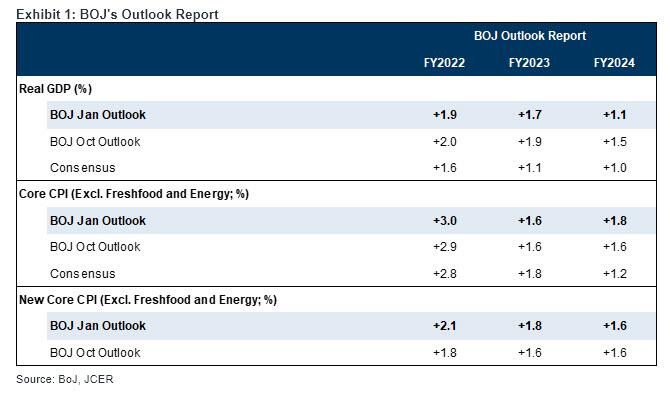
At the press conference, Governor Kuroda stressed the need to maintain easing policy until the risks from economic downturn overseas have eased and wages start rising sufficiently, stating that the bulk of inflation in the current phase is cost-push inflation attributable to import prices, not a demand-pull inflation driven by significant wage growth, which Kuroda hopes to see. This basic stance is shared with the government, in our view. We expect some improvement in wages, as the 2023 shunto wage hike is likely to reflect recently high inflation, but we think wage growth will still be some way below the 3% rate that the BOJ believes is consistent with achieving its 2% inflation target.

Accordingly, from the point of view of macro fundamentals, the BOJ likely intends to maintain accommodative monetary conditions for a relatively long time.

* * *

Which brings us to the "technical tweak" discussed above, or as Goldman puts it, the continuation of YCC at least during Kuroda's tenure with the Introduction of "Additional Easing"

As Goldman's Naohiko Baba writes, another key point of the latest MPM is the BOJ's introduction of what can be effectively seen as an additional easing measure—in the form of extended funds-supply operations against pooled collateral—in an attempt to mitigate any yield curve distortions (a side effect of large-scale easing) by encouraging financial institutions to engage in arbitrage with higher-yielding cash bonds and swaps. This measure, as largely expected by Goldman and others, should be seen as a measure to buy time. After all, recall what we said yesterday, namely that "BOJ Is Less Than A Year Away From Running Out Of Bonds To Buy"

Furthermore, with the new BOJ leadership to be decided ahead of the next March MPM, which will be Kuroda's last, Goldman was confident the January MPM was likely to be the last opportunity to make any significant policy changes (the government will likely present nominees to the Diet on February 10, according to a January 17 Reuters report).

Taking all of the above into account, it appears that that Governor Kuroda is strongly committed to maintaining YCC through the end of his tenure. However, there is a problem, namely that...

Sustainability of YCC Still in Question

As shown below, the widening of the 10-year yield band in December only served to heighten market expectations for an exit from YCC and resulted in the BOJ having to increase its JGB purchases significantly in order to defend the 10-year yield's upper limit of 0.5%.

And while the 10-year yield moved below 0.5% following the BOJ's decision today to maintain YCC, how long that remains the case is open to question (spoiler alert: not long). Also, the above-mentioned extension, or technical tweak, of funds-supply operations offers no guarantees that market functioning will be meaningfully restored.

With these factors having raised the bar for maintaining YCC over the long term, one of the imminent tasks for the new BOJ leadership from April will be how to strike a proper balance between the desire to prolong YCC from a macro fundamentals standpoint and the sustainability of YCC. Unfortunately, there is no outcome where both outcomes are satisfied.

* * *

Finally, turning attention again to the altered loan program, we should point out that the BOJ altered a clause about its loan program, saying it will determine interest rates to encourage the formation of a yield curve that’s consistent with the guideline for market operations. And while the loan program was fixed at 0% previously, Kuroda said at the press briefing that a lending rate below zero isn’t ruled out.

Specifically, the BOJ can lead bond yields to desired levels by offering loans at these rates and letting financial companies buy bonds or enter swap contracts. BOJ said it will separately offer 5-year loans to financial companies, the longest term ever

According to Naka Matsuzawa, chief strategist at Nomura, this tweak to the loan program is so important that it’s equivalent to a policy change. The move "can be almost interpreted as strengthening policy easing", according to Nomura, and is why yields have stayed near session lows even as the yen rebounded hard.  

https://www.zerohedge.com/markets/technical-tweak-unveiled-boj-which-equivalent-strengthening-policy-easing

Secretive Surveillance Program Captured 150 M Global Money Transfers Spanning 20 Countries

 A secretive financial surveillance database established by the Arizona attorney general's office in 2014 has ballooned into a behemoth tool used by more than 600 law-enforcement entities, which can search for more than 150 million money transfers between people in the US and more than 20 countries, according to internal program documents obtained by Sen. Ron Wyden (D-OR).

The database is called TRAC, or Transational Record Analysis Center, and was established as part of a settlement reached with Western Union to combat human trafficking and drug runners from Mexico. The data includes the full names of both the sender and the recipient, along with the amount of the transaction, the Wall Street Journal reports.

"It’s a law-enforcement investigative tool," said Rich Lebel, TRAC’s director, who claims that the program has resulted in hundreds of leads and busts involving drug cartels and other criminals engaged in money laundering. "We don’t broadcast it to the world, but we don’t run from or hide from it either."

Three money-services companies, MoneyGram, Euronet, and Viamericas, sent TRAC bulk tranches of customer data in response to subpoenas issued out of the San Juan, Puerto Rico office of the US Immigration and Customs Enforcement agency.

Euronet and Viamericas had received customs summonses from that office seeking data for transactions between anywhere in the U.S. and countries including many in the Caribbean and Latin America as well as Canada, France, Spain, Ukraine and China, the companies told Mr. Wyden. Those subpoenas ordered the money-services companies to turn the data over to TRAC. -WSJ

What's more, many of the subpoenas given to TRAC were extremely broad - often requiring all data on transfers between certain places above the $500 threshold, according to the documents - even in cases where an American living in a border state sends $500 or more to another American living elsewhere in the country.

Sen. Wyden thinks differently, saying TRAC allows the government to "serve itself an all-you-can-eat buffet of Americans’ personal financial data while bypassing the normal protections for Americans’ privacy."

Internal records, including TRAC meeting minutes and copies of 140 subpoenas from the Arizona attorney general, were obtained by the American Civil Liberties Union and reviewed by The Wall Street Journal. They show that any authorized law-enforcement agency can query the data without a warrant to examine the transactions of people inside the U.S. for evidence of money laundering and other crimes. One slideshow prepared by a TRAC investigator showed how the program’s data could be used to scan for categories such as “Middle Eastern/Arabic names” in bulk transaction records. -WSJ

"Ordinary people’s private financial records are being siphoned indiscriminately into a massive database, with access given to virtually any cop who wants it," said Nathan Freed Wessler, deputy director of the ACLU's Speech, Privacy and Technology Project. "This program should never have been launched, and it must be shut down now."

The program was established due to lax rules surrounding money-transfer services companies. While banks have to monitor transactions for suspicious activity - and report over $10,000 in cash transactions, companies such as Western Union and MoneyGram don't have to. Now, customer transactions above $500 are available in the TRAC database.

What's more, Wyden uncovered that the federal government has participated in TRAC, including the Department of Homeland Security's Investigations division, collected around six million records of money transfers from Western Union and Maxitransfers since 2019.

"The scope of this surveillance program and federal agencies’ role is far greater than initially revealed," said Wyden in a letter asking the DOJ inspector general to investigate the FBI and DEA's involvement with the program.

https://www.zerohedge.com/political/secretive-surveillance-program-captured-150-million-international-wire-transfers-spanning

Telehealth patients scramble for in-person care amid crackdown on online controlled substances

 Catherine was getting nervous about her ADHD prescription. In 2022, the 29-year-old New Yorker had started using Done, a direct-to-consumer telehealth company that treats attention deficit hyperactivity disorder. The medication her provider had prescribed, a stimulant called Vyvanse, was helping her manage distraction so severe that she frequently had car accidents. 

But online, she had started reading about other telehealth patients running into problems getting their ADHD medications. Increasingly, big box pharmacies were cracking down on prescriptions from online-only providers like Done and Cerebral as their practices faced intense scrutiny. And she heard that, when the Covid-19 public health emergency eventually ended, she likely wouldn’t be able to get her medication without meeting a provider in-person. 

“With the whole pandemic thing ending and restrictions happening, it was like, ‘I need to be seeing an actual psychiatrist so I don’t have my access to this cut off,’” said Catherine, who asked to be referred to by her first name only.  

When the pandemic hit, and mental health care providers were in short supply, patients like Catherine flocked to telehealth — and in many cases, obtained prescriptions for controlled substances that previously could only be prescribed in-person. But as those channels close, many of them are facing the challenge of transferring their prescriptions to in-person providers.

“People during the crisis that accessed telehealth, now they’re trying to plan for care, and there is a gap,” said Mark Stein, director of the ADHD clinic at Seattle Children’s. “Where telehealth could be a solution, in some ways it’s making it worse when you’re having fragmented or disconnected care.” 

As they attempt to transition to in-person care, some patients will likely still struggle to find providers who are comfortable treating ADHD, said Maggie Sibley, a clinical psychologist and associate professor at Florida International University who specializes in ADHD. Those providers are still scarce, and at the same time, ADHD awareness across age groups has spiked during the pandemic

Even if a patient is able to find a qualified doctor with openings, it’s not certain they will simply pick up with the same prescription a telehealth company offered. “From the patient’s perspective, they’re looking for somebody who can fulfill their need,” said Sibley. “But what they’re going to find, I think, is that traditional providers are going to be doing a higher level of due diligence,” possibly reconsidering stimulant prescriptions altogether.

Adult ADHD in particular can be complex to diagnose and treat, said Stein. Other mental health disorders often mimic or overlap with ADHD symptoms, and cognitive difficulties with concentration, motivation, and planning can be related to other health problems. “The idea that you could do a comprehensive evaluation online in a half an hour, I think that for many people that would not be adequate in terms of capturing their history,” he said. 

Catherine had been diagnosed with depression and post-traumatic stress disorder before reaching out to Done last February. She had long felt pigeonholed by her providers, who prescribed a series of antidepressants that didn’t work or came with negative side effects, including hallucinations. So when she sought out treatment for her attentional issues with Done, she didn’t share her previous diagnoses on an intake survey or with her prescribing provider. 

“Quite frankly, I just flat-out lied,” she said. “I was done with even remotely trusting anyone. And I was just like, I know what I need to say to get me an appointment with someone who is going to actually just give me the medication for this.” 

She knew it was a risky choice — and as her executive function symptoms improved on Vyvanse, she sought out care for other symptoms from one of her previous psychiatrists, who diagnosed and treated her for bipolar II. He was concerned, she said, about treating a patient whose medication was managed by another psychiatrist. So after establishing a stable regimen to treat her bipolar disorder and discussing the challenges of balancing the two types of medication, “he wanted to take over my stimulant prescription to figure it out and get it right together.” 

That suggestion saved her from having to figure out what to do next if she lost access to her prescription via telehealth.  

The transition to in-person care may not be as straightforward for patients without an existing history of behavioral health treatment. They’re more likely to be treated by primary care providers, many of whom don’t feel comfortable diagnosing ADHD or choosing a medication and dose for a patient. “That’s the part that feels out of their wheelhouse,” said Sibley. 

Another patient who ultimately got care from Done had talked to her primary care doctor about her ADHD-like symptoms for years. “He’s always suggested that I get tested, as he suspected it as well,” she wrote in an email to STAT. “But he never felt comfortable diagnosing.” After reaching out to Done in early 2022, she received a prescription for Concerta, which helped her sleep better, avoid overthinking, and cut down on anxiety.

It wasn’t long before her local Walgreens cracked down on filling telehealth prescriptions. She was able to find a local pharmacy that would distribute the medication, “but that doesn’t come without fear that they’re going to cut me off,” she shared.

Along with the looming end of controlled substance prescribing online and growing stigma around telehealth prescriptions of stimulants, “that was ultimately the pushing point for me to switch,” she wrote. Recently, she reached out to her primary care doctor to discuss the problem — and this time, she said, he felt confident enough in her treatment history to take over the prescription. 

That can be fairly common among PCPs, said Sibley. “Once we figure out what works, they feel comfortable overseeing continued care.” But she and other providers expressed concern that some telehealth patients — especially those who were diagnosed recently online — may need more careful assessment by a new provider before stimulant prescriptions can be safely continued. 

“These companies are under scrutiny, and questions have been raised publicly about whether they are being discerning enough with their patients,” said Sibley. “So I think any responsible doctor should be, regardless of who they’re getting care from, should be making sure that they do due diligence to collect full information.”

But the Done patient who is transferring her prescription to her primary care doctor said she avoided sharing details with him about her current provider, given that scrutiny. “You hear ‘telehealth’ and you’re automatically stuck wearing the ‘pill mill,’ ‘drug seeking’ stigma like a backpack, no matter where you go,” she wrote. “Thankfully he didn’t ask for too many details.”

A successful care transition to primary care is “a lot easier when someone comes in with really good documentation about their symptoms and their impairment and their treatment history and you know them,” said Stein. “But we don’t have that sometimes if someone just comes in fresh from telehealth.” In those cases, a patient may need further evaluation from a specialist — which could leave patients frustrated and facing gaps in medication as they work to establish a treatment history with a new physician.

“ADHD is a disorder that, from a professional’s perspective, takes a lot of detective work,” said Sibley. “The patients have to learn to advocate for themselves, but also have to learn to trust the new providers that they may be doing due diligence.”

With a psychiatrist now managing her prescriptions for both ADHD and bipolar disorder, in-person care feels like the right fit to Catherine. But she still sees telehealth as a valuable tool for ADHD patients — especially those with more straightforward medical histories — who have long struggled to access care and found an easier path during the pandemic. 

“Telehealth, I think for a lot of people, is a really lucky in to getting a first treatment,” she said. “You can then be able to prove to someone like, ‘Hey, this actually works for me.’” 

That ‘in’ is still somewhat available, for now. While some pharmacies have stopped filling online prescriptions, federal health secretary Xavier Becerra this month extended the public health emergency for another 90 days. But it will at some point end, and Done said it is committed to minimizing disruptions in care when that happens. 

“We are working on a plan to switch to a hybrid model of in-person care and remote chronic care management for all the new members, while continuing to take care of our current members in accordance with federal and state regulations,” wrote Done clinical leader Zoe Martinez in a statement to STAT. “We are taking all necessary precautions to ensure a smooth transition for our patients and will keep them informed throughout the process.”

Other providers, including Stein, see potential for hybrid models to manage complex disorders like ADHD, which can spiderweb into many so many aspects of a patient’s health. But it will need to include careful coordination to make sure that patients get the best care from both specialists and primary care providers — and avoid the interruptions that some are experiencing today.

“These telehealth companies kind of filled the gap in terms of doing evaluations and providing some aspects of care,” said Stein. “But they really weren’t a long-term solution in terms of reducing the fragmentation of ADHD care.” 

https://www.statnews.com/2023/01/17/adhd-drug-telehealth-done-cerebral-prescription-access/

Addiction crisis is causing a spike in endocarditis cases

 Increased injection drug use has led to a spike in cases of the life-threatening heart condition endocarditis, with cases rapidly accelerating since the onset of Covid-19.

The increased case count is one of the lesser-known side effects of the deadly addiction epidemic. But patients with endocarditis, an inflammation of the heart lining caused by infection, require complex, thoughtful care — care that the U.S. health system is ill-equipped to provide.

With drug deaths hovering at an all-time high and endocarditis cases among drug users up nearly tenfold in the last decade, physicians, researchers, and health officials have begun to confront the problem with more urgency. In particular, doctors are coming to terms with a basic reality: Their hospitals often have few protocols for treating endocarditis patients who use opioids and the withdrawal they’ll likely experience upon admission.

“We’re taking steps in the right direction, but we need to do much more,” said Daniel DeSimone, an infectious diseases specialist at the Mayo Clinic in Minnesota. “We need to do better with regard to managing opioid withdrawal in the hospital.”

In areas with high rates of injection drug use, infectious disease outbreaks are nothing new. In the past decade alone, the U.S. has seen outbreaks of HIV and hepatitis C associated with increased opioid use.

Between 2011 and 2022, the rate of new endocarditis among patients with opioid use disorder increased dramatically, according to new research published by the National Institute on Drug Abuse and scientists at Case Western Reserve University. Among drug users, most endocarditis infections stem from the use of non-sterile syringes, allowing bacteria to enter the bloodstream and, eventually, the heart.

Among people with opioid use disorder, the rate of endocarditis jumped from 4 per million per day to 30 per million per day. The sharpest increase occurred between 2021 and 2022 — a spike that the study’s authors attribute to the Covid-19 pandemic.

Care for endocarditis, which is not always caused by drug use, typically consists of a course of antibiotics delivered by IV drip. Some patients receive what’s known as a PICC line, a larger form of IV used when they’ll require medication for several weeks. Many cases require surgery to repair or replace damaged heart valves.

Such care is complicated to begin with. But for patients with addiction, each of those steps adds a new layer of complexity — in particular, lengthy hospital stays and ensuing withdrawal for patients accustomed to regular opioid use.

“You have someone that has very strong physical dependence to opioids, they go into the hospital, and they go into withdrawal, and that withdrawal can be very, very severe,” Nora Volkow, NIDA’s director and the co-author of the recent study, said in an interview. “They may leave the hospital against medical advice, because they’re not being treated for the severity of the withdrawal symptoms.”

Even when patients’ withdrawal is treated, Volkow said, patients “stay throughout the whole hospitalization as needed — and then they get released with no linkage to treatment or care.”

Keeping patients in the hospital, however, is only half the battle. In cases where patients remain in treatment, many still don’t receive the resources they need, or the expertise their care requires.

Even once patients’ infection and heart condition has been addressed, discharging them from the hospital can present unique challenges. Many of those who inject drugs are also experiencing dangerous or unpredictable housing situations, and those whose addictions remain untreated often quickly return to use.

Many of those patients soon wind up readmitted to the hospital for repeat infections. In recent years, such cases have engendered frustration from hospitals and additional stigma among health providers — even leading to public debates about whether patients with multiple endocarditis cases are worthy of additional care.

As a result, some doctors seek long-term care facilities where their patients can recuperate in a more stable environment. Even in those cases, however, the U.S. health infrastructure poses major obstacles.

“I can’t tell you the number of times I’ve had skilled nursing facilities say they will not accept a patient with addiction, because of challenges getting them methadone or getting them buprenorphine, or other reasons that seem to be code for stigma,” said Ashish Thakrar, an addiction physician and postdoctoral fellow at the University of Pennsylvania’s National Clinician Scholars Program.

The spike in cases, and growing recognition that the U.S. health system is ill-equipped to treat complex patients experiencing addiction, has spurred calls for improving treatment standards.

The American Heart Association last year issued new recommendations for endocarditis care that revolve around treating the patient’s underlying addiction. The AHA’s multidisciplinary approach, in an ideal scenario, would include input from doctors in at least four fields: cardiology, cardiac surgery, infectious disease, and addiction medicine or addiction psychiatry.

The Department of Justice has weighed in as well, issuing guidance and announcing a number of settlements and new lawsuits aimed at forcing health care facilities to admit patients who’ve been prescribed addiction medications like methadone or buprenorphine.

While some experts welcome the new guidance, they concede that in some cases it’s impossible to live up to.

“Most hospitals don’t have addiction consult services,” Thakrar said. “Most hospitals are not going to have access to addiction expertise, and in part that’s because hospitals haven’t paid for it. It hasn’t been a priority. … A lot of hospitals don’t have specialty services, so a lot of providers and cardiologists might be left without anyone to call.”

The resulting void forces other doctors — in this case, cardiologists or infectious disease specialists — to treat their patients’ addiction, which they’re sometimes ill-equipped to do.

DeSimone, the infectious disease specialist who was the lead author for the AHA’s new recommendations, acknowledged those doctors may be uncomfortable providing addiction medications, like writing a prescription for buprenorphine or connecting their patients with a methadone clinic.

The failure to provide comprehensive care is a big missed opportunity, Volkow said, because patients hospitalized with endocarditis are a “captive audience” for addiction care. A hospital, she argued, provides patients with medications, food, shelter, and safety — in other words, an ideal setting to begin addiction treatment.

Moreover, patients whose addictions remain untreated leave the hospital at even higher risk.

The condition “may require heart valve repair or complete replacement,” DeSimone said. “That typically requires the use of prosthetic material — and particularly for patients who inject drugs, that hardware now predisposes you to getting infected again.”

The increase in infective endocarditis has taken place amid a broader debate about the impact of “harm-reduction” strategies — services including syringe exchange, which data shows as highly effective at preventing infectious disease transmission.

In recent years, however, local governments in Indiana and West Virginia have moved to limit or outright close syringe exchange services. Even left-leaning leaders, like President Biden or California Gov. Gavin Newsom, have resisted the opening of proposed supervised injection sites that would provide syringe services alongside medical supervision for people using drugs.

Last year, conservative media caused an uproar by falsely reporting that the Biden administration planned to use federal money to distribute sterile pipes used to consume methamphetamine or fentanyl, among other drugs. In response, the White House issued a formal denial — and lawmakers from both parties introduced legislation meant not only to ban the use of federal funds for sterile pipes, but also to prevent government money from being spent, for the first time, on clean syringes.

While the $30 million allocation for harm-reduction services last year was unprecedented, critics say it wasn’t enough. And when communities lack access to services like syringe exchange, Volkow said, the results are easy to predict.

“During the Covid pandemic, many of the community services that exist to support people that take drugs — including, for example, syringe exchange programs — were closed,” Volkow said.

She added: “You can look at it throughout the whole world: Areas closing their syringe exchange programs are followed by outbreaks for HIV, and we’re seeing the same thing with hepatitis C. We can very much predict it is also associated with infectious endocarditis.”

STAT’s coverage of chronic health issues is supported by a grant from Bloomberg Philanthropies. Our financial supporters are not involved in any decisions about our journalism.

https://www.statnews.com/2023/01/17/addiction-spike-endocarditis-cases-hospitals/

In the search for therapies for solid tumors, novel target: claudin-6

 Targeted immunotherapies like CAR-T have been remarkably successful in combating blood cancers like chronic lymphocytic leukemia. But malignancies that involve solid tumors have proved far more challenging for these new technologies. As yet, there has been no engineered cell therapy for solid tumors, which make up the overwhelming majority of cancers and include breast, lung, pancreatic, ovarian and prostate cancers.

One of the biggest roadblocks has been finding the right molecular targets. These therapies work by killing any cell that carries a designated marker, so scientists need to find a molecular target that exists on cancer cells but is not present in healthy tissues –  especially life-sustaining tissues like the heart or the brain.

Scientists have found few targets that fit this bill, but recently, a protein called claudin-6 or CLDN6 has been drawing the interest of researchers as one potential guide for immunotherapies. Several biotech and pharma companies have begun developing bispecific antibodies — engineered antibodies that can bind to two different antigens — or CAR-T cell therapies targeting CLDN6. BioNTech, whose founders helped discover the protein as a possible cancer antigen, is one of the most notable.

Researchers working with BioNTech presented data from a clinical trial of a CAR-T therapy targeting CLDN6 at the American Association of Cancer Research meeting in New Orleans in 2022. The trial showed that, with an immunologic boost from an mRNA vaccine, the therapy could shrink some solid tumors. BioNTech code-named the combination of the vaccine and therapy BNT211, and it remains one of the first examples of early efficacy from CAR-T cells in solid tumors, something that the cancer immunotherapy field has long struggled to achieve.

That data also helped put CLDN6 more firmly on the map as a target, said Martin Lehr, the CEO of Context Therapeutics, a biotech that is also developing drugs targeting CLDN6. “For me as an oncology drug developer, the BioNTech data was really exciting. It creates opportunities for companies like us,” he said.

The discovery

In the 1990s, Özlem Türeci and her husband, UÄŸur Åžahin, the co-founders of BioNTech, were mulling over how to find a viable target for solid tumors. Ideally, they knew, it would be a protein that wasn’t present in healthy tissues but was highly expressed on cancer cells. That gave them an idea. Cancer cells sometimes turn on embryonic genes, or genes that are only turned on during fetal development and then silenced after birth.

“We knew cancer cells like to activate embryonic genes because they make use of proliferation,” Türeci said.

So, if Türeci and her colleagues could find activated embryonic genes in cancer cells, that might yield a useful therapeutic target. In their search, “We got this set of interesting targets,” Türeci said. “One of them was claudin-6.”

Türeci and Åžahin went on to found a company called Ganymede that was focused on building antibodies to CLDN6 and other targets, including one in the same protein group, claudin 18.2. Astellas Pharma acquired that company, along with its claudin assets, but it wasn’t the end of Türeci and Åžahin’s interest in CLDN6. Later, after they created BioNTech, they turned back to CLDN6 and created more therapies targeting the protein, including BNT211, the CAR-T and mRNA vaccine combination.

The biology

CLDN6 is a member of the claudin family of proteins, involved with regulating cell permeability and adhesion and helping maintain the structure and shape of cells. While scientists know that CLDN6 is present during the development of a fetus, its exact function is not entirely clear. The protein helps cancer cells spread, Türeci said,  “but we can’t explain fully how it promotes transformation of a cancer cell, for example. We do not know in-depth how CLDN6 functions. To understand this in-depth, it really is a project of a lifetime.”

Still, she added, “That’s not so relevant for us. We are more interested to find what molecules are stably expressed on cancer cells. If you are using immunotherapy to target such a molecule, it doesn’t really matter what it does, only that it is cancer cell selective.”

CLDN6 is present on nearly all testicular cancers and is also expressed on a significant proportion of ovarian cancers, non-small cell lung cancers, and gastric, breast, and endometrial cancers. It’s found in certain healthy adult tissues, like the pancreas and liver, but only at extremely low levels. “It’s really an ideal target in solid tumors,” Türeci said, adding, “There are not many of them. In the late ’90s, when we found CLDN6, we basically went through the entire genome, and there’s not much which compares to CLDN6 that you can find for solid tumors.”

The pipeline

In the last couple of years, more companies have begun investing in CLDN6 assets. “The field has gotten pretty exciting,” said Lehr of Context Therapeutics, a biotech that’s developing a CLDN6 bispecific antibody, a double-armed molecule that can bind to a T cell with one arm and to an immunotherapy target with the other arm. “We’ve seen an acceleration of companies entering the space,” Lehr said.

Xencor, NovaRock, Amgen, I-Mab, Chugai, Daiichi Sankyo, and AbbVie all have programs for CLDN6 compounds, he said. While these companies are taking different approaches, they will have to solve some of the same problems. For one, although CLDN6 is rarely expressed in normal adult tissues, it’s structurally very similar to another, related protein called CLDN9, which is expressed at high levels in the whole body.

An antibody or a CAR that cannot distinguish between CLDN6 and CLDN9 could  potentially lead to severe toxicities for patients, since CLDN9 is widely present in healthy tissue. So far, that hasn’t happened with BioNTech’s BNT211, and Lehr said that he hasn’t seen it arise in Context’s research either. Amgen also presented data this year showing that its specific antibody could selectively bind against CLDN6, ignoring CLDN9.

Like other bispecific antibodies, Amgen and Context’s bispecifics can use CLDN6 to grab onto the cancer cell with one arm. The other arm of the bispecific engages a T cell using another protein present on the surface of T cells like CD3, and pulls the two cells into close proximity. “That permits the T cell to exert its tumor cell killing function,” Amgen said, while potentially disrupting CLDN6’s function in the cancer cell “associated with tumor cell proliferation, migration, and invasion.”

If companies can get these approaches to work, CLDN6 may help unlock some of the first cell therapies or bispecific antibody therapies for solid tumors.

https://www.statnews.com/2023/01/18/cancer-therapies-solid-tumors-claudin-6-cldn6/

Mix-it-yourself Wegovy? Some are trying risky sources for weight-loss drugs

 With a few clicks, Daniel added the chemical to his online cart and ordered it. In less than a week, a vial containing white powder arrived at his house. He used a syringe to measure out sterile water and eject it into the vial to dissolve the powder.

Then, with a different syringe, he drew up about a quarter of a milliliter of the solution and injected it into his lower abdomen.

The product was what an online chemical supplier says is semaglutide. Similar websites offer what they say is tirzepatide. Those are the active ingredients in a new generation of diabetes and obesity drugs that have become immensely popular for causing significant weight loss.

At least a dozen websites that specialize in a class of protein-related products called peptides now list semaglutide and tirzepatide. Though they say their chemicals should only be used for lab research purposes and not for human use, individuals have been ordering from the websites to make their own injections at home.

People in bodybuilding and biohacking circles have long gone to these sources for chemicals to try to build muscles and burn fat, and now, some people with clinical obesity are also turning to the websites for the first time, hoping to obtain semaglutide or tirzepatide as the original medications from Novo Nordisk and Eli Lilly remain difficult to access.

Novo’s semaglutide, sold under the brand names Ozempic for diabetes and Wegovy for obesity, is recovering from months-long shortages. Lilly’s tirzepatide, sold under the name Mounjaro for diabetes, also recently fell into short supply. The chronic medications each cost over $1,000 a month, and few insurers cover drugs for weight-loss purposes.

Daniel, a delivery worker, ordered from these suppliers starting in August because he couldn’t afford the list price of the drugs. So far, he said, he’s been losing weight and has felt nausea and fatigue, similar to side effects associated with the original medication. “I’m willing to take the risk if it means I can get it,” he said. STAT is publishing only the first name of people who ordered from peptide suppliers in light of potential legal action from the suppliers.

People are also turning to compounding pharmacies, which mix the active ingredients with other chemicals to offer ready-made compounds.

These alternative routes can be risky, doctors say, since Novo and Lilly aren’t selling their drugs to any other manufacturers, so it’s unclear what exactly is inside the alternative products. They also aren’t regulated in the same way that traditional medications are.

“It just shows you the level of desperation that people have and the level of unmet need that we have when it comes to treating obesity effectively,” said Jamy Ard, co-director of the Atrium Health Wake Forest Baptist Weight Management Center.

The excitement around the new medications, known as incretin drugs, may also be leading some people to jump straight to them as a treatment option, “skipping from A to Z,” Ard said. “There are some people who definitely need an incretin treatment strategy, but it is not the only thing, it is not the absolute solution for everyone.”

Novo said in an emailed statement that it does not provide or sell bulk semaglutide, and alternative compounded products “do not have the same safety, quality, and effectiveness assurances as FDA-approved drugs, and may expose patients to potentially serious health risks.”

In an emailed statement, Lilly said Mounjaro, the company’s branded tirzepatide, “is only available in a pre-filled single-dose pen manufactured by Lilly. Mounjaro is not commercially available in any other form (e.g., powder).” 

Josh is a patient who repeatedly tried to get the original medications. He got insurance coverage for Wegovy back in September, but he couldn’t pick any up since the drug was in shortage. He then got a prescription for Mounjaro, but in early December, the medication also fell out of stock at his pharmacy.

Josh has congenital heart disease and obesity, and he fears that having both heighten his risk of serious cardiac issues, so he rushed to look for other options. He found a telehealth provider that prescribed him semaglutide from a compounding pharmacy.

He also ordered semaglutide from a peptide supplier. He never ended up using it because Wegovy has come back into stock, but he’s keeping the chemical on hand in case he can’t obtain the original medications again.

“It became frustrating and gave me anxiety when I started to consider that I would have to pause treatment just simply due to the lack of availability,” he said.

Ordering from peptide suppliers can be dangerous because it’s unclear what’s inside the chemicals and people may be mixing wrong amounts or not doing so in a sterile manner, opening themselves up to potential infection, said Jaime Almandoz, medical director of the University of Texas Southwestern Weight Wellness Program.

While the peptide suppliers say their products are meant for lab research purposes, they appear to be marketing in a way that appeals to individual consumers. Extreme Peptide, for example, says on its website that people can earn rewards on their orders to use for future purchases. SAF-Research’s site says it offers a buy now, pay later option. Emails and calls to the suppliers went unanswered.

Almandoz said compounding pharmacies may pose fewer risks since professionals are expected to be mixing the products in a sterile environment. But, he said, it’s also unclear where the pharmacies are getting the active ingredients, and there’s no data on the safety or effectiveness of the compounded products.

If the pharmacies are registered with the Food and Drug Administration, the compounds that they produce don’t have to be approved by the regulator, as typical marketed drugs have to be.

Pamela Mitchell, a 52-year-old journalist near Houston, said she feels comfortable getting compounded semaglutide since her doctor prescribed it to her after she could no longer get refills for Mounjaro.

She wanted to lose weight to alleviate the menopause symptoms, like brain fog, that were interfering with her work. Her blood work also showed indicators of nonalcoholic fatty liver disease. “It was important to me to find a tool that would help me continue to lose weight so that the health concerns that come with menopause and obesity — I could continue to treat them,” she said.

Mitchell gets compounded semaglutide from Empower Pharmacy, which didn’t respond to requests for comment.

Almandoz of UT Southwestern said though he understands the desire to obtain some form of the newest medications, whenever his patients ask about compounding pharmacies “I get very anxious and I try to counsel them away” from that option. There are other drugs and procedures like bariatric surgery that could be considered, he said.

Ultimately, “people are desperate to have better health,” he said. “The fact that people are resorting to nontraditional pathways to get medications which may be risky speaks to their desire for better health.”

STAT’s coverage of chronic health issues is supported by a grant from Bloomberg Philanthropies. Our financial supporters are not involved in any decisions about our journalism.

https://www.statnews.com/2023/01/18/risky-sources-wegovy-ozempic-obesity-drugs/

CDC's Updated Clinical Practice Guidelines for Prescribing Opioids

 Everyone should receive safe and effective pain care. The Centers for Disease Control and Prevention (CDC) understands that treating patients living with pain can be complex and that treatment is highly individualized.

CDC supports clinicians and their patient relationships. The newly released CDC Clinical Practice Guideline for Prescribing Opioids for Pain – United States, 2022 (2022 Clinical Practice Guideline) reflects CDC's commitment to helping people living with pain and supporting individualized patient care, safe and effective pain management options, and good communication between clinicians and patients. To support this effort, CDC developed resources to assist clinicians in implementing the guideline's recommendations in their practices. New resources will be added as they become available.

What You Need to Know

The 2022 Clinical Practice Guideline updates and replaces the 2016 guidelines. CDC followed a rigorous scientific process using the best available scientific evidence and obtained feedback from the public and independent subject matter experts to write this guideline.

Through the update process, we developed 12 voluntary recommendations to help clinicians provide pain care in outpatient settings for patients aged 18 years or older with acute pain, subacute pain, and chronic pain. The guideline is not applicable for pain management related to sickle cell disease, cancer-related pain treatment, palliative care, or end-of-life care.

A few key changes to the 2022 Clinical Practice Guideline include expansion of the clinical audience, clarification regarding dosing thresholds and tapering of doses, and the addition of guiding principles for implementing the recommendations. Of note:

  • The clinical audience has been expanded from primary care clinician to include clinicians who prescribe opioids in outpatient settings.

  • New guidance includes pain management recommendations for acute and subacute pain in addition to chronic pain.

  • There is revised and expanded guidance on opioid tapering, including carefully weighing the benefits and risks of continuing opioid therapy and a slower taper.

The recommendations in the 2022 Clinical Practice Guideline are voluntary and intended to support you as you provide individualized, flexible, patient-centered care as part of a multimodal and multidisciplinary approach to pain management. Special attention should be given to avoid misapplying this clinical practice guideline beyond its intended use.

How the Guidelines Can Help You

The 2022 Clinical Practice Guideline's broadened scope and updated recommendations help you and your patients make decisions together about how to manage pain. The guideline can help you:

  • Select an appropriate nonopioid therapy. Nonopioid therapies are at least as effective as opioids are for many common types of acute pain (including low back pain, neck pain, pain related to other common musculoskeletal conditions or to minor surgeries or dental procedures, kidney stone pain, and headaches).

  • Weigh the benefits and risks of opioid vs nonopioid pain treatments. There is guidance for treating acute (< 1 months' duration) and subacute (1-3 months' duration) pain.

  • Select appropriate treatment for chronic pain. The new guideline mostly reinforces the 2016 guideline recommendations for the use of opioids for treating chronic pain, with some key exceptions to dosing thresholds and tapering guidance.

  • Determine an opioid dosage for your patient. The guideline provides general dosing principles rather than specific dosage thresholds (eg, avoiding increasing dosage above levels likely to yield diminishing returns in benefits relative to risks). The goal of this distinction is to avoid using the guideline to create overly restrictive policies and help support clinicians and patients in making individualized decisions.

  • Decide when to change dosage or discontinue opioids. CDC provides guidance on assessing the benefits and risks for continued opioid use and determining whether or when to taper opioid dosage for your patients who are already receiving opioids.

The guideline also includes a set of guiding principles to help you implement the recommendations and support your efforts to treat pain with your patients. The complete recommendations and implementation considerations can be found at 2022 Clinical Practice Guideline.

Use the Guidelines to Help Your Patients

The 2022 Clinical Practice Guideline aims to ensure equitable access to pain treatment that improves the lives of persons living with pain and reduces the risks associated with opioid pain therapy. CDC continues to develop new tools and resources to help you and your colleagues implement the guidance in your practice or health system. We support you and your patients and hope that this guidance will help you provide safe, effective, individualized, and informed pain care for your patients living with pain.

Resources:

2022 Clinical Practice Guideline for Prescribing Opioids for Pain

CDC Opioid Prescribing Resources for Healthcare Professionals

CDC Guideline at a Glance

https://www.medscape.com/viewarticle/986793