Search This Blog

Tuesday, January 24, 2023

Ukraine Rocked By Corruption Scandal, Wave Of Top Officials Resign

 The Ukrainian government on Tuesday confirmed the resignation of multiple high ranking officials amid large-scale corruption allegations, in what's being called the biggest mass resignation and graft scandal since the Russian invasion began.

Some dozen officials have quit their posts after a huge political shake-up over allegations and probes into cases ranging from bribery, to mismanagement of aid funds for purchasing food, to embezzlement, to driving expensive cars while common people suffer under wartime conditions.

A top presidential adviser and four deputy ministers - among these two defense officials, along with five regional governors were forced out of their posts. And among the regional governors to step down included officials overseeing regions which have seen intense fighting, including the Zaporizhzhia and Kherson regions, where Russian forces have lately reported gains.

In reference to the announcement by a senior government official, Oleg Nemchinov, international reports detail the following list

  • Deputy Prosecutor General Oleskiy Symonenko

  • Deputy Minister for Development of Communities and Territories Ivan Lukeryu

  • Deputy Minister for Development of Communities and Territories Vyacheslav Negoda

  • Deputy Minister for Social Policy Vitaliy Muzychenk

  • And the regional governors of Dnipropetrovsk, Zaporizhzhia, Kyiv, Sumy and Kherson

And separately, "the defense ministry had earlier announced the resignation of deputy minister Vyacheslav Shapovalov, who was in charge of the army's logistical support, on the heels of accusations it was signing food contracts at inflated prices." 

In this case regarding the food contracts, Shapovalov is accused of signing a deal with an unknown, shady firm. In his role as deputy defense minister, his is the most notable and visible resignation. Crucially he would have had no small part in overseeing the billions of dollars flowing from the pockets of US and European taxpayers as authorized defense aid.

He purchased military rations at inflated prices in what appears a scheme to line the pockets of contractors, and potentially involving kickbacks to himself.

While the defense ministry is still trying to downplay it as a "technical error" - Politico reviews of the details to the scandal

An exposé from the Ukrainian news website ZN.UA revealed last week that the defense ministry purchased overpriced food supplies for its troops. For instance, the ministry bought eggs at 17 hryvnias per piece, while the average price of an egg in Kyiv is around 7 hryvnias. According to ZN.UA, a contract for food procurement for soldiers in 2023 amounted to 13.16 billion hryvnias (€328 million).

This is two to three times higher than current rates for such food items, reports say. Shapovalov's resignation letter indicated he's stepping down so as "not to pose a threat to the stable supply of the Armed Forces of Ukraine as a result of a campaign of accusations related to the purchase of food services."

There's also deputy head of the Zelensky administration Kyrylo Tymoshenko, who stands accused of living a lavish wartime lifestyle. Many current mainstream media reports on Tuesday are burying some of the key verified details. For example, BBC writes simply that "Tymoshenko was implicated in several scandals during his tenure, including in October last year when he was accused of using a car donated to Ukraine for humanitarian purposes."

But starting in early December local Ukrainian outlets, angered at the posh lifestyle of Ukrainian leaders at a moment tens of millions are without power amid Russian aerial bombardment of the nation's power grid, began confirming that Tymoshenko drove high-end sports cars in and out of the capital, to and from mansions which typically range in cost from $10,000 to $25,000 per month

Deputy Head of the President’s Office 34-year-old Kirill Timoshenko

Below are photos published by The New Voice of Ukraine, republished in Yahoo News, in early December of last year, showing Tymoshenko frequently behind the wheel of a shiny new Porsche Taycan...

One outlet published a photo series entitled Not the "martial law" of Kyrylo Tymoshenko, deputy head of Ukraine’s Office of the President

US taxpayer dollars at work in Ukraine...

As another example of Western MSM seeking to downplay or soften this latest wave of graft-related forced resignations, the AFP writes, "Ukraine has long suffered endemic corruption, including among the political elite, but efforts to stamp out graft have been overshadowed by Moscow's full-scale war that began in February." And yet officials like Tymoshenko were spotted around Kiev and oligarchs' neighborhoods driving luxury sports cars for months throughout the war.

Additionally, there's this laughable and embarrassing line out of the AFP report: "Kyiv's Western allies, who have allocated billions of dollars in financial and military support, have been pushing for anti-corruption reforms for years, sometimes as a precondition for aid."

From a government supposedly "pushing anti-corruption reforms for years" to over $100 billion in US defense and foreign aid being pledged to Kiev's coffers over the past year... to now this from within the heart of the Zelensky administration:

It doesn't stop at posh and expensive cars, but the controversy has even extended to luxury vacations abroad as Ukrainians suffer the deprivations of war at home. "The departure of Symonenko, a deputy prosecutor general, comes after media reports that he spent a holiday in Spain this winter, reportedly using a car belonging to a Ukrainian businessman." The government has as a result now reportedly barred top officials from vacationing abroad as a result of the scandal.

Just prior to the wave of resignations, another official named Vasyl Lozynskiy was accused of receiving bribes to "facilitate" the purchase of generators at greatly hiked-up prices. Crucially, Lozynskiy as Deputy Minister of Infrastructure and Communities Development would have also been directly involved in overseeing how billions of dollars in Western humanitarian and infrastructure assistance gets doled out.

Commenting on this, mainstream media is now belatedly acknowledging a fact that's long been well-known, but which would get a person 'canceled' in public discourse if they dared pointed it out:

"Transparency International ranked Ukraine 122 out of 180 in its corruption ranking for 2021," the AFP now writes (the second most corrupt in Europe, with Russia the most at 136.)

And now Ukraine’s Defense Minister Oleksii Reznikov is under scrutiny related to the growing probe and scandal. Meanwhile, as news of the widening scandal hits world headlines...

Red Flags to Watch for in Diagnosing Type 1 Diabetes in Kids

 Oh, January. It's no one's favorite month. The holly jolly of the holidays is behind us, the marshmallow world of fresh snow is now dingy and gray, and credit card statements from a merry December are rolling in alongside tax documents for the new year.

For doctors, the list of reasons to hate January is even longer: full census, peak burnout, and never getting to see the sun. To this dreary list, we can add one more concern: January is the month with the highest number of new-onset type 1 diabetes  (T1D) cases.

The high rate of T1D diagnoses right in the middle of peak illness season makes working in primary care, urgent care, or emergency departments especially precarious — fatigue, large patient loads, and high prevalence of other illnesses can cause missed diagnoses.

The viral triggers that began hitting susceptible patients in the late fall have had time to destroy islet cell mass to levels that will cause symptomatic hyperglycemia. Timely reminders of the signs of new-onset diabetes bear repeating widely, because eagle eyes from everyone from hairstylists to concerned grandparents have urged the appropriate workup that led to the diagnosis in my patients. The majority of patients with newly diagnosed diabetes had seen a healthcare provider within the preceding month, and the signs are frequently ignored.

Typical warning signs of new T1D include increased urination owing to increased filtration at the level of the kidney in response to hyperglycemia. The resulting volume depletion triggers increased thirst. Lack of insulin, lost glucose through urine wasting, and diminished ability to store energy as fuel causes weight loss. High glucose levels also promote the growth of yeast and impede wound healing.

Even though most medical professionals can rattle off these symptoms when asked, patients often come to us with different labels, causing us to stumble when the clock is ticking to make the correct diagnosis. Although the body can burn ketones for fuel temporarily, ketone buildup eventually causes diabetic ketoacidosis (DKA), a life-threatening metabolic crisis.

In the United States, missed diagnoses lead to unacceptably high rates of DKA at diagnosis, which is especially concerning because DKA is the most common cause of morbidity and mortality of children and young adults with T1D. When children present too late, deaths may occur at diagnosis. In a concerning trend, more patients are presenting for initial care already in DKA when compared to previous years.

Despite the large number of people living with T1D, stubborn myths persist about its causes and treatment, even among professionals who should know better. People are not born with T1D, though it may present at any age, from infants to older adults. It's not caused by poor diet or lifestyle choices.

All pediatric diabetes cases should be discussed with a pediatric diabetes specialist immediately and started on insulin urgently, usually the same day. My colleagues and I still receive routine referrals buried among our fax machines with 7-year-old children inappropriately started on metformin despite exhaustive community education, and we live in fear that these patients will slip through the cracks and suffer harm without our constant diligence.

Most people living with T1D do not have a family history of T1D. Family or personal history of autoimmune disease (including hypothyroidism, celiac disease, alopecia areata, multiple sclerosisCrohn's diseaseulcerative colitis, lupus, rheumatoid arthritis, Addison disease, and others) should increase suspicion. Lack of known autoimmunity in the family does not exclude the possibility of T1D. A family history of type 2 diabetes certainly doesn't mean that new diabetes in a relative is also T2D. T1D symptoms may develop over just weeks to months, so routine annual screening for the condition at well-child checks may not be helpful.

Out of all my medical writing, I suspect that this article has the potential to save the most lives. Here are red flags to look out for to ensure timely diagnoses.

Vomiting without diarrhea. Gastroenteritis causes both vomiting and diarrhea. Isolated vomiting is concerning for ketoacidosis, among various other serious conditions, ranging from increased intracranial pressure from a tumor to testicular torsion. When a child presents with only vomiting, a thorough history and exam are crucial. The nearest to fatal case I have seen in my career was a child inappropriately diagnosed with viral gastroenteritis after presenting to urgent care with vomiting. She had been drinking regular Sprite for hydration all weekend before presenting obtunded with a blood glucose level > 2000 mg/dL. A simple urinalysis would have provided the diagnosis.

Yeast infections in prepubertal girls who don't wear diapers. These should not occur in immunocompetent children, but yeast flourishes when glucose values average above 200 mg/dL.

Thrush in children past infancy. Continuing on the topic of opportunistic yeast infections, I have treated many children who had been seen previously for "strep throat" that was truly thrush. A high degree of suspicion must be maintained.

"Asthma exacerbations" that are in fact Kussmaul respirations. Many children's hospitals have a specific respiratory cohort where children are triaged for presumed asthma or bronchiolitis. Sometimes clinicians will see a child after the first albuterol treatment is given and assume that a lack of wheeze may be due to treatment efficacy. Is the expiratory phase prolonged despite resolution of wheezing? Does the air smell like fingernail polish remover, a telltale sign of pathologic ketone levels? I have a child in my practice who was seen three times prior to diagnosis by three different providers for "asthma" who later came in with cerebral edema and pH of 6.7 owing to missed new-onset T1D. This child had an autoimmune condition but was obese, so suspicion of T1D was low among the previous clinicians.

Blurry vision. One of my patients was diagnosed following difficulty in getting his contacts prescription right. Fortunately, this symptom resolves when blood glucose levels stabilize.

Any abnormal blood glucose value. Even after eating a high-sugar meal, children with normal insulin function should respond normally. Any blood glucose level > 180 mg/dL is concerning and should be discussed with a pediatric endocrinologist for further work-up.

"Possible UTI." Although antibiotic stewardship is reason enough to never prescribe antibiotics over the phone for a presumed pediatric urinary tract infection (UTI), at least one quarter of my patients with new-onset T1D had presented to their pediatrician concerned about a parent-diagnosed urinary tract infection because of increased frequency of urination.

New bedwetting. Nocturia and bedwetting in a previously potty-trained child are flashing warning signs to investigate further.

Weight loss. This one is obvious, but children have many reasons to appear slimmer — from growth spurts to new stimulant medications, increased activity with a new sport, or an intentional lifestyle change. Most pediatricians know that weight loss can be a harbinger of many serious conditions, but no list of new-onset diabetes symptoms is complete without mentioning it.

Increased thirst. Although this is the most obvious sign, in the Southeast, where I live, increased thirst easily can be blamed on hot weather. Teachers may notice increased bathroom use before parents do. Once, a dentist called me with a new diagnosis because a child couldn't make it through a routine cleaning without several bathroom breaks. Increased public awareness of common signs of diabetes like these will help get children the help they need before they need intensive care — or worse.

Although there is a national shortage of both pediatric and adult endocrinologists (stay tuned for my next article), your friendly local pediatric diabetes specialist is here to help. We depend on our colleagues on the front lines to help bring patients into our care at the right time. Beyond the prevention of death and complications from DKA at diagnosis, we also know that earlier diagnosis preserves islet cells, which is becoming more important for prevention efforts. The first step in diagnosing diabetes is to consider it in the first place. Continued commitment to education in every community will save and improve lives.

https://www.medscape.com/viewarticle/987122

Paxlovid Prescribing Concerns for People 65+ Revealed in Medscape Survey

 Concerns over drug interactions, existing health conditions and, to a lesser extent, risk of rebound were reasons providers cited in a new Medscape survey examining why healthcare professionals hesitate to prescribe Paxlovid in older adults. The survey also reveals differences in attitudes and prescribing behaviors for Paxlovid (nirmatrelvir/ritonavir) among more than 1500 physicians, nurse practitioners, physician assistants, and pharmacists.

Public health officials have said for some time that use of Paxlovid, approved under an FDA emergency use authorization (EUA) in December 2021, remains far below the proportion of Americans who could potentially benefit from the therapy.

What's driving the lackluster uptake remains unknown, so Medscape Medical News took a deeper dive into the challenges surrounding Paxlovid prescribing.

Older Americans remain one of the groups at highest risk for COVID-19 adverse outcomes, including hospitalization and severe illness. However, the survey found that providers also remain reluctant to prescribe Paxlovid in this population for multiple reasons.

"Unfortunately, we have a major mismatch of the people who would benefit most from Paxlovid compared with those who are actually getting it," said Eric Topol, MD, editor-in-chief of Medscape. "This survey helps us understand the main factors." 

The Medscape Survey on Paxlovid Prescribing Attitudes and Behaviors polled more than 1500 physicians, physician assistants, nurse practitioners, and pharmacists regarding Paxlovid use in people 65 and older. Respondents were asked whether they had prescribed Paxlovid and about situations in which they were reluctant to do so. The survey was administered during a 3-week period in November and December.

Overall, 37% of providers said they had prescribed this agent to older Americans in the previous 2 months.

Also, 77% of healthcare professionals who prescribe Paxlovid for people with COVID-19 are comfortable giving it to patients of any age. In contrast, about 1 in 5 doctors said they had not prescribed or considered prescribing it to those 65 or older during the study period. Under the EUA, Paxlovid is recommended for people age 12 and older who are at risk of progressing to severe COVID-19.

The survey found that almost half of patients were on a medication that is contraindicated with Paxlovid and that could not be discontinued (44%). Another finding was that almost the same proportion were on a medication that is contraindicated with Paxlovid, but the risk of discontinuing that medication was too high (41%). Also, the researchers found some patients were on a medication that could interact with Paxlovid, but it was unclear how to manage the interaction (29%).

Topol said that doctors, in some cases, may be overly concerned about the drug interactions. "There's a straightforward workaround strategy for nearly all the drug interactions — most commonly statins — which can easily be stopped for 5 days," he said.

Another concern preventing Paxlovid prescription is renal impairment, the survey reveals. More than one third of respondents, 37%, said they did not prescribe the protease inhibitor combination because of concerns over this condition, which can lower how efficiently medications are cleared by the body.

Despite the considerable attention given to COVID-19 rebound — a return of symptoms after someone stops taking an antiviral medication — only 22% of respondents cited this as a reason they would not prescribe Paxlovid in older adults.

Pharmacists were the least likely among those surveyed to prescribe Paxlovid to this demographic. Only 14% of pharmacists said they had prescribed Paxlovid to a patient in this age group in the previous 2 months. And just 27% indicated they would consider prescribing the agent to people 65 or older, for example. Pharmacists were included in the prescribing survey because the FDA in fall 2021 allowed them to start prescribing the antiviral without a physician's involvement.

https://www.medscape.com/viewarticle/987121

Record Number Of Border Deaths During Biden’s First 2 Years

 by Charlotte Cuthbertson via The Epoch Times (emphasis ours),

As the number of illegal immigrants flooding across the southern border continues to increase, so does the number of illegal immigrants who die while crossing into the United States, or soon after.

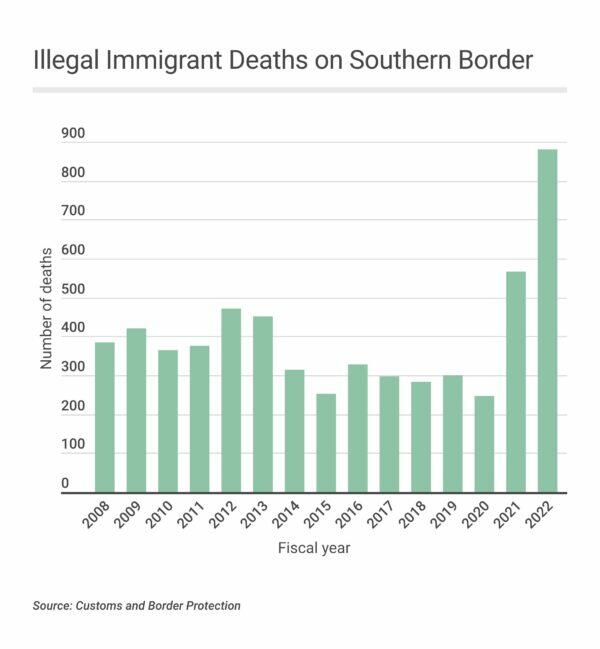
Customs and Border Protection (CBP) recorded a total of 880 illegal immigrant deaths in fiscal 2022, which ended on Sept. 30, 2022. It’s the highest number of deaths since data became available in 1998. The second-highest number on record was fiscal year 2021, with 566 deaths.

The Epoch Times submitted a Freedom of Information request in October 2022 to obtain the data for the past two fiscal years after the Biden administration broke a long-standing policy and stopped publicly releasing the numbers. CBP responded to the Freedom of Information request on Jan. 18.

Previous, publicly available CBP data show 247 illegal immigrants died near the southern border during fiscal 2020, the lowest on record, while 300 died in fiscal 2019.

Graph depicts the number of illegal immigrant deaths aalong the U.S.–Mexico border as reported by Customs and Border Protection. (The Epoch Times)

The Rio Grande Valley in Texas and the Tucson Sector in Arizona have traditionally been the most deadly border sectors, as the river and the summer heat claim the most lives, and smugglers leave injured and sick migrants to die.

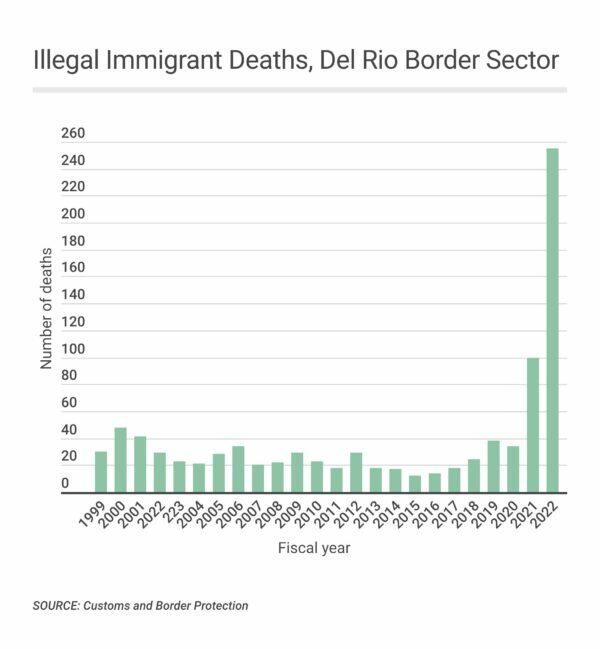
But, Texas’s Del Rio sector, which includes Eagle Pass, bore the brunt of the deaths last year with 255 recorded. Most of the deaths in this area were due to drowning in the deceptively swift Rio Grande. But the total also includes 53 deaths of illegal aliens being smuggled in a locked tractor-trailer unit near San Antonio last June.

Deaths in the Del Rio sector over the past two fiscal years were higher than the previous 15 years combined. The sector also became the epicenter of mass illegal crossings.

The CBP data include a footnote indicating that the “data may be subject to change based on new discoveries of remains and possible dates of death as determined by a medical examiner.”

Not all migrant deaths are counted in the CBP data, as Border Patrol agents aren’t always involved in the discovery. Sheriff’s offices have their own tally of bodies discovered by ranchers, hunters, or others.

The bodies are often from those who are walking in remote ranchland to circumvent Border Patrol highway checkpoints, sometimes 60 to 100 miles from the border.

Former CBP Commissioner Mark Morgan said the CBP numbers are the “tip of the iceberg” for migrant deaths.

“When you increase the number of illegal aliens coming by 500 percent, you’re going to increase all the suffering, tragedies, and inhumane actions associated with that,” Morgan told The Epoch Times on Jan. 19.

“Everything expands—the numbers of those that are thrown into trafficking expand, the number of those that are sexually assaulted expand, the numbers of those that die expand. It’s a game of numbers.”

Border Patrol apprehensions of illegal aliens along the southern border increased exponentially after President Joe Biden took office.

More than 1.6 million illegal aliens were apprehended in fiscal year 2021 and 2.2 million in fiscal 2022, according to CBP data. In comparison, fiscal 2020 saw just over 400,000 apprehensions along the southern border.

The number of illegal crossings has more than tripled since 2020, as have the number of deaths.

“Biden’s got blood on his hands. He knows this is happening. And he knows migrants are dying. He knows migrants are being assaulted. He knows migrants are being raped. He knows migrants are being thrown into the life of trafficking,” Morgan said.

Benny Martinez, then-chief deputy of the Brooks County Sheriff’s Office, carries the human remains of a suspected illegal immigrant on a ranch in Falfurrias, Texas, on May 22, 2013. (John Moore/Getty Images)

Department of Homeland Security Secretary Alejandro Mayorkas has maintained the border is secure.

“I have been to the border nearly 20 times, and I can attest to the steadfast commitment of the DHS workforce to secure our border, enforce our laws, and build safe, orderly, and humane immigration processes under extremely difficult conditions,” Mayorkas said in a Jan. 5 press conference.

“Let me be clear: Title 42 or not, the border is not open,” Mayorkas said, referring to the public health order that allows Border Patrol agents to quickly expel some illegal aliens back to Mexico.

CBP declined to provide a comment to The Epoch Times on the increase in deaths.

Deadly Brooks County

In south Texas, Brooks County sheriff’s deputy Don White of Remote Wildlands Search and Recovery volunteers his time to search for the injured and dead. Most often, he says, he finds males, aged 19 to 40, from Mexico, Guatemala, Honduras, or El Salvador.

During 2022, he found 91 bodies—a decrease over the record-breaking previous year of 119. In comparison, 34 bodies were found in 2020.

Brooks County Sheriff Benny Martinez estimates that for every body they find, another 5 to 10 are never recovered.

I’ve spoken to a lot of mothers over the telephone, or they’ve been here in my office, crying for their loved ones that have been lost for 10, 15 years,” Martinez, a Democrat, said in an earlier interview.

“Our terrain is real sandy. We’re about 100 foot above sea level. So once that sand starts going over that body, and that body starts getting torn apart by the feral hog, by the coyote … the only time it’s recovered is when they’re moving cattle and they turn the soil over… [and] a skull would pop up, or something. Body parts would pop up. That’s how we’re going to find out that something laid there for a while. I mean, what is compassionate about that?”

In Kinney County, southwest Texas, the sheriff used to handle one or two deceased illegal immigrants per year.

In 2021, the county dealt with 17 bodies, and 10 in 2022. In one case, the county judge had to leave a county meeting to officially pronounce dead the body of an illegal alien found on his own ranch.

“The thing is, it’s 17 bodies in a small county,” Sheriff Brad Coe told The Epoch Times in December. Kinney County sits on the border with Mexico and has a population of about 3,600 people.

“Brooks County will always lead the state in the number of dead, but for us here, 17 was an astronomical number when we’re used to one or two.”

https://www.zerohedge.com/political/record-number-border-deaths-during-bidens-first-2-years

Guidelines Urge Cognitive Behavioral Therapy Alone for Mild Acute Depression

 The American College of Physicians has issued new guidelines for managing acute major depressive disorder, suggesting those with moderate to severe depression may start with cognitive-behavioral therapy (CBT) alone or a second-generation antidepressant (SGA) alone.

The guidelines also state that patients with mild depression should start with CBT alone, and if a patient with moderate to severe depression prefers, they can use a combination of both CBT and an SGA.

These nuanced recommendations contrast sharply with the 2016 ACP guidelines for depression, which lumped all stages and severity levels together, and came with just one recommendation: Clinicians should choose between CBT and an SGA.

More data have come to light over the years, requiring the present update, reported lead author Amir Qaseem, MD, PhD, vice president of Clinical Policy and the Center for Evidence Reviews at the ACP, and adjunct faculty at Thomas Jefferson University, Philadelphia, and colleagues.

In addition to the focus on acute depression, Dr. Qaseem and colleagues highlighted the new guidelines' "consideration of patient values and preferences, and costs," as well as responses to therapy.

Recommendations were derived from a network meta-analysis that included studies evaluating nonpharmacologic and pharmacologic therapies, the authors wrote in Annals of Internal Medicine. They compared effectiveness across a range of SGAs, "including selective serotonin reuptake inhibitors; serotonin-norepinephrine reuptake inhibitors; and others such as bupropionmirtazapinenefazodonetrazodonevilazodone, and vortioxetine."

This analysis yielded three pieces of clinical advice.

First, patients in the acute phase of mild depression should receive CBT alone as their initial treatment.

Dr. Qaseem and colleagues noted that many depression studies for pharmacologic therapies excluded these patients in favor of those with moderate to severe depression, leaving an evidence gap.

"Furthermore, the Clinical Guidelines Committee had concerns about adverse effects of SGAs in these patients and suggests that the use of SGAs as initial treatment of these patients should be based on additional considerations, such as limited access to or cost of CBT, history of moderate or severe major depressive disorder, or patient preferences," they added.

The committee's next recommendation, based on moderate-certainty evidence, suggested that CBT alone or an SGA alone should be considered for patients in the acute phase of moderate to severe depression. This call for monotherapy is balanced by a conditional recommendation based on low-certainty evidence that the same group may benefit from initial combination therapy with both CBT and an SGA.

"The informed decision on the options of monotherapy with CBT versus SGAs, or combination therapy, should be personalized and based on discussion of potential treatment benefits, harms, adverse effect profiles, cost, feasibility, patients' specific symptoms (such as insomnia, hypersomnia, or fluctuation in appetite), comorbidities, concomitant medication use, and patient preferences," the guidelines state.

The third and final recommendation offers an algorithm for patients who do not respond to initial therapy with an SGA. Multiple pathways are provided: Switch to CBT or augment with CBT; or switch to a different SGA or augment with a second pharmacologic therapy, such as mirtazapine, bupropion, or buspirone.

"These second-line treatment strategies show similar efficacy when compared with each other," the guidelines committee noted.

Again, the guidelines suggest that second-line choices should be personalized based on the various factors previously discussed.

A timely update

"The new guideline is very different from the last guideline," said Ryan Mire, MD, president of the ACP and practicing internal medicine physician in Nashville, Tenn. in a written comment. "ACP decided to update the depression guidelines with a focus on acute depression because approximately 70% of patients with major depressive disorder do not achieve remission and remain in the acute phase after the initial pharmacologic treatment attempt. In addition, there is new evidence on second-line treatments since the 2016 ACP guideline was published."

Dr Ryan Mire

Neil S. Skolnik, MD, of Thomas Jefferson University, Philadelphia, agreed that the guidelines offer a necessary and fresh perspective on caring for patients with depression.

"These guidelines are a helpful update, assuring us that we are using the latest, evidence-based therapies, and [they] are written in a practical, easy-to-implement manner," Dr. Skolnik said in a written comment.

Dr Neil Skolnik

"First, the guidelines reaffirm that CBT is an effective first-line option, with or without the concurrent use of an SGA," Dr. Skolnik said, noting that CBT alone may reduce likelihood of recurrence, compared with an SGA alone. "Many patients do not like the idea of medication, or the potential side effects of medications, and CBT is an evidenced-based approach that can be very helpful for patients."

Dr. Skolnik also applauded the guidelines authors for offering a clear path forward for patients who do not have full remission after treatment – a common clinical scenario.

He went on to offer some more detailed steps forward.

"If someone chooses to be treated with an SGA alone and has not had much response at all to an initial SGA, usually a selective serotonin reuptake inhibitor, I'll usually switch to a different SSRI or serotonin and norepinephrine reuptake inhibitor (SNRI) and/or add CBT," Dr. Skolnik said. "If they have had a partial response, I'll often encourage CBT and consider the addition of augmentation with an additional medication as discussed in the guidelines."

Valuable despite the gaps

Other experts expressed mixed impressions of the update, noting both highs and lows.

"Although [this guideline] has some gaps, it is more valuable in several ways than other widely consulted practice guidelines for depression," wrote Miriam Shuchman, MD and Elia Abi-Jaoude, MSc, MD, PhD, of the University of Toronto, in an accompanying editorial.

Specifically, they praised the publication's focus on shared decision-making in the treatment planning process.

"This effort to respond to patient preferences is crucial and may even increase the chance that patients will improve with treatment," they wrote.

They also applauded the ACP's efforts to recuse any committee members who may have had conflicts of interest "that could affect their judgment about treatments for depression."

After highlighting these attributes, Dr. Shuchman and Dr. Abi-Jaoude noted that the guidelines still contain "significant gaps."

Foremost, they pointed out the guidelines' emphasis on CBT to the exclusion of other nonpharmacologic options.

"The guideline does patients a disservice by leaving out several nonmedication treatment options that clinicians can offer as first- or second-line therapies," they wrote.

This oversight may increase risk that patients simply hop from one SGA to another, which is a common, and often ineffective, strategy, according to Dr. Shuchman and Dr. Abi-Jaoude.

"Patients often go from one drug to the next in the hopes of landing on one that 'works,' " the editorialists wrote. "This narrow clinical approach of pursuing medication-based treatments ignores the ways difficulties in a person's work or relationships may contribute to their struggles with depression. At a time when the COVID-19 pandemic has underscored the importance of the social context of mental health, clinicians may need to consider other forms of support and tailor prescribing to what is most relevant and accessible for a particular patient."

Dr. Shuchman and Dr. Abi-Jaoude went on to suggest several nonpharmacologic options beyond CBT, including interpersonal therapy, psychodynamic therapy, problem solving, behavioral activation, and guided self-help.

The other key gap they pointed out relates to withdrawal.

Although the guideline does advise physicians to taper antidepressants to reduce risk of withdrawal, the editorialists suggested that this recommendation lacked sufficient emphasis, as it can be a particularly difficult period in the treatment process.

"Tapering of an antidepressant may need to be done over months or years, not weeks, and a patient may need to visit a compounding pharmacy to obtain doses of a second-generation antidepressant not marketed by drug manufacturers so that prescriptions can be tapered even more slowly," they suggested.

Financial costs remain unclear

Beyond the above medical considerations, one other piece of the depression puzzle remains unsolved: cost.

In a simultaneously published rapid review, Andreea Dobrescu, MD, PhD, of Cochrane Austria, and colleagues evaluated the relative cost-effectiveness of first- and second-step treatment strategies.

For most comparisons, evidence was insufficient to reach a conclusion, although they suggested that CBT may be more cost effective at the 5-year mark.

"For most pharmacologic and nonpharmacologic interventions for major depressive disorder, evidence was missing or was insufficient to draw conclusions about the cost-effectiveness of first- or second-step treatments for MDD," Dr. Dobrescu and colleagues wrote. "The strongest evidence (albeit still low certainty of evidence) was for the cost-effectiveness of CBT compared with SGA as a first-step treatment over a 5-year time horizon from the societal and health care sector perspectives. However, this evidence should also be interpreted cautiously considering it is based on a single study."

When asked about the financial findings, Dr. Mire agreed that more data are needed, especially because CBT and SGA costs range widely. He suggested that cost, for each patient, should be considered in the personalized approach now highlighted by the new guidelines.

The guidelines and the Cochrane cost-effectiveness study were supported by the ACP. The guidelines' authors and other individuals quoted in this article reported no conflicts of interest.

https://www.medscape.com/viewarticle/987428

Depression Guidelines Fall Short in Characterizing Withdrawal

 Current depression guidelines offer incomplete guidance for clinicians to identify antidepressant withdrawal, based on data from a review of 21 guidelines.

Previous research suggests that approximately half of patients who discontinue or decrease dosage of antidepressants experience withdrawal symptoms, wrote Anders Sørensen, MD, of Copenhagen University Hospital, and colleagues. These symptoms are diverse and may include flulike symptoms, fatigue, anxiety, and sensations of electric shock, they noted. Most withdrawal effects last for a few weeks, but some persist for months or years, sometimes described as persistent postwithdrawal disorder, they added.

"Symptoms of withdrawal and depression overlap considerably but constitute two fundamentally different clinical conditions, which makes it important to distinguish between the two," the researchers emphasized.

In a study published in the Journal of Affective Disorders, the researchers identified 21 clinical practice guidelines (CPGs) for depression published between 1998 and 2022. The guidelines were published in the United Kingdom, the United States, Canada, Australia, Singapore, Ireland, and New Zealand. They compared descriptions of withdrawal from antidepressants and calculated the proportion of CPGs with different information.

Overall, 15 of the 21 studies in the review (71%) noted that antidepressants are associated with withdrawal symptoms, but less than half (43%) used the term "withdrawal symptoms," or similar. Of the nine guidelines that mentioned withdrawal symptoms, five used the term interchangeably with "discontinuation symptoms" and six used the term "discontinuation symptoms" only when discussing antidepressant withdrawal. In addition, six CPGs specifically stated that patients who stop antidepressants can experience withdrawal symptoms, and five stated that these symptoms also can occur in patients who are reducing or tapering their doses.

The type of withdrawal symptoms was mentioned in 10 CPGs, and the other 11 had no information on potential withdrawal symptoms, the researchers noted. Of the CPGs that mentioned symptoms specifically associated with withdrawal, the number of potential symptoms ranged from 4 to 39.

"None of the CPGs provided an exhaustive list of the potential withdrawal symptoms identified in the research literature," the researchers wrote in their discussion.

Only four of the guidelines (19%) mentioned the overlap in symptoms between withdrawal from antidepressants and depression relapse, and only one provided guidance on distinguishing between the two conditions. Most of the symptoms of withdrawal, when described, were characterized as mild, brief, or self-limiting, the researchers noted.

"Being in withdrawal is a fundamentally different clinical situation than experiencing relapse, requiring two distinctly different treatment approaches," the researchers emphasized. "Withdrawal reactions that are more severe and longer lasting than currently defined in the CPGs could risk getting misinterpreted as relapse, potentially leading to resumed unnecessary long-term antidepressant treatment in some patients," they added.

The findings were limited by several factors including the inclusion only of guidelines from English-speaking countries, which may limit generalizability, the researchers noted. Other potential limitations include the subjective judgments involved in creating different guidelines, they said.

However, the results support the need for improved CPGs that help clinicians distinguish potential withdrawal reactions from depression relapse, and the need for more research on optimal dose reduction strategies for antidepressants, they concluded.

The study received no outside funding. The researchers had no financial conflicts to disclose.

https://www.medscape.com/viewarticle/987431

Flood-Damaged Cars From California Likely To Hit Used Market Soon

 by Jack Phillips via The Epoch Times,

Recent storms that hammered California have dumped years’ worth of rain on the state, causing widespread flooding, and has prompted warnings that flood-damaged vehicles may hit the used car market soon.

In California, 32 trillion gallons of rain and snow fell since Christmas. The water washed out roads, knocked out power, and created mudslides by soaking wildfire-charred hills. It caused damage in 41 of the state’s 58 counties. At least 21 people have died, officials say.

After recent flooding hit the Los Angeles area this week, Ivan Drury, director of insights for Edmunds, said that cars that have suffered water damage could be quite unsafe even if they don’t appear so on the surface.

“Number one, your electrical system: you’ve got so much electronics on a car, now more so than ever. Technology systems prevent you from getting into an accident, and now you are in more danger,” he told the Los Angeles Times late last week.

“And there’s the vehicle physically deteriorating over time.”

Drury emphasized that smelling the vehicle is critical.

“You had better get your face close to carpet,” he said.

“That gross, musty smell,” he added, “that’s a big red flag.”

Consumers should take caution when purchasing a used car that was registered in a state or city where there has been recent flooding, Drury said.

Kenneth Potiker, owner of San Bernardino-based Riteway Auto Dismantlers, told the paper that he expects to see recently flooded California vehicles to appear at car auctions in the coming weeks. “I’ll buy a few, I’m sure—but I stay away from a lot,” he said, adding that it’s difficult to tell the extent of the damage.

But he warned potential buyers that they should avoid such cars. 

“I would tell them not to buy a car like that—that would be the best advice,” he said.

“If it floods inside a car, water damage is one of the worst types of damage.”

Insurance companies say that many flooded vehicles often get totaled, meaning that the cost of the repair work is equal or greater to the value of the car. According to the Insurance Information Institute, some flood-damaged cars are issued a salvage title, which can alert people and companies to possible damage.

“By definition, a flood vehicle has been completely or partially submerged in water to the extent that its body, engine, transmission or other mechanical component parts have been damaged,” it says.

“If the vehicle is so damaged that it is no longer operable, the driver’s insurance company settles the claim by buying the vehicle and selling it as a ‘salvage’ at an auto auction.”

But the Institute warns that “dishonest and unscrupulous car dealers” can then purchase the vehicles, clean them, but it leaves “hidden flood damage.” Those dealers then take the cars to states that weren’t impacted by the storm before selling them as used cars to unsuspecting buyers.

A woman waits for her husband at their front porch to be rescued from their flooded home in Brentwood, Calif., on Monday, Jan. 16, 2023. (Jose Carlos Fajardo/Bay Area News Group via AP)

And those “dishonest dealers will not disclose the damage on the vehicle’s title as they are required, which is a crime called ‘title washing,'” says the Institute. “The vehicles are then sold with the hidden damage.”

“It’s very easy for a professional to clean up a vehicle and make it look new, when, in fact, the electronics and computers are in really bad shape,” Jack Gillis, chairman of the board of directors for the nonprofit Center for Auto Safety, told KOMO News.

“This can present a safety hazard.”

After Hurricane Ian hammered Florida last year, vehicle data company Carfax warned consumers about purchasing used vehicles that may have water damage. At the time, it estimated that more than 350,000 vehicles might have been damaged by Ian’s flooding.

“We are seeing these flooded cars show up all around the country, putting unsuspecting buyers at risk,” Emilie Voss, a Carfax spokeswoman, said in a statement last year about Ian’s aftermath.

“Cosmetically these cars might look great, but if you don’t know what to look for, it’s nearly impossible to tell they are literally rotting from the inside out.”

From Dec. 26 to Jan. 17, California was deluged by 11.47 inches of rain and snow on average across the state, according to the National Weather Service’s Weather Prediction Center, with some reports of up to 15 feet of snow in the highest elevations of the Sierra Nevada. Late last week, meanwhile, President Joe Biden toured a California beach town to survey damage that was done by the recent storms.

California has been hit by nine atmospheric rivers since late December. The storms have relented in recent days. Forecasters say that a dry period will envelop much of the state for the time being.

https://www.zerohedge.com/personal-finance/flood-damaged-cars-california-likely-hit-used-market-soon