Search This Blog

Thursday, August 3, 2023

US psychiatrists prescribe Wegovy to battle medication-induced weight gain

 U.S. psychiatrists are increasingly prescribing the popular weight-loss drug Wegovy to patients who gain weight from medicines used to treat mental disorders, such as schizophrenia or bipolar disorder, according to Reuters interviews with ten prescribers across the country.

Many antipsychotic drugs and mood stabilizers can cause patients to gain significant weight and contribute to diabetes and heart disease, the leading cause of death among adults with schizophrenia.

Complicated by other factors such as inadequate access to healthy food and lower physical activity, over half of patients with bipolar depression and schizophrenia are overweight or obese.

Novo Nordisk's Wegovy is self-injected once a week and has been shown to help patients lose around 15% of their body weight, making it the most effective treatment available.

"It's been a real welcome addition …. for people who truly have endured significant weight gain because of atypical antipsychotics and have doggedly tried their best to overcome that," said Dr. Joseph Goldberg, a professor of psychiatry at Icahn School of Medicine at Mount Sinai in New York.

Wegovy received U.S. approval as an obesity treatment in June 2021, while Mounjaro, a similar drug from Eli Lilly , is expected to be authorized this year. New rivals are also in development.

The global market for weight-loss drugs is forecast to reach as much as $100 billion within the decade.

Yet the best use of such drugs among patients with psychiatric diagnoses is just beginning to be understood.

Beyond severe mental health disorders, other patients struggling with obesity tend to suffer from mental health issues like depression and anxiety at higher levels than the general population, studies show.

Clinical trials for Wegovy, which belongs to a class of drugs known as GLP-1 agonists that began as diabetes medicines, excluded psychiatric patients, a common practice in drug development.

Pentagon Mulls Placing US Troops On Shipping Tankers To Prevent Iranian Seizure

 The Pentagon is pursuing strategic ways to prevent further seizures of international vessels by Iran's military, particularly in and near the vital Strait of Hormuz and Persian Gulf region. There's been a series of tit-for-tat tanker seizures of late between Tehran and Washington, as the US attempts crude oil sanctions enforcement against Iran.

And now the US is mulling more drastic action, with The Associated Press reporting Thursday, "The U.S. military is considering putting armed personnel on commercial ships traveling through the Strait of Hormuz, in what would be an unheard of action aimed at stopping Iran from seizing and harassing civilian vessels," per four American officials cited in the report. Some reports now suggest Marines are already being trained for the proposed program.

The ongoing 'tanker wars' began in the summer of 2019, and has more recently seen headlines such as the following: Quiet US Seizure Of Iranian Crude Prompted Iran's Capture Of Houston-Destined Tanker.

No details have as of yet been revealed of the potential plan to place US military personnel aboard tankers entering 'hot zones' where Iranian naval patrols are known to frequent, but it comes following Defense Secretary Lloyd Austin announcing that additional Marines have been sent to the Gulf region.

Austin said in late July that the USS Bataan amphibious readiness group and the 26th Marine Expeditional Unit have been deployed, which consists of about 2,500 Marines, to provide "even greater flexibility and maritime capability in the region.”

The amphibious readiness group consists of the Bataan warship and two others, the USS Mesa Verde and the USS Carter Hall. The group had already left Norfolk, Virginia earlier in July. 

Weeks ago the Pentagon sent the USS Thomas Hudner and additional F-35 and F-16 fighter jets to the region, to assist A-10 attack aircraft, as tankers have come under increasing threat - including an incident in which one was fired upon. 

Interestingly, these additional measures against Tehran come in tandem with the US sending more advanced combat jets to the region in response to aggressive behavior from Russian aircraft over the skies of Syria. There's also growing concerns that pro-Iranian elements will attack more US outposts in northeast Syria.

https://www.zerohedge.com/markets/pentagon-mulls-placing-us-troops-shipping-tankers-prevent-iranian-seizure

Mysterious Land Acquisition Group Sues Farmers After Buying Land Surrounding Air Force Base

 by Masooma Haq via The Epoch Times (emphasis ours),

An agriculture land acquisition company that is reported to have bought up land on three sides of a major U.S. Air Force base in California is now suing the farmers who sold them the land.

Flannery Associates LLC spent nearly $800 million to buy the land surrounding Travis Air Force Base, then filed a $510 million lawsuit in May against the farmers.

Rep. John Garamendi (D-Calif.) told NewsNation the suit is likely a tactic to financially destroy the farmers.

Mr. Garamendi said some of the families he has spoken to did not want to sell to Flannery, but the company made them offers for huge amounts. Flannery’s lawsuit accuses the farmers of conspiring to inflate the price of the farms.

“It’s a suit designed to force the farmers to lawyer up, spend tens of thousands of dollars on lawyering, and maybe at the end of the day, bankrupt themselves,” Mr. Garamendi said. “In fact, that has happened to at least one family that I know of and I’ve heard rumors that another family simply said we can’t afford the lawyers.”

Intimidation Suspected

According to The Wall Street Journal, the U.S. Air Force's Foreign Investment Risk Review Office has not been able to determine who is funding the purchases, even after an 18-month investigation into the purchase of the 140 properties around the Air Force base.

Based on property records, the land covers California’s Solano County from the Sacramento River to Fairfield, including land directly bordering three sides of the Air Force base, The Wall Street Journal reported.

Sarah Donnelly is a member of the city council for Rio Vista, California, which borders the land purchased by Flannery. She said she is highly suspicious of Flannery’s motives.

"The Flannery group is an unknown entity," Ms. Donnelly told The Epoch Times in an emailed statement. "Based on the fact that they are suing our farmers, their intentions are suspect."

"I can only assume they are suing as a form of intimidation," she added.

ABC7 reported the company began purchasing the land in 2018, and accelerated purchases in 2022 and 2023.

Flannery, represented by Skadden, Arps, Slate, Meagher & Flom, claims lost profits from land it did not buy and from overcharges for properties it did purchase.

"If the conspirators had acted independently, they could have each individually negotiated a sale with Flannery and made tens of millions of dollars in profits," Flannery's attorneys said in the complaint. "But the conspirators wanted to make hundreds of millions."

National Security Concerns

The suit against the California farmers comes at a time when U.S. lawmakers have been growing increasingly alarmed about farmland purchases by U.S. adversaries, such as China and Iran.

Congress is imposing more guards against foreign adversary purchases of land near sensitive sites.

U.S. Reps. Mike Thompson (R-Calif.) and Mike Gallagher (R-Wis.) introduced legislation on July 12 to strengthen and expand protections around national security sites, critical infrastructure, and farmland.

Protecting national security and food security go hand in hand in our region—which is why it is vital to know who owns land around national security sites," Mr. Thompson said in a statement.
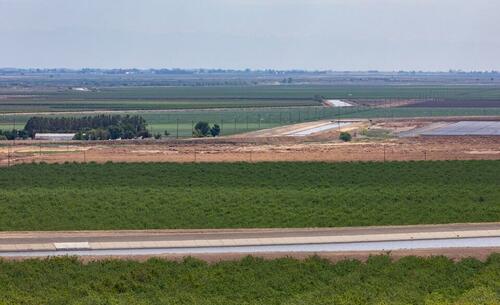
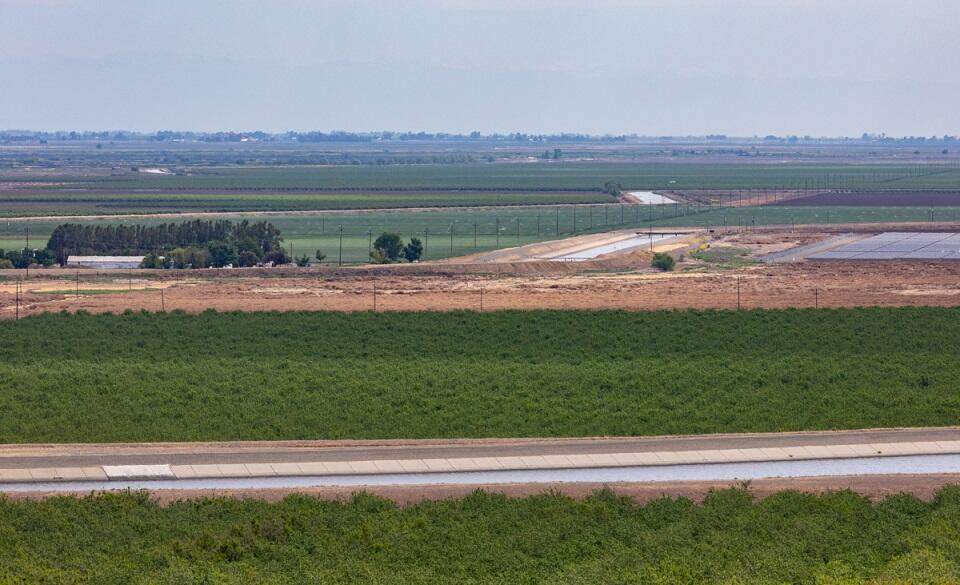
Public records of Solano County, where Travis Air Force Base is located, can trace Flannery Associates LLC back to Feb. 9, 2018. Roughly 52,000 acres with 314 land purchases are directly connected with this mysterious company.

“The land purchases go up to the fence of Travis Air Force Base, the home of the largest wing of the Air Force’s Air Mobility Command,” Thompson's office said in the statement.

When asked if he had spying concerns, Mr. Garamendi, who represents the area where Travis Air Force Base sits, told ABC7 he had "every reason in the world" to suspect there is spying going on.

"This land is adjacent to a critical national security platform, Travis Air Force Base; therefore [it’s] an area where spy operations or any other nefarious activity could take place," he said. “That could detrimentally impact the ability of Travis Air Force Base to operate in a moment of national emergency."

In addition, U.S. senators recently approved a measure in the National Defense Authorization Act that would prohibit China, Iran, North Korea, and Russia from purchasing U.S. farmland and would screen American investment in high-tech ventures on foreign adversary soil.

The provision passed in a vote of 91–7.

https://www.zerohedge.com/political/mysterious-land-acquisition-group-sues-farmers-after-buying-land-surrounding-air-force

Novel strategy to suppress triple negative breast cancer growth

 In 2022, a team of researchers at Baylor College of Medicine discovered that a little-known enzyme called MAPK4 is involved in the growth of triple negative breast cancer (TNBC) and its resistance to certain therapies. Looking into the details of this novel role of MAPK4, the researchers have now identified a strategy that can potentially control MAPK4-promoted growth in TNBC and other cancers. The study, published in PLOS Biology, opens new options for treating this devastating disease.

"Some cancers depend on MAPK4 for their growth, and our team studies  or pathways that participate in MAPK4-induced cancer growth," said corresponding author Dr. Feng Yang, associate professor of pathology and immunology and of molecular and cellular biology. He also is a member of the Dan L Duncan Comprehensive Cancer Center at Baylor.

Yang and his team knew that in some TNBC cases, MAPK4 activates an enzyme called AKT, which promotes cancer growth. They also knew that in the same , another enzyme called PDK1 can also promote cancer growth by activating both AKT and a series of other enzymes of the AGC group. This PDK1-mediated activation of AGC enzymes mostly depends on the amount of PDK1 in the cell.

In this study, the team discovered that MAPK4 and PDK1 are not so independent in their tumor-promoting actions after all, and this led to a novel idea on how to treat these cancers. Working with TNBC cells in the lab, the researchers found that besides directly activating AKT, MAPK4 also enhances the production of PDK1 in cells, which in turn promotes tumor growth.

"We found that MAPK4 can activate both AKT and PDK1, which then work together enhancing cancer growth and resistance to therapy," Yang said. "Eliminating MAPK4 in cells in the lab inhibited both of its actions on AKT and PDK1 and reduced tumor growth."

However, there are no drugs that specifically block MAPK4 that could be tested to reduce . Instead, Yang and his colleagues explored an alternative approach. "We showed that blocking both AKT and PDK1 effectively repressed MAPK4-induced cancer cell growth, suggesting a potential therapeutic strategy to treat MAPK4-dependent cancers, such as a subset of TNBC, prostate and lung ."

"In this study we have not only advanced our understanding of the molecular mechanism underlying the tumor-promoting activity of MAPK4, we also have found a potential novel therapeutic approach for human cancers," Yang said.

Other contributors to this work include Dong Han, Wei Wang, Julie Heejin Jeon, Tao Shen, Xiangsheng Huang and Bingning Dong, all at Baylor, and Ping Yi at the University of Houston.

More information: Dong Han et al, Cooperative activation of PDK1 and AKT by MAPK4 enhances cancer growth and resistance to therapy, PLOS Biology (2023). DOI: 10.1371/journal.pbio.3002227


https://medicalxpress.com/news/2023-08-strategy-suppress-triple-negative-breast.html

Novel pathway that minimizes liver injury during transplantation

 UCLA-led research describes the role that a protein called CEACAM1 plays in protecting the liver from injury during the transplantation process, potentially improving transplant outcomes. But the features that regulate this protective characteristic remain unknown.

In a study, published online Aug. 2 in Science Translational Medicine, a research team has identified the molecular factors at the root of this protection and shown how using molecular tools and alternative gene splicing can make CEACAM1 more protective, thus reducing organ injury and ultimately improving post-transplant outcomes.

Prior to transplantation, a solid organ, such as a , has no  and, as a result, lacks oxygen. Blood supply is returned to the organ during transplantation, but that process can cause inflammation and  called ischemic reperfusion injury, also known as reoxygenation injury.

"Understanding the factors that lead to organ shortage remains the best option to expand the donor pool available for life-saving transplantation," said Kenneth Dery, an associate project scientist in the UCLA Department of Surgery and the study's lead author. "Peri-transplant events, such as ischemia-reperfusion injury activate the recipient's immune responses and negatively affect outcomes.

Specifically, the researchers found that Hypoxia Inducible Factor 1 (HIF-1α), which regulates , played a central role in orchestrating the activation of the version of CEACAM1, called CEACAM1-S, that limits cellular injury and improves liver function in mice. They also found that this relationship between CEACAM1-S and HIF-1 in donor livers in humans predicts better overall liver transplantation outcomes and better immune functioning.

The researchers identified a novel gene expression pathway that becomes activated following ischemia and oxygen stress. This pathway, called alternative splicing, is an adaptation that cells use to boost their protein diversity in times of danger, inflammation, and injury.

The researchers showed that as the cell senses low oxygen conditions, HIF-1α begins regulating the RNA splicing factor, Polypyrimidine tract-binding protein 1 (Ptbp1), that in turn directs the splicing of the CEACAM1 gene, leading to the protective CEACAM1-S version that reduces the liver injury that accompanies transplantation.

In addition, the researchers used a molecule called DMOG in animal studies to stabilize HIF-1α in vivo, under normal oxygen conditions, which effectively boosted the protective version of CEACAM1-S, thus providing a therapeutic proof-in-concept for future studies.

"These results suggest that CEACAM1-S may be a potential marker of liver quality and that efforts to increase its expression may have therapeutic benefits for transplantation or acute liver injury," the researchers write.

The next steps will be to test the perfusion of tissues from suboptimal human livers that were kept in extended cold storage in the presence of molecules called morpholinos that modify gene expression.

Many hundred genes are likely undergoing alternative splicing in an effort to manage the cellular stress that accompanies liver transplanation, Dery said.

"Our hypothesis is that if we can identify all the  changes that are occuring following ischemic stress, we can begin to really understand how to "rejuvenate" donor organs, which play an important role in reducing organ shortages," he said. "Forming the 'beneficial' version of CEACAM1-S prior to liver transplantation has the potential to act as a checkpoint regulator of oxygen-related stress and will see a reduction of liver ischemia-reperfusion injury."

Study co-authors are Dr. Hidenobu Kojima, Dr. Shoichi Kageyama, Dr. Kentaro Kadono, Dr. Hirofumi Hirao, Brian Cheng, Dr. Yuan Zhai, Dr. Douglas Farmer, Dr. Fady Kaldas, and Dr. Jerzy Kupiec-Weglinski of UCLA; and Xiaoyi Yuan and Dr. Holger Eltzschig of UT Health. Kageyama and Kadono are now at Kyoto University and Zhai is currently at the University of South Carolina.

More information: Kenneth Dery et al, Alternative splicing of CEACAM1 by Hypoxia-Inducible Factor–1α enhances tolerance to hepatic ischemia in mice and humans, Science Translational Medicine (2023). DOI: 10.1126/scitranslmed.adf2059www.science.org/doi/10.1126/scitranslmed.adf2059


https://medicalxpress.com/news/2023-08-pathway-minimizes-liver-injury-transplantation.html

'Boost in dopamine in adolescence permanently amplifies dopamine function, impulsivity, aggression in mice'

 In a breakthrough finding researchers at Columbia University Irving Medical Center identified a sensitive developmental period during adolescence that impacts adult impulsivity, aggression, and dopamine function in mice.

As organisms grow from embryo to adult, they pass through sensitive time-periods where developmental trajectories are influenced by environmental factors. These windows of plasticity often allow organisms to adapt to their surroundings through evolutionarily selected mechanisms.

The new findings, published online today in the journal Molecular Psychiatryindicate that stimulant drug exposure highjacks this period with potentially harmful consequences to healthy kids but also beneficial ones to kids with pathological dopamine hypofunction.

The dopamine system is pivotal in modulating and shaping adolescent behaviors. Dopamine system dysfunction is commonly implicated in adolescent-onset , such as attention deficit disorders, depression disorders, and schizophrenia.

"First, we found that dopamine transporter blockade in  during their mid-adolescence from postnatal day 32 to 41, but not before or after, increases adult aggression, impulsivity and the behavioral response to amphetamine in mice. We then found that  are also more active in these animals," said Darshini Mahadevia, Ph.D., a research scientist at Columbia University Irving Medical Center (CUIMC), who co-led the study along with Deepika Suri, Ph.D. and Giulia Zanni, Ph.D., also research scientists at CUIMC.

To test for a  between altered neuronal activities and behavior, the researchers next applied modern genetic tools to artificially stimulate dopaminergic neurons during behavioral tasks that measure impulsivity.

In one such task, mice are trained to press a lever to receive a reward. Once mice become proficient at the task, they have to learn a new rule—withholding from pressing the lever to get rewarded. Mice that had their dopamine transporters blocked during mid-adolescence and mice that have their dopamine neurons artificially stimulated both perform badly on withholding from lever-pressing for rewards.

In another impulsivity task, mice are given the choice between a small immediate reward and a large later reward, the mouse version of the marshmallow test in humans, both assessing delay discounting. "Again, the pharmacologic as well as the direct neuronal manipulation both increase impulsive behavior, making mice choose the immediate small rewards over the large later rewards," said Dr. Suri.

While the investigation of sensitive periods in brain development has a long history, it has largely been focused on sensory systems. As an early recognition for the significance of this fundamental process, Hubel and Wiesel received the Nobel Prize in Physiology and Medicine (1981) for their work on ocular dominance plasticity in the 1960s.

"Studying sensitive developmental periods that impact complex behaviors, such as impulsivity and aggression, is novel and will aid in understanding the origins of psychiatric disorders, as well as their diagnosis, prevention, and treatment," said Dr. Zanni.

"By identifying these 'negative' consequences of adolescent  transporter blockade on  and behavior in mice, we are tempted to speculate that adolescent stimulant exposure in humans will likewise increase aggression, impulsivity, and potential susceptibility to drug addiction later in life."

The researchers said that because the experiments were performed in wild-type animals, the findings cannot directly translate to the clinically appropriate use of psychostimulants (for example to treat attention deficit disorders), but perhaps more so to chronic recreational use or improper prescription.

In a diseased state that results from  hypofunction, transient exposure to psychostimulants during adolescence might potentially be corrective, but this hypothesis needs to be experimentally tested.

"Critically, we argue that an understanding of the underlying biology is necessary for a clear risk/benefit evaluation of recreational or therapeutic drug exposure prior to adulthood" said Dr. Ansorge, the senior author of the study.

More information: Deepika Suri et al, Dopamine transporter blockade during adolescence increases adult dopamine function, impulsivity, and aggression, Molecular Psychiatry (2023). DOI: 10.1038/s41380-023-02194-w


https://medicalxpress.com/news/2023-08-boost-dopamine-adolescence-permanently-amplifies.html

Dopamine controls movement, not just rewards

 Dopamine: It's not just for rewards anymore.

In a new Northwestern University-led study, researchers identified and recorded from three genetic subtypes of  in the midbrain region of a mouse model.

Although there is a long-standing, common assumption that most—if not all— neurons solely respond to rewards or reward-predicting cues, the researchers instead discovered that one genetic subtype fires when the body moves. And, even more surprisingly, these neurons curiously do not respond to rewards at all.

Not only does this finding shed new light on the mysterious nature of the brain, it also opens new research directions for further understanding and potentially even treating Parkinson's disease, which is characterized by the loss of dopamine neurons yet affects the .

The study will be published on Thursday (Aug. 3) in the journal Nature Neuroscience.

"When people think about dopamine, they likely think about reward signals," said Northwestern's Daniel Dombeck, who co-led the study. "But when the dopamine neurons die, people have trouble with movement. That's what happens with Parkinson's disease, and it's been a confusing problem for the field.

"We found a subtype that are motor signaling without any reward response, and they sit right where dopamine neurons first die in Parkinson's disease. That's just another hint and clue that seems to suggest that there's some genetic subtype that's more susceptible to degradation over time as people age."

"This genetic subtype is correlated with acceleration," added Northwestern's Rajeshwar Awatramani, who co-led the study with Dombeck. "Whenever the mouse accelerated, we saw activity, but in contrast we did not see activity in response to a rewarding stimulus. This goes against the dogma of what most people think these neurons should be doing. Not all dopamine neurons respond to rewards. That's a big change for the field. And now we found a signature for that dopamine neuron that does not show reward response."

Dombeck is a professor of neurobiology at Northwestern's Weinberg College of Arts and Sciences. Awatramani is the John Eccles Professor of Neurology at Northwestern University Feinberg School of Medicine. The paper's first authors are Maite Azcorra and Zachary Gaertner, both graduate students in Dombeck's and Awatramani's laboratories.

Motor-driving signals

This new discovery builds on a previous study from Dombeck's lab, which found a population of dopamine neurons associated with movement in mice.

"At the time, we thought it was just a tiny fraction of neurons," Dombeck said. "And others continued to assume that all dopamine neurons were still reward neurons. Maybe some of them just had motor signals too."

To probe this question further, Dombeck teamed with Awatramani, who used genetic tools to isolate and label populations of neurons based on their gene expression. Using this information, Dombeck's team then tagged neurons in the brains of a genetically modified mouse model, which was generated at the Northwestern Transgenic and Targeted Mutagenesis Lab, with fluorescent sensors. This enabled the researchers to see which neurons glowed during behavior—ultimately revealing which neurons control different specific functions.

In the experiments, about 30% of dopamine neurons only glowed when the mice moved. These neurons were one of the genetic subtypes that Awatramani's team identified. The other populations of dopamine neurons responded to aversive stimuli (causing an avoidance response) or to rewards.

The Parkinson's connection

For decades, researchers have been confounded by why patients with Parkinson's disease lose dopamine neurons yet have difficulties moving.

"It's not like people with Parkinson's disease only lose their drive to be happy because their dopamine response is damaged," Dombeck said. "Something else is going on that affects motor skills."

Dombeck and Awatramani's new study might provide the missing piece to the puzzle.

In their work, the researchers noted that dopamine neurons correlated with acceleration in mice appear to be in the same location of the midbrain as those that tend to die in patients with Parkinson's disease. But the dopamine neurons that survive are correlated with deceleration. The discovery leads to a new hypothesis that Dombeck and Awatramani plan to explore in the future.

"We're wondering if it's not just the loss of the motor-driving signal that's leading to the disease—but the preservation of the anti-movement signal that's active when animals decelerate," Dombeck said. "It could be this signal imbalance that strengthens the signal to stop moving. That might explain some of the symptoms. It's not just that patients with Parkinson's can't move. It could also be that they are being driven to stop moving."

"We're still trying to figure out what this all means," Awatramani said. "I would say this is a starting point. It's a new way of thinking about the brain in Parkinson's."

The study is titled "Unique functional responses differentially map onto genetic subtypes of dopamine neurons."

More information: Unique functional responses differentially map onto genetic subtypes of dopamine neurons, Nature Neuroscience (2023). DOI: 10.1038/s41593-023-01401-9


https://medicalxpress.com/news/2023-08-dopamine-movement-rewards.html