Search This Blog

Wednesday, August 23, 2023

New targeted treatment shows promise for select patients with stomach cancer

 An international phase 3 clinical trial, done in participation with Weill Cornell Medicine and NewYork-Presbyterian, has found that a new targeted treatment called zolbetuximab, given in combination with a standard chemotherapy, extended survival for patients with advanced gastric or gastroesophageal junction cancer that overexpressed a specific biomarker.

Results from the GLOW study, published July 31 in Nature Medicine, together with results from the parallel SPOTLIGHT study that evaluated zolbetuximab with an alternative standard chemotherapy, prompted the United States Food and Drug Administration to grant priority review to the manufacturer's biologic license application and set January 12, 2024, as the target decision date.

If approved, zolbetuximab will be the first targeted therapy in the U.S. for patients with previously untreated advanced gastric or esophageal junction  that is human epidermal growth factor receptor 2 (HER2)-negative and overexpresses the protein claudin-18 isoform 2 (CLDN 18.2).

Gastric cancer is the fifth most diagnosed cancer globally, and its incidence has increased markedly in the last few decades. Patients with cancer of the stomach or at the junction where the esophagus joins the stomach, known as the gastroesophageal junction, typically have few symptoms in early disease stages, so most are diagnosed after the cancer has advanced or become metastatic. According to the National Cancer Institute, the five-year survival rate for patients with metastatic disease is about 7%.

There are few targeted treatments available for patients with gastric and gastroesophageal cancers: Patients with tumors expressing the programmed cell death ligand 1 protein can be treated with immunotherapy, and those with HER2-positive tumors can be treated with trastuzumab, also known by the trade name Herceptin.

There is another group of HER2-negative patients who fit neither category, and for whom targeted therapies aren't generally used. However, these gastric cancers tend to have higher levels of CLDN 18.2, which is normally found in gastric mucosa cells and becomes more exposed as  develops. Zolbetuximab is a monoclonal antibody, administered intravenously, that binds to CLDN18.2, killing the dividing cancer cells directly and also alerting the immune system to respond.

"Currently, standard chemotherapy regimens are the only treatment options for many patients with HER2-negative and low PD-L1 gastric and gastroesophageal cancer, and survival is about 12 months," said lead study author and trial co-principal investigator Dr. Manish Shah, the Bartlett Family Professor of Gastrointestinal Oncology and director of the Gastrointestinal Oncology Program in the Division of Hematology and Medical Oncology at Weill Cornell Medicine. "A new treatment for these patients would address a significant unmet need to extend survival."

The GLOW study was conducted between November 2018 and February 2022 at 166 sites, including NewYork-Presbyterian/Weill Cornell Medical Center, across 18 countries. A total of 507 patients with previously untreated HER2-negative locally advanced or metastatic gastric or gastroesophageal junction cancer expressing CLDN18.2 were randomized to receive zolbetuximab in combination with capecitabine plus oxaliplatin chemotherapy (CAPOX) or a placebo plus CAPOX.

Zolbetuximab plus CAPOX significantly increased  compared with placebo plus CAPOX. Specifically, zolbetuximab plus CAPOX lowered the risk of disease progression or death by 31% compared with placebo plus CAPOX. The median progression-free survival was 8.21 months for patients in the zolbetuximab group compared with 6.8 months for those in the placebo group. Furthermore, the addition of zolbetuximab doubled the chance of not having disease progression at 2 years (from 7% with placebo versus 14% with zolbetuximab).

Results also demonstrated that zolbetuximab plus CAPOX significantly lengthened overall survival and reduced the risk of death by 23%. The  was 14.4 months for patients in the zolbetuximab plus CAPOX group versus 12.2 months for those in the placebo plus CAPOX group. Long terms survival similarly increased significantly with the addition of zolbetuximab—29% survival at 2 years with zolbetuximab versus 17% with placebo.

Treatment-related adverse events were similar between groups, with nausea, vomiting and decreased appetite reported most frequently. "These  were as expected," said Dr. Shah, who is also chief of the Solid Tumor Oncology Service and co-director of the Center for Advanced Digestive Care at NewYork-Presbyterian/Weill Cornell Medical Center and a member of the Sandra and Edward Meyer Cancer Center and of the Englander Institute for Precision Medicine at Weill Cornell Medicine. "It was good to see zolbetuximab did not add significant toxicity."

Similarly, a study published in The Lancet on May 20, 2023 reported strong survival outcomes for the international phase 3 SPOTLIGHT trial that evaluated zolbetuximab in combination with a different chemotherapy regimen consisting of modified folinic acid or levofolinate, fluorouracil and oxaliplatin (mFOLFOX). Dr. Shah was a member of the SPOTLIGHT steering committee, co-author of The Lancet paper and involved in designing both the GLOW and SPOTLIGHT trials.

"We now have evidence from two large trials showing that the addition of zolbetuximab provides a meaningful survival benefit for patients with CLDN 18.2-positive gastric cancers," he said. "If zolbetuximab is approved, patients will be able to decide with their physicians whether zolbetuximab plus CAPOX or mFOLFOX is the right regimen for them."

More information: Manish A. Shah et al, Zolbetuximab plus CAPOX in CLDN18.2-positive gastric or gastroesophageal junction adenocarcinoma: the randomized, phase 3 GLOW trial, Nature Medicine (2023). DOI: 10.1038/s41591-023-02465-7


https://medicalxpress.com/news/2023-08-treatment-patients-stomach-cancer.html

Long COVID may affect more people than previously thought

 Millions of Americans were exposed to SARS-CoV-2, the virus that causes COVID-19, early in the pandemic but could not get diagnosed due to testing limitations. Many of those people developed a post-viral syndrome with symptoms similar to those of long COVID. In a new study of a small group of those people, their immune response shows that 41% had evidence of SARS-CoV-2 exposure. The study is published in Neurology Neuroimmunology & Neuroinflammation.

Since most long COVID clinics are only accepting patients with a positive test result, these people experiencing identical symptoms are left without specialized care and excluded from research studies on long COVID," said study author Igor J. Koralnik, MD, of Northwestern Medicine Comprehensive COVID-19 Center in Chicago and a Fellow of the American Academy of Neurology.

"Our data suggest that millions of Americans with post-viral syndrome may have been exposed to SARS-CoV-2 at the beginning of the pandemic, and they deserve the same access to care and inclusion in research studies as people with a confirmed COVID diagnosis."

The small study involved 29 people with post-viral syndrome including neurologic symptoms such as problems with memory and thinking skills, headache and fatigue but who did not have a positive COVID test result. They were matched with 32 people of similar age with long COVID and positive test results. Both groups were also compared to 18 people with none of those symptoms and no known exposure to COVID or positive test result.

Researchers tested the participants for antibodies to two types of proteins that show an  that indicate a prior COVID infection—nucleocapsid protein and spike protein. Of the 29 people with post-viral syndrome, 12 people, or 41%, had immune responses consistent with prior exposure to COVID and similar to the long COVID group. Three-quarters had responses against the nucleocapsid protein and one-half had responses against the spike protein.

That group also had similar symptoms to the long COVID group and similar results on tests of thinking skills.

"Unlike our clinic, about 70% of post-COVID clinics in the U.S. do not accept people with long COVID symptoms who do not have a positive test result for COVID," Koralnik said. "Our data suggest that at least four million people with post-viral syndrome similar to long COVID may indeed have detectable immune responses to support a COVID diagnosis. More research is needed to confirm our findings."

A limitation of the study is the small number of people with post-viral syndrome. Also, some of the participants may have tested positive for COVID-19 immune responses if their  were collected closer to when their symptoms began.

More information: Igor J. Koralnik et al, Neurology Neuroimmunology & Neuroinflammation (2023).


https://medicalxpress.com/news/2023-08-small-covid-affect-people-previously.html

Lower-middle class Americans near retirement are worse off than 20 years ago

 Lower-middle class Americans nearing retirement age are worse off than their counterparts more than two decades ago, while upper-middle Americans have largely seen their life expectancy and wealth improve. Policymakers, meanwhile, overlook the lower middle group of Americans who don't qualify for many assistance programs. That's according to a new study by the USC Schaeffer Center for Health Policy & Economics and the Columbia University Mailman School of Public Health.

Using data from the Health and Retirement Survey and a microsimulation called the Future Elderly Model, researchers estimated future life expectancy and disability for cohorts of individuals in their 50's at different times between 1994 and 2018.

Researchers grouped individuals by : upper, upper-middle, lower-middle and lower. The results, published online in Health Affairs, showed healthy  at age 60 increased 1.5–2 years for the higher economic groups but was stagnant or decreased for the lower ones. They found a similar pattern when they looked at the number of future life years without disability.

Study authors said the  at age 50 for both the upper and lower middle has worsened over the past two decades, but health is deteriorating faster for the lower middle. Worsening health includes increased hypertension, diabetes, and heart disease.

"Our findings suggest that today's lower-middle class will spend a larger proportion of their older life with ," said Jack Chapel, study lead author and a Ph.D. candidate in economics at the USC Dornsife College of Letters, Arts and Sciences. "For example, an average 60-year-old woman in the lower-middle in 2018 will reach age 84. We project that almost 40% of her remaining years will be lived with a disability—an increase since 1994."

Struggles to pay for health care and housing

Study authors say policymakers continue to focus on assistance for the most disadvantaged Americans, while neglecting those just one step up the income ladder. The researchers call this group the "forgotten middle"—overlooked because they don't qualify for supports such as Medicaid, housing vouchers or food stamps, yet lack adequate resources to cover the increasing costs of  and housing.

Researchers found the combined value of financial and housing wealth and other resources including income, health insurance benefits, and quality-adjusted life-years after age 60 grew 13% for the upper middle group between cohorts. Meanwhile, people in the lower-middle group in 2018 were barely better off—with just 3% growth—compared to their earlier counterparts.

The growing gap was driven by robust growth in private income and housing wealth for the upper-middle group, compared with stagnation in both categories for the lower-middle group, whose reduced economic fortunes included a striking drop in homeownership at midlife. The lower-middle trailed the upper-middle group in homeownership by 10 percentage points in 1994; by 2018, this gap had tripled.

"Our study projects lower-middle Americans will spend a longer proportion of remaining life with significant health care needs, but with no more economic resources to attend to those needs than similar cohorts had 20 years earlier," said Dana Goldman, dean and C. Erwin and Ione L. Piper chair of the USC Sol Price School of Public Policy and the co-director of the USC Schaeffer Center.

The study authors said the ripple effect—an overburdened health care system, reduced productivity and strained family caregivers—should concern Americans at every income level.

"The public conversation about inequality tends to focus on the challenges faced by only the most vulnerable populations," said Bryan Tysinger, director of health policy simulation at the USC Schaeffer Center and research assistant professor at the USC Price School. "But our models found that there has been an important divergence in the middle of the economic distribution."

Researchers point to the improvement of health insurance coverage rates for the study's lower-middle cohort after implementation of key parts of the Affordable Care Act in 2014 as an example of an effective strategy, while acknowledging the  did not offset the losses in employer-sponsored health insurance that disproportionately impacted the lower-middle class.

More information: The Forgotten Middle: Worsening Health And Economic Trends Extend To Americans With Modest Resources Nearing Retirement, Health Affairs (2023). DOI: 10.1377/hlthaff.2023.00134


https://medicalxpress.com/news/2023-08-lower-middle-class-americans-worse-years.html

Truist Reiterates Positive Outlook on Compugen and Adjusts Price Target

 Truist Securities has recently reiterated its positive outlook on Compugen (NASDAQ:CGEN) while adjusting its price target. In a virtual fireside chat hosted by Asthika Goonewardene, Truist Securities Biotech Analyst, Compugen’s management discussed the promising COM701 data presented at ASCO. Additionally, Goonewardene actively participated in Compugen Ltd.’s Q2 2023 Earnings Conference Call.

While various sources provide different price targets for Compugen, it is important to note that Truist Securities has lowered its price target from $14.00 to $4.00. MarketBeat indicates that the current price target for Compugen stands at $8.33, while Tipranks reports an average price target of $4.00 with a high forecast of $4.00.

Furthermore, Benzinga reports that a total of 10 analyst firms have released ratings on Compugen, with one firm setting a price target of $13.00, expecting CGEN to experience significant growth within the next 12 months.

In terms of the statement in question, Truist Securities believes that Compugen’s dual TIGIT/PVRIG approach surpasses that of Roche, a pharmaceutical company. They consider Roche’s data to be a legitimate signal. Truist Securities maintains an optimistic stance, confident that Compugen can demonstrate a unique clinical profile that sets them apart in the industry.

https://beststocks.com/truist-securities-reiterates-positive-outlook/

CVS Health Launches Biosimilar Subsidiary Cordavis

 CVS Health said Wednesday it launched Cordavis, a subsidiary which will focus on biosimilar products for the U.S. pharmaceutical market.

Cordavis will work with manufactures to commercialize and/or co-produce biosimilar products. The products will be approved by the U.S. Food and Drug Administration, CVS said, adding it will ensure consistent long-term supply of affordable biosimilars.

Cordavis' has contracted with Sandoz to produce and bring to market Hyrimoz. Hyrimoz, or adalimumab-adaz, is a biosimilar for Humira. Cordavis list price for Hyrimoz will be more than 80% lower than the current list price of Humira, the company said.

CVS said the biosimilar market is expected to grow from less than $10 billion in 2022 to more than $100 billion by 2029.

https://www.marketscreener.com/quote/stock/CVS-HEALTH-CORPORATION-12230/news/CVS-Health-Launches-Biosimilar-Subsidiary-Cordavis-44683058/

Thorne HealthTech, Inc. Beat Earnings Expectations And Analysts Now Have New Forecasts

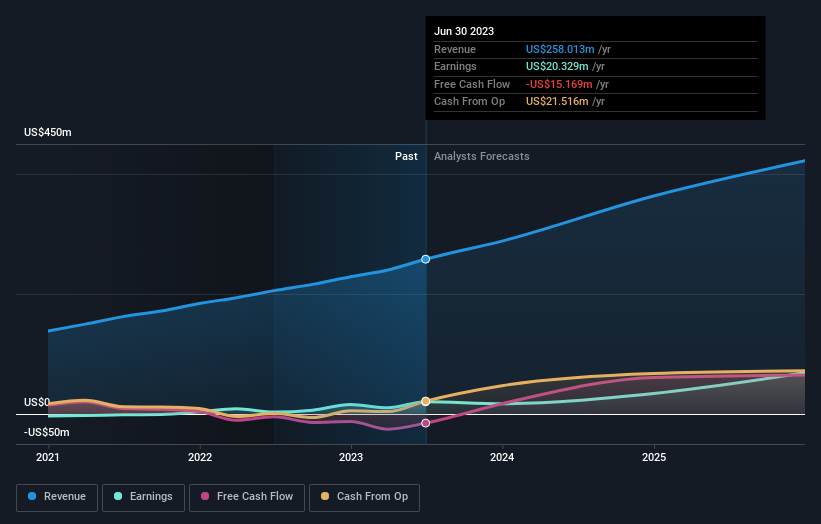
 Thorne HealthTech, Inc. (NASDAQ:THRN) defied analyst predictions to release its second-quarter results, which were ahead of market expectations. It was overall a positive result, with revenues beating expectations by 6.0% to hit US$73m. Thorne HealthTech reported statutory earnings per share (EPS) US$0.08, which was a notable 14% above what the analysts had forecast. The analysts typically update their forecasts at each earnings report, and we can judge from their estimates whether their view of the company has changed or if there are any new concerns to be aware of. So we collected the latest post-earnings statutory consensus estimates to see what could be in store for next year.

earnings-and-revenue-growth
NasdaqGS:THRN Earnings and Revenue Growth August 12th 2023

Taking into account the latest results, the current consensus from Thorne HealthTech's five analysts is for revenues of US$288.2m in 2023. This would reflect a meaningful 12% increase on its revenue over the past 12 months. Statutory earnings per share are expected to drop 12% to US$0.33 in the same period. In the lead-up to this report, the analysts had been modelling revenues of US$282.2m and earnings per share (EPS) of US$0.29 in 2023. So it seems there's been a definite increase in optimism about Thorne HealthTech's future following the latest results, with a substantial gain in the earnings per share forecasts in particular.

Althoughthe analysts have upgraded their earnings estimates, there was no change to the consensus price target of US$7.75, suggesting that the forecast performance does not have a long term impact on the company's valuation. The consensus price target is just an average of individual analyst targets, so - it could be handy to see how wide the range of underlying estimates is. There are some variant perceptions on Thorne HealthTech, with the most bullish analyst valuing it at US$8.00 and the most bearish at US$7.00 per share. This is a very narrow spread of estimates, implying either that Thorne HealthTech is an easy company to value, or - more likely - the analysts are relying heavily on some key assumptions.

Taking a look at the bigger picture now, one of the ways we can understand these forecasts is to see how they compare to both past performance and industry growth estimates. The period to the end of 2023 brings more of the same, according to the analysts, with revenue forecast to display 25% growth on an annualised basis. That is in line with its 25% annual growth over the past year. Compare this with the broader industry, which analyst estimates (in aggregate) suggest will see revenues grow 6.6% annually. So although Thorne HealthTech is expected to maintain its revenue growth rate, it's definitely expected to grow faster than the wider industry.

The most important thing here is that the analysts upgraded their earnings per share estimates, suggesting that there has been a clear increase in optimism towards Thorne HealthTech following these results. Happily, they also upgraded their revenue estimates, and are forecasting them to grow faster than the wider industry. The consensus price target held steady at US$7.75, with the latest estimates not enough to have an impact on their price targets.

https://simplywall.st/stocks/us/household/nasdaq-thrn/thorne-healthtech/news/results-thorne-healthtech-inc-beat-earnings-expectations-and

Number of missing after Maui fires increases to 1,100 as crews recover ‘crumbling’ bodies

 The number of missing from the Maui wildfires has increased again to around 1,100 amid confusion over how they are being reported — with officials admitting that some victims may never be recovered because search crews are picking up “crumbling” bodies.

The list of unaccounted-for people has shot up from 800 due to “ambiguous” or partial information coming in, prompting local authorities and the FBI to call on family members to submit DNA samples for identification.

The number could still rise higher, officials warned as the tally of confirmed dead remained at 115.

The FBI said its preliminary, unconfirmed list of unaccounted-for people has between 1,000 and 1,100 names — some of them frustratingly incomplete, with only a first or last name available, and no dates of birth for anyone.

The list has been cobbled together from shelter logs, the Red Cross, FEMA, the Maui Emergency Management Agency, missing persons reports filed with the Maul Police Department, and people reported missing at the local family assistance center.

Tattoo parlor owner Shelby Schweitzer, left, is comforted by her mother Shawnee Schweitzer.
Tattoo parlor owner Shelby Schweitzer (left) is comforted by her mother, Shawnee Schweitzer, as she speaks about her store that burned down near crosses erected to honor the victims of the Lahaina wildfire.
James Keivom

The initial list included 2,500 names, but of those 1,400 people have been found safe, according to officials.

Maui Police Chief John Pelletier said it was “tough” to know how many of the dead are kids.  

“I’d love to say there’s none,” he said, with other officials saying that none of those confirmed by DNA so far are minors.

“I don’t know the answer because we’re not recovering whole bodies. We’re picking up ash and some of it is crumbling.”

View of destroyed buildings from historic wildfires on Tuesday, August 22, 2023 in Lahaina, Hawaii.
All single-story homes in Lahaina have been searched for human remains, with the death toll standing at 115 and another 1,100 unaccounted for.
James Keivom

Steven Merrill, special agent in charge of FBI Honolulu, noted that reports of the missing often lack key, basic information such as a first and last name.

The FBI official said the agency’s analysts are making “every effort” to comb through social media and publicly available information to try to reach the people who made the original missing persons reports to obtain additional details to help with identification.

Maui County Mayor Richard Bissen speaks during a news conference on Tuesday, August 22, 2023 in Lahaina
During a press conference Tuesday, Maui officials said search crews have been finding “crumbling” bodies.
James Keivom

Merrill said his team has been trying to reach every single person who has made a report containing “ambiguous” or partial information about a missing person, but there have been few callbacks or replies.

The local family assistance center has collected DNA from just 104 families, said Julie French, with the rapid DNA company ANDE helping with the identification process. She said three-quarters of the remains tested for DNA so far have yielded usable results.

The number of family members coming in to submit DNA samples is “a lot lower” than in other major disasters, said Maui Prosecuting Attorney Andrew Martin, who is running the assistance center.

Crosses are placed by the Lahaina Bypass at a memorial to the victims of the historic wildfires on Tuesday, August 22, 2023.
Only 43 of the 115 victims killed in the wildfires have been identified so far.
James Keivom

“That’s our concern, that’s why I’m here today, that’s why I’m asking for this help,” he said.

Martin and French stressed that any samples would be used only to help identify victims and would not be entered into any law enforcement databases or used for any other purpose. People will not be asked about their immigration status, they said. 

“What we want to do — all we want to do — is help people locate and identify their unaccounted-for loved ones,” Martin said.

Merrill, the FBI agent in charge, called on those who have filed missing person reports to follow up and make sure that officials have the most up-to-date and complete information, including date of birth, physical description, family relations and contact information.

Tim Laborte holds 'MISSING' flier featuring a photo of his stepfather, Joseph Lara, who is missing
Police and the FBI said they have only partial information about many of the missing people.
REUTERS

Officials warned that the number of missing could still rise because the information was still being collected.

As of Tuesday, all single-story homes in Lahaina have been searched, with crews turning their attention to multi-story residential and commercial properties.

But Pelletier warned that despite the efforts to search every damaged structure for human remains, there will be victims who will never be recovered, much like after the September 11 terrorist attacks in New York City.

“When this is all said and done, realistically, let’s be honest here, we’re going to have a number of confirmed [dead], we’re going to have a number of presumed [dead],” he told reporters.

“Two thousand people on 9/11 were not recovered,” Pelletier added. “We don’t have that type of devastation like we saw with the towers, but we have an entire town that’s destroyed.”

The chief also clapped back at claims that during the fire, police officers closed roads out of Lahaina, creating a death trap.

“We did not close [roads] or forbid people from getting out of Lahaina,” Pelletier said. “If there was a downed power line that was live, we wanted to make sure you didn’t go over a downed power line.”

The chief said his officers spent the entire day and night knocking on doors and urging people to flee.

“They did everything they could,” Pelletier said. “We wanted to get people out.”

https://nypost.com/2023/08/23/number-of-missing-after-maui-wildfires-increased-to-1100/