Search This Blog

Wednesday, September 27, 2023

CVS pharmacists voice concern over working conditions

 Some CVS pharmacists in Kansas City are calling out of work Sept. 27 to bring attention to increasingly difficult working conditions, USA Today reported. 

Kansas City organizers have encouraged CVS pharmacists across the nation to join them in the protest. It is unclear how many pharmacists are participating. Mike DeAngelis, executive director of corporate communications for CVS, told Becker's the company was experiencing normal pharmacy operations nationwide and in its Kansas City market Sept. 27.

The protest is the second in less than a week. On Sept. 21, nearly two dozen pharmacists called out of work, forcing about 10 CVS locations in eastern Kansas and western Missouri to close, according to a separate USA Today report. All locations resumed normal operations Sept. 23. 

Kansas City pharmacists say their actions are in response to increasingly challenging working conditions, which is putting patients and pharmacists at risk. Pandemic-related stressors have worsened existing pharmacy shortages over the past few years and magnified burnout among staff members nationwide, causing many to leave the field.

"The workload is so heavy and the amount of staff they allot us is so low that I’m unable to go to the bathroom during my 10-hour shift," one pharmacist, who wished to remain anonymous, told the publication. 

Mr. DeAngelis said industrywide pharmacist shortages have made it difficult to staff the retail chain's more than 9,000 stores and that demand for vaccinations is further straining pharmacies this fall. After the Sept. 21 walkout, CVS executives met with pharmacists and pharmacy staff at several Kansas City locations to understand their concerns. 

"Our pharmacy leadership team is in Kansas City this week to listen to feedback from our pharmacists," Mr. DeAngelis said. "We always seek to work with our pharmacists to directly address any concerns they may have — which is why we've taken several actions to support our local teams in Kansas City and Missouri, including bringing in more staffing support and providing additional training." 

CVS Chief Pharmacy Officer Prem Shah, PharmD, also issued a memo to staff in the Kansas City market Sept. 26, which was obtained by USA Today.

"I want to apologize to our pharmacy teams that we haven't addressed these concerns in the region more quickly," Dr. Shah said. "With the currently unprecedented demand for vaccinations from our patients in mind, we are taking a series of actions effective immediately."

These efforts include providing additional resources for pharmacies, adjusting appointments, filling open positions and removing unnecessary tasks for pharmacists. 

The American Pharmacists Association and Kansas Pharmacists Association have both released statements in support of Kansas City pharmacists. 

https://www.beckershospitalreview.com/pharmacy/cvs-pharmacists-stage-walkout-over-working-conditions.html

Gritstone BARDA Contract to Conduct Phase 2b Study Evaluating Next-Gen Vax for COVID Valued ~ $433M

10,000 participant randomized Phase 2b study will evaluate Gritstone’s self-amplifying mRNA (samRNA) vaccine candidate containing Spike plus other viral targets with an approved vaccine against COVID-19 --

-- Contract is part of ‘Project NextGen,’ an initiative by the U.S. Department of Health and Human Services to advance a pipeline of new, innovative vaccines and therapeutics providing broader and more durable protection for COVID-19 --

https://finance.yahoo.com/news/gritstone-bio-awarded-barda-contract-200100476.html

Biden Admin Gives Universities and Children’s Hospitals $100 M to Prop Up Transgenderism

 As the number of children identifying themselves as transgender quickly rises, the Biden administration has assured Americans that it is both safe and normal for kids to undergo medical “transition” procedures. Assistant Secretary for Health Admiral Rachel Levine, for example, has taken to social media to say that “gender-affirming care is medically necessary, safe, and effective for trans and non-binary youth” and has called chemical and surgical transitioning a “life-saving” and “critical tool” for pediatricians.

Behind the scenes, though, the Biden administration doesn’t seem so sure that the science is as settled as it claims. While telling the world that the sudden spike in transgender youths and adults is safe and natural, the Biden administration has poured an obscene amount of money into researching the devastating mental and physical health consequences that mysteriously plague people who have undergone “gender affirming care.”

The Method

According to a keyword search of USASpending.gov, a database of federal expenditures, the Biden administration has set aside or spent nearly $1.2 billion since 2021 for grants, contracts, direct payments, and loans to programs that use the word “transgender” in their description.

However, most of the payments since 2021 were not allocated for specifically transgender-related work and included “transgender” only as part of a diversity, equity, and inclusion (DEI) statement in the description. The $1.2 billion total is a testament to the rapidly ascendant power of government DEI departments under the Biden administration (the combined total from 2008 to 2020 was just $184 million), but the $1.2 billion total isn’t particularly useful for determining how much the Biden administration has spent on transgenderism. To get useful data, each individual grant and contract description had to be reviewed, and only those grants and contracts initiated in 2021 or later were considered.

What We Found

To isolate generic DEI statements from trans-specific spending, Capital Research Center combed through over 600 individual federal grants and contracts featuring keywords and phrases like “transgender” or “gender affirming” and identified over $104 million in payments to initiatives mostly or exclusively promoting, subsidizing, or studying transgenderism.

Despite the Biden administration’s assurances that “gender affirming care” is safe enough to be performed on children, most of this money was spent by the U.S. Department of Health and Human Services (HHS) commissioning medical research on a variety of horrific mental and physical health conditions that plague transgender people both before and after transitioning. Some of these studies even examined catastrophic side effects from the hormonal and surgical transition procedures that the administration insists are supported by overwhelming medical consensus.

In addition, many grants of a less sinister but equally wasteful nature put the federal government’s proclivity for downright absurd spending practices on full display.


To see a full list of the grants and contracts identified by our research, see the source spreadsheet, which includes links to original source documents.


Funding the Very-Much-Not-Settled Science

The Biden administration has already directed millions of dollars toward researching the health problems that plague transgender adults.

A combined $650,000, for example, was given to the Medical College of Wisconsin and the Beth Israel Deaconess Medical Center for studies examining how to manage the elevated rates of breast cancer in “transfeminine” people taking estrogen for long periods of time, while $1.1 million was awarded to UC San Diego (by the Department of Defense) to study their risk of prostate cancer. A further $1.3 million was given to the University of Minnesota just to develop a process to recruit transgender patients for future hypothetical cancer studies, since it’s currently difficult to obtain a group sample size large enough to be useful.

Cancer isn’t the only risk being studied.

The Boston Medical Center received $498,000 to study cardiovascular health problems in transgender people and how hormone treatments affect long-term heart health. Indiana University at Bloomington received $1.1 million to study why transwomen have an increased risk of asthma. Michigan State University received another $1.1 million to develop a framework for “modeling resilience as a multidimensional protective factor for transgender health disparities.”

Alongside these grants are many more to study and treat the unusually high rates of alcoholismdomestic violencesubstance abuse, and mental health issues suffered by transgender adults.

The Trans HIV Epidemic

Millions were also spent on programs to study, treat, and reduce the staggering rates of HIV/AIDS infection in transgender people. According to the Centers for Disease Control and Prevention (CDC), 42 percent of transgender women surveyed in seven major U.S. cities in 2021 were HIV positive. That same year, the CDC estimated that 1.2 million total Americans (0.36 percent of the general population) were HIV positive. This indicates transgender people (at least in the seven cities) experience HIV at a rate over 100 times higher than the rest of America.

Leaving no stone unturned (and no dollar unspent) the government has funded expensive studies at a long roster of universities to examine this issue from virtually every angle.

Emory University for example, received $172,316 to study why pumping biological males with estrogen as part of “gender affirming hormone therapy” makes the rectal mucus of transwomen more susceptible to HIV infection. On the other side of that coin, the University of Alabama at Birmingham received $222,750 to study why pumping biological women with testosterone makes the vaginal and cervical tissue of transmen much more susceptible to severe tearing and HIV infection.

Another $3.5 million was awarded to John Hopkins University to create a nationwide study of transwomen to get a more accurate estimate of their “disproportionately” high the rate of HIV infection. The Research Foundation for Mental Hygiene, meanwhile, received $1.1 million to test the efficacy of an “evidence-based, trauma-informed HIV prevention” program for transwomen of color that claimed to reduce HIV infection rates by mitigating the effects of “intersectional stigma.”

Perhaps one of the largest grants, though, was a $5.4 million grant to UCLA to develop an app to promote sexual health and HIV testing specifically among young transwomen.

“But what about an app to help promote HIV testing to transmen?” you might ask. Fear not, Columbia University received $660,723 from the Biden administration for MyPeeps Mobile, which was designed just for young transgender men.

Eliminating HIV is an admirable goal, and the transgender community is undoubtedly a good place to start in that work, but the administration’s policy of vigorously promoting gender-affirming care seems to be directly at odds with a goal they are spending millions of taxpayer dollars to reach.

Experimental Medicine Targeting Children

A bombshell study by the American Medical Association published this week revealed that an estimated 3,600 minors have undergone gender-affirming surgeries in the U.S. since 2016. It directly refuted the claims of transgender activists that such procedures are never performed on children. The Biden administration, for its part, has long acknowledged that these procedures are being performed on children, if only through its grantmaking. At least $19 million of the trans-specific grants that our research discovered paid for the promotion and research of transgenderism among children and young adults.

In August 2022, months before President Joe Biden publicly endorsed hormone replacement therapy as safe for minors, HHS pledged $1.1 million to Childrens Hospital Medical Center in Cincinnati to study “thrombosis risk in transgender adolescents and young adults starting gender-affirming hormone therapy.” The hospital said the risk of thrombosis, or severe blood clots, is elevated when a young person is taking “gender affirming” hormone treatment, particularly if they are being administered estrogen.

A similar $500,000 study at Yale also studied the “cardiometabolic effects of gender-affirming hormone therapy in transgender adolescents” and hypothesized that “altered hormonal milieu is the major driver of increased cardiometabolic risk in transgender youth.”

There was also a great deal of research into the mental health problems that transitioned children face.

$136,000 HHS grant to Princeton examined the “psychological consequences of medical transition in transgender youth.” Princeton acknowledged that “transgender youth experience higher levels of mental illness” and conceded that there is currently not enough evidence to support the idea that gender-affirming care is psychologically beneficial for children. As the grant says:

Legislators throughout the US have recently introduced bills that would ban transgender youth from accessing puberty suppression and hormone therapy, asserting that these interventions are not psychologically beneficial. Five studies to date have longitudinally examined the relationship between one or both of these interventions and mental health in transgender youth. However, these studies have had relatively small samples, none have been able to isolate the effects of endocrine interventions, none have included a cisgender comparison group, and none have examined the mechanisms by which endocrine interventions might improve mental health. [capitalization adjusted]

In other words, according to Princeton, no satisfactory evidence suggests gender-affirming care confers a psychological benefit to kids and young people. Despite this, Princeton University Health services continue to offer gender-affirming hormones and surgeries to students.

The administration also generously funded a $2.3 million study at Nationwide Children’s Hospital to examine the long-term negative mental health consequences of supposedly reversible pubertal hormone blockers, admitting that “the overall impacts of [gonadotropin releasing hormone antagonists] treatment have not been systematically studied.”

The study was first approved for funding by the HHS in July 2021, but in October 2022, President Biden called legislation proposing to ban the use of puberty blockers on transgender minors ”outrageous” and “immoral,” while his administration sued Tennessee to prevent the state from enacting such a law.

“Grooming”

Other grants even focused on supporting behavior that many in right-leaning political circles have dubbed “grooming,” though the use of the term is considered highly controversial. The Seattle Children’s Hospital, for example, received $143,057 to develop a telehealth clinic for “gender diverse youth” and another $216,453 for programs to help promote healthy sexual relationships among “transgender and gender expansive youth.”

One particularly troubling $161,192 grant to the University of Wisconsin funded a study to determine how social media influencers can encourage kids to explore their gender identity without their parents’ knowledge. Another $203,050 was paid to the University of Nebraska to create an experimental “online mentoring program” in which transgender children could be paired up with a transgender “adult mentor” to discuss, among other things, “self-harm, alcohol and drug-use, [and] sexual risk-taking.”

One of the largest, a $3.3 million grant to the Boston Children’s Hospital that has already been widely reported, commissioned an “interactive educational digital platform” designed for transgender children to explore.

Another grant, awarded to a mysteriously redacted recipient in New Jersey, spent $138,000 on a study of “social preferences among transgender, gender nonconforming, and gender typical children.” Only HHS and the undisclosed recipient know what that means.

A Sprinkling of Government Waste

Besides the truly sinister targeting of children and horrifying medical experiments, much of the transgender-specific spending our research identified is just hilariously wasteful.

The Center for Lesbian, Gay, Bisexual, Transgender Art & Culture received a total of $65,000 for its “Queer arts festival.”

The YR Gaitonde Medical Educational and Research Foundation in India received nearly $50,000 from the Department of State “to sensitize employees in Hyderabad and Chennai toward transgender persons in their workforce.”

The Federation of Sexual and Gender Minorities, Nepal received $2,315 to provide English classes for “professional transgender women makeup entrepreneurs.”

The Memphis Brooks Museum of Art received $20,000 for an exhibition featuring portraits of transgender people by contemporary photographer Mark Seliger.”

Another $10,000 was given to Oregon Arts Watch by the National Endowment for the Arts to “support the creation and publication of a series of written and photo essays featuring gender nonconforming and transgender people.” So far, the Oregon Arts Watch website shows that the grant has paid for a total of six articles (with photographs) so far, all written by the same author. At the current pace of two-thirds of an article per month, the $10,000 grant will have paid for eight articles by the conclusion of its one-year term, coming out to $1,250 per article.

The Fundacion Grupo de Accion y Apoyo a Personas Trans received $125,000 to support “the rights and safety of transgender people” in Colombia, the Universidad de los Andes received $25,000 to raise awareness of transgenderism in the Colombian opera scene, and an unidentified “foreign awardee” received $10,000 to promote the “insertion of trans people in Colombia.” At an average cost of $3 per-meal in 2023, the money the Biden administration has spent promoting transgenderism in Colombia could have paid for over 53,000 school lunches.

HSU Development was given an $833,361 contract to build one single gender-neutral bathroom on the first floor of a government building. In fact, the Biden administration has spent $3.7 million on gender-neutral bathrooms alone since 2021.

Who Can you Trust?

Despite the assurances that the Biden administration, universities, children’s hospitals, and activists have give the public, the science is not settled on transgenderism. The institutions that promote “gender-affirming care” across the U.S. are the exclusive beneficiaries of a small government-funded industry that has been erected around treating and studying the catastrophic mental and physical health consequences that result from it. The universities that deluge impressionable students with gender theory, the hospitals that provide the surgeries and pills, and the activist groups and community centers that promote transgenderism to the world are all raking in enormous grants to fix the problems that they helped cause.

There is simply no way to trust “the science” or “the experts” on this issue. It would be akin to trusting a tobacco company on the negative side effects of cigarettes.

This is particularly true since the leading scientists and experts in this field have remained silent when the very administration funding them voices support for conclusions about the safety of transgenderism that are at odds with the basic premises of their ongoing government-funded research.

https://capitalresearch.org/article/biden-administration-gives-universities-and-childrens-hospitals-100-million-to-prop-up-transgenderism/

When A Payment To A Pol Is A Bribe

 A few days ago, on Friday September 22, the federal prosecutors in the Southern District of New York indicted the senior Senator from New Jersey, Robert Menendez, for bribery. A copy of the full indictment can be found at this link at the New York Times. There is also a detailed summary of the charges in a Department of Justice press release here.

The Menendez indictment gives us the opportunity to look at the conduct of Menendez claimed to constitute “bribery” and compare it to some of the well-known and documented conduct of President Biden. Is there any significant difference here that makes one bribery and the other not?

My previous post in this series on September 19 went through the elements of a charge of bribery, showing that it is not a complicated charge, and has only three elements. We hear a constant drumbeat from the government media that there is “no evidence” that Biden engaged in bribery. So what about the conduct Menendez is charged with is so different from what Biden did that Menendez faces decades in prison while Biden gets a pass?

For this exercise, I’ll use the conduct of Joe and Hunter Biden in the Ukraine/Burisma matter as the comparison to the Menendez charges. Of the various corruption allegations involving the Bidens, this Ukraine/Burisma matter is the one that most closely tracks the elements of bribery as listed in the statute.

As set forth in my September 19 post, the three elements of the federal crime of bribery are: (1) “corruptly seek[ing], receiv[ing] [or] accept[ing] anything of value”; (2) “in return for”; and (3) “being influenced in the performance of any official act.” Those elements come from the main federal bribery statute, 18 U.S.C. Section 201. That is indeed the main statute under which Menendez is charged. The indictment calls the first charge “Conspiracy to Commit Bribery,” and specifically cites Section 201 (as well as 18 U.S.C. Section 371, the main conspiracy statute).

If we look at elements (1) and (3) of the crime of bribery, we can see that those elements are clearly present for the Bidens (based on facts known in the public record), and mostly so for Menendez assuming the truth of the facts alleged (although there is a weakness in the claim against Menendez as to element (3)). Element (2) is therefore the critical one for both of these men, to which I will shortly return. As to elements (1) and (3):

  • Element (1) is the providing of a “thing of value” (the bribe) to the politician.

    • For the Bidens, the “thing of value” in the Ukraine/Burisma situation is the $3 million or so paid to Hunter Biden by Burisma to serve on its board for several years.

    • For Menendez, the “thing of value” is wads of cash, gold bars, and jewelry given to him by various Egyptian officials and nationals.

  • Element (3) is the performance of an “official act” that benefits the briber.

    • For the Bidens in the Ukraine/Burisma situation, this is the threat to withhold U.S. aid in order to get prosecutor Victor Shokin fired and thus end the investigation of Burisma and its Chair Mykola Zlochevsky.

    • For Menendez, this is various favors that he is alleged to have done for the government of Egypt, including “pressuring” U.S. executive agencies to end a prosecution and to protect the monopoly of an Egyptian company, as well as providing U.S. government secret information to Egypt. The weakness here is that, as to the actions within the ambit of executive agencies rather than Menendez himself, he is only alleged to have exerted “pressure,” rather than to have committed the acts himself. However, the same is not true of the alleged transfer of U.S. government secrets to Egypt. Note that this weakness is not present in the case of Biden, who as “point man” for U.S. foreign policy in Ukraine controlled whether the U.S. aid would be delivered.

Now consider element (2), the “in return for” element. This element is generally the crux of bribery prosecutions, because it can be very ambiguous whether one act was “in return for” the other. This is particularly true where the alleged briber is a domestic person or entity and has made what appears to be an ordinary campaign contribution to the politician. Our election system requires campaign contributions, and it is inevitable that nearly every politician has done “official acts” that have benefited multiple campaign contributors in some way or another. It can’t possibly be that every such instance is a bribe. And thus, in the domestic context, the prosecutors have a very hard time distinguishing those payments to politicians that are bribes from those that are not.

But both the Biden and Menendez matters involve payments to the politicians from foreign entities — in the case of Biden, from the Burisma company in Ukraine; and in the case of Menendez, from various people in Egypt. Campaign funding from foreigners is illegal. In other words, for either the Bidens or Menendez, this can’t possibly be campaign funding, or for that matter constituent service.

I won’t try to guess what the defense of Menendez is going to be. But you can see from this that Biden, if prosecuted, would be hanging by a thread. Elements (1) and (3) of the crime of bribery are easily established in the public record. So the only defense that Biden really has is that under element (2) he was going to demand that the prosecutor be fired irrespective of the $3 million paid to his son. That potential defense got knocked to pieces when Just the News came up with the October 15, 2015 U.S. interagency email that concluded that Ukraine had made sufficient progress on corruption that it should get the aid.

https://www.manhattancontrarian.com/blog/2023-9-25-the-bidens-stone-cold-crooked-10-how-do-you-tell-when-a-payment-to-a-pol-is-a-bribe

Guardant upped to Overweight from Neutral by Piper

 Target $40

https://finviz.com/quote.ashx?t=GH&p=d

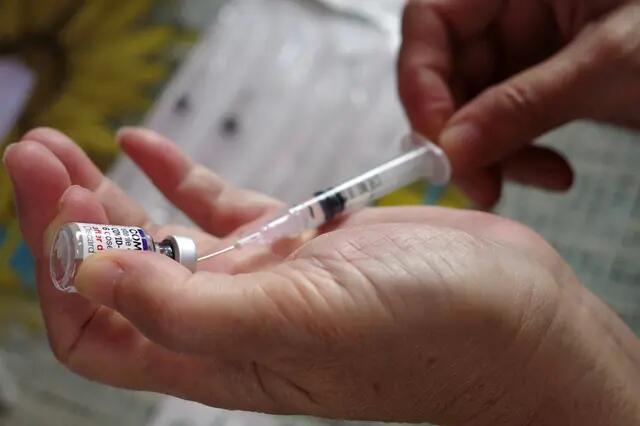
False, Misleading Information About COVID-19 Vaccines And Myocarditis Spreads Widely

 by Zachary Stieber via The Epoch Times (emphasis ours),

False and misleading information about COVID-19 vaccines and heart inflammation is being spread widely, including by doctors.

That includes claims that data clearly show myocarditis, or heart inflammation, is more prevalent after COVID-19 infection when compared to COVID-19 vaccination.

"Teen boys have been up to five times as likely to have heart inflammation after having a COVID infection than after getting vaccinated," Dr. Mandy Cohen, director of the U.S. Centers for Disease Control and Prevention (CDC), said in a video encouraging nearly all Americans to get one of the new COVID-19 vaccines.

A similar claim was made by Dr. Scott Rivkees, Florida's former surgeon general, to ABC.

The claims are largely based on a non-peer reviewed study from the CDC from April 2022.

"At this point it does not seem like an intellectually honest attempt to conduct a risk-benefit analysis," Allison Krug, an epidemiologist, told The Epoch Times. "I'm just dismayed that they don't seem genuinely interested in repairing the credibility with parents lost over the last two-and-a-half years."

The CDC did not respond to a request for comment.

Dr. Rivkees, presented with studies that have found people in at least some populations are at a higher risk of myocarditis after vaccination when compared to after a positive test, doubled down on his claim.

"In articles that compare risks of myocarditis from COVID vs. following vaccination ... the risk of myocarditis is greater after COVID than after vaccination," Dr. Rivkees, professor of the practice of health services, policy, and practice at Brown University, told The Epoch Times via email.

In one of the papers, English researchers found a higher risk for men under 40 who were vaccinated with Moderna's shot.

Nordic researchers also identified a higher risk for men under 40, as well as some females.

German researchers found 655 cases related to a COVID-19 vaccine, versus 77 related to COVID-19.

The CDC researchers found a higher rate of cardiac complications after a positive COVID-19 test than after COVID-19 vaccination in 40 U.S. health care systems. They did not include all COVID-19 infections.

Dr. Rivkees later sent meta-analyses that confirm the COVID-19 vaccines increase the risk of myocarditis, with no tabulations for the risk following COVID-19.

Dr. Rivkees was quoted by ABC as countering recommendations from Florida to people under 65 to avoid new COVID-19 vaccines, which have virtually no clinical trial data behind them.

Florida's recommendations contradict the CDC, which advises nearly all Americans receive one of the new shots, but align with or are close to the recommendations from much of the rest of the world, including many European countries and Israel.

Other Claims

Other recent reporting on COVID-19 vaccines also includes false or misleading claims about myocarditis.

"The risk of myocarditis from the virus is far greater than the risk of myocarditis from the vaccine,” Dr. Kawsar Talaat, an associate professor at Johns Hopkins School of Medicine, told MIT Technology Review. Dr. Talaat did not provide any citations. A request for comment returned an away message.

CBS News reporter Alexander Tin wrote in an article that "research shows people are more likely to develop myocarditis from a COVID infection than from the vaccine." Mr. Tin did not link to any of the purported research and declined to comment on the record.

USA Today reporter Karen Weintraub wrote that no myocarditis cases were recorded after receipt of the bivalent vaccines, which were available from 2022 through when the new vaccines were cleared. That's false, according to the CDC presentation (pdf) to which she hyperlinked. The CDC's Vaccine Safety Datalink alone recorded two confirmed cases, including one in a young male. Ms. Weintraub did not respond to a query.

[ZH: related...]

Continues Trend

Solid information on myocarditis and COVID-19 vaccines has been hard to come by during the pandemic, with even the CDC hiding data and making false statements about the condition.

In guidance on its website, the North Carolina Department of Health and Human Services says that COVID-19 poses more of a risk than COVID-19 vaccination.

Officials pointed to the same CDC paper cited by vaccine proponents.

That report, published by the CDC's quasi-journal, analyzed electronic health records from 40 U.S. health care systems and counted cardiac complications following a positive COVID-19 test or COVID-19 vaccination. Then they compared the rates and claimed people were at higher risk after a positive test.

"For post COVID-myocarditis, they only included young people with an official COVID diagnosis in the health system," Dr. Tracy Beth Hoeg, an epidemiologist in California, told The Epoch Times via email.

"So not only was this a non-representative sample because these were a subset of the sickest children who were seeking medical attention but happened to also have a COVID positive test," she added. "At the same time they underestimated the total number of children infected by only including those with a health system associated positive result (so this shrinks the denominator and increases the myocarditis rate per infection)," she said.

Those choices would inflate the rate of post-COVID myocarditis cases, she said.

The researchers did include in the paper calculations for post-vaccination myocarditis as high as 360 cases per million second doses in 12- to 17-year-old males, or as high as one in 2,800 second doses.

The CDC "glossed over" those calculations, Dr. Hoeg said. "I don't know how many parents would have taken the chance on vaccination if they had known this risk of myocarditis was around 1/3,000 according to the CDC's own study, which was consistent by the way with data from Hong Kong."

Dr. Hoeg and Ms. Krug previously authored a paper that found the risk of cardiac complications to young, healthy males from COVID-19 vaccines was higher than the risk from COVID-19.

Dr. Jason Block, the CDC study's corresponding author, did not respond to a request for comment. The North Carolina Department of Health and Human Services did not respond to an inquiry. Pfizer and Moderna have not responded to requests for comment.

Cases After Bivalent Shot

According to the Vaccine Safety Datalink data, through March 11, one case of myocarditis was detected after Pfizer vaccination and one case was detected after Moderna vaccination.

CDC officials did not present any data from the Vaccine Adverse Event Reporting System (VAERS). Starting in mid-2021, the CDC has analyzed reports to the system and verified some of them before regularly updating reported rates.

The CDC, asked for the data, would only provide a study that covered VAERS reports lodged through Oct. 23, 2022. The study found nine reports of myocarditis or pericarditis, seven of which were verified by medical record review.

Asked for more current data, the official said the study "is the most recent publicly available data we have on the topic" and that more current data would be made available to the public "when appropriate."

An Epoch Times search of VAERS turned up 98 myocarditis, pericarditis, or myopericarditis reports following bivalent vaccination through Sept. 8. Ms. Krug counted 10 reported cases that were or appeared to be myocarditis or pericarditis among 12- to 29-year-olds.

Dr. Rivkees said the Vaccine Safety Datalink data "show that the risk of myocarditis following COVID boosters is very rare." He did not comment on the lack of VAERS data.

Dr. Walid Gellad disagreed.

Without the VAERS data, "no risk benefit can accurately be calculated for young people," Dr. Gellad, director of the University of Pittsburgh's Center for Pharmaceutical Policy and Prescribing, wrote on X.

Dr. Rivkees said he also felt the vaccines would prevent deaths in children, pointing to observational papers on older versions of the shots. Two were non-peer reviewed studies from the CDC.

Multiple people, including children, have died from post-vaccination myocarditis. And there's no evidence the new vaccines prevent infections, hospitalizations, or deaths in any age group. Pfizer's vaccine has no human data behind it, while Moderna's vaccine was tested on just 50 people, with no efficacy estimates presented. One of those 50 suffered a medically-attended adverse event deemed related to the shot. Moderna has not disclosed what the event was.

Older Misinformation

The CDC started the trend of mis- and disinformation about COVID-19 vaccines and myocarditis in early 2021, when then-Director Dr. Rochelle Walensky falsely claimed that the agency had seen no cases of the condition.

The agency also missed or ignored a safety signal for myocarditis after COVID-19 vaccination.

Outside researchers have also downplayed the cases by citing how symptoms resolved quickly in many patients, while abnormalities on imaging and symptoms persisted in some. They've also made false claims about deaths from post-vaccination myocarditis.

"No deaths from myocarditis post-mRNA COVID-19 vaccination have been reported in the USA, with very rare deaths reported worldwide," U.S. researchers wrote in a review article in 2022. By then, multiple deaths had been reported in the United States alone. Dr. Stephanie Chin, the study's corresponding author, did not return a query.

In another example from late 2021, Chinese researchers falsely said, "so far, all adults and adolescents with myocarditis/pericarditis following COVID-19 vaccinations, including those reported in the current study, have been mild cases." They cited a single study from California.

https://www.zerohedge.com/political/false-misleading-information-about-covid-19-vaccines-and-myocarditis-spreads-widely

Inside America’s plans for an autonomous, AI-powered military

 The United States is accelerating an effort to revolutionize modern warfare by fielding swarms of self-operating drones and weapons systems. The push will shape the next generation of war and, military leaders hope, give America a leg up on China in the new global arms race. 

With the Pentagon’s new Replicator initiative, the U.S. is moving fast toward an ambitious goal: propping up a fleet of legacy ships, aircraft and vehicles with the support of weapons powered by artificial intelligence (AI), creating a first-of-its-kind class of war technology. It’s also spurring a huge boost across the defense industry, which is tasked with developing and manufacturing the systems.

For those watching the U.S. defense and security field closely, Replicator was greeted with a sigh of relief — though it’s also raising a host of concerns related to accountability and the human cost of autonomous warfare. 

“This is the same as the transition from crossbows to guns, from cavalry to tanks,” said Steve Blank, co-founder of the Gordian Knot Center for National Security Innovation at Stanford University. “Thousands of these things that are semi-autonomous or autonomous is a major transformation in warfare. Period. All nations will eventually get here.”

The U.S. is hoping that Replicator, designed to field thousands of fully autonomous systems within two years, will get the military ahead of foreign adversaries who are also pursuing this technology, particularly China. 

In the event of a clash over the self-governing island nation of Taiwan, AI-powered drones and aircraft will be vital to countering a larger Chinese military force, especially over contested waters and airspace where Beijing’s mass could overwhelm American forces.

Moreover, the war in Ukraine has shown just how important drones are. While those deployed in Ukraine and Russia are being guided remotely by human operators, AI-powered ones would significantly boost the capabilities of the forces deploying them by swarming targets.

Replicator also means faster and cheaper military technology. It’s spurring a huge boost across the defense industry, giving smaller defense tech companies a chance to compete for contracts against traditional defense giants.

If successful, the U.S. will be able to quickly produce these drones for a much cheaper cost than conventional systems, putting the military at a competitive advantage against other rivals.

The only question for defense contractors and war analysts is whether the U.S. can meet the program’s ambitious timeline.

Deputy Defense Secretary Kathleen Hicks announced the new initiative in late August and said the goal was to develop these weapon systems in the next 18-24 months. She added this month that Replicator does not involve new funding or personnel, but rather a steering committee will guide its progress across the entire military.

Eric Pahon, a spokesperson for the Defense Department, said it was mostly a matter of scaling out technology. He admitted there were some challenges with bureaucracy, but said the U.S. has a history of being able to pivot.

“A lot of this is about cutting the red tape within the department,” Pahon said. “We have the ability to do these things, but it’s going to take a massive mindset change and somebody who’s able to help kind of cut through the biggest delays that we have in the department.”

Pahon said Replicator would put the U.S. ahead of China and allow for AI weapons systems to be mass-deployed in nearly every field of warfare.

“The great thing about these kinds of cheap systems is that we can really easily reprogram them and refit and be really creative,” he said. “I can send an [autonomous] drone to carry a bomb or it can do weather readings or it can do surveillance. I’ve got thousands of them, no big deal.”

One challenge might be getting all of the technology to talk to each other, Pahon said, but there are plans to invest more heavily in Joint All-Domain Command and Control, a computerized network in the early stages of development.

Over time, Congress will need to step in with more robust funding for the next-generation weaponry and support structure. It’s not clear if AI weapons will end up as an immediate priority in the defense spending bills currently caught up in budget negotiations on Capitol Hill. 

Last year’s defense bill included a requirement to enhance warfighting capabilities with AI and report annually through 2025 on progress.

Replicator inherits the original goal of Assault Breaker, a U.S. military program in the 1970s that proposed methods of using swarms of weapons, like long-range smart weapons that divide into tracking submunitions, to counter a larger Soviet Union until reinforcements could arrive.

Assault Breaker 2, similar to its predecessor, appears to have been rolled out in the last decade. Testimony from Steven Walker, then a leader of the Defense Advanced Research Projects Agency, in 2019 said the Pentagon was focused on using “emerging technologies” in the strategic initiative.