Search This Blog

Friday, January 12, 2024

"The Deep State Is Terrified" - Dr. Ben Carson Warns Iowa Trump Supporters "Be Looking For Dirty Tricks"

 by Nathan Worcester via The Epoch Times (emphasis ours),

Dr. Carson has advice for supporters of former President Donald J. Trump ahead of Iowa’s Jan. 15 caucus.

The Deep State is terrified because he [Trump] now knows who they are,” the neurosurgeon told a crowd at a Team Trump Faith Event at Grace Baptist Church in Marion, Iowa.

“The system doesn’t want to be fixed. That’s why they will do anything to keep him out of office,” said Dr. Carson, who previously served as President Trump’s Secretary of Housing and Urban Development.

Be looking for dirty tricks,” he added.

“They will be coming up with all kinds of things, but you know what? God is in charge,” he continued.
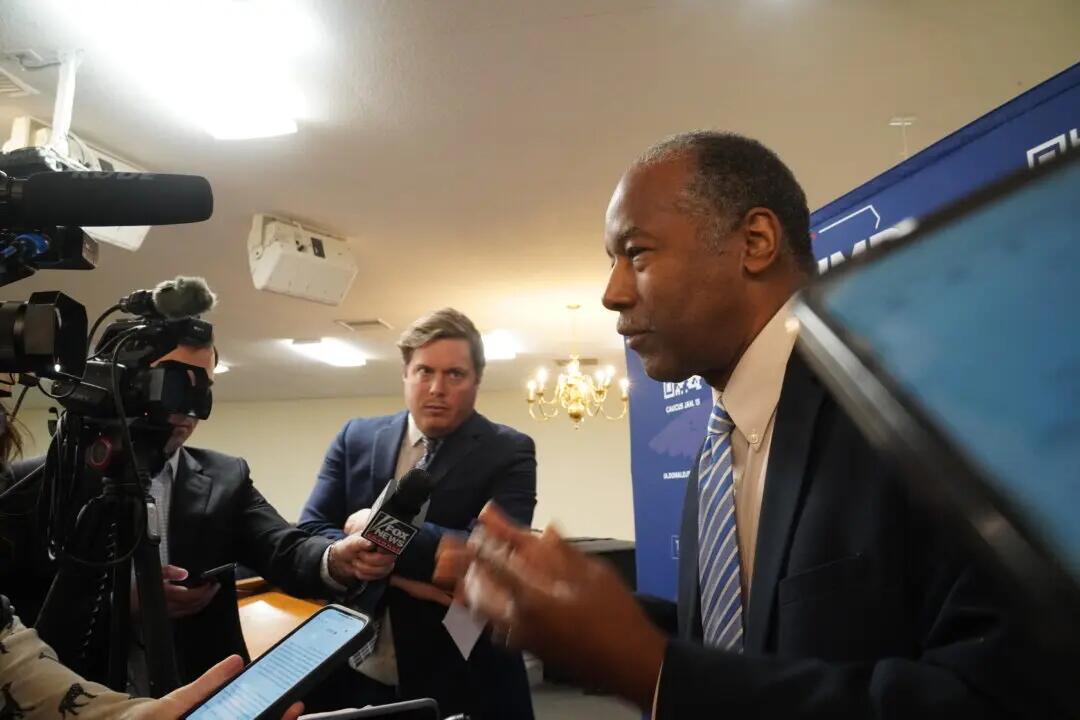
Dr. Ben Carson takes questions from the press after a Trump faith event in Marion, Iowa, on Jan. 11, 2024. (Nathan Worcester/The Epoch Times)

At one point, Dr. Carson’s phone went off. It happened not too long after he spoke about irregularities with poll watchers and signature matching for mail-in ballots—two issues that some supporters of former President Trump raised after the 2020 election—as well as a range of other topics important to President Trump’s base.

“It’s the FBI,” he quipped, drawing laughter.

While some of Dr. Carson’s language resonated with an audience sick of feeling politically persecuted, his message wasn’t all doom and gloom.

He began by rejecting cynicism about the possibilities for those who work hard and prize education.

“There’s so many people who say the American Dream is dead. It’s alive and well,” he said.

Race, he argued, is no impermeable barrier to prosperity.

If you look at Nigerians who immigrated to this country or Bahamians—they have black skin, but if you go into one of their homes, what do you see? A bachelor’s degree is the baseline,” Dr. Carson continued.

Mr. Carson’s speech came ahead of an appearance by one of President Trump’s competitors, Vivek Ramaswamy, just a few miles away in Cedar Rapids.

Former United Nations ambassador Nikki Haley also had a Jan. 11 “Pick Nikki” event in Linn County, home to both Marion and Cedar Rapids.

Florida Gov. Ron DeSantis spoke elsewhere in Iowa, including Dubuque, about 75 miles northeast of Marion along the Mississippi River.

Dr. Ben Carson speaks on behalf of former President Donald J. Trump's candidacy for the GOP nomination at a church in Marion, Iowa, on Jan. 11, 2024. (Nathan Worcester/The Epoch Times)

Carson Defends Trump’s Abortion Stance

The Team Trump Faith Event comes soon after President Trump’s Iowa town hall on Fox News.

Asked about his stance on abortion, the former president said that “I happen to be for the exceptions, like Ronald Reagan, with the life of the mother, rape, incest.”

He also emphasized the need to “win elections,” suggesting that abortion battles weren’t electoral winners for Republicans.

A Seventh-Day Adventist, Dr. Carson stood out as a staunch opponent of abortion during his run for the presidency almost a decade ago.

ABC News reported in 2015 that a spokesperson for his campaign said the doctor “believes abortion is not acceptable after conception” when pressed on his view of exceptions.

When asked about President Trump’s town hall comments, Dr. Carson said he thinks the president shares his belief that “we should be more engaged in conversion than we are in coercion.”

“If we coerce people to do things the way we want them to do it, all we’re going to do is create more division and hatred,” he told The Epoch Times.

The crowd listens as Dr. Ben Carson speaks at a pro-Trump event at a church in Marion, Iowa, on Jan. 11, 2024. (Nathan Worcester/The Epoch Times)

Trump ‘Has What It Takes’

While not everyone at Faith Baptist Church, multiple attendees voiced enthusiasm for President Trump and Dr. Carson.

“Trump has a track record. He has what it takes. He’s the only one that can do it,” Emma Aquino-Nemecek told The Epoch Times. She was sitting with friends in the front pew.

Ms. Aquino-Nemecek is a serial volunteer for Republican candidates, including Dr. Carson and the late Sen. John McCain (R-Ariz.). Only Mr. McCain came in for criticism.

“Sometimes he yell[ed]. I don’t like that at all,” she said.

Dr. Carson, by contrast, was “the best … very calm.”

Now Ms. Aquino-Nemecek is all set to be a Trump caucus captain.

“I don’t see Nikki Haley as being a big factor,” said Tom Sandersfeld, a real estate broker who was there with his wife, Sheryl Sandersfeld.

“We like Trump’s policies, and Ben Carson was HUD secretary, and I’m guessing he'll be involved in the administration of Trump somehow,” Mr. Sandersfeld told The Epoch Times when asked why he had come to Grace Baptist to hear Dr. Carson speak.

Mr. Sandersfeld thinks Iowans’ biggest issue will be the border.

“We’re being invaded,” he said.

Tom Sandersfeld (r) and his wife Sheryl (l) listen during a chant of "U.S.A.!" at Dr. Ben Carson's speech for former President Donald J. Trump in Marion, Iowa. (Nathan Worcester/The Epoch Times)

State AGs Blast Biden, Wall Street Plan To Sell Rights To America's Public Lands

 by Kevin Stocklin via The Epoch Times (emphasis ours),

The current plan by the New York Stock Exchange (NYSE) to create Natural Asset Companies (NACs), which would buy up land rights throughout America, faced heavy criticism from 25 state attorneys general, who in a Jan. 9 letter urged the Securities and Exchange Commission (SEC) to reject the concept.

“What is happening here is clear,” the AGs wrote. “The Commission and the NYSE are seeking to implement a radical environmental agenda through the rulemaking process (and outside the legislative process).”

This type of decision, particularly given its vast economic consequences, must be left to Congress and not the Commission or the NYSE,” they stated.

Hikers walk beside the Delicate Arch at sunset in the Arches National Park near Moab, Utah on April 21, 2018. - The park which has over 2000 arches that were formed over 100 million years by a combination of water, ice, extreme temperatures and underground salt movement. (Photo by Mark Ralston / AFP) (Photo credit should read MARK RALSTON/AFP via Getty Images)

The idea for NACs was developed by an activist eco-organization called the Intrinsic Exchange Group (IEG), funded in part by the Rockefeller Foundation, in partnership with the NYSE. NACs would pool investors’ money from around the world to buy the rights to public and private land in the United States and limit its use to “sustainable” endeavors.

Currently, much of the land under federal control is intended for public use, which includes farming, ranching, hunting, fishing, drilling, mining, hiking, and camping, according to its designation by Congress. In many western states, including Idaho, Alaska, and Utah, more than 60 percent of the land is government owned. About 85 percent of the land in Nevada is government owned.

“On the spectrum of serious ESG threats, this is one of the most concerning, and least understood,” Utah Attorney General Sean Reyes, who co-authored the letter, told The Epoch Times. “I don’t think most people in America even know about it; it was done very quietly.

There are a number of interests—big government, extreme environmental activism,” he said. “It’s about power, money, and who controls what can happen on these lands.”

The proposal to alter the NYSE’s governing rules to allow this new type of company on the exchange currently sits with the SEC, awaiting approval. The original public comment period was set at an unusually short 21 days, running through the Christmas holiday until Jan. 2.

After protests from 32 Republicans in Congress and 22 red-state financial officers, the SEC extended the comment period until Jan. 18. Anyone wishing to comment can do so at https://www.sec.gov/rules/sro/sr-nyse-2023-09.

$100 Trillion Per Year

Flowers bloom at the Carrizo Plain National Monument in Calif. in 2017. (Bob Wick/Bureau of Land Management)

In its SEC filing, the NYSE explained the concept of monetizing the value of America’s natural assets.

“Healthy ecosystems produce clean air and water, foster biodiversity, regulate the climate, and provide the food on which our existence depends,” the NYSE stated. “These and other benefits derived from ecosystems are called ecosystem services, and in the aggregate, economists estimate their value at more than US$100 trillion dollars per year.”

According to a statement from IEG CEO Douglas Eger, cited in a Rockefeller Foundation press release“this new asset class on the NYSE will create a virtuous cycle of investment in nature that will help finance sustainable development for communities, companies, and countries.

“Together, IEG and the NYSE will enable investors to access nature’s store of wealth and transform our industrial economy into one that is more equitable,” Mr. Eger said.

The NACs would require accounting and reporting systems regarding the assets they possess, which would be provided by IEG under license. The NYSE would acquire a stake in IEG as part of the agreement to establish NACs on the exchange.

According to the NYSE filing, the intention of the NACs is to buy land management rights, including farming rights, mineral rights, water rights, and air rights, and that “NACs are expected to license these rights from sovereign nations or private landowners.” The question remains, however, how the federal government would sell such rights to a private company.

According to state AGs, the answer lies in a current effort within the Bureau of Land Management (BLM) to sell “conservation leases” on public lands.

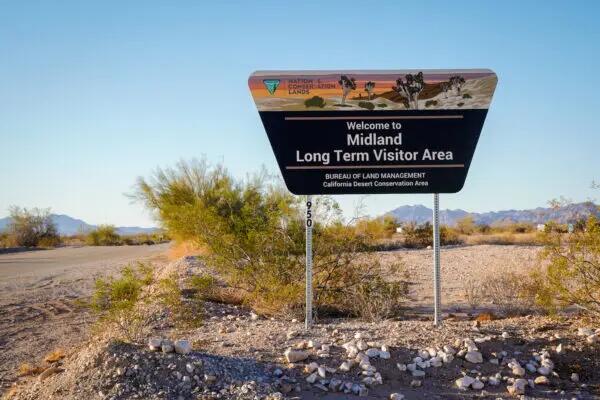
The Bureau of Land Management's Midland Long-Term Visitor Area is another camping spot for people who've fallen through the financial cracks of society and prefer to live off grid, on Feb. 13, 2022. (Allan Stein/The Epoch Times)

“The proposed [NYSE] rule plainly is intended to serve as the funding mechanism for the Bureau of Land Management’s (BLM’s) recent proposed rule, ‘Conservation and Landscape Health,’ which would authorize BLM to grant ‘conservation leases’ for public lands,” the letter states. “The BLM rule provides that ‘once the BLM has issued a conservation lease, the BLM shall not authorize any other uses of the leased lands that are inconsistent with the authorized conservation use.’

“This means that once BLM issues a conservation lease, productive economic uses such as grazing, logging, or mining will no longer be allowed unless they are consistent with the lease’s environmental purposes,” the AGs wrote.

Now you have a seller—BLM created that,” Mr. Reyes said. “And now you have a buyer, or a vehicle to use private money to buy what the BLM couldn’t do through proper legislation and couldn’t do at the ballot box.

“They’re quietly, almost secretly, trying to bypass all of that,” he said, “and funnel the money directly into owning these sovereign lands and imposing their own political agenda on them.”

Biden’s 30x30 Plan

The plan to create NACs coincides with efforts by the Biden administration to block access to public lands by farmers, ranchers, hunters, and most particularly, oil and mining companies. President Biden’s 30x30 plan, according to which 30 percent of the United States’ land and freshwater areas and 30 percent of U.S. ocean areas would be set aside for conservation by 2030, was announced in a January 2021 executive order.

A coal mine in Wyoming in a file photo. (Bureau of Land Management)

One of the issues facing the NACs is how their assets would be valued, given that for the most part the requirement of “sustainability” would preclude many economically productive uses. One of the reasons the NYSE is seeking an exception to its rules from the SEC is that NACs would not use standard audited GAAP accounting for their investors, but rather see the American institution adopt the United Nations System of Environmental-Economic Accounting.

Coincidentally, in January 2023, the Biden administration created its U.S. System of Natural Capital Accounting, which adopts the same U.N. environmental accounting standards. The Biden administration says that this effort is a “system to account for natural assets—from the minerals that power our tech economy and are driving the electric-vehicle revolution, to the ocean and rivers that support our fishing industry, to the forests that clean our air—and quantify the immense value this natural capital provides.”

Critics of this effort say that it violates the Constitution because only elected officials in Congress have the authority to transfer rights for public lands.

The Bundy family and their supporters fly the American flag as their cattle were released by the Bureau of Land Management back onto public land outside of Bunkerville, Nev. on April 12, 2014. (AP Photo/Las Vegas Review-Journal, Jason Bean)

“The attorneys general are absolutely correct when they say that the SEC and the NYSE are trying to implement a radical environmental agenda outside of the legislative process,” Will Hild, executive director of Consumer’s Research, said in a statement emailed to The Epoch Times. “This is the great scam of ESG that is being foisted on the American people, regardless of the harm it does to consumers or entire sectors of the economy.”

The Epoch Times requested comment from the SEC, the NYSE, and the Intrinsic Exchange Group regarding this article. The NYSE declined to comment. The SEC and IEG did not respond as of press time.

https://www.zerohedge.com/political/state-ags-blast-biden-wall-street-plan-sell-rights-americas-public-lands

Security and Privacy Risks from Rapid AI System Deployment

 The U.S. National Institute of Standards and Technology (NIST) is calling attention to the privacy and security challenges that arise as a result of increased deployment of artificial intelligence (AI) systems in recent years.

"These security and privacy challenges include the potential for adversarial manipulation of training data, adversarial exploitation of model vulnerabilities to adversely affect the performance of the AI system, and even malicious manipulations, modifications or mere interaction with models to exfiltrate sensitive information about people represented in the data, about the model itself, or proprietary enterprise data," NIST said.

As AI systems become integrated into online services at a rapid pace, in part driven by the emergence of generative AI systems like OpenAI ChatGPT and Google Bard, models powering these technologies face a number of threats at various stages of the machine learning operations.

These include corrupted training data, security flaws in the software components, data model poisoning, supply chain weaknesses, and privacy breaches arising as a result of prompt injection attacks.

"For the most part, software developers need more people to use their product so it can get better with exposure," NIST computer scientist Apostol Vassilev said. "But there is no guarantee the exposure will be good. A chatbot can spew out bad or toxic information when prompted with carefully designed language."

Security and Privacy

The attacks, which can have significant impacts on availability, integrity, and privacy, are broadly classified as follows -

  • Evasion attacks, which aim to generate adversarial output after a model is deployed
  • Poisoning attacks, which target the training phase of the algorithm by introducing corrupted data
  • Privacy attacks, which aim to glean sensitive information about the system or the data it was trained on by posing questions that circumvent existing guardrails
  • Abuse attacks, which aim to compromise legitimate sources of information, such as a web page with incorrect pieces of information, to repurpose the system's intended use

Such attacks, NIST said, can be carried out by threat actors with full knowledge (white-box), minimal knowledge (black-box), or have a partial understanding of some of the aspects of the AI system (gray-box).

The agency further noted the lack of robust mitigation measures to counter these risks, urging the broader tech community to "come up with better defenses."

The development arrives more than a month after the U.K., the U.S., and international partners from 16 other countries released guidelines for the development of secure artificial intelligence (AI) systems.

"Despite the significant progress AI and machine learning have made, these technologies are vulnerable to attacks that can cause spectacular failures with dire consequences," Vassilev said. "There are theoretical problems with securing AI algorithms that simply haven't been solved yet. If anyone says differently, they are selling snake oil."

https://thehackernews.com/2024/01/nist-warns-of-security-and-privacy.html

Gilead Sciences Must Face Consumer Claims Over Older, Lower-Quality Drugs, Court Rules

 Gilead Sciences must face thousands of claimants in court who allege the company deliberately delayed development of safer drugs to maximize profits on older drugs, California’s First District Court of Appeal ruled Tuesday.

The claims allege that the drugmaker’s tenofovir, an antiretroviral used in Gilead’s older HIV drugs, caused kidney, tooth, or bone damage to patients, and that Gilead knew its tenofovir-based drugs which were still in development, were safer. They further allege that Gilead deliberately paused the development of those new, safer drugs in order to maximize its profits from both types.

“We conclude that the legal duty of a manufacturer to exercise reasonable care can, in appropriate circumstances, extend beyond the duty not to market a defective product,” Associate Justice Jeremy M. Goldman wrote in the court’s published opinion, according to reporting by Bloomberg Law. The court further noted that there does not appear to be precedent in California cases of express consideration of the relationship between “defect” and “negligence.”

The ruling reaffirms a lower court ruling denying Gilead’s motion for summary dismissal for negligence claims, but also reversed the lower court’s decision to deny Gilead’s motion for summary dismissal on the claims of fraudulent concealment. Similar litigation is also under review by a federal court in California, also involving thousands of claims. Separate litigation filed in 2019 by eight patients who took Gilead’s Truvada, a combination of emtricitabine and tenofovir disoproxil fumarate, makes similar claims to this lawsuit, alleging Gilead withheld safer HIV drugs in a “patent-timing scheme.” The company has yet to announce the outcome of that suit.

This isn’t the first round of litigation related to its HIV drugs the company has faced, though the last round was ultimately decided in Gilead’s favor. A court ruled in July 2023 that Gilead and Teva did not conspire to delay the release of generic versions of their drugs.

The 2019 lawsuit, filed by consumers as well as direct purchasers such as the Blue Cross Blue Shield Association, claimed Gilead had maintained a monopoly in the market by extending patent protection on its drugs as well as striking so-called “pay-to-delay” deals. In particular, the suit alleged Gilead struck a deal in 2014 to pay Teva $1 billion in a “reverse payment,” so that Teva would reshelve its generic versions of Truvada and another drug, according to reporting by Bloomberg Law.

The suit sought $3.6 billion in damages, but a jury decided that the 2014 deal did not violate antitrust law.

That ruling came just two months after a jury concluded that Truvada and another Gilead HIV prevention drug, Descovy, did not violate government patents and also found that those patents were invalid. The lawsuit, launched in 2012 by the Trump administration, alleged the two-drug regimen at the basis of Gilead’s offerings was invented and proposed for prophylaxis by Centers for Disease Control and Prevention researchers. Descovy netted Gilead over $1.6 billion in revenue in 2022, with Truvada bringing in $113 million.

https://www.biospace.com/article/gilead-sciences-must-face-consumer-claims-over-older-lower-quality-drugs-court-rules/

EPA sets out rules for proposed 'methane fee' for waste generated by oil and natural gas companies

 Oil and natural gas companies for the first time would have to pay a fee for methane emissions that exceed certain levels under a rule proposed Friday by the Biden administration.

The proposed Environmental Protection Agency rule follows through on a directive from Congress included in the 2022 climate law. The new fee is intended to encourage industry to adopt best practices that reduce emissions of methane and thereby avoid paying.

Methane is a climate “super pollutant” that is more potent in the short term than carbon dioxide and is responsible for about one-third of greenhouse gas emissions. The oil and natural gas sector is the largest industrial source of methane emissions in the United States, and advocates say reduction of methane emissions is an important way to slow climate change.

Excess methane produced this year would result in a fee of $900 per ton, with fees rising to $1,500 per ton by 2026.

EPA Administrator Michael Regan said the proposed fee would work in tandem with a final rule on methane emissions EPA announced last month. The fee, formally known as the Methane Emissions Reduction Program, will encourage early deployment of available technologies to reduce methane emissions and other harmful air pollutants before the new standards take effect, he said.

The rule announced in December includes a two-year phase-in period for companies to eliminate routine flaring of natural gas from new oil wells.

“EPA is delivering on a comprehensive strategy to reduce wasteful methane emissions that endanger communities and fuel the climate crisis,” Regan said in a statement. When finalized later this year, the proposed methane fee will set technology standards that will “incentivize industry innovation'' and spur action to reduce pollution, he said.

Leading oil and gas companies already meet or exceed performance levels set by Congress under the climate law, meaning they will not have to pay the proposed fee, Regan and other officials said.

Sen. Tom Carper, chairman of the Senate Environment and Public Works Committee, said he was pleased the administration was moving forward with the methane fee as directed by Congress.

“We know methane is over 80 times more potent than carbon dioxide at trapping heat in our atmosphere in the short term,'' said Carper, D-Del. He said the program "will incentivize producers to cut wasteful and excessive methane emissions during oil and gas production.”

New Jersey Rep. Frank Pallone, the top Democrat on the House Energy and Commerce Committee, said oil and gas companies have long calculated that it's cheaper to waste methane through flaring and other techniques than to make necessary upgrades to prevent leaks.

“Wasted methane never makes its way to consumers, but they are nevertheless stuck with the bill,” Pallone said. The proposed methane fee “will ensure consumers no longer pay for wasted energy or the harm its emissions can cause.''

Republicans call the methane fee a tax that could raise the price of natural gas. “This proposal means increased costs for employers and higher energy bills for millions of Americans,” said Sen. Shelley Moore Capito, R-West Virginia.

The American Petroleum Institute, the oil and gas industry's largest lobbying group, slammed the proposal Friday and called for Congress to repeal it.

“As the world looks to U.S. energy producers to provide stability in an increasingly unstable world, this punitive tax increase is a serious misstep that undermines America’s energy advantage,'' said Dustin Meyer, API's senior vice president of policy, economics and regulatory affairs.

While the group supports “smart” federal methane regulation, the EPA proposal “creates an incoherent, confusing regulatory regime that will only stifle innovation and undermine our ability to meet rising energy demand,'' Meyer said. “We look forward to working with Congress to repeal the IRA’s misguided new tax on American energy.”

Fred Krupp, president of the Environmental Defense Fund, called the proposed fee "common sense,'' adding that oil and gas companies should be held accountable for methane pollution, a primary source of global warming.

In a related development, EPA said it is working with industry and others to improve how methane emissions are reported, citing numerous studies showing that and oil and gas companies have significantly underreported their methane emissions to the EPA under the agency's Greenhouse Gas Reporting Program.

The climate law, formally known as the Inflation Reduction Act, established a waste-emissions charge for methane from oil and gas facilities that report emissions of more than 25,000 metric tons of carbon dioxide equivalent per year to the EPA. The proposal announced Friday sets out details of how the fee will be implemented, including how exemptions will be applied.

The agency said it expects that over time, fewer oil and gas sites will be charged as they reduce their emissions in compliance with the rule.

https://news.yahoo.com/epa-sets-rules-proposed-methane-194155404.html

Novo Nordisk resumes shipments of Wegovy 1.7 mg dose in US

  Novo Nordisk said on Friday that it has resumed shipments of weight loss drug Wegovy 1.7 milligram dose in early January, following a short-term stock-out in the U.S. in mid-December last year.

https://www.marketscreener.com/quote/stock/NOVO-NORDISK-A-S-1412980/news/Novo-Nordisk-resumes-shipments-of-Wegovy-1-7-mg-dose-in-US-45734954/

'BlackRock’s Fink: Bitcoin ETFs just 1st step in tech revolution of finance'

 Bitcoin exchange-traded funds have arrived after a hard-fought battle between the crypto industry and the U.S. Securities and Exchange Commission. Larry Fink, CEO of BlackRock

 — the biggest asset manager in the world — thinks it’s just the first step toward a new financial world.

ETFs were seen as a way to give investors exposure to a young and risky asset class. But the value blockchain technology provider goes beyond bitcoin, and the new ETFs are just a precursor to broader tokenization of other assets, Fink told CNBC’s “Squawk Box” on Friday.

“ETFs are step one in the technological revolution in the financial markets,” he said. “Step two is going to be the tokenization of every financial asset.”

Before BlackRock filed its application for a bitcoin ETF in June and created a groundswell of optimism that such a fund could become a reality, tokenization of real world assets such as gold had been revived as a hot topic among financial institutions, who claimed this would give institutions the ability to provide more information and data to clients about their investments.

Some see bitcoin as the beginning of a bigger push by crypto into the legacy financial system. After the approval of bitcoin ETFs, investors are looking forward to the first deadline for the SEC to approve or deny spot ether ETFs, which is scheduled for May.

Fink appeared more focused on the deployment of blockchain technology to upgrade existing systems. Although some financial heavy hitters such as BlackRock have warmed to bitcoin over the years and the idea of offering bitcoin exposure to clients, there’s a big crypto world beyond bitcoin that many will continue to remain cautious on, at least publicly.

“I see value in having an ETH ETF,” he said. “As I said, these are just start stepping stones toward tokenization.”

“We have the technology to tokenize today,” he added. “If you had a tokenized security … the moment you buy or sell an instrument, it’s known it’s on a general ledger that is all created together. … This eliminates all corruption, having a tokenized system.“

https://www.cnbc.com/2024/01/12/blackrocks-larry-fink-says-bitcoin-etfs-are-just-the-first-step-in-the-technological-revolution-of-finance.html