Search This Blog

Friday, January 17, 2025

Zuckerberg blamed ex-exec Sandberg for pushing ‘inclusivity initiative’ in meet with Trump aides

 Meta CEO Mark Zuckerberg reportedly trash-talked his former top lieutenant Sheryl Sandberg during his visit to Mar-a-Lago, blaming her for implementing controversial DEI initiatives at Facebook that “encouraged employees’ self-expression in the workplace.”

Zuckerberg, who has drawn criticism for cozying up to the new administration, made the comment during a sit-down with President-elect Donald Trump’s advisers at his Florida retreat shortly after the Republican’s historic election victory in November, according to the New York Times.

Meta CEO Mark Zuckerberg reportedly blamed Sheryl Sandberg for introducing an “inclusivity initiative” at Facebook.Bloomberg via Getty Images

The discussions on Nov. 27 — which included Stephen Miller, who will take over as White House deputy chief of staff — covered a range of hot-button topics such as the administration’s expected crackdown on immigration, and diversity, equity and inclusion efforts, the Times reported.

Miller told Zuckerberg that the billionaire mogul had “an opportunity to help reform America, but it would be on Trump’s terms,” according to the Times.

Sandberg, the author of “Lean In,” served as chief operating officer at Meta from 2008 to 2022.AFP via Getty Images
The 40-year-old tech tycoon was “amenable” and said he and his top executives at Meta would “do nothing to obstruct the Trump agenda,” individuals familiar with the meeting told the Times.

Zuckerberg reportedly threw Sandberg under the bus for pushing the “inclusivity initiative” and said Meta would scrap its DEI policies.

“[Zuckerberg] said new guidelines and a series of layoffs amounted to a reset and that more changes were coming,” the Times reported, citing someone with knowledge of the meeting.

Meta, Zuckerberg insisted, would focus “solely on building tech products,” the Times reported.

After the meeting, Zuckerberg dispatched his top deputies to Mar-a-Lago to inform Trump transition officials of planned changes at Meta, according to the Times report.

Zuckerberg met with Stephen Miller, the incoming White House deputy chief of staff for policy, at Mar-a-Lago on Nov. 27, according to the New York Times.Getty Images

Zuckerberg, who donated $1 million to Trump’s inaugural fund, has instituted a wholesale makeover at Meta in recent weeks following his meeting with Miller.

He laid off about 5% of its workforce, ended third-party fact-checking and censorship programs and did away with DEI initiatives.

Zuckerberg has sought to curry favor with President-elect Donald Trump since his Nov. 5 election victory.Bloomberg via Getty Images

Meta also appointed new board members, including pro-Trump UFC president Dana White, Stellantis chairman John Elkann and former Microsoft executive Charlie Songhurst.

The Post has sought comment from Meta, the Trump transition team and Sandberg.

Sandberg, 54, served as Meta’s COO for 14 years, spearheading development of the Facebook advertising juggernaut that comprises the vast bulk of Meta’s revenue.

She shockingly quit in 2022. At the time, she claimed she wanted to give more energy to philanthropy, women’s advocacy and personal projects.

But reports suggested that her departure stemmed from increased regulatory scrutiny of Meta’s business practices as well as internal tensions over content moderation, political advertising and corporate culture shifts.

Sandberg left Meta in 2022 due to reported disagreements over the company’s pivot to the metaverse. Zuckerberg and Sandberg are seen above in 2021.Getty Images

While she did not publicly link her exit to these challenges, her influence within the company had reportedly waned as Zuckerberg shifted Meta’s focus toward the metaverse and cost-cutting measures.

A government official in the Treasury Department during the Clinton administration, Sandberg wrote the 2013 book “Lean in,” which encourages women to be more aggressive in climbing the corporate ladder.

Before Zuckerberg hired her to help run Facebook, Sandberg helped to develop Google’s ad program while working for the search engine.

https://nypost.com/2025/01/17/business/mark-zuckerberg-blamed-sheryl-sandberg-for-inclusivity-initiative/

Arrested LA Arson Suspect Says He Just "Liked The Smell Of Burning Leaves"

 Los Angeles Police Department Chief Jim McDonnell said this week that an arson suspect who was arrested Tuesday in Pacoima told police he had started small fires because he "liked the smell of burning leaves."

Police detained a suspect around 5:15 p.m. Wednesday after a citizen extinguished a fire and held him near Glenoaks and Van Nuys boulevards, according to ABC7.

The man, whose name was not released, was booked on suspicion of arson. Later, around 9:30 p.m., firefighters responded to reports of multiple trash fires near Vermont Avenue and Santa Monica Boulevard in East Hollywood.

"The suspect admitted to setting multiple fires that day and stated that she enjoyed causing chaos and destruction," McDonnell said. 

"As we continue to manage this historic, catastrophic event, we want to express our gratitude to everyone who has provided tips and remained vigilant in keeping the city safe," he continued. 

The ABC7 report said that firefighters quickly extinguished the blaze, and officers arrested the suspect, unrelated to the Eaton and Palisades fires. Authorities have also arrested dozens for looting, burglary, curfew violations, and one person for impersonating a firefighter.

Los Angeles DA Nathan Hochman pledged swift consequences for lawbreakers and is investigating price gouging, calling it "despicable" for exploiting vulnerable people.

Reports of charity and insurance scams have also surfaced, prompting warnings to verify charities and avoid cash or bitcoin donations.

https://www.zerohedge.com/markets/arrested-la-arson-suspect-says-he-just-liked-smell-burning-leaves

Illinois Poised To Become Even Worse

 by Laurie Higgins via American Greatness,

As if America needed any more proof that Democrat-ruled Illinois is the worst state in the union, that Democrats don’t care about the suffering of women and children, and that Democrats have no interest in the common good, Illinois Democrats have announced that they will be proposing legislation to “decriminalize sex work.” In other words, they plan on moving step by step toward legalizing prostitution. If successful, Illinois would have the dubious honor of being the first state to decriminalize prostitution.
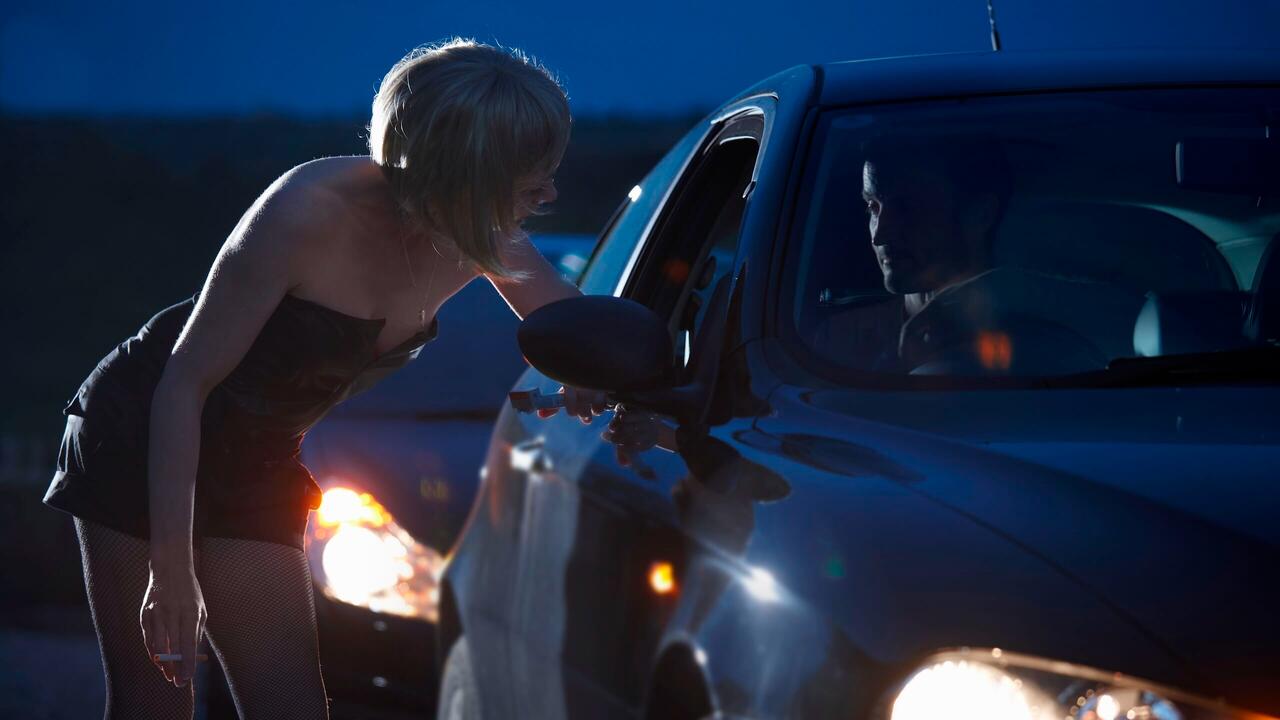
The instigators of this offense against women are Chicago Democrat State Representative Will Guzzardi—a product of an Ivy League education—and State Senator Celina Villanueva. They are collaborating with crossdressing man and former prostitute “Reyna” Ortiz and homosexual Brian C. Johnson, another Ivy grad and CEO of Illinois’ infamous LGBTQ+ activist organization, Equality Illinois.

The first step by leftists in their eternal quest to make America unlivable is always to redefine terms, hence the Newspeakian term “sex work,” with its positive connotations of labor and industry. Illinois Democrats hope to destigmatize the degrading purchase of women’s bodies for the hedonistic pleasure of men by associating such evil with other forms of work.

Cited in a WTTW report on the impending bill, Brian Johnson said that reducing the crime of prostitution to a misdemeanor in 2013 “has contributed to a 97% reduction in arrests and prosecutions of sex-related offenses.” Is that a justification for decriminalizing prostitution? If so, why not legalize theft? Legalizing theft would likely reduce arrests and prosecutions of theft-related offenses by 100%.

Jeanne Ives posted on X another reason Illinois Dems want to legalize the institutional sexual abuse of women:

Illinois Dems looking for tax $$.

  • Casinos

  • Video Gambling

  • Sports Betting

  • Liquor

  • Cannabis

And now legalizing prostitution.

There is nothing IL Democrats won’t do to suck money out of the pockets of decent, hardworking Americans. Predators prey on the worst impulses of humans and do so without regard for the human suffering they cause.

Ortiz admits to “living under the fear and threat of violence” during his twenty-year stint as a crossdressing male prostitute. He assumes such fear and threats will be reduced by decriminalizing prostitution, but that’s not what Janice G. Raymond argues in an article published in both the Journal of Trauma Practice and in Prostitution, Trafficking and Traumatic Stress.

Professor Emerita at the University of Massachusetts Amherst, feminist, and lesbian Raymond looked at the question of “What happens when prostitution is treated as ‘sex work’ rather than … as sexual exploitation and violence against women,” and finds many reasons to oppose “all state-sponsored forms of prostitution,”

including but not limited to full-scale legalization of brothels and pimping, decriminalization of the sex industry, regulating prostitution by laws such as registering or mandating health checks for women in prostitution, or any system in which prostitution is recognized as “sex work” or advocated as an employment choice.

Those reasons include the following:

  1. “Legalization/decriminalization of prostitution is a gift to pimps, traffickers and the sex industry. … Some people believe that, in calling for legalization or decriminalization of prostitution, they dignify and professionalize the women in prostitution. But dignifying prostitution as work doesn’t dignify the women, it simply dignifies the sex industry. They haven’t thought through the consequences of legalizing pimps as legitimate sex entrepreneurs or third party businessmen, or the fact that men who buy women for sexual activity are now accepted as legitimate consumers of sex.”

  2. “Legalization/decriminalization of prostitution and the sex industry promotes sex trafficking. … One argument for legalizing prostitution in the Netherlands was that legalization would help to end the exploitation of desperate immigrant women who had been trafficked there for prostitution. However, one report found that 80% of women in the brothels of the Netherlands were trafficked from other countries.

  3. “Legalization/decriminalization of prostitution does not control the sex industry. It expands it.”

  4. “Legalization/decriminalizaton of prostitution increases clandestine, illegal and street prostitution. … many women are in street prostitution because they want to avoid being controlled and exploited by pimps (transformed in legalized systems into sex businessmen). Other women do not want to register or submit to health checks, as required by law in some countries where prostitution is legalized. Thus, legalization may actually drive some women into street prostitution.”

  5. “Legalization of prostitution and decriminalization of the sex industry increases child prostitution. … The Amsterdam-based ChildRight organization estimates that the number of children in prostitution … increased by more than 300% between 1996 –2001, going from 4,000 children in 1996 to 15,000 in 2001. ChildRight estimates that at least 5,000 of … children in Dutch prostitution are trafficked from other countries.”

  6. “Legalization/decriminalization of prostitution does not protect the women in prostitution.”

  7. “Legalization/decriminalization of prostitution increases the demand for prostitution. It encourages men to buy women for sex in a wider and more permissible range of socially acceptable settings. … many men who previously would not have risked buying women for sex now see prostitution as acceptable.”

  8. “Legalization/decriminalization of prostitution does not promote women’s health.”

  9. “Legalization/decriminalization of prostitution does not enhance women’s choice. … There is no doubt that a small number of women say they choose to be in prostitution, especially in public contexts orchestrated by the sex industry. In the same way, some people choose to take dangerous drugs such as amphetamine. However, even when some people consent to use dangerous drugs, we still recognize that is harmful to them, and most people do not seek to legalize amphetamine. In this situation, it is harm to the person, not the consent of the person, that is the governing standard.”

In 2019, Democrats in Congress tried to pass a similar bill. Every Illinois lawmaker considering supporting Villanueva’s and Guzzardi’s repugnant bill should read the testimony of Ally-Marie Diamond, a victim of the decriminalized prostitution system in New Zealand, who pleaded with Congress to reject the bill:

Throughout my time in prostitution, many men threw me across the room, slapped me, called me “a useless black bitch,” brutally sodomised me, told me I was worthless and should be grateful they were giving me money. Sex buyers would try sticking their entire fists into my vagina, degrade me, beat me, rape me. When I could finally catch my breath, my body hurt terribly. I was bruised, broken, my nipples were cracked and bleeding. …

When decriminalization advocates say that prostitution would come out into the “light,” all the abuse inherent to the prostitution goes on behind closed doors, the scariest room in any commercial sex establishment. Sex buyers will not see women any differently than as objects, and their attitude to do as they please to the women they purchase – battery, rape, sodomy – does not change. Sex buyers shoved bottles, vegetables, oversized vibrators, shoe heels, batons and whatever else their warped minds could come up with, so far and so hard up my sisters’ vaginas, they damaged their reproductive systems beyond repair. So many of my sisters got lost in those streets, with substance abuse to the point that they died of kidney and liver failure. And for those who couldn’t cope anymore, chose the only path they could see – suicide. …

Since the 2003 Aotearoa New Zealand law, street prostitution has risen by 400%. In fully decriminalized Aotearoa New Zealand, girls as young as 9 are being sold on the streets of Auckland, and 12-year olds are being bought in licensed massage parlours. … Sex tourism flourishes, as does sex trafficking to replenish the brothels and the market of flesh.

Writing about the failed 2019 congressional bill, Lisa Thompson, vice president of the National Center on Sexual Exploitation’s Research Institute, makes clear the place of coercion in the sex trade industry:

Supporters … fail to see the grotesque power imbalance between the person purchased in sex, and the purchaser. Simply put, the person with the money, is the person with the power. Whether the buyer is Robert Kraft or a blue collar worker, it’s the money that leverages the sexual exchange not an actual desire to have sex. Thus, paid sex is coerced sex.

Many current and former prostitutes who support the decriminalization of prostitution began selling their bodies while minors, as Ortiz did, living lives of quiet desperation and abuse, thereby illuminating the intrinsically coercive nature of the sex trade industry.

Just as marijuana dispensaries have popped up all over Illinois, so too will venues that sell women’s bodies for sex if this bill passes. Let’s hope Illinoisans have the spine to stop this bill before women and children are grievously harmed and before more good people hightail it out of this Godforsaken state.

https://www.zerohedge.com/political/illinois-poised-become-even-worst

'What could happen to your TikTok app on Jan. 19'

 What happens on your smartphone once a US law banning the social media app TikTok takes effect on Jan. 19?

It will depend on the actions of TikTok parent ByteDance, President-elect Donald Trump, and some of the largest tech giants in the US.

ByteDance could voluntarily shut down use of the app for US users. Anyone trying to open the app would see a message sending them to a website offering an explanation about the ban, according to reports by Reuters and the Information.

TikTok’s lawyer hinted at this possibility when arguing his case before the Supreme Court, which on Friday upheld a US law that bans the app on Jan. 19 unless it is sold to an owner not controlled by a foreign adversary.

On Jan. 19 "at least as I understand it, we go dark. Essentially, the platform shuts down," TikTok's lawyer told the court on Jan. 10.

But this is not necessarily what is required by law — a law upheld by the nation’s highest court Friday.

What the law signed by President Joe Biden actually states is that it will no longer be legal for companies like Apple (APPL) and Google (GOOGGOOGL) to allow users to download TikTok from their app stores, nor can cloud-storage companies like Microsoft (MSFT), Amazon (AMZN), and Oracle (ORCL) host the app.

Penalties for violations range up to $5,000 for each access provided to a US user.

In that scenario the app won’t "magically disappear" from phones, CNET tech reporter Abrar Al-Heeti told Yahoo Finance, but experts said its performance could weaken over time because TikTok’s parent won’t be able to make app store updates.

“The practical effect is, in the short run, what's going to happen is new users won't be able to download the app in any of the marketplaces,” said Pepperdine University media and intellectual property law professor Victoria Schwartz.

But I think more significantly, they won't be able to push any updates," she said. And that becomes more and more problematic, especially as new operating systems are released.

"Now, all of a sudden, TikTok is essentially what we call an orphan program. It's super vulnerable to data breaches, to cyber hacking."

TikTok's millions of users, especially small business owners, are worried about whether they'll be able to continue to create content on the platform or save their content if the app is shuttered, Schwartz added.

"In terms of content, under TikTok's licensing agreements, the intellectual property belongs to its content creators," Schwartz said.

Account holders who want to keep their content, she said, should have a plan in place to back it all up. "It doesn't do any good if you own intellectual property rights and it's stored only somewhere in the TikTok universe."

If TikTok does in fact go dark on Jan. 19, it plans to give users an option to download all their data so that they can take a record of their personal information, according to Reuters.

It could also later restore service for US users if the ban is ever reversed.

What Trump could do

Friday's decision likely leaves the fate of TikTok in the hands of President-elect Donald Trump, who promised to "save TikTok" and had asked the nation's highest court to suspend the divest-or-be-banned deadline. Trump takes office on Jan. 20.

"It ultimately goes up to me, so you're going to see what I'm going to do," Trump said in an interview with CNN on Friday. "Congress has given me the decision, so I'll be making the decision."

Trump is reportedly mulling unconventional ways to save TikTok from an impending US ban, including an executive order that would push out enforcement of the new law by months.

The order being considered by Trump, as reported first by the Washington Post and confirmed by other media outlets, would suspend enforcement of the TikTok law for 60 to 90 days.

But doing so could mean contravening federal law, heightening the danger that such a rescue could face serious legal hurdles.

Any executive order from Trump delaying enforcement of the law would create a new legal dilemma for the tech giants that are required by law to put the TikTok ban into effect.

FILE PHOTO: Elon Musk speaks with U.S. President-elect Donald Trump at a viewing of the launch of the sixth test flight of the SpaceX Starship rocket in Brownsville, Texas, U.S., November 19, 2024 Brandon Bell/Pool via REUTERS/File Photo
Last November Elon Musk speaks with U.S. President-elect Donald Trump at a viewing of the launch of the sixth test flight of the SpaceX Starship rocket in Brownsville, Texas. Brandon Bell/Pool via REUTERS/File Photo · Reuters / Reuters

Trump could ask his attorney general not to enforce the law — his nominee Pam Bondi didn’t commit to enforcing it when questioned by lawmakers this week. But Apple and Google still have to weigh whether that’s a risk they want to take.

There are less risky paths for Trump to take. He could push Congress to overturn the law or to encourage lawmakers to pass a law extending the Jan. 19 deadline. This week, Sen. Ed Markey did introduce a bill that would extend the deadline by 270 days, according to a statement.

He could also help find a buyer for the US operations, or even a piece of it, which would allow TikTok to avoid the ban. Chinese government officials, according to reports by Bloomberg and the Wall Street Journal, have discussed selling the US business to Elon Musk, the owner of X.

The officials would prefer to keep TikTok under ByteDance ownership, according to the media reports, but have discussed the sale to Musk as among their contingency plans.

There are other possible buyers too. Investor and “Shark Tank” star Kevin O’Leary told Yahoo Finance last week that he and a consortium of business professionals led by billionaire Frank McCourt Jr. are willing to pay up to $20 billion for TikTok, calling it a "legacy opportunity.”

Trump said in a post Friday on Truth Social that he had spoken with Chinese President Xi Jinping about TikTok and other topics.

"It is my expectation that we will solve many problems together, and starting immediately."


https://finance.yahoo.com/news/what-could-happen-to-your-tiktok-app-on-jan-19-162446081.html