Search This Blog

Friday, January 17, 2025

Trump Factor Strikes Again: President-elect and his envoy impact Mideast before inauguration

 Days before departing his last political job, a beleaguered Joe Biden went to the podium to announce a long-awaited ceasefire between Hamas and Israel. But when pressed by the news media over who should get credit for the deal, the 46th American president demurred.

"Is that a joke?" Biden retorted Wednesday afternoon. And moments later he walked away without providing an answer.

Half away across the globe, another world figure whose country was lead negotiator in the deal offered a clear answer: The man succeeding Biden as U.S. president had changed the dynamic and enabled a deal that had been stalled for months.

Qatar’s Minister of State told Just the News that the deal unveiled Wednesday was made possible because President-elect Donald Trump coordinated with Biden’s outgoing team, made a powerful warning to both sides to reach a deal before he was inaugurated and then dispatched his own envoy to the region, Steve Witkoff, to help seal the deal, especially with a wary Israel.

"President-elect Trump has been clear in his public statements that he wants to see an end to the war as soon as possible. These messages supported our efforts as we continued mediating between the parties to try to finalize an agreement,” Mohammed Al-Khulaifi said Wednesday night.

“Steve Witkoff in particular has been actively engaged in the discussions to get a deal over the line," the minister added. "He has been in Doha, working closely with our team to close the gaps between the two sides in the final few days.”

The deal still faces much uncertainty, and could even fall apart at some point over Israeli distrust of Hamas in the aftermath of the Oct. 7 atrocities. But its initial approval once again affirmed a Trump factor that has begun reshaping the world even before Monday’s inauguration.  

Al-Khulaifi acknowledged the rarity of having a deal first negotiated by incumbent Biden pushed to fruition by his successor even before Trump took office.

Trump: "Hamas might face hell"

“There truly is no better way for an incoming administration to handle this situation,” he declared.

The deal includes a ceasefire, a pullback of Israeli troops from Gaza and the release of Hamas-held hostages, which include eight Americans, officials said. It is not known how many of the hostages will be alive or dead in the exchange, and Israel is being forced to reciprocate by releasing Hamas terrorist prisoners in an exchange.

The Qataris’ account of how the deal unfolded was confirmed by U.S. and Israeli officials, as well as Arab diplomats.

“The deal really is essentially the same as Biden struck in May. The only thing that changed was Trump entering the picture with Witkoff,” one diplomatic source directly familiar with the negotiations told Just the News. “The Biden team didn’t offer anything to change the dynamic, but Trump’s team did after the election.”

Added another diplomatic source: “Biden gets credit for conceiving the deal but his team couldn’t get the sides to agree. Trump’s clarity after the election and his envoy’s ability to deal with Israel is what changed the game.”

Newspapers across the Middle East affirmed the dynamic as details of the deal – still fragile and capable of changing – began spilling out.

“Trump envoy swayed Netanyahu more in one meeting than Biden did all year,” The Times of Israel blared in a headline.

Rep. Tom Tiffany, R-Wis., told the "Just the News, No Noise" television show Wednesday’s events affirmed once again the Trump effect globally since Election Day, especially the change in diplomatic stances from Biden’s peace through appeasement approach to Trump’s peace through strength.

“We've seen in the last four years, weakness leads to war. And now we're seeing strength leads to peace,” Tiffany said. The Wisconsin congressman specifically credited a social media post Trump made a few weeks warning that Hamas might face hell if it didn’t capitulate to a hostage release.

"Even the bad guys understand what this what it means to have President Trump come back into office.”

“I mean, the Biden administration and Tony Blinken, who has been really the person setting foreign policy for the Biden administration, could you ever imagine them speaking in such definitive tones that all hell's going to rain down on you. Hamas, if you don't figure this out. Well, guess what? They figured it out. What about four or five days before inauguration? Because they know that is exactly what's going to happen.”

Trump’s performance during the transition – from securing multibillion dollar foreign investments in the United States to pushing the Hamas-Israel deal – reminds some of Ronald Reagan’s transition from Jimmy Carter in 1981, which led to the immediate release of hundreds of American hostages from Iran.

“It's not a totally equivalent situation, because these aren't all Americans the way they were in 1981 coming out of Tehran,” former Deputy National Security Adviser Victoria Coates told the "Just the News, No Noise" television show. “But the response to a very strong American leader is the same: even the bad guys understand what this what it means to have President Trump come back into office.”

Officials said that Witkoff and Biden administration officials met in Doha with Sheikh Mohammed bin Abdulrahman Al Thani, Qatar's prime minister and foreign minister, before Witkoff dispatched separately to Jerusalem to negotiate outstanding issues with Israeli Prime Minister Benjamin Netanyahu. 

The deal picked up momentum in the last few days. Biden told reporters that the deal would roll out in two steps. The first phase will span about six weeks and include “a full and complete cease-fire, withdrawal of Israeli forces from all the populated areas of Gaza, and the release of a number of hostages held by Hamas, including women and elderly and the wounded,” the president said.

"I'm proud to say Americans will be part of that hostage release in phase one as well," Biden said. "And the vice president and I cannot wait to welcome them home." Biden cautioned the situation remains delicate and fluid. "There are a number of details to negotiate the move from phase one to phase two," he said. "But the plan says if negotiations take longer than six weeks, the cease-fire will continue as long as the negotiations continue."

For all the vitriol of the last five years between Trump and Biden, the final days of the Biden presidency have seen the two men and their staffs work closely on hot spots like Gaza, Lebanon, Syria and Ukraine.

CIA cites cooperation despite policy differences that defined the presidential campaign.

Within weeks of the election, Biden’s National Security Advisor Jake Sullivan held an unannounced meeting with Trump’s choice for the post, Florida Congressman Mike Waltz. Both stressed the importance of a smooth transition as several global crises rage around the globe. 

“Jake Sullivan and I have had discussions. We’ve met,” Waltz told Fox News Sunday anchor Gillian Turner

Other Biden administration officials, like CIA Director Bill Burns, have praised the cooperation despite policy differences that defined the presidential campaign. In an appearance on NPR’s " All Things Considered" podcast, Burns said his agency has been collaborating with incoming Trump nominees, especially on ceasefire negotiations between Israel and Hamas fighters in Gaza. 

“For our adversaries out there that think this is a time of opportunity that they can play one administration off the other, they’re wrong, and we are — we are hand in glove. We are — we are one team with the United States in this transition,” he continued. 

Sullivan later echoed Waltz’s sentiments, nearly verbatim. 

“Other actors, particularly our enemies, look at transitions as moments of opportunity… the imperative on us is to lash up more tightly than is typical and send a common, clear message to both friends and adversaries,” Sullivan told GZERO World’s Ian Bremmer in an interview. 

“You know, at this point, I still think there's a chance [for a ceasefire]. I mean, I've learned the hard way not to get my hopes up. I do think there remains a chance to get a deal. And we'll certainly — in this administration — work very hard at that right up until January 20,” Burns told host Mary Louise Kelly. “And I think the coordination with the new administration on this issue has been good. So, I think there's a chance.” 

https://justthenews.com/politics-policy/all-things-trump/trump-factor-strikes-again-president-elect-and-his-envoy-impact

Why is there controversy over GMO foods but not GMO drugs?

 Consumers are used to hearing about GMOs in food crops, but may be unaware of the vital role GMOs play in medicine. Most modern biomedical advances rely on the same molecular biology tools that are used to create genetically modified organisms.

We call for a ban on the planting of all genetically engineered crops . Our policy is not intended to be applied to biomedical applications.


At a Glance

The introduction of commodity genetically modified crops (GMOs) in 1996 sparked a fierce backlash from environmental activists and consumers concerned that ‘manipulating nature’ could lead to potentially dire, unforeseen consequences. But there was almost no public outcry when the techniques of genetic engineering were first developed in the 1970s and used to commercialize pharmaceutical applications, such as GMO insulin, in 1982.

So why does the public view crop biotechnology and biomedicine so differently?

The public perceives biomedicine more favorably, experts say, because it directly benefits them by preventing and treating serious diseases that afflict millions of people worldwide. The benefits of commodity crop biotechnology—including better yields and lower production costs—go first to the farmer and have remained largely unseen and thus underappreciated by consumers. Additionally, the anti-GMO movement has capitalized on consumer ignorance with an effective marketing campaign against GMOs, financed largely by organic food proponents and environmental organizations.


Science and Politics


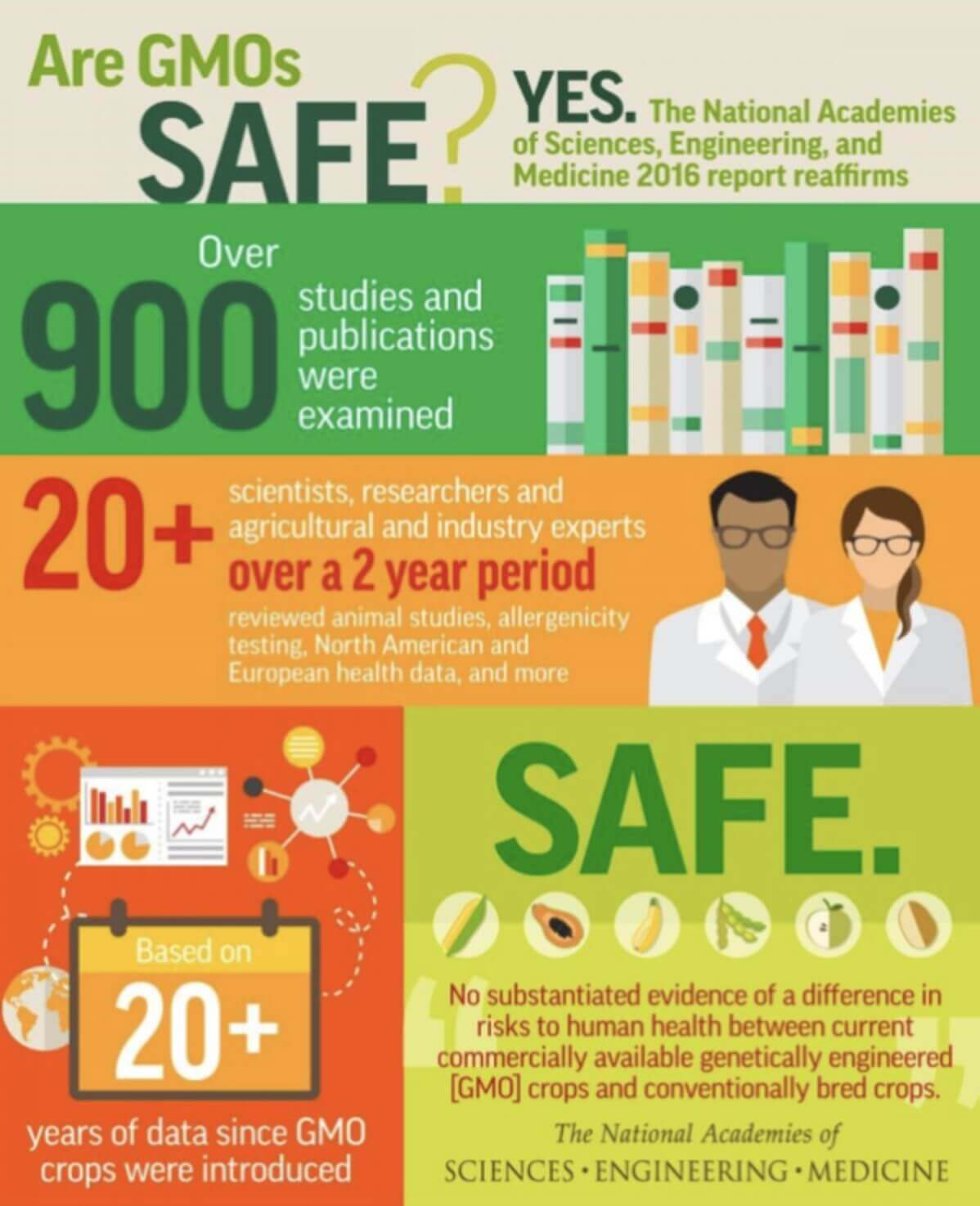
Despite ample evidence that GMO crops do not threaten human health, a large portion of the general public remains skeptical of agricultural biotechnology. According to a June 2018 poll, just over 50 percent of US. consumers say they would avoid foods that were labeled as “bioengineered.” That contrasts with scientists who see bioengineered crops as safe and beneficial. A 2015 Pew poll found that 88% of American Association for the Advancement of Science (AAAS) scientists believe the technology is perfectly safe.


When it comes to medical advancements, however, Americans aren’t as apprehensive. In the same 2015 study, which also considered American opinions on biomedicine,The Pew Research survey asked the general public whether or not they felt the use of bioengineering to create artificial organs was an “appropriate use of medical advances” or was “taking such advances too far.” Fully 74% of adults say that bioengineering of organs is appropriate .

Consumers are clearly split about how they think about genetic engineering. GMOs (transgenics), which involves moving genes from one animal or plant into another, seems artificial to many people, a violation of nature’s order, especially when it comes to something as personal and visceral as food. It’s not clear how the public will respond to the introduction of CRISPR gene-edited crops, which are expected to hit the market in the coming years, but anti-GMO activists are beginning to sound the alarm about the alleged dangers of gene editing as well.

Yet the use of transgenics in biomedicine creates very little controversy, even though the process to develop a medical product is almost identical to the one used to create a GMO seed. Both are the result of very long and careful screening processes to find the right molecules and proteins, and the genes that code for them. In both cases, various organisms are engineered for use as factories to produce the engineered product. Bacteria are the preferred option, as they are the easiest to grow and scale-up for production. But depending on the complexity of the drug’s molecular structure, other organisms such as yeasts and mammalian cells can also be used to express the final product.

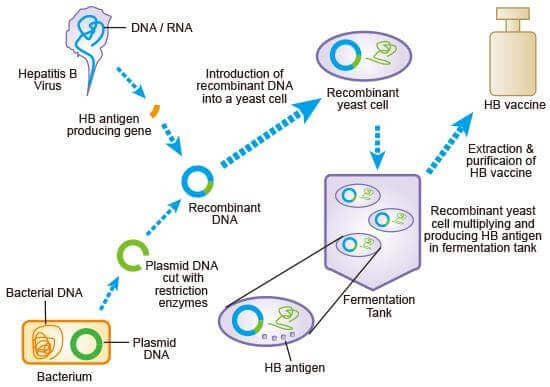
As one example, scientists use biotechnology to analyze new diseases and manufacture vaccines to protect against them. Harvard University chemist Jeff Bessen:


Many vaccines and top-grossing pharmaceuticals contain proteins as the main ingredient. Proteins are too costly and delicate to manufacture from scratch. But living cells must make proteins to survive, and they can be coaxed to produce medical proteins in bulk, requiring little more than the DNA instructions and sugary broth as fuel. Since these genetic blueprints must be inserted into the cells, many vaccines and drugs are technically the product of GMOsThis graphic depicts how many vaccines are made using genetic engineering. Image Credit: GenScript

While the techniques used to modify the organisms in making drugs and creating new crops are similar, the intent couldn’t be more different. Pharmaceutical companies look to manufacture drugs intended to have deliberate effects on the biochemistry of their targets, to treat or cure a disease. Agricultural companies add traits to plants that will help farmers without harming consumers or the environment. The next step is to take the candidate genes and insert them into the appropriate host crop. Then begins the painstaking operation of selecting the organism or plant that expresses the desired trait.

This leads to the last commonality between biotech crops and drugs: both go through a multi-year approval process. The process for drug products ensures that it does what it is designed to do, with minimal side effects. Because these compounds are designed to have profound biological impacts, they have a more in-depth approval process. They must not only be shown to be safe, but effective for the condition they are targeted to treat.

The approval process for agriculture is far more limited in principle, supposedly only concerned with safety and substantive equivalence. The process confirms that the crop is as safe to eat or use as its non-GMO counterpart, and that it does not pose a risk to the environment. Currently only a few genetic changes are made to a crop, which ultimately result in the expression of well understood proteins. That makes checking for known allergens and digestibility a relatively straightforward process. These safeguards are doing their job, as the scientific consensus is quite clear: the currently approved GMO crops pose no greater health or environmental concerns than their non-GMO counterparts. But the approval process has been so politicized that it takes on average 13 years and $130 million to get a crop approved; the only bioengineered animal to be approved, AquaBounty’s sustainable salmon, took 17 years, and still is not on the market because of a political fight led by Alaska Senator Lisa Murkowski who fears the engineered Atlantic salmon will threaten the wild Pacific salmon.


Nonetheless, the public perceives biomedicine as much more palatable than crop biotechnology. The reasons are twofold. Most importantly, medical innovations have immediate, palpable impacts on public health. For example, diabetes, which was once a “death sentence” according to former FDA scientist Henry Miller, is now manageable for millions of diabetics thanks in part to inexpensive insulin mass produced with genetically-engineered bacteria. FDA-approved gene therapies are now available to mute the effects of leukemia and lymphoma, diseases that kill just over 40,000 people a year. Both treatments involve genetically engineering a patient’s immune cells to attack the diseases.

Research suggests that consumers are more willing to accept genetic engineering when they experience direct benefits. A 2016 study published in PLOS One found that 68 percent of consumers were willing to accept genetic engineering when used to improve human health. Consumer acceptance dropped to 49 percent when genetic engineering was applied to agriculture.

With the notable exceptions of vitamin-enhanced Golden Rice (still not in distribution) and the disease-resistant Hawaiian papaya, both of which were developed largely independently of multinational corporations, the agricultural applications of biotechnology have been predominantly designed to address the practical concerns of farming, such as controlling destructive insects and weeds. Herbicide-resistant and insect-resistant crops have given farmers more choices and reduced agriculture’s environmental footprint.

Consumers benefit, but indirectly in the form of significantly lower food prices for many products, according to the USDA. But it’s farmers who actually benefit from improved crop yields and lower costs. Beginning in the late 1990s, many organic food proponents and environmental groups have capitalized on consumer ignorance about genetic engineering, launching well-funded, anti-GMO campaigns. Aided by widespread media coverage, activists raised “unnecessary anxiety among consumers,” says University of California, Riverside molecular geneticist Alan McHughen, which gave rise to the ongoing controversy over crop biotechnology.

The Takeaway


Anti-biotech activists first tried to stifle genetic engineering in the late 1970s and early 1980s when the technology was used to develop the first biotech pharmaceuticals. They failed, experts say, because the medical benefits of the technology were tangible to the public. Research confirms that communicating consumer-focused benefits of current and new generation gene edited crops, including lower prices and increased nutrition, might quell unfounded fears of crop biotechnology, as it did with biomedicine. The authors of a 2018 study summarized what might be done:


[O]ur research points to the need for the GM industry to change how it’s promoting the products, and to begin producing foods that directly benefit consumers. The agricultural biotechnology industry needs to place consumer interests at the center of their focus, not only at the time of selling their products, but also during the research and development processes.

University of Saskatchewan agricultural economist Stuart Smyth speculates that the anti-GMO movement, by so fervently attacking GMOs, has galvanized scientists and science journalists to engage the public in conversation about crop biotechnology, which could also improve consumer acceptance.

As the public continues to learn about and experience the benefits of genetic engineering, claims about GMO “frankenfoods” could begin to fall on deaf ears. If that happens, the public may gradually embrace GMO crops and next-generation gene edited foods as they do bioengineered pharmaceuticals.

GLP Articles
Corporate support for anti-GMO advocacy groups is growing. Do companies know what their money is funding? Jack Dini, August 23, 2018
Why is there so much ‘fear and loathing’ of anything biotech? Dan Murphy, July 25, 2018
Viewpoint: CRISPR gene editing might quell ‘frankenfood’ fears and win consumer support for biotech, Abby Dilk, July 19, 2018
How to change consumer perception of crop biotechnology and GMO foods, David Di Zhang, Grant Alexander Wilson, July 13, 2018
Viewpoint: How anti-glyphosate activists deny science when debating the herbicide’s safety, Cameron English, June 4, 2018

Additional Resources
GMOs lead the fight against Zika, Ebola and the next unknown pandemic, Jeff Bessen, The Conversation, July 27, 2016
When is genetic modification socially acceptable? When used to advance human health through avenues other than food, Widmar et al., PLOS One, June 7, 2017
Public Acceptance of Plant Biotechnology and GM Crops, Jan M. Lucht, Viruses, July 30, 2015
GM crops and foods: What do consumers want to know? Alan Mchughen, GM Crops and Food, September 18, 2013
Who’s afraid of the big bad GMO? Alan McHughen, C2C Journal, January 21, 2013
Public perceptions of biotechnology, Alan Mchughen, Journal of Biotechnology, September 2007
https://geneticliteracyproject.org/gmo-faq/why-is-there-controversy-over-gmo-foods-but-not-gmo-drugs/

Lawsuit filed against Proctor & Gamble alleging environmental deception of Charmin packaging

 A class-action lawsuit was filed against Proctor & Gamble (P&G) in the U.S. District Court for the Western District of Washington on Thursday, alleging the company used deceptive marketing practices regarding the environmental impact of Charmin toilet paper, according to court documents.

The suit claims P&G’s “Keep Forests as Forests” campaign and its “Protect-Grow-Restore” messaging are examples of “greenwashing” by misrepresenting the source and sustainability of their product.

The lawsuit alleges that P&G sources Charmin toilet paper from the Canadian boreal forest, one of the world’s most significant biological ecosystems, and engages in destructive clear-cutting practices while marketing the product as environmentally responsible.

According to the filing, P&G advertises the use of pulp certified by the Forest Stewardship Council (FSC) while using a small fraction of their pulp from FSC-certified forests.

They also display the logo for the “Rainforest Alliance Certified” despite the fact the Rainforest Alliance ceased its certification program some years ago.

The suit also accuses P&G of misrepresenting its tree-planting claims, stating the company “replants single-species conifers, evenly spaced, and then cover these trees with chemical herbicides to intentionally eliminate all growth other than just a handful of tree species most valuable for logging” instead of replanting a biodiverse forest.

The claim further states that using “frankenforests” reduces overall forest health and carbon storage capabilities.

The lawsuit seeks damages and injunctive relief, alleging P&G’s practices violated state consumer protection laws and further claims that these misrepresentations violate the Federal Trade Commission’s “Green Guides.”

The plaintiffs also contend that “P&G’s competitors demonstrate that more sustainable practices are possible.”

https://www.yahoo.com/news/lawsuit-filed-against-proctor-gamble-024727464.html

FTC Sues PepsiCo For Providing 'Unfair' Pricing Advantages to Big Box Retailer

 The Federal Trade Commission has filed suit against PepsiCo for allegedly offering price advantages to a big box retailer while raising prices for competitors and customers.

The snacks and beverage maker, which is the second-largest food company in the world, engaged in illegal pricing practices that for years provided unfair advantages that negatively affected businesses from large grocery chains to local convenience stores.

"Pepsi's unfair practices have led to inflated prices for American families, while denying competing retailers the ability to fairly compete," the FTC said on Friday.

PepsiCo said that it strongly dispute's the FTC allegations and will present its case in court. The lawsuit was "wrong on the facts and the law," the company said in a statement.

"PepsiCo's practices are in line with industry norms and we do not favor certain customers by offering discounts or promotional support to some customers and not others," PepsiCo said.

The big box retailer, which wasn't named in the complaint, was provided with promotional payments and allowances by PepsiCo, the FTC said. They were also offered advertising and promotional tools that weren't provided to other retail competitors.

"The FTC's action will help ensure all grocers and other businesses-no matter the size-can get a fair shake and compete on the merits of their skill, efficiency, and talent," FTC Chair Lina Khan said.

https://www.morningstar.com/news/dow-jones/202501175303/ftc-sues-pepsico-for-providing-unfair-pricing-advantages-to-big-box-retailer

What Wegovy's inclusion in Medicare price negotiation means for patients, company

 The U.S. government on Friday announced a list of 15 prescription medicines targeted for Medicare price negotiations for 2027, which includes Novo Nordisk's blockbuster weight-loss drug Wegovy.Here's what Wall Street analysts say about the inclusion:

WHAT IT MEANS FOR PATIENTSThe potential for more aggressive price cuts would enable wider access to GLP-1 drugs - the same class of drugs as Ozempic and Wegovy - for people over the age of 65. Medicare prescription drug plans administered by private insurers, known as Part D, currently cannot cover drugs that are approved solely for obesity. Expanding coverage of anti-obesity drugs could enable more Americans to afford the new weight-loss medications. However, inclusion does not solve access or out-of-pocket costs issues for commercial and uninsured patients, BMO Capital Markets analysts said.

WHAT IT MEANS FOR SALES

Given that diabetes drugs, including Ozempic, are already heavily discounted and the negotiated cuts are based on the gross price rather than the discounted price, the impact of a negotiated price is expected to be small.

TD Cowen analysts estimate that about 45% of U.S. sales for Ozempic and Rybelsus each goes through Medicare Part D.

Wegovy, on the other hand, is eligible for coverage under Medicare only if the eligible overweight or obese patients have pre-existing heart conditions.This group constitutes around 3.6 million overweight or obese patients with heart conditions insured under the U.S. Medicare program, according to a study published last year by Kaiser Family Foundation. However, this was still a relatively small portion of obesity population in the U.S., according to TD Cowen analysts.

WHAT IT MEANS FOR PRICE

Ozempic has a list price of around $935 a month while Wegovy has a list price of around $1,350 a month, regardless of dosage, not taking any coupons and rebates into account.

The negotiated price cuts are based on the gross price and do not reflect after-market rebates or discounts the drugmakers had already been giving.

Novo has said it retains around 60% of Ozempic's list price.

TD Cowen expects the negotiations to result in about 30% discount relative to the current average net price in 2027, adding that there was a wide range of possibilities on what the negotiations would be like with the incoming Trump administration.

https://www.marketscreener.com/quote/stock/NOVO-NORDISK-A-S-1412980/news/What-Wegovy-s-inclusion-in-Medicare-price-negotiation-means-for-patients-company-48802759/

'Biden says Equal Rights Amendment should be considered ratified but not taking action'

 President Joe Biden on Friday said the Equal Right Amendment should be considered ratified, but is stopping short of taking any action on the matter in his final days in office.

"I have supported the Equal Rights Amendment for more than 50 years, and I have long been clear that no one should be discriminated against based on their sex," Biden said. "We, as a nation, must affirm and protect women's full equality once and for all."

Biden said he agreed with the American Bar Association, which has said the amendment cleared the necessary hurdles to be added to the Constitution after Virginia in 2020 became the 38th state to ratify it even though that was well past the deadline for ratification.

"It is long past time to recognize the will of the American people," Biden said. "In keeping with my oath and duty to Constitution and country, I affirm what I believe and what three-fourths of the states have ratified: the 28th Amendment is the law of the land, guaranteeing all Americans equal rights and protections under the law regardless of their sex."

Vice President Kamala Harris echoed Biden's statement, saying the ERA "is the law of the land because the American people have spoken in states across our nation."

"It has always been clear that when we lift up women, we lift up children, families, communities, and all of society," added Harris, the nation's first female vice president. "Now, Americans must continue to fight for a more equal and just nation where everyone has the opportunity to realize the promise of America."

President Joe Biden speaks at a Department of Defense Commander in Chief farewell ceremony, at Joint Base Myers-Henderson Hall in Fort Myer, Va., Jan. 16, 2025.
Evelyn Hockstein/Reuters

Political debate around the ERA, which was first introduced in 1923, ramped up after the Supreme Court overruled Roe v. Wade in 2022 and again after the 2024 election.

In December, more than than 120 congressional Democrats called on Biden to officially ratify the amendment before ceding power to President-elect Donald Trump.

“Solidifying your legacy on equal rights with a final action on the ERA would be a defining moment for the historic Biden-Harris administration and your presidency,” they said in their letter to Biden.

PHOTO: Representative Cori Bush along with other lawmakers and advocates hold a press conference to urge President Joe Biden to certify the Equal Rights Amendment (ERA) before his term ends in January in Washington DC, Dec. 10, 2024.
Representative Cori Bush along with other lawmakers and advocates hold a press conference outside the Capitol Hill building to urge President Joe Biden to certify the Equal Rights Amendment (ERA) before his term ends in January in Washington DC, Dec. 10, 2024.
Celal Gunes/Anadolu via Getty Images

The move prompted a rare statement from the leaders of the National Archives, who contended the amendment couldn't be certified without action from Congress or the judicial system because states did not meet the deadline established by Congress for ratification.

Lawmakers had set a seven-year deadline in 1972 for state ratification, though later extended it by an additional three years. Efforts by Democrats in recent years to remove the deadline have failed.

"Court decisions at both the District and Circuit levels have affirmed that the ratification deadlines established by Congress for the ERA are valid," the archivists wrote. "Therefore, the Archivist of the United States cannot legally publish the Equal Rights Amendment."

Though Biden renewed his call for the ERA to become law of the land, he is not taking any action on the matter before he departs the White House on Monday, according to a senior administration official.

When pressed by reporters whether any steps would be taken in addition to Biden's messaging, the official "he is using his power of the presidency to make it clear that he believes and he agrees with leading constitutional scholars," but said he wasn't taking any specific action.

When asked why the announcement came now, the official said that Biden has supported the amendment for decades but said that he felt strongly about making this push before he leaves office.

If Biden had taken any action to force ratification, it would have likely resulted in a legal fight, experts said.

A group of activists gather at the National Archives, to demand action on the Equal Rights Amendment, calling for its full ratification and recognition in Washington, D.C., Jan. 10, 2025.
Celal Gunes/Anadolu via Getty Images

"At that point, there would be further litigation," Wilfred Codrington III, a constitutional law professor at Cardozo Law, previously told ABC News. "But really that would just become a question or a conflict between the president and Congress."

"If Congress is not doing something to suggest that the amendment is ratified, then that's kind of where the ball is going to end," Codrington said. "Congress is ultimately the gatekeeper when it comes to amendments."

The ERA is unlikely to be a priority in the incoming administration or new Congress, where Republicans control the House and Senate. Republicans have argued in the past that the amendment is unnecessary and duplicative.

"That doesn't seem to be where the Republicans are going," Codrington said. "But it is notable that states are also another avenue that advocates can look to."

Codrington pointed to New York voters approving Proposition 1, a measure akin to the Equal Rights Amendment that also includes safeguards to abortion access, during the 2024 election.

https://abcnews.go.com/Politics/biden-renews-calls-equal-rights-amendment-ratified-taking/story

Texas Judge Says States Can Revive Challenge to Abortion Pill Access Nationwide

 The Texas judge who previously halted approval of the nation's most common method of abortion ruled Thursday that three states can move ahead with another attempt to roll back federal rules and make it harder for people across the U.S. to access the abortion drug mifepristone

opens in a new tab or window (Mifeprex).

Idaho, Kansas, and Missouri requested late last yearopens in a new tab or window to pursue the case in federal court in Amarillo, Texas, after the U.S. Supreme Court issued a narrow ruling finding that abortion opponents who first filed the case lacked the legal right to sue.

The only federal judge based in Amarillo is Matthew Kacsmaryk, a nominee of President-elect Donald Trump during his first term, who in recent years ruled against the Biden administration on several issues, including immigration and LGBTQ protections.

The states want the FDA to prohibit telehealth prescriptions for mifepristone and require that it be used only in the first 7 weeks of pregnancy instead of the current limit of 10 weeks. They also want to require three in-person doctor office visits instead of none to get the drug.

That's because, the states argued, efforts to provide access to the pills "undermine state abortion laws and frustrate state law enforcement," according to court documents.

Meanwhile, Kacsmaryk said they shouldn't be automatically discounted from suing in Texas just because they're outside the state.

The American Civil Liberties Union (ACLU) said Thursday that the case should have been settled when the U.S. Supreme Court unanimously preserved access to mifepristone last year, where the justices issued a narrow ruling finding that abortion opponents who first filed the case lacked the legal right to sue.

Kacsmaryk's decision "has left the door open for extremist politicians to continue attacking medication abortion in his courtroom," the ACLU said.

The ruling comes days before Trump begins his second term as president, so his administration will likely be representing the FDA in the case. Trump has repeatedly said abortion is an issue for the states, not the federal government, though he's also stressed on the campaign trail that he appointed justices to the Supreme Court who were in the majority when striking down the national right to abortion in 2022.

In the years since, abortion opponents have increasingly targeted abortion pills, largely due to most U.S. abortions being carried out using drugs rather than through surgical procedures. So far, at least four states -- Indiana, Missouri, New Hampshire, and Tennessee -- have seen Republicans introduce bills aimed at banning pills. None take the same approach as Louisiana, which last year classified the drugs as controlled dangerous substancesopens in a new tab or window.

Previously, Kacsmaryk sided with a group of anti-abortion doctors and organizations that wanted the FDA to be forced to rescind entirely its approval of mifepristone in 2000.

Yet the states are pursuing a narrower challenge. Rather than target the approval entirely, they sought to undo a series of FDA updates that have eased access.

But while the states' leaders are pushing to severely limit access to the drugs, voters in Missouri sent a different message in November when they approved a ballot measure to undo one of the nation's strictest bans. In Idaho, abortion is banned at all stages of pregnancy. In Kansas, abortion is generally legal up until the 22nd week of pregnancy.

Across the U.S., 13 states under Republican legislative control bar abortion at all stages of pregnancy, with some exceptions, and four more ban it after the first 6 weeks -- before women often know they're pregnant.

Some Democratic-controlled states have adopted laws seeking to shield from investigations and prosecutions the doctors who prescribe the pills via telehealth appointments and mail them to patients in states with bans. Those prescriptions are a major reason a studyopens in a new tab or window found that residents of states with bans are getting abortions in about the same numbers as they were before the bans were in place.

Mifepristone is usually used in combination with a second drug for medication abortion, which has accounted for more than three-fifths of all abortions in the U.S. since the Supreme Court's ruling overturning Roe v. Wadeopens in a new tab or window.

The drugs are different than Plan B and other emergency contraceptives that are usually taken within 3 days after possible conception, weeks before women know they're pregnant. Studies have foundopens in a new tab or window they're generally safe and result in completed abortions more than 97% of the time, which is less effective than procedural abortions.

https://www.medpagetoday.com/obgyn/abortion/113826