Search This Blog

Sunday, January 19, 2025

LA fire victims fear rebuilding ordeal. Some will not do it

 Karen Myles, 66, walked out of her Altadena, California home, in the middle of the night in her pajamas, confronted by a forest of red and orange flaming trees and live wires from tumbled electric poles sparking in the street. Her son, who had woken her from a deep sleep, navigated their path to safety.

The fire destroyed her neighborhood this month, and she is not going back.

“I’m not going to rebuild. Oh no. Hell no. That fire took everything out of me. I’m going to fly away somewhere, somewhere nice. Maybe Colorado,” the retiree said outside a disaster recovery center. She lived in the house for more than 40 years and will miss friends, she said, but “the fire left me no choice.”

Across Los Angeles on the coast, Pacific Palisades residents Sonia and James Cummings lost a house they bought in 1987 and renovated a decade ago.
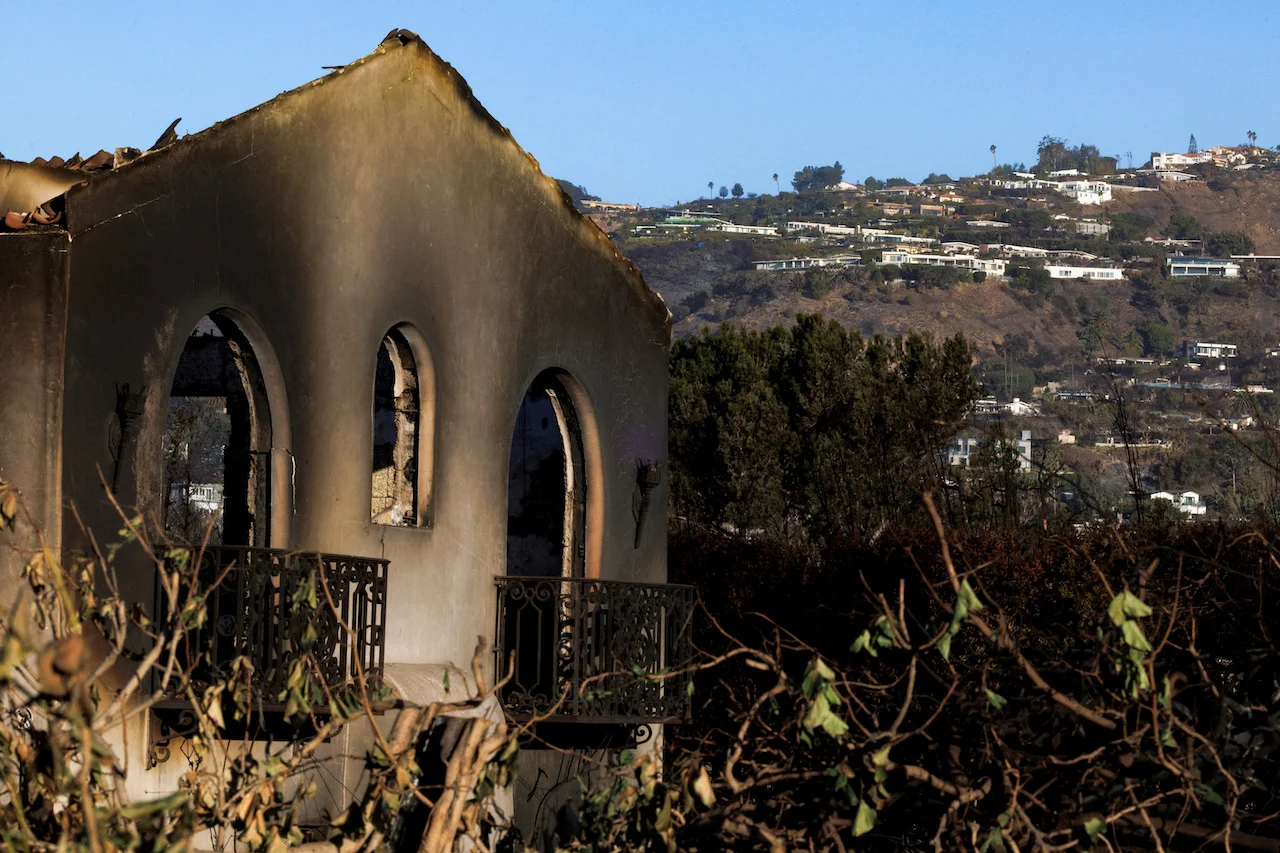
CALIFORNIA-WILDFIRES-REBUILD/REUTERS/Mike Blake/File Photo

FILE PHOTO: Walls remain from a building which burned following the Palisades Fire in the Pacific Palisades neighborhood in Los Angeles, California, U.S. January 15, 2025. REUTERS/Mike Blake/File Photo

“It was with the intention of staying there until we were no longer above ground,” said James Cummings, 77.

Now they see a wasteland.

“I worked two years nonstop building our ideal home,” Sonia added. “We were at the point where everything was perfect. I don’t want to do that again.”

Victims of one of the most destructive fires in California history are struggling to decide whether to rebuild, facing a bewildering array of challenges, including soaring construction costs, years of effort, and the question of whether the tight-knit communities, especially middle-class Altadena, will rise again.

10,000 burned structures

One issue for many is the toxic ash and other pollutants that blanket destroyed neighborhoods, stretching block after block. The fires have killed about two dozen people and destroyed more than 10,000 structures.

"Think of ash like fine, dangerous dust that can be inhaled deep into the lungs and can cause major problems everywhere it lands. It's not just dirt," an advisory from the L.A. County Public Health Department warned.
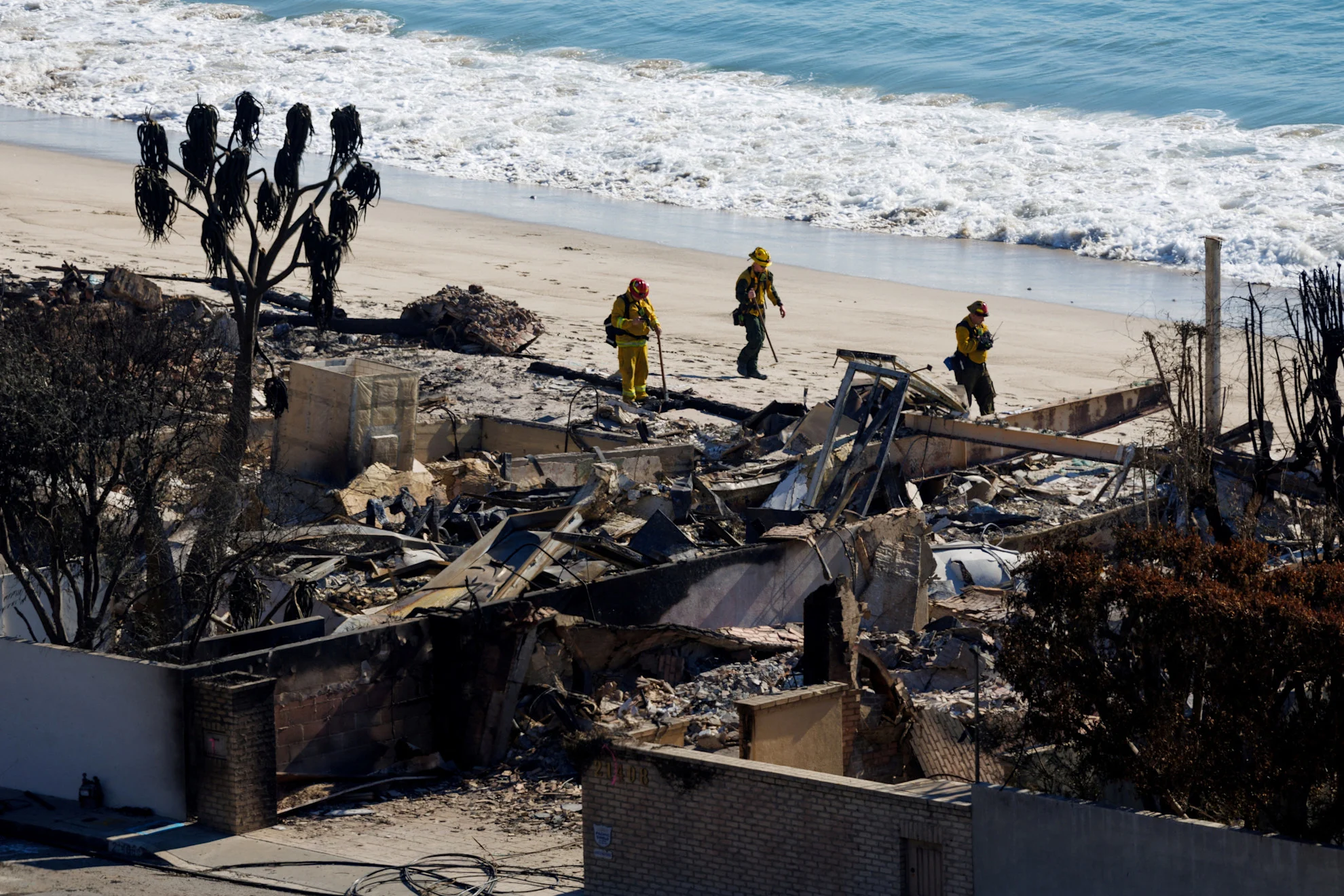
REUTERS - CALIFORNIA-WILDFIRES - JAN17

Firefighters walk next to the remains of beachfront houses that burnt down in the Palisades Fire, in Malibu, California, U.S., January 16, 2025. REUTERS/Mike Blake

Mark Pestrella, director of Los Angeles County Public Works, said he is setting up a program free to homeowners to clear out the hazardous waste.

"We will dispose of material properly and we will deliver a lot to you ready to build (on)," he told residents recently, adding that the county would also allow private contractors. State and local officials are promising to cut red tape to speed reconstruction.

Many considering rebuilding do not expect it to be that easy, or fast.

Altadena resident Shawna Dawson-Beer, 50, renovated her venerable house into what she called a “forever home.” She did not recognize her street when she returned after the fire.

“We want to come home, and our homes are gone,” she said. “God only knows when the cleanup is going to be done. God only knows if the cleanup is going to be done right. And then you are going to be around construction and then, lucky you, during this whole time you have no community. It’s gone. We’ve all been uprooted and scattered to the wind.”

Her husband, Marcus Beer, 54, notes they had good insurance on the destroyed house.

“If we go back, are we uninsurable? Because we weren’t in a ‘burn area’, but oh boy, howdy, are we now,” he said. Realizing they are in a burn zone also makes the idea of rebuilding more stressful.
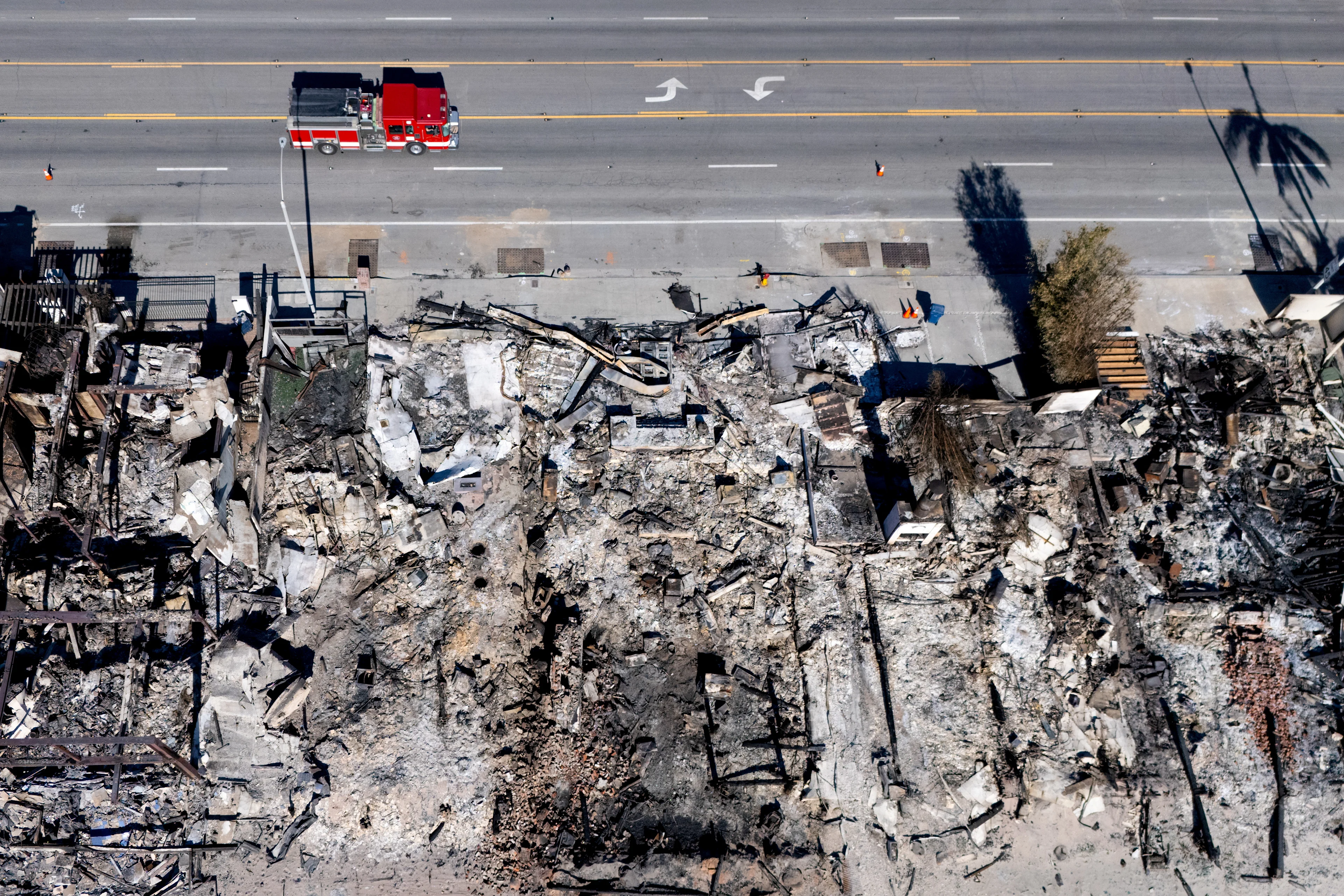
REUTERS - CALIFORNIA WILDFIRES - JAN17

A drone view shows a fire truck next to a site where houses were burnt down by the Palisades Fire, in Malibu, California, U.S., January 16, 2025. REUTERS/Mike Blake

Jewelry designer Charlotte Dewaele, 48, is lucky in one way: her house survived because her husband stayed behind to defend it as fire approached. It is a rental, but it had their lives in it, she said.

Now what, she wonders. Will the landlord keep the house? Does she want to move back in, surrounded by devastation? Will years of construction keep asbestos, lead and other toxic chemicals in the air?

“You are in the middle of this wasteland,” she said. “Am I going to make my kid wear a mask outside for the next four years?”

Many homeowners fear that they will not collect enough insurance money to cover what they expect to be skyrocketing building costs. Pacific Palisades real estate broker Adam Jaret, 49, suspects that could be an opening for big developers and investors to change the place in a building process that he believes will take a decade.

Still, abandoning a community is hard. Dawson-Beer and her husband were on the verge of signing a one-year lease on a house about 100 miles (160 km) away, to give them time to think, but she could not do it.

"The idea of leaving everything I know gave me a panic attack," she said.

https://www.theweathernetwork.com/en/news/weather/severe/los-angeles-wildfire-victims-fear-rebuilding-ordeal-some-will-not-do-it-palisades-eaton-california

SoCal faces renewed fire threat as Santa Ana winds increase this week

 Another moderate to strong Santa Ana wind event is expected to develop across Southern California during the first half of the workweek, heightening wildfire dangers in a region still coping with the last significant firestorm from nearly two weeks ago.

Many communities from Santa Barbara through Los Angeles County and into San Diego are under a Fire Weather Warning beginning at 10 a.m.

Monday morning until at least 10 p.m. Tuesday night, according to the National Weather Service office in Oxnard, California.

The NWS said sustained winds are expected to reach 30 mph, with gusts up to 60 mph downwind of the mountains.

Additionally, relative humidity values are expected to plummet to less than 10%, which will allow vegetation to quickly burn if flames break out.

“If fire ignition occurs, conditions are favorable for extreme fire behavior and rapid fire growth, which would threaten life and property,” meteorologists warned.

The NWS warns residents in the Los Angeles/Ventura County Santa Ana wind corridor to stay alert, monitor the forecast and listen to orders from emergency officials in the coming days.

A series of wet winters, followed by a sudden dry spell since last spring, has set the region up for a period of active fire weather that is usually seen during the summer and fall.

A California firefighter monitoring the spread of the Auto Fire in Oxnard on Jan. 13, 2025.Photo by ETIENNE LAURENT/AFP via Getty Images
Fire weather outlook through Tuesday, Jan. 21, 2025.

According to the latest US Drought Monitor, only 36% of the Golden State is officially in a drought, but the dry conditions are affecting all of Southern California.

Since the start of the year, Los Angeles has seen a rainfall deficit of nearly 2 inches of precipitation, with San Diego closer to a 1-inch deficit.

The 2025 rainfall deficits do not tell the whole story, as both cities are closer to 6 inches and 4 inches below average, respectively, since July.

Firefighters spraying the rubble of a burned down house in Altadena with water on Jan. 15, 2025.Photo by FREDERIC J. BROWN/AFP via Getty Images
Here’s what to expect from next week’s fire threat in California.

Authorities warn that the lack of precipitation has caused the underbrush to significantly dry out, leading to increased fire risks.

Residents living near wildland areas are urged to take precautions, such as forming a defensible space around their homes and preparing an evacuation plan, should additional fires ignite in the coming days.

Similar weather conditions earlier in the month helped spread a series of wildfires in Los Angeles County, which destroyed more than 40,000 acres and led to the deaths of more than two dozen victims.

Wind gusts upwards of 100 mph complicated firefighting efforts during the initial start of the blazes, which allowed the wildfires to quickly spread out of control north of Los Angeles.

Burned down oceanfront homes in Malibu seen on Jan. 17, 2025.Photo by ROBYN BECK/AFP via Getty Images

Local authorities reported more than 12,000 structures were destroyed in the Palisades and Eaton fires, leading to the event being labeled as one of the costliest disasters in US history.

Investigators have not released a cause for the major blazes, but due to the absence of lightning in the area, agencies such as the ATF have focused on the role humans may have played in starting the infernos.

According to a congressional report, 89% of the country’s wildfires between 2018 and 2022 were human-caused, with debris burns, utility equipment and acts of arson being common ignition sources.

https://nypost.com/2025/01/19/us-news/southern-calif-faces-renewed-fire-threat-as-santa-ana-winds-increase-this-week/

Transplant treatment for diabetes shows promising results

 A completely new way of treating type 1 diabetes is being tested at Uppsala University Hospital. Patients are being offered transplants of genetically modified insulin-producing cells and the initial results are promising. We put a few questions to Per-Ola Carlsson, Professor of Medical Cell Biology, who is leading the study.

The study started in December and has already attracted a lot of attention. What makes it so special?

To find a  for diabetes, two components are needed. Firstly, you have to have a sufficient quantity of  to be able to treat many individuals with type 1 diabetes. This problem has actually been solved in the last ten years by means of a type of stem cell treatment with insulin-producing cells that is currently undergoing clinical trials.

The remaining problem has been that as the cells come from another individual, the patients need lifelong immunosuppressive treatment, which can lead to serious side-effects. What we have done is to see whether we can find a possibility and a strategy for transplanting cells between individuals without .

You have developed genetically modified insulin-producing cells that are hypoimmune, so that immunosuppressive treatment is not required. For the first time, they have been transplanted into a human. How has it gone?

We want to see if we can transplant between individuals and get the cells to survive. Though this study is primarily a safety trial, of course we are taking the opportunity to see how the cells are doing.

At the end of the year, we had just over four weeks of observations and saw that the same quantity of cells remained as when we inserted them. They do not disappear, they have stayed there with their own stable insulin production over the course of these weeks. What we would otherwise have expected in a transplant between individuals is that we would have had a rejection process and would already have lost this cell function in the first few weeks.

What will be the next stage of your research?

We will now continue to monitor this over time. This type of study has to carry on for 15 years to show that the treatment is safe. It may not take that long to be able to say that the cells work and that it's reasonably safe, so we won't wait all that time before we go ahead with new studies.

The next step is to apply this genetic modification to stem cells. That would make it possible to produce huge quantities of insulin-producing cells with this . We would then have a large number of cells that could be used in  and could also be made into a pharmaceutical product.

Transplantation treatment for diabetes

  • For people with severe type 1 , transplantation of islets of Langerhans containing insulin-producing cells has been an established treatment for over 20 years.
  • These cells come from the pancreas of a deceased donor and are transplanted into a patient with the aim of achieving normal blood sugar control and insulin independence.
  • As with all other organ and , suppression of the recipients immune system has so far been required to prevent immune rejection of the transplanted cells.
  • The insulin-producing cells used in the new study are genetically modified to avoid detection by the immune system, which protects them from both rejection and autoimmune attack.

New option for tough cases in blood pressure control

 Nothing doctors prescribed controlled Michael Garrity's dangerously high blood pressure—until they zapped away some nerves on his kidneys.

If that sounds weird, well, kidneys help regulate blood pressure in part through signals from certain nerves. The new treatment disrupts overactive renal nerves.

"My blood pressure would spike and I'd run out of breath and feel tired, and that doesn't happen anymore," said Garrity, 62, of Needham, Massachusetts. He still takes medicine but at lower doses, his blood pressure normal for the first time in years. "I'm thrilled."

About half of U.S. adults have , a major risk for heart attacks, strokes, kidney failure, even dementia. Many people don't even realize they have hypertension until it's done serious damage.

"Know your blood pressure, know the numbers," stressed Dr. Randy Zusman of Massachusetts General Hospital, who specializes in the hardest-to-treat cases and advises people who think they're fine to at least get a yearly check.

And only a fraction of patients have their hypertension well-controlled, meaning there's a need for novel strategies. The Food and Drug Administration approved that "renal denervation" option about a year ago, based on studies showing a modest benefit in patients whose blood pressure remains high despite multiple medicines.

Now, after the American Heart Association recently deemed it promising, some hospitals including Mass General Brigham are cautiously offering it as they work out who are good candidates—and whether their insurance will cover a minimally invasive procedure costing thousands of dollars.

What is high blood pressure?

Two numbers describe blood pressure. The top, "systolic" pressure, is the force blood puts on the walls of arteries as its pumped out of the heart. The bottom "diastolic" number measures that same pressure but between heartbeats.

Normal is less than 120 over 80. Blood pressure naturally fluctuates throughout the day, higher when you're physically active or stressed. But when it stays high—consistently 130 over 80 or higher, according to the most recent guidelines—it stiffens arteries and makes the heart work harder.

How to measure blood pressure

It doesn't take a doctor's visit. Pharmacies and sometimes even libraries offer screening, and people can use at-home monitors.

To avoid falsely high readings, the American Medical Association has tips: Sit quietly with feet on the floor, legs not crossed. Place the cuff on a bare arm, not over clothing. Don't dangle the arm—rest it on a table.

Drugs aren't the only way to treat high blood pressure

Lifestyle changes are the first step, especially for otherwise healthy people. Guidelines urge losing weight, exercise, eating more fruits and vegetables, limiting salt and alcohol, and taking steps to handle stress.

Medicine is a must once hypertension reaches 140 over 90. The average patient requires two or three drugs, sometimes more, along with healthier living, Zusman said.

But the hypertension Garrity has struggled with since his late 20s is treatment-resistant. Despite taking four to six drugs plus a  and exercise, his blood pressure regularly reached 150 over 100 or worse.

What is renal denervation?

Doctors thread a small catheter, or tube, through blood vessels to reach the kidneys, and then beam in ultrasound or radiofrequency energy. Those pulses pass through the renal arteries to selectively target surrounding nerves, said Dr. Joseph Garasic, a Mass General interventional cardiologist who performed Garrity's procedure. It takes about an hour.

Although already used in other countries, a key U.S. trial of  failed about a decade ago, prompting changes before researchers tried again. In November 2023, the FDA approved two catheter systems, from Recor Medical and Medtronic.

It's not a cure—and some patients get no benefit. But Garasic said multiple studies show on average an 8 to 10-point drop in blood pressure, a modest but important improvement. Some like Garrity see a bigger drop, enough to gradually scale back medications.

The FDA deemed the procedure safe for carefully chosen patients—it wasn't tested in those with kidney disease or narrowed arteries, for example. And studies have lasted only a few years, not long enough to tell if the nerves might eventually regenerate.

Guidance from the American Heart Association urges would-be patients and experienced doctors to have "thoughtful and informed discussions" to decide who's a good candidate.

https://medicalxpress.com/news/2025-01-blood-pressure-critical-option-tough.html