
Search This Blog

Friday, March 7, 2025

Corporate Health Wears an Inflatable Sumo Suit: Fat-Mongering and “World Obesity Day”

 by Alan Cassels

To fully grasp the spectacle of modern disease mongering, let’s riff on the latest and pudgiest kid on the block: fatness. Here’s a handy image to help grasp pharma’s marketing message: visualize a big, obese pro wrestler, but mean and scary looking, because corporate America is trying to sell you the idea that being overweight is mean and scary.

But one caveat: the image in your head can’t be a real wrestler, but a fake one dressed up in a Sumo costume, so the person looks like a children’s cartoon version of someone sick and unhealthy. You might find this marketing ploy confusing, but being oversized is a disease that wins oversized attention from drug manufacturers who’ve found that the gargantuan size of the injectable weight loss drug market is big, malleable, and easily manipulated.

It wins my attention because it is so utterly mockable, where the jokes come unprompted once you realize these weight loss “breakthrough drugs” are just diabetes medicines repurposed to net billions in Big Pharma profits.

Drug makers rarely cure disease, but they show a profound level of professional expertise in selling sickness. Selling you the science that excess fat is definitively lethal and a precursor to heart disease, cancer, diabetes and early death required insightful market analysis, human psychology research, and refining the art of physician schmoozing. Old-fashioned fat-shaming can only sell a limited number of scripts.

Modern fat-mongering deploys a pharma-fuelled fear machine with industry-sponsored guidelines, gullible media, complicit psychologists, as well as promoters, pimps and pushers in all medical specialties including endocrinologists, cardiologists, and even dermatologists (because everyone wants to look "healthier").

Think Top Gun. Yup, everyone’s getting into the cockpit to fly that hypersonic fear machine into the danger zone!

Obedient journalists have always been pharma’s best marketers. In the past, a drug pitch sometimes caused a gag reflex. Now corporate messages wash down like a shot of Jack Daniels before they start typing.

Case in point: Canada’s national newspaper, the Globe and Mail has hopped on the fat-mongering gravy train, hosting a half-day session on the obesity “epidemic.” Of course, the only epidemic these days is legacy media’s gluttony around headlines with the term “epidemic.”

But I digress.

Norvo Nordisk got the Globe and Mail’s AndrĂ© Picard, the guy some consider Canada’s most highly decorated health reporter, to pimp WeGovy. But let’s face it, Novo is rolling in so much excess money, they can buy whomever they like.

One such guy that has already sold his soul to fat-lowering drug makers is Picard’s co-panelist Dr. Arya Sharma. Based on public disclosures, Sharma has reported receiving payments from companies including Novo Nordisk (makers of Ozempic, Wegovy, and Saxenda), Eli Lilly, Boehringer Ingelheim, Currax, Johnson & Johnson, Allurion, Aidhere, Medscape, MDBriefcase, Oviva, and Xenobiosciences. I’m sure he’d say he’s “independent” yet when a “Thought Leader” like Arya Sharma pockets honoraria from a laundry list of pharma companies pushing weight-loss drugs it’s tough to swallow the “independent” claim without giggling.

It's also the kind of pharma relationship Mr. Picard would have criticized in the past.

Speaking of the past, and “independence” I remember 30 years ago when AndrĂ© actually wrote copy that criticized the pharmaceutical industry’s marketing tactics. But now our eminence grise is being paid for an afternoon pretending he’s moderating a “scientific” discussion.

Oh, how the mighty have fallen, not to mention getting plumper on the golden goose. At the bottom of the webpage for the Globe and Mail’s Novo Nordisk marketing event, Novo Nordisk runs a final ad, followed by a Globe and Mail ad that asks readers to “support quality, independent journalism.”

Who is marketing whom?


Drug companies are not just selling weight loss anymore; they’re selling salvation. Novo’s Wegovy is a GLP-1 inhibitor, other brands include Ozempic and Mounjaro. Drug companies along with friendly reporters like Andre Picard promote these drugs for shedding pounds as well as supposed “downstream health benefits” like reducing heart attacks. The science behind these claims might not be solid, but economics drive real profits that cannot be disputed making Novo and Eli Lilly mind boggingly rich.

Novo Nordisk is headquartered in a Copenhagen suburb and its market capitalization of $570 billion currently exceeds the entire Danish GDP.

The Globe and Mail/Novo Nordisk event reports that “in 2022, approximately 30 per cent of adults in Canada were living with obesity.” I have to apologize for the awkward wokeness of the Canadian language. We no longer have hypertensives, diabetics or obese people, we have people “living” with hypertension, diabetes and obesity. The Globe maintains that “access to care is hampered by stigma and a long-held view that obesity is a lifestyle choice versus a chronic illness.” Bingo!

The crappy food that corporations sell causes a chronic disease that other corporations now cure! Medicine can save us while the markets rejoice.

Picard and his corporate friends will discuss “leverage” or how “Canada can leverage its private sector and implement programs and policies to help prevent and treat obesity for a healthier nation.” Since Novo is funding this adventure, the leverage is clear: Novo will leverage the Canadian government to drive patients onto the Novo teat, hoping that WeGovy is their path to salvation.

So, let’s stop eating this nonsense for a second and consider a few reasons why we all need to fast from all the fat-mongering:

1. Repeat after me: Being Overweight Is Not a Disease. Period.

What happened to the days when we accepted that people come in different shapes and sizes? Definitions of diversity and inclusion don’t include big fat people, because THOSE people need reminding that their diversity is pathological and they need to do the right thing and consider high tech injectable weaponry.

The reality is that weight indices are a terrible predictor of health. We learned this over the last 40 years with the grossly inappropriate use of the term “Body-Mass Index” or BMI, a fiction which is still being used to push the idea that one can formulate health based on height and weight, and then use that number to beat everyone senseless.

2012 JAMA study showing metabolic health discrepancies (e.g., 50% of overweight and 30% of obese individuals being metabolically healthy) across BMI categories is good proof that the BMI, as a way to diagnose or classify “healthiness” is a dud. Let’s be frank: there are also very thin and fit-looking people who drop dead of heart attacks or cancer.

This research was followed in 2016 by a study in Nature showed that 30% of people classified as obese by BMI had normal body fat percentages when measured by DEXA scans. Additionally, many overweight people also happen to have good cardiovascular systems, perfect cholesterol and blood pressure, who then live long and healthy lives.

Real Sumo Wrestlers are very big dudes, such as the legendary Japanese heavyweight Yamamotoyama (pictured here) who weighed in at 584 pounds and yet, by all accounts, was a pretty healthy guy despite a BMI that was clearly off the charts. Seems like it wasn’t his weight that made him stop Sumo wrestling. (he was caught match fixing—oopsie—and asked to quit). This guy was the real deal, not some bozo running around in an inflatable Sumo suit allegedly having fun pretending to be fat.


2. Diet and Exercise Work, But Where’s the Profit in That? Patented phama solutions on the other hand…

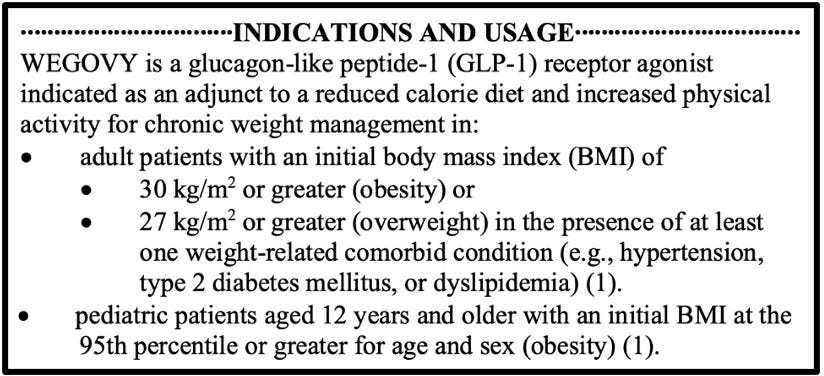
The age-old solution—eating better and moving more—works. It always has. But there’s no billion-dollar ad campaign for broccoli and brisk walks, so instead, lets pump the sexy narrative that obesity is an untreatable disease requiring expensive injections. The irony? These drugs work only if you also change your diet and lifestyle, (see Wegovy’s FDA-Approved product indications, in the box). No one really talks about the fine print, old-fashioned discipline which is always a barrier to the gut-busting weight-loss drug market.
The brief history of weight loss drugs, by the way, is a tragicomedy of human vanity, corporate greed, and the FDA’s uncanny ability to approve weight loss disasters every time corporations ask. With zero exceptions.

A quick whirlwind tour of weight loss drugs demonstrates how ungodly stupid humans are in failing to learn from recent medical history. Fen-phen, a combo of fenfluramine and phentermine, hit the U.S. market as a weight-loss drug in the early 1990s. American Home Products (later Wyeth) pushed fenfluramine hard, and by 1996, millions were popping it.

But reports later linked fen-phen to heart valve damage and pulmonary hypertension, and in September, 1997, the FDA yanked fenfluramine and its cousin dexfenfluramine (Redux) off the market. Phentermine stayed legal, but the fen-phen craze was toast.

Meridia (sibutramine) came on the U.S. market in November 1997, approved by the FDA as a prescription weight-loss drug. It promised modest results—about 5-10% body weight loss—and was aimed at obese patients with BMI over 30, or those at 27 with risks like diabetes. By 2010, research showed a 16% increased risk of heart attacks and strokes in patients with pre-existing heart issues. Meridia got the axe in October 2010 when Abbott voluntarily pulled it under FDA pressure.

Then came a really shitty situation brought to us in 1999 by Roche—a drug for those who like their weight-loss horror with a side of public humiliation. Xenical was a wonder pill that was great at blocking fat absorption but had an inconvenient side effect of making you accidentally shit your pants. Roche’s drug gifted the world with a brand new medical term “anal leakage,” putting into public parlance the thought that perfectly healthy adults wearing diapers was natural. The FDA added a liver warning in 2010 but didn’t pull it. Now, it’s sold as Xenical (prescription) and Alli (over-the-counter since 2007, lower dose).

Lastly, let’s not forget the loveable gastric banding, launched as a weight-loss strategy in the late 1970s. Adjustable versions emerged in the 80’s, but the real game-changer came in 1993 with laparoscopic adjustable gastric banding (LAGB). The FDA greenlit it in the U.S. in 2001, and it peaked around 2008. Then the problems came: It appeared that poorly fitted or slipping bands caused mayhem—stomach necrosis (tissue death) and sepsis from blood poisoning. Studies found reoperation rates at 15-60%, with patients needing fixes for slippage, erosion, or plain failure to lose weight. Fast forward to now, the Lap-Band, once a star, became a cautionary tale; removal surgeries now outpace installations. A 2020 article in Temple Health tracks the declining popularity and the long-term complication rates, including the 35-40% removal rate after 10 years.


3. GLP1 Adverse Effects Are Likely Underestimated. Aren’t they always?

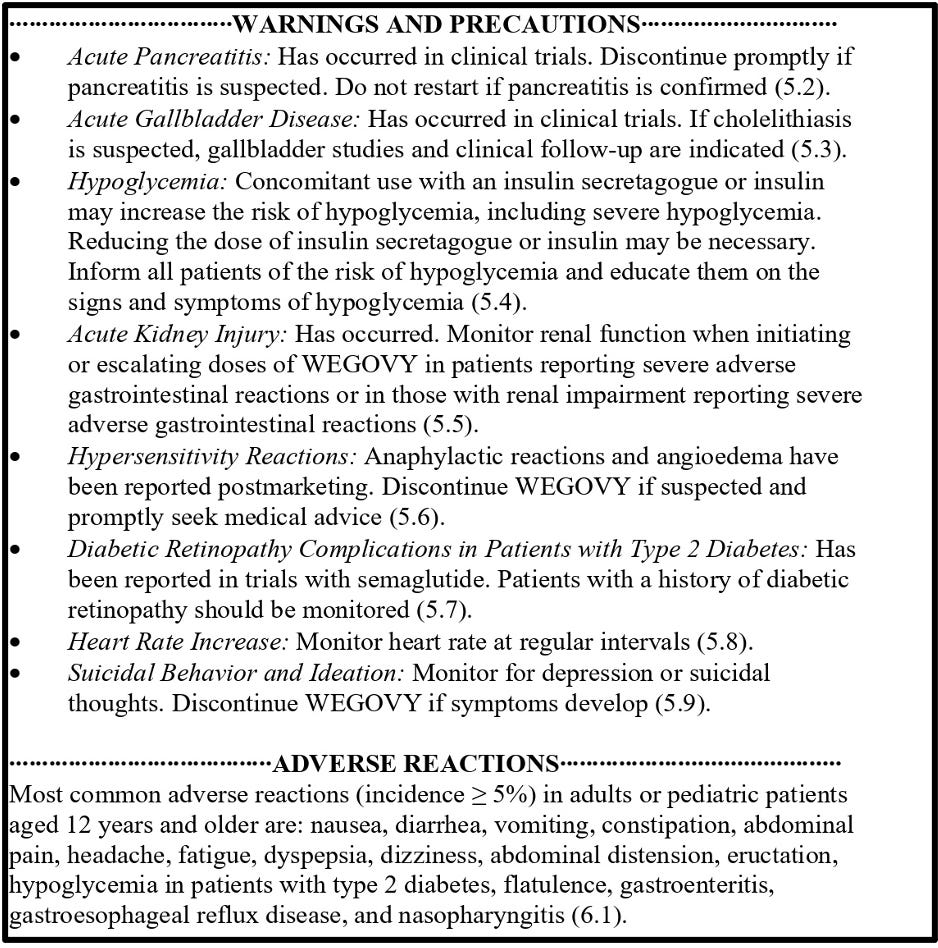
GLP-1 drugs are the golden goose of weight loss, but they come with a price. And I don’t just mean financial—though at over $1,000 a month, that’s no joke. We’re talking nausea, diarrhea, gastroparesis (that’s when your stomach stops working), and muscle loss so extreme that some people look like they’ve aged 20 years in six months. Rats tested on GLP-1 were found to have thyroid tumors, but we’re different than rats aren’t we?

(see Below: from FDA-Approved label for Novo’s Wegovy)
Oh, and when you stop taking them? The weight comes back, often with added pounds. Sounds like a great plan for lifelong dependence, doesn’t it?

These drugs “work” because they can help you lose weight if you never stop taking the drug and don’t die from side effects. Reading from the label, you’ll find those the side effects include pancreatitis, muscle loss, paralytic gut issues and nausea so severe it makes food repulsive. Nothing screams health like vomiting up your dinner.

Remember the last big drug scandal we’re still living through? Big Pharma reconfigured good old “pain” and turned pain patients into lifelong opioid customers to make billions until the lawsuits caught up with them. Now, we’re seeing a similar kind of thing developing.

According to the news site Law360, “The number of lawsuits against GLP-1 manufacturers is growing, with over fifty stomach paralysis lawsuits filed in federal court by early 2024 with many more expected.” What’s coming down the road? Mass tort litigation, and it’s going to be BIG given the millions of people taking these drugs and some percentage of whom are being injured. My insiders in the legal world tell me the GLP-1 makers are secretly setting aside mountains of cash to cover future legal bills when they start getting sued for all the usual stuff criminal drug companies do: bribing doctors, lying to regulators, and planting propaganda with reporters like the Globe and Mail’s Andre Picard.

And the lobbying to make these drugs available for teens and even children is in full sway. The key point is that they’re aiming to hook people young, keep them on the drugs forever, and rake in the profits. Because nothing shouts ethical medicine like getting a 14-year-old hooked on an injectable weight-loss drug they’ll need for the rest of their lives.

4. Health Is More Than One Number

Corporate health has forced numbers on generations of people, figures which do nothing but play sheer havoc, leaving people obsessed about their cholesterol, blood pressure or blood sugar numbers. Of these, the BMI is one number that doctors use as a lazy shorthand for health.

Actual health is about so much more: nutrition, strength, endurance, mental well-being. But why encourage people to improve their eating and metabolic fitness when a magic shot can bring down BMI? It’s the same playbook as cholesterol drugs, anti-diabetes meds, and blood pressure pills: redefine health’s numbers in a way that guarantees more prescriptions.

The Bottom Line

Corporate health such as this Globe/Novo obesity event deserves even more mocking than I can muster. Clearly it isn’t about health—it’s about profit for The Globe and Novo Nordisk.

It’s also about convincing the public that normal human variation is a medical problem requiring pharmaceutical intervention, replacing personal agency with a monthly prescription. This is a story you’ll never find written by Andre Picard in the Globe and Mail.

The next time you hear someone say, “You should take Wegovy for your health,” ask them this: Since when did Big Pharma become the guardian of our well-being? For good measure, then remind them that the best prescription for lifelong health still comes down to common sense—which these days seems pretty uncommon.

https://disinformationchronicle.substack.com/p/corporate-health-wears-an-inflatable

USDA eliminates two food safety advisory committees, members say

The U.S. Department of Agriculture has eliminated two committees that advise it on food safety, members said on Friday, raising concerns about government oversight of the food supply as the Trump administration seeks to downsize the federal bureaucracy and slash costs.

The USDA eliminated the National Advisory Committee on Microbiological Criteria for Foods and the National Advisory Committee on Meat and Poultry Inspection, according to the non-profit consumer advocacy group Consumer Reports. 

Representatives of the consumer group had served on both committees, according to USDA websites.

The committees provided scientific advice to the USDA and other federal agencies on public-health issues related to food safety, Consumer Reports said.

The microbiological committee was terminated in response to an executive order aimed at reducing bureaucracy, according to a March 6 email from USDA received by committee members and seen by Reuters.

The USDA did not immediately respond to a request for comment.

"The termination of these two important advisory committees is very alarming," said Brian Ronholm, director of food policy at Consumer Reports.

Randy Worobo, a food science professor at Cornell University, sat on the microbiological committee and confirmed it was eliminated as of Thursday. Members were appointed and received no financial compensation, he said.

"It was important because it gave unbiased microbiological criteria recommendations by the expert appointed committee for many of the regulatory agencies," Worobo said.

Representatives of the Meat Institute, an industry group for meat processors, sat on both committees, according to USDA websites. Major meat companies, including Cargill, Smithfield Foods and OSI Group, were committee members too, the websites show.

"We are disappointed in the decision to shut down the advisory councils, but it does not change the industry's dedication to improving food safety," said Sarah Little, spokesperson for the Meat Institute. 

Nonprofit group Stop Foodborne Illness, which served on the meat and poultry inspection committee, said it had not been informed of USDA's elimination of the panels. 

"Without the input of these committees, we have little confidence that the food safety policies at USDA and FDA (Food and Drug Administration) will, in fact, 'Make America Healthy Again,'" said CEO Sandra Eskin, a former USDA acting under secretary for food safety, referring to a slogan used by President Donald Trump and other administration officials.

https://www.usnews.com/news/us/articles/2025-03-07/usda-eliminates-two-food-safety-advisory-committees-members-say

'Biogen, Apple study finds smart devices can track cognition'

 A large-scale observational study has suggested that smartphones and watches may be able to spot mild cognitive impairment (MCI) during daily usage.

The results of the Intuition Brain Health study – sponsored by Biogen and supported by Apple – show the feasibility of using passive sensors on devices such as the iPhone and Apple Watch, alongside other metrics, to chart changes in thinking and memory over time that could point to MCI.

A key objective of the trial was to look at brain changes that occur normally as people age and distinguish them from those that may be a precursor to dementia, which was achieved.

The study enrolled more than 23,000 adults aged 21 to 86 across the US who used an iPhone, with the cohort ranging from people who were cognitively healthy to those diagnosed with MCI. They were asked to use their phone and wear an Apple Watch daily and take cognitive assessments on their own whilst also completing questionnaires on a monthly and quarterly basis.

There was a high level of compliance with the trial protocol of more than 90% and self-administered digital cognitive assessments "were reliable and clinically valid across the broad populations enrolled," according to the researchers, who note that the approach could be a major advance on current assessment approaches that can yield variable results.

"Our early findings are the first step in a larger research initiative aimed to equip and empower patients and clinicians with mobile tools for prevention and early detection of prevalent neurodegenerative and neuropsychiatric disorders," they write in the journal Nature Medicine.

Rhoda Au, a co-author from Boston University Chobanian & Avedisian School of Medicine, said that the results show that "in the long term, we may be able to track digital health metrics and identify those reflecting cognitive changes that are on a trajectory of decline and warrant follow-up with a medical professional."

That, in turn, could lead to treatment or other interventions that may slow or prevent progression to dementia, she said.

The study used Cambridge Cognition's CANTAB (Cambridge Neuropsychological Test Automated Battery) platform, to measure various brain functions, including attention, memory, and executive function, for the core cognitive assessment.

The company said that the study demonstrates the feasibility of large-scale, cognitive assessments using smart devices and the potential to make brain health monitoring widely accessible for the general population.

"As healthcare systems increasingly turn to digital solutions to address urgent challenges, this represents a significant opportunity which we are well positioned to address," said the UK-headquartered company's joint managing director and chief operating officer, Rob Baker.

https://pharmaphorum.com/news/biogen-apple-study-finds-smart-devices-can-track-cognition

Denali's ALS programme suffers another setback

 Prospects for Denali Therapeutics' experimental medicine for amyotrophic lateral sclerosis have taken another tumble after the drug generated disappointing biomarker data in a clinical trial.

The South San Francisco biotech revealed in January that eIF2B agonist DNL343 was unable to slow disease progression or increase survival compared to placebo at 24 weeks in Regimen G of the phase 2/3 HEALEY ALS study, which is testing a series of different drugs and regimens for the devastating neurodegenerative disease.

Now, Denali has revealed in a stock exchange filing that the drug was also unable to show a treatment effect on neurofilament light (NfL), a surrogate marker for neuronal damage in ALS, either in the double-blind, 24-week stage of the trial or an additional 28-week open-label extension.

"Based on these outcomes, the active treatment extension in Regimen G will be discontinued," said the company in its filing.

"Overall, DNL343 was found to be safe and well tolerated [and] data from Regimen G will be presented at a future medical meeting," it added. "Denali intends to assess potential future development opportunities for DNL343."

It is the second disappointing readout for the biotech in the neurodegenerative disorder in the last year, coming after Sanofi-partnered RIPK1 inhibitor SAR443820 missed the mark in the HIMALAYA trial, causing the partners to discontinue testing in ALS, although the drug remains in development for multiple sclerosis.

Shares in the company remained largely unmoved by the new revelation, suggesting that investors have already factored in the potential demise of DNL343, but the stock is now trading at around half the level of its 52-week high.

The company remains on track to file for accelerated approval of its Hunter syndrome candidate tividenofusp alfa (DNL310) based on phase 1/2 data early this year, with a potential launch in late 2025 or early 2026, and recently reported positive phase 1/2 data with its Sanfilippo syndrome drug DNL126.

Nevertheless, the new disappointment with DNL343 is another major disappointment to ALS patients, who have limited drug treatment options at present, particularly after one FDA-approved therapy – Amylyx's Relyvrio/Albrioza (sodium phenylbutyrate/taurursodiol) – was pulled from the market last year.

At the moment, patient options are limited to Mitsubishi Tanabe's Radicava (edaravone) and generic drug riluzole (sold as Rilutek by Sanofi), and Biogen's Qalsody (tofersen), the latter only if they have a genetic form of ALS associated with a mutation in the SOD1 gene.

https://pharmaphorum.com/news/denalis-als-programme-suffers-another-setback

Watch Live: President Trump Delivers Remarks From Digital Assets Summit

 Update (1545ET): After a three hour Digital Assets Summit, President Trump will deliver remarks on the outcome:

*  *  *

President Trump’s executive order establishing a US Strategic Bitcoin Reserve and a National Digital Asset Stockpile is expected to be a catalyst for wider Bitcoin adoption, according to investment analysts and crypto industry leaders.

On March 6, Trump acknowledged the need to “harness” the power of digital assets while signing the executive order for crypto assets, which states:

“Because there is a fixed supply of BTC, there is a strategic advantage to being among the first nations to create a strategic Bitcoin reserve.”

Standard Chartered's Geoffrey Kendrick sees the main points here as:

  1. BTC currently held will be added to the reserve. Nothing in the reserve will be sold

  2. Treasury Secretary Scott Bessent and Commerce Secretary Howard Lutnick are also authorized to develop budget-neutral strategies for acquiring additional bitcoin, provided that those strategies have no incremental costs on American taxpayers

  3. The non-BTC coins held will be added to the Stockpile. No more will be bought. Treasury Secretary could sell them. Arkham data show the government’s current holdings, of 198,109 BTC, 56,035 ETH, 122mn USDT etc U.S. Government (arkm.com)

Bitcoin prices have recovered most of the kneejerk decline on last night's EO signing...

As CoinTelegraph reports, Ryan Rasmussen, the head of research at Bitwise, anticipates a cascading effect where other countries and private investors will invest in Bitcoin with renewed confidence. 

“The end game was never ‘the US government buys all of the world’s Bitcoin,’” he said.

Source: Ryan Rasmussen

Large institutional investors, such as wealth managers, financial institutions and pension schemes, now have “no excuse” for not increasing exposure to Bitcoin and other crypto assets endorsed by the Trump administration. 

With the sell pressure reduced, the probability of the US government and individual states procuring Bitcoin has increased, Rasmussen said, adding:

“Probability the government outlaws Bitcoin is definitively zero.”

Andrew O’Neill, digital assets managing director at S&P Global Ratings, noted that the Bitcoin reserve would only include BTC already owned by the US government, specifically assets forfeited through criminal or civil procedures.

The presidential order to hold Bitcoin “is mainly symbolic” for Bitcoin to be formally recognized as a reserve asset, O’Neill said. It also created a clear distinction between Bitcoin and other crypto assets: 

“The order does contemplate the possibility of acquiring additional Bitcoin for the reserve, provided it can be done in a budget-neutral manner.”

Speaking to Cointelegraph, Ryan Lee, chief analyst at Bitget Research, said he anticipated Trump unveiling more details about the strategic crypto reserve on March 7 at the White House crypto summit.

According to Lee, the summit’s outcome may significantly influence the regulatory landscape and institutional sentiment toward digital assets, shifting toward clarity on token classification, tax incentives and reduced enforcement actions, possibly dismantling barriers for banks and funds.

“A successful summit could see Bitcoin reclaim $100,000 and crypto assets like Ether, XRP, and Solana soar, cementing US leadership in global crypto markets. Conversely, a lack of actionable steps might disappoint investors, underscoring the high stakes of this event.”

So, what next for bitcoin?

Standard Chartered's Geoffrey Kendrick is positive...

The next question is what could constitute budget-neutral strategies.

In theory, the following:

1. Sell gold, buy BTC. The US government holds USD760bn of gold

2. The Treasury can use the Exchange Stabilisation Fund (ESF), which has USD39bn net assets. This would be a clear change of direction for the ESF which is mostly used to shore up liquidity in extreme events

3. The Bitcoin Act 2024 (sponsored by Senator Lummis) could be passed and worked into a budget neutral way (possibly). Buy 200k BTC a year for 5 years

VanEck had some other ideas (nearly all of which would require congressional approval):

4. Reduce the Fed’s permissible surplus (requires congressional approval, but doesn’t require specific on use of proceeds). For background: Pre-2015, Fed had limitless surplus, then lowered to $10B (highway bill), then reduced to $7B in 2018.

5. Lobby IMF to include BTC in SDRs (last review 2022, next in 2027). Phased integration like CNY in 2016? Likely no congressional vote needed, but would require lobbying from lawmakers.

6. Bitcoin Bonds - U.S. Treasury issues bonds priced above par, with a small portion of the proceeds used to buy Bitcoin and the remainder financing government operations. The Bitcoin would be held as collateral and returned to bondholders in-kind upon maturity, potentially alongside principal repayment in dollars (would likely require congressional approval as “material change” to structure of US debt.

7. Sell the 1.433 Billion pounds of Cheese stored in Missouri caves. Estimated value = ~$2 to 4B. (Most of the cheese is privately held, but USDA can sell excess dairy without congressional approval.)

8. % of DOGE savings? Unclear if general savings like this fit the bill.

President Trump is expected to deliver remarks at today’s White House Digital Assets Summit at 3pm EST. In reality I cannot see any of these 3 solutions being delivered today. Rather they would all require Treasury Secretary Bessent to propose something (given the importance placed on Bessent in the executive order).

So it is difficult to see today’s 3pm EST Trump comments driving BTC prices higher.

But how low should they fall?

I have written previously about how a US strategic reserve, whatever it looks like, can embolden other sovereigns.

At the end of December Abu Dhabi held 4.7k BTC equivalent of IBIT. Other sovereigns will now surely join the buying.

We previously noted the potential for buying by the Czech National Bank, which is considering investing as much as 5% of its EUR 140bn of reserves (EUR 7bn) in Bitcoin. The Swiss National Bank (SNB) is also in the early stages of Bitcoin ownership

An official strategic reserve may also embolden others in the US, like the states and/or long term pension money.

While BTC remains in a 80-95k range it is probably choppy an there’s not a lot to do. But I think the next move is out the top of this range.

Buy weekend dip caused by lack of news from Trump tonight, look for a break out of the top of this range soon (especially if the tariff noise can slow down for a while).

https://www.zerohedge.com/crypto/bitcoin-what-next

Tirzepatide Plus Contraceptives

 Obesity is a complex public health issue associated with significant morbidity and mortality. According to the World Obesity Federation, more women than men were living with obesity in 2022. They are also more likely to use injectable medications for weight loss.

photo of Dr Clare Spencer
Clare J. Spencer, MA, MB, BChir, DM

Importantly, women taking injectable weight loss drugs should use an effective form of contraception as a protective measure against their potential risks on foetal development. This makes it imperative for doctors to be aware of how injectable weight loss drugs affect the absorption of oral contraceptives. And, although no data currently exists, consideration should also be given to a potential impact on the absorption of oral hormone replacement therapy.

Delayed Gastric Emptying and Oral Drugs

Glucagon-like peptide-1 (GLP-1) agonists were found to be effective for the management of type 2 diabetes and subsequently for weight loss. They bind to the GLP-1 receptor, resulting in an increase of insulin secretion, a decrease in glucagon secretion, and slower gastric emptying. Their impact on gastric emptying is greatest immediately following injection and when the dose is adjusted. This is also when they can influence the rate of absorption of oral medications that are taken concomitantly. 

Commonly used weight loss injections include tirzepatide, semaglutide, liraglutide, exenatide, dulaglutide, and lixisenatide. In the UK, semaglutide is available through National Health Service (NHS) specialist weight loss services and tirzepatide was approved by the National Institute for Health and Care Excellence for managing overweight and obesity in December 2024.

Tirzepatide differs from other GLP-1 agonists in that it acts as a dual agonist, activating both the GLP-1 receptor and the glucose-dependent insulinotropic polypeptide receptor. This potentially leads to a greater impact on appetite suppression. Tirzepatide has been shown to be more effective for weight loss than semaglutide when both were given with diet and weight loss support. 

Mounjaro ( tirzepatide) manufacturer Eli Lilly used paracetamol as a model drug to investigate the impact of delayed gastric emptying on oral medication absorption. Based on the results of that study, tirzepatide’s summary of product characteristics  says dose adjustments for most concomitantly administered oral medicines are not expected to be required. However, the manufacturer does recommend monitoring patients taking oral medications with a narrow therapeutic window, like warfarin and digoxin. The impact of a delayed effect should also be considered for other medications, such as where a rapid onset of effect is important.

Keep Eye on Oral Contraceptive Use

When it comes to oral contraceptives, tirzepatide is the only weight loss injection that has been shown to have a clinically significant effect on the bioavailability of oral contraceptives in women. According to Eli Lilly, a clinical trial found that exposure to oral contraceptives was reduced after a single dose of tirzepatide, with the impact diminishing after subsequent doses. 

It is important that clinicians and women are aware of this and that it is discussed at the time of prescribing and administration, especially since animal studies have demonstrated that GLP-1 agonists pose a risk of abnormalities to the developing foetus. No data for human pregnancy is currently available. 

The British National Formulary advises that GLP-1 agonists should be avoided during pregnancy. It and the UK’s Faculty of Sexual and Reproductive Healthcare also state that women of childbearing age should take effective contraception whilst using GLP-1 agonists. 

Eli Lilly advises that women using oral contraception who plan to take tirzepatide should switch to a non-oral contraceptive method — such as intrauterine, transdermal, vaginal, or injection — or add in barrier methods of contraception for 4 weeks after initiation of tirzepatide and for 4 weeks after each dose increase, since the impact of tirzepatide on gastric emptying diminishes with time. 

Furthermore, diarrhoea and vomiting are common side effects of all GLP-1 agonists and can also decrease contraception efficacy. Missed pill rules should be followed in these cases according to manufacturer instructions.

If GLP-1 injections can impact the availability of oral contraception, how about hormone replacement therapy (HRT)? There are currently no studies to inform us of this, but the delay in gastric emptying and the resulting decreasing hormone bioavailability could be a potential issue for women taking oral HRT and for those taking oral micronized progesterone for endometrial protection. 

There is no doubt that GLP-1 agonists play an important role in obesity management. Women taking oral contraception need to be aware of the potential for loss of efficacy, and it would seem sensible to talk through the potential short-term impact on oral HRT while we wait for more data and clinical experience.

Dr Clare Spencer is clinical director of My Menopause Centre, runs an NHS menopause service, and is a GP partner in a practice in Leeds, UK. She qualified from Cambridge University and holds membership of the Royal College of Obstetricians and Gynaecologists and is a fellow of the Royal College of General Practitioners. She is also a member of the British Menopause Society (BMS) Medical Advisory Committee and a BMS menopause trainer. Dr Spencer is involved in educating GPs about the menopause transition through talks, lectures, and seminars and has written on the menopause, including training material, for the British Menopause Society, Primary Care Women’s Health Forum, and Leeds Teaching Hospitals Trust. 

https://www.medscape.com/viewarticle/tirzepatide-plus-contraceptives-what-you-need-know-2025a10005dj

MedPAC Says Agents Make More Money Enrolling Clients in Medicare Advantage

 A report released Thursday showing how health plan agents receive hefty financial incentives to steer beneficiaries

opens in a new tab or window into Medicare Advantage (MA) plans -- rather than traditional Medicare and Medigap -- prompted several members of the Medicare Payment Advisory Commission (MedPAC) to call for dramatic changes in the enrollment system.

"I think we have a system here ... that is inherently flawed," said Commissioner R. Tamara Konetzka, PhD, a public health sciences professor at the University of Chicago, during a MedPAC public meeting. "It will never be a good system for beneficiaries [even if] we can regulate it to death ... It can't be fixed, because agents are going to recommend things in their own interest and the interest of the companies they work for."

"I say, blow it all up. We need a new system that actually works for beneficiaries," she added.

Commissioner Lynn Barr, MPH, of the Barr-Campbell Family Foundation in Lahaina, Hawaii, said she recently enrolled in Medicare herself and found the process extremely confusing. "It seems to me that we're not doing beneficiaries justice by putting them through this process. It's not in their best interest and it's too slanted against them."

Ledia Tabor, MPH, a MedPAC senior analyst who delivered part of the report, noted that "agents have a financial incentive to enroll beneficiaries" in MA prescription drug plans.

She explained that an agent selling an MA plan to a new beneficiary makes $626 in commissions that year, but only $450 for selling a Medigap plan with a Part D drug plan. If the beneficiary stayed in that MA plan, the agent would continue to receive commissions of $313 for each subsequent year, but only $225 for each year the beneficiary stayed in the Medigap and Part D plans.

"Over a 5-year period, an agent would make $528 more for enrolling a beneficiary into an MA plan rather than a Medigap with a Part D plan," she said.

Agents can also receive bonuses from their health plan companies for meeting enrollment benchmarks, administrative payments for marketing, or payments for conducting risk assessments of their clients' health, said Jennifer Druckman, JD, MHA, a MedPAC principal policy analyst.

That prompted several commissioners to wonder if those health risk assessments may help identify chronic conditions that, when the client is enrolled in an MA plan, would generate higher risk-adjusted monthly payments for the plans from Medicare funds.

When not paired with actual care and services recorded in patients' charts, plans' high-risk categorization of patients' health conditions has resulted in numerous accusationsopens in a new tab or window of upcoding fraud from the HHS Office of Inspector General.

Health risk assessments "could definitely change the amount that the insurance company is being paid," said Commissioner Greg Poulsen, MBA, senior vice president at Intermountain Healthcare in Salt Lake City.

Tabor replied, "We have heard that insurers may work with brokers to do health risk assessments that could identify beneficiaries that would need further clinical review to identify conditions that could be used to affect future payments."

Paul Masi, MPP, MedPAC's executive director, noted that agents' assessments by themselves wouldn't mean the health plan would automatically place the beneficiary in a risk category that would result in higher payments to the plan.

"It may serve as information to prompt further clinical diagnoses, but at this point, we don't know very much about actually how they're being used, and so we want to tread cautiously," he said.

Another issue noted in the report is that when a beneficiary wants to be placed in traditional Medicare with a supplemental Medigap plan, agents also have an incentive to place them in the most expensive one, because their commission -- a percentage of their monthly premium -- is higher.

Commissioners also said some plans have stopped paying agents any commission for enrolling in a Part D plan, which beneficiaries with Medigap need to provide drug coverage.

"This is intentionally or not a way to kill traditional Medicare," said Commissioner Larry Casalino, MD, PhD, MPH, of Weill Cornell Medical College in New York City. "Without [prescription drug] plans, traditional Medicare will cease to exist."

Commissioner Cheryl Damberg, PhD, MPH, a health plan policy expert at RAND Corporation in Santa Monica, California, summed it up: "The incentives are wrong on so many different levels."

Some of the commissioners noted that their own parents, and even themselves, are so baffled by the complexity of choices and decisions that often beneficiaries don't even know what type of plan they are in.

Barr noted that the system of using agents should be replaced by "a public system to help beneficiaries." She added that the money that plans pay brokers, much of which comes from Medicare, should "pay employees of the government to actually do this work."

At one point in the discussion, Commissioner Brian Miller, MD, MBA, MPH, of Johns Hopkins University in Baltimore, objected to the idea that older adults can't handle the process and need independent help.

"We really need to be careful in our conversation here because we're incorrectly assuming that Medicare beneficiaries have no agency and need a paternalistic central authority to help them make decisions," he said. They make "other large purchases with complex trade-offs assisted by financially interested third-party intermediaries; for example, home purchases or new or used cars."

But that prompted pushback from several commissioners who said Medicare is nothing like a used car.

Poulsen noted that in many cases, beneficiaries think they are talking to a Medicare representative when they talk with a broker or agent working for a for-profit plan.

"It may not be allowed by law, but it happens," he said. "I don't disagree with your premise that it could work. I disagree with your premise that it does work."

Barr also took issue with Miller's remarks. "If I'm buying a car, I can look at the price. I can compare, right? I cannot compare these plans without help. I'm a Medicare commissioner who is recently enrolled in Medicare, and this is a whole different thing."

Several commissioners pointed to references in the report to a study from the Commonwealth Fundopens in a new tab or window from 2022 that showed that one in three beneficiaries used an insurance agent to enroll in a plan, but only 5% used the State Health Insurance Assistance Program (SHIP), a nationwide network of federally funded volunteer and paid counselors who help beneficiaries make informed Medicare choices.

Commissioner Gina Upchurch, RPh, MPH, founder and executive director of Senior PharmAssist in Durham, North Carolina, who is a SHIP counselor, said the program is "woefully underfunded." Nationally, the program receives just $55 million annually from the federal Administration for Community Living, according to the MedPAC report.

And even with their annual required training, counselors can't keep up, she said. "A lot of them are quitting because it has gotten so complex."

MedPAC Chair Michael Chernew, PhD, of Harvard Medical School in Boston, said that the session on MA and enrollment was the first of many to be held throughout the year. "We are at the beginning of this whole work stream."

Cheryl Clark has been a medical & science journalist for more than three decades.


https://www.medpagetoday.com/publichealthpolicy/medicare/114540