Search This Blog

Thursday, August 14, 2025

Doctor's go-to habit to reduce heart attack or dementia risk

 Read carefully — and don’t lose the thread.

A super speedy habit you’re probably skipping could reduce your changes of heart attack, stroke and dementia.

But a naturopathic doctor who goes by Dr. Mac says she does it multiple times a day — and the science backs her up.

Dr. Mac
Dr. Mac says she flosses after every meal to reduce her heart attack and dementia risk.Tiktok/@drtoohey

“If you see me flossing after every meal, it’s because I am terrified of having a heart attack and terrified of getting dementia when I’m older,” she said in a viral TikTok video (@drtoohey) with nearly 70,000 views.

Though the American Dental Association recommends flossing at least once a day, only about 32% say they do. In the same 2019 study, nearly 32% of Americans admitted they don’t floss at all.

Good oral hygiene has been tied to a bunch of health benefits, and not just for your mouth. That because the bacteria that causes gingivitis, or gum disease, doesn’t just stay around your teeth.

In 2019, researchers in Norway found DNA evidence that “bacteria causing gingivitis can move from the mouth to the brain,” said Piotr Mydel of Broegelmanns Research Laboratory at the University of Bergen (UiB).

There, it makes a protein that destroys brain cells, which can lead to memory loss and dementia. In their study of 53 perople with Alzheimer’s, 96% of them tested positive for this enzyme.

“The public needs to be more aware of the correlation between oral health and cognitive abilities,” Chia-Shu Lin, a professor in dentistry at National Yang Ming Chiao Tung University in Taiwan, previously told Newsweek.

Woman flossing her teeth in a mirror.
Oral hygiene has been linked to lots of health conditions.Mapodile M./peopleimages.com – stock.adobe.com
Oral hygiene issues can also increase your odds of developing heart disease. It’s no small difference, either: People with gum disease are 28% more likely to suffer a heart attack.

“Studies show that people who brush their teeth regularly, along with getting dental cleanings, tend to have healthier hearts and a lower risk of heart disease,” gastroenterologist Dr. Saurabh Sethi said in one viral TikTok.

Your stroke risk is also influenced by your brushing and flossing habits. One study piblished this year linked flossing teeth at least once a week to a 22% lower risk of ischemic stroke, 44% lower risk of cardioembolic stroke and 12% lower risk of AFib.

“Oral health behaviors are linked to inflammation and artery hardening,” said the study’s lead author, Dr. Souvik Sen. “Flossing may reduce stroke risk by lowering oral infections and inflammation and encouraging other healthy habits.

“Many people have expressed that dental care is costly,” he continued. “Flossing is a healthy habit that is easy to adopt, affordable and accessible everywhere.”

That’s not all: Recent research has linked oral bacteria to head and neck cancers as well.

Though Dr. Mac admitted that it might seem “crazy” that flossing could have such an enormous health impact, she also said it “makes sense because everything’s so connected.”

“But you best believe if you invite me out to a restaurant, I will be flossing after that meal. Respectfully, I will walk away and go to the bathroom or step outside, but I am getting in there. Because those are two ways I’m not gonna go,” she said.

https://nypost.com/2025/08/14/health/doctors-go-to-habit-to-reduce-heart-attack-and-dementia-risk/

CytomX Reports Treatment-Related Patient Death in Phase I Colorectal Cancer Study


The death was linked to acute kidney injury in a patient who had a single kidney remaining and a “complex medical history,” according to CytomX.

A patient has died in CytomX’s Phase I trial for CX-2051, an investigational antibody-drug conjugate being tested for colorectal cancer.

The California biotech made the disclosure Wednesday morning, noting that the mortality was linked to acute kidney injury in a patient with a “complex medical history.” CytomX noted that the patient in question had only one kidney. The company found out about the death on July 11 and reported the event to the FDA on July 18, “in accordance with regulatory requirements,” according to the news release.

The safety review board for the Phase I study convened days after the death and endorsed the continuation of the trial. Data are expected in the first quarter of 2026.

CytomX shares dipped as much as 14% to $1.78 at close of trading Wednesday.

Designed to target the epithelial cell adhesion molecule (EpCAM), CX-2051 is a conditionally activated antibody-drug conjugate (ADC) that according to CytomX’s website has “potential applicability” across cancers expressing the EpCAM marker. The biotech is currently running an early-stage program for CX-2051 in solid tumors, with a focus on advanced colorectal cancer.

CytomX released interim data for CX-2051 in May, noting that in 18 evaluated patients, five achieved confirmed partial response, resulting in a 28% overall response rate. At the highest dose level of 10 mg/kg, 43% of treated patients hit confirmed partial response. Disease control rate was 94% across all dose arms.

At the time, CytomX said that CX-2051 was “generally well-tolerated with manageable adverse events” and had no dose-limiting toxicities. However, the company also reported five cases of grade 3 diarrhea and one of nausea.

Beyond the readout expected in early 2026, CytomX is also planning a Phase II initiation for CX-2051 in advanced late-line colorectal cancer in the first half of 2026, according to a company announcement in May. The biotech is also looking to potentially start combination studies for the ADC in earlier lines of colorectal cancer, as well as a Phase Ib study to assess its potential in other solid tumors.

As of June 30, CytomX still had $158.1 million in cash, cash equivalents and investments, which it expect will be enough to keep afloat into the second quarter of 2027. In January, the biotech shaved its headcount by 40%, laying off around 48 employees, to focus resources on the development of CX-2051.

https://www.biospace.com/drug-development/cytomx-reports-treatment-related-patient-death-in-phase-i-colorectal-cancer-study

Schrödinger Cans Early-Stage Blood Cancer Drug After Two Patient Deaths


After two patients who received the investigational CDC7 blocker died, pushing forward with SGR-2921’s development would be “difficult,” according to Schrödinger, whose stock dropped 17.5% before the opening bell on Thursday.

Two patients have died after receiving Schrödinger’s investigational CDC7 blocker SGR-2921, being tested in relapsed/refractory acute myeloid leukemia or high-risk myelodysplastic syndromes. The New York–based biotech has decided to pull the plug on SGR-2921.

Schrödinger had been testing SGR-2921 in a Phase I dose-escalation study, which found “early evidence of monotherapy activity,” according to a company announcement on Thursday. However, the drug was “considered to have contributed” to two patient deaths, resulting in an overall risk/benefit profile that would make further development, including as part of a combination regimen, “difficult to pursue,” Schrödinger added in its statement.

Chief Medical Officer Margaret Dugan said in a prepared statement on Thursday that the decision to discontinue SGR-2921 is “disappointing” but is “the right decision for patients.”

Schrödinger is down 17.5% before the opening bell on Thursday.

Despite losing SGR-2921, the company still has a bevy of oncology activity. In June, Schrödinger released initial Phase I data for the small molecule drug SGR-1505 in relapsed/refractory B cell malignancies, demonstrating clinical activity in different histologies, including chronic lymphocytic leukemia and Waldenström macroglobulinemia. Meanwhile, the company is trialing another small molecule, SGR-3515 for solid tumors, with preclinical data in October 2024 pointing to stronger and more durable anti-tumor activity versus previous inhibitors. The asset’s Phase I study is recruiting and has a primary completion date in October 2026.

Patient deaths have captured pharma headlines in recent months, most prominent of which were the three mortalities associated with Sarepta Therapeutics’ gene therapy portfolio: two with the Duchenne muscular dystrophy treatment Elevidys and one with an investigational product for limb-girdle muscular dystrophy.

On Wednesday, California-based CytomX reported one patient death linked to its antibody-drug conjugate CX-2051 being tested for colorectal cancer. A safety committee has supported the continuation of the Phase I study for the asset.

Earlier this month, Allogene also reported a mortality in the Phase II study of its lymphoma CAR T cell therapy cemacabtagene ansegedleucel. The death was attributed to ALLO-647, an antibody that helps suppress the immune system in preparation for cell therapy infusion.

Last week, Agios Pharmaceuticals also reported three patient deaths associated with its anemia therapy Pyrukynd. The biotech maintained that these mortalities have “not altered the established benefit-risk profile” for the drug.

https://www.biospace.com/drug-development/schrodinger-cans-early-stage-blood-cancer-drug-after-two-patient-deaths

Lilly Aims To Raise Europe Drug Prices in Response to Trumps’ Most Favored Nation Policy


As Trump has pressured drugmakers to lower the cost of medicines in the U.S., the pharma industry has coalesced behind a message of rebalancing what nations pay to better reflect the innovation and value of drugmaking.

Eli Lilly will soon announce higher prices for its drugs in markets like Europe in an effort to “align prices across developed countries.” The move comes as pressure mounts from the Trump administration to lower the cost of medicines to match what other equivalent nations pay or face consequences.

In a statement issued Thursday responding to President Donald Trump’s Most Favored Nation drug pricing initiative, Lilly said that price adjustments for the European market will be announced by September 1. An agreement will also be made with the U.K. government to increase the list cost of Lilly’s obesity drug Mounjaro while keeping it available on the National Health Service.

“Lilly supports the administration’s goal of keeping the United States the world’s leading destination for biopharmaceutical research and manufacturing, and the objective of more fairly sharing the costs of breakthrough medical research across developed countries,” Lilly said. “This rebalancing may be difficult, but it means the prices for medicines paid by governments and health systems need to increase in other developed markets like Europe in order to make them lower in the U.S.”

As Trump has pressured drugmakers to lower the cost of medicines in the U.S., the pharma industry has coalesced behind a message of rebalancing what nations pay to better reflect the innovation and value of drugmaking. On recent earnings calls, pharma CEOs like Lilly’s David Ricks have repeated the message but Lilly’s statement today is the first concrete step toward actually changing prices.

It’s unclear what leverage Lilly will have as drug prices are typically negotiated with the health authorities based on value-based pricing. Ricks himself admitted on an earnings call earlier this month that these nations are not exactly fighting to pay more for drugs.

Moreover, the Trump administration has also not provided a legal rationale for Most Favored Nation drug pricing. In Trump’s prior term, the policy was overturned by the courts. But the president has threatened to use regulatory levers elsewhere such as patent enforcement to force drugmakers to drop their prices, most recently in a batch of letters sent to the CEOs of 17 Big Pharma companies, including Lilly.

In today’s statement, Lilly pointed to the complex nature of the U.S. health system that keeps drug prices higher than they need to be. Specifically, the pharma flagged multiple cross subsidies, abuse of government programs like 340B and insurance cost-sharing burdens for patients.

“While we agree that the costs for breakthrough medicines should be more fairly shared across developed countries, we must also address the underlying structural issues in the U.S. that have contributed to high drug prices,” Lilly said.

Nevertheless, the company asserted that it has taken steps to lower costs for U.S. consumers. Lilly has bolstered its LillyDirect service, which offers drugs such as its weight loss blockbuster Zepbound at a reduced cost for people who do not use their insurance. This kind of direct-to-consumer outreach has been encouraged by the Most Favored Nation policy in an effort to cut out pharmacy benefit managers, long seen as “middle-men” in the drug selling process. Lilly has also reduced insulin prices by 70% and capped what people pay at $35 per month.

The statement also took a stab at defending the pharmaceutical industry from tariffs, another of the president’s policy priorities, which Lilly says could increase the cost of drugs.

“Broad tariffs would raise costs, limit patient access, and undermine American leadership, especially for companies already investing heavily in domestic manufacturing,” Lilly said. “We urge the administration and Congress to prioritize strategic incentives that strengthen U.S. manufacturing and supply‑chain resilience without sacrificing access, affordability, innovation, or American leadership.”

https://www.biospace.com/business/lilly-aims-to-raise-europe-drug-prices-in-response-to-trumps-most-favored-nation-policy

Buffett's Berkshire acquires 5 million shares in UnitedHealth

 Warren Buffett's Berkshire Hathaway has acquired 5 million shares in UnitedHealth Group, a regulatory filing showed on Thursday, sending the health insurer's stock up 7% in extended trading.

Billionaire investor Buffett owned about 1.18 million shares in UnitedHealth between 2006 and 2009, before selling his entire stake in 2010 amid a broader retreat from health insurers.

The investment comes as UnitedHealth faces soaring medical costs, federal investigations, the fallout of the killing of a top executive and a cyberattack last year.

The healthcare conglomerate has signaled prolonged pain with a new, far lower profit forecast as it sees billions of additional costs in the upcoming quarters.

https://finance.yahoo.com/news/berkshire-hathaway-acquires-5-million-202333554.html

Misinformation Scholarship Exposed As Liberal Activist Grift

  by Paul D. Thacker via The DisInformation Chronicle,

A funny thing happened when the NY Times reported a month back that Elon Musk’s exit from DC politics had been facilitated by a group of activists targeting his electric car company after he abandoned Democrats, helped fund Trump’s election, and then ran DOGE.
In short, Musk supports zero Democratic Party politicians and none of their priorities.

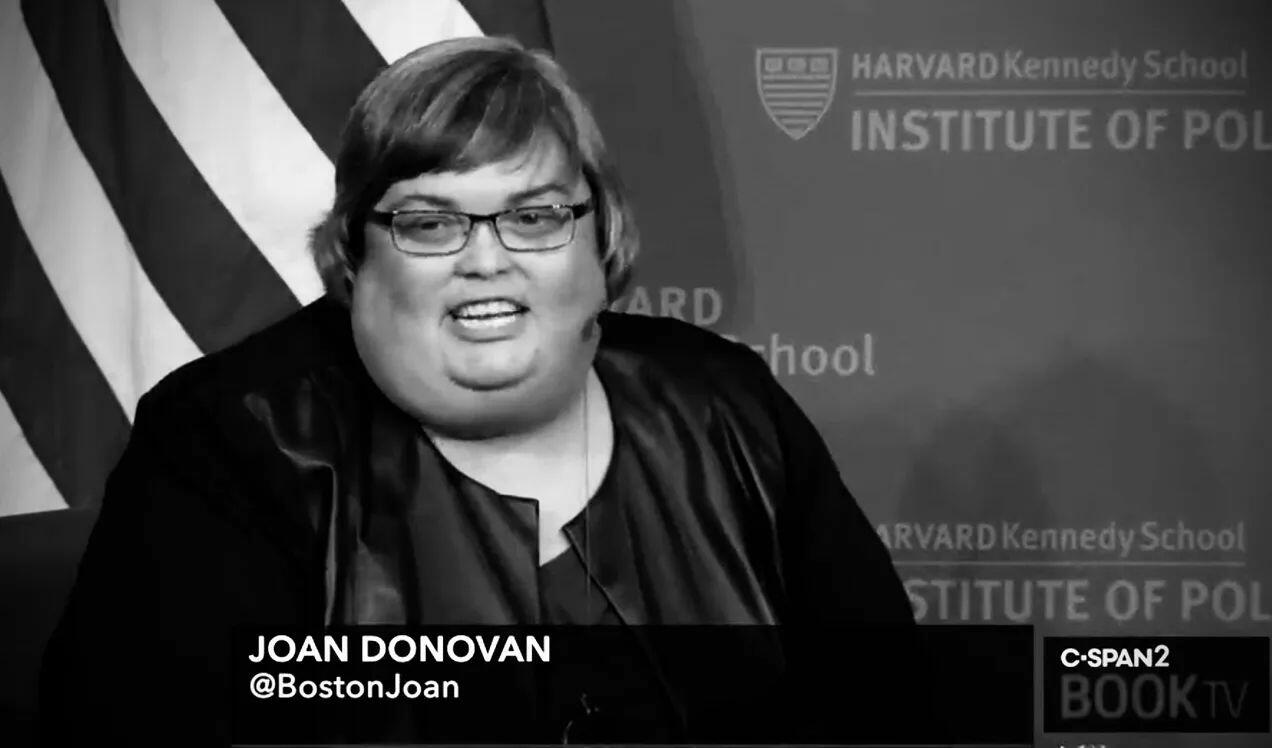
Enter Democratic activists who protested against the company run by the party’s main boogey man—protests that sometimes veered into violence and started at the impetus of sociology professor Joan Donovan. Here’s the Times report:
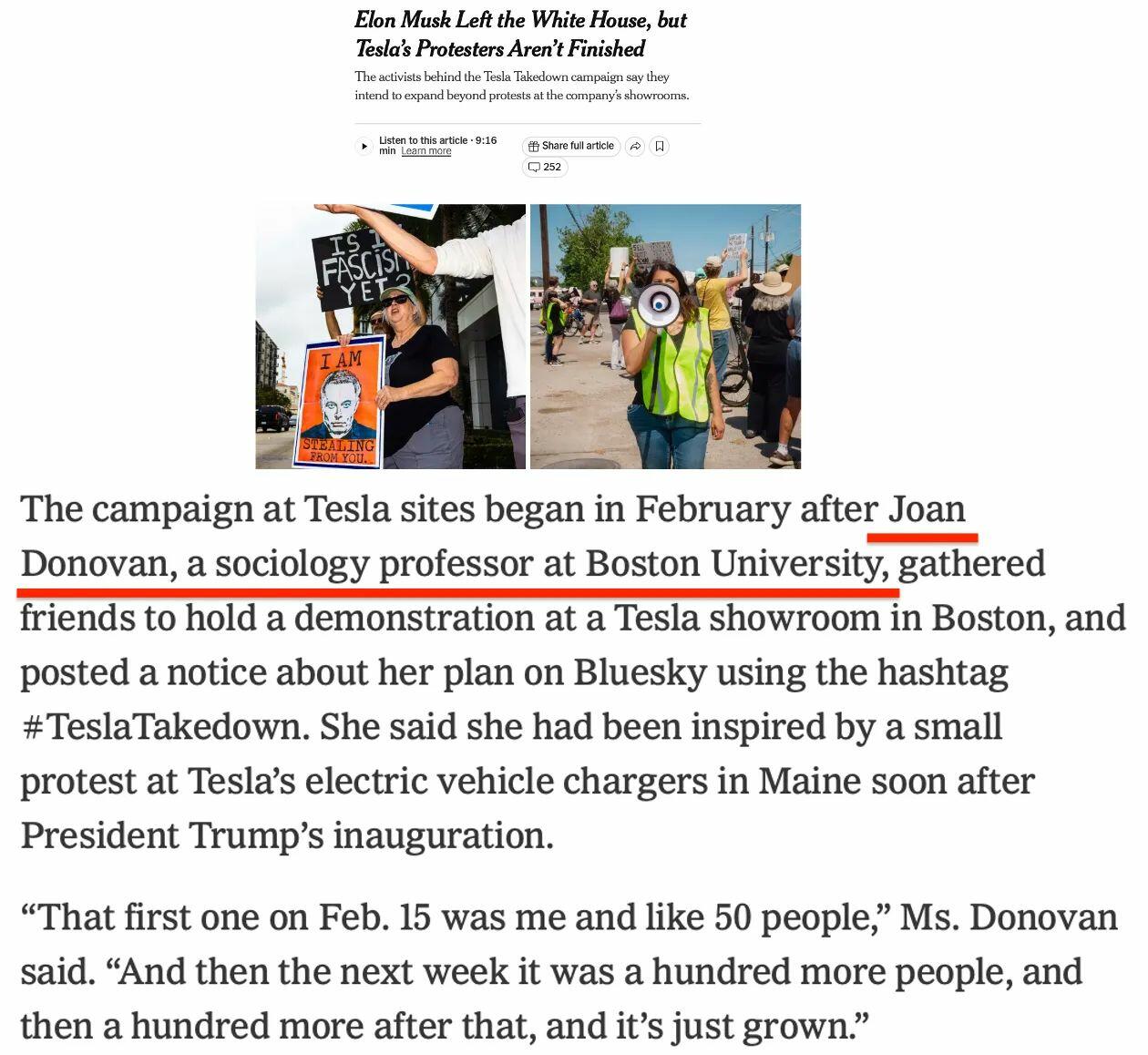
The problem with Times story is what the Times journalist doesn’t tell us, namely the function professor Joan Donovan has served at the New York Times and other legacy news. Labeling Donovan a “sociology professor at Boston University,” skips over this purported academic’s role as a central character in the Time’s fake narrative that America is awash in “disinformation” that can only be fixed by legacy media and professors, like Joan Donovan—a misinformation authority who allegedly publishes objective scholarship with neutral, verified facts and reliable truths.

Dr. Donovan leads the field in examining internet and technology studies, online extremism, media manipulation, and disinformation campaigns,” explains one news site. “She conducts research, develops methods, and facilitates workshops for journalists, policy makers, technologists, and civil society organizations on how to detect, document, and debunk media manipulation campaigns.”

In reality, the entire arena of disinformation studies has been exposed as a jobs program for liberal activists who dress up in academic garb, to provide quotes to the Times when they run articles claiming anything not published in the New York Times might be disinformation.

Here’s just a few examples:

Donovan was in hot demand throughout 2020 as a quotable expert to anchor New York Times stories on alleged rampant disinformation (spread only by conservatives and Trump supporters, of course):

However, professor Donovan’s sparkly “scholarly” judgements tend to dull and tarnish under history’s harsh light, a common occurrence among her fellow “disinformation experts.”

Right before the 2020 election, the New York Post broke a story based on documents and emails found on the laptop of Hunter Biden that implied he might be getting rich off his father’s name and that the President was aware of this. "Well we know that this whole smear on Joe Biden comes from the Kremlin ...” Congressman Adam Schiff alleged on CNN, defending Biden weeks before the election. “Clearly, the origins of this whole smear are from the Kremlin, and the president [Trump] is only too happy to have Kremlin help and try to amplify it."

Frightened by the “RUSSIAN DISINFORMATION!!!” outcry, social media companies began censoring the Hunter Biden laptop story. But when social media companies ceased censoring the New York Post’s election bombshell scoop, the NY Times quoted Donovan claiming the censorship that began becuase of politics had ceased because of—get this—politics.

“They are merely reacting to public pressure and therefore will be susceptible to politician influence for some time to come,” Donovan told the Times.

At this point, much of the information on Hunter Biden’s laptop has now been validated. And after first claiming the emails and photos from his laptop were not real, Hunter Biden sued a Republican operative for published these very same emails and photos from Hunter Biden’s laptop on a website called Marco Polo. After his father gave him a blanket pardon from prosecution, Hunter withdrew his lawsuit and the founders of Marco Polo sued him for attorney’s fees.

I could document other examples of Donovan’s academic musings running uncontrollably like a Southern California wildfire throughout the media before falling apart upon closer inspection, but what’s the point? Her fellow “disinformation academics” have a similar spotty history, including Renee DiResta (the disinformation “hobbyist” bounced from Stanford, now at Georgetown, who seems to have lied about her own history of spreading election disinformation); and Brown University’s Claire Wardle (who once claimed COVID vaccine mandates were a “conspiracy” and then pivoted to defend those same COVID vaccine mandates once President Biden implemented them).

None of these academics retain their former credibility. Last summer, the Chronicle of Higher Education eviscerated Joan Donovan in an investigation that ran almost 11,000 words, with several of her former Harvard colleagues correcting her fibs and mischaracterizations, calling out poor research habits, and noting a chronic pattern of making unhinged accusations that lack evidence.

“How I see Joan more than anything is an opportunist who will stop at nothing to put herself in an optimal position,” one of her former Harvard colleagues told the Chronicle. “Anyone who’s seen as a threat to that is somebody to be targeted, displaced, and she doesn’t care who those people are.”

In response to the Chronicle’s questions, Donovan invented wild claims that shadowy forces were out to get her … including the reporter. “There are people who do want me dead,” Donovan wrote to the Chronicle, in one example, among a slew of texts.

Nonetheless, it remains critical to remember the role Donovan, DiResta, Wardle and other “disinformation experts” played in lying to the public that they held some special scholarly claim on truth while they helped censor perceived political opponents during a pandemic that was the most tumultuous period in a generation. The real truth is that none of these self-ordained wizards had any exclusive understanding of falsehoods, lies or medical evidence. Like priests in the past, censorship scholars pretend to possess a unique insight to truth, a lie we can now all see quite clearly.

AFTERTHOUGHT

Harvard University runs a journal called the Harvard Kennedy School Misinformation Review which publishes prestigious homilies written by the censorship clergy. In July 2023, the HKS Misinformation Review released a survey of “150 academic experts on misinformation” examining their views on the censorship field and its future. As is often the case in academic studies, the best findings can be found buried in the appendix.
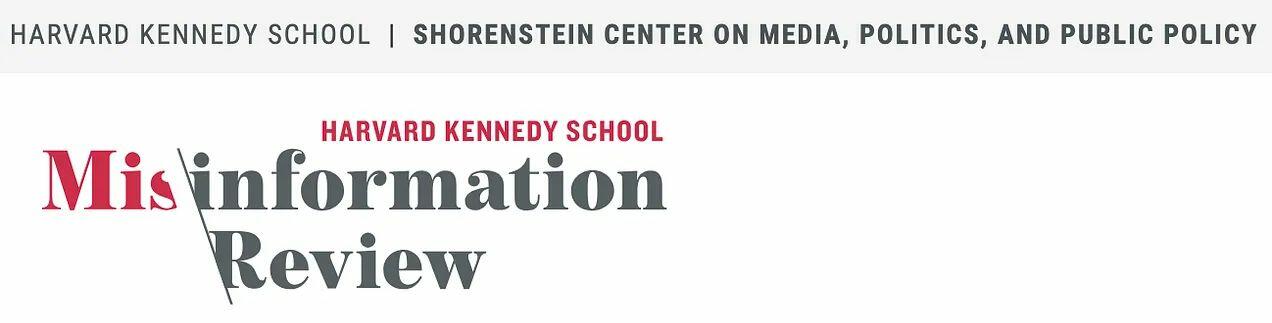
In appendix A we learn that “academic experts on misinformation” skew in one political direction. Guess which direction! Just take a gamble.

None of the “experts” in this field are right-wing or conservative. But around 80% consider themselves Lefties. Does such a field sound like it attracts and fosters dispassionate scholars, or ideologically-aligned political priests?
The HKS Misinformation Review’s mission statement says it’s a peer-reviewed, scholarly publication that publishes high-quality research that examines misinformation from “different perspectives.”

Now close your eyes and imagine—just for a microsecond!—that this field skewed 80% conservative. Do you think the New York Times and legacy media would rely on professors from this field like Donovan, DiResta, and Wardle to tell you the “truth” on pretty much any topic that appears in a newspaper—elections, public health, foreign policy—if all three of these women professed views that aligned with a right-wing politician like Congresswoman Marjorie Taylor Greene?

If 80% of “disinformation academics” were conservative, do you fee confident Harvard would publish and promote their esteemed journal?

https://www.zerohedge.com/political/misinformation-scholarship-exposed-liberal-activist-grift

Kyivstar to go public in landmark New York listing on August 15

 Ukraine's biggest mobile operator, Kyivstar, said on Thursday its shares will begin trading on the Nasdaq on August 15, making it the first Ukrainian company to be listed on a U.S. stock exchange.

Kyivstar's parent, telecoms group VEON, has pitched this IPO to attract foreign investors betting on Ukraine’s reconstruction, which hinges on prospects for peace with Russia.

The IPO coincides with a highly anticipated summit between U.S. President Donald Trump and Russian President Vladimir Putin in Alaska, a meeting closely watched by Ukraine and European nations as a potential turning point in peace negotiations.

Robust activity in the U.S. IPO market has also encouraged companies to float shares among investors, who have shown renewed interest in new listings after a slump earlier this year caused by uncertainty from trade policy changes.

Kyivstar, owned by telecoms group VEON, is the market leader in Ukraine with more than 24 million subscribers.

Its revenue and profit have risen since Russia’s invasion, despite repeated cyberattacks and power outages.

The company has deepened its U.S. ties during the conflict, appointing former U.S. Secretary of State Mike Pompeo to its board and signing a deal with Elon Musk's Starlink for satellite services.

Rothschild & Co acted as the lead financial advisor and capital markets advisor to VEON.

https://finance.yahoo.com/news/kyivstar-public-york-august-15-201026758.html