Search This Blog

Sunday, August 26, 2018

Biotech week ahead, August 27


Biotech stocks saw a resurgence last week, as a post-earnings follow-up rally and company-specific news offered support. The iShares NASDAQ Biotechnology Index (ETF) IBB 0.07% gained about 1.5 percent.
The following catalytic biotech events are set to occur this week:

Conferences

  • 2018 European Society of Cardiology Congress: Aug. 25-29 in Munich, Germany
  • 13th European Congress on Epileptology: Aug. 26-30 in Vienna, Austria
  • International Conference on Molecular Biology and Medicine: Aug. 27-28 in Dubai, UAE
  • 8th Global Experts Meeting on Advances in Neurology and Neuropsychiatry: Aug. 27-28 in Tokyo, Japan
  • 5th International Conference on Glycobiology & Glycoproteomics: Aug. 27-28 in Toronto, Canada
  • 21st World Congress on Radiology & Cancer Research: Aug 27-28 in Toronto
  • 14th International Conference on Clinical Gastroenterology and Hepatology: Aug. 29-30 in Toronto
  • 5th International Conference on Neglected Tropical & Infectious Diseases: Aug. 29-30 in Boston
  • 5th Annual Congress on Rare Diseases and Orphan Drugs: Aug. 29-30 in Boston
  • 4th Annual Congress on Infectious Diseases: Aug. 29-30 in Boston
  • 4th World Congress on Parkinsons & Huntington Disease: Aug. 29-30 in Zurich, Switzerland
  • 4th International Conference on Epilepsy & Treatment: Aug. 29-30 in Zurich
  • 32nd Annual World Dentistry Summit: Aug. 31-Sept. 1 in Boston
  • 6th World Summit on Heart, Stroke & Neurological Disorders: Aug. 31-Sept. 1 in Boston
  • 14th World Summit on Alzheimer’s Disease, Dementia Care Research and Awareness: Aug. 31-Sept. 1 in Boston

PDUFA Dates

Tuesday
Tetraphase Pharmaceuticals Inc TTPH 2.31% awaits FDA decision on Eravacycline, a fully synthetic fluorocycline being developed for complicated intra-abdominal infections.
Thursday
The FDA is set to rule on Akcea Therapeutics Inc AKCA 4.34%‘s NDA for Volanesorsen, a RNAi drug to treat patients with familial chylomicronemia syndrome. Akcea is a unit of Ionis Pharmaceuticals Inc IONS 2.75%.

Clinical Trial Results

Pfizer Inc. PFE 0.45% will present late-phase data for Tafamidis, a TTR amyloid cardiomyopathy medication, at the European Society of Cardiology Congress on Monday.
Esperion Therapeutics Inc ESPR 0.49% is due to release Phase 3 data for bempedoic acid/ezetimibe, being evaluated for hypercholesterolemia.
Xenon Pharmaceuticals Inc XENE is due to present Phase 1 data for its epilepsy treatment candidate XEN101 at the European Congress on Epileptology.
TG Therapeutics Inc common stock TGTX 1.63% has scheduled the release of Phase 3 UNITY-CLL study’s top-line data for its TG-1101 and TGR-1202 combo to treat chronic lymphocytic leukemia and non-Hodgkin’s lymphoma for the end of summer 2018.

BeiGene 1st Application for Lymphoma Med Accepted by China Drug Regulator


BeiGene, Ltd. BGNE, +2.65% (hkex:06160), a commercial-stage biopharmaceutical company focused on developing and commercializing innovative molecularly-targeted and immuno-oncology drugs for the treatment of cancer, today announced the acceptance by the China Drug Administration (CDA) of a new drug application (NDA) for zanubrutinib, an investigational Bruton’s tyrosine kinase (BTK) inhibitor, for the treatment of patients with relapsed/refractory mantle cell lymphoma (MCL). Zanubrutinib was discovered in BeiGene’s research facilities in Beijing, China, and is being developed globally by BeiGene as a monotherapy and in combination with other therapies to treat various hematologic malignancies.
“We are proud of our team, and are appreciative of the clinical investigators and patients in China who made this first regulatory filing for zanubrutinib possible. This is BeiGene’s first NDA and is a significant milestone for our company. We look forward to additional regulatory submissions with zanubrutinib and with tislelizumab, our investigational anti-PD-1 antibody,” commented John Oyler, co-founder, CEO and Chairman of BeiGene.
“We believe zanubrutinib is a potentially differentiated BTK inhibitor based on the depth and durability of responses observed in clinical trials of zanubrutinib to date. We are hopeful that zanubrutinib, if approved, may represent a valuable and important treatment option for patients in China with MCL,” said Dr. Xiaobin Wu, General Manager of China and President of BeiGene, Ltd.
“We are excited that the CDA has accepted our new drug application of zanubrutinib for patients with MCL and that it is being reviewed as a Category 1 new drug submission, which is reserved for medicines that are going through their first worldwide regulatory review in China. We look forward to working with the CDA as it completes its thorough assessment of zanubrutinib,” added Wendy Yan, Global Head of Regulatory Affairs at BeiGene.

The NDA is supported by an extensive clinical and non-clinical data package, including the results from an 86-patient single-arm pivotal Phase 2 study in Chinese patients with relapsed or refractory MCL treated with zanubrutinib, dosed at 160 mg orally twice daily. An independent review of response data from this study showed overall response rate (ORR) of 84 percent, including 59 percent of patients who achieved a complete response. With 8.3 months median follow-up, the median duration of response has not been reached, as a majority of the responders remain in a response. The safety profile was consistent with previously reported clinical data for zanubrutinib. Full results of the study are planned to be presented at an upcoming medical conference.
Zanubrutinib is being studied in several clinical trials as part of a broad development program and was recently granted Fast Track Designation by the U.S. Food and Drug Administration (FDA) for the treatment of patients with Waldenstr�m macroglobulinemia (WM). BeiGene plans to submit an NDA to the FDA for zanubrutinib as a potential treatment for patients with WM in the first half of 2019 based on results from a global Phase 1 study.
In addition to the global Phase 1 trial of zanubrutinib, it is also being evaluated in a fully-enrolled, global Phase 3 clinical trial in patients with WM comparing zanubrutinib to ibrutinib, the currently approved BTK inhibitor for WM. Zanubrutinib is also being studied in a global Phase 3 clinical trial in patients with previously untreated chronic lymphocytic leukemia (CLL) and a pivotal Phase 2 trial in patients with relapsed/refractory follicular lymphoma in combination with GAZYVA [(R)] (obinutuzumab). In China, BeiGene has completed enrollment in two other pivotal Phase 2 clinical trials of zanubrutinib in patients with CLL and WM, respectively. BeiGene also plans to initiate a Phase 3 trial comparing zanubrutinib to ibrutinib in patients with relapsed/refractory CLL/small lymphocytic lymphoma (SLL). As of August 2018, more than 1,500 patients have been enrolled in the zanubrutinib clinical development program.

NIH says addressing conflict of interest concerns


The National Institutes of Health is actively working to ensure it’s vetting projects funded by private donations more thoroughly in the wake of several controversial studies.
Addressing the Senate Health, Education, Labor and Pensions Committee on Thursday, NIH’s Director Francis Collins, M.D., acknowledged the potential conflict of interest and ethics concerns that can arise when NIH is setting its research priorities.
The problem came into stark focus earlier this year when the agency canceled a study on the potential benefits of moderate alcohol consumption on cardiovascular health, which was funded in part by the beverage industry. In April, NIH officials dropped a plan to accept $200 million from the drug industry toward research on pain and addiction treatment.
Officials from the agency have said they will present a plan to ensure better delineate the process for future private-sector collaboration to an advisory committee in December.
Sen. Elizabeth Warren, D-Mass., said that corporate or private funding for NIH should be eliminated completely, and its funding should completely come from public, taxpayer dollars. She said she was “happy to write the bill” immediately that would end such donations.
Collins said that NIH can still conduct valuable research that’s funded by private donations. Some of these private-public research partnerships have furthered science more quickly, he said, as they can design studies together in a way that draws on both side’s expertise and experience. “We have to be thoughtful” about designing these studies, though, he said.
“What we need to be careful about, and which has I think caused us to stub our toe here a couple of times, is a circumstance where the source of the funds has a vested interest in a particular outcome of the study,” Collins said.
In general, Collins said, setting research priorities poses a challenge at NIH. Collins said that the agency at present is focused on supporting and recruiting younger scientists, addressing the opioid epidemic and promoting genomics and precision medicine, among a slew of other priorities, which are supported in part by a $3 billion increase in funding to NIH approved by Congress earlier this year.
However, the lawmakers weren’t convinced NIH is looking at the most crucial issues.
Sen. Bill Cassidy, R-La., who is also a physician, noted that the disease burden for obesity is $190 billion while spending on research is at $965 million. The discrepancy is a problem, Cassidy, M.D., said, as obesity is not only costly on its own but linked to other chronic diseases like diabetes.
Collins said that NIH focuses its research funding opportunities on areas with the greatest scientific opportunity, such as curing diseases like HIV/AIDS, and the difference may to some degree boil down to a “bookkeeping issue,” as some programs for diabetes and other related diseases would also be considered research on obesity more broadly.
But setting goals and priorities is a complicated issue that Collins admitted can be tough for him and his team.
“I think this is something we worry about every day: ‘Are we setting our priorities properly?’” Collins said.

Diageo Wants Its Own Cannabis Deal In Canada


Within two weeks of Constellation Brands, Inc. STZ 1.33% announcing a $4-billion investmentin Canadian cannabis company Canopy Growth Corp CGC 8.44%, rival alcohol maker Diageo plc (ADR) DEO 0.45% is reportedly looking for a similar deal of its own.

What Happened

Diageo, the parent company of alcohol brands including Ketel One vodka, Guinness beer and Captain Morgan rum, has held discussions with at least three Canadian cannabis firms, sources familiar with the matter told BNN Bloomberg. The company is looking to create a marijuana-infused beverage to help boost flat volume growth and would consider a simple partnership or even an equity arrangement, the report said.
A Diageo spokesperson told BNN Bloomberg it won’t comment on the specific report but did say it is “monitoring this space closely.”

Why It’s Important

It is not known how advanced any talks are between Diageo and potential partners, the report said. The alcohol company’s corporate relations director was quoted as saying in July it views the North American cannabis sector as still being in “very early stages.”
The American cannabis market is somewhat fragmented, with some states “more advanced than others,” but the legal cannabis sector is taking share from the illegal segment, the executive said.

What’s Next

One source involved in the discussions told BNN Bloomberg that Diageo is very much “in the mix” for a deal, but it can also “back out of talks at any time if it is not comfortable with the opportunity.”

Bayer, J&J’s heart drug Xarelto fails trial to widen use


Bayer and Johnson & Johnson’s campaign to widen the market for its heart drug Xarelto hit a snag on Sunday when a study for a potential new patient subgroup failed to show a statistically reliant benefit.
The blockbuster clot prevention drug could not be shown to reduce the rate of dangerous blood clots in a certain group of high-risk patients after discharge from hospital, the New England Journal of Medicine reported.

Participants in the so-called Mariner study had previously been admitted to hospital for a range of conditions that are associated with a higher risk of venous thromboembolism, such as heart failure, acute respiratory disease, ischemic stroke or infections.
Bayer reported 3.3 billion euros ($3.77 billion) in Xarelto revenues last year, mainly from stroke prevention in the elderly, and expects annual sales to rise above 5 billion euros.
A Bayer spokesman said that the latest results, also presented at the European Society of Cardiology congress in Munich, did not change its peak sales estimate or have any implications for other conditions that Xarelto is approved for.
It is a reversal of fortunes for Bayer, which in July won approval for additional Xarelto use in the potentially lucrative market for atherosclerosis patients.
Bayer has the marketing rights for the drug outside the United States while partner J&J sells Xarelto in the U.S., with Bayer being eligible for royalties on U.S. sales of 20-30 percent.

Amarin’s REDUCE-IT study on-track to report results before end of September


Amarin commented that following this week’s European Society of Cardiology Congress in Munich, Germany, its landmark cardiovascular outcomes study, REDUCE-IT, is now likely to be the next large cardiovascular outcomes study to report results. As previously guided, top-line results from the REDUCE-IT study are expected to be reported before the end of September 2018. REDUCE-IT is evaluating the effect of Vascepa, administered at four grams per day, as an add-on to statin therapy, on major adverse cardiovascular events as compared to statin treated patients plus placebo. REDUCE-IT is the first cardiovascular outcomes study to be conducted in patients who despite low density lipoprotein cholesterol control have risk factors for cardiovascular disease, including elevated triglyceride levels. The company said that its REDUCE-IT study of Vascepa is noticeably different than the recently completed ASCEND trial presented today at ESC 2018. ASCEND studied a different drug in a different patient population.

Improve Your Writing With Simple Rhetorical Tricks

8
I didn’t used to be a good writer.  Just read this postthis post or this one.  Actually, don’t.  But, you will notice that I got a lot better starting in late 2017.   How did this transformation occur?  Two things:
  1.  I started using stories and analogies to explain concepts.  This is one of the most effective teaching methods I know and I highly recommend it when trying to explain or discuss a complex topic.
  2. I started deliberately using certain rhetorical techniques to sound more eloquent.
I can’t help you think up useful analogies or find intriguing stories, but I canshow you some rhetorical techniques to make you sound more eloquent.  Most of these tips are taken from The Elements of Eloquence: Secrets of the Perfect Turn of Phrase by Mark Forsyth, which I highly recommend you buy if you want to improve your writing.  The funny thing is, once you learn these rhetorical techniques you will start seeing them EVERYWHERE.  So, let’s begin:
1. Remember the Rule of Three
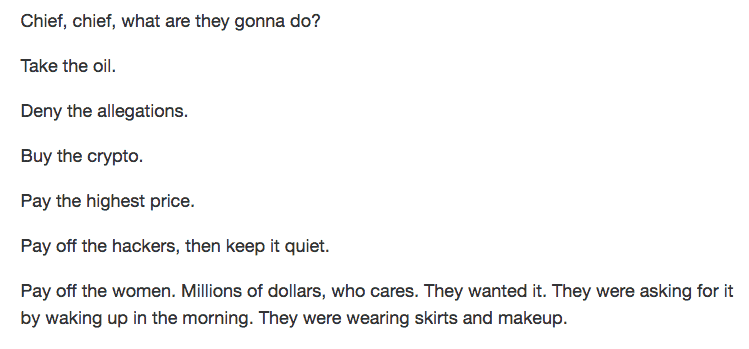
The Three Blind Mice.  The Three Little Pigs.  The Three Muskateers.  Why does the number three work so well in lists?  I don’t know, but anytime you are making lists, if you can, go with three.  Not four, not two.  Three.  This is why real estate agents say, “Location, location, location,” why Arnold Schwarzenegger’s autobiography repeated the theme of Reps, Reps, Reps, and why Jim Cramer says:
It is everywhere in our society, so your best bet as a communicator is to follow suit.  I have engrained this rhetorical device so deeply into my writing that I don’t even notice when I use it anymore.  Check out this excerpt from one of my most popular posts:
In all the lives you could be living, in all of the worlds you could simulate, how much did luck play a role in this one?  Have you gotten more than your fair share?  Have you had to deal with more struggles than most?
It asked 3 questions, though I never planned on doing that.  It just sounded better when I did.  So, I oblige you, when making lists, use the rule of three.
2. Repeat Yourself (Kind Of)
My next favorite rhetorical technique is called anaphora or parallelism, and it is simply starting each sentence with the same word or phrase.  I don’t know why it sounds so good.  I don’t know why it works so well.  I don’t know why, but it’s just that easy.  Winston Churchill used it in his “We shall fight on the beaches” speech, Martin Luther King Jr. used it in his “I Have A Dream” speech, and I just used it in this very sentence.
However, despite the eloquence of anaphora, Forsyth warns how it can be abused:
But anaphora is dangerous.  It’s almost too powerful…With anaphora people always remember the opening words, but they usually forget the rest.
And he is right, if you overuse it.  By repeating the same phrase more than 3 times you put much more focus on the phrase itself instead of the content it is discussing.  Therefore, I recommend sprinkling parallelism throughout your work for a touch of eloquence without distracting from your overall message.
3. Follow A Rhythm 
Another easy way to keep your audience’s attention, especially when you are passionate about something, is to use isocolon.  Isocolon is the repetition of grammatical structure.  So instead of repeating the same word or phrase, you would repeat the same number of syllables in a phrase.
The simplest form of this is, “Roses are red.  Violets are blue.”  The syllable structure is 2-1-1, 2-1-1.  I don’t use this technique too often, but someone that does (and better than just about anyone else) is Josh Brown.  Look at his vicious isocolon game when concluding “The Year of Living Dangerously“:
This was one of Josh’s most read pieces ever (yes, I did run the numbers to verify this) and you can see why.  But, you know who else used this technique marvelously?  Cardi B. in the song “No Limit.”  Her entire verse (more or less) repeats the same 3 syllable structure, and it works.  I will admit that isocolon is not used as much in modern writing, but when the circumstances are right, use this to send a powerful message.
4. Ask Questions
Why do questions work well as rhetorical devices?  Is it because you get the reader to think about something more deeply?  Is it because it makes the reader come to the same conclusion that you want them to come to?  Is this string of questions making my point?  I actually don’t know why questions (rhetorical or otherwise) work so well, but it seems like when multiple questions are asked in succession, eloquence emerges.  I most recently used this technique in this article when asking you to ponder the idea of multiple discovery:
Is it just chance that the most famous businessmen and women of the Gilded Age were born within half a decade of each other?  Or did they all get swept up in an era that resulted in more income accumulation than any point in American history?
I didn’t really need to ask this question, but it sounds better than a declarative statement.  A far more eloquent example of asking questions occurs at the beginning of this interview where Milton Friedman responds to whether greed is a bad foundational idea for a society to run on:
Well, first of all, tell me, is there some society that doesn’t run on greed?  You think Russia doesn’t run on greed?  You think China doesn’t run on greed?  What is greed?
Friedman is able to simply and easily destroy the premise of the question with his own questions.  This doesn’t mean that the host doesn’t have a point, only that he is asking the wrong question.  “What should we do to better redistribute wealth?” is the relevant question.  So, don’t always declare facts because, sometimes, it’s better to get your reader to do it for you.  Don’t you think so?
5. Just Keep Writing
The most important tip I can provide to you to become more eloquent is the simplest—just keep writing.  I cannot tell you how much better you get at something when you deliberately keep at it week after week.  I have seen this in my own writing (it took about 11 months) and have heard similar things from other writers who have been in the game a long time.  Additionally, make sure that your writing is shared with others who can judge it.  When you know that other people will read your work, it forces you to think deeper and care more about how you write.  This process in and of itself forces you to become better.

More Than Words
Unlike businesses where execution is more important than ideas, with writing, ideas matter just as much as execution.  So while the tips discussed above (and in Eloquence) can help you, without a good idea backing your writing, it may be difficult to get people to read.  This is true because writing is about more than words.  It’s about capturing someone’s attention with a story, idea, or perspective that they haven’t read before.  So, keep this in mind when on your writing journey.
If you are interested in hearing more about how to improve your writing, I highly recommend Morgan Housel’s and Michael Batnick’s advice on this topic.  Also, big shout out to David Perell for showing me the book Eloquence which changed my writing game for the better.