Search This Blog

Sunday, December 9, 2018

US Spending on Physician, Clinical Services Rose 4% in 2017


US spending for physician and clinical services rose 4.2% in 2017, the smallest increase seen since 2013, according to a new report. This continues a recent ebb in the growth rate for total national healthcare expenses, which followed a jump in 2014 and 2015 due to expansion of Medicaid and private insurance coverage.
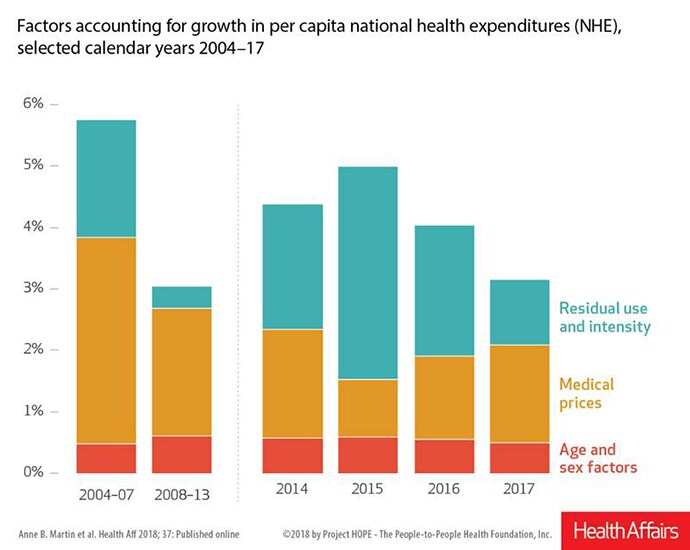
The Office of the Actuary at the Centers for Medicare & Medicaid Services (CMS) on Thursday released the latest version of its widely followed annual national health expenditures reportHealth Affairs published a related articleimmediately online, which will appear in the January issue of the journal.
Total US health spending experienced a bump in annual growth rates in 2014 (5.2%) and 2015 (5.8%), compared with annual increases of between 3% and 4% seen from 2011 to 2013, CMS said.
Around 2014, many states expanded their Medicaid programs, while at the same time, public and private insurers wrestled with the cost of new drugs for hepatitis C. By 2016, however, the Medicaid expansion was largely established and many people had been treated for hepatitis C, thus the growth rate for total US health spending that year slowed to a 4.8% increase.
In 2017, national healthcare spending rose by just 3.9% to a total of $3.49 trillion.
Spending on physician and clinical services followed a similar pattern, with annual gains between 2.2% and 4.6% from 2011 to 2014, CMS said. The growth rate then hit 6.0% in 2015, slowed to 5.6% in 2016, and slipped again to 4.2% for last year. Spending for physician and clinical services totaled $694.3 billion last year, CMS said.
On a call with reporters, Aaron Catlin, deputy director in the National Health Statistics Group in CMS’ Office of the Actuary, said there are a number of factors that could play into the drop in growth rate for physician and clinical services for which the agency hasn’t created specific estimates.
In response to a question from a reporter, Catlin said high-deductible health plans might play a role in the decrease in intensity of services. (These plans make their customers directly pay a larger share of some medical bills, giving them an incentive to reconsider some visits or treatments.) He also noted that there has been a shift in site of care, with some physician services shifted to freestanding and other clinical settings.

Drug Spending

The recent spike and decline in spending growth has been even more pronounced for prescription drugs. Annual increases in this spending ranged from 0.2% to 2.3% in 2011 to 2013. A 12.4% spike occurred in 2014, due in part to the introduction of costly sofosbuvir (Sovaldi), a hepatitis C antiviral drug sold by Gilead Sciences Inc.
The rate of growth has slowed since, dropping to 0.4% last year, with retail prescription drug spending totaling $333.4 billion. The slower growth rate reflects a continued shift to lower-cost generic drugs, slower growth in the volume of some high-cost drugs, declines in generic drug prices, and lower price increases for existing brand-name drugs, CMS said.
These cost-saving steps for pharmaceutical purchases were, however, balanced by the continued introduction of new medicines, which often command high prices. In the new report, CMS noted that there were 46 new drug approvals last year, more than double the 22 approvals in 2016.
The 2017 introductions included 13 new drugs approved for cancer, CMS said. Of the new drugs introduced in 2017, 15 were “first in class,” including drugs for eczema and multiple sclerosis. Eighteen new drugs were intended for rare diseases and are often referred to as “orphan drugs,” CMS said.
CMS officials also reported that:
  • Hospital spending rose 4.6% to $1.1 trillion, less than the 5.6% growth seen in 2016.
  • Private health insurance spending increased 4.2% to $1.2 trillion in 2017, less than the 6.2% growth seen in 2016. CMS said this deceleration reflects both slower growth in medical benefits and a decline in taxes resulting from the suspended collection of a health insurance provider fee in 2017.
  • Medicare spending grew 4.2% to $705.9 billion in 2017, little changed from 2016 when spending grew 4.3%. Growth in fee-for-service Medicare spending was 1.4% in 2017 compared to 2.6% in 2016, while spending for Medicare private health plans rose 10.0% in 2017 compared to 8.1% in 2016.
  • Medicaid spending growth slowed in 2017, increasing 2.9% to $581.9 billion following growth of 4.2% in 2016.
  • Out-of-pocket spending by consumers, including copayments, deductibles, and spending not covered by insurance, grew 2.6% to $365.5 billion in 2017, which was slower than the 4.4% growth in 2016.
The CMS officials ended their report by highlighting the overall trend toward having healthcare costs consume more of the nation’s economy, although there was a slight drop last year in its share. Healthcare spending accounted for 17.9% of GDP last year, as opposed to 18.0% in 2016.
Last year was the first since 2013 that healthcare’s share of the gross domestic product did not increase. “2014 and 2015 were marked by insurance coverage expansion and expensive new drug treatments that produced faster growth in health care spending, while 2016 was affected by low economic growth,” the CMS officials said.
The CMS officials noted that health care spending growth averaged 4.3% per year between 2008 and 2017, compared with an average annual rate of 7.3% in 1998 through 2007.
Even so, healthcare spending’s share of GDP increased by 1.6 percentage points from 2008 to 2017, compared with a 2.6-percentage-point increase from 1998 to 2007, CMS said.
“For a health sector that now accounts for nearly one-fifth of the US economy, future increases in health care expenditures will likely lead to policy decisions focused on affordability and sustainability,” the CMS officials wrote.
The authors have disclosed no relevant financial relationships. The opinions expressed in the analysis are the authors’ and not necessarily those of CMS.
Health Aff. Published online December 6, 2018. Abstract
CMS. Published online December 6, 2018. Report

Apple Watch ECG App Rolls Out: The Healthcare Experiment Begins


Apple rolled out its electrocardiogram (ECG) app for the Apple Watch Series 4 yesterday with less fanfare but no fewer questions about how its first wearable consumer heart-monitoring tool will affect healthcare providers.
“The idea that wearables can be used by both patients and their healthcare providers to manage and improve heart health holds promise and should also be approached with caution to ensure information and data are used responsibly and in concert with other evidence-based tools and guidelines,” American College of Cardiology President C. Michael Valentine, MD, said in an Apple release.
To take an ECG similar to a single-lead reading, consumers simply hold their finger on the watch’s digital crown and, after 30 seconds, the heart rhythm is classified as either atrial fibrillation (AF), sinus rhythm, or inconclusive. The waveforms can be stored on an iPhone and shared in a PDF with physicians.
“The role that technology plays in allowing patients to capture meaningful data about what’s happening with their heart, right when it’s happening, like the functionality of an on-demand ECG, could be significant in new clinical care models and shared decision making between people and their healthcare providers,” Nancy Brown, CEO of the American Heart Association, said in the Apple release.
The updated Apple Watch also has a notification feature that checks for signs of AF and alerts the user if it detects an irregular rhythm on five rhythm checks over a minimum of 65 minutes.
Apple acknowledges that in the Apple Heart Study, however, the watch’s AF warning was not confirmed 20% of the time by an ECG patch simultaneously worn by study participants.
Physicians took to Twitter after the app went public yesterday, with Daniel Yazdi, MD, Brigham and Women’s Hospital, Boston, tweeting: “Single lead EKG useful for detecting arrhythmias, not sensitive for ischemia. Excited for this new granularity but benefit/harm of anticoagulation needs to be evaluated.”
Electrophysiologist Kevin Driver, MD, Charleston, West Virginia, tweeted: “Congrats @leftbundle and Apple Watch team. High quality ECG will recommend to patients.”
Others had a different view. Nishat Siddiqi, MD, University of Aberdeen, United Kingdom, tweeted: “The apple smart watch app for AF is exciting BUT those with the highest risk of AF are older than the average smartwatch user and the false positive rates are too high. So, as a cardiologist, I’ll end up reassuring lots of anxious young people they don’t have AF.”
Michael Katz, MD, @MGKatz036, tweeted, “Of course, as a heart rhythm specialist, I immediately installed the iOS update on Apple Watch to EKGs enabled. We are gonna get wrecked.”
In response to Katz’s tweet, private-practice cardiologist Kevin Woolf, MD, @kwoolfmd, replied: “Job security/kids through college.”
News that the irregular heart rhythm notifications are not intended for people who have been diagnosed with AF also prompted headlines in the Washington Post and groans on Twitter. Electrophysiologist Edward J. Schloss, MD, The Christ Hospital in Cincinnati, tweeted: “Huh? Apple Watch 4 is not designed for the people in which it has the most utility.”
Electrophysiologist Paul Zei, MD, Brigham and Women’s Hospital and Harvard University, both in Boston, tweeted simply, “Oh, The irony…”
When Apple unveiled the app in September, Medscape Editor-in-Chief Eric Topol, MD, Scripps Research Institute, La Jolla, California, cautioned that the ECG feature could increase the chance of false-positives and detect cases of low-risk AF that don’t need to be treated.
Medscape columnist and electrophysiologist John Mandrola, MD, from Baptist Health, Louisville, Kentucky, said the app could misdiagnose patients because of inaccurate readings or lead to overtreatment of patients. Still, over time, “we may learn important things about arrhythmia from all these data. Similarly, people will gain more health literacy when it comes to their heart rhythm.”
In granting de novo clearance for the new ECG app in less than a month’s time, the US Food and Drug Administration stated that it is not intended for people younger than 22 years, a point that some on Twitter suggested could be easily worked around by changing the watch’s user settings.
When first unveiling the updates this September, Apple Chief Operating Officer Jeff Williams heralded the watch as the “ultimate guardian for your health.”
Apple executives sounded a more moderate tone yesterday.
“Apple Watch has helped so many people around the world and we are humbled that it has become such an important part of our customers’ lives,” Williams said in Apple’s statement. “With the release of these heart features, Apple Watch takes the next step in empowering people with more information about their health.”
Sumbul Desai, MD, Apple’s vice president of health, remarked, “We are confident in the ability of these features to help users have more informed conversations with their physicians. With the ECG app and irregular rhythm notification feature, customers can now better understand aspects of their heart health in a more meaningful way.”

A good word for proton pump inhibitors from anticoagulant patients


Anticoagulation patients at risk for upper gastrointestinal (GI) bleeding saw their risk reduced by more than a third when a proton pump inhibitor (PPI) was added to oral anticoagulant therapy, according to a retrospective analysis of Medicare claims.
In addition, the choice of anticoagulant can be important for outcomes, reported Wayne Ray, PhD, of Vanderbilt University Medical Center in Nashville, and colleagues. During 754,389 person-years of therapy, they found that the highest risk of upper GI hemorrhage was associated with rivaroxaban (Xarelto) but not apixaban (Eliquis), dabigatran (Pradaxa), or warfarin (Coumadin).
Ray noted in a Vanderbilt new release that an estimated 1% to 1.5% of patients on oral anticoagulants will experience upper GI bleeds every year, and anticoagulant choice and PPI co-therapy could affect the risk of upper GI tract bleeding, a frequent and potentially serious complication of oral anticoagulant treatment. The study, published online in JAMA, found that adding a PPI reduced overall bleeding across all anticoagulants, for an incidence rate ratio of 0.66 and a risk reduction of 34%.
“For patients starting oral anticoagulant treatment, both PPI co-therapy and anticoagulant choice can materially affect risk of upper gastrointestinal bleeding hospitalization,” Ray told MedPage Today. “These factors are particularly important for patients with elevated gastrointestinal risk and argue for a GI evaluation prior to initiating oral anticoagulant treatment.”
Ray also noted that without an added PPI the incidence of hospitalization for upper GI bleeding was 4% per year, while adding a PPI reduced the rate to 2.8% per year.
The retrospective analysis looked at hospitalizations for upper GI bleeds among Medicare beneficiaries in the period 2011-2015. The researchers identified 1,643,123 patients with 1,713,183 new episodes of oral anticoagulant treatment for conditions such as atrial fibrillation.
The mean age in the cohort was 76.4, and atrial fibrillation accounted for 870,330 person-years (74.9%) of follow-up. Women accounted for 56.1% of person-years of follow-up.
Warfarin was by far the most commonly used anticoagulant, Ray and co-authors found. Overall, 1,058,807 anticoagulation patients had no PPI co-therapy vs 239,672 with co-therapy, for a follow-up of 754,389 person-years without co-therapy.
During no PPI co-therapy, the adjusted incidence of hospitalization for upper GI bleeding (n=119) was 115 per 10,000 person-years (95% CI 112-118).
Comparing PPI co-therapy (264,447 person-years) with no co-therapy, the researchers found the overall risk of upper GI bleeding hospitalizations (n=2,245) was lower with co-therapy, for an incidence rate ratio (IRR) of 0.66 (95% CI 0.62-0.69).
Compared with the results of other anticoagulants without PPI co-therapy, hospitalization per 10,000 person-years was highest for rivaroxaban (n=1278) at 144 (IRR 1.97) and lowest for apixaban (n=279) at 73. “Because rivaroxaban is given as a single daily dose intended to maintain 24-hour therapeutic levels, the relative peak plasma concentrations are higher than those for other oral anticoagulants,” Ray and associates explained.
The corresponding hospitalization incidence for dabigatran (n=629) was 120 per 10,000 person-years and for warfarin (n=4,933), 113 per 10,000 person-years.
The association of anticoagulant choice and PPI co-therapy with hospitalization for upper GI bleeding varied according to patients’ underlying disease, with absolute differences driven by the upper quartile of risk.
“For these patients, the difference in the annual incidence of hospitalization for upper gastrointestinal tract bleeding between the treatment strategies with the lowest and the highest gastrointestinal safety (rivaroxaban treatment without PPI and apixaban treatment with PPI, respectively) was 2.1 hospitalizations per 100 person-years,” the authors wrote. “These findings indicate the potential benefits of a gastrointestinal bleeding risk assessment before initiating anticoagulant treatment.”
Ray noted that oral anticoagulants can be extremely valuable in preventing an ischemic stroke — “which is one thing you really do not want to have happen, and we can’t lose sight of that.”
“On the other hand,” he added, “they have potentially very dangerous side effects. What we’ve done with this study is show that clinicians can focus on a high-risk population and significantly improve care for those patients with the addition of a PPI.”
Important Because of Large Patient Numbers
Asked for her perspective, Suneal K. Agarawal, MD, of Baylor College of Medicine in Houston, who was not involved in the research, said: “This a very important study because it reinforces with large numbers of patients what gastroenterologists have assumed for some time, that PPIs reduce GI bleeding. The COGENT trial showed that a PPI reduced GI bleeding in patients on antiplatelet medication, and now we have data on the role of PPIs in anticoagulant as well as antithrombotic therapy.”
The Medicare-based analysis had several limitations, the authors said, including the potential misclassification of anticoagulant treatment, PPI co-therapy, and non-steroidal anti-inflammatory drug use, since these variables were determined from filled prescriptions, and Medicare restricts reimbursement for many over-the-counter drugs. In addition, confounding could also have been present by unmeasured factors, such as aspirin exposure and Helicobacter pylori infection.
Furthermore, bleeding risk was measured with a disease risk score, an internal measure suitable for risk stratification within the Medicare cohort and not studied in other populations, Ray and co-authors noted. In terms of generalizability, the cohort excluded patients previously hospitalized for GI bleeding or who switched to a different anticoagulant during the study period. In addition, its Medicare population had a greater prevalence of anticoagulant treatment and GI bleeding risk compared with younger populations.
The study was supported in part by a grant from the National Heart, Lung, and Blood Institute.
Ray reported having no conflicts of interest; one co-author reported funding from the National Institute of Arthritis and Musculoskeletal and Skin Diseases and the Rheumatology Research Foundation.

Akebia to host special shareholder meeting


Special Shareholder Meeting to vote on the merger with Biopharmaceuticals will be held in Boston on December 11 at 11 am.
https://thefly.com/landingPageNews.php?id=2834179

Centene to hold a meeting


2019 Financial Guidance & Investor Day will be held in New York on December 14 at 8:30 am. Webcast: https://edge.media-server.com/m6/p/zsdxjzqz
https://thefly.com/landingPageNews.php?id=2834175

Catalyst Pharmaceuticals to hold a conference call


Conference call to discuss the Company’s commercialization plans for Firdapse will be held on December 13 at 8:30 am.
https://thefly.com/landingPageNews.php?id=2834173

Prophylaxis May Cut Cardiotoxicity Risk in HER+ Breast Cancer


The frequency of cardiotoxicity declined significantly with prophylactic antihypertensive medication for patients with early HER2-positive breast cancer treated with anthracycline-containing chemotherapy, but not trastuzumab (Herceptin), a randomized trial showed.
Although the trial did not meet the primary endpoint of cardiotoxicity in all treated patients, the incidence decreased by about half in patients who received anthracycline-containing adjuvant or neoadjuvant therapy and cardiovascular prophylaxis with a beta-blocker or angiotensin converting enzyme (ACE) inhibitor. Patients who received trastuzumab (Herceptin) without an anthracycline had a similar rate of cardiotoxicity whether they received one of the antihypertensive drugs or placebo, reported Pamela M. Munster, MD, of the University of California San Francisco, and colleagues.
“Our primary endpoint was similar for all cohorts,” Munster said at the San Antonio Breast Cancer Symposium (SABCS). “However, cardiotoxicity-free survival [CFS versus placebo] is comparable, with a hazard ratio of 0.71 for carvedilol and 0.74 for lisinopril, with a nonsignificant P-value.”
“Cardiotoxicity-free survival was longer with carvedilol or lisinopril than with placebo in patients who received anthracycline-containing regimens, but no differences were seen with the non-anthracycline regimens,” she added. “In patients with HER2-positive breast cancer treated with trastuzumab and anthracyclines, the addition of lisinopril or carvedilol should be considered.”
Two separate studies presented at the 2018 American College of Cardiology meeting in Orlando reported that cardiotoxicity from breast cancer drugs was about half as likely with prophylactic use of heart drugs in higher-risk patients, as well as an early trend for less cardiac damage.
‘Nice,’ but Not Enough?
The results are “very nice” but did not address the key issue for patients with breast cancer treated with anthracyclines and/or trastuzumab, said Steven Vogl, MD, a medical oncologist who practices in the Bronx in New York City.
“You’ve shown that you have fewer decreases in [left ventricular ejection fraction, LVEF], so you can give more trastuzumab, but did these interventions prevent dyspnea, heart failure — something that bothered the patient?” Vogl asked.
Acknowledging that his point was well taken, Munster said investigators struggled over the selection of the primary endpoint and ultimately decided that LVEF was more practical to assess than “subjective symptoms” in a community-based clinical trial involving 127 practices across the U.S.
“We will now analyze, do we in the long term actually have symptomatic changes, or is it just left ventricular ejection fraction?” she added.
Vogl continued, “There is considerable controversy about whether longer trastuzumab is better than shorter, but the bulk of the data suggest, at least for patients with the worse prognosis — positive nodes or bigger tumors — longer is better. In that situation, if that’s correct, then it’s good to give these [cardiovascular drugs] because then you get to give longer trastuzumab, regardless of whether they prevent symptoms or severe congestive heart failure — if you’re going to do the echocardiograms.”
Background and Results
Adjuvant trastuzumab remains standard of care for patients with early-stage HER2-positive breast cancer. The drug’s potential for cardiotoxicity requires monitoring and often leads to dose interruption and/or discontinuation, Munster noted. Results of several small studies suggested that treatment-induced cardiotoxicity might be prevented by prophylaxis with an ACE inhibitor or beta blocker, which are widely used to treat hypertension and heart failure.
Designing a randomized, multicenter, community-based trial of cardiovascular prevention posed several challenges, she continued. Reports about the frequency and severity of cardiotoxicity with HER2-targeted regimens varied widely. Evolving changes in practice pattern preferences for adjuvant neoadjuvant regimens have led to variation by geography and practice setting. Selection of regimens might be influenced by perceived or actual cardiac risk factors of patients with HER2-positive tumors.
Ultimately, investigators designed a randomized, double-blind, placebo controlled community-based trial involving patients with early HER2-positive breast cancer treated with trastuzumab. The design included stratification by use of anthracycline-containing chemotherapy. Patients were randomized to lisinopril (Zestril), carvedilol (Coreg and Coreg CR), or placebo, beginning day 1 of trastuzumab treatment and continuing for 52 weeks.
The trial had a primary endpoint of cardiotoxicity, defined as an absolute 10% decrease in LVEF from baseline or a 5% absolute decrease if LVEF fell below 50%. Eligible patients had early HER2-positive breast cancer and planned treatment with trastuzumab for 1 year, adjuvant or neoadjuvant cytotoxic therapy, LVEF ≥50, systolic blood pressure ≥90 mm Hg, and pulse ≥60 bpm.
Investigators randomized 468 patients 1:1:1 to placebo, lisinopril 10 mg, or carvedilol 10 mg. A total of 193 patients discontinued treatment before 52 weeks, including 86 patients who had a decrease in cardiac function. The patients remained in follow-up and 181 were eligible for efficacy analysis. Munster said 189 of 468 patients received anthracycline-containing chemotherapy in addition to trastuzumab.
The primary analysis showed similar rates of cardiotoxicity for the three treatment arms: 32% for placebo, 29% for carvedilol, and 30% for lisinopril. The carvedilol and lisinopril groups had nonsignificant trends toward better CFS, but neither difference achieved statistical significance:
  • Carvedilol: HR 0.71 (95% CI 0.47-1.07, P=0.052)
  • Lisinopril: HR 0.74 (95% CI 0.48-1.12, P=0.076)
The prespecified analysis by anthracycline use showed significant advantages for treatment with either cardiovascular agent versus placebo. Patients who received anthracycline-containing chemotherapy in addition to trastuzumab had a 51% reduction in the CFS hazard with carvedilol (95% CI 0.27-0.89, P=0.009) and a 47% reduction with lisinopril (95% CI 0.30-0.94, P=0.015). Cardiovascular prophylaxis did not affect CFS in the patients who received trastuzumab without an anthracycline.
Interruption of trastuzumab therapy occurred significantly more often in the placebo group (26.3% vs 15.4% with carvedilol and 17.3% with lisinopril, P=0.01). Anthracycline use accounted for most of the difference, as trastuzumab interruption occurred in 40.3% of the placebo group versus 19.7% of the carvedilol group and 23.0% of the lisinopril group.
Adverse events associated with carvedilol and lisinopril were consistent with their known safety profiles. Fatigue, dizziness, headache, cough, and hypertension were more common with lisinopril than with carvedilol.
SABCS session moderator Giuseppe Curigliano, MD, PhD, of the European Institute of Oncology in Milan, called the findings “provocative and potentially practice changing.”
The study was supported by the National Cancer Institute and the University of South Florida.
Munster and co-authors disclosed no relevant relationships with industry.